Home Blog Page 353

Gvt, ZMF to roll out ASM safety training programs

0

In the wake of the mine tragedy that claimed seven lives at Bucks Mine in Colleen bawn, the government is working on capacitating emergency rescue teams to equip miners in all districts to swiftly deal with mine accidents to avert disasters.

Prince Sunduzani

This week, seven miners died when they plunged down a 200-meter shaft after a rope from a winch snapped.

The rescue mission took about three nights, pumping water out of the 240-metre-deep shaft.

Teams from Vumbachikwe Mine and the Ministry of Mines collaborated in the effort.

In an interview with Mining Zimbabwe, the Deputy Minister of Mines and Mining Development Ministry, Dr Polite Kambamura, said the government, in collaboration with the Chamber of Mines, will train and capacitate Emergency Rescue Teams (Proto teams) consisting of small scale miners and teams from large scale operations in every mining district.

He said, in addition to this, they will be conducting awareness campaigns and training on safety to conscientize miners on mine safety measures.

This will assist with preparedness in the event of an accident.

“The Ministry of  Mines is conducting safety awareness campaigns and training workshops in all mining districts. We formed joint Ministry of Mines and EMA Inspectorate teams to go around all mining areas checking on compliance,” said Kambamura.

“Government together with Chamber of Mines, will train  and capacitate Emergency Rescue Teams (Proto teams) consisting of small scale miners and teams from large scale operations in every  mining district”

He called on small scale miners to adhere to mining safety standards enshrined in the Mines and Minerals act.

“Government appreciates the role played by small scale miners, and as such we are concerned about numerous mining accidents happening in the sector. We urge small scale miners to adhere to mining safety standards as set out in the Mines and Minerals Act. Every mining operation must be registered, and have an appointed qualified and competent mine manager who among other duties, administers this Act on the day to day running of the mine,” he said.

Speaking to the media on Sunday at the site of the tragedy, Zimbabwe Miners Federation (ZMF) Matabeleland South chapter chairman Mr Philemon Mokuele said his association was concerned by the lack of safety knowledge among small scale miners.

As such, he said, ZMF will conduct safety training to reduce the number of mine accidents.

“We saw this accident as a challenge to us because we now understand that most small-scale miners lack knowledge of health and safety which is very important in our mining operations. We’ll be training our miners so that they understand the importance of safety in the mines. Most miners were not taking issues of health and safety seriously such that when we called for training, most miners were not coming. However, this training will be useful in reducing accidents in our mines,” said Mr Mokuele.

Hwange Colliery to scale up production

0

HWANGE Colliery Company Limited (HCCL) projects to scale up high-value coal production from the current 15 000 tonnes per month to 150 000 tonnes per month in the last quarter of the year 2023 as part of measures to unearth the company’s potential.

To increase production, the coal miner says it has entered into an equipment mobilisation agreement for the Underground Mine, that will result in the company getting new underground mining equipment valued at more than US$15 million in the next two years.

“This arrangement will enable us to increase production to 50 000 tonnes per month in the second-half of 2022, then 100 000 tonnes per month first-half of 2023 and 150 000 tonnes per month in the last quarter of the year 2023 compared to the current production of 15 000 tonnes per month,” financial results for the year ended 31 December show.

“In addition, Opencast operations at the JKL pit will continue to be capacitated in order to increase high-value coking coal in the product mix, the target being to increase production to 90 000 tonnes per month by end of 2022.”

The firm added that it has also engaged a new mining contractor to increase high-value coking coal with a target production of 20 000 tonnes per month.

As part of strategies to boost production at Chaba Mine, the mine said it is in an advanced stage to engage a new mining contractor to increase thermal and industrial coal.

“This will result in increased monthly production by 40 000 towards the end of 2022. This will enable the company to meet its demand of dry products.”

The production is targeted to commence during the first quarter of this year and will generate about US$3,4 million in 2022.

Colliery noted that in the period under review, production increased by 49,5 percent and sales volumes also increased by 39 percent compared to the prior year.

“Going forward, the company is targeting to increase coking coal production and sales, which will in turn increase capacity to discharge obligations to creditors as well as create a positive balance sheet in the medium term.

During the period under review, the focus was on increasing production and sales of highvalue coking coal. Raw coking coal and clean coking coal sales increased by 226 percent from 63 294 tonnes in 2020 to 206 564 tonnes in 2021.

The coking coal sales volumes were however, limited by washing capacity constraints and the company redressed it by recommissioning a washing plant during the period under review, it noted.

The coking coal. Image taken from NS Energy
For Opencast operations, 1 804 663 tonnes were mined, a 53 percent increase in production from the previous year.

A total of 733,102 tonnes of coal was delivered to Hwange Power Station during the year, which was an increase of 11 percent from the previous year. Deliveries into the power station were however, negatively affected by plant challenges in the power station and limited stockholding space, it said.

Meanwhile, revenue improved by 31 percent from $7,2 billion in 2020 to $9,4 billion in 2021 on an inflation-adjusted basis.

The firm said this was largely driven by a combination of an increase in sales of high value coking coal and regular product price adjustments done during the year in line with market value.

Gross profit increased by 26 percent from $1,6 billion prior year to $2,1 billion in inflationadjusted terms this year.
Legacy debts contributed $904 million of unrealised losses on inflation-adjusted terms.


The Chronicle

Poor cashflow weighs down Hwange Colliery

0

OPERATIONS at coal miner Hwange Colliery Company for the 2021 financial year were hampered by depressed cashflows to import spares and consumables among other challenges despite a 49,5% increase in production.

In its financial results for the year ended December 31, the coal miner said it had been affected by the exchange rate impact on legacy debts.

“Legacy debts contributed $904 million of unrealised losses in inflation adjusted terms,” Hwange Colliery revealed in its financial statement.

Operations were also negatively affected by the prevalence of the COVID-19 pandemic, depressed cashflows to import spares and consumables as well as the depressed market for NPD (nuts, peas and duff) and duff products. The coalminer‘s production increased by 49,5% during the period under review with sales volumes increasing by 39% compared to prior year.

Hwange Colliery’s revenue improved by 31% from $7,2 billion in 2020 to $9,4 billion in 2021 on an inflation-adjusted basis. This, it said, was largely driven by a combination of an increase in sales of high value coking coal and regular product price adjustments done during the year in line with market value.

The coalminer’s gross profit increased by 26% from $1,6 billion prior year to $2,1 billion in inflation adjusted terms this year. The company posted a net profit of $28,6 million during the year.

Going forward, the company is targeting to increase coking coal production and sales, which will in turn increase capacity to fulfil its obligations to creditors.

On coal production, Hwange Colliery said raw coking coal and clean coking coal sales increased by 226% from 63 294 tonnes in 2020 to 206 564 tonnes in 2021 but the coking coal sales volumes were, however, limited by washing capacity constraints which the company redressed by recommissioning a washing plant during the period.

It revealed that total coal mined by opencast operations was 1 804 663 tonnes, a 53% increase in production from the previous year.

A total of 733,102 tonnes of coal was delivered to Hwange Power Station during the course of the year, which was an increase of 11% from previous year. Deliveries to the power station were, however, negatively affected by plant challenges at the power station and limited stock-holding space.

Coal production on its three Main Underground Mine was 27% higher than the previous year, spurred by improved operational funding and credit availed by spares suppliers.

The coal miner said it had entered into an equipment mobilisation agreement for the underground mine, that will result in the company getting new underground mining equipment valued in excess of US$15 million in the next two years.

This arrangement will enable it to increase production to 50 000 tonnes per month in the second half of 2022, then 100 000 tonnes per month in the first half of 2023 and 150 000 tonnes per month in the last quarter of year 2023 compared to the current production of
15 000 tonnes per month.

Hwange Colliery revealed that opencast operations at the JKL pit will continue to be capacitated in order to increase high value coking coal in the product mix, the target being to increase production to 90 000 tonnes per month by end of 2022.

The company also engaged a new mining contractor to increase high value coking coal with a target production of 20 000 tonnes per month.

At its Chaba Mine, the company is at an advanced stage to engage a new mining contractor to increase thermal and industrial production which would result in increased monthly output by 40 000 tonnes towards the end of 2022.

The company has also engaged a contractor to resuscitate beehive coke ovens to produce high value foundry coke with high demand on the export market.

The production is targeted to commence during the first quarter of 2022, and is expected to generate about US$3,4 million in 2022.


Newsday

Electric vehicles surpass phones as top driver of cobalt demand

0

Electric vehicles (EVs) overtook smartphones and other high-tech devices for the first time last year as the main driver of cobalt demand, with the sector consuming 59,000 tonnes of the battery metal, or 34% of the total globally.

According to a report published on Tuesday by the Cobalt Institute, cellphones manufacturers consumed 26,000 tonnes of the metal used in lithium-ion batteries, while laptops and tablets accounted for 16,000 tonnes of the total demand, which reached 175,000 tonnes.

Not surprisingly, prices for cobalt, nickel, lithium and copper have skyrocketed. Cobalt has nearly tripled in price since the start of 2021. Nickel turned so wild in March the London Metal Exchange (LME) had to suspend trading.

Source: Cobalt Institute.

Battery-makers have responded by using more lithium-iron-posphate chemistry, which doesn’t use either cobalt or nickel, but that tightens up the lithium market itself with spot prices doubling since the start of the year.

Benchmark Mineral Intelligence estimates the global lithium industry needs as much as $42 billion of investment by the end of the decade in order to meet demand

MINING.COM’s EV Metal Index, which tracks the value of battery metals in newly registered passenger EVs (including full battery, plug-in and conventional hybrids) around the world, totalled $1.5 billion in December, an increase of 192% over the same month of 2020.

“Securing access to raw materials is crucial if the world is to achieve the sustainable and just transition to a greener future,” David Brocas, head Cobalt Trader at Glencore and chairman of the Cobalt Institute’s executive committee, said. “Cobalt’s role in batteries and recycling makes it one of the critical materials of a climate-neutral future.”

Production in hands of very few

The metal, a by-product of copper and nickel mining, makes up only 0.001% of the earth’s crust. Its appeal to EV makers comes from the fact that it provides batteries with energy density that increases the range of their vehicles and boosts their life.

Supply comes mainly from the Democratic Republic of Congo, where production is dominated by miner and commodities trader Glencore (LON: GLEN) as well as Chinese companies.

Source: Cobalt Institute.

The institute expects cobalt demand to keep growing to about 320,000 tonnes annually over the next five years, almost double the total consumed in 2021, with EVs driving 70% of this growth.

It also sees supply picking up this year and next, leading to a more balanced market. From 2024, cobalt availability will wind down again, growing 8% a year, compared to more than 12% of demand growth, which will leading to significant deficits.

Some manufacturers, such as Tesla (NASDAQ: TSLA) and Volkswagen have even announced intentions of becoming “actively involved in raw materials business”.

Mining


Zinc joins battery race in the US

0

US battery maker Urban Electric Power is set to supply an initial 4,550 MWh of its rechargeable zinc alkaline batteries over the next five years to solar and energy storage project developer Pine Gate Renewables.

Through a memorandum of understanding, the companies have set their objective to be supporting Pine Gate’s growing pipeline of solar-coupled and standalone energy storage projects across the United States. At present, Pine Gate has over 1 GW of operating solar assets in the country with over 16 GW in active development.

The firm’s alkaline zinc manganese dioxide battery has been in development since 2012 by researchers at City College of New York. It is considered fire-safe for indoor installations in cities as it is not subject to thermal runaway, a common issue in lithium-ion batteries. It is also considered more ESG-friendly than its lithium counterparts as it doesn’t contain the white metal, cobalt or lead.

The battery has been tested and proven for large-scale uses such as in the San Diego Supercomputer Center, and at commercial-industrial locations to offer backup power and dispatchable energy storage to the power grid.

“We’re excited to partner with Urban Electric Power to bring zinc alkaline batteries, a familiar household item, and apply it towards grid-connected utility-scale applications for our customers across the United States,” Raafe Khan, director of energy storage at Pine Gate Renewables, said in a media statement.

“We are committed to supporting our partners and customers with safe, domestically manufactured, scalable, reliable, and durable solutions that they can connect with for their storage needs.

Mining

Shattered hopes: Bodies of seven miners retrieved from shaft

0

THREE nights of pumping water out of the 240-metre-deep shaft at Bucks Mine in Colleen where seven miners have been trapped underground since Saturday were met with dead silence when the first body was finally hoisted out of the shaft.

After waiting for days with no idea what could have been happening with their loved ones underground, anxious relatives could finally see the culmination of their wait.

While some watched helplessly, others couldn’t hold back tears. They stood, watched and wept silently as the rescue team battled with a blue drum containing the body of one of the trapped miners at around 9.30AM.

In that moment, all hope started to peel off.

Another body emerged at around 12 noon and was again met with dead silence, blank stares and tears.
Dejected relatives watch as more bodies are brought to the surface

By 1.50PM, another body was being hoisted to the surface, and at this point, it was clear there were no survivors from the accident as some of the retrieved bodies had been badly injured with skin peeling off due to prolonged exposure to water.

It must’ve been hard to be a police officer as co-workers struggled to identify some of the miners whose faces had been defaced.

The blankets covering the bodies were opened and closed several times before positive identifications could be made so that the correct relatives could be asked to identify the bodies.

The rescue workers who have been on the mission 24/7 since they were called in to assist, some of whom have been living underground since Saturday continued to hoist more miners out with a body count of five by 5PM.

The inevitable would soon follow — packing up the deceased belongings and holding family caucuses on what the next move would be.

Members from various miners’ associations gathered to commiserate with the bereaved families and offer assistance to the rescue team in retrieving the trapped miners’ bodies.

By 6PM, six bodies had been retrieved with the seventh one reportedly visible to the rescue team but partly crushed by the plunged skip.

Speaking at the scene of the accident yesterday, Mines and Mining Development Deputy Minister Polite Kambamura urged miners to adhere to safety standards in order to avoid similar accidents in future.

“It’s sad that we lost seven miners of this operation but we want to thank everyone who is here and has been making frantic efforts to rescue those who drowned underground. We’ve so far managed to retrieve five bodies; the sixth body is still underground but it will be out in the next hour. The seventh body is still trapped underground under a cocopone which we’re trying to move so that we can have space to get the body out. We’re confident that we’ll be able to retrieve all the seven bodies,” said Deputy Minister Kambamura.

Mines and Mining Development Deputy Minister Polite Kambamura (right) gets briefed on the rescue operation by national chief mining engineer Mr Michael Munodawafa yesterday He extended his condolences to the families and co-workers of the deceased.

“We’re so saddened as Government and want to urge the communities around to adhere to all safety standards to make sure that such accidents don’t happen in future. Currently, the department of the chief Government mining engineer is going around doing safety awareness campaigns together with the Ministry of Environment to make sure that miners adhere to safety standards and a safe working environment,” said Deputy Minister Kambamura.

Vubachikwe Mine rescue team captain Mr Cleopas Karima said the rescue mission had been a difficult one.

“We started pumping water on Sunday around 10PM because the mine had problems with broken pipes so we started by equipping the pipes and the pump. We continued pumping until Monday around 10PM, that’s when we started to see the first body floating on top of water.

“We continued pumping until today (yesterday) around 5AM, that’s when we saw six bodies,” said Mr Karima.

He said the team started cleaning the shaft and installing some working platforms to enable them to retrieve the bodies.

“We started retrieving the bodies around 9AM today (yesterday) but still our challenge is that there’s still water underground.

The water from the expected platform is about three meters which makes it difficult for us.

We’ve retrieved five bodies, the sixth one is on its way up now. The seventh body is still a challenge but there are positive signs that we’ll retrieve it soon. If we fail, we’re going to pump water again so that we can retrieve it,” said Mr Karima.

Zimbabwe Miners Federation president Ms Henrietta Rushwaya speak to some of the rescuers

He said the top part of the seventh body was still trapped underwater.
“We’re fighting to retrieve it. This has been a difficult activity considering the state of the mine. It’s been hard but we’ve managed to sail through. We hope we’re going to retrieve the seventh body soon. We’ve had help from some of the guys from here. It’s a hard situation especially considering that these bodies have been in water since Saturday up to now. The bad smells and you can imagine the water with blood and everything,” said Mr Karima.

Zimbabwe Miners Federation Matabeleland South chapter chairman Mr Philemon Mukwili said the bereaved families would be assisted with burial logistics.

“We saw this accident as a challenge to us because we now understand that most smallscale miners lack knowledge of health and safety which is very important in our mining operations. We’ll be training our miners so that they understand the importance of safety in the mines. Most miners were not taking issues of health and safety seriously such that when we called for training, most miners were not coming. However, these trainings will be useful in reducing accidents in our mines,” said Mr Mukwili.


The Chronicle

Caledonia seeks power deal with ZETDC

0

Victoria Falls Stock Exchange-listed Caledonia Mining Corporation has commenced discussion with the Zimbabwe Electricity Transmission and Distribution Company (ZETDC) to connect its US$14 million solar plant to the national grid.

ZETDC is a division of State-run power utility, Zesa Holdings, which sells power to consumers.

Independent power producers sign agreements with the utility to help them sell output from their facilities.

The plant is expected to be commissioned next month.

“The company is in talks with the Zimbabwe Electricity Transmission and Distribution Company to co-ordinate the commissioning and connection of the plant to the 33KV grid and it is expected that the plant will be commissioned in June 2022,” the mining company said in its latest management’s discussion and analysis.

“Manufacturing delays and port closures due to the current COVID-19 lockdowns in China could impact the supply of the remaining equipment and may cause delays to the commissioning date. This equipment is not currently on the critical path to complete the project.”

“The company has commenced the evaluation of a further phase for the solar project to provide for Blanket’s peak demand during daylight hours. This will require an agreement between the company and the Zimbabwean authorities regarding the treatment of power that will be generated by a second phase that is surplus to Blanket’s requirements and or the installation of storage capacity,” it said.

Blanket, which is Caledonia’s flagship operation, suffers from unstable grid power and load shedding which results in frequent and prolonged power outages.

In late 2019, Caledonia initiated a tender process to identify parties to make proposals for a solar project to reduce Blanket’s reliance on grid power. After careful consideration, Caledonia’s board approved the construction of a 12 mega-watt alternating current solar plant at a revised construction cost of approximately US$14 million.

The plant is expected to provide all of Blanket’s minimum electricity demand during daylight hours. Blanket will continue to rely on the grid and generators to provide additional power during daylight hours and at night.

In 2020, the company raised US$13 million to fund the project through the sale of 597 963 shares at an average price of US$21,74 per share.

Currently, the 40-hectare site for the project has been cleared and fenced and Caledonia has obtained the necessary licences and permits for the project.

Voltalia, an international renewable energy provider, has been appointed as contractor for the project under an engineering, procurement and construction contract.

Caledonia provided Voltalia with a notice to proceed in March 2021 and has made an advance payment of US$1,8 million for long lead time items that are required to construct the plant. It said orders had been placed for approximately 95% of the solar equipment required to build the plant.

Civil works on the internal roads, drainage, foundations for equipment and the operations and maintenance building have commenced.

The majority of the equipment to construct the project has either been delivered or is en route to site.

Approximately 4 300 holes have been drilled on the structure to be constructed.

Caledonia said 15 770 metres of low voltage cabling has been installed out of a total of 15 932 metres.

Newsday

Small scale gold producers continue to impress

0

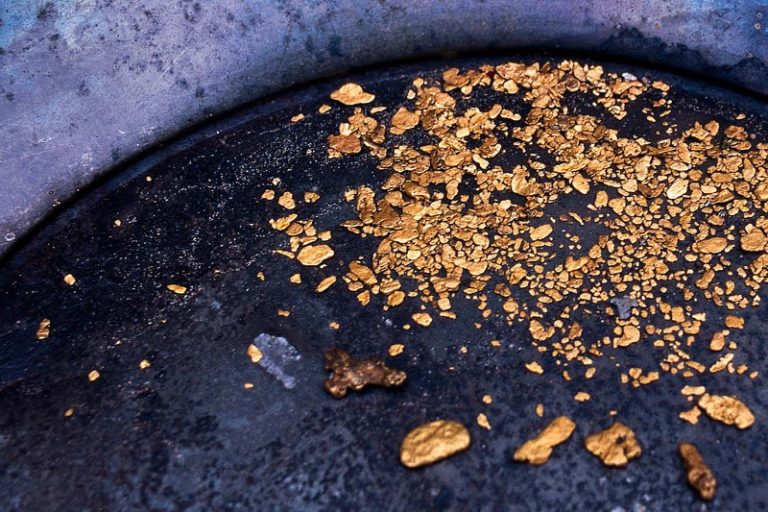
The Artisanal and Small-Scale Mining (ASM) sector has continued to show its significance in the achievement of the US$4 Billion gold industry by 2023 as gold deliveries to the country’s sole gold buyer and exporter Fidelity Gold Refinery (FGR) increased by over 3 per cent in April from the previous month.

Rudairo Mapuranga

On average the ASM sector accounts for over 60 per cent of gold deliveries to FGR and has been a significant player in ensuring that the country’s target to achieve a US$12 billion mining sector is well on course to be achieved.

According to FGR figures received by this publication deliveries in April 2022 gold deliveries increased by 3.71761 per cent to 1621.9712 kgs from  1563.8339 kgs in March while Large scale producers’ deliveries decreased by 14.1343 per cent to 859.4400 kgs from 1000.9122 kgs produced in March 2022.

The statistics show that overall deliveries to Fidelity in April decreased by 3.24925 per cent to 2481.4112 Kgs from 2564.7461 kgs delivered in March 2022.

During the first quarter of 2022 gold deliveries jumped 92 per cent to 7.695 tonnes from 4.016 tonnes in the comparable period of 2021.

The March 2022 gold output spiked 39 per cent to 2.564 tonnes from 1.8 tonnes achieved during the comparable period following the 5 per cent mining incentives put in place by the central bank.

Of the 7.695 tonnes delivered during the first quarter of 2022, small scale miners delivered 4.949 tonnes against 2.746 tonnes from large scale miners.

Large gold producers delivered 11,2 tonnes to Fidelity in 2021 whilst small-scale producers contributed 18,5 tonnes. The highest tonnage of gold was delivered in the fourth quarter when small scale miners delivered a record 7,6 tonnes, whilst primary producers weighed in with 3,1 tonnes.

Caledonia cost per ounce drops 16 %

0
Victoria Falls Stock-Exchange-listed Caledonia Mining Corporation Plc has managed to keep its operational costs in check with on-mine cost per ounce having dropped by 16 per cent in the first quarter of 2022.
Prince Sunduzani
Caledonia Chief Executive Officer, Steve Curtis,  said the reduction was spurred by higher production, improved grades and reduced use of diesel generators.
This means fixed costs are spread over more production ounces.
The company said the all-in sustaining costs per ounce were also 7 per cent lower than the first quarter of 2021.
“The first quarter of 2022 was an excellent start to 2022. Gold production in the Quarter represents a new production record for any first quarter. Production in April showed a further improvement: production of almost 6,800 ounces in the month reflects an annualised production rate that is marginally above the top end of our guidance range for 2022 of 73,000 to 80,000 ounces of gold. The higher production reflects increased tonnes milled, better grade and improved recovery. Production in the Quarter excludes approximately 1,500 ounces of recoverable gold contained in an ore stockpile which accumulated during the Quarter as we await the commissioning of an additional mill later in the year,” said Mr Curtis in the Q1 results released today.
“Operating costs were well controlled. The on-mine cost per ounce fell by 16 per cent compared to the first quarter of 2021. The reduction was because of higher production, which means that fixed costs are spread over more production ounces; costs were also helped by reduced diesel consumption following the installation of equipment in late 2021 which allows us to manage the poor-quality grid power.”
Caledonia reported higher earnings for the first quarter of the year, as gold production reached a new record for the first three months of the year.
Mr Curtis said following Caledonia, which controls Gwanda-based gold producer, Blanket Mine’s successful secondary listing on the Victoria Falls Stock Exchange in late 2021, the proportion of revenues received in USD dollars has increased.
“This, in conjunction with other arrangements, means that we are not accumulating excessive local currency balances. We have a strong, long-term working relationship with the Reserve Bank of Zimbabwe and Fidelity Printers and Refiners (the Zimbabwe government-owned gold refiner) and we are delighted that the payment process for gold deliveries and the regulations that manage the flow of funds from Zimbabwe continue to operate smoothly,” said Mr Curtis.
He noted that the 12 MWac solar project is now in the final phase of construction and is expected to be operational within the next few months.

AANR Poised to exploit the Nickel Supply Cliff

0

As the stampede for the adoption of Li-ion batteries intensifies, Associated African Nickel Resources Ltd (“AANR”) has been growing its mining portfolio in Zimbabwe and Africa at large to satisfy the world’s growing demand for Li-Ion Battery technology.

Rudairo Mapuranga

The junior mining company has announced its intention to list on Zimbabwe US$ Denominated stock exchange, Victoria Falls Stock Exchange (VFEX) thereby attracting significant domestic capital trapped in Zimbabwe pension funds.

Li-Ion Battery technology is an essential component in the electric vehicle industry.

Reports have indicated that the Electric Vehicle rollout promises extraordinary Nickel demand growth, possibly 300-500 percent by 2040. The biggest suppliers of Nickel ore, Indonesia and the Philippines are producing expensive Nickel Oxide deposits that yield toxic waste.

AANR Chair Ben Mbanga indicated that the company and the Nation are on an expansion drive and are looking to spread their wings across the nickel value chain. This will help the company tap into the ever-growing Li-ion battery in line with the global shift towards clean energy alternatives.

“AANR is therefore focused on clean Nickel Sulphide deposits in Africa to yield traceable, sustainable EV-Battery Grade Nickel Sulphate and Cobalt Sulphate (99.5% pure). This has seen the company advancing rapidly in exploring nickel and other Li-Ion Battery technology required metals to advance the world’s increasing demand for green energy, “he said.

Nickel production for AANR remains significant because for small devices and Electric Vehicles, Li-Ion Batteries are unchallenged. Within Li-Ion technology, developments continue to reduce Cobalt requirements in favour of Nickel.

AANR projects in Zimbabwe

AANR intends to Beneficiate its ore in Zimbabwe to EV Battery-Grade Nickel Sulphate + a matching quantum of EV Battery-Grade Cobalt Sulphate – all traced to the source and certified as socially and environmentally responsible. This will likely attract significant price premiums. The following are projects being carried out by AANR in Zimbabwe.

Chaka Project

AANR’s Chaka Project incorporates a 19kms strike of the Chakari Belt including the mothballed Perseverance mine (ex Rio) – which closed for safety reasons during the civil war. Historically, float-concentrate from the mine’s high-grade sulphide ore was processed at Rio’s Empress smelter facility and refinery. The resource may be open at depth and amenable to near-term re-opening. Prospectivity promised by a Thompson model offers a roadmap for discoveries in repetitions targeted along the 19kms strike.

According to the Chaka project’s significant investment to date – geophysics, geochemistry, mapping, Hydrogeological studies, drilling, dewatering etc. The project is arguably in the top 10 global nickel sulphide prospects.

Exploration rollout

Ground-based Electromagnetic Survey – 100x100m TDEM moving transmitter loop; base frequency 1Hz and Average 26Amp pulses. EM targeted at nickeliferous, gossanous outcrop, soil, radiometric, and magnetic anomalies plus off-topographic expressions of bulging serpentinite structures mimicking known ore bodies. Conductors require analysis for differentiation between previously logged graphitic, conductive black shales versus massive sulphides.

Exploration Drilling & Resource Development plans

Drill defined anomalies for proof-of-mineralisation; and Massive & disseminated Sulphide bodies were identified to be drilled out to JORC compliance.

Maddy Project

The setting of the Maddy project is within the greater Madziwa Igneous Complex with Brownfield sites and extensive potential for blind ore body discovery based on new geological understanding.

The Maddy project is one of AANR’s lead projects with the potential for early production and extensive potential for multiple virgin nickel sulphide bodies. It Is a Brownfield with >50,000 tonnes of nickel produced historically.

The float-concentration residues of this history form a 14 million tonne tailings dump. AANR has surveyed & drilled this asset. A JORC compliant Resource of ~25,000 tonnes containing Ni Metal has been declared (mostly in Indicated category). Large parts of the dump are running at 0.2% and over, with early extraction tests showing that much of this is in sulphide particles. Various techniques are being tested to upgrade the dump material to >0.4% Ni whereafter flotation to 5%+ Ni is expected to be achievable.

The Company intends to advance this project to profitable production within 18 months.

During the first quarter of 2022, Maiden JORC Resource Declared 24,923 tonnes of contained nickel metal = ~USD$1 billion gross in situ metal inventory. A feasibility study has commenced intending to test the economic viability of tailings retreatment – targeting a Reserve and Balance Sheet revaluation on discounted NPV.

A comprehensive 2015 White Paper authored by Prendergast & Wilson – arguably two of the leading geologists in their field – has essentially revolutionised the Company’s view of the Madziwa Igneous Complex and offered (indirectly) a clear roadmap to new deposit discovery. This, therefore, means that Past Geological Survey Bulletins can be largely disregarded.

AANR has conducted extensive geophysical surveys over an area of roughly 10kms x 7 kms (Magnetic survey) to assist in the identification of further anomalous zones with nickel mineralization potential. These surveys are ongoing and have yielded excellent data prompting more expensive Stage 2 Geophysics. In stage 2, Legacy data & magnetic anomalies highlighted by Stage 1 Geophysics guided a recently completed time-domain electromagnetic survey. A large conductive body was pinpointed. Qualified interpretation leads the Company to believe it represents a massive sulphide, possibly a significant virgin nickel ore body – i.e. a high-value drill target.

Empress Project

The mineralogy and geological setting of Empress Nickel mine are unusual in that it hosts relatively high Gold, Silver, Palladium, Platinum, Rhodium & Rhenium credits in addition to the expected Nickel, Copper, Cobalt. Host minerals, in order of % occurrence, are pyrrhotite, pentlandite, chalcopyrite, pyrite, violarite and chalcocite.

The ratio of Nickel to Copper is also unusual in that it is almost 50/50 @ 14:13. It has become common practice, therefore, to refer to combined base metals (“CM”) – i.e. Ni+Cu, when referring to estimated contained metals (i.e. excl Co, Au, PGM’s)

Owned and mined by Rio Tinto until 1983, Empress was both open pit & underground, with total reported production of nett 100,000 tonnes of CM (USD$1.4 billion @ today’s pricing). Cobalt and Precious metals went largely unreported.

Rock Stockpiles, slag dumps and float tailings make up some 13 million tonnes lying on the surface – likely bearing some 40,000t CM. Residual underground reserves have been professionally estimated @ 80,000t CM underground excluding lateral extensions which would require exploration & resource definition drilling.

Exploration rollout

Geophysics Surveys around old mine site to detect orebody extensions at depth and nearby; and Targeted magnetic geophysics + geochemistry on surrounding areas, subject to tenure consolidation, to identify targets for EM; and Dewatering followed by limited re-equipping then LIDAR underground survey to map voids/pillars/stopes etc, define residual extractable resource; and Subject to outcomes of above, consider merits of underground EM and drilling for extensions.

Exploration Drilling & Resource Development plans:

Underground: channel sampling + limited drilling of halo; Surface drilling of strong anomalies in lateral extensions; and All above-mineralised zones drilled out to JORC compliance.