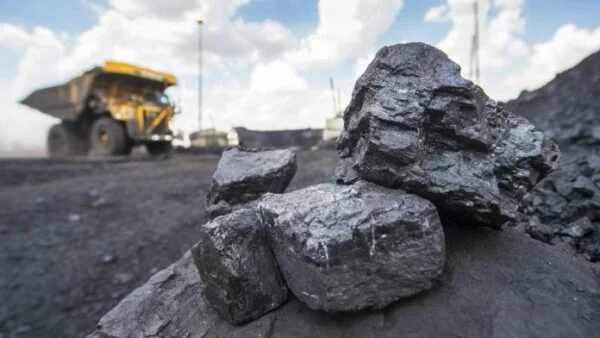
London-based mining company focused on the US and Africa, (Galileo Resources) commenced exploration activities at lithium and gold projects in Zimbabwe, with a recon mapping and sampling site visit at the Kamativi lithium project set to start immediately.
Meanwhile, permitting work has begun to prepare for more advanced exploration in the coming weeks and months which will advance towards facilitating early drill testing.
Also, Galileo has signed a contract with Xcalibur Airborne Geophysics to carry out a fixed-wing airborne magnetic and radiometric survey over the prospective parts of the Bulawayo gold project.
“We are very pleased to have already commenced work over the lithium and gold projects in Zimbabwe. The Kamativi Lithium project is adjacent to the Kamativi tin mine which hosts a substantial lithium tailings Resource, mainly in the form of spodumene which is the most sought-after lithium mineral. Primary lithium grades at the Kamativi mine could well be higher than reported in tailings,” says Chair and CEO Colin Bird.
GALILEO RESOURCES PLC
Galileo Resources Plc is an opportunity-driven company whose model is to acquire large databases generated by major companies and abundant for strategic, corporate, technical and other reasons which do not necessarily reflect the potential value of the project.
The company has a strong management team who have success in discovering, evaluating and advancing mining projects.
President Emmerson Mnangagwa has challenged Zimbabwean mining companies to invest in technology, in order to improve sustainable mining and unlock Zimbabwe’s mining fortunes.
Prince Sunduzani
The President said this while commissioning the RioZim Biox plant in Kadoma this month.
He called upon mining houses to embrace sustainable extraction and utilization of the country’s resources.
The mining sector needs to foster innovation to remain competitive. Integrating technological innovation into its practices can result in reduced costs, increased productivity and improved worker safety for the mining sector.
“The extraction of our mineral resources plays an important part in the economic social and technological development of Zimbabwe through industrial development employment creation as well as linkages with the agricultural sector among others. This biological oxidation plant attests to the ongoing scaling up and the expansion of production works at existing mines exploration activities resuscitation of closed minds and opening of human minds under the second republic,” said President Mnangagwa.
He also called upon young innovators dotted across the country’s innovation hubs to put their focus on coming up with innovations that will be valuable to the mining industry.
“I challenge our young talented boys and girls at our innovation arms and industrial parks to undertake more research and innovation to identify characteristics select and develop Bioprocesses for industrial and commercial applications. As you can see in 1968 no one thought about this (Biox plant) but with the development application of research in science see where we are now. In line with the second republic’s quest for a knowledge-based innovation technology-driven economy, I call upon other mining houses in the country to follow this good example set by Rio Zim for sustainable extraction and utilization of our rich mineral resources across the country,” Mnangagwa said.
Rapid advances in technological innovation, including automation, digitization, and electrification, are having a fundamental impact on the mining sector.
A few technologies reshaping the sector include autonomous vehicles, automated drilling and tunnel-boring systems, drones and smart sensors.
President Emmerson Mnangagwa has been confirmed to be attending the 2022 Investing in African Mining Indaba, happening in Cape Town from 9 – 12 May 2022.
Since assuming the mantle of President in 2017, President Mnangagwa has continued to emphasise the importance of mining to the Zimbabwean economy and people and has sought to encourage investment in exploration, mining and refining. Under his watch, a number of significant mining investments have been announced and are at very stages of implementation.
President Mnangagwa has repeatedly emphasized that Zimbabwe is ‘open for business’.
President Mnangagwa is the fifth African President to confirm his attendance at Mining Indaba 2022.
Distributed by APO Group on behalf of Investing in African Mining Indaba.
The Zimbabwe Republic Police (ZRP) has reported that a gang of robbers has been apprehended after a spate of robberies in the Norton, Chegutu and Kadoma areas.
The gang of eight had robbed Innez mine in Kadoma at 23:00hrs. After noticing the suspect’s vehicle the driver was flagged to stop and the occupants then attempted to attack the Police with Machetes and a shootout ensued.
Mining Zimbabwe gives you the Police statement in full:-
“The ZRP confirms a shooting incident which occurred at James area, Patchway, Kadoma (today) at about 0800 hours btwn Police detectives and eight-armed robbery suspects. Following a robbery incident which occurred at Innez Mine, Kadoma on 25/04/22 at 2300 hours, the Police crack team on armed robbery intercepted the suspect’s Nissan Caravan vehicle (AFH6988) which was used during the robbery and flagged it stop. The suspects tried to attack police officers with machetes and a shootout ensued resulting in the arrest of three suspects. Two of the suspects later died upon admission at Kadoma General Hospital due to the injuries sustained during the shootout. The gang is linked to a series of armed robbery cases which occurred in Kadoma, Norton and Chegutu,” the statement read.
Aim-listed Premier African Minerals has signed a binding joint venture (JV) agreement with lithium exploration company Li3 Resources, which will acquire a 50% interest in Premier‘s hard-rock lithium assets, collectively known as the Li3 project, in the Mutare greenstone belt, in Zimbabwe.
Premier acquired these claims in June 2020 and the assets are held by Premier’s wholly-owned subsidiary LicoMex.
The Li3 project comprises a number of prospective claim blocks in the Mutare greenstone belt – an area prospective for lithium and gold.
Li3 has until December 31 to acquire the 50% interest in the Li3 project by spending $250 000 in further exploration works.
“The Li3 project is located in a region in Zimbabwe that is receiving significant interest in both lithium and potential gold deposits. The claim blocks are well located and, in several instances, have already attracted interest from international lithium producers.
“Of particular importance is that Li3 plans to list on the TSX, and this brings to Zimbabwe widened international interest and investment.
“For Premier, this expands our lithium interests in Zimbabwe and, while exploration and development at Zulu is independent of the activities of the Li3 project, there is bound to be benefit and synergy. Li3 has indicated that their contribution will be settled in one complete payment, and this is expected imminently,” says Premier CEO George Roach.
Platinum miner Zimplats Holdings has widened its social responsibility footprint and donated a state of the art dairy parlor project worth over US$500 000 to the Gwebi College of Agriculture, in line with its drive to help in the building of sustainable communities through giving back.
Prince Sunduzani
The parlor will benefit the college and the surrounding communities with revenue generation and increased dietary options in line with sustainable development goals.
The parlor was officially commissioned by Vice President Constantino Chiwenga who, in a speech read on his behalf by Lands and Agriculture minister Anxious Masuka, commended the platinum miner for its continued support of Zimbabwean communities.
“I am reliably informed that Zimplats invested over half a million United States dollars towards infrastructural development and refurbishment of this facility. It is at the back of such investments that we are seeing a positive recovery of the country’s dairy sector,” he said.
“As part of the partnership agreement, Gwebi Agricultural College will empower local communities by taking groups from the community for training on better management of herd health, and for training on the concept of rearing rural cattle for commercial purposes”.
The milking parlor has the capacity to milk 64 cows per hour and 300 cows per session.
Palmline Investments also donated 20 Holstein in-calf cows to the college to boost their dairy herd.
Zimplats chief executive officer Alex Mhembere said his company was committed to the continued support of projects that empower communities.
He said Zimplats through its activities intends to create a better future for Zimbabweans.
“I am humbled to stand before this august gathering as we once again fulfil our purpose of creating a better future through the metals we produce and the way in which we do business. As Zimplats we believe in creating shared value with the communities we operate in and to this end, the investment we have made in the milking parlor facility here at Gwebi Agricultural college is a testimony to our pursuit of continual improvement in social performance and to contribute to the wellbeing of the communities in our country,” he said.
Zimplats embarked on a cattle ranching and dairy project through a joint venture project with Palmline Investments that was officially launched by Mnangagwa in Ngezi on 26 August 2021.
A STRING of multinational investors, who have made forays into Zimbabwe’s huge lithium endowment, are currently reviewing production targets before approaching government, a senior government official has said.
Mines and Mining Development deputy minister Polite Kambamura told businessdigest that following fast-paced takeovers in the final quarter of last year, targets had shifted because new entrants had bigger capacities to exploit the resource.
He said the government was waiting for new investors’ work plans before revising current and projected lithium targets.
Lithium has been the latest of exciting discoveries on the resources front in the past decade, powered by high demand in electric vehicle battery production.
It has replaced the hype that characterised platinum resource discoveries from the early 2000s, when giants like Zimplats came into the picture.
Following the entry of mostly junior resources firms into the lithium industry from 2018, there has been an influx of big investors, who have pounced on green fields under development.
It is not clear if this is a strategy by small investors in Zimbabwe to buy cheap assets and sell them off at massive profits.All lithium assets have been taken over by global giant led by Chinese deal makers, who are now completing exploration and sinking shafts.
New investors have pounced on everything from Zulu Lithium near Bulawayo to assets in Bikita and Harare in one of the most aggressive changeovers.
Chinese investors poured US$570 million into Zimbabwe’s lithium mines in the last quarter of 2021.
They have been making serious inroads to feed into their battery production industries, following steeper demand since electric vehicle (EV) manufacturing increased.
Kambamura said current projections of US$500 million revenues from the industry by 2023 may have been affected by shareholder changes.
He said a clear picture would only emerge after new internal production targets are submitted to government.
“We have a target of US$500 million from the lithium sector,” Kambamura said last Friday in the interview.
“Actual production targets in terms of tonnage comes from the individual mines and as you may be aware Arcadia Prospects Zimbabwe was bought by Zhejiang Huayou Cobalt from China and they haven’t come to the ministry yet with regards to their work schedule and plan to develop the lithium in Goromonzi.
“At Bikita Lithium, there is a transaction, which is going on by a new investor and they are yet again to come to the ministry to show us their production targets, expansion drive and so forth.
“There is massive exploration that is ongoing in the country so it is difficult now to quantify even the reserve of lithium or the production targets because the companies are still working on that so it’s still work in progress,” he said.
The deputy minister said the government was offering a cocktail of incentives to attract investment into lithium mines.
“The government came up with rebates, free duty on capital equipment and tax breaks for foreign investment in the country. These are some of the incentives that the government came up with. Registration will be done promptly,” Kambamura added.
Last year’s climate change summit in Scotland saw world leaders call for countries to reconfigure and adopt technologies that can boost clean energy production, thereby unlocking opportunities, among them, investments in lithium mining.
The trend has caught the eye of the multinationals.
According to an African Mining Markets report, Zimbabwe is the leading country in Africa in lithium production.
Battery metal specialists say the drive for clean technology initiatives and off-grid power storage has created an enormous demand for lithium batteries and electric vehicles in recent years.
This demand is expected to accelerate rapidly.
“Government opened doors to this by coming up with several investor friendly policies. Government is coming up with a massive exploration drive not only for the lithium sector, but on all other minerals in an effort to quantify the mineral reserves that we have,” he said.
However, there have been fears that Zimbabwe’s lithium mines are being sold for a song.
Experts have said with international lithium prices rocketing and the mineral being declared one of the most strategic commodities, Zimbabwe’s parliament should take a lead in making sure future generations would not be prejudiced.
According to Trading Economics, lithium carbonate prices in China extended their rally to US$78 180 per tonne in the third week of March.
This marked a gain of over 75% so far this year.
Lithium is used to make batteries for electric car vehicles, and demand is seen rising.
Fifty-year-old Rosemary Chiadzwa of Ward 30 in Chiadzwa village was in the company of her niece at a business centre widely known as maSugar Sugar in Marange in Manicaland where she sells vegetables to support her family when the horror unfolded.
What appeared like any normal working day one afternoon in 2015 soon became a traumatic lifetime experience for the two.
Chiadzwa and her niece were about to head home when a joint army and police reaction team descended on the business centre to arrest suspected diamond dealers.
“I thought my niece was also going to be set free so I went straight home.
“She eventually got home, only to tell me that she had been sexually abused by the soldier without her consent or protection in exchange of her freedom,” Chiadzwa recalls the ordeal.
Rosemary Chiadzwa said she is living in fear of beind raped by state security in Marange that constantly sexually harass her
This incident may have happened nearly seven years ago, but the sexual abuses have intensified over the years says Chiadzwa who now lives in constant fear of being raped herself.
Chiadzwa, who lost her husband in 2005, said her marital status has made her a soft target of soldiers, who have been making sexual advances towards her.
She says her children and grandchildren are now being used as hostages as they are arbitrarily arrested as a way to force her into giving in to the sexual advances.
“What we are going through in Chiadzwa as women is very painful, especially now that they know that I’m a widow,” Chiadzwa said.
“They come at my house even in the middle of the night asking whether there are any diamond dealers inside.
“But they know it’s just me, my three children and three grandchildren.
“I now live in constant fear of being raped at any moment.”
Some of the police and army bases in Marange
Chiadzwa’s case characterises the experiences of many women in the vast diamond concession who are either into vending or run small shops to support their families as job opportunities from diamond companies are hard to come by.
“Soldiers are not doing their core business,” said Marvelous Mawoyo of Tinoengana village, who sells fruits and vegetables.
“They are supposed to protect the community and not harass us.
“If they propose to you and you reject the proposal they will make your life difficult.
“And they don’t care whether you are married or not.”
Ellen Nyadongo of Chiadzwa village who also sells vegetables, recalled one night when she got arrested and ended up being physically assaulted after she refused to submit to sexual advances made by a soldier, who had arrested her.
Queen Mutamba of Chirasika village, who sells eggs and clothes, said at times the security agents forcefully take away their wares “if we can’t pay the fine”.
It emerged that when the soldiers assist female villagers climb into the military or police trucks, they indecently touch their private parts and force them to interlock legs with men who would have also been apprehended.
The villagers said their daughters were also being impregnated by members of the security forces.
Investigations supported by Information for Development Trust (IDT) — a non-profit making outfit probing bad governance — showed that Marange women were subjected to an array of gross human rights violations and crimes.
Marange business centres and the raids they suffer
These ranged from arbitrary arrests, detentions, extortion, bribes and sexual abuses.
While cases of sexual abuses were mainly attributed to military personnel, it was also found that police officers were working in cahoots with their army counterparts to abuse their authority by arbitrarily arresting bona fide Marange villagers during raids meant to clamp down on diamond dealers.
Police and army are equally involved in corruption where they order arrested villagers to pay
$2 000 in bribes (at the time of the investigation) to secure their release or risk detention at a security base for three nights where they are made to sing continuously without food and are subjected to manual labour.
Moreover, state security personnel demand bribes of between US$5 to US$10 from small business owners operating at various business centres in Marange.
Bars are made to pay as much as US$50.
“We are told that the money is for shop licences,” said Irene Sithole, who runs a shop at maSugar Sugar business centre.
Sithole said the Mutare Rural District Council (RDC), which oversees the area, has not been issuing shop licenses to Marange businesses since it is a protected area.
This, she added has created an environment conducive for corruption.
“Generally, they charge between US$5 to US$10 per raid but no receipts are given,” Sithole said.
“At one point I paid US$80 for a shop license valid for one month, which is too much.
“Recently I was arrested on allegations that I was keeping gwejas (diamond dealers) at my shop.
“The charges are absurd, how can I tell whether people who hang around or frequent my shop are diamond dealers or not?” she wondered.
Investigations indicated that Mutare RDC is not accepting any new applications for shop licences.
New licences are only accepted under stringent conditions where the authority receives written recommendations from the diamond concession holders.
Mutare RDC has the sole responsibility to issue shop licences to all legal businesses in the eastern border district comprising Marange and Zimunya communal lands after paying the relevant fees and adherence to planning and health requirements.
The annual fees paid by operators in Marange could not be established as the council indicated that they vary according to business classes.
Community led audits identified up to 11 army and police bases broken down as three each in Chiadzwa and Tonhorai villages; one each in Tinoengana, Tarindwa, Chishingwi, Mkwada and Kusena villages.
The audits also identified up to six business centres, namely maSugar Sugar, maCrush, Chingome, Machangwa, Chimbiya, and Tenda with a population of over 300 small and big shops.
It was gathered through these community led audits that the various army and police bases, including ZRP Bambazonke take turns to raid the centres at least twice a week where they net up to US$6 000 in bribes.
“Bambazonke police say that they are sent by Mutare RDC to collect money for shop licences,” said Sithole.
We are being abused by State security in Marange, says Irene Sithole
However, inquiries with Mutare RDC chief executive officer Shepherd Chinaka indicated otherwise.
“Council has no knowledge of bribes being paid to police or army.
“We recommend those who have encountered such situations to report to the relevant authorities,” said Chinaka.
Zimbabwe National Army spokesperson Lieutenant Colonel Alfios Makotore said any allegations with a criminal element levelled against soldiers must be directed to the Zimbabwe Republic Police (ZRP).
ZRP spokesperson Assistant Commissioner Paul Nyathi issued a stern warning against rogue officers.
“ZRP is not aware,” Nyathi said.
“We appeal for people to come and report those cases either in Mutare or directly to our headquarters, so that investigations are conducted.
“If there are any members of the forces involved in any cases of corruption or (sexual) abuse, I assure you they will be dealt with accordingly.
“But firstly, we encourage those making the allegations to make formal reports.”
However, it was gathered that reports have previously been made without any arrests being made as the security agents devise means to protect the perpetrators.
“They remove or hide their force numbers when they are committing the crimes.
“If you go to report, the superiors at the bases simply remove the officer from the parade and the matter ends there.
“I think they also take advantage of us. They see us as mere villagers, who are ignorant of their rights,” said Otilia Chipise (59) of Muedzengwa village.
The villagers appealed to President Emmerson Mnangagwa’s government to intervene and put an end to the series of sexual abuses and extortion cases in Marange involving security agents.
“I think they should be able to clearly differentiate between gwejas and bona fide villagers,” said Rosemary Changadzi of Muedzengwa village, who sells fruits and vegetables.
Rosemary Changadzi appealed for the protection of Marange villagers from arbitrary arrests during raids to nab diamond dealers
“We need to be protected by way of law, and IDs can be used to prove that. But the problem are the soldiers.
“They pretend to be illiterate and order you to show their bosses at the bases only for you to spend three nights there.
“So, they should be instructed that their business is not to harass members of the community before they are deployed,”
Records from the Mines ministry indicate that there is a total of 4 300 families that were up for relocation in the vast diamond concessions.
However, additional records from the Mutare district administrator’s office indicated that only 1 100 families were relocated to Arda Transau Relocation Area.
Technically, this leaves out a total of 3 200 families still trapped in the diamond fields and undergoing untold challenges at the hands of state security agents.
The Zimbabwe Consolidated Diamond Company (ZCDC) is on record acknowledging human rights violations by security forces.
ZCDC’s private security has undergone several human rights trainings spearheaded by the Zimbabwe Environmental Lawyers Association to better their conduct within communities.
Over the years, state security agents have been accused of gross human rights violations and fuelling organised diamond pilferage.
When ZCDC took over the former diamond fields, its former acting chief executive officer Roberto De Pretto also said while there were no security problems under their claims, serious security breaches were emanating from areas protected by state security.
AUSTRALIA Stock Exchange listed miner, Prospect Lithium Zimbabwe (PLZ) allegedly attempted to evade taxes in a deal clinched to transfer Arcadia lithium fields into its name about four years ago, multiple court actions and internal correspondence showed last week.
Mandizha & Company, a law firm representing Fredrick Mubaira, who owns part of claims on which PLZ is developing Arcadia Mine near Harare, alleged in High Court papers submitted on April 11, 2022, that the firm was determined to evade duties due to the state at every twist and turn.
After PLZ announced substantial lithium finds on a block where Mubaira and another Zimbabwean were mining gold, the parties agreed to evaluate the value of the resource. After that a settlement would be arranged, High Court papers said.
PLZ trades its stock on one of the world’s most advanced stock exchanges, where high levels of transparency and disclosures are demanded. The legal action gives a window into the extent to which PLZ has used its “economic might” to cow a “low literate Zimbabwean” into accepting a meager settlement for a claim that it sold for US$378 million to Chinese tycoons in December last year, according to Mandizha & Company. Mubaira’s attorneys said after “cajoling” their client into accepting US$55 000 for the multi-million lithium asset, PLZ persuade him to present the agreed amount as US$5 000 to the ministry of Mines and Mining Development. The documents expose how PLZ has avoided paying the US$55 000, buying the house and car as agreed, settling only ZW$8 400 (US$56) so far for Mubaira’s portion of the Arcadia resource, one of the biggest in Africa.
“In using the said modus operandi Mr Nyasowa made it unequivocally plain to our client that they had to misrepresent the price to the ministry, and therefore government, to enable PLZ to avoid paying the actual and real duty arising from the transaction,” Mandizha & Company said in the High Court papers.
They have also send a copy of the High Court papers to Shanghai Stock Exchange listed Chinese giant, Zhejiang Hoayou Cobalt Limited, which is currently securing requisite multiple approvals to take over the claims, after agreeing to pout US$378 million to take over 87% shareholding in PLZ.
“The conduct of Mr Nyasowa, and by extension PLZ, is fraudulent in various respects, not least, illegally avoiding paying the correct duty to government,” the lawyers stated in the court papers.
“The same conduct reported to, and investigated by, the correct authorities, could be found to be criminal.
“He also, cajoled, forced and convinced our client that the US$55 000 was of no concern to the ministry since our client would enter into a substantive contract with PLZ and its counter parties in due course. “Deploying economic duress and taking advantage of our client’s low literacy and low bargaining power, Mr Greaves (of PLZ) coerced and cajoled our client into signing the said “agreement”.
“This agreement is a fraud, not least because the US$5 000 (as stated in papers to the ministry) was not paid, and has not been paid to our client, nor was it even the contract sum,” the lawyers said.
They went further to state: “He (Nyasowa) refused to give (our) client a copy assuring him that he would get one once all directors had signed. Using fraud, misrepresentation and the same tactics…all of which are reminiscent of the infamous Rudd Concession of 1888, Mr Nyasowa directed our client to lie on the transfer forms that the purchase price was US$5 000”.
Mubaira’s High Court battle to repossess the gold and lithium fields further exposes shocking laxity in mineral claims administration in Zimbabwe, where wrangles have swamped the legal system. He is also suing the Ministry of Mines and Mining Development, the custodian of the country’s mineral resources.
The Arcadia asset holds sway on the global lithium industry due to high grade ore, whose first samples have attracted international attention.
Lithium is a key raw material in the production of electric vehicle batteries. PLZ and the Ministry of Mines and Mining Development had not filed their responses by Wednesday.
VILLAGERS in Mutoko face the increasing risk of injury and even death in open pits left by Chinese companies mining granite stone in their areas without regard to environmental restoration.
Mining companies are obliged to clean up and fill back open-pit sites and also carry out corporate social responsibility (CSR) activities in the communities they operate in.
According to treehugger.com, this can be done through flattening solid waste and placing it back inside the pit.
However, this is not happening in Mutoko where villagers and Chinese granite mining companies are embroiled in a battleof attrition over the mining activities and possible displacements of the villagers from their ancestral lands.
The villagers, who are also receiving threats from local authorities and being barred from talking to the media, told the Independent that the Chinese granite mining companies were not taking responsibility over the environmental destruction.
They said the companies were not cleaning up the open-pits, putting both livestock and people at risk.
The communities, who are supposed to be consulted, have been excluded from the prospecting stages. Instead, they have observed Chinese nationals visiting their villages in the company of traditional leaders, politicians or officials from the local authority.
Prior investigations on these issues carried out with support from Information for Development Trust — a non-profit organisation supporting independent investigative reporting — revealed that most communities remained vulnerable to arbitrary and sporadic displacements.
This is on the backdrop of numerous factors that include the deliberate violation of the law, connivance between the investors and influential community leaders, out-dated laws and politically-induced fear.
On the issue at hand, ordinarily, the Environmental Management Agency (Ema) is supposed to ensure the sustainable management of natural resources and protection of the environment, the prevention of pollution and environmental degradation and the preparation of environmental plans for the management and protection of the environment.
However, villagers say the agency was not making follow-ups with the companies, citing transport challenges.
A villager, who asked not to be named, said: “If you are unfortunate and your cow falls in the pit, you don’t get compensation for it. We are living in fear because these people (the Chinese miners) are known for beating up people. Even our roads are in shambles. They do whatever they want in our area and are not repairing anything, but instead, they are destroying the environment.”
He said villagers are fined for cutting down trees, but the Chinese firms are not being sanctioned for destroying the environment.
“These people are cutting down trees on vast pieces of land and leaving open pits everywhere, but they get away with it. We are not sure if the mandate of Ema is to fine just the villagers who cut down trees,” the villager said.
Investigations show that four Chinese mining companies, which started mining operations a long time back, have failed to meet their CSR.
The villagers said the roads in these areas were now in a deplorable state as a result of the heavy equipment that transports the granite stone from the mining sites. In addition, they were also not allowed to fetch water from any of the boreholes drilled by the companies in and around their communities.
Another villager said: “Our government should come here to assess these companies because what we want as communities is development. Emamust do its job.
“The companies are supposed to respect our rights not for us to live in fear because they beat up locals. They are supposed to employ interpreters because we are also facing language barriers.
“If they violate our rights, they are also supposed to be arrested. No one is above the law,” she said.
Zimbabwe Environmental Law Agency (Zela) executive director Shamiso Mtisi told the Independent that the assessments made so far indicated glaring shortcomings on the miners’ part, with most roads and bridges being destroyed and not being repaired.
He was, however, quick to point out that this was not to discourage Chinese investment in the country,but said there was need for political will to ensure that conflicts are avoided by enforcing compliance to CSR, stopping violation of human rights and deaths of livestock.
In cases where compensation was due, it should be delivered, Mtisi said.
He said the work being done as part of CSR was not enough, considering the amount of damage the companies were causing in the area.
“You will realise that most companies take time to fill up the pits or those areas that they will be extracting some granite and you will also observe that in terms of the environment, the companies have contributed to shaking of houses through vibration caused by their blasting,” Mtisi said.
“That causes some problems. Even the roads are in a very bad state, one would expect these companies to put some good gravel or some bridges to enable their big trucks to reach those areas. But it’s not happening.
“As companies that are into granite mining, we would expect them to do more in terms of fixing these bridges and roads, but they have actually damaged the bridges that were built long back.
“They should not be found wanting when it comes to ploughing back into the community.
“We also expect the rural district councilto benefit from the extraction of resources, but nothing is happening. So it’s a matter of extraction and they go. When they go, they leave open pits and sometimes they are taking grazing pastures and farming land which they leave degraded.”
He called on government to hold these miners accountable so that the standards that apply to big miners like Zimplats and Mimosa also apply to all other miners in the country.
“It’s the nature of the Chinese that they do not give any regard to the rights of locals. They disregard our rights and assume they are superior,” Mtisi said.
He said this was caused by poor legislative enforcement measures and political will on the part of government to ensure that the Chinese are accountable.
“When I refer to political will I refer to the fact that some of the Chinese will tell you that they have been told to start mining, but were not aware to the laws we will be referring to,” Mtisi said.
But Ema education and publicity officer Astas Mabwe implored Zimbabweans to desist from discriminating against the Chinese.
“From the bi-annual environmental audits we carry out as Ema, most granite mining companies are complying with the conditions set out in their environmental impact assessment certificates,” he said.
“The companies have all the required licences. On rehabilitation, granite mining companies say granite mining can be migratory within the claim precincts depending on the costs and quality.
“Ema ordered all granite mining companies to fence off their claims to avoid any mishaps involving community life. They all complied. As for community social responsibility, community leaders are responsible for following up with the respective companies depending on their agreements,” Mabwe said.
Both the councillor and the CEO of the Mutoko Rural District Council refused to respond to questions sent, insisting on face-to-face interviews.
To provide the best experiences, we use technologies like cookies to store and/or access device information. Consenting to these technologies will allow us to process data such as browsing behavior or unique IDs on this site. Not consenting or withdrawing consent, may adversely affect certain features and functions.
Functional
Always active
The technical storage or access is strictly necessary for the legitimate purpose of enabling the use of a specific service explicitly requested by the subscriber or user, or for the sole purpose of carrying out the transmission of a communication over an electronic communications network.
Preferences
The technical storage or access is necessary for the legitimate purpose of storing preferences that are not requested by the subscriber or user.
Statistics
The technical storage or access that is used exclusively for statistical purposes.The technical storage or access that is used exclusively for anonymous statistical purposes. Without a subpoena, voluntary compliance on the part of your Internet Service Provider, or additional records from a third party, information stored or retrieved for this purpose alone cannot usually be used to identify you.
Marketing
The technical storage or access is required to create user profiles to send advertising, or to track the user on a website or across several websites for similar marketing purposes.