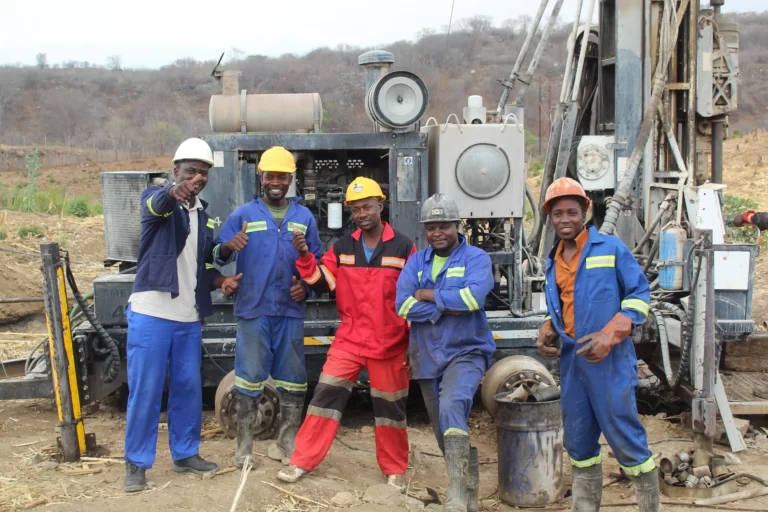
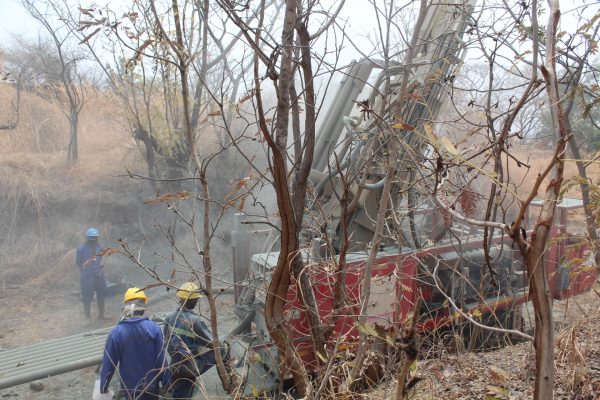
BELARUSIAN and Chinese miners have invaded the internationally acclaimed Musangano Lodge in Manicaland’s Mutasa district to prospect for gold and other minerals.
The property is owned by a German national, Birgit Klein Alterkamp and is protected by Bilateral Investment Protection and Promotion Agreement (BIPPA).
Alterkamp has now dragged Belarusian and Chinese companies Zim Gold Fields (ZGF) and Young Tech Engineering (YTE) respectively to the High Court to stop them from disrupting her business operations.
The High Court in Mutare ruled in her favour and interdicted ZGF and YTE from continuing with mining operations.
But ZGF and YTE challenged the ruling at the Supreme Court, and the matter is yet to be heard.
Alterkamp told The Standard that the mining operations impacted negatively on their hospitality business.
“On May 5, 2022, we were approached by a company named YTE which was contracted by a company named ZGF apparently involving Belarusian and Chinese interests, claiming to have a special grant from the Zimbabwean government to conduct mining of alluvial gold and other minerals,” Alterkamp said in a statement seen by this publication.
“A portion of the claim area is within our property bordering Mutare River. ZGF and YTE expressed the intention to mine on our property.”
“In one of the letters, ZGF and YTE stated that we had verbally given them the permission to mine on our property which is false and we had stated that the environment impact assessment (EIA) had not been done which is a requirement to the laws of Zimbabwe. ZGF and YTE replied stating that they do not need an EIA,” she said.
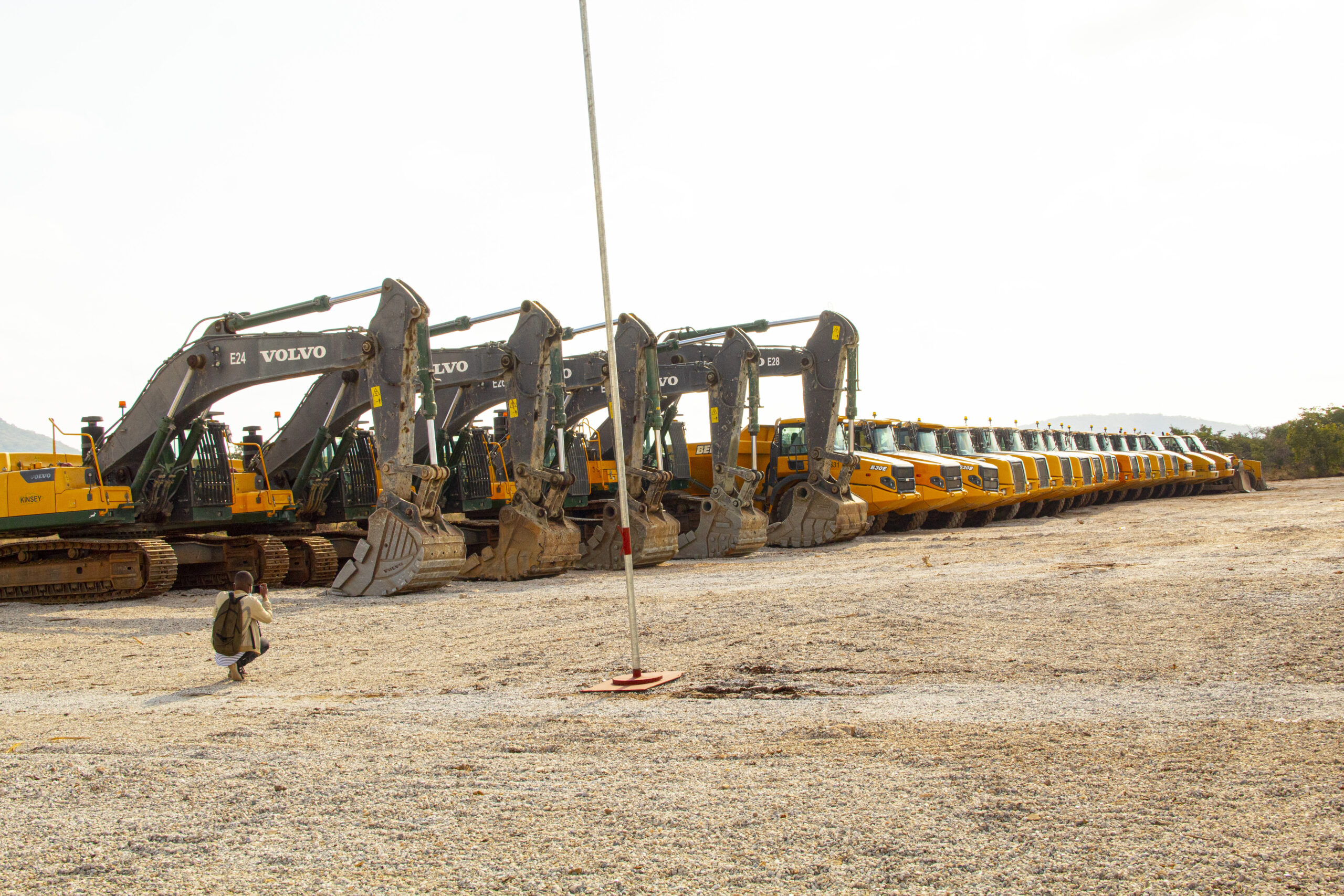
According to Alterkamp, on July 8, 2022, ZGF and YTE deployed heavy machinery and started carrying out mining activities on the properties adjacent to the lodge.
“They had four excavators and three tippers operating 24/7,” she said.
“The noise produced by this heavy machinery disturbed guests at Musangano Lodge.
“On August 29 we received a letter around 12pm stating mining activities within our property.
“ZGF/YTE entered our property at around 2pm on August 29, 2022 with four excavators and three tipper trucks.
“They engaged in the opening of deep casts.”
This forced Alterkamp to file an urgent High Court application.
An interim interdict directing ZGF and YTE to stop mining operations was issued on September 1 by the Mutare High Court.
“This was effected on Thursday 1 September in the early evening when the heavy machinery was withdrawn from our premises. Since then ZGF/YTE have submitted various objections, our lawyer’s submitted applications countering the above,” reads the statement
“After submitting an appeal at the Supreme court to suspend the interim interdict ZGF/YTE returned on September 6 with even greater force and speed, quite apparently to maximize the mining activities and to utilize each minute while using fine-tuned legal steps to prevent ZGF and YTE from being stopped operating.”
Land under BIPPAs is exempt from invasions.
However, during the fast track land reform programme a number of farms under BIPPA were invaded.
In 2020, government announced that it would offer land back to two categories of farmers who were dispossessed under land reform.
Under Section 295 of the Constitution, farmers under BIPPAs and indigenous farmers must be compensated for land seized during the land reform exercise.
According to the Ministry of Foreign Affairs and International Trade, Zimbabwe has ratified at least 12 such agreements with countries such as South Africa, Germany, Denmark, Netherlands and Switzerland, among others.
SG 90% AND ABOVE US$51.06/g
SG ABOVE 85% BUT BELOW 90% US$50.25/g
SG ABOVE 80% BUT BELOW 85% US$49.71/g
SG ABOVE 75% BUT BELOW 80% US$49.17/g
SAMPLE BELOW 10g BUT ABOVE 5g US$48.37/g
FIRE ASSAY CASH US$51.06/g
NB: Fire Assay cash price is for gold above 100gs and no sample is deducted.
For FireAssay Transfer price, a sample of not more than 10g is deducted
2% royalty is charged on all deposits (Small-scale Miners)
5% royalty is charged on Primary Producers
Cash available. Fidelity Gold Refinery prices will be changing daily in relation to world market prices.
Speaking at ZECSA’s inaugural Annual General Meeting and Stakeholders Workshop on Friday, the Association’s President Mrs Charity Chikuni said the establishment of ZECSA was to respond to a call by the public to come up with a solution that works in coming up with an energy and power industry that has world-class standards.
“The formation of ZECSA is aimed at solving the challenges that sustain the economy of Zimbabwe. Every economic activity depends on power and it is our mandate to protect and promote behaviour that endures the availability of power at all times.
“To our credit, we are the ones who have bestowed our labour to infrastructure development that facilitate power generation and power distribution. As an association we responded to the call of the public by creating ZECSA,” Chikuni said.
Speaking at the same event, Zimbabwe Energy Regulatory Authority (ZERA) Engineer Samuel Zaranyika commended the formation of ZECSA saying the convergence of contractors helped establish world-class standards in the power and energy industries. He said this will help curb accidents, theft and vandalism.
Zaranyika said the formation of the organization will help ZERA in registering all contractors in the country.
He alluded that as many opportunities are being built in the energy industry, the establishment of ZECSA will help the government and ZERA’s vision to see electric uptake going to 100 per cent from the current plus or minus 60 per cent.
“Contractors should adhere to standards, to minimize accidents, disasters and theft in the power industry.
“Contractors should be well conversant with standards. Let us uphold all the standards, we are in the process to call on Zimbabwe Electricity Transmission and Distribution Company (ZETDC) to post their standards to ensure that contractors are conversant to standards. This year alone the country recorded more than 60 accidents. A minimum of 3 people per month are dying due to accidents and most of these accidents can be avoided.
“We are going to be registering each and every contractor in the country.
“There are many opportunities for contractors, we have what is called energy transition. The rise of new energy that can be connected to the national grid, for example, solar projects among others. These projects will require contractors and standards should be our motto.
“Due to the popularity and rise of Electric Vehicles (EVs) as ZERA, we actually bought an EV in 2019 to test it and feel the future of the energy industry. ZERA has put 3 EV charging units across the country and we have realized that charging stations need to be installed throughout the country, that’s an opportunity for all contractors.
“We expect Zimbabwe to have an uptake of electricity of up to 100 per cent, these can be achieved when ZECSA adheres to set standards. We would want to adhere to standards as much as possible,” Eng Zaranyika said.
Zimbabwe Electricity Supply Authority (ZESA)‘s Webster Micho was delighted with the establishment of ZECSA and said it has a long way to build and mould electric Suppliers and contractors of integrity.
“As we advocate for sustainable business practices which is the theme of this event, the founding of ZECSA makes us happy to address the concerns of the contractors and suppliers as there will be increased interaction. The founding of this association will improve coordination. ZESA requires contractors and suppliers of integrity. With the continued interaction with ZESA, we would want to come up with a policy with world-class electricity installation standards,” Webster said.
Speaking at the AGM ZECSA Vice President Ms Pheneous Munemo said there was a need for ZECSA to adhere to standards to create a sustainable industry and reduce accidents and theft.
“There is a need for us to follow standards, we need as ZECSA to be able to familiarise with the standards that we currently have and help to improve them,” she said.
The Ministry of Finance and Economic Development is proposing measures that will see half of the mining royalties being paid in minerals to store value as well as get the real tax value.
Anerudo Mapuranga
There are fears that mining companies have been understating the real sales they would have made from minerals thereby fleecing the country of the much-needed foreign currency. The government, therefore, might be attempting to get its maximum tax by collecting revenue in minerals.
In a letter written to the Ministry of Mines and Mining Development, Permanent Secretary in the Ministry of Finance George Guvamatanga said the Finance Ministry is proposing to get part of the revenue in minerals because they carry no credit or counterparty risks.
“The Treasury is concerned that the country does not have reserves of the minerals, which ‘serve as a source of trust in a country given that they carry no credit or counterparty risks,” Secretary for Finance George Guvamatanga said.
Deputy Minister of Mines and Mining Development Hon Dr Polite Kambamura said the idea by the government was to get the maximum benefit from mineral taxes.
“The whole idea by the Ministry of Finance is that they want to store value of our royalty,” Dr Kambamura said.
Mineral royalties are one of the oldest forms of mining taxation and were initially introduced to extract economic rents from mining. Over time, the royalty regime has become more complex as it was identified as an important policy instrument that can achieve more multi-faceted outcomes.
SG 90% AND ABOVE US$50.54/g
SG ABOVE 85% BUT BELOW 90% US$49.74/g
SG ABOVE 80% BUT BELOW 85% US$49.21/g
SG ABOVE 75% BUT BELOW 80% US$48.68/g
SAMPLE BELOW 10g BUT ABOVE 5g US$47.88/g
FIRE ASSAY CASH US$50.54/g
NB: Fire Assay cash price is for gold above 100gs and no sample is deducted.
For FireAssay Transfer price, a sample of not more than 10g is deducted
2% royalty is charged on all deposits (Small-scale Miners)
5% royalty is charged on Primary Producers
Cash available. Fidelity Gold Refinery prices will be changing daily in relation to world market prices.
Lithium Mining in Zimbabwe is on the rise with several projects in the exploration phase forecasted to kick-start production in 2023.
Zimbabwe has the largest lithium reserves in Africa and the fifth-largest deposits worldwide. It has the highest number of Lithium projects under exploration on the continent. Below is a comprehensive list of current lithium mines from the exploration phase to full-scale operations in no particular order.
Kamativi Mining Company (KMC) is rapidly spearheading its exploration drive to transform the former tin mine into one of the biggest spodumene and Petalite ore body in Zimbabwe.
Mining Zimbabwevisited Kamativi Lithium Mine to assess the progress and witnessed Diamond drill rigs drilling at different locations to delineate the potential deposit.
Between September 2021 and March 2022, Phase-one drilling commenced with 38 holes being drilled to the depth of 2140m. Phase-one drilling focuses on open-cast areas with shallow holes for Open Cast Mining.
Between April 2022 – June 2022, Phase-two drilling commenced and KMC managed to drill 28 holes of 5000m. The drilling was for underground mining and Mineral Processing research is still underway.
Phase-two detailed drilling of 100 holes of around 15000m is being carried out with detailed exploration for underground mining and resource report and feasibility study to be expected after drilling is completed.
To date, 4900m have been drilled from late September 2022 using the 8 rigs on site. Exploration is going to be upscaled by an additional 4 rigs which are expected to be on-site by early November 2022 (bringing the total number of rigs on-site to more than 12 rigs) in mid-November.
The type of lithium dominant at KMC
Preliminary sample results have shown encouraging results for the mine hosting high-grade lithium spodumene, petalite with the mine having the potential to become one of the biggest lithium producers in Africa.
Spodumene is an essential supply of lithium to be used in ceramics, cell phones and car batteries, medicine, Pyroceram and as a fluent substance.
With the rise and popularity of Electric Vehicles (EVs), spodumene has become the most important commodity in the world with nearly all battery producers looking for mines that can supply them uninterruptedly spodumene for the future of the transport sector.
Bikita Lithium Mine is Zimbabwe’s biggest lithium producer and is the home to the world’s largest-known deposit of the metal at around 11 million tonnes.
Bikita Minerals has been an active mining site for around 100 years.
For over 50 years, the mining and extraction of lithium minerals has been at the centre of Bikita Minerals’ activities. Today, Bikita Minerals is the World’s foremost supplier of the lithium mineral Petalite.
China Sinomine Resource Group, which acquired Bikita Minerals will invest US$200 million to build a plant and expand its existing mining operations.
Zimbabwe also has upcoming projects with the Arcadia lithium mine expected to start delivering lithium-containing minerals spodumene and petalite next year.
It is anticipated that Arcadia will be producing an average of 212,000 tonnes (t) of 6% spodumene concentrate, 216,000t of petalite concentrate, and 188,000 pounds (lbs) of tantalum per annum from Arcadia. The project is estimated to have a mine life of 12 years.
The project hosts greenstone rock units of Arcturus formation, a member of the Harare Greenstone Belt (HGB). It is housed within a series of stacker, petalite-spodumene bearing pegmatites, with an average thickness of 15m, in the HGB. The pegmatites extend up to 2.5km along strike.
The mineralisation at the Arcadia deposit is predominantly made up of petalite and spodumene, while the secondary minerals are eucryptite, bikitaite, lepidolite, and tantalite
Huayou, one of the world’s major producers of cobalt, last year completed a 422-million-U.S.-dollar purchase of the hard-rock lithium mine from Australia-listed Prospect Resources.
Shenzhen-listed Chengxin Lithium Group last year also acquired a 51 per cent interest stake in Sabi Star Lithium Mine in eastern Zimbabwe for 77 million U.S. dollars.
The company, listed on the Shenzhen stock exchange, spent US$76.5 million last September to buy 51% of MaxMind, which held claims.
Sabi Star Mine is expected to produce 1 million tonnes of raw ore and is currently constructing processing infrastructure. The recovery of the lithium will be via the floatation process which will include gravity separation circuits to also recover tantalite. At full operational capacity, the 1 million tonnes of ore will translate to 300 000 tonnes of lithium concentrate and 300 tonnes of tantalite-niobium per year.
The construction of the processing infrastructure will be in the region of US$130 million.
Sabi Star Mine will initially export lithium concentrates to China.
Also promising is the Shamva-based MIRRORPLEX (Pvt) Limited’s lithium project which is currently in the exploration phase.
The project which is postured to become Zimbabwe’s biggest hard rock lithium resource has the potential to grow into a world-class lithium mine with results from 240 Rock Chip samples taken from the exposed Bonnyvale pegmatite body at the Shamva Lithium Project providing high-grade lithium assay results up to 3.13% Li2O and surface sampling at the Loch Ness prospect revealing two more pegmatites containing high Li2O grades up to 4.82% Li2O.
Speculatively sitting on over 6 million tonnes of lithium highest grade ore, Mirrorplex is working on Stage two drilling consisting of reverse circulation to confirm mineralisation beneath Lochness North, South Bonny Vale and Hereford East and West as well as testing for extensions of mineralisation.
Another leading project is the Premier African Minerals-owned Zulu Lithium and Tantalum Project near Bulawayo.
Zulu Lithium and Tantalum Project is possibly the largest undeveloped lithium-bearing pegmatite in Zimbabwe, located 80 kilometres from Bulawayo.
In early August, Premier received US$18,1 million from Suzhou TA&A Ultra Clean Technology, as part of the marketing and prepayment agreement, which the two parties entered into in June this year.
Under the agreement, clean technology developer Suzhou TA&A agreed to purchase, in advance, spodumene concentrate six (SC6) worth US$34,6 million from Premier to enable the construction and commissioning of a large-scale pilot plant at the Zulu lithium project.
Prospect Resources currently owns a potential high-grade lithium deposit located approximately 8km north of the Arcadia Lithium project, the Step Aside Lithium project.
The prospectivity of this area is confirmed by positive historical regional stream and soil sample geochemistry results. The potential is centred on four mineralised pegmatites that are mapped within a meta-dolerite host rock. These LCT mineralised pegmatites run parallel to each other in a north-south orientation and have dip angles of approximately 40-45˚ to the west.
An early-stage exploration program is underway at Step Aside, with rock chip sampling completed and trenching and drilling activities set to commence in Q3 2022. This work is targeted to determine the potential extent by delineating the thickness and strike length of the sub-surface pegmatite.
According to the company’s half-year financial results for the year ended December 31, 2021, an exploration programme is underway.
Following an assignment agreement (Deed of Assignment) Galileo Resources entered with BC Ventures and Cordoba Investments Limited in January this year, the resources firm has the option to acquire a 51 per cent interest in BC Ventures by spending US$1,5 million on exploration. BC Ventures own the lithium project and two gold licences near Bulawayo through its wholly-owned Zimbabwe subsidiary, SinamateIa Investments (Private) Limited.
The Kamativi Lithium Project comprises EPO 1782, covering 520 km2, and lies on the Kamativi Belt directly adjacent to, and along strike from the historic Kamitivi tin-tantalum mine which operated from 1936 to 1994. The Kimativi Mine produced 37,000 tonnes of tin and 3,000 tonnes of tantalum ore from pegmatites, and in 2018 Chimata Gold Corp (Zimbabwe Lithium Company) announced a new JORC (2012) compliant Indicated Mineral Resource of 26Mt @ 0.58% Li2O within the Kamativi mine tailings, confirming that the mine contained significant quantities of lithium.
In June 2022, Galileo announced that it has started exploration works at the Kamativi lithium project.
Lithium discoveries in Zimbabwe
The Ministry of Mines and Mining Development and the Minerals Marketing Corporation of Zimbabwe list Areas of verified Lithium deposits in Zimbabwe are Goromonzi, Mudzi, Buhera, Bikita, Chegutu, Hwange, Harare, Insiza, Rushinga, Mutoko, Mutare and Hwange. However, Lithium continues to be discovered in various areas across the country. So far the mineral has been discovered in areas such as Mberengwa, Fort Rixon, Bindura, and Kadoma cementing the statement by veteran Geologist Mr Kennedy Mtetwa that “Zimbabwe is hamstrung by lack of exploration”.
SG 90% AND ABOVE US$50.46/g
SG ABOVE 85% BUT BELOW 90% US$49.66/g
SG ABOVE 80% BUT BELOW 85% US$49.13/g
SG ABOVE 75% BUT BELOW 80% US$48.60/g
SAMPLE BELOW 10g BUT ABOVE 5g US$47.80/g
FIRE ASSAY CASH US$50.46/g
NB: Fire Assay cash price is for gold above 100gs and no sample is deducted.
For FireAssay Transfer price, a sample of not more than 10g is deducted
2% royalty is charged on all deposits (Small-scale Miners)
5% royalty is charged on Primary Producers
Cash available. Fidelity Gold Refinery prices will be changing daily in relation to world market prices.
While Mashonaland Central Province Minister of State Senator Monica Mavhunga has been calling for the reopening of Mazowe Gold Mine to reduce issues of illegal mining, gold smuggling and unemployment in Mazowe, last week an illegal miner was killed by a rival gang for the control of the goldfields.
Anerudo Mapuranga
Senator Mavhunga was quoted by this publication saying, the reopening of Mazowe Gold Mine was of importance because many illegal miners were dying while seeking a decent living.
Speaking through its official Twitter handle the Zimbabwe Republic Police (ZRP) said a man named Avon was stabbed to death with an unidentified sharp object on the thigh by members of a rival group while illegally mining gold.
“Police in Mazowe are investigating a case of murder which occurred on 17/09/22 at Jumbo Mine Mazowe. The victim, only identified as Avon, was stabbed to death with an unidentified sharp object on the thigh by members of a rival group while illegally mining gold,” the Police said.
The vast Mazowe gold fields have several mines, with the parent one being Mazowe Mine owned by Metallon Corporation Ltd.
Mazowe Mine comprises Jumbo Mine but is currently under care and maintenance after Metallon Corporation was forced to close its mines in 2018 due to “unsustainable costs of running them without proper compensation for its proceeds from the government of Zimbabwe.”
The mine has 247 claims covering 2 939 hectares.
Zimbabwe’s mining sector, especially the extraction of gold, has lately been characterised by illicit leakages of gold and it is believed the establishment of gold centres could help restrict obscure movement of the yellow metal. The gold sector carries a huge potential for the Zimbabwean economy with small-scale miners producing about 60 per cent of gold receipts which has necessitated consistent efforts to support their production.
The Parliament of Zimbabwe needs to monitor and evaluate the impact of tax incentives as these hidden public expenditures deserve equal Parliamentary and public scrutiny as much as direct budget allocations, Chairperson of the Zimbabwean Caucus of the African Parliamentary Network on Illicit Financial Flows and Taxation Hon James Chidakwa said.
Sophia Takuva
Many mining companies in Zimbabwe like Great Dyke Investment, and Prospect Lithium Zimbabwe, among others, are listed under special economic zones (SEZ) where tax incentives schemes are included. The mining community has been raising red flags that tax incentives given to some mining firms will bleed the country of its much-needed foreign currency.
Speaking at the Zimbabwe Environmental Law Association (ZELA)‘s Champion MPs Capacity Building Programme with Zimbabwe Parliament Caucus on IFFs and Taxation Chidakwa said the country was confronted with a discourse of growing public demand for basic services such as health, education, water, power, food to mention a few. Therefore, optimizing public revenue, efficient and effective allocation and public spending is a necessity.
“How are we monitoring and evaluating the impact of tax incentives and are we doing a cost-benefit analysis? These hidden public expenditures deserve equal Parliamentary and public scrutiny as much as direct budget allocations. Apart from overly generous tax incentives, what are we doing to curb base erosion and profit shifting, aggressive tax planning by corporates and the wealthy to avoid paying a fair share of taxes in Zimbabwe despite generating substantial income from our economy? With festering informality, criminality, and corruption, how are we priming our role as Parliament to crank pressure on the executive to deliver on optimal tax revenue mobilization? While we focus on domestic initiatives to curb illicit financial flows, we must not lose sight of the big picture, the inequitable and sustainable global financial architecture that benefits developed countries as the primary destination for IFFs from Africa,” Hon Chidakwa said.
Chidakwa said, “Shifting focus from tax to debt. Do we need debt to finance public expenditure? Developed countries massively rely on debt to fund public expenditure, USA and Japan, are classic examples. Zimbabwe is facing a debt sustainability crisis. Debt servicing obligations, if honoured, will significantly thin much-needed investment in health and education. Think about it, allegedly US$70 million facilitation fees for the loan for Plumtree to Forbes border post highway, the Chinese loan from collateralization of platinum resources. The linkage between debt and IFFs is fundamental in that toxic and hidden debts, their repayment, exorbitant borrowing costs, and the principal, are a tax burden on future generations, thereby posing a huge threat to intergenerational equity, an important constitutional principle of public financial management. Transparency, public participation, and accountability, just like tax revenue, should underpin debt governance in Zimbabwe,” he concluded.
SG 90% AND ABOVE US$49.91/g
SG ABOVE 85% BUT BELOW 90% US$49.12/g
SG ABOVE 80% BUT BELOW 85% US$48.60/g
SG ABOVE 75% BUT BELOW 80% US$48.07/g
SAMPLE BELOW 10g BUT ABOVE 5g US$47.28/g
FIRE ASSAY CASH US$49.91/g
NB: Fire Assay cash price is for gold above 100gs and no sample is deducted.
For FireAssay Transfer price, a sample of not more than 10g is deducted
2% royalty is charged on all deposits (Small-scale Miners)
5% royalty is charged on Primary Producers
Cash available. Fidelity Gold Refinery prices will be changing daily in relation to world market prices.
To provide the best experiences, we use technologies like cookies to store and/or access device information. Consenting to these technologies will allow us to process data such as browsing behavior or unique IDs on this site. Not consenting or withdrawing consent, may adversely affect certain features and functions.
Functional
Always active
The technical storage or access is strictly necessary for the legitimate purpose of enabling the use of a specific service explicitly requested by the subscriber or user, or for the sole purpose of carrying out the transmission of a communication over an electronic communications network.
Preferences
The technical storage or access is necessary for the legitimate purpose of storing preferences that are not requested by the subscriber or user.
Statistics
The technical storage or access that is used exclusively for statistical purposes.The technical storage or access that is used exclusively for anonymous statistical purposes. Without a subpoena, voluntary compliance on the part of your Internet Service Provider, or additional records from a third party, information stored or retrieved for this purpose alone cannot usually be used to identify you.
Marketing
The technical storage or access is required to create user profiles to send advertising, or to track the user on a website or across several websites for similar marketing purposes.