Home Blog Page 365

Premier African Minerals completes Zulu Lithium DFS funding

0

Premier African Minerals saw its share price fall 4.5% to 0.3p in late afternoon trading on Tuesday after the company announced the completion of its Zulu Lithium Definitive Feasibility Study (DFS) funding.

Premier African Minerals reported its subscription agreement with Suzhou TA&A Ultra Clean Technology to raise £12 million prior to expenses at an issue price of 0.4p per new ordinary share in order to continue its Definitive Feasibility Study (DFS) at the company’s Lithium and Tantalum project.

The news followed Premier African Minerals’ announcement regarding the DFS funding on March 8 2022, in which CEO George Roach welcomed the subscription from Suzhou TA&A:

“I am delighted to accept this Subscription from Suzhou TA&A, and particularly that this makes available to Premier a wealth of expertise in this industry whilst aligning future offtake and mine development with Yibin Tianyi Lithium Industry Co. Ltd.”

“[The company] is a major producer of Lithium Hydroxides, financier and take-off partner for the Manono Lithium and Tin project and who have completed long term spodumene off-take agreements with Pilbara Minerals Limited.”

“I look forward to welcoming a new board member who will be nominated by Suzhou TA&A and active involvement from Suzhou TA&A in our DFS, particularly in the area of test work and flow sheet development.”

The company today announced the pending appointment of geologist Dr Luo Wei to its board of directors for Premier African Minerals, Zulu Lithium Mauritius Limited and Zulu Lithium Private Limited.

CEO George Roach commented positively on the outcome of the DFS funding in the reported update.

“I reiterate my welcome to our new shareholders and to Dr Lou Wei, and express my appreciation for the confidence in Premier and Zulu,” said Roach.

“Premier has already taken steps to expedite issues associated with resource definition needed to complete mine optimisation and test work and we will continue to accelerate all aspects of the DFS underway.”

First African Career Gemmologist capped

0

Zimbabwean engineer Clever Sithole  was capped as the first Career Gemmologist from Africa. He studied with the World Gem Foundation after obtaining two scholarship fundings from the Tino Hammid Memorial Gemmological Scholarship Foundation and the W. E Hunn Memmorial Gemmological Scholarship Foundation. Eng Sithole completed his studies in Spain where he completed training at the Spanish Gem Academy to become the first career gemmologist in Africa including the Diamonds & Coloured Stones professional endorsement from the same institution.

The World Gem Foundation provides quality and affordable gemmological training to students, jewellers and professional gemmologists. Currently there are fourteen national and regional gem academies worldwide allowing students to study locally but to be recognized internationally. They offer three diploma programs (Career Gemmologist, Diamond Professional & Coloured Gemstone Professional) and an array of courses ranging from basic through advanced gemmology to gem identification, diamonds and coloured gemstones.

The World Gem Foundation is the publisher of the magazine Gemmology Today, and Eng. Sithole is featured on the front cover of the latest edition published in January 2022.

Tharisa acquires Karo platinum project in Zimbabwe

0

Platinum producer Tharisa Plc has acquired a controlling stake in a platinum group metals (PGMs) project in Zimbabwe which will eventually double its output, it said on Thursday.

Tharisa exercised an option to increase its stake in Karo Mining Holdings Limited from 26.8% to 66.3% in an all-share deal valued at $27 million.

The Karo project, expected to start producing in two years, will produce 150,000 ounces a year of PGMs in concentrate in its first phase, the company said.

Prices of PGMs including platinum and palladium have surged since Russia’s invasion of Ukraine, as Western sanctions on Russia squeeze supply of the metals. Russia produces 25-30% of the world’s palladium.

“With the challenges and uncertainty to the supply chain of these vital precious metals, a new short-dated source of primarily platinum and palladium metals is a significant risk mitigant for global users and provides security and certainty of supply,” said Tharisa CEO Phoevos Pouroulis.

The Karo project’s resources are split between platinum (45%), palladium (42%), rhodium (4%) and gold (9%).

Reuters

New Mines and Minerals Act needed to end chaos in sector

0

Mines and mineral activities in Zimbabwe are currently being regulated by the Mines and Minerals Act of 1963, which has proved to be an obsolete piece of legislation out of touch with contemporary activities as well as the nature in the current industry.

This opinion piece serves to depict the deficiencies that have grown over the years in the colonial legislation making it inadequate to regulate the current mining landscape, with object to canvass for an all-encompassing legislation that speaks to the exigencies of the time in the industry with the aim of fostering sustainable mining in line with the values of an open democratic society, human dignity, equality and freedom.

The prevailing presumption among the legal minds in the mining fraternity is that legislation was modelled in a manner that was meant to safeguard the interests of the colonial elite and those in the echelons of power.

The attainment of independence in Zimbabwe in 1980 saw the country adopting democratic values in which transparency and equality was sought.

The post-independence period sought a new era for the judicious exploitation of the national endowments for the benefit of the citizenry.

This became the core of governance in the mining industry.

There have been several attempts by the legislature to cure the legislation through amendments but the legislation has remained inadequate in nature to govern the developments in the industry.

The biggest pitfall of the Mines and Minerals Act of 1963 is that it lacks statutory measures and provisions which can prevent mineral revenue leakages, corruption, vague mining licensing and poor mining taxation and royalty system.

As has been alluded before, the Act was crafted particularly targeting big mining conglomerates which existed during the time.

The empowerment drive of 2000 saw small players who are mainly locals and Chinese taking the centre stages.

Unlike the former conglomerates which had formal and auditable systems, the small scale player coming in saw the increase in revenue leakages, corruption and a host of other mining industry economic ills manifesting.

The legislature reacted to these misfortunes through the Mines and Minerals bill of 2015.

Among other aims, the Bill sought to plug numerous revenue leakages and corruption which are bedevilling the industry which the 1963 Act had failed to deal with.

However, the disheartening legislative development is that the Bill remains a pipe dream as it is yet to come into law since 2015.

What is discouraging is the lack of urgency and reluctance by the legislature and Executive in promulgating and subsequently enacting it into law.

Revenue leakages and corruption continues unabated in the mining industry. One would wonder why it has taken the executive such a long time to enact the Bill despite the government mantra of “US$12bn mining economy by 2023” and  “growing the national revenue base and plugging leakages in the mining industry”.

One would wonder the sincerity of the executive in that call, or whether the executive has become a player-regulator who is unwilling to blow himself the whistle.

The new Bill contains a cocktail of measures aimed at addressing a myriad of challenges in the Mining sector.

Section 14(1) of the new Bill provides for a cadastre system, which means the use of manual or electronic management and recording of processes that create mining rights and titles.

The cadastre system will be an efficient way of management of mining activities in the sense that it will remove the corrupt human element and provide a tool which will make profiling and compliance by operating licence holders easy.

If properly and effectively implemented, the cadastre system will improve the public’s access to data or information about mining licences, a legal provision which is not provided for by the current Mines and Mineral Act.

However, the legislature should fine-tune the provision which violates the separation of power principle through which our constitution is founded.

The Bill provides that the Permanent Secretary of Mines will double as the registrar of cadastre system and as the chair of Mining Affairs Board.

This undermining of the separation of power principle will negate the freedom, tenor and purports of democracy which the masses of Zimbabwe envisaged through the yes vote in which brought the 2013 democratic constitution.

The same scenario also negates the principles of corporate governance as it creates room for abuse of power and corruption in awarding mining licenses. An independent body should assume such responsibilities.

Section 19(1) of the new bill states that, “Where two or more competing applications are received in respect of the same area or the same overlapping areas from two or more persons on the same business day, the application which is first received on that business day shall be deemed to have priority over any other”

This is a sound, self-executing, progressive legal provision meant to clamp down the discretion of mine officers which is being corruptly abused and perpetuating disputes and unnecessary clogging the courts.

Under this provision the serving of licenses will be on a first come first serve basis. Double licensing and allocation has been the cause of machete wars and unrest in the industry. However, the legislature needs to have made this provision in retrospect to deal with the already existing disputes.

The adoption of the use it or lose it principle in the new Mines and Minerals bill is one of the profound provisions.

However, the government needs to take into account the principle of sustainable mining. Sustainable mining principles provide that mining must be done progressively taking into account the need for future generation and industry.

The use it or lose it principle provides that the government can repossess a mining licence which was acquired for speculative purposes.

The principle will force mining companies to be productive and contribute to the national mineral output.

Section 27(2) provides that an exclusive prospecting licence shall not entitle the prospector to remove or dispose of any mineral, mineral oil, nuclear energy mineral or natural gas discovered within the area specified in the licence, except for the bona fide purpose of having it assayed or for 25 determining its nature and unless the Cadastre Registrar has given prior written permission for it to be removed or disposed of”

This section plays a very critical role in curbing the ongoing mineral resource leakages which is taking place in the country on alluvial mining of the country’s precious minerals such as diamonds.

It is a public secret that some very big mining companies are conducting mining operations under the auspices of exploration which section 27(2) wants to cure.

Transparency and accountability were some of the thorny issues in the mining industry, however under the new Bill mining giants will now be obliged to be listed in the stock exchange, which is a positive development in the promotion of accountability, transparency and curbing illicit financial flows ravaging Zimbabwe’s mining sector.

Section 85B of the Bill states that, “Any owner or occupier of ground who is injuriously affected by the exercise of any rights under any mining rights or title granted under this Act shall be entitled to recover compensation from the person to whom the mining rights or title was granted or in whose favour the mining rights or title was made in such amount as may be agreed upon or, failing such agreement, as shall be determined by the Administrative Court”.

This section in the Bill is progressive because it provides compensation caused by mining activities which is in line with the law of damages.

However, the challenge with this particular provision is that it fails to make it mandatory for any victim who is displaced due to mining activity to claim compensation before being relocated. Mining companies can take forever to compensate displaced inhabitants and the inhabitants being on the weaker side of the bargain will be vulnerable. The Bill should unequivocally provide for the compensation before removal so as to protect the right to shelter and human dignity.

We have thousands of Zimbabweans being relocated without compensation by mining companies and up to day they have never received any compensation, a development which is unjust and unfair in a democratic society based on human dignity.

Zororai Nkomo is a Zimbabwean journalist, Lawyer and Environmental Justice Activist, he writes in his own personal capacity. He can be contacted on [email protected]

Gold glitters as exports double

0

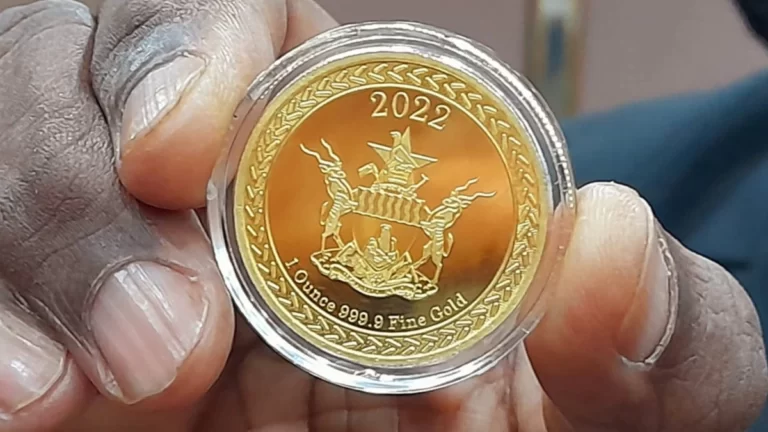
Zimbabwe’s gold export revenue more than doubled in the month of February  to US$134,99m  from US$66,18m achieved in the prior comparative period on the back of increased output and firming  prices, Business Times can report.

Gold delivered to the country’s sole buyer and marketer of the yellow metal, Fidelity Printers and Refiners (FPR) soared 92% to  2,26 tonnes from 1,178 tonnes delivered in the same period last year.

FPR acting general manager Peter Magaramombe told Business Times that mining incentives pushed volumes in the gold sector.

“This year gold export receipts were off to a strong start  due to firm commodity prices on the international market.

“We hope  to continue riding on this purple up to year end,” Magaramombe said.

The country’s gold deliveries also jumped 137% to 5,131 tonnes during the first two months of 2022 from 2,168 tonnes during the comparable period due to improved mining policies.

The total gold delivered to FPR in January 2022 stood at 2,867 tonnes  at an average price of US$58 410 per kilogramme  against  January’s output of 0.997 tonnes at an average of US$60 002 per kg.

The small scale miners delivered 2,05 tonnes in January this year from 0,355 tonnes  delivered during the same period last year while large scale producers  delivered 0,814 tonnes  against  0,642 tonnes.

The Chamber of Mines of Zimbabwe  chief executive officer Isaac Kwesu  said there was need for improved production to capitalise on the current strong mineral prices.

“The firm commodity prices continue to be good for miners but there is a need to ramp up production to ensure that we have capitalised on this current wave of very good   prices,” Kwesu said.

He said though the output is fairly good, there was still a long way to go to achieve an average of 8,3 tonnes per month to reach 100 tonnes a year.

The country’s gold export receipts rose by 42% to US$1,7bn last year from the US$1,2bn earned in 2020 due to improved gold output and firm prices.

Gold deliveries to FPR soared 55% to record 29.6 tonnes   in 2021 from 19,05 in 2020 on the back of timeous payments and incentives given to yellow metal producers.

The 33,4 tonnes of gold delivered in 2018 is the best output ever, followed by 29,6 tonnes last year and 29,4 in 2018.

Gold is the third largest foreign currency earner after platinum and diaspora remittances.

However, the yellow metal has in the past been smuggled due to payment delays by FPR and low prices compared to those obtained on the international market.

Authorities have rectified the problem with payment being timeous and prices at par with those on the international markets.

In addition, the central bank has also scrapped taxes on small scale miners to encourage deliveries through formal channels.

Experts say there is a need to review retention levels for the large scale miners and capacitation of small scale miners to ramp up production.

On Tuesday, the international gold prices stood at US $61 665 per kilogramme and Fidelity was paying above US$61587  per kg to those who delivered above 20kg.

The government has moved to provide equipment in gold centres to move towards helping the attainment of US$4bn gold export revenue.


Miners expect big rally in commodities

0

Zimbabwe’s mining sector is anticipating to benefit from elevated commodity prices  in the international market  this year with the Russia-Ukraine conflict playing a more prominent role in driving up prices.

Export receipts are expected to hit US$6bn  this year as sanctions are expected to restrict Russia minerals to be sold outside its borders thereby creating huge demand for Zimbabwe’s minerals, according to Chamber of Mines of Zimbabwe CEO Isaac Kwesu.

“The geopolitical conflict between Russia and Ukraine is anticipated to somewhat pull down the world economic growth from the original forecasts with potential consequences of price hikes in various commodities and the impact will invariably result in high energy and food prices,” Kwesu told Business Times.

He said the crisis was having “positive spinoffs” on metal prices with gold, PGMs and some base metals such as nickel already surging above 2021 averages.

“High uncertainty to propel precious metal prices for the greater part of 2022, precious metals will find support as a safe haven on the back of the crisis in Europe. We anticipate gold prices to trend towards the all-time high reached in 2020,” Kwesu said.

He said palladium prices were also expected to reach their previous peaks as deficits emerge from constriction of supply from Russia- the world’s largest producer.

Platinum prices will also trend up with the increasing fungibility with palladium.

Coal prices are expected to slightly improve as Russia’s supply to Europe was restricted, Kwesu said.Base metal prices are projected to hit peaks on the backdrop of political risks and supply chain constraints.

Low metal inventories and strong consistent demand in the economic recovery has been supporting prices.

As Russia and Ukraine are global leaders in metal markets such as nickel, copper, iron, the ongoing conflict has the potential to spur supply bottlenecks and this is expected to push up metal prices, Kwesu said.

In its latest economic outlook bulletin , the Chamber of Mines said Zimbabwe’s mining sector was set to benefit from global developments in 2022 and favourable commodity prices were expected to spur the mining sector’s performance.

The State of the Mining Industry Survey conducted by the Chamber of Mines last year indicates that mining companies are ramping up production in 2022, with mineral exports expected to benefit from favourable prices.

The gold and PGMs sectors are the main growth pillars for the mining sector in 2022.

“The mining industry is expected to generate approximately US$5,5bn in 2022, underpinned by strong performance in gold with US$2,1bn, palladium with US$1bn and diamond with US$0,8bn,”reads part of the Chamber’s report.

The downside risks to the above projections include an erratic power supply (resulting in production disruptions), capital shortages, exchange rate volatility and widening parallel exchange market premiums and foreign exchange constraints, it said.

The global economy which was projected to grow by 4,5% in 2022, is set to be affected by the geopolitical conflict between Russia and Ukraine which has already affected value chains across the world.

The conflict will have far-reaching global political and economic consequences, particularly in the first half of 2022.

Russia is the second-largest oil producer and supplies over 45% of Europe’s oil and natural gas.

Russia also supplies 6% of the world’s aluminium and is a major player in PGMs markets producing 38% and 10% of global palladium and platinum, respectively.

This means that sanctions that have since been imposed on Russia by the US, British, and other European countries, which include removal of Russian banks from Society for Worldwide Interbank Financial Telecommunication (Swift) and a suspension of the Nord Stream 2 natural gas pipeline, would destabilise commodity markets.

Although there are no direct sanctions on commodity producers, the removal of some Russian banks from the SWIFT payment system will massively complicate international trade finance.

Inflation, a major risk, is anticipated to remain high in 2022, partly due to fiscal and monetary policies put in place to alleviate the effects of Covid-19 and the rallying commodity prices.

Additional inflationary pressures are expected to emanate from elevated food and oil prices as well as associated lagged pass-through effects, particularly in developing economies.

Global economies still face significant threats of resurgent new Covid-19 variants and reduced vaccine efficacy against new highly transmissible variants implies that the evolution of the pandemic remains uncertain.

With potential intermittent outbreaks, supply-chain bottlenecks across different sectors will likely persist in 2022, weighing down the prospects of developing economies, most of which are heavily dependent on commodity exports.

In 2022 gold price is expected to remain elevated above US$1,900/ounce throughout the year.

“With the geopolitical tension, gold still will be a main safe haven asset. Meanwhile, the gold price has already responded to the unfolding crisis in Europe, surging above the US$2,000/ounce mark during the period of conflict, from an average of US$1,750/ounce in December 2021.

“Gold will also have support from high demand from central banks and jewellery sectors. In the second half of 2022, we anticipate the gold market to revert to macro drivers such as real rates, U.S. Federal Reserve policy as well as the growth outlook. We, therefore, expect the gold price to taper off at prices above the 2021 average,” the Chamber said.

A miner who preferred anonymity said the mining sector anticipates to grow and reach the government target of 8%, with attendant benefits including improved foreign currency receipts and other contributions to the economy.

Notwithstanding the buoyant outlook and inherent potential of the mining industry, the mining sector is not immune from the systemic challenges that continue to affect the economy, with other specific challenges impacting negatively on mineral performance including inadequate foreign currency allocations and loss of value on the surrender portion.

“We expect the government to remove various bottlenecks and capitalise on the current commodity price boom to maximise on the situation,” he said.

In the outlook, mining experts said that there is a need for the government to work closely with the private sector to address all structural bottlenecks, improve the operating environment and unlock the full potential for the mining sector.


Business Times

PPC projects 8% sales volumes growth

0

Regional cement maker, PPC Limited, expects sales volumes to increase by between 4% and 8%  with Zimbabwe and Rwanda being the key contributors.

In a trading update, PPC said Zimbabwe’s operations  will record a double digit volume growth.

“PPC expects total group cement sales volumes for the twelve months ending March 31, 2022 to increase by 4%-8% year-on-year, with double digit volume growth in Zimbabwe and Rwanda.”

However, this projection is much lower than that of the cement manufacturer’s previous financial period which had cement sales volumes at 11% – 15%.

“PPC Zimbabwe continues to trade well and ahead of expectations. For the twelve months ending 31 March 2022, PPC Zimbabwe’s cement sales volumes are expected to increase by 21%-25% year-on-year,” PPC said.

PPC said increased retail demand, increased sales to concrete product manufacturers, and support from Government-funded projects would push growth in Zimbabwe.

In the materials category the company reported a recovery in its readymix and aggregates businesses, due to an increase in construction activity within the regions it operates in. Thus, PPC expects sales volumes for the two materials to increase, upping revenues for the division.

“For the twelve months ending 31 March 2022, PPC expects ready mix volumes to increase by 5%-10% year-on-year, while aggregates volumes are expected to increase by 10%-14% year-on-year,” PPC said.

PPC, however, expects its fly ash sales volumes to decrease by 14%- 18% due to an unusually strong performance in the prior year due to lack of slag in the market.

Overall the company has a positive outlook for the following financial year with the company  saying: “PPC is well-positioned to benefit from growing cement demand in the territories it operates. The group remains focused on improving operational efficiencies to ensure financial sustainability through all demand cycles.”


Business Times

Mining Zimbabwe Shines at Mining Excellency awards

0

Mining Zimbabwe has been named the Best Mining Media House in recognition of its stellar coverage of Small-scale and Artisanal Miners in Zimbabwe.

Prince Sunduzani

The Timelison Media-owned publication was bestowed with the accolade in the ASM media awards category at the inaugural Mining Industry Excellence Awards ceremony held at the State House yesterday, where President Emmerson Mnangagwa was the Guest of honour.

The awards, organized by the Ministry of Mines and Mining Development were aimed at honouring mining and related institutions that excelled in the previous year and made a significant contribution to the expansion of the mining sector.

Timelison Media’s founder and Managing Director said the award was a great honour and represented the highest recognition of the publication’s work by the Mining industry captains.

He pledged the magazine’s continued support of the ASM and the Mining industry at large.

He said the magazine will continue providing mining intelligence that is vital in growing the mining sector.

“Thank you to the Ministry of Mines and Mining Development for the opportunity and recognition for Best Media Coverage of the Artisanal and Small-scale Mining Industry in Zimbabwe. As Mining Zimbabwe, we are committed to empowering the fast-growing Small-scale mining industry, highlighting its challenges as well as putting forth expert solutions. Over the years we have managed to demystify the misconception that Artisanal and Small-scale Mining is only associated with dirty violent men, which has seen us grow to be the leading, factual, and most reliable mining platform in Zimbabwe,” he said.

He said to advance the Zimbabwe story, the publication will attend the continent’s biggest mining meetup, Mining Indaba, in Cape Town where the magazine will be displayed to tell a story of Zimbabwe’s growth in mining and also attract partners in growing the sector in line with the Government’s Economic Vision.

“There is a global misconception that Zimbabwe is a country with little to no Mining activity. It is in this light we decided to partner with Mining Indaba to tell the true Zimbabwean Resources story.

“This issue aims to certify that Zimbabwe is a momentous contender with a fully functioning mining economy that is fully backed by world-class equipment suppliers, service providers, highly qualified personnel and a government bent on seeing a thriving mining industry. The May Magazine will highlight the country’s ability to instil confidence for investors to just bring their personal belongings and Capex, as the rest is available locally,” said the director.

It is also without a doubt an opportunity for the country to showcase the abundant mineral resources and investment opportunities available in the Zimbabwean Mining sector. Our May 2022 Mining Zimbabwe magazine will be placed on the Media Centres at Mining Indaba in Cape Town creating an opportunity for Zimbabwe to showcase its abilities to World-Class mining Investors.”

Giving a keynote address, President Emmerson Mnangagwa commended mining industry players for making significant strides toward the achievement of an upper-middle-income economy by 2030.

The main categories and winners were as follows :

  • Best Artisanal And Small-Scale Miners Media Awards: Mining Zimbabwe.
  • Minister’s Award, Tsing Tsan group.
  • Gold producer of the year – Freda Rebecca Gold Mine.
  • Most improved gold producer – How Mine.
  • Ferrochrome producer of the year- Afrochime.
  • Coal producer of the year- Zambezi Gas Pvt Ltd.
  • Coke producer of the year- South Mining Pvt Ltd.
  • PGMS producer of the year- Zimplats Pvt Ltd.
  • Diamond producer of the year – Rio Zim Murowa Diamond.
  • Diamond exporter of the year – ZCDC.
  • Corporate Social Responsibility Programme of the year- Mimosa Mining Company.
  • Mining Media Award – Alpha Media Holdings.
  • Best Gold buyer of the year – Better Brands.
  • Best community and social responsibility programme- Masvingo people living with disabilities in Mining.
  • Small scale gold producer of the year- Mag Mac Mine Pvt Ltd.
  • Most improved small scale gold producer of the year- Power Investments Pvt Ltd.
  • Small Scale Gold Producer Of The Year: Mag Mac Mine (Pvt) Ltd.
  • Most Improved Small Scale Gold Producer Of The Year: Ultra-Power Investments (Pvt) Ltd.

The 2021 Inaugural Mining Excellence Awards winners

0

The 29th of March 2022 saw the debut of the Ministry of Mines and Mining Development‘s Mining Excellence Awards.

The colourful ceremony saw the gathering of the Mining Industry’s finest players who were rewarded for excelling in different categories of the mining sector. Timelison Media‘s Mining Zimbabwe got the Best Artisanal and Small-scale Mining Media Award at the ceremony held at State House.

High-level attendees included President Mnangagwa, Vice President Chiwenga, Minister of Mines and Mining Development and his Deputy, ZMF President Ms Henrietta Rushwaya, Mines Portfolio Committee chairman Hon Edmond Mkaratigwa, MMCZ GM Mr Tongai Muzenda, Fidelity Gold Refiners General Manager Magaramombe among others.

The following were the winners of the 2021 Inaugural Mining Excellence Awards.

MINISTER’S AWARD : TSINGSHAN HOLDINGS

TSINGSHAN HOLDINGS

Tsingshan Group through its subsidiary Dinson Iron and Steel Company (DISCO) is currently establishing a Carbon Steel Plant in Chivhu-Mvuma. The Carbon Steel Plant is set to be the largest in Zimbabwe and possibly in the region, with its establishment undoubtedly going to greatly impact on the human settlement patterns in the area. The steel plant will produce 1.2 million tonnes of carbon steel per annum. It links with projects in Dinson Colliery in Hwange (Coke Project) and Afrochine Smelting in Selous (Ferrochrome Project) in line with the MoU signed with the Government of Zimbabwe after the President’s visit to China in 2018.

  1. GOLD PRODUCER OF THE YEAR: FREDA REBECCA GOLD MINE (PVT) LTD

 Freda Rebecca is a Leading Gold Producer in Zimbabwe and a key contributor to the USD 4 Billion Gold Industry by 2023. Freda Rebecca Gold Mine specializes in the extraction, purification and value addition of gold.

  1. MOST IMPROVED GOLD PRODUCER OF THE YEAR AWARD: HOW MINE

How Mine is situated in the Bulawayo Greenstone Belt. How Mine has been in operation since 1942 and has produced over 1.1 million ounces of gold to date. How Mine is reaping the benefits of a USD5 Million Investment in a Shaft Sinking Project commissioned in 2020. How Mine is currently undertaking exploration, both on surface and underground, inorder to open up the resource base for expansion.

  1. BEST SAFETY HEALTH AND ENVIRONMENT PROGRAM: ZIMSHECZIMSHEC

ZIMSHEC is an organization founded by small scale and artisanal miners in Zimbabwe to promote occupational health and safety, environmentally friendly and sustainable mining practices as well as reduce the number of people trapped in mines due to poor mining practices. The organization was launched on the 10th of September 2021 inspired by several trainings undertaken by the ZELA with support from Christian Aid.

  1. FERROCHROME PRODUCER OF THE YEAR: AFROCHINE SMELTING

Afrochine Smelting (Pvt) Ltd was established in 2012 and is a subsidiary of Chinese firm called the Tsingshan Group. Afrochine is a leading producer of High Carbon Ferrochrome in Zimbabwe. The company is currently operating 5 state of the art Ferrochrome Smelting Plants in Selous, Mashonaland West.

  1. MOST IMPROVED FERROCHROME PRODUCER OF THE YEAR: JINYI ENTERPRISES (PVT) LTD 

Jin Yi (Pvt) Ltd is a ferrochrome producer that will establish 2 sets of smelting furnaces in 2022 and export 3 thousand tonnes per month of High Carbon Ferrochrome from February 2023.

  1. COAL PRODUCER OF THE YEAR: ZAMBEZI GAS (PVT) LTD

Zambezi Gas Zimbabwe (Pvt) Ltd is a wholly-owned Zimbabwean private limited company operating in the coal mining and coalbed methane exploration industry since its incorporation on August 1st, 2002. Zambezi Gas explores, mine, process and market coal, coke and their associated by-products. In 2021, Zambezi Gas purchased 2 excavators and 6, 100 tonne dump trucks which will boost production after self-mining commences. A total of USD 10 million was invested in the new equipment.

  1. MOST IMPROVED COAL PRODUCER OF THE YEAR: ZHONG JIAN

Zhong Jian is a leading coal mining company in Hwange, Matebeleland North. In 2021, Zhong Jian commenced construction of a coke battery of 300 000 tonnes per year capacity. The Coke Oven Batter is expected to contribute significantly to the value addition of coal to coke

  1. COKE PRODUCER OF THE YEAR: SOUTH MINING (PVT) LTD

South Mining‘s expansion project was officially opened by His Excellency The President Cde Dr. E.D Mnangagwa on the 16th of July 2020. The construction of Phase 2 Coke Batteries with an additional 140 000 tonnes per annum capacity commenced in 2021 and is expected to be completed by Quarter 2 2022.

  1. MOST IMPROVED COKE PRODUCER OF THE YEAR: SOUTH MINING (PVT) LTD

South Mining is one of the leading coke producers in Zimbabwe. Two Coke Oven Batteries are currently in operation with a capacity of 12000 tonnes per month each.

  1. PGMS PRODUCER OF THE YEAR: ZIMPLATS (PVT) LTD

ZIMPLATS is a leading mining company in Zimbabwe specializing in Platinum Group Metals such as platinum, palladium, rhodium, iridium, ruthenium and osmium. ZIMPLATS signed a memorandum of understanding with the Government of Zimbabwe in 2021 that will see the company invest USD1.8 billion to expand its operations by the year 2025.

  1. MOST IMPROVED PGMS PRODUCER OF THE YEAR: UNKI MINES

Development of the underground operations at Unki Mines commenced in 2008 with production from the concentrator starting in late 2010. Milling name plate capacity of 120,000 tonnes per month was achieved during 2011.  Since then, production has been increasing due to optimization of underground teams’ operational performance and mineral processing capacity improvements. Unki Mines developed an employee residential scheme together with amenities and a school at the Impali housing scheme in Shurugwi which caters for its production crews. Unki Mines installed smelting facilities 2018 in response to government call for local beneficiation and value addition which saw the conversion of concentrates into matte before export. By 2019 Unki Mines underground production had increased to 180 000 tonnes per month.  A concentrator expansion to 210,000 tonnes per month was commenced in 2020 and was completed in late 2021. Anglo American Platinum has invested in excess of USD 560 million in developing mine, concentrator, smelter and employee housing.  Unki achieved IRMA 75 in 2021 becoming the first mine in the world to assessed by Initiative for Responsible Mining Assurance (IRMA).

  1. DIAMOND PRODUCER OF THE YEAR: RIOZIM MUROWA DIAMONDS (PVT) LTD

RZM Murowa is one of the leading private limited diamond mines in Zimbabwe, operating a 24-hour open-pit mine situated in Ward 18 of Runde Rural District Council in the Zvishavane District of Zimbabwe. Operations are sorely based in Zimbabwe with the Headquarters located at Newlands in Harare

Since beginning production in 2004, RZM Murowa’s current name-plate capacity is approximately 1.2 million carats per annum of predominantly white, gem-quality diamonds. In 2015 RioZim took over the management of Murowa at a time the company had stopped mining sighting viability issues. RioZim led a strategic overhaul exercise for the Company which resulted in a radical change in its business by steering it to a new life of mine plan, new approach to mining and a massive brownfield expansion of the plant code-named ‘Project Sunrise’. After having more than tripled its capacity in 2016, RZM Murowa today is a global top 10 diamond mine enabling it to become one of the biggest exporters and foreign currency generators for Zimbabwe.

In 2019, the RZM Murowa Board approved a 500 tonne per hour expansion project code-named Project Crown Jewel (PCJ). The project will see the company process all ore sources on-site, namely K1, K2, K3, low-grade ore and re-crush stockpiles to maximise diamond recovery. Despite the delays caused by Covid-19, the project has presented many opportunities including the employment of 679 local people to support the various work streams. PCJ will be commissioned in the second quarter of 2022. Running concurrently with PCJ are an Underground and Exploration growth programmes that will increase the Life of Mine of the business.

RZM Murowa is “more than diamonds” as it’s making a significant impact in the country that goes way beyond producing diamonds. The Company is firmly committed to building a sustainable legacy that will improve the economy and lives in our communities, region and country. This is achieved through royalty, tax contributions, initiatives and robust sustainable development projects. Our successes to date lie in a highly skilled workforce of over 1000 in strength and shareholder support in ensuring that the company continues on its journey into the future. The business is certified to three ISO standards namely 14001: 2015 attained in 2008, 45001: 2018 attained in 2019 and 9001:2015 attained in 2021.

International Memberships

  • Kimberly Process Certification Scheme

  • Natural Diamond Council

  • Responsible Jewellery Council

  • Rapnet


Local Memberships

  • Business Council for Sustainable Development Zimbabwe
  • Employers’ Confederation of Zimbabwe
  • Zimbabwe Chamber of Mines

Belonging to the various industry bodies and being an affiliate to International bodies allows RZM Murowa to add its voice to the important diamond industry discussions and sustainable world-class practices.

  1. DIAMOND EXPORTER OF THE YEAR: ZIMBABWE CONSOLIDATED DIAMOND COMPANY (PVT) LTD

The Zimbabwe Consolidated Diamond Company (Pvt) Ltd (ZCDC) is wholly owned by the Government of Zimbabwe through the Ministry of Mines and Mining Development. It holds special diamond grants in Chiadzwa and Chimanimani.

ZCDC started operations in March 2016 following the Government’s policy on the consolidation of diamond mines in the country. The consolidation policy sought to ensure transparency, accountability and global marketing of the country’s diamonds.

However, for the past 4 years to 2020, ZCDC had been making perennial financial losses, a situation which has since been reversed during the 2021 financial year. With a focused, dedicated, and formidable leadership team, the year 2021 became the first-ever financial year whereupon ZCDC declared a profit. This was all due to a cocktail of technical and business interventions related to changing processes, technology, employee mind-set to turn around the company’s fortunes.

In 2021, ZCDC exceeded its diamond production target by a whooping 30%, a feat which was achieved with a 50% reduction in the cost of doing business. Currently, Portal A in Chiadzwa which has an estimated life of mine of at least 8 years is the producing mine. The company is currently conducting extensive exploration and evaluation programs countrywide.

Regarding community development, ZCDC is carrying out focused and sustainable community development initiatives and constant engagement through implementation in line with the Initiative for Responsible Mining Assurance (IRMA) standard. The diamond company is on an upward trajectory of achieving its aspirations of becoming a World-Class Diamond Producer for the long-term benefit of the nation.

  1. THE CORPORATE SOCIAL RESPONSIBILITY PROGRAM OF THE YEAR : MIMOSA MINING COMPANY

Mimosa Mine is carrying out various projects to increase process efficiency. A concentrate handling facility to use a bulk loading bunker was commissioned in 2021. The company is also working on process optimization project to improve recovery from the metallurgical plant. A number of Corporate Social Responsibility Projects were done in 2021 including Livestock Revitalization – artificial insemination and bull donations, building local bridges, boreholes and gardening projects. This will all target increasing revenue and helping the nation attain a USD12 Billion mining economy.

  1. MINING MEDIA AWARD OF THE YEAR: ALPHA MEDIA HOLDINGS (PVT) LTD

Alpha Media Holdings (AMH) is a leading media company in Zimbabwe that publishes newspapers and internet publications. Alpha Media Holdings has four newspapers: The Zimbabwe Independent, a business weekly published every Friday, The Standard, a weekly published every Sunday, and Newsday, Southern Eye – daily newspapers. Each newspaper has an online edition. In addition to that Alpha Media publishes MyClassifieds, an online classifieds platform.

  1. BEST GOLD BUYER OF THE YEAR: BETTER BRANDS (PVT) LTD

Better Brands (Pvt) Ltd, is a leading gold buying agent in Zimbabwe. The company remains honoured by the Government’s empowerment programmes and challenged by His Excellency’s mining sector targets. Better Brands is a key player in the Government’s target to increase the annual gold deliveries to 100 tonnes by 2023.

  1. BEST COMMUNITY AND SOCIAL RESPONSIBILITY PROGRAMS: MASVINGO PEOPLE LIVING WITH DISABILITIES IN MINING


  1. SMALL SCALE GOLD PRODUCER OF THE YEAR: MAG MAC MINE (PVT) LTD

Mag Mac Mine (Pvt) Ltd was the leading Small Scale Gold Producer in Zimbabwe in 2021. In 2021, Mag Mac Mine delivered a total of 75.7122 kg of gold.

  1. BEST ARTISANAL AND SMALL-SCALE MINERS MEDIA AWARDS: MINING ZIMBABWE

Mining Zimbabwe is a leading publication whose core focus is Zimbabwe’s Mining Industry, Mining News, trends, new technologies being developed and used to improve the sector, as well as new opportunities and investments.

  1. MOST IMPROVED SMALL SCALE GOLD PRODUCER OF THE YEAR: ULTRA-POWER INVESTMENTS (PVT) LTD

Ultra-Power Investments (Pvt) Ltd was the most improved small scale gold producer in 2021. A total of 18.0187kg of gold was delivered in 2021 compared to 13.1294kg in 2020 representing a 37.2% increase.

Speed up the Mines and Minerals Act Amendment – Mnangagwa

0

President Emmerson Dambudzo Mnangagwa has called on the Minister of Mines and Mining Development Hon Winston Chitando to speed up the amendment of the Mines and Minerals Act for the achievement of the US$12 Billion mining sector.

Rudairo Mapuranga

Speaking at the inaugural 2021 Mining Industry Sector Awards at State House last night the President said the snail’s pace at which the amendment of the Mines and Minerals Act has been moving is against the work ethics of the Second Republic.

“The amendment of the Mining and Minerals Act has rather taken too long Hon Minister (Winston Chitando). And this is against the expectation and work ethics of the second Republic. The amendment process must be speeded up to capture the interest of the various mining stakeholders and best practices in the sector,” The President said.

The President also encouraged the Parliamentary Portfolio Committee on Mines and Mining Development Chairperson to push hard for the tabling of the bill. He also reinvigorated the mining industry to remain to comply with the current Mines and Minerals act.

The President said his government will continue to create a conducive environment for investors as the mining sector has become a priority for economic growth. He said the Mining sector, which has grown from US$2,7 billion in 2017 to US$5,2 billion last year, has potential for further growth.

“This remarkable growth must cascade to other associated downstream and upstream industries; hence, my Government encourages the buy local thrust wherever possible.

“As a strategic sector, you have what it takes to accelerate the realisation of the US$12 billion milestone by 2023. This must be premised on the re-opening of closed mines, expansion of existing mines, the opening of new mines, and investment in beneficiation facilities, among others.

“On its part, my Government is committed to providing a conducive and profitable operating environment. This includes promoting sustainable extraction as well as enhancing beneficiation and value addition through the creation of value chains between mining and other sectors of the economy.

He also said that his government was rolling out a computerised mining cadastre system that will eliminate disputes and improve production towards realising the sector target of US$12 billion by 2023.

“Furthermore, Government is in the process of rolling out the computerised mining cadastre system to eliminate mining disputes and avail mining information online,” President Mnangagwa said.