

Home Blog Page 383

women in mining call for bigger slice in claims

0

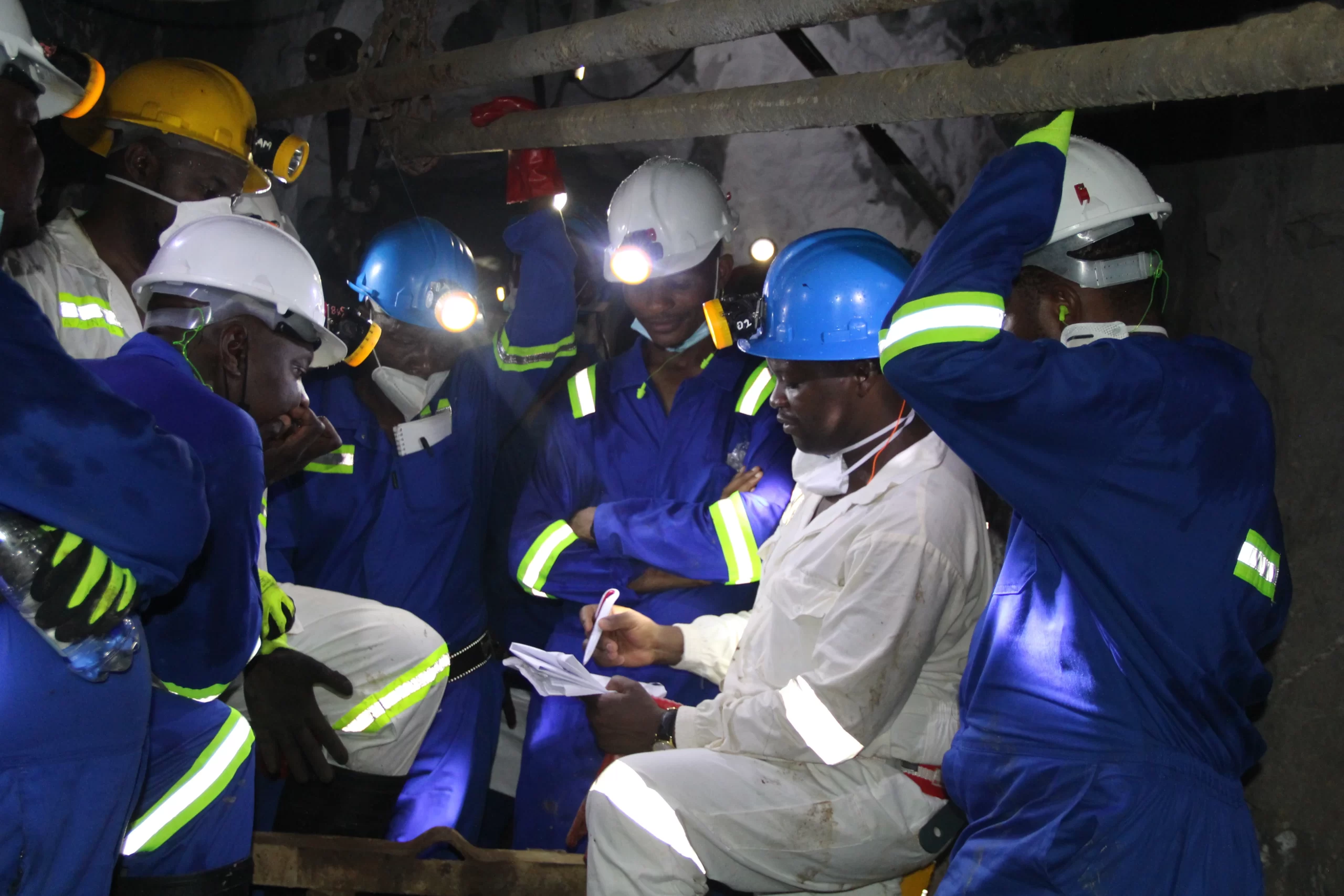
WOMEN mining in Matabeleland South Province want a bigger slice of the cake and are seeking small-scale mining claims in gold rich areas across the province.

Gwanda District sits on the Greenstone gold belt which hosts notable gold producers including Blanket, Vubachikwe, Jersey, Freda and Horn mines.

Women in mining believe mining claims in richer areas will improve the scope of their work, spur their growth and increase their returns in general.

Speaking during an engagement meeting with women in production in Gwanda last week, Mthandazo Women Miners Association chairperson Ms Sithembile Ndlovu said their current claims were not yielding much.

“We want rich claims where we can realise significant gains. We also want our families and the country as a whole to prosper. We recently pegged at areas that were giving us 50g of gold ore or less yet richer areas are available.

We’re failing to get access to rich mining claims and it would seem men are going ahead of us in this regard. We don’t know how the men are doing it but they’re getting the claims,” said Ms Ndlovu.

She said various income streams were funding their operations.

“We’ve been getting loans through the Ministry of Women Affairs (Community, Small and Medium Enterprise Development) to fund our operations. Through the assistance of the ministry, we continue to grow.

Mthandazo is now sustainable as we speak. We have students on attachment coming from universities for procurement at Mthandazo because there’s money from investors that needs to be accounted for. Some of us did not study accounting but through these students who are doing accounting, we’re able to keep our books in order.”

Ms Ndlovu, who is also the Zimbabwe Miners Federation Matabeleland South Chapter Women Affairs Secretary encouraged more women to join the mining industry.

“As it stands, I was the only woman who contested in the ZMF Matabeleland South chapter elections. Women don’t realise the potential they have to contribute towards the prosperity of the country. We also need agents in our districts to help the miners so that they’re not burdened by the work.

Women used to be scared to approach the Ministry of Mines (and Mining Development) but through various engagements, we’re now being assisted.”

Ms Ndlovu bemoaned the violence and gangsterism in some mining areas in the province.

“We’re now scared of being attacked and appeal to the relevant authorities to assist us so that we feel secure. Moving around with as little as 10g of gold ore is now dangerous as it is still worth a lot of money that someone would want to steal from you,” she said.

Illegal gold miners have sprouted all over the province as they seek the precious metal.

Mineral output is a source of foreign currency and mining is a source of employment for many.

However, illegal gold miners have left a trail of destruction in some communities while in other areas, crime rates have risen because of the influx of illegal gold miners.


The Chronicle

Chinese ready to buy Lafarge Zimbabwe

0

Holcim could sell its Zimbabwe unit, Lafarge, as part of the world’s largest cement company continuing sell-off of assets globally.

Lafarge Zimbabwe is one of the country’s biggest cement companies, and has been increasing investment to take advantage of rising cement demand. But it could become part of Holcim’s global consolidation strategy.

“We are constantly evaluating possibilities to align our portfolio with this vision to open new growth opportunities for our company,” a Holcim spokesman told Bloomberg. He would not comment on “market rumours” that the Zimbabwe unit may be among the units being sold off.

A likely buyer is Huaxin Cement, one of China’s biggest cement companies. Huaxin bought Lafarge Zambia and Lafarge Cement Malawi late last year. In June, Huaxin bought 75% of Lafarge Zambia for US$150 million and spent US$10 million to buy Pan African Cement from Lafarge Cement Malawi. In 2020, Huaxin bought Tanzania’s Marvini Limestone for US$145 million, its first investment in Africa.

Last year, Holcim sold part of its Ghana business and disposed of its Brazil unit for US$1 billion.

In Zimbabwe, the past year has been one of contrasts for the cement company.

Increased construction inspired the company to lay out a US$25 million expansion plan to meet growing demand for building materials. But the company also faced rising costs, the surprise departure of its CEO and a plant accident that has stopped cement production for a quarter.

In September, CEO Precious Nyika stepped down after the company took a fine of the equivalent of US$1 million for exchange control violations. She had been in the job for just over a year. Geoffrey Ndugwa, who has been with the company since he joined it in 2001, replaced Nyika in December.

Ndugwa’s last job was CEO of Lafarge Malawi, which was sold to Huaxin. He declined to comment on speculation about a sale.

A roof collapse at Lafarge’s Manresa mills has stopped production since October, and the company has issued a warning that sales will be seriously hit.

In April, Lafarge commissioned a new US$2.8m dry mortar plant. The new plant has sharply increased output of dry mortar products – such as adhesives and agricultural lime – from just 7,000 tonnes per year to 100,000 tonnes annually, equal to national demand.

Lafarge also announced plans to use output from the new plant to launch 3D-printed low-cost housing, which would be a first for Zimbabwe.

The company has also started construction of a separate Vertical Cement Mill plant, which will more than double Lafarge’s annual cement milling capacity from the current 450,000 tonnes to one million tonnes. Completion is expected in the first half of the year.


Bloomberg/newZWire

Ema fines Chinese miner $520 000

0

CHINESE mining company, Edsabri (Private) Limited, has been fined $520 000 by the Environmental Management Agency (Ema) for conducting gold mining activities at the Inyorka ranch in Matobo district, Matabeleland South province  without an environmental impact assessment certificate.

Ema provincial manager Decent Ndlovu confirmed the development yesterday, adding that the miner had been ordered to cease operations.

“We issued them with a $500 000 ticket for illegal mining and $20 000 for illegal prospecting and also ordered them to stop all their activities. But we were being told by the ranch owner that they continued to mine.

“So we today (yesterday) sent our officers with the police to a open docket against them if they continued mining,” Ndlovu said.

The ranch owner Philip Mpofu accused the Chinese miner of causing environmental damage.

Matobo Rural District Council chief executive officer Elvis Sibanda said he was not aware of the matter, adding that he didn’t know of the presence of a Chinese mining company in the district.

“I don’t have any information about that mining company. I will have to verify it. I only heard about it on social media today (yesterday) in the morning,” he said.

According to sources, the Chinese miner claimed to have been granted special mining rights by government to do riverbed mining, which is banned locally.

Of late, Chinese miners throughout the country have been accused of causing environmental damage and violating human and labour rights, including displacing villagers in communities they are operating.


NewsDay

Invictus Raises US$5,7m For Zimbabwe GAs Project

0

AUSTRALIA’S Invictus Energy has raised A$8mn ($5.7mn) to support the development of the Cabora Bassa project in Zimbabwe, it said on January 25.

A total of A$8m was raised comprising of A$4mn via a placement and A$4mn via a share purchase plan (SPP). “Due to overwhelming demand and to accommodate as many eligible shareholders as possible, the SPP was doubled from A$2mn to A$4mn,” Invictus said.

The proceeds from the placement will be used to fund a range of initiatives to further develop the Cabora Bassa project. Invictus will use the proceeds to pay for the rig mobilisation fee, purchase of long-lead items for the planned 2-well drilling programme and finalisation of the data processing of CB21 seismic survey.

The Cabora Bassa project comprises the Muzarabani and Msasa gas and condensate prospects, which Invictus describes as “world-class multi-trillion ft3” plays. The project received environmental approval from Zimbabwean authorities in August 2020.

Chinese firm to explore for lithium in DRC

0

China’s Zijin Mining Group is hoping to tap into the Democratic Republic of Congo’s (DRC) lithium deposits by launching an exploration project in a partnership with state-owned firm La Congolaise d’Exploitation Minière (Cominiere).

The joint venture, called Katamba Mining, has already secured mining rights to two greenfield exploration and mining projects at the periphery of the Manono lithium mine in the DRC, the parties said in a statement.

The move, Zijin says, aims to enhance the company’s “competitiveness in new energy minerals.” It follows a fresh investment in a smelter for its Kamoa-Kakula copper project, which is developing in the DRC with Canada’s Ivanhoe Mines (TSE: IVN) to reduce reliance on third-party smelters.

The Manono lithium-tin project, owned by AVZ Minerals (ASX: AVZ) holds lithium oxide reserves pegged at 8.78 million tonnes.

The Australian miner is developing the mine with the help of Chinese capitals. In October, it secured $240 million in funding from Suzhou CATH Energy Technologies (CATH), jointly owned by Pei Zhenhua and Chinese battery giant CATL.

Global demand for lithium is rising as the mineral is used in lithium-ion batteries for electric vehicles (EVs).

Source: Cochilco, Jan. 2022.

According to Chilean copper agency Cochilco, the EV industry will dominate demand for lithium in the coming years, accounting for almost three quarters of the battery metal’s consumption by 2030, up from 41% in 2020.

The industry body sees lithium hydroxide taking the lead with about 56% of the total consumption versus 44% for carbonate by the end of the decade. This switch can be mainly explained by manufacturers’ growing preference for nickel-intensive cathodes, which tend to favour the use of hydroxide over carbonate, Cochilco said.

Demand associated with cell phones, computers and tablets and other consumer goods would reach 411,000 tonnes in 2030, compared with the 79,000 tonnes expected for this year.

Supply shortage

The world’s second largest miner, Rio Tinto (ASX, LON, NYSE: RIO), which saw its lithium plans in Serbia crushed last week, sees EV sales accounting for up to 55% of the world’s total light vehicles sales as early as 2030, with about 65 million units.

This means manufacturers would need about three million tonnes of lithium, compared with the roughly 350,000 tonnes they consume today.

Existing operations and projects combined, however, are slated to contribute one million tonnes of lithium, Rio Tinto has warned.

Source: Rio Tinto’s Investor Seminar 2021. (Click for full size)

Experts say the world’s shortage of lithium had been forecast to last for another three years at least, but with the cancellation of Rio Tinto’s Jadar lithium, project, the shortfall would be exacerbated.

“We’re at the point now where lithium supply is going to set the pace of electric vehicle rollout,” Credit Suisse analyst Saul Kavonic said.

A recent report by the International Energy Agency (IEA) recommended governments start stockpiling battery metals, noting that lithium demand could increase 40-fold over the next 20 years. IEA executive director Fatih Birol said this would become an “energy security” issue.

China dominates lithium processing, while mine supply largely comes from Chile and Australia

Mining (With files from Reuters)


China defends its companies

0

CHINESE authorities have aggressively waded into the standoff between Beijing’s companies operating in Zimbabwe and the “superfluous” non-governmental organisations, boasting that without the world power’s investments, Harare would be “candle lit” and struggling without internet.

China has emerged as the biggest source of investment into Zimbabwe since Harare’s diplomatic tiff with Western powers two decades ago, which led to a damaging embargo, whose cost to the economy has been estimated at about US$100 billion.

Despite injections of at least US$2,5 billion, Chinese multinationals have had a frustrating time in Zimbabwe, where they face accusations spanning from labour and human rights violations to environmental degradation, tax evasion and foreign currency externalisation.

Beijing has rebuffed the claims.

Other reports have slammed Chinese investors for digging up graves and decimating ecologically sensitive forests in an accelerated exploration of minerals in Zimbabwe.

The Chinese embassy said the “dubious” NGOs’ combative claim “stinks of a hideous agenda from groups that make a living from political advocacy”.

It said they had ignored China’s huge investments, which propped up Harare’s faltering economy.

“Were it not for China’s funding support and the work of Chinese companies in ICT and power generation, even the statement in question would perhaps have to be scribbled on a piece of paper, in a candle-lit room, and never find its way on a functioning internet,” Chinese diplomats in a statement.

“How can a few unsubstantiated stories be used to negate China’s real, enormous contribution to the development of Zimbabwe…and the improvement of the wellbeing of ordinary citizens?” the embassy said.

The embassy claimed that NGOs’ work pale into insignificance compared to 100 000 Zimbabweans employed by Chinese companies.

“Suffice to say that they are significantly outnumbered by the Zimbabwean employees working in companies established with Chinese investment and outnumbered by the ordinary Zimbabwean citizens who are benefiting from China-Zimbabwe cooperation…Chinese State-owned and private businesses have been making great contribution to the improvement of local people’s livelihoods.”

“Dragging Chinese investors into political sideshows or making them victims of domestic political vendettas hurts the people of Zimbabwe and the development of the country as a whole. It is a way of extending sanctions by trying to force Chinese investment out of the country to make Zimbabwe more vulnerable. What is most sad about the statement is that it ignores the wolf in the room that is truly threatening the lives of local people. That is the sanctions,” added the embassy.

On Sunday, the Chamber of Chinese Enterprises in Zimbabwe (CCEZ) also attacked the NGOs.

In a statement, the CCEZ, which represents some of the world’s biggest corporations, came close to admitting serious transgressions by its members, but quickly reminded the NGOs that “it is not within our space to correct perceived legal gaps or inadequacies in laws’ in the country.

“We strongly deplore and oppose groundless accusations that are malicious and driven by falsehoods,” the CCEZ hit back. “Our member companies employ more than 100 000 local people throughout different sectors, worth billions in US dollars of investment. We have done this heeding the clarion call that “Zimbabwe in Open for Business” and in line with Zimbabwe’s aspirational targets such as achieving a US$12 billion mining economy by 2023 and Vision 2030 of achieving, and upper middle-income economy by 2030.

“Instead of engaging in microphone diplomacy and manipulation of public opinion, anyone or any civil society can resort to legal means if any of our member companies does anything illegal.

“People, who engage in microphone diplomacy, always have their clandestine political agendas,” said the CCEZ.


NewsDay

Invictus makes fresh headway in data protection phase

0

INVICTUS Energy, the Australian firm that is exploring for oil and gas in north-eastern Zimbabwe, says it has made significant headway in the data processing phase of the project.

The firm said it was expecting final data next month from Canadian firm, Earth Signal Processing (ESP), whose results would be crucial in determining the next phase of development following several years of extensive groundwork.

Invictus is expecting to drill the first of its two test wells later this year, which will be crucial in determining the quality and quantity of oil or gas found in the area.

“Concurrent processing of both vintages of data will result in a contractor-consistent and process-consistent data set. This will ensure there are minimal irregularities between the data sets and provide a comprehensive and confident basis for seismic interpretation,” the statement said.

“The quality control of the post-stack migration data has been completed and is already showing significant improvements in the overall seismic data quality. The CB21 survey data has provided evidence of multiple trap geometry configurations which provides a target rich hydrocarbon environment for the upcoming drilling campaign. As well as improved structural clarity of faults, there are multiple anomalies of interest that have been observed across the Muzurabani rospect.


NewsDay

Zimplats creates a better future

0

Alex Mhembere has been at the helm of the Zimplats team as chief executive officer (CEO), since October 2007.

Zimplats is in the business of producing platinum group and associated metals and is a subsidiary of one of the world’s leading producers of platinum group metals (‘PGMs’), the South African-based Impala Platinum Holdings Limited (Implats).

PGMs are precious metals, which frequently occur together in nature as constituents of various ores and minerals and they include platinum, palladium, rhodium, iridium, and ruthenium. These metals are also known as “green metals”.

Platinum and palladium are vital components in autocatalytic converters which play a significant role in controlling air pollution by reducing emissions in both gasoline and diesel engines.

PGMs are recyclable, ensuring not only a reduction in waste but also sustainability of supply. Their excellent resistance to corrosion and high melting points make them ideal metals for a variety of industrial uses.

They are used in the development of fuel cells which reduce air pollution considerably, while curtailing demand for fossil fuels.

Zimplats operates five underground mines in Mhondoro-Ngezi, which supply ore to three concentrator modules (two at Ngezi and the third one at Selous). Production from the mining operations is processed by the three concentrators and then further refined at the Selous Metallurgical Complex (‘SMC’) in Selous where the smelter is located.

Ore production in the year ended June 2021 was 7,2 million tonnes. Zimplats’ purpose

Zimplats’ purpose is to create a better future through the way it does business, the metals it produces and superior economic performance, to improve the lives of future generations.

Its vision is to be the most valued and responsible metals producer, creating a better future for its stakeholders, while its values are respect, care, deliver.

Team Zimplats

Zimplats has a workforce of 6 692 comprising 3 549 own employees, and a further 3 143 contractors.

The company strives to create a strong employee value proposition (EVP) which aims to address compensation and benefits, career, work environment and culture issues. These factors are core to creating an enjoyable and caring workplace with a sound wellness programme, that includes mental health, and an environment, which also offers real growth opportunities to the team.

Safety critical to Zimplats’ work culture

The promotion of a safe and secure working environment for all workers is central to the way in which Zimplats does business.

The company strives to create a healthy and safe work environment for its employees, contractors, host communities and other stakeholders.

To this end, the company has implemented and maintained international standards and is certified to ISO14001:2015 (Environmental Management System), ISO9001:2015 (Quality Management System) and ISO45001:2018 (Occupational Health and Safety Management System). These standards provide a framework for sound occupational health and safety and environmental management.


Commitment to creating shared value for all our stakeholders

Zimplats’ commitment is to create long term shared value for all its stakeholders in a systematic manner. The company accepts the importance of sustainable development and embraces the sustainable development goals in a bid to conduct its business as a responsible citizen.

Its strategy on social performance aligns with its purpose of creating a better future for its stakeholders through the way it does business and the positive contribution it makes to society.

Zimplats focuses its investment in social development initiatives on education and skills development and on local enterprise, socio-economic and infrastructure development.

Community development initiatives are carried out within the context of the overall Zimplats business strategy which emphasises the importance of engagement, its values of care and respect, and in managing stakeholder expectations, with emphasis on those areas that affect the social licence to operate.

Zimplats and the Sustainable Development Goals

The United Nations Sustainable Development Goals (UN SDGs) provide guidance on how business can contribute effectively to sustainable development. The challenges highlighted by the UN SDGs led to an agreement on a common approach to addressing economic, social, and environmental concerns. Zimplats utilises the SDGs to establish an effective framework to promote sustainable development.

As a mining company, Zimplats is driven to create value in a manner which ensures that communities are in a better position than they were historically. Alignment to the UN SDGs assists in prioritising those goals and targets that the company believe are most important to its business and which create value for its stakeholders.

Local supplier development

Zimplats continues to establish and review its value chain system to create value for stakeholders whilst also positively impacting the community and the environment through various capacity development programmes. The company, since 2013, has implemented a structured Local Enterprise Development (LED) programme to capacitate and grow local small and medium enterprises (SME’s) through inclusive procurement practices.

The programme currently has 22 LEDs who positively impact communities through job creation, skills development, investment in local infrastructure, and the overall establishment of thriving and healthy mine communities. The aim is to bring efficiencies associated with proximity for services, especially labour and other locally available  materials such as river sand and quarry stones for construction purposes thus reducing costs and delivery times. Services offered to LEDs by Zimplats to enhance their performance include training, capacity development, engagement, commercial and technical.

Underpinning Zimplats’ approach to local enterprises development are four fundamental principles:

. Sustainability: Going beyond compliance to support the development of thriving local communities, enabling their businesses to grow and develop markets beyond Zimplats.

. Economic enablement: Zimplats is committed to creating shared and sustainable value in local communities thereby promoting economic growth, employment creation, poverty eradication and improvement of quality of life.
iii. Sound governance: Sound business principles and good governance underlined all transactions.

Key is development of capacity to attain quality, delivery, service, business management systems and other technical requirements.

. Partnerships: Zimplats works in collaboration with major suppliers and original equipment manufacturers (OEMs), government, communities, and development institutions to create an enabling environment for local enterprises development. The objective is raising the standards of business processes within the LEDs to align with the Zimplats’ way of doing business and core values of care, respect and deliver.

Communities and social development initiatives

Zimplats is committed to effective social development. The company’s vision in this regard is to contribute towards the creation of sustainable livelihoods through self-sustaining and inclusive host communities by 2030.

The creation of shared value for all its stakeholders is a guiding principle for how Zimplats does business. The company’s success is intrinsically linked to the extent to which it creates value for its stakeholders, upholding the values of respect, care and deliver. Equally driven by these values Zimplats is committed to proactive engagement of all its stakeholders to  unlock value creating relationships.

Protecting the environment

Zimplats recognises and acknowledges that mining and processing operations have a potential to adversely impact the immediate and indeed the global environment in which we operate. It takes a risk-based management approach that actively seeks to avoid, minimise, and mitigate negative environmental impacts throughout its operations and in all its processes. Zimplats subscribes to the principle of sustainable development which states that any development must meet the needs of the present generation without compromising the ability of future generations to meet their own needs.

The company has an environmental management system (EMS) built on the ISO 14001:2015 framework.

The framework is designed to facilitate the attainment of the following objectives:

Ensuring compliance with environmental legislation and other non-statutory requirements

Promoting responsible water stewardship by minimising water use and water pollution

Responding to climate change risks and opportunities and promoting responsible energy management

Minimising negative impacts on air quality

Managing and minimising waste streams

Promoting responsible land management and bio-diversity practices Zimplats strives to integrate environmental management into all aspects of the business with the aim of achieving sustainable world class environmental performance.


The Sunday Mail

Zim makes giant strides in mining

0

Zimbabwe is forecast to have raked in US$6 billion in mineral exports last year, which is a significant milestone in current plans to grow the sector’s contribution to the economy to US$12 billion by 2023, the Government has said.

The sector accounts for more than 60 percent in foreign currency receipts annually and 13 percent of Gross Domestic Product (GDP).

Mines and Mining Development Minister Winston Chitando said investments by mining companies in recent years had boosted output and placed the country firmly on course to meet the envisaged target.

Growing investments are mainly attributed to deliberate policies meant to smoothen the operating environment.

In a presentation at the Rodgers Alfred Nikita Mangena Barracks (formerly Zimbabwe National Defence University (ZNDU) last week, Minister Chitando said mining had grown from US$2,7 billion in 2017 to US$5,73 billion in 2021.

“The final figures will be announced, but we will have about US$5 billion generated by the mining sector in 2021. US$12 billion was structured in a way that looks at some of the lowhanging fruits, which had potential to give immediate returns, then some projects which would take medium term to implement,” he said.

“ . . . The fact of the matter is every day we are moving towards the attainment of US$12 billion by 2023. It will be achieved and it is being achieved every day.”

Over the years, lack of capital has been a major constraint in developing mining projects, but the situation has since improved owing to targeted policies by the Second Republic.

“What we have been lacking as a country is capital. We have the minerals; we have human capital. I have said it on many forums that there is no country in this world that has better human capital in mining than Zimbabwe.

“We do have the human capacity, something which has been demonstrated over years, but we lack focus on economic development, which enables capital to flow in.”

Sustained economic development, Minister Chitando added, was not an event, but a process that required serious planning and action.

“If there is a mine that requires five years to build, even if you are in a rush, you cannot do it in six months.

“So economic development is a process, not an event.

“The most important thing is to identify the process and start walking in the process,” he said.

A number of new projects are at various stages of implementation.

In terms of the US$12 billion target, US$4 billion is expected from gold, US$3 billion from platinum, US$1 billion from coal, US$1 billion from diamonds, US$1 billion from chrome, ferrochrome and carbon steel, US$500 million from lithium and the balance from other minerals.

The country has inherent potential in the sector since it has over 60 mineral occurrences.

For instance, it is home to the world’s second largest deposits of platinum group metals and is believed to have potential to supply a quarter of the total value of diamonds traded globally.

Recent official data shows that nickel mattes earned Zimbabwe US$1,14 billion, nickel ores and concentrates US$956 million, while semi-manufactured gold exports raked in US$1,36 billion in the eleven months to November 2021.

Unwrought platinum earned US$186 million.


The Sunday Mail

Interview: James Beare Pickstone and Eureka gold MD

0

On the 21st of October this year, Dallaglio owned Eureka Gold mine was officially commissioned by President Mnangagwa.

It was amazing to see a brand new State-of-the-art-plant which was a clear indicator that mine owners meant serious business. Eureka had been trending online and the commissioning was an event that was highly anticipated not just locally but globally. The event was attended by high-level delegates from across the Mining sector with many coming from as far as South Africa. I interviewed Eureka gold mine’s youthful Managing Director Mr James Beare about this most promising new mine of 2021 and this is how the interaction went.

KS: Who is James Beare?

JB: I am a finance professional with a diverse 16 years of experience in a range of different industries. In Australia I worked with Deloitte in their management consulting arm, I moved into Oil and Gas as a cost engineer and then started businesses in food manufacturing, hospitality and telecommunications. I joined Dallaglio in 2019 to lead the team constructing Eureka mine and have since taken the position of Managing Director of Delta Gold Zimbabwe (Eureka mine) and Breckridge Investments (Pickstone Peerless mine). Both these companies are solely owned by Dallaglio Investments which is a subsidiary of Padenga Holdings Limited which is listed on the Victoria Falls stock exchange.

KS: Dallaglio Investments is considered by the Minister of Mines and Mining Development Winston Chitando as crucial in the attainment of 100 tonnes gold target by 2023. How much gold are you projecting to produce as a company by 2023?

JB: Eureka mine is projected to produce an average of 140kg of gold per month during its 9-year open pit life. The average grade of the mine increases at depth meaning higher production volumes towards the end of the pit life. At our Pickstone Peerless operation, we are planning to re-commission the underground mining operations in Q2 2023 which is another exciting project in our pipeline.

KS: Now that Exclusive Prospecting Orders (EPOs) are being approved unlike during the previous dispensation, does your company have any EPOs applied to increase its mining portfolio?

JB: Dallaglio has not positioned itself as an exploration company and does not hold any EPOs. Our focus is to develop established resources and build processing plants that do them justice.

KS: Currently, Eureka Mine is mining very low grades of 1.3 grams per tonne, is there hope that ore grades will increase?

JB: As mentioned earlier our grade does increase with depth and our average open pit grade is 1.6g/t.

KS: Eureka Mine is using the open cast method, in terms of environment and air pollution what are you currently doing to reduce dust in the neighbouring communities?

JB: Dust suppression in our mining operations is currently done by tractor-drawn water bowsers on a daily basis. In our plant, we use a number of water and wind mitigating methods. We regularly consult our neighbouring communities to understand and reduce our impact to their environment and livelihoods.

KS: Are you planning on purchasing any other mining assets?

JB: Dallaglio is working on developing its existing resources which include Giant and Blue Rock claims near Chegutu. In addition to these developments, we shall certainly be identifying acquisitions that align to the group’s strategy of becoming Zimbabwe’s leading gold miner.

KS: What benefits are you hoping to get from Victoria Falls Stock Exchange?

JB: By listing on the Vic Falls exchange Padenga is looking to improve USD retention on its gold sales on incremental gold in line with RBZ Circular Number 4 of 2021.

KS: In terms of social corporate responsibility, what are you planning to do for the Guruve community so that everyone benefits?

JB: To date, Eureka mine has targeted its recruitment strategy to uplift the local community and employ from the surrounding community. A brick-making operation on-site employs women from the surrounding community as well as the mine making donations to schools, the Guruve hospital and the Rural district council. Going forward a targeted CSIR program focusing on education, health and clean drinking water shall be in place.

KS: You have one of the state of the art plants in the country tell us more about it

JB: I can’t comment on how we compare to other Zimbabwean plants but I can say that the 93-95% gold recoveries we achieve at Eureka are testament to the team that designed and built the plant. The plant incorporates a Knelson concentrator circuit which collects our gravity
gold, a 12MW diesel Genset backup power plant, a wet laboratory for fast assay results and numerous instrumentation feeding back to our integrated SCADA system giving live control of the plant to the operating team in the control room.

KS: What five challenges would say are faced by large scale miners in Zimbabwe

JB: Gold retention, utility power quality and availability, importation challenges for inputs, in-country skills and experience and access to capital markets.

KS: We have many students from Universities and technical institutions looking for work or attachment. How do they get in touch with Eureka or Dallaglio??

JB: By using the Contact us form at www.dallaglio.co.zw or by emailing [email protected] where their enquiry shall be passed onto the relevant department.

KS: Some mining companies in Zimbabwe have been decrying power challenges. Are you also facing similar challenges? If so, could you tell us how you have been affected?

JB: The major challenge faced by poor power availability is the impact it has on production. A short power cut or a trip related to a surge or dip in power from the local grid can lead to a plant-wide shutdown. It can then take the team anywhere between 45mins to 1.5 hours to restart operations. Should these events become numerous the financial impact can be significant, not to mention the damage such events can have on the electrical equipment.