Home Blog Page 396

Resource sector confident of meeting 2022 growth targets

0

The resource extraction sector is confident of attaining the 2022 growth projections of 8 percent as long as Government provides major enablers and immediately resolve matters that weigh down on the miners’ performance.

The sector is estimated to grow 3,4 percent in 2021, before reaching a peak of 8 percent in 2022 as it moves towards attaining the US$12 billion mining industry target for 2023.

In the 2022 National Budget, the Mines and Mining Development Ministry was allocated $3 billion that will enable it to implement a number of programmes that will assist the mining sector to attain its desired growth by 2023.

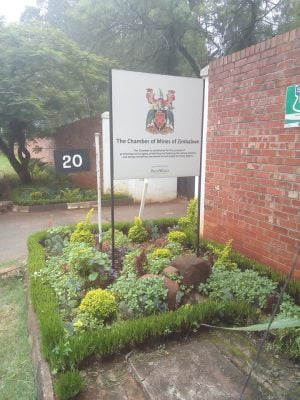
Chamber of Mines Zimbabwe president, Colin Chibafa, said that the private sector is prepared to work closely with the Government to resolve all matters that weigh down the performance of the industry.

“With adequate support that meets the expectations of mining companies, the growth target of 8 percent is achievable.

“The mining industry is upbeat about prospects for 2022 and we hope that with the cordial working relationship with the Government, most key matters will be resolved and mining companies will be able to meet their production targets and support the attainment of the mining growth target,” he said.

Zimbabwe is targeting a fourfold increase in revenue from minerals by 2023, under the policy document, known as the Strategic Road to the Achievement of $12 billion by 2023, which will see gold exports at $4 billion and platinum at $3 billion.

Chibafa said that the Ministry of Mines and Mining Development requires support to meet most of the outstanding policy and legislative matters for the mining industry that will promote the attainment of the US$12 billion milestone by 2023.

“We feel the $3 billion (0.3 percent of total budget) may not be adequate, and the Ministry will remain underfunded to discharge its mandate,” he noted.

Chibafa indicated that the 2022 National Budget seeks to consolidate the economic recovery momentum experienced in 2021, while ramping up revenue collections through a raft of tax measures that seek to plug revenue leakages.

“We also see increased appetite to spend on agriculture, infrastructure and provision of social safety nets, anchored on deployment of SDR funds,” he said.

On the other hand, he highlighted that the mining industry had submitted proposals into the National Budget that related to fiscal support measures to unlock the full potential of the mining industry to enable the sector to optimally contribute to the socio-economic development of the country.

He said only one of the sector player’s submissions clarifying the calculation of royalties for PGMs was incorporated.

“We are dissatisfied that key proposals including measures to improve availability of foreign currency to fund operations and expansion projects through allowing mining companies to pay taxes in local currency, the proposal for removal of beneficiation taxes on PGMs and Lithium to unlock investments in the sectors as well as bringing finality to the exemption of the mining sector from complying with the equity thresholds of Indigenisation Act were not accommodated in the National Budget.

“We will continue engaging the Government on these matters and we are grateful that both parties seem to be converging in terms of understanding of the principles around these matters,” Chibafa said, adding that these matters need to receive attention urgently.

Chibafa said that given the pricing distortions in the market, miners are being penalised through an effective 20 percent tax on their export proceeds since they are supposed to surrender 40 percent of their export receipts at the official exchange rate yet these proceeds only have 50 percent purchasing power.

“Government itself does not accept miners to utilise these ZWL proceeds to pay taxes!

Therefore, in effect, these ZWL proceeds from surrender have limited usage and value. This is not sustainable. We hope that the Monetary Policy Statement will close the policy gaps and provide the necessary support to the   productive sectors so that they anchor economic recovery,” he said.

Through the 2023 mining sector vision policy document, the government is focusing on “value addition, enhanced investment within the sector, increased productivity and employment creation and increased exports and foreign-currency generation.

Private sector is expected to play a big role in the attainment of the envisaged growth while the government will facilitate the ease of doing business to encourage investments in the sector.


Business Weekly

Former Ziscosteel Workers Demand US Dollar Pensions

0

FORMER Zimbabwe Iron and Steel Company (Ziscosteel) employees are demanding that their pensions be paid in United States Dollars since they made pension contributions in that currency.

Ziscosteel stopped production at its Redcliff plant over a decade ago at its Redcliff plant.

The company brought to its knees following years of mismanagement, gross incompetence, corruption and political interference.

Its closure workers stranded and without terminal benefits.

Their representative Benedict Moyo, who also sits of the Ziscosteel pensions board of trustees said: “Ziscosteel retrenched it’s entire group employees on 31 August 2016. Pension payouts rules say that once one is terminated, resigns etc, then one must be paid out their pension within three months,” Moyo said.

“Zisco employees contributed to the pension scheme using US Dollars. On retrenchment, the government of Zimbabwe took over the company’s debt through the Zisco Debt Assumption Act while the Zisco pension fund is administered by First Mutual Life who took it from Old Mutual,” Moyo explained.

“A verification exercise was done by FML on individual’s payout. Government then passed a law saying that the Zimbabwean is rated to the US Dollar on 1:1 in 2019 through a Statutory Instrument. Afterwards, the government delayed the payouts until today,” he said.

He said the board of trustees (BOT) for the former employees does not agree with the 1:1 arrangement.

“As BOT of the Zisco Pension Scheme, we do not agree with the position of paying out at 1:1. The government must have a heart for its citizens by paying out in the currency that the former employees contributed or at worst payout at interbank rate. It’s not a secret that our currency’s value has been eroded. We have put our grievance to ministry of Finance and the Pensions and Insurance Commission so that the plight of former Zisco employees is attended to before the inhumane proposed payouts,” Moyo said.

NewZimbabwe

Caledonia bumps up VFEX windfall to US$8m

0

CALEDONIA Mining Corporation yesterday increased its target of funds for a planned listing on the Victoria Falls Stock Exchange (VFEX) to US$8 million after a positive response from Zimbabwean investors, chief executive officer Steve Curtis has said.

The firm, which holds majority control in Blanket Mine, will list on December 2, 2021.

In a shareholder update, Curtis said massive interest had boosted his board’s belief that joining southern Africa’s newest exchange would produce a range of positive spin-offs.

In a prelisting statement released last month, Caledonia said it was floating US$5 million worth of stock as it debuts at the VFEX.

However, Curtis yesterday said an additional US$3 million would be raised.

“Caledonia is delighted to announce that in respect of its Victoria Falls Stock Exchange listing, due to extremely positive Zimbabwe investor response, Caledonia has decided to raise more funds than originally anticipated and, therefore, to issue more shares,” Curtis said in market update.

“At the offer price of US$12,64 per depositary receipt, Caledonia expects to issue approximately 630 000 new shares, raising approximately US$7,96 million (before expenses).

“The proceeds of the offer will be used for general corporate purposes in Zimbabwe,” he added.

The Jersey-headquartered outfit hopes to leverage on the forex-indexed VFEX to raise funding for its ambitious expansion in Zimbabwe, where it has set sights on purchasing new goldfields, after expanding production at Blanket Mine.

“The support from Zimbabwe investors has been extremely encouraging and reinforces our belief that this listing is an important milestone, welcoming new shareholders, with a mutual desire for investment in Zimbabwe and who have not, until now, been able to participate in Caledonia’s growth journey,” Curtis said.

“The VFEX listing will also enable Caledonia to progress with its next phase of development.

“The access to 100% USD revenue for incremental gold sales will assist Blanket Mine, and any other new mine Caledonia develops, and will attract investors who are confident that Zimbabwe is a competitive investment environment capable of delivering attractive returns.

“The anticipated listing highlights our continued commitment to Zimbabwe. We are excited about this next stage,” he added.

After enduring a listing drought since establishment in October last year, VFEX has recently been the subject of listing plans by several resource firms.

Last week, the Zimbabwe Stock Exchange-listed Bindura Nickel Corporation (BNC) said it would switch to the VFEX, giving impetus its growth ambitions.

The delisting, tentatively set for December 15 will bring to an end BNC’s 50-year relationship with the ZSE, having joined the bourse during the Rhodesian era in 1971.

BNC chairperson Muchadeyi Masunda sees the plan as a crucial step towards bolstering Zimbabwe’s plan to transform the mining industry into a US$12 billion economy by 2023.

Zimbabwe’s mines currently generate about US$3 billion annually.

The BNC boss spelt out his vision for the VFEX in papers sent to shareholders, rallying them to give the nod to the transaction during an extraordinary general meeting slated for December 13.

He said apart from its ability to raise foreign currency, special fiscal and monetary incentives extended to VFEX would unlock shareholder value.

“Your company is evaluating several projects which could be viable but would require substantial capital to be raised in foreign currency,” Masunda said.


Newsday

Caledonia to raise more funds than anticipated on VFEX

0

Caledonia Mining Corporation PLC has decided to raise more funds than originally anticipated in respect of its Victoria Falls Stock Exchange (VFEX) listing.

Vongai Mbara

VFEX is a subsidiary of the Zimbabwe Stock Exchange (ZSE), launched late last year as part of efforts to attract global capital as well as help restore foreign investor confidence in Zimbabwe’s capital markets.

At the offer price of US$12.64 per depositary receipt, Caledonia expects to issue up to approximately 630,000 new shares, raising approximately US$7.96mln. 

The proceeds of the offer will be used for general corporate purposes in Zimbabwe.

“The support from Zimbabwe investors has been extremely encouraging and reinforces our belief that this listing is an important milestone, welcoming new shareholders, with a mutual desire for investment in Zimbabwe and who have not, until now, been able to participate in Caledonia’s growth journey,” Caledonia’s chief executive Steve Curtis said in a statement.

He added, “The VFEX listing will also enable Caledonia to progress with its next phase of development. The access to 100 per cent USD revenue for incremental gold sales will assist Blanket, and any other new mine Caledonia develops and will attract investors who are confident that Zimbabwe is a competitive investment environment capable of delivering attractive returns.

“The anticipated listing highlights our continued commitment to Zimbabwe.  We are excited about this next stage, and I would like to thank everybody for their continued support.”

Curtis noted that Caledonia will announce the exact number of new shares, and depositary receipts, to be issued once subscription monies have been deposited and formalities have been completed in the next few days.

He added that once the securities are issued, the Company’s depositary in Zimbabwe will liaise with the VFEX to have the depositary receipts admitted to electronic trading in Zimbabwe and dealings will commence. 

“The listing and dealings are expected to occur on or about December 2, 2021,” said Mr Curtis.

2 rescued, 3 bodies recovered at Zimplats parent company

0

Two mineworkers have been rescued and the bodies of three have been recovered at Impala Rustenburg 6 Shaft, which suffered an underground mud-rush incident.

Search and rescue operations continued around the clock following the incident took place on Sunday, November 28.

Eight search and rescue teams from Impala Rustenburg and other mining companies were engaged in clearing accumulated material in their search for the five missing employees, with the teams reaching the affected area by mid-afternoon on Monday.

“It is with deep regret we report that the search and rescue teams recovered the bodies of three of our employees. Their families have been notified and are receiving counseling and support,” Implats stated in a media release to SA based publication Mining Weekly.

Two Implats employees were, however, successfully rescued from the area and transferred to hospital for treatment.

“Their families are being informed. They are both in a serious but stable condition,” the Implats release added.

All operations at Impala Rustenburg’s 6 Shaft remain suspended and Impala continues to work closely with the Department of Mineral Resources and Energy and other stakeholders.

No identities will be disclosed at this time while their next of kin are being informed.

“Our deepest sympathies lie with the families, friends, and colleagues of those whose lives were lost in this tragic accident,” the company stated.

All operations at 6 Shaft and 16 Shaft, where a fatality occurred on Saturday, November 27, have been suspended until a full and comprehensive report is available.

The underground mud rush incident, which occurred on Sunday, November 28, followed a separate incident at the 16 Shaft mining complex on Saturday when a contract employee was fatally injured during underground drilling operations.

When the mud rush occurred, seven employees were working at the bottom of 6 Shaft. Two managed to escape with minor injuries but five remained missing.

“The impact of these events will probably permeate the entire lease area and potentially to other shafts. We will have to assess and prevent similar risks from occurring at any of the operations, ” Implats CEO Nico Muller told a media conference on Monday.

Muller said it was difficult to predict the duration of the closure of the shafts, particularly at the mud-deluged 6 Shaft.

“In the interest of safety, it’s important to stop the operations and to assess all the risks,” said Muller.

“The concern for us at 6 Shaft is we had a mud rush at the bottom of the 265 m shaft. It is typically a dry shaft so the source of the ingress has to be determined because we may be at risk at other shafts.

“It is critically important to understand the source of the risk and to make sure that the risk is mitigated across all operations not only at Implala Rustenburg, but all our operations within the group,” he said.

A mud rush tore through the operation’s 6 shaft on Sunday. Two miners escaped with minor injuries.

Seven employees were working at the bottom of the shaft when the area became inundated as a result of a mud rush. Two employees safely exited the area with minor injuries and are reportedly receiving counseling and support.

READ IMPALA PRESS RELEASE BELOW

IMPALA RUSTENBURG 6 SHAFT RECUE OPERATION CONCLUDES –
TWO RESCUED, REGRETTABLY THREE FATALITIES
Johannesburg, 29 November 2021 – Search and rescue operations continued around the clock since the underground mud-rush incident at Impala Rustenburg’s 6 Shaft, which took place on 28 November 2021.

Eight search and rescue teams from Impala Rustenburg and other mining companies were engaged in clearing accumulated material in their search for the five missing employees. The teams reached the affected area mid-afternoon.

It is with deep regret we report that the search and rescue teams recovered the bodies of three of our employees. Their families have been notified and are receiving counselling and support.

Two of our employees were, however, successfully rescued from the area and transferred to hospital for treatment. Their families are being informed. They are both in serious but stable condition. All operations at Impala Rustenburg’s 6 Shaft remain suspended and Impala continues to work closely with the Department of Mineral Resources and Energy and other stakeholders.

No identities will be disclosed at this time while their next of kin are being informed. Our deepest sympathies s lie with the families, friends and colleagues of those whose lives were lost in this tragic accident.
ends//

Sources: Mining Weekly and Impala platinum

Mthandazo Women Miners Association a priority for ASM development

0

Mining operations by Mthandazo Mthandazo Women Miners Association is an indication that women have the capacity and potential to make an impact in the US$12 billion mining roadmap subsequently leading to the President’s vision for the economy to achieve an upper-middle-income status, Parliamentary Portfolio on Mines and Mining Development chairperson Hon Edmond Mkaratigwa has said.

Rudairo Mapuranga

Speaking at Mthandazo women in mining gold service centre near Gwanda on Parliamentary fact-finding mission on gold leakages the Portfolio Committee chairperson commended the pilot project which is being spearheaded by 38 women with a Trustee run by 7 women as pivotal for the government to fund the project that the whole mining sector can learn from it.

“This is a good project in my own view, if you empower a woman you empower the whole nation. As a pilot project, we have to support it. This project must be registered and upscaled, it must be prioritized by the government that the whole mining sector can learn from it,” Mkaratigwa said.

Mkaratigwa also enquired if it could be considered that the pilot project is used to encourage miners to accept soft currency in US$ to reduce the risk of miners getting robbed because criminals will have the information that they have sold their gold in cash.

“This pilot project can also be used to encourage electronic money in USD. It is safe from robberies and we think this will also encourage other miners to accept electronic money,” he said.

Bulawayo Metropolitan Province House of Assembly Constituency member Jasmine Toffa who was standing as the acting chairperson on the visit to Mthandazo women in mining gold service centre said the project was wonderful and it was being run better than the much-appraised government-owned Bubi gold service centre.

One student from the school of Mines who is doing her attachment with Mthandazo said she has learnt a lot from the initiative giving her the confidence that she has the capacity to do more than what the Mthandazo women are doing.

“I have learnt that as a woman I can do it also, we now have the confidence and we know that as young women can make a difference in the mining sector and now the experience in the industry is there,” she said.

Alluvial mining activities a threat to riverine ecosystems

0

LARGE scale and mechanical alluvial/river bed mining in Zimbabwe has contributed to the degradation of an estimated 421.84 hectares of the riverine ecosystem, it has been revealed.

According to a survey that was done by the Environmental Management Agency (EMA) about 1 555 kilometres of river channels have been affected through water pollution and siltation.

EMA Environmental Education and Publicity Manager Ms Amukela Sidange said the practice of riverbed mining has been increasing over the years.

“Large scale and mechanical alluvial mining or riverbed mining are relatively an economic activity which spread in earnest from around 2011 across all the eight rural provinces of Zimbabwe, targeting mainly major rivers and their immediate tributaries. Such mining activities have gravely affected riverine ecosystems through water pollution, siltation, and degradation of approximately a total of 1 555km of the river channel; and disruption of
riverine ecosystem,” she said.

She said that has affected the capacity of the vital ecosystems to deliver goods and services in their best quantity and quality. Ms Sidange said the use of heavy equipment, such as dozers, tippers, excavators and front-end loaders in alluvial mining was resulting in several impacts to the immediate and downstream environment as well as the whole catchment landscape ecosystem.

“A recent survey carried out by EMA established that an estimated 421.84 hectares of riverine ecosystem has been degraded through alluvial mining or river bed mining in the country. The most affected major rivers include Mazowe, Umzingwane and Angwa, among others. Alluvial mining in Zimbabwe is prohibited according to Statutory Instrument 104 of 2021, except under certain specific conditions,” she said.

She said alluvial mining can only be done under written authorisation by the Minister of Environment, Climate, Tourism and Hospitality Industry; and submission of the Environmental Impact Assessments (EIA) reports for review in terms of Section 97 of the Environmental Management Act as read with Section 3(2) of Statutory Instrument 104 of 2021.

Such measures, she said, and numerous others are meant to protect the environment and prevent further pollution in line with the dictates of sustainable development.

“To ensure mining is done in a sustainable manner, rehabilitation, among other numerous abatement measures, have to be carried out in order to try and restore the mined areas to their original state and utilise the land for other productive activities.

She said this puts the land impacted by the mining activity back to a sustainable usable condition. EMA noted, in the survey on active and abandoned alluvial mining sites, that they needed to be rehabilitated owing to the extent of degradation that the areas had been exposed to.

EMA highlighted that rivers by their nature play a pivotal role in water provision, ecological integrity and community livelihoods, hence the Government intends to rollout a rehabilitation programme for Mazowe, Umzingwane, Manzimudaka, Angwa, Mutare, Nyamukwarara and Haroni Rivers degraded ecosystems.

“This is to impress on the criticality of rehabilitation and judicious protection of such areas to promote sustainable development. A call for interest to companies with capacity to rehabilitate degraded river ecosystems has since been made through media and the response  was overwhelming,” said Ms Sidange.

Due process is being undertaken to identify companies that have relevant expertise to champion rehabilitation of river ecosystems in Zimbabwe and restoration of ecosystems in line with the aspirations of National Development Strategy 1. EMA said rehabilitation was an expensive exercise, which can account for as much as over 10 percent of mining costs in certain circumstances, hence a clarion call to mainstream environmental protection in any form of development, as it is costly not to do so.


The Sunday News

Madziva miners robbed at gun-point

0
A trio of miners in Madziva were on Thursday around 7 pm forced to surrender their possessions at gunpoint by armed robbers.
By Shantel Chisango
Speaking to Mrs Munyoro, a ZMF member, she said the cases of miners being robbed in Madziva has increased.
“Armed robbers have heavily troubled the miners of Madziva,” said Munyoro
The miners, Tendai Onyimo and his wife, with their neighbour Respect Gwangwava, (a buyer), and Shekede (a miner) were brutally beaten after having refused to co-operate with the robbers in showing them where the money and gold was.
Onyimo was robbed of US$600 and cellphones, while Gwangwava was robbed of US$600 and cellphones, 60 grams of gold, and Shekede US$5000 and a car, and was left with an injury that left him hospitalised.
Shekede’s son reported the case to the police who went after the robbers but were unlucky in finding them.
It is reported that Shekede’s car was found crashed on a tree in Nyamaropa.
The police are still searching for the robbers.
Armed Robbers are currently wreaking havoc in mining areas. The Zimbabwe Republic Police (ZRP) is concerned with the occurrence of robbery cases in mining sites where armed gangs are targeting artisanal miners and individuals who are keeping large sums of money or gold at home and business premises.

Four of the complainants sustained severe injuries which include deep cuts on the body and were referred to Kadoma District Hospital for treatment. The suspects took US$905-00 and six (6) cellphones.

In another armed robbery case that occurred at M and A Kiosk Mine in Filabusi on 20 November 2021, at around 0130 hours, a 40-year-old male adult was attacked by eight unknown suspects while he was attending to his pumps at a carbon tank. The suspects got away with 200 kgs of non-pregnant carbon valued at US$160-00.

Another robbery case occurred at Shangani Mine Compound, Fort Rixon on 19th November 2021 at around 1300 hours.

A 26-year-old man went to the bush to relieve himself and was attacked by the accused person, Terrence Masango (23) using a machete. The suspect, who has since been arrested forcibly took the complainant’s wallet containing US$90-00 and fled.

In Chinhoyi, eight male adults approached a security guard who was manning premises at Eldorado Mine elution plant on 13 November 2021 at around 0300 hours while armed with iron rods.

The suspects disarmed the guard who was armed with a 12 bore Mossberg shotgun and tied him with electric cables. They broke into the elution plant and stole gold loaded wire wools and stole the security guard’s Itel cellphone.

The Mossberg shotgun was recovered by the police dumped at the 110km peg along the Harare – Chirundu highway. The stolen property is valued at US$ 82 915-00.

Recently Mines and Mining Development Portfolio Committee chairperson Hon Edmond Mkaratigwa strongly advised miners and millers to invest in security. This was after the committee visited a mine site on a nationwide tour dubbed “Enquiry into gold mining sector problems”. The committee was in awe after the premises they visited had no security personnel yet had costly equipment on site.
Most Artisanal and Small-scale Miners do not invest in security. Most of their blocks are unfenced and have no armed or qualified security personnel manning their premises making them a soft target for armed gangs.

‘Competitive opportunities in Zim mining sector’

0

INVESTORS have been urged to consider investing in Zimbabwe’s mining sector as it presents many competitive opportunities to different needs.

The mining sector in Zimbabwe accounts for around 65 percent of the country’s foreign currency receipts. The country has witnessed several big developments on the mining front in the past years.

In a presentation at the Expo 2020 Dubai Zimbabwe Mining Promotion Conference in Dubai last Thursday, Mines and Mining Development Minister Winston Chitando said Zimbabwe’s mining sector presented many competitive opportunities to different needs of diverse investors.

“Zimbabwe has abundance of mineral resources, availability of a highly skilled labour force that is willing to work, attractive investment incentives and investor-friendly Mines and Minerals Act – currently being amended to make it more competitive.

The country has effective and efficient minerals marketing system, functional systems and responsive Government Ministries, progressive policies such as Ease of Doing Business and RRI and availability of good basic infrastructure,” said Minister Chitando.

He said the country had a membership to regional and international trade and cooperation organisations such as SADC, COMESA, WTO, EU/ACP Convention which ensured easy access to world markets.

Minister Chitando said mining was one of the key sectors tasked by the Government to anchor economic growth and transformation towards its vision of making Zimbabwe an  Upper-Middle Income country by the year 2030.

In line with that vision, he said the mining industry was expected to contribute US$12 billion by 2023 and US$20 billion by 2030.

“Zimbabwe has huge potential in minerals of the future and those expected to drive the economy such as gold with over 4 000 recorded gold deposits, nearly all of them located on ancient workings. More than 90 percent of gold deposits in Zimbabwe are associated with greenstone belts which are considered to be some of the richest in the world.”

He said the country had highly diversified mineral endowment and investment opportunities therefore existed across entire mining value chain.

“There is exploration of both brownfield and greenfield. The country is still under-explored and there is huge potential for new discoveries, particularly using the modern exploration techniques.

In mining most of the mines are using antiquated machinery and require retooling to increase efficiency and productivity.

Also, across linkages with entire economy, these include local value addition, support services such as supplies of mining equipment and consumables, financial services, management and technical consultancy services,” he said.

Parliamentary Portfolio Committee on Mines and Mining Development chairman Edmond Mkaratigwa who is also in Dubai said that mining investments in Zimbabwe were not only in the extraction of minerals.

“There is vast unexplored land in the country and the known diverse minerals have already been discussed. In the country moreover, mining sector related business include mineral extraction, processing, market based environmental reclamation as well as mining sector mechanisation and consumable supplies, among others.

One of the windows is coming through the imminent global ban on mercury in particular and cyanide,” he said.

Mkaratigwa said there was a need for innovation and for a replacement to the technologies which harm the environment and livelihoods.

He said supply of equipment in the sector was a huge niche because most of the small-scale miners were using rudimentary methods of mining.

“As Parliament, we are embarking on a raft of measures to ensure water tight legal protections of investors’ interests which are in general, “the profits”.

We are also continuously monitoring and reviewing our systems, processes and approaches to ensure ongoing improvement, effectiveness, efficiency, friendliness and sustainability. In that regard the one stop shop, Zimbabwe Investment Development Agency, already exist.”

Meanwhile, presenting the 2022 National Budget on Thursday, the Minister of Finance and Economic Development Professor Mthuli Ncube allocated $3 billion to the Ministry of Mines and Mining Development for implementation of the programmes and activities.

“Among others these include amendment of Mines and Minerals Act Amendment, operationalisation of the Cadastre System, mining exploration, decentralisation of operations, opening of closed mines, hiring and capacitating mining extension officers, establishment of gold service centres and mineral value addition and beneficiation.” Zimbabwe is among 192 nations participating at the expo.


The Sunday News

Govt focuses on private sector-led mining growth

0

The Mines and Mining Development Ministry budget allocation of $3 billion, approximately  US$3 million at last auction rate, points to the Government’s desire for a private sector-led mining sector growth.

The sector is estimated to grow 3,4 percent in 2021, before reaching 8 percent in 2022, as the country continues to leverage its mineral resources to achieve the desired growth in line with the US$12 billion mining industry milestone by 2023.

Zimbabwe is targeting a fourfold increase in revenue from minerals by 2023, under the policy document, known as the Strategic Road to the Achievement of $12 billion by 2023, which will see gold exports at $4 billion and platinum at $3 billion.

Through the policy document, the Government is focusing on “value addition, enhanced investment within the sector, increased productivity and employment creation and increased exports and foreign-currency generation.

Private sector is expected to play a big role in the attainment of the envisaged growth while the Government will facilitate the ease of doing business to encourage investments in the area.

Earlier in the year, the country’s largest platinum producer, Zimplats, committed to spend US$1,8 billion on capital expansion projects that are currently at different stages of implementation until the year 2028.

The envisaged investment of US$1,4 billion by Zimplats will see the setting up of integrated projects, including the development of new mines, expansion of the smelter, construction of an additional concentrator, base metal refinery, sulphuric acid plant and the setting up of a 110MW solar power plant.

Chamber of Mines Zimbabwe President, Mr Collins Chibafa, recently said the mining sector remains committed to play its part to ensure the industry maximises contribution to the socio-economic development of the country.

“To this end we are working closely with the Government to ensure all challenges that are weighing down the performance of the mining sector are addressed,” he said.

He noted that there is a need for supportive measures for exporters that will guarantee increased foreign currency generation and all bottlenecks that are currently weighing down the performance of the export sector should be resolved to unlock the growth potential of foreign exchange earnings.

“When all these are taken into account, most mining companies do not have sufficient foreign currency to fund their operations,” he said.

According to Mines Minister Winston Chitando, in the platinum sector, other mining firms like Unki and Mimosa are expanding their operations while new projects are at different stages of development.

Great Dyke Investments, a consortium of Zimbabwean and Russian investors, has opened two box cuts at its site in Darwendale, near Harare, and they would be operational by 2023.

Bravura, which is owned by a Nigerian investor, has completed its drilling and will open its first box cut this year.
Karo Resources, partly owned by South Africa’s Tharisa Holdings, is also completing its exploration.

In the coal and hydrocarbons sector, Minister Chitando said, there are thermal power projects at various stages of development.

In the diamond sector, the Zimbabwe Consolidated Diamond Company (ZCDC), a diamond mining company wholly owned by the Government, is looking to produce 3 million carats this year.

Meanwhile, Minister Ncube in the 2022 Budget presented on Thursday said the ongoing economic recovery as well as favourable international mineral prices, on the back of strong global demand is expected to sustain the mining sector.

He said the budget allocation will enhance the capacity of the Ministry of Mines and Mining Development to implement a number of programmes and activities aimed at stimulating growth.

Minister Ncube said the budget will capacitate Mining Promotion Corporation (MPC) to enable it to spearhead exploration by the private sector and the Zimbabwe Geological Survey.

“In this regard, a total of $203,6 million is estimated to cater for the exploration needs for the year 2022,” he said.

In addition to that, the Government will operationalise the Cadastre System, after its successful pilot in Manicaland province.

A Cadastre system is an up-to-date electronic land information system that contains a record of interests on a particular piece of land including a geometric description of land parcels and nature of the interests, ownership or control of those interests which help to reduce title disputes and buoy the mining sector.

“In support of the programme, an amount of $146 million has been set aside under the 2022 National Budget for that purpose,” he said.

In line with the Devolution and Decentralisation agenda, the Ministry of Mines and Mining Development is establishing provincial office centres, such as Hwange, Kadoma, Zvishavane and Lupane.

The Lupane Office will be transformed into a fully-fledged Provincial Office, and the 2022 National Budget has allocated $60 million for acquisition of land, construction of appropriate offices and provision of requisite tools of trade.

On opening of closed mines, Minister Ncube said efforts towards resuscitation of the mines is being pursued to increase investments and production in the sector.

Minister Ncube noted that the small-scale and artisanal miners contribute significantly to mining production, delivering over 60 percent of gold, among other minerals.

However, this sector faces high cost of capital and other consumables required for mineral processing.

Therefore, as part of measures to capacitate small miners, the Government set aside US$10 million of the SDR resources for the opening of Bubi gold service centre.

The Finance Minister said in order to realise maximum value from the country’s minerals, the Government will target beneficiation of mineral value chains such as the gold ore to bullion processing – through setting up of gold processing/milling service centres.

On Diamond cutting and polishing, Government will facilitate establishment of more cutting and polishing factories while on base metals (nickel, copper, iron, cobalt) recovery from PGMs, Government is supporting the private sector towards establishment of Base Metal Refinery (BMR).

The Government is also aiming to improve access to international markets, increased productivity, and enhanced liquidity and better pricing of our mineral resources, through establishing the Mineral Commodities Exchange riding on the existing Zimbabwe Mercantile Exchange.

The Finance Minister said the Exchange will provide for both spot market and futures market that enables the trading of mineral commodities on an organised, transparent and regulated marketplace for the benefit of all miners including artisanal and small-scale miners, and the nation at large.


The Sunday Mail