Home Blog Page 439

Zim sees 10 renewable energy projects coming online by year-end

0

Zimbabwe expects 100 megawatts of electricity to be added to the national grid from renewable energy projects by the end of this year, with an additional 50MW in thermal power, a government minister said on Tuesday.

“Cabinet advises that one thermal power project and ten renewable energy projects will come on board this year,” Information Minister Monica Mutsvangwa said, speaking at a post-Cabinet press briefing.

“The thermal power project will add 50MW to the national grid, while the renewable energy projects will provide about 100MW, translating to a combined total of about 150MW being realised from the projects,” Mutsvangwa said.

Zimbabwe is enduring load shedding, due in part to limited imports from Eskom South Africa. After itself going through bouts of rolling blackouts, South Africa has currently had a brief respite thanks to Koeberg nuclear power station generating power at full capacity

Due to ageing equipment, existing power plants are generating far below the national requirement.

With government-owned power utilities failing to provide adequate energy supplies, private companies have committed to invest in their own power plants.

It is hoped that the Independent Power Producers (IPPs), some of which are companies in different sectors of the economy, would produce electricity to meet their operational requirements while excess power would be fed into the national grid to reduce the deficit.

Companies go green

Zimplats, through its parent company Implats, is already conducting feasibility studies for the installation of a 200MW solar plant.

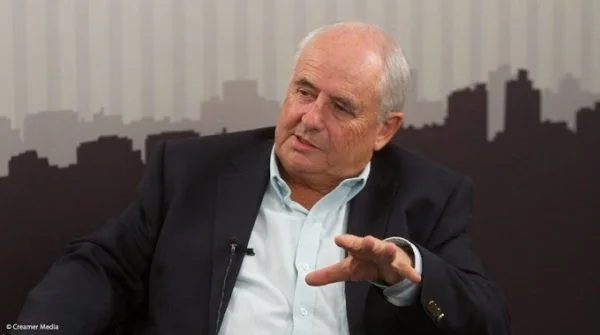
PPC Limited CEO Roland van Wijnen announced this week that its Zimbabwe unit is “looking to be an off-taker of solar electricity produced by IPPs“.

In November last year, Sun Exchange, a solar crowdfunding startup, started its African expansion in Zimbabwe by commissioning a US$1.4-million crowd sale of shares in a solar farm for fresh produce exporter Nhimbe Fresh.

A total of 1700 individual investors bought various portions of the 1.9MW plant.

Sun Exchange investors in the solar farm will earn a monthly income stream for 20 years, with an estimated internal rate of return (IRR) of 16.71% in South African rand terms, the firm said.

In the last couple of years, Zimbabwe has been stepping up incentives for solar power generation investors. According to Energy Minister Zhemu Soda, solar power generation investors can import solar equipment duty-free and can also enjoy five-year tax breaks.

Fin24

Kuvimba Mining House has shown the way

0

State-owned enterprises have a bad reputation in Zimbabwe, and often deservedly so, with even the best usually under-capitalised, having been unable to make enough profit for replacement of the museum pieces they use for machinery, and the worst with reputations of padded payrolls, executives who seem incapable of running a tuckshop let alone anything larger, and audit reports that outline wide-scale abuse of office or corruption.

Finance and Economic Development Minister Mthuli Ncube, who in the end has to deal with dubious CEOs hanging around the corridor outside his office clutching begging bowls, could be forgiven for feeling they are a lot more bother than they are worth.

But then this week he had a different experience, being guest of honour at the first dividend announcement of the newest, Kuvimba Mining House, where US$5,2 million was distributed with 65 percent of that going to entities and funds in the public sector, around US$3,4 million in revenue that is “off budget”. He looked rather happy and who could blame him since he had got it right.

His boss, President Mnangagwa, will be pleased also. He has already shown his intense interest, presiding over mine reopening ceremonies, visiting mines, watching Zimbabweans with good jobs getting back to work and seeing in concrete form the success of the difficult and necessary reforms he has presided over.

So what is different about Kuvimba?

Kuvimba was set up late last year to take over a set of mining assets, quite a lot under judicial management, but which on careful examination appeared to be fundamentally sound, that is they had large ore bodies that could be mined profitably rather than being worked-out holes in the ground fit for little but conversion into toxic-waste repositories.

That was a crucial first point. Some State-owned enterprises are almost trying to resuscitate the ox-wagon industry, an exaggeration perhaps, but are kept going because they are there rather than because they are needed. But when you start with mines that can produce for years to come, you have something to work with.

The next point was to examine why these assets, which had all been in the pure private sector and many owned by external investors, had failed or were limping along under a court-appointed manager owing money to everyone. Digging in it was found that the owners had not been reinvesting profits in good times, and in an incredibly cyclic industry like mining that is critical, and had been milked for revenue, basically a form of asset stripping.

Inadequate management was, in many cases, unhelpful and recruiting decent managers difficult since the best people, and Zimbabwe has produced some first-class mine managers, prefer working for success stories, rather than taking orders to run something into the ground.

The topsy-turvy Zimbabwean economy with its bouts of hyperinflation, and a foreign currency policy administered by bureaucrats and diktat rather than markets, made life difficult for some of these investors and they decided not to bother. And political decisions in the declining years of the First Republic were another big turn-off.

This was not to say that all investors were turned off. Some managed rather well and saw the potential of the Zimbabwean mining industry and were willing to make the effort to ride out the storms in the expectation that we would be able to sort out the fundamentals. With the advent of the Second Republic they have justified their faith and have taken the lead in pushing forward. That example made Kuvimba possible.

The second interesting point about Kuvimba when it was set up was getting the structure and management right. For a start, private investors took 35 percent of the equity and, from what can be gathered, did this through a single entity. And those investors, like all investors, were in the operation to make money and had no doubt read the geology reports and studied the accounts very carefully before coming in with their cash.

The State’s 65 percent was not a single investment, but rather split between a number of interested parties. That provides a large block of important shareholders who are not going to let one bureaucrat make decisions. It is fairly obvious now that the Government saw its investment as a way of funding, without taxpayer assistance, a number of crucial areas, everything from raising money for venture capital for youths, starting the conversion of public service pensions to a fund rather than an annual Parliamentary vote, to starting to implement the critical deal with the expropriated farmers. And the dividend cheques still give Minister Ncube a decent sum for his capital budget.

But critically the public entities and funds that were allocated equity are reliant on Kuvimba working well. They are not going to tell professionals how to mine gold or nickel or platinum, or who to hire to do the digging, but are going to be looking over the management shoulders to make sure that the business is run properly and, critically, justifies the investments.

The next step, after securing investment, was to get the management right. Rather than “jobs for the boys”, that is well-connected former school friends, relatives or in-laws, Kuvimba went for the professionals, largely chosen by the private investors. This started with the CEO, someone who climbed the greasy pole in a major South African mining house, restructured a failing set of mines in South Africa and was seeking a new challenge.

The chairman, the recently-retired number two public servant who had the depressing experience of looking over failing State enterprises and so knew what can go wrong, was there to represent that block of public shareholders and sort of make sure that Kuvimba’s managers delivered, without telling them how to dig holes in the ground, and generally provide that oversight a proper board is supposed to give and often, in the State sector, has failed to do. With a decent board, with muscle, asking the right questions, on time, managers know what is expected and, most importantly, the Zimbabwe Anti-Corruption Commission does not have to hang around clutching handcuffs.

So we have the formula, a Second Republic formula for its first major State enterprise: a public-private partnership, decent assets, a dispersed State shareholding, a professional management and a board that has the muscle to do its job. And zero corruption.

And the results are coming in. Freda Rebecca gold mine is producing record quantities of gold, 300kg in May. That comes to around 24 of those big bars you see in pictures of Swiss bank vaults or Fort Knox. Shamva Gold Mine is out of the woods, has rehired the miners whom the judicial manager had to let go, is back in full production and has plans to tackle the next block of the ore body with an open cast mine. Its target is 400kg a month. Bindura Nickel, and ZimAlloys, are back in producing, refining and selling nickel. And the joint investment with a Russian giant for the third huge platinum mine is on course and should next year start adding to the revenue.

There has been talk about floating Kuvimba on the Zimbabwe Stock Exchange. That needs to be seriously considered. It first of all values the shares that the public and private entities hold, even if most investors want to hold on to their stakes. Secondly it allows new equity to be raised when necessary, important for a growing concern. While existing shareholders obviously are keen to retain present dividend income, and see it rise, if a business is growing properly then that is possible as well as seeing more shareholders coming in with properly-priced investment.

Thirdly a floatation would allow other Zimbabweans to invest directly. Very few people can ever own a gold mine,  nickel or a platinum mine. But they can own a few hundred shares in a well-balanced group and enjoy the modest “bonus” at dividend time. The failed and simplistic indigenisation policy of the First Republic was never going to empower ordinary people, and was built around the false premise that there was a fixed block of wealth that could be divided differently. But that does not mean ordinary Zimbabweans should not be able to participate directly in the most productive sectors of the economy.

But regardless of how the future opens up, the main lesson from Kuvimba is that given the right conditions, a State-owned enterprise can be properly run, can be honestly and properly managed, can contribute to the country and the fiscus. It provides a model for others.

Business Weekly

MMCZ marketing weak – Miners, mining professionals

0

Miners and Mining professionals on a highly interactive gemstone platform have blasted the MMCZ for poor marketing.

Members of the platform are of the notion that weak marketing from the Mineral Marketing Corporation of Zimbabwe is stifling the growth of the precious and semi-precious sector.

One member questioned why the MMCZ does not have an online shop that showcases semi-precious minerals the country has for everyone to see.

“What is missing on the MMCZ website is an Online Shop. As the corporate state the role of mediating between the producer and the buyer: what is it in stock for the international market. Is it not possible to add a shop online that gives everyone the chance to see the aquamarine, emeralds, amethyst, tourmaline etc we claim as a nation we have,” he asked.

The member went on to add that the MMCZ must also consider the domestic market.

“It also appears MMCZ focus is only on foreign buyers my question why not open up the domestic market? We have seen how a good domestic market can transform key economic sectors in the tourism industry. What is it in gemstones that the local market needs to know? We need to embrace the therapeutic value of gemstone and bring awareness to the people. If one knows a piece of cats eye in your pocket can ward off evil spirits who wouldn’t want to have one?  There are many benefits and spiritual values in gemstones more than money. This is the kind of approach l would want to see MMCZ embracing,” he ended.

Today, more than ever, social media delivers creative liberty to people. Sharing views and topics of interest has become easier and more seamless. According to data reportal, there were 1.30 million social media users in Zimbabwe in January 2021 and according to estimates, the number of worldwide social media users reached 4.2 billion in January 2021.

This creates a splendid marketing opportunity for any business as social media channels can also let you send people to your website to learn more about what products and services your business provides. Surprisingly in this digital age, the Minerals Marketer of Zimbabwe isn’t on any social media platform!

“This is the biggest challenge, the regulator seems stuck in primitive ways of conducting business. They still want another unproductive so-called stakeholder consultative meeting to address a simple thing like having an interactive website. Apologies for being blunt but this is where I see that the regulator has failed to evolve. They should be prominent on social media – Facebook, Linked In, Instagram, WhatsApp etc,” former MMCZ minerals evaluator and gemologist Engineer Clever Sithole said.
“Management must be dynamic. As a marketing entity, it ought to be prominent in product promotion on all platforms. If it can’t be technical (kuziya matombo [knowing stones] & mining processes) let’s see its perfection in product promotion zve,” Sithole added on.
Another lamented on the lack of knowledge miners have from extraction to value addition a void the MMCZ should consider filling.
“One of our greatest drawbacks in the gemstone sector is a dearth and lack of basic knowledge in the value chain of gemstones, from extraction to the jeweller’s shop. Our forays into value addition are hazy, we just do not know how to do that. This, I think, is space that the MMCZ could fill. Educate us. Give us knowledge. Give us relevant literature,” he concluded.

MMCZ Functions

  • To act as the sole marketing and selling agent of all minerals produced in Zimbabwe.
  • To purchase and acquire any minerals for its own account and to sell such minerals.
  • To encourage local beneficiation and utilization of any minerals.

MMCZ markets directly in some regional and international markets e.g. Diamonds to Belgium, India, Dubai, RSA; coal products into Zambia RSA and DRC, Ferrochrome in Italy; Chilled pool Iron in South Africa, Prime Steel to various regional markets and Chrome Concentrates to South Africa and China.

Channels

1. Direct channel – sales to industrial users
2. Distributor Channel – Sales to industrial distributors
3. Agents Channel – Sales to/through agents/sub-agents/broker
4. Consignment Channel – Sales made from a warehouse in another country
5. Tender Channel – Sales by tender
6. Over-the-counter Channel – Sales to end-users through personal contact.

BREAKING: Local residents block entrance to Murowa Diamonds

0

The Sese community in Chivi District yesterday blocked the entrance to the RZMurowa compound in protest of the exploration currently taking place in their community.

The community needs Murowa to cease operating in Danhamombe Secondary school premises and houses lamenting that learning is being disrupted by noise from machinery. The school’s development committee (SDC) last year gave RZ Murowa until the 5th of December to wind up operations and leave the area.

The community accuse RZMurowa of conducting exploration without consultation. Last year the local councillor in the area, Alec Mhundu said the mine had also not formalised its operations with the Chivi Rural District Council (RDC).

“What the villagers raised is a cause for concern because as a local authority we are not aware of Murowa Diamonds’ existence or who gave them the permission to be where they are operating from,” said Mhundu.

“Council should be collecting rates from them and if they are indeed genuine miners, they should formally apply for land from the local authority.”

Sources privy to the issue indicate Murowa engaged the community way before they commenced exploration. Some of the community members signed consent forms in areas where the diamond miner indicated an interest in exploring. Some even received food hampers from the miner.

The miner has remained mum on the situation.

More to follow

Gold deliveries slump 17 percent

0

Zimbabwe gold deliveries fell 17% to 1.668 tonnes in May 2021 from 2.015 tonnes achieved in the prior comparative period owing to unfavourable policies and smuggling.

In April this year, gold deliveries declined 5% to 1.38 tonnes from 1.46 tonnes recorded in the same period in 2020. The only positive output was recorded in March this year, during which deliveries improved 2% to 1.80 tonnes from 1.77 tonnes.

Despite the slowing down of rainfall the gold output continues to fall each month. This means that Zimbabwe could struggle to reach its target of 100 tonnes per year by 2023.

The country’s sole buyer and marketer of gold, Fidelity Printers and Refiners (FPR) acting general manager, Peter Magaramombe, told Business Times that Covid-19 induced lockdowns have affected mining as accessing raw materials remained a challenge under the restrictions.

“The gold deliveries to Fidelity were 1.668 tonnes in May 2021 against 2.015 tonnes delivered to us during the same period last year. The decline on deliveries from the small scale sector is attributed to the Covid-19 lockdown/restrictions occasioned by the second wave in this country.

“And also the heavy rains the country received up to February which caused flooding in a number of mining sites rendering extraction of ores difficult,” Magaramombe said.

He said as the weather gets drier, output from the small scale sector is expected to pick up.

During the period under review, small scale miners delivered 0. 783 tonnes while primary producers delivered 0.884 tonnes to FPR.

Overall, gold deliveries for the first five months of the year fell 24% to reach 7.028 tonnes from 9.195 tonnes during the January to May period in 2019.

In January 2021, from the output of 0.997 tonnes, primary producers delivered 0.64 tonnes against small scale who managed 0.355 tonnes, in February 2021, the small scale extracted 0.56 tonnes and primary producers delivered 0.61 tonnes.

Recently, former FPR general manager, Fradreck Kunaka said the country could be losing over 30 tonnes yearly valued at US$1.7bn due to smuggling unfavourable mining policies.

Gold mining experts said the country should totally liberalise the gold sector to combat smuggling and compete at the highest level with foreign gold buyers.

Gold Miners Association of Zimbabwe chief executive Irvine Chinyenze said there is reluctance from the authorities’ side to curb leakages.

“The authorities know the unfriendly policies they put in place but are not acting upon it which is a cause for concern

“The country wants to achieve 100 tonnes per year within the next two years but with high taxes, costs and lack of funding tells that the country is not ready to achieve this target,” Chinyenze said.

Zimbabwe’s gold output plummeted 31% to 19.052 tonnes in 2020 from 27.66 tonnes recorded in  2019 due to Covid-19 effects, delay in payments and low foreign currency retention levels.


Business Times

Platinum revenue to exceed US$3bn

0

Revenue from Zimbabwe’s platinum sector is expected to exceed US$3bn by the end of next year, driven by new projects that are expected to take off at the end of this year and the beginning of 2022, Mines and Mining Development minister Winston Chitando has said.

Revenues for the sub-sector have been hovering between US$1.5bn and US$2bn a year.

Some of the projects in the pipeline include Great Dyke Investment’s Darwendale Platinum project, Bravura platinum and some expansion projects at Mimosa Mining Company and Unki Platinum Mines.

“We are expecting platinum to exceed US$3bn revenue by the end of 2022 driven by new projects that are expected to start production by the end of this year and the beginning of next year,” Chitando said.

Zimbabwe’s platinum producers are also planning to engage a consultant to give advice on the establishment of a base metal refinery by 2025 and a precious metal refinery by 2027 to process platinum from all the country’s platinum mines.

The platinum miners — Zimplats, Mimosa Mining Company and Unki — have a strong plan to jointly develop a base-metal refinery in the country. The plan has been under consideration since 2014.

Zimbabwe has the second largest known deposits of platinum after South Africa and has been pushing mining firms operating in the country to build refineries to stop the export of raw platinum ore.

In 2015, the government imposed a 15% tax on raw platinum ore exports to force companies to process locally but suspended the levy after the miners agreed to support local platinum processing.

The establishment of a platinum refinery has become even more urgent considering that mining is expected to anchor economic growth under the National Development Strategy 1 which charts policies, institutional reforms and national priorities needed from 2021-2025 to achieve an upper-middle-income economy under Vision 2030.


Business Times

Reprieve for gold miners as RBZ slashes royalties, cash imports costs

0

The Reserve Bank of Zimbabwe (RBZ) has slashed small scale miners’ royalties and the cost of importing cash as part of efforts to improve gold deliveries to Fidelity Printers and Refiners (FPR) and stem the smuggling of the yellow metal.

FPR is now buying gold at the prevailing international gold prices.

Yesterday, the spot price for gold in the international market was US$57,225 per kilogramme.

Analysts said the move was triggered by the plummeting output of the yellow metal.

This worried the monetary authorities.

ZMF chief executive officer Wellington Takavarasha told Business Times that there have been some improvements on gold deliveries in the past week.

“With the granting of the right to sell the yellow metal at the prevailing international gold price, removal of punitive taxes and cost of importing cash, gold deliveries had been high in the past 10 days,” Takavarasha said.

“We are happy to tell you that from Monday last week, our members were delivering to FPR and were paid on the spot. Last week alone, we delivered   over 0.350 tonnes which is a huge jump from other weeks we could deliver less than 0.1 tonnes per week.”

He said all outstanding payments to ZMF members were paid as FPR took heed of RBZ governor John Mangudya’s word of “giving us competitive prices”.

Takavarasha encouraged ZMF members to continue selling gold to FPR as it is paying at the same rate as the parallel market.

“Why do we have to go to the black market or smugglers when the formal sector is paying more than the cartels,” he said.

During the past three years, small scale miners delivered close to 70 tonnes of gold to FPR against large scale miners’ output of 52 tonnes.

Given that the small-scale miners are highly informalised, their gold is prone to smuggling as they sell it to the highest bidder.

In his Monetary Policy Statement in February, Mangudya attributed the fall in gold deliveries to the subdued performance by the small scale miners.

But FPR wants the spot payments to continue to improve deliveries.

FPR acting general manager Peter Magaramombe said the gold buyer has no payment backlogs.

“Payment on time is good but there is need for incentives to improve   the output in the long run. It is thus expected that there will be an improvement in deliveries,” Magaramombe said.

He said the small-scale miners are paid as they step in with their gold into FPR while the large- scale miners are paid within seven days of delivery.

Zimbabwe’s gold output plummeted 31% to 19.052 tonnes in 2020 from 27.66 tonnes recorded in 2019 due to Covid-19 effects, delays in payment and low foreign currency retention levels.

Gold deliveries for January 2021 were 0.99 tonnes from 2.54 tonnes during the comparable period last year.

Large scale producers delivered 0.64 tonnes while small scale miners delivered 0.35 tonnes to FPR.

Gold export receipts in January 2021 were at US$53.1m from US$98.1m during the same month last year due to subdued deliveries due to Covid-19 effects, heavy rains that the country experienced in January and the failure to remove costs on small scale gold miners.

In a recent mining report, mining experts advised that President Emmerson Mnangagwa’s government should give artisanal mining cooperatives legal standing, pay gold producers at world prices and strengthen mining dispute resolution.

Zimbabwe is targeting 100 tonnes of gold per year by 2023.

Business Times

Kuvimba pays US$5m dividend, turns around struggling mines

0

KUVIMBA Mining House has turned around the fortunes of several struggling mining assets around the country and within its first year of operations paid a hefty US$5,2 million dividend to stakeholders.

The group took over the ownership and management of several mining assets in Zimbabwe during the second half of 2020, and has seen the performance of the underlying mining assets improve significantly.

Eighteen months ago, Shamva Gold Mine, Homestake and Zimbabwe Alloys were all under judicial management with uncertainty hovering over the heads of employees and communities that also benefitted from the operations of the companies.

To the extent of this improvement, the group yesterday shared a US$5,2 million dividend to seven key shareholders at a ceremony held in Harare.

The money was distributed as follows: Sovereign Wealth Fund of Zimbabwe (US$520 000), Public Service Pension Management Fund (US$560 000), Deposit Protection Corporation (US$400 000), Insurance and Pensions Commission (US$400 000), Datvest Nominees (US$1 million), National Venture Capital Company of Zimbabwe (Pvt) Ltd (US$600 000) and Government (US$1,72 million).

According to management, the dividend is based on unaudited figures, “but the board felt that given the underlying performance of its subsidiary companies the dividend was appropriate.”

“The investment in Kuvimba is also in line with Government’s aim of driving robust and rapid economic growth and the transformative thrust of moving the economy up the value chains.

“During the National Development Strategy 1 (NDS1) period, Government priorities have been placed on developing and strengthening already existing value chains, decentralisation of industrialisation initiatives and provision of a consistent, stable policy environment for the mining sector,” said Finance and Economic Development Minister Professor Mthuli Ncube who was the guest of honour.

“In this regard, Government has taken the opportunity to partner with willing and able private sector players who believe in the National Vision and are desirous to participate in the economic prosperity of the people of Zimbabwe.

“In the same vein, Government is also demonstrating to all existing and potential partners that Zimbabwe is capable of meeting its domestic financial obligations.”

The majority shareholding in Kuvimba Mining House is held by a broad spectrum of local institutions, including a 12,5 percent, which is for the purpose of meeting obligations in respect of compensation for white former commercial farmers for improvements under the Global Compensation Agreement signed between Government and former farmers, a 7,5 percent stake by the National Venture Fund, which is managed by the National Venture Capital Company of Zimbabwe. Of this, 2,5 percent is held on behalf of youths whose projects will be supported under the Fund; 2,5 percent for supporting women’s projects and 2,5 percent is held for the account of Veterans of the Liberation Struggle.

About five percent shareholding is held by the Insurance and Pensions Commission and proceeds thereof are earmarked for compensation in respect of legacy pensions. The Deposit Protection Corporation holds five percent shareholding in the company. The DPC is working on a framework towards some compensation for small depositors for loss of value on savings.

Also, seven percent of shares in Kuvimba are held by the Public Service Pension Management Fund, while 6,5 percent shareholding is held by the Sovereign Wealth Fund of Zimbabwe, a statutory fund, which is now being fully implemented for the future benefit of the Zimbabwean citizenry.

The Government holds 21,5 percent equity in Kuvimba, and the balance of 35 percent is held by the private sector investors, which includes management. Shareholders are pleased with the outcomes of the mining entity.

Insurance and Pensions Commission commissioner Dr Grace Muradzikwa, said the model worked to cushion pensioners in the long-run.

“Today’s event makes us appreciate Government’s wisdom in allocating shares for the purpose of cushioning pensioners, since they are backed by real assets, which will benefit our pensioners for the foreseeable future on a sustained basis,” said Dr Muradzikwa.

Earlier in May, Kuvimba’s Freda Rebecca broke a 20-year production record by producing 300kg of gold.

Said DPC chief executive Mr Vusi Vuma: “The distribution of the dividend in the first year gives us confidence in its (Kuvimba)’s future”.

Kuvimba owns and manages three operating gold mines, three non-operating gold mines, various chrome operations, an operating nickel mine as well as an investment in a platinum project.

“I would like to congratulate the management and staff of Kuvimba Mining for this achievement. Considering the levels of production and the state of many of the entities that make up Kuvimba Mining only a year ago when the operations began to being able to increase production and maintain costs to the extent of issuing a dividend of this magnitude a year later is remarkable,” said Commercial Farmers Union’s Mr Andrew Pascoe whose organisation has 12,5 percent in the mining giant.

The company strategy has followed an initial phase of stabilising the operations, secondary phase of increasing metal output from current operations and the third phase is to operationalise the current non-operating asset.

Phase one has largely been completed and this was achieved through the reinvestment of capital in the operations, management re-organisation.


The Chronicle

Miner wants Grace Mugabe evicted from Mazowe farm

0

A MAZOWE gold miner, who was allegedly displaced from his farm by the former First Family Grace Mugabe, has applied summons against the late President’s widow seeking her eviction.

Langton Chapungu was ejected from his 110 Smithfields Farm in Mazowe in 2008.

Chapungu once approached the court for similar summons and applied for a spoliation order to repossess the farm and equipment seized during the farm grab.

In the present application, Chapungu cited Grace as respondent.

The miner claimed that he was the owner of 110 Smithfields Farm registered under deed of transfer No 6758.

“The defendant (Grace) occupied my farm or caused my farm to be occupied by unknown people. The defendant went further to build a school in the farm without notice to me. Despite myself having a prospecting licence to prospect gold in the area the defendant caused some Chinese to occupy my homestead and a white man to farm on the land,” he wrote in the application.

“I issued summons under case No 8314/19, but surprising the case was withdrawn by unknown people who forged my signature, hence these summons.”

The case is still to be heard.


NewDay

New plant for Sabi Mine

0

Mining investment consortium, Chandiwana Mining Corporation, says it is constructing a processing plant at the Zvishavane-based Sabi Gold Mine as it moves to ramp up output.

Chandiwana is the majority shareholder in Sabi Mine, holding 51% stake. It has the intention to increase its shareholding in the gold miner.

Brian Chandiwana, the managing director of Chandiwana Mining Corporation, confirmed the development this week.

“The project is worth about US$7m, it’s a repleach of open castable resource oxides (plant) and we will be commissioning (it) at the end of the year. We are halfway in terms of the project,” Chandiwana told Business Times.

He said Chandiwana was also involved in the US$10m construction of a refractory gold processing plant in Kwekwe. The project is in partnership with Minerals Marketing Corporation of Zimbabwe.

The roasting Plant is expected to undertake the processing of refractory gold around the Midlands area.

Chandiwana has been instrumental in the revival of Sabi Gold Mine which at one time was closed due to shortage of working capital and ballooning debt levels.

Chandiwana partnered ZMDC to revive Sabi Mine.

At the time when Chandiwana came in, Sabi Mine required recapitalisation to the tune of US$15m to have the capacity to produce 45 kg per month of gold.

Sabi has a mine capacity to treat 450 tonnes of ore per day.

The Sabi mine claims were first pegged in 1890 with the first recorded production in 1909. It was acquired by ZMDC in 1984. ZMDC used to own 100% Kimberworth Investments trading as Sabi Gold Mine.

At full capacity, the mine can employ about 450 employees and is currently serviced by one rectangular double compartment shaft reaching down to 15 metres below 12 level elevation.


Business Times