

Home Blog Page 448

Junior Gold miners interested in Caledonia’s shares

0

Caledonia Mining Corporation has announced that it has recently become aware that VanEck Vectors Junior Gold Miners ETF has interests in 3.90% of its shares. 

VanEck Vectors Junior Gold Miners ETF announced on its website that it holds an interest in a total of 473,246 Caledonia shares which equates to 3.90% of the issued share capital of Caledonia. 

This deems VanEck as a significant shareholder of Caledonia Mining Corporation (as defined by the AIM Rules for Companies).  

 Currently, Caledonia has consulted VanEck pertaining to the announcement and will provide further information if need be. 

Caledonia is a constituent of the MVIS Global Junior Gold Miners Index (GDXJ Index) which forms the basis of various passive gold sector investment funds in the North American market, the most significant being the VanEck Vectors Junior Gold Miners ETF. 

VanEck Vectors Gold Miners ETF is an exchange-traded fund that gives investors exposure to gold mining companies. 
 

The fund was established in May 2006 and trades on the NYSE Arca exchange. It is composed of 53 companies with $15.1 billion in total assets as of April 22, 2021. 

Adding insult to injury, govt increases fuel levy

0

Zimbabwe’s government has increased the strategic reserve levy by as much as 323%, a move which will push the country’s fuel price, already the highest in the region, higher.

notice by Finance and Economic Development Minister Mthuli Ncube, issued on 3 September 2021, shows that the strategic reserve levy, which is charged on all fuel imports, is now US$0,127 for a litre of diesel and US$0.087 per litre of petrol. Previously, the strategic reserve levy for both diesel and petrol was US$0,03 per litre.

Through the same notice, the government also announced the reduction of the NOCZIM debt redemption levy to zero, from US$0,057 per litre of fuel, but this is scant consolation for Zimbabwean motorists who will continue to pay way more than their regional counterparts at the pump.

The levy changes amount to a net increase of US$0,03 and US$0,04 per litre of petrol and diesel, respectively.

Before the changes, Zimbabweans were being charged as much as US$0,49 in various fuel taxes and levies. In other words, government taxes and levies account for nearly 40% of the fuel price.

Zimbabwe’s regional peers such as Mozambique, Zambia and Botswana pay between US$0,81 and US$1 for a litre of fuel.

Apart from further worsening Zimbabwe’s weak regional competitiveness, the levy increase will fuel bubbling inflationary pressures. Month-on-month inflation quickened from 2,56% in July to 4,18% in August, as the government revised its year-end annual inflation rate target from below 10% to as high as 35%.


NewZwire

Mines troop to VFEX

0

GOVERNMENT says several mining firms have indicated plans to list on Zimbabwe’s year-old bourse, the Victoria Falls Stock Exchange (VFEX).

VFEX, which exclusively trades in foreign currency, has largely disappointed, having secured only two listings since its inception.

These are Seed Co International, which listed last year, and crocodiles producer, Padenga Holdings, which joined a few months ago.

“For more than a decade now businesses have not been able to raise capital,” the Finance minister said.

“They find it futile to raise capital in local currency. VFEX addresses that aspect. We want a platform where the private sector can attract hard currency. We are going to see that in the coming years. VFEX is targeting the exporting companies but largely the mining sector. One of the mining companies have registered and we are expecting more mining companies to list soon. It is yet another innovation that is meant to support the process for financial access and we are deepening it to give it more options to foreign investors and companies. We are also looking at the diaspora where we are engaging them to be able to participate,” Ncube added.

The Treasury boss could not disclose which firm was planning to list soon, but the New York Stock Exchange-listed Caledonia Mining Corporation, which operates Gwanda-based Blanket Mine has indicated that it could head to Victoria Falls, while Invictus Energy, which is exploring for gas in Muzarabani, has also said it may consider a VFEX listing.

“We want to list a US dollar bond on VFEX soon but we cannot give you the exact date yet as the advisors are still fine-tuning. I can’t also share the amount for now. We want to make sure that we develop a yield curve not just for domestic debt but also foreign debt on VFEX. We are really working hard on this,” he said.


NewsDay

Mine workers push for 270% salary hike

0

THE Zimbabwe Diamonds and Allied Workers Union of Zimbabwe (ZDAMWU) is pushing for a 270% salary increase that would see the least paid worker pocketing at least $65 000 per month.

They are currently earning $24 000.

In a statement, ZDAMWU secretary-general Justice Chinhema accused the Chamber of Mines frustrating employees.

“The amount $24 500 of the least paid employee in the mining industry is not only enough, but also now an insult considering that the food basket is now pegged at $45 000 and this only benefits workers in towns.”

He added: “As far as we are concerned in the mining districts, the food basket is around$ 65 000 or US$600. The mine workers salaries and wages have remained stagnant despite the inflationary environment. This is also notwithstanding the fact that the mining sector is a vital cog of our economy. As mine workers, we are demanding a minimum of at least US$500 and a COVID-19 allowance of US$100 to make it US$600 paid 100% in United States Dollars.”

Chinhema said the workers were getting “impatient” and also frustrated by the Chamber of Mines, which has failed to heed their calls.

“Mine industry workers might resort to go slow as a sign of their frustration caused by the employer for failing to adjust salaries in line with the traditional practice of quarterly wage negotiations. The works council bargaining is also being affected, without the National Employment Council gazetting minimum wage based on bargaining. At the moment, works council are used by the employers to push their nefarious agendas,” he said.

“Currently mine workers are failing to bring issues of salaries and wages on the table as employers argue that they are waiting for NEC’s outcome. The obtaining situation in the mines is not healthy, the situation has reached a boiling point. Mineworkers have been pushed to the limits and are currently suggesting to down tools or go on a go-slow as a way of pushing NEC or individual mines to increase salaries in line with the current economic situation.

“As a union, we are giving NEC up to next week to come up with something within the range of the above stated, or we will be mobilising for a go-slow across the industry or a full job action in terms of the Labour Act.”

Chinhema also claimed that some mines had not paid back pay for increases in the first and second quarter.

Chamber of Mines chief executive Isaac Kwesu said he could not comment as he was out of office.

“Please refer to National Employment Council and AMWUZ [Associated Mine Workers Union of Zimbabwe] for comment. They can better give you the latest position regarding the wage negotiations as well as most key issues raised on them. I am currently out of office,” he said.


NewsDay

Namibia top court hands Deep-South small win in battle for copper project

0

Canada’s Deep-South Resources (TSX-V: DSM) has scored a small but key win in its battle to renew the company’s prospecting licence for the Haib copper project in Namibia, as the country’s High Court has ruled no permits over the same area can be granted for now.

The Vancouver-based miner took the country’s Ministry of Mines and Energy to court in July after it refused to renew the company’s permit.  The company initially believed the denial was a misunderstanding but was then told it was due to its “inability” to advance to prefeasibility and complete the proposed drilling program as planned.

Deep-South maintains it has clearly demonstrated meeting all the criteria to justify a renewal. It insists the ministry was kept well-informed and had not objected to a proposed change to an upgraded preliminary economic assessment and a full feasibility study, which was already started.

The High Court’s ruling affects Orange River Exploration and Mining, which had applied for an exclusive prospecting licence covering the Haib copper deposit in November 2020.

The case will return to court on September 16, when the judge is expected to define the next steps in reviewing the non-renewal decision by minister Tom Alweendo.

Layoffs

Deep-South Resources stopped all work on-site in June and is now in the process of laying off workers.

The company had acquired the remainder of the project in 2017 from Teck Resources, which is one of its major shareholders.

The updated PEA in December had put Haib’s after-tax NPV at $957 million and IRR at 29.7% using a $3 per pound copper price, envisaging a 24-year mine producing 35,332 tonnes per annum of copper cathodes and 51,080tpa copper sulphate.

Deep-South is also investigating its international legal options and said it will disclose its strategy in due course

Mining

Congo says 12 dead, 4,400 sick following Angola mine tailings leak

0

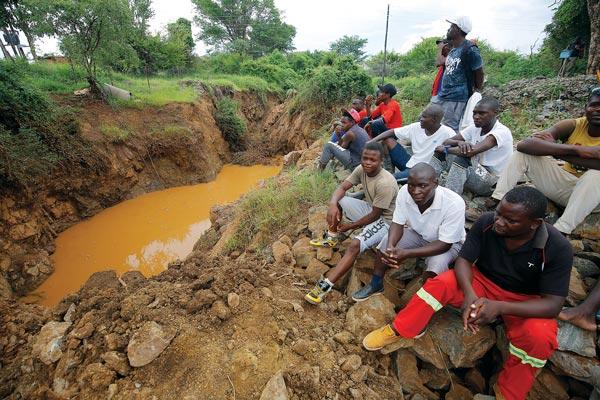
The Democratic Republic of Congo will seek compensation from the owners of an Angolan diamond mine after a tailings dam leak polluted drinking water, causing 12 deaths and making thousands of people ill, the country’s environment minister said on Thursday.

The late-July leak from Angola’s biggest diamond mine turned a tributary of the Congo River red following a rupture in a spillway for the mine’s tailings dam, which stores mining industry waste meant to stay undisturbed.
Researchers at Kinshasha University last month pointed to “huge pollution” that affected some 2 million people, killed fish and caused diarrhoea among river communities.

Congo, which shares a 1,600-mile (2,575 km) long border with Angola, will seek compensation in line with the “polluter pays” principle, where those who produce pollution should bear the cost of mitigating it, Eve Bazaiba told a media conference after visiting the country’s southern Kasai province.

Bazaiba said she could not yet say how much in damages the country could seek. She said 4,400 people had fallen ill.

The leak and deaths represent the latest in a string of tailings disasters for the global mining industry that investors, executives and environmentalists have tried to curtail with safety and inspection standards introduced last year.The mine’s operator, Sociedade Mineira de Catoca, did not immediately respond to a request for comment on the damages claim and deaths listed by the minister.

Not all companies – including Catoca – have publicly committed to the standards, which are non-binding, further fuelling questions about how the standards can cause industry-wide change if not all mines and mining companies adhere.

Catoca, a joint venture between Angolan state diamond company Endiama and Russia’s Alrosa, said in a press release last month that tailings leaked into the Lova River, a tributary of the Tshikapa River, which eventually feeds into the Congo River, in late July.

Satellite images reviewed by Reuters show the Tshikapa turned red on July 25.

Catoca said it immediately sought to repair the leak, built two dykes to filter sediment out of the water and by Aug. 9 the breach was sealed.

Alrosa, which holds a 41% stake in Catoca, did not disclose the incident and told Reuters it was not its responsibility to do so as it does not control the mine site.

Endiama, which also holds 41% of the company, also said it was Catoca’s responsibility to make the incident public. In answers to Reuters’ questions, Endiama said it was made aware of the leak on July 30, three days after Catoca said it was seen.

Catoca said it donated food baskets to riverine communities to mitigate the impact of the pollution. Endiama said other measures were being worked on, without providing details.

The International Council on Mining and Metals (ICMM), the global mining industry trade group, which worked to draw up standards on tailings dams, said it had offered support to Alrosa – which is not an ICMM member – after the leak.

Adam Matthews, chief responsible investment officer for the Church of England Pensions Board, which was also instrumental in drawing up the safety norms, said the leak was a reminder that tailings management requires continued attention from industry, governments and investors.

He said investors and the United Nations are developing an Independent International Institute which would implement the standard and verify companies’ compliance with it.

Reuters

Zimplats lays out expansion plan as FY revenue climbs to US$1.4bn

0

Zimplats spent US$159.1 million on capital projects over the past year, and has laid out an even bigger budget on an expansion programme to grow platinum output.

In the year to June, revenue grew by 56% to US$1.4 billion, as Zimplats benefited from firmer world platinum prices. As a result, profit after tax increased to US$563.1 million from US$261.8 million same time last year.

The company is investing more into its operations, redeveloping and expanding its mines.

“The redevelopment of Bimha Mine is largely complete with cumulative spend of US$100.3 million, in line with the estimated project budget of US$101 million,” Zimplats says in its latest financials.

Rukodzi and Ngwarati mines will be depleted in 2022 and 2025, respectively. The two mines are being replaced by the new Mupani mine, whose development is “progressing well and remains on schedule”.

The project has a design capacity of 2.2 metric tonnes per annum, which is expected to be achieved in September 2024. Mupani and Bima will be further upgraded to replace Mupfuti mine, which reaches the end of its life in 2027.

“The upgrade project encompasses the following: Mupani Mine will be upgraded from the current design capacity of 2.2Mtpa to 3.6Mtpa at a total additional cost of US$122.6 million, thereby increasing the estimated total project cost from US$264 million to US$386 million. US$48.4 million was spent during the year increasing the cumulative total project expenditure to US$146.6 million at year end,” Zimplats says.

Full production capacity of the upgraded mine is expected to be achieved in August 2028.

Zimplats has set a budget of US$81.7 million to upgrade Bimha from the current design capacity of 2Mtpa to 3.1Mtpa. A total US$6.9 million was spent in the year and the project is expected to be done in 2023.

Zimplats: processing expansion

Zimplats is not just expanding the mining capacity; it is also growing the processing end.

The board approved a US$93.8 million concentrator expansion plan that will increase capacity to 900 000 metric tonnes per year.

Says Zimplats: “The project comprises the following: A third concentrator plant project at Ngezi which commenced in FY2021. The plant will process the additional ore volumes from the early ramp up at Mupani Mine and Bimha mines and is expected to be commissioned in the first quarter of FY2023. During the year, US$14.7 million was spent from the project budget of US$93.8 million.”

Zimplats is also buying new mobile mine machinery worth US$17.6 million.


NewZwire

‘US$3bn Sengwa deal still alive’

0

THE Industrial and Commercial Bank of China (ICBC) has not reneged on an agreement to finance the US$3 billion coal fired power plant Zimbabwean firm, RioZim, wants to develop in Sengwa, Gokwe North, sources have said.

If it collapsed, this would be the umpteenth time that potential funding deals for the Sengwa thermal power project, which was mooted in the 1990s, would have gone off rails for RioZim, a Zimbabwe Stock Exchange (ZSE) listed diversified mining entity.

This would also be a setback for Zimbabwe, which faces acute shortage of power and has dished out several permits to independent producers for electricity projects, in attempts to drive investment in production of electricity in order to become a net importer.

Zimbabwe faces a crippling power deficit that at times see the southern African country resorting to regular load shedding in order to balance supply and demand. At peak periods, the country needs 1 800 megawatts against supply capacity of roughly 1 600MW.

The Government is working on a number of projects to bridge the gap, including the 600MW expansion of Hwange Power Station, its second largest plant after Kariba South, as well as a 2 400MW joint venture with Zambia to be built on the riparian Zambezi River.

Company executives with intimate knowledge of the deal said while an environmental lobby claimed, through international media, that the deal was dead in the water, the claim was in fact incorrect, as no such official communication had been received from ICBC.

The report claimed ICBC told Go Clean ICBC, which includes environmental activist group 350.org, that it would no longer fund the 2 800 MW Sengwa coal project RioZim wants to develop in Northern Zimbabwe.

The project is based on a coal resource of 1,3 billion tonnes, capable of generating up to 2000MW of power, almost as much as Zimbabwe’s total installed capacity. The proposed project envisages the construction of a number of smaller power plants over the next ten years.

ICBC had reportedly signed a formal notice of interest in funding the plant, which would be constructed by China Gezhouba Group, while associated transmission lines would be built by Power Construction Corp of China.

The bank also allegedly claimed that they would no longer proceed to fund the Lamu coal project in Kenya as well as the Sengwa coal project in Zimbabwe.

But company officials who spoke on condition of anonymity this week said the agreement between RioZim and the bank still subsisted and no official communication had been received from ICBC over the issue.

In fact, they claimed the 1 400 megawatts coal fired project had been delayed by Zimbabwe’s outstanding sovereign debt with China, which if cleared, the bank was willing to finance the Sengwa project.

All outbound investments by Chinese State owned banks are insured by the Asian economic giant’s state insurance entity, Sinosure, which reportedly raised the red flag over further loans to Zimbabwe, including to private entities.

As such, RioZim executives are scheduled to meet with the Finance and Economic Development Minister Mthuli Ncube and other key Government stakeholders to discuss how the issue of the sovereign debt can be resolved to unlock funding.

“We do not have any conclusive report that they abandoned the project, or that they have written any letter to say that they have exited the deal. For us the project is still on but has been delayed by other issues, including (Covid-19) travel restrictions.

“There is no communication from them, (and if those who say the funding deal has been terminated have seen the communication from ICBC) they should just publish it,” said an executive who has inside knowledge of all internal affairs of the company.

Efforts to get a comment from company spokesperson Wilson Gwatiringa were not successful by the time of going to print, but other sources within the company’s board said the company was working to seek the intervention of the Government on the matter.

“We are having meetings and this coming Friday (today) we are going to meet the chairperson of ZERA (Zimbabwe Electricity Regulatory Authority) so that we can approach the Ministry of Finance and Economic Development.

“Look, the real issue is that they cannot finance the project because of Zimbabwe’s sovereign debt, Chinese banks require guarantees from Sinosure to extend loans, but the problem is that Zimbabwe is in arrears,” said a board member who cannot be named.

The source said the Chinese bank had advised RioZim to engage the Ministry of Finance to renegotiate the terms of outstanding loans from China, adding once this scenario is achieved, the Chinese banks would be more than willing to give the loan.

The source said the bank may be playing the right politics, as it was easier to claim it had pulled out over environmental issues than to come out in the open and say it had withheld funding over Zimbabwe’s multi-million US dollar sovereign debt arrears.

The African Forum and Network on Debt and Development (AFRODAD) says Zimbabwe’s sovereign debt reached US$18 billion in 2018.

The Chinese share of Zimbabwe’s total debt stock as of 2018 was 34 percent. According to the China World Investment Tracker, Zimbabwe received in excess of US$9 billion in aid, investment and grants between 2005-2019.

It would be uncharacteristic, sources said, of the Chinese to decline funding a US$3 billion project, and supply about US$1 billion of the equipment to be used in the project, because of the pressure from environmentalists, when 60 percent of China’s power comes from coal.


Business Weekly

Zinyemba takes the reins at Hwange Colliery

0

DR ZINYEMBA had been in the acting position for HWANGE Colliery Company Limited (HCCL) since October 2018 until August 17, 2021 when he was confirmed the substantive managing director.

A holder of an MBChB from University of Zimbabwe (1986), Dispensing Medical Practitioner certificate (2001, MCPCPZ (2002) and an MBA he attained from National University of Science and Technology in 2014, had been the coal miner’s medical services manager since January 2011.

He left the post in October 2018 when he was appointed acting managing director, a position he diligently held until recently.

Arguably one of the oldest and largest mining companies in the country in terms of size, production and employment, HCCL is a company which explores, mines, processes coal and its related products in the coal mining town.

The company is also one of the local authorities that co-own Hwange town where it provides various services including social amenities such as health, accommodation and education.

As managing director, Dr Zinyemba will be reporting to the Board of Directors.

However, because the company is under reconstruction, the position currently reports to the Administrator.

His role and responsibility hovers around the overall success of the business and involves

supporting the whole team to deliver a successful coal mining business.

“The role directs core mining, processing operations and support services including the Estates and Medical Services Divisions,” said the company in a statement.

Dr Zinyemba’s role, just like his predecessors, will be to ensure that the mining company is profitable and involves a sharp focus on mining, processing and delivering coal and its related products in a strategic and operational nature to the nation and across the region.

Dr Zinyemba has proven to be the tonic the colliery company needs to turn around its fortunes and return to profitability, after driving the company to a profit two years ago.

“As managing director, I am pro-actively working for the benefit of the whole team as well as focusing on individual goals. Under my leadership and stewardship of the administration team HCCL reported a first half profit for the first time since 2012 in 2019. The company also posted an operating profit for 2021.

“Two new excavators, a grader, an LHD and dozer together with three new buses and several new utility vehicles were purchased and paid for in full as part of recapitalisation. Since the start of reconstruction to date, the company has paid salaries in full and on time and has cleared all pre-reconstruction salary areas while making steady progress towards clearing local debts incurred prior to administration,” said Dr Zinyemba, adding that production is steadily improving.

He did his medical internship at Mpilo Central Hospital and United Bulawayo Hospitals between January 1987 and December 1988.

From January 1989 to December 1990 he was a general duty medical officer at the Zimbabwe National Army referral hospital at Imbizo Barracks outside Bulawayo.

He rose to be senior medical officer in charge of the smooth running of all military hospitals and clinics in the Midlands and along the Limpopo Corridor (all military dressing stations and the Field Hospital at Mapai) from Sango border post along the route to Maputo during the Renamo war in the period January 1991 to December 1993.

He was a medical officer for HCCL from January 1994 to December 1998.

He also was in private medical practice providing medical services mostly in the Midlands for Zisco, Zimasco, Sable Chemicals, ZPC Munyati Power Station and Haggie Rand.

As a medical practitioner, Dr Zinyemba’s main line of business is in medicine, general surgery, orthopaedics, obstetrics and gynaecology and paediatrics.

He is also a member of College of Primary Care Physicians of Zimbabwe (CPCPZ), Zimbabwe Medical Association (ZIMA), associate member of the Institute of Directors of Zimbabwe, the CEO Africa Round table, past secretary general of Midlands Chapter of ZIMA, past chairman of Midlands Independent Medical Practitioners Association (MIMPA) and past vice chairman of MIMPA.

Outside work, Dr Zinyemba is a Christian and loves sport particularly cricket, chess and soccer, and the latter could be what Hwange Colliery Football Club needs to get full support for a quick return to topflight football.

He sits in various boards and councils, some of them the Council of the Anglican University in Zimbabwe, member of the Zisco Advisory Group —Technical, member of the ZIMCHEM

Refiners Board of Directors and member of the Stanley House (Pvt) Ltd Board of Directors.

As medical services manager, Dr Zinyemba was in charge of Hwange Colliery Company Hospital and eight clinics which are all owned by the coal miner.

This was an executive position reporting to the managing director.

Hwange Colliery Hospital has a private wing for senior staff and paying patients, three generalwards, and a maternity ward.

The facility has a Registered General Nurses’ training school and has been instrumental in spearheading Government health programmes in Hwange District.

The hospital has three theatres, a laboratory, an X-ray department, physiotherapy, pharmacy and dental surgery.

It runs its owhttps://www.chronicle.co.zw/n kitchen, laundry, mortuary and ambulance services and is a member of the private Hospital Association of Zimbabwe.

Hwange Colliery Hospital is ISO9001:2015 Certified and the hospital uses the same QMS system being a division of the main company subject to all the SAZ audits.


The Chronicle

Unki’s de-bottlenecking project to create jobs

0

Unki Mine’s de-bottlenecking project will result in increased employment and enhanced foreign currency generation, Information, Publicity and Broadcasting Services Minister Monica Mutsvangwa said this week during a post-cabinet briefing.

While Minister Mutsvangwa, who was highlighting some of the selected projects under Government’s 100-Day Cycle did not elaborate much on the project, Business Weekly understands Unki is undertaking the project aimed at expanding its metals concentrator.

The expansion, referred to as the “de-bottlenecking” project will help Unki increase throughput capacity to 210,000 t/mth.

In previous media reports, Unki said the concentrator, built in 2010, only treated up to 180,000 t/mth before the ongoing expansion.

Once it becomes operational the project Unki is expected to result in a reduction in transport costs by 60 percent as most of the ore will be processed locally before being exported for separation of base metals and precious stones. The project is part of Unki’s commitment towards implementing the government’s mineral beneficiation process meant to derive maximum benefits from the industry.

Unkie Mines General Manager Mr Walter Nemasase confirmed to this publication that the project is set to be commissioned on the 26th of this month. The new concentrator, debottlenecking plant was put up at a total cost of US$48 million.


Business weekly