Home Blog Page 496

Zvishavane women miners in pursuit of growth in the ASM

0

Zvishavane Women Miners are working towards the improvement and growth of women in the Artisanal Small Scale (ASM), through empowering each other in between gatherings and workshops.

By Shantel Chisango

The Association, yesterday gathered at Caravan Park for their mining monthly meeting to discuss the obstacles that women are encountering in the mining sector, as well as coming up with solutions to the challenges faced in the sector.

Zvishavane Women Miners Chairwoman Shuvai Mutami said, “As women miners, we continue to empower each other to work towards growth and development in the ASM sector.”

During the gathering, women from the Sabi tribe raised concerns over the belief that there are sacred areas in mines where women are not allowed to be.

The Chairwoman advised women to respect sacred places in mines. She further suggested that chiefs be honored, as well as their mining areas, saying creating good relationships brings harmony.

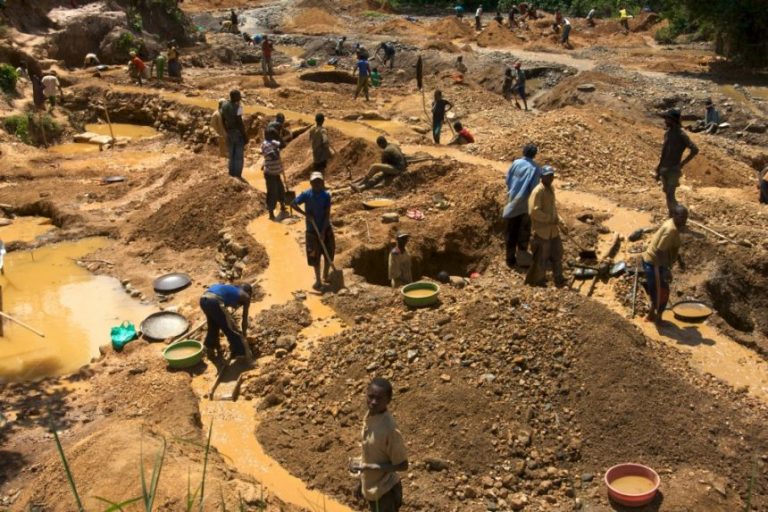
The association comprises dozens of women from different parts of Zvishavane and Mberengwa, a small, active mining town 32 kilometers (19.8 miles) away. A small proportion is registered small-scale miners who mine gold or chrome. The rest are Artisanal miners – lone workers who often mine illegally or without adequate machinery – who hope to get into established small-scale mining.

The women meet once a month, assisting each other with issues such as getting a license, reporting their earnings, and pegging out potential plots. In between meetings, the workshop issues on WhatsApp.

Prospect Resources happy with Zim government

0

Prospect Resources Managing Director, Sam Hosack has expressed his delight in the account of policies and the attitude of the government pertaining to the permitting process of the Arcadia Lithium Project.

By Shantel Chisango

In an interview with corporate analyst Peter Strachan discussing Prospect’s experience with the government, Sam Hosack said that he is impressed that the Arcadia Lithium project has been identified as of national significance, with the office of the president assisting in the permitting process of the company.

He further added that there have been no hindrances from the government, pertaining to issues to do with the progress of the project.

“There are no hold-ups in the account of the policies or the attitude of the government, and it is pretty impressive,” said Hosack.

During the interview, Mr. Hosack mentioned that the supply chain of lithium into batteries is really quite complicated and there is certainly debottlenecking as projects come to align and demand to pull product out of the supply chain.

He further added that downstream demand, battery storage costs in Europe are a response to the exhaustion of stockpiling and real intensification of conversion, with China holding dominance of the supply chain.

“There Is still a complete dominance of the supply chain from China and the high pricing is a response to the exhaustion to the stockpiling and real intensification of conversion.”

Mr. Hosack went on to say that, “there is quite a lot of consolidation and demand coming down the supply chain and definitely rising prices of carbonates and the hydroxides.

Prospect Resources Limited (ASX: PSC, FRA:5E8) is a battery minerals company with a focus on lithium in and around Zimbabwe, with the flagship project being the 70% owned Arcadia Lithium project, located on the outskirts of Harare in Zimbabwe.

Abu Dhabi oil giant ADNOC considers IPO

0

DUBAI.  Abu Dhabi National Oil Company (ADNOC) is considering listing its drilling business on the local stock market, according to three sources familiar with the matter.

The state oil giant says its drilling company is the largest in the Middle East.

ADNOC has held discussions with banks over the potential initial public offering (IPO), said the sources, who declined to be named as the matter is not public.

Two of the sources said ADNOC wanted the deal to happen this year. One of them said discussions were at an early stage but the IPO size could be more than $1 billion.

ADNOC declined to comment.

If the deal goes ahead, it would be the oil company’s second listing of a unit on the Abu Dhabi stock exchange after it listed ADNOC Distribution in late 2017, raising 3,1 billion dirhams ($844 million).

ADNOC, which supplies nearly 3 percent of global oil demand, has also sold stakes in its pipeline infrastructure and refining businesses to global companies and investors.

ADNOC Drilling owns and operates a large fleet of rigs, including 75 onshore rigs, 20 offshore jackup rigs, and 11 well water rigs, according to its website.

The business is critical for ADNOC’s upstream operations, helping the oil company reach its production targets.

The potential deal comes as the world’s top oil and gas companies scramble to control costs in response to the coronavirus crisis, which has hammered oil demand and prices.

CEO Sultan al-Jaber said in June that a transformation strategy embarked on four years ago had helped the company adapt more quickly to market changes, and that it would continue to work with strategic investors to attract foreign capital and maximise value from its resources.   Reuters.

Fidelity official gold buying prices Thursday 8 April 2021

0

Fidelity Printers and Refiners (FPR) official gold buying prices Thursday 8 April 2021

  • SG 90% AND ABOVE $50.10g
  • SG ABOVE 85% BUT BELOW 90% $49.17/g
  • SG ABOVE 80% BUT BELOW 85% $48.05/g
  • SG ABOVE 75% BUT BELOW 80% $47.49/g
  • SAMPLE BELOW 10g BUT ABOVE 5g $48.61/g
  • FIRE ASSAY CASH $50.29/g


Cash available. Fidelity Printers and Refiners prices will be changing daily in relation to world market prices.


Contact FPR

No. 1 George Drive, Msasa, Harare, Email: [email protected], Telephone: +263 242-486670, +263 242-486694, +263 242-487131, +263 242-447810-5

Anjin looting Zim diamonds – COZWVA

0

The Children of Zimbabwe War Veterans Association (COZWVA) has implored that Chinese owned diamond miner Anjin Investments (Pvt) Ltd two weeks ago collected diamonds from diamonds fields in Chiyadzwa adding on to allegations that the diamond miner is illegally selling the country’s diamonds without the involvement of Minerals Marketing Corporation of Zimbabwe (MMCZ).

Rudairo Mapuranga

Through their Twitter handle, COZWVA also said that politicians have formed cartels that use artisanal diamond miners to mine and loot diamonds from the fields, this is despite the fact that diamond mining in Zimbabwe according to the diamond policy can only be carried out by four firms.

“On Thursday last week, this Blue & white aeroplane landed at Anjin Diamond Mine in Chiyadzwa. It collected some diamonds. Over 5000 illegal miners are in Chiyadzwa today, working for syndicates controlled by politicians. No arrests No diamonds revenue accounts Only looting.”

https://twitter.com/cozwva/status/1377124122866552835

It is alleged that since Anjin resumed operations in Marange last year it has not been selling its diamonds with the involvement of MMCZ. MMCZ is Zimbabwe’s exclusive agent for selling and marketing of all minerals except gold.

The failure by Anjin to sell the gems through MMCZ has highlighted long-held fears that the diamond mining companies have been looting resources, depriving the country of meaningful revenue in the form of taxes and dividends in the case of firms jointly held by the government.

It is alleged that many politicians and military chiefs are working with the Chinese owned mine to loot the country’s diamonds for personal use.

In a report, titled “An inside job Zimbabwe: the state, the security forces, and a decade of disappearing diamonds” released in 2017 the country’s security forces benefit from the plunder of diamonds, despite Treasury coffers being dry. According to the report, the military is the single biggest local beneficiary of Anjin Investments Pvt Ltd’s diamond mining revenues.

Anjin is a joint venture between the Chinese military and their Zimbabwean counterparts and is back in Marange after it was ordered to stop operations, alongside other producers, in the diamond-rich area by Robert Mugabe led government in 2016 as the government was getting little from the gems.

RioZim Prioritizes Completion Of US$17 Million Processing Plant

0

Diversified resource group, RioZim Limited, says it has prioritized the completion of the US$ 17 million Biological Oxidation (BIOX) plant at the rm’s Cam and Motor mine in Kadoma this year following delays to the project in the past two years due to funding constraints and the COVID-19 pandemic.


The BIOX technology will help the group value-add its precious minerals through processing pure oxide ores to make good grades and high recoveries and this is expected to increase current production levels by at least 50 percent.

As it stands, discussions with potential lenders to secure funding are underway with high hopes of a breakthrough, the company said in its latest trading update for the full year ended December 2020.

“The completion of the BIOX plant remains a key priority for the Company as we pursue value creation for all stakeholders. The success of this project will be pivotal for the sustenance of the Cam & Motor mine,” it said.

External funding for the project remained elusive throughout the year as lenders took a conservative approach in light of the uncertainties brought about by the COVID-19 pandemic. This left the Company primarily dependent on internally generated funding.

Despite the funding and COVID-19 challenges, the Company managed to steamroll the project to bring civil works to near completion and managed to take delivery of the bulk of the equipment by end of last year.

“Installations commenced post year end and are progressing well. As at the reporting date, the Company was engaged in discussions with potential lenders to secure the remaining funding requirements to complete the project and the Company is hopeful of reaching nancial closure. The Company remains optimistic of concluding and commissioning the BIOX Plant within the ensuing
reporting year,” said RioZim.

The Company will build on its exploration drive from the prior year in order to upgrade and increase confidence levels on all resources across all our mines in light of the declining grades at Renco, One Step and Dalny mines.

The Company’s gold production declined by 27 percent from 1.66 tons achieved in the prior year to
1.21 tons.
“Throughout the current year, the Group’s flagship operation Cam & Motor Mine carried out mining activities from the nearby One Step Mine hauling low-grade ore to the Cam & Motor plant for processing. This resulted in a drastic fall in gold production compared to the prior year when the Mine processed higher grade ore from its Cam pits,” the company said.

The gold price maintained a growth trend throughout the year recording a 27 percent growth from the prior year’s average price of US$1 395/oz, to an average price of US$1 765/oz in the current year which counteracted the impact of lower production volumes.

Revenue generated during the period was ZWL$3.1 billion in comparison to ZWL$577.1 million in the prior year. The exponential increase in revenue was a direct result of the depreciation of the local currency against the US dollar.


263Chat

Advanced Fire Protection of Mining Vehicles

0

In the mining industry, safety has always been a crucial issue – not least when it comes to fire. Therefore, it is not at all surprising that Dafo, with 100 years of industry experience, is investing heavily in fire safety of the mining industry.

The Swedish-owned family company Dafo is today regarded as one of the Nordic region’s largest suppliers of fire protection and rescue equipment. A year ago, Dafo separated its vehicle fire protection operations from its other fire protection operations to the new company Dafo Vehicle Fire Protection. Dafo Vehicle Fire Protection offers a complete range of fire detection and fire suppression systems for vehicles – from simple solutions to tailor-made systems for heavy vehicles, buses, forestry machines, port cargo handling equipment, mining, and construction machinery.

Johan Balstad, Vice President, sees fire protection as a crucial element for sustainable mining:

– Fires in vehicles often have a very intense development and are difficult to extinguish with a portable fire extinguisher. With the right dimensioned automatic fire suppression system, you get quick and effective protection that limits the consequences of a fire and gives vital time to evacuate – which can be extra important in a mine. Fire protection in heavy vehicles such as mining machines places high demands on both equipment and durability.

– The vehicles really get to operate in the toughest of environments, not least because of dust, the vibrations, and the extreme temperatures they are exposed to. Therefore, we offer high-tech customized solutions with associated service agreements. This is also why we continuously invest a great deal in the development of our products and systems, explains Johan Balstad.

Fire safety important part of operators’ sustainability work
The complexity is so extensive that Dafo Vehicle Fire Protection’s experts are also involved and assist in the design and planning of the vehicles of the manufacturer, to create well-integrated and efficient solutions. From the industry side, fire safety is often seen as a crucial issue and an important part of the sustainability work.

– First of all, you want to eliminate or minimize the risk of personal injury – that is the most important factor and where fire protection is central, Johan Balstad says and continues:

– At the same time, you also want to avoid downtime due to fires or other types of accidents, which in a mining environment can be problematic, costly, and time-consuming to rectify. Therefore, it becomes extra important that the systems and equipment work as intended.

Transition to alternative vehicles and fuels – new challenges
Dafo Vehicle’s experience, competence, and know-how have largely contributed to the entry into market after market, and today there are customers all over the world. This of course places great demands on the company’s organization, but also on continued development work of both systems and products:

– Right now, development is particularly important as we are facing a significant transition in terms of machine fuel. There is extensive electrification in the mining industry as well, and it places new demands on the fire protection equipment to some extent. A battery that catches fire through thermal runaway is not the same as the more traditional fires in diesel or gasoline-powered vehicles. Here we are placing a lot of focus right now, says Johan Balstad.

Fire protection system for electric and hybrid vehicles
Dafo Vehicle has launched a fire protection system for electric and hybrid vehicles that is activated before a fire in a battery occurs. The fire protection solution has been developed for buses but will also be available for other heavy electric vehicles.

Low, or non-existent emissions, cost-efficient operation, and reduced noise levels are some of the major advantages of hybrid and electric vehicles today but the disadvantages of the technology, when something goes wrong, are less known. Fires in lithium-ion batteries of electric vehicles usually have rapid progress and are very difficult to extinguish.

– We have followed the vehicle development closely and seen an increased need for fire protection as more electrified vehicles are being introduced to the market. Dafo Vehicle was concerned early on regarding the potential fire risks and dangers this technology would bring, which meant that we also started looking at solutions to meet the development, says Anders Gulliksson, Technical Manager, Dafo Vehicle.

Dafo Vehicle is today alone in the market to offer a complete fire protection system for electric and hybrid vehicles. The patented and award-winning suppression system was developed through the EU-funded research project Li-IonFire and initially aimed at electrified buses in public transport.

– Our system is an advanced fire suppression system with a fire prevention part integrated into the system. This means that the system can detect any temperature changes in the lithium-ion battery at an early stage and cool it down before reaching the critical “thermal runaway” state, which can result in the battery starting to burn and a fully developed fire occurs, continues Gulliksson.

High risk of toxic emissions
Anders Gulliksson explains that today there are no successful methods to extinguish a battery that has already caught fire and entered the thermal runaway stage, after an overcharge or vehicle collision. If the battery starts to burn, the highly toxic gas emits hydrogen fluoride (HF), which can cause serious damage to both the skin and the respiratory tract.

– In the long term, our suppression system can be used for various electric vehicles and areas, such as heavy-duty mobile equipment vehicles in the mining industry and ports. The main reason for this is partly to do with the high safety requirements in the industry, but also that our fire protection minimizes the risks of costly downtime that a fire can entail, says Johan Balstad.

Li-IonFire™ will significantly boost the safety of operators, the protection of valuable assets, and allow safe evacuation of drivers.

The new Li-IonFire™ fire protection system will detect potential battery failure, at the earliest possible stage and take immediate action by spot cooling, using the suppression agent Forrex EV™. This will effectively stop, or delay, a potentially hazardous situation without the fire developing further.

About Dafo Vehicle

Dafo was founded in 1919 and has developed into a modern, high-tech company committed to offer the very best solutions to its customers. Dafo was one of the first companies in the world which started to develop integrated firefighting solutions for vehicles back in 1976. Dafo Vehicle Fire Protection has three main business areas: Integration (Fire suppression systems integration into OEM production line, Retrofit (Fire suppression systems installed at final customer) as well as Service & Maintenance. The Dafo Vehicle group today consist of several subsidiaries and Dafo dealers – Dafo Vehicle Oy (Finland), Dafo US, Dafo Deutschland, Dafo Russia, Dafo Asia, Dafo Spain, Dafo UK & Ireland, Dafo Middle East, Dafo Chile, Dafo Brasil, Dafo Australia and Dafo Peru. The head office is located in Tyresö, Sweden.

EVs to compete with petrol cars by 2030, says battery maker

0

China’s push towards peak emissions in less than 10 years would allow electric vehicles (EV) to compete equally with standard petrol-powered cars by then, according to the head of a leading Chinese EV battery manufacturer.

“Economies of scale alone, coupled with innovation, will be sufficient to reach the parity line by 2030,” said Peng Zhou, chief executive of Octillion Power Systems, referring to China’s peak emission target year.

China, the world’s biggest producer of climate-warming greenhouse gases, aims to become carbon neutral by 2060.

Zhou’s comments came as US-based General Motors announced it is testing a variety of battery chemistries, technologies and manufacturing processes aimed at slashing costs and reducing dependence on cobalt and other expensive metals.

Tougher emission standards, more competitive EV models and a national commitment to curb greenhouse gas are driving growth, said Zhou, whose firm designs and builds customised modules for automakers and counts Total, SoftBank and Samsung Venture Investment among its shareholders.

However, one of the obstacles is the cost of batteries. “Obviously, battery cost is the main driver,” said Peng.

The competition to fine-tune technology to cut EV battery costs is the battleground for deciding the industry’s winners and losers, analysts say.

AIMING TO DIVERSIFY

Octillion, a lithium-ion supplier based in Hefei, Anhui province, supplied 10% of China’s EV battery market in the second half of 2020.

It shipped 95,191 units in 2020, up from 24,844 a year earlier, and is also aiming to diversify geographically and build on existing business in Brazil, India and North America.

GM president Mark Reuss, speaking at an investor conference, said the company is experimenting with silicon-rich and lithium metal anodes, solid state and high voltage electrolytes, and dry processing of electrodes for its next generation of Ultium batteries, due in 2025.

The Ultium, which will be used in new GM EVs such as the Hummer EV and Cadillac Lyriq, uses graphite-based anodes, nickel-cobalt-manganese-aluminium cathodes and a liquid electrolyte.

Last year, GM and Honda agreed to jointly develop two all-new EVs for the Japanese carmaker, based on the Ultium platform.

GM has said it aims to reduce battery cell cost to well under $100 per kilowatt-hour by 2025, compared with more than $150/kW today. GM executives have also said the company expects its future EV batteries to last for a million miles or more, with driving ranges of 500-600 miles between charges.

The automaker’s $2.3-billion joint venture with Korea’s LG Energy Solution is due to start producing Ultium cells in Lordstown, Ohio, in 2022. GM and LG are expected shortly to announce a second EV battery plant in Tennessee, to further support GM’s production target of 1 million electric vehicles a year by 2025.

Asian Times Financial With reporting by Reuters

Rare earth market holds its breath as Greenland votes against mining

0

An election in Greenland that could have changed the face of the global rare earth market has been won by a party opposed to mining the valuable commodities.

With 36.6 percent of the vote, the left-wing environmentalist Inuit Ataqatigiit (IA) party was ahead of Siumut, a social democratic party that has dominated politics in the Danish territory since it gained autonomy in 1979.

The dividing line between the two parties was whether to authorise a controversial giant rare earth and uranium mining project, which is currently the subject of public hearings.

The Arctic island of just 56,000 people holds some of the world’s richest deposits of uranium and rare earth minerals – a group of 17 metals used as components in everything from smartphones to electric cars and weapons.

Exploitation of the deposits was hoped to lift the island’s economy and also boost the rare earth market, which is dominated by China. The world’s second-largest economy increased exports of the commodities by 28% in the first two months of this year as demand recovered in Europe and Japan, according to customs data cited by Argus Metals.

The IA has called for a moratorium on mining, which would effectively put a halt to the project at the Kuannersuit deposit, in the island’s south.

Snap election

Divisions over Kuannersuit originally triggered the snap election in the territory after one of the smaller parties left the ruling Siumut coalition.

One side of the Kuannersuit mountain is said to have been devastated by test drilling and the creation of an open pit by miners.

“Now that area is like all sand and just black,” campaigner Aili Liimakka Laueshe told NPR in the US. “There’s no green at all.”

Opponents say the project, led by the Chinese-owned Australian group Greenland Minerals, has too many environmental risks, including radioactive waste.

IA leader Mute Egede said on KNR public television he would immediately start discussions to “explore different forms of cooperation” before forming a coalition government.

The 34-year-old, who has been a member of the Inatsisartut since 2015, took over the reins of the left-green party a little over two years ago.

Asian Times Financial

Caledonia increases quarterly dividend

0

GOLD producer, Caledonia Mining Corporation, has resolved to increase its quarterly dividend to shareholders again riding on improved performance and confidence in the business outlook.

Last year, Caledonia’s total annual haul hit close to 58 000 ounces of gold, coming at a time when the Government is pushing for mining production ramp-up that is poised to see the country’s total mineral export earnings averaging US$12 billion a year from 2023 onwards up from US$2,7 billion in 2017.

The mining concern, which owns Blanket Mine in Matabeleland South province, has increased its quarterly dividend to US$0,12 from US$0,11 previously.

“The company is pleased to announce that the board of directors has declared an increased quarterly dividend of US$0,12 on each of the company’s shares,” it said.

The upgraded dividend would be paid on 31 April 2021, group chief executive officer, Mr Steve Curtis, said, adding that the quarterly dividend increase was the fifth in the past 18 months.

“This represents a cumulative 75 percent rise in the dividend since the first increase in October 2019,” he said.

Mr Curtis said the decision by the board to increase the dividend reflects Caledonia’s continued confidence in the outlook of its business.

“As we reach the end of the six-year investment programme at Blanket Mine, the anticipated combination of rising production and declining capital investment gives us confidence to further increase the dividend payment in addition to providing funding for investment in new projects, including the exploration prospects at Glen Hume and Connemara North, as announced at the end of 2020,” he said.

The New York Stock Exchange-listed mining group recently announced that it had obtained exclusive rights to explore new gold mining claims in the Connemara North area near Gweru in the Midlands province.

Connemara North is in close proximity to the Glen Hume property, which is also under Caledonia focus consideration.

The option gives Caledonia the right to explore the area for a period of up to 18 months. The firm hopes to derive favourable outcomes from this effort, which will impact positively on its overall business. Increased capacity at already existing mining houses, as is the case with Blanket Mine, is one of the key anchors expected to drive the mining sector turnaround.

The company’s 2020 strong performance comes on the back of the miner having managed 55 182 ounces in 2019.

In October last year, Caledonia signed a memorandum of understanding (MoU) with the Government, which is aimed at boosting the miner’s investment portfolio and gold production.

In the MoU, the mining concern declared and affirmed its intention to increase gold production in excess of 500 000 ounces, around 15,5 tonnes by 2030.

Further, the Government and Caledonia have acknowledged and agreed that where the firm has a specific interest in identified assets or projects towards the achievement of the target, there shall be a need to enter into specific agreements governing such assets.


The Chronicle