The 60km Kwekwe – Nkayi road is supposed to be the shortest link between the two centres, but it has become the longest.
So bad is the road that what should be a 30-minute drive has since transformed into a two-hour nightmare as motorists cautiously negotiate around the potholes. The heavy rains that recently pounded the country worsened the already damaged road, making it basically untraficable.
The poor state of the road, which passes through Silobela in the Midlands Province, is only but a tip of an iceberg in as far as the state of infrastructure in the area is concerned. The area is still backward and the state of infrastructure does not paint a true picture of the vast natural resources available in the area.
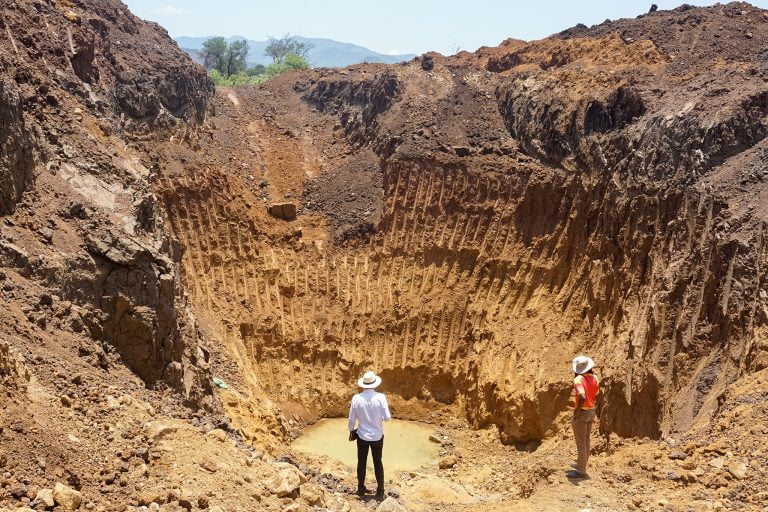
Silobela is home to a number of mines, both large scale and small scale and millions worth of gold have been extracted from the area, but the area has nothing to show for it. Kwekwe, a well-known mining town, has a poor road network as well. Kadoma is another mining town that does not seem to be benefiting from its gold judging by its bad infrastructure. Silobela legislator Cde Mthokozisi Manoki-Mpofu said this was a serious challenge in the area saying ‘outsiders’ were plundering gold from Silobela.
“We have that problem in Silobela, whereby outsiders come to the area to extract gold and take it away without benefiting the area. Silobela is one of the least developed. I think you are aware of the Kwekwe-Nkayi Road; it is one of the worst roads in the country and it is deterring development in the area,” said Cde Manoki-Mpofu.
He envisages a situation whereby his area has a communication center, a Grain Marketing Board depot and a vocational training center amongst other infrastructure. Having noticed that the area was not benefiting from its resources, Government once helped a Peace Mine Community Ownership Trust, a first of its kind in the country which was supposed to benefit the community but it appears to have died a natural death.
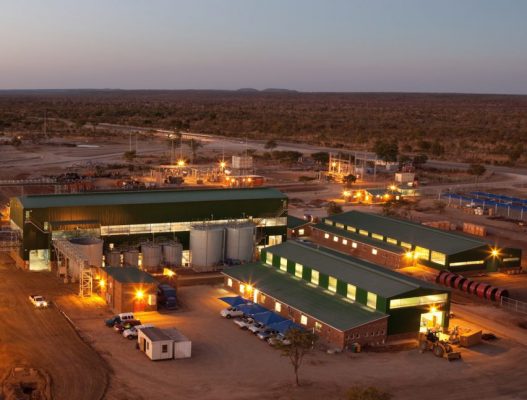
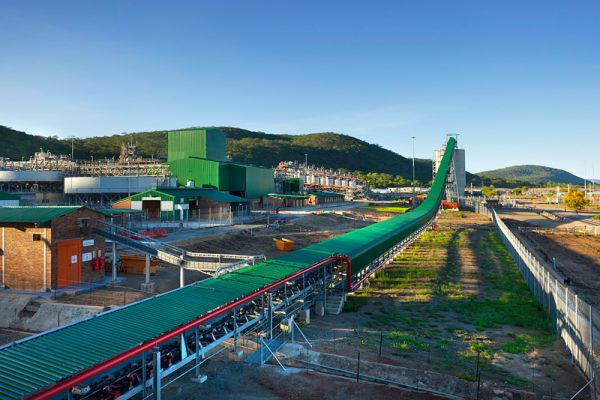
Under the community trust, 10 percent of whatever was coming out of the mine was supposed to be channeled towards infrastructure development across Silobela. The idea was that the fund would be channeled towards community development with infrastructure like roads, schools, clinics, water and sanitation amongst other developments. Government built a state of the art mining and gold processing centre which has, however, been vandalized.
“It only lasted less than a year and it collapsed due to corruption. People there were only thinking of fattening their own pockets. Now Peace Mine has gone to the dogs and it was closed after people died due to improper mining methods,” said Cde Manoki-Mpofu. He however gave credit to a few miners who have ploughed back into the community.
“We have our local miner Mr Gwandu who helps with road maintenance and recently Decent Sibanda also provided us with his grader and tipper truck for rehabilitation of Dambridge road. We are so grateful,” said Cde Manoki. Zimbabwe Miners Federation (ZMF) Chief Executive Officer, Mr Wellington Takavarasha said plans to set up gold processing centers like the Peace Mine one, across the country were derailed by the Covid-19 outbreak. The processing centers were supposed to ensure that every procedure, from extracting the gold, processing, to the last stage was done at one place.
“The idea had to be shelved due to Covid-19 but I am sure since the lockdown restrictions are now being eased, we are going to resuscitate the idea working together with Government. Some investors have since gone round meeting with our member associates and plans are in the pipeline,” he said. Mines and Mining Development Deputy Minister Polite Kambamura said Government was working on modalities for communities to benefit more from local mineral resources.
“Local communities should benefit from mineral resources being extracted in their area. Mining companies, both large and small scale must engage local communities under the corporate social responsibility initiative. These initiatives must be agreed between the community and the mining organization and not to be imposed onto the community,” said Hon Kambamura.
On local authorities, Local Government Minister July Moyo is on record saying Government was also working on how local and rural authorities should benefit from mining companies in their areas. He also said devolution came to address the anomaly. “Devolution came to ensure that communities benefit from their resources.
You find that some places like Kwekwe have a vast number of mines dotted around the city but has poor infrastructure. Those mines should play their part by at least paying royalties to councils. We are formulating a system of how best local authorities should benefit from these mines; some of them who do not want to pay dues to councils,” said Minister Moyo.
A natural resources governance expert Mr Tapuwa Nhachi said communities need to be involved in the management of their resources.
“This should be done in line with Section 13(2) of the Constitution which states that people must be involved in the formulation and implementation of development plans and programs that affect them. There is also need for Government to craft deliberate policies aimed at fostering development in the host communities,” said Mr Nhachi.
If well implemented, the Government’s idea working hand in hand with the devolution concept introduced by the Second Republic, communities can start benefiting a lot more from their resources and the face of the country’s infrastructure, a key development tool, can be improved.
FORMER First Lady Grace Mugabe’s son, Russell Goreraza, was yesterday remanded in custody at the Concession Magistrates Courts on charges of stealing gold processing equipment at Tian Bao Mineral Industry in Mazowe.
Goreraza (37) appeared before magistrate Moreblessing Makati together with his accomplices, Paul Sithole (45), Aaron Muchenje (31) and Trymore Madzitire (36).
The four were remanded in custody to today for bail ruling.
Goreraza is Grace’s son from her previous marriage.
The complainant in the matter is Prince Danda of Number 9 Calgary Farm, Mazowe, who is employed by Tian Bao Mineral Industry (Pvt) Ltd as managing director.
Allegations are that on April 10 this year at around 7am at Tian Bao Mineral Industry (Pvt) Ltd Smithfield Farm, Mazowe Farm owned by the late former President Robert Mugabe and his wife Grace, Sithole, Muchenje and Madzitire dismantled a processing plant under the instructions of Goreraza.
The trio then loaded a gold smelter, ball mill, electric motor, approximately 200 ball mill metal balls, 50 ball mill liners, 20 slay pumps and 15 angle iron bars into a truck using a crane.
They were intercepted by Mazowe police and arrested.
The value of the stolen property is US$130 0000 and only property worth US$30 0000 was recovered.
OUTPUT at RioZim’s gem extraction associate Murowa Diamonds slipped to 579 000 carats during the year ended December 31, 2020 after Zimbabwe’s oldest operating diamond mining asset depleted high-grade gems in 2019, the listed giant said on Friday, spelling out an exploration strategy to sustain production.
RioZim, the multi-resource operation quoted on the Zimbabwe Stock Exchange, had produced 685 000 carats in 2019, according to chairman Saleem Rashid Beebeejaun.
But it was a tough year for RioZim, which saw gold output at its three mines tumble 27% after breakdowns at the flagship Cam & Motor operation and troubles at the ageing Dalny Mine pulled back operations.
Output at Dalny Mine plummeted by 46% to 198kg after its milling section was crippled by downtime. But Murowa’s huge influence within the RioZim empire was quite significant during the period, pushing its contribution to profits to $495 million, from $22 million previously.
Much of this push was underpinned by hyperinflation in Zimbabwe, where regulators have directed firms to apply hyperinflationary accounting standards to help investors make out what’s coming out of companies.
“The group’s associate, RZM Murowa Private Limited, produced 579 000 carats from 685 000 carats produced in the comparative period,” Beebeejaun said in a commentary to the financial statements.
“The lower production in the current year is attributable predominantly to the processing of the low grade K2 resources after the high grade K1 (kimberlite) resources had been depleted in the prior year.
“The associate continued to contribute positively to the group’s profitability with a share of profit of $494,8 million compared to $22,9 million in the prior year.
“The company will build on its exploration drive from the prior year in order to upgrade and increase confidence levels on all resources across all our mines in light of the declining grades at Renco, One Step and Dalny mines.”
RioZim bounced back to profit after overturning a $581,4 million loss in 2019 and made a profit after tax of $452,73 million, which was underpinned by firming gold prices on the international markets.
Gold prices averaged US$1 765 per once (oz) during the review period, which was 27% higher than 2019’s US$1 395/oz.
Revenues increased to $3,1 billion in 2020 from $577 million in 2019.
“The company’s gold production declined by 27% from 1,66 tonnes achieved in the prior year to 1,21 tonnes. Throughout the current year, the group’s flagship operation Cam & Motor Mine carried out mining activities from the nearby One Step Mine hauling low grade ore to the Cam & Motor plant for processing,” Beebeejaun said.
“This resulted in a drastic fall in gold production compared to the prior year when the mine processed higher-grade ore from its Cam pits. The gold price maintained a growth trend throughout the year recording a 27% growth from the prior year’s average price of US$1 395/oz, to an average price of US$1 765/oz in the current year which counteracted the impact of lower production volumes.”
THE Zimbabwe Diamond Allied Workers Union (Zidawu) has encouraged young miners to continue advocating for laws and policies that promote transparency and accountability, resource mobilisation, and good governance as they work towards contributing to the targeted US$12 billion mining economy and an upper-middle-class economy by 2030.
Speaking at the Young Miners Foundation (YMF) minerals export, trade and value addition (METVA) seminar last week, Zidawu legal officer, Ms Proud Nyakuni said youths who were now constituting a large number of artisanal and small-scale miners should also continue advocating for laws and policies that promote transparency and accountability, resource mobilisation and good governance.
“Zimbabwe is endowed with over 60 minerals which are expected to boost the economy and as young miners, as we also work towards contributing to the US$12 billion mining economy and an upper middle-class economy by 2030, let us continue advocating for laws and policies that promote transparency and accountability, resource mobilisation and good governance. The National Development Strategy (NDS1) has good governance which ensures that youth participation is fully supported in all sectors of the economy,” said Ms Nyakuni.
She noted that young miners should be able to track and monitor the implementation of policies directly linked to them such as taking mining as a business. Ms Nyakuni said that NDS1 ensures job creation and youths should be at the forefront of creating jobs.
“As young miners have collaborations or groups coming together, pulling in resources to start mining projects so as to overcome the issue of financial capital. Contracts should be there to safeguard the projects. Also, take advantage of gemmology centres to take up careers in the mining field with the aim of being employers, not employees.”
Meanwhile, Sunrise Sign Language Academy chairman and founder Mr Douglas Mapeta said young miners should also consider learning sign language and have young deaf miners as it was important to have accessible mining environment for young miners with disabilities.
YMF chief executive officer Mr Payne Kupfuwa said the seminar was an excellent forum for young miners to unlock the mining and mineral development opportunities for chrome, coal, gold, tantalite, gemstones, among many other minerals in Zimbabwe.
THE Victoria Falls Stock Exchange (VFEX) says it is working on a framework that will guide listing by small-scale mining companies at the foreign currency-denominated bourse.
The VFEX, which was officially launched last year, has said it expects more listings this year and is rolling out investment campaigns targeted at potential investors.
SeedCo International is so far the only listed company on the foreign currency-denominated bourse.
Recently the Zimbabwe Stock Exchange (ZSE) subsidiary held a free virtual mining masterclass targeting mining companies and individuals that may want to invest.
The ZSE chief executive officer, Mr Justin Bgoni recently invited stakeholders to contribute towards crafting of the small-scale miners’ framework, which will then be used to regulate the bourse.
“VFEX seeks to increase its product range through the establishment of a regulated platform to list and trade small-scale mining companies.
“The listings requirements reflect, inter alia, the rules and procedures governing new applications and ongoing obligations that will be expected from small scale mining companies and are aimed at providing investor confidence via an orderly, secure, efficient and transparent financial market,” he said.
“The Victoria Falls Stock Exchange formally invites comments from all stakeholders on the first draft of the VFEX junior mining companies’ listing requirements issued on 6 April, 2021.”
Mr Bgobi said a consultative approach was being used to drive maximum benefits from the practical experiences of all stakeholders. He said input from stakeholders will be used in the crafting of the final draft, which will be submitted for regulatory approval.
“VFEX, therefore, welcomes input on the proposed Junior Board Listings Rules and any other issues related to their trading thereof,” he said.
The first draft of the framework was issued last Tuesday.
Some stakeholders have commended the move and urged VFEX to extend the facility to other sectors such as agriculture.
The establishment of the foreign currency-denominated stock market has a positive bearing on the country’s journey towards the establishment of an offshore financial services centre that the Government approved in 2012.
The Environmental Management Agency (EMA) has produced a fake coal mining project acceptance letter for Dinde that was manufactured by its consultant, founding Director of the Centre for Natural Resource Governance (CNRG) Farai Maguwu has said.
Rudairo Mapuranga
The production of fake Environmental Impact Assessment (EIA) by EMA-linked consultant companies has been a growing trend in the mining sector with environmental advocacy groups accusing the government of using the law against its own citizens.
According to Maguwu EMA has produced the acceptance letter when due diligence was not done, he said that a police officer by the name of Chief Nekatambe who does not reside in the area was used by the consultancy to sign acceptance letters on behalf of the community. Chief Nekatambe is also accused of being an interested party in the project, therefore, has no right to speak or represent the community even if he was a member of the community.
“The Environmental Management Agency, formed in 2002 through an Act of Parliament to defend and protect the environment, has reached a new low by producing a fake coal mining project Acceptance Letter for Dinde that was manufactured by its consultant. EMA has also produced a fake permission letter for the same project. The letter is fake because it is signed by people who do not reside in the affected area. For instance, the acceptance letter states that ‘allow for coal exploration to go on and then sit down after discovery to map the way forward when the EIA for mining is to be done. The proponent should employ the local community and work well with the community.’
The permission was signed by Chief Nekatambe, a Zimbabwe Republic Police Officer and another cited as a Villager. Chief Nekatambe does not even reside in the area to be affected hence he has no legal grounds to sign on behalf of the Dinde Community. He is also believed to be an interested party in the project and has been accused of threatening the community with arrests and unspecified actions if they continue to resist the project. All the papers produced by EMA regarding this venture were stamped and signs by the notorious Chief Nekatambe. It is equally scandalous that a ZRP official gives permission on behalf of the community. He does not even belong to the Dinde community and his duties are primarily to ensure the meeting proceeds peacefully.” Maguwu said.
Groups have called for the commissioning of an independent impact in Dinde as a matter of urgency to protect the community from being displaced from their ancestral land without full benefits. The groups have called for the government to bring to book EMA officials and Geovannah Consultants company. The technical reports should be used as a basis for an emergency injunction against the exploration with the justice department.
According to Muguwu attendance registers for the approval of the project were signed by Chinese nationals.
“Equally baffling is the fact that the attendance registers which are now presented as acceptance letters, were also signed by the Chinese nationals who are trying hard to impose themselves on the Dinde community. The EMA letter also confirms that indeed government issued the Chinese with a Special Grant, SG 7712, for Dinde Communal Lands. This explains the presence of security forces at the meetings and all attempts to coerce and trick the community into accepting the environmentally catastrophic project.
EMA has produced an attendance register from Gweru based Geovannah Consultants as proof that consultations were held. However, the attendance register is just that – an attendance register and must never be spun to stand for an acceptance form. Further, a significant number of the people listed on the attendance register, including the Police, do not live in the affected area. What is more important is the fact that the Dinde Community – all those who stand to be affected by this investment in fossils, which is a big policy contradiction on the part of the Zimbabwe government given President Mnangagwa’s ambition for a green economy by 2030 – has strongly said NO to the Beifa project,” he said.
Zimbabwe’s mining industry has become the leading horse towards the resuscitation of the economy.
Rudairo Mapuranga
The mining industry has of late become the country’s largest foreign currency earner with nickel, gold and platinum groups of metals leading in fetching the country the much-needed forex.
The government through the Ministry of Mines and Mining Development has a vision for the mining industry to earn the country US$12 BILLION annually by 2023 an achievement that will have the capacity to transform the country’s economy to yester-year’s heights.
The country has many mid-tier and large-scale Mines which are well geared and oiled and are actively playing a critical role in helping achieve President E.D Mnangagwa’s vision for the mining sector to achieve a US$12 BILLION industry by 2023.
The following are some of the country’s operating mid-tier and large-scale mining operations in Zimbabwe 2020.
Zimplats
Impala Platinum’s Zimplats is Zimbabwe’s leading mining firm contributing significantly to the national fiscus.
Zimplats specializes in platinum group metals such as platinum, palladium, gold, rhodium, iridium, ruthenium and osmium.
Zimplats is 87 percent owned by Implats, a leading South African platinum producer. Its Ngezi operation is located on the Hartley Geological Complex on the Zimbabwean Great Dyke approximately 150 kilometres southwest of Harare.
The Hartley Geological complex is the largest of the PGM-bearing complexes containing 80% of the known PGM resources in Zimbabwe. In FY2018 the operation produced 270 800 ounces of platinum in matte (including concentrate sold).
Zimplats operates four shallow mechanized underground mines, one open-pit and two concentrators at Ngezi. The Selous Metallurgical Complex (SMC), located some 77 kilometres north of the underground operations, comprises a concentrator and a smelter.
The company’s Half-year revenue for the half-ended 31 December 2020 increased by 79 percent to US$674.9 million compared to the same period last year, largely driven by increases in average metal prices and volumes of metal sold.
RioZim
RIOZIM logo at Newlands offices Harare
RioZim separated from Rio Tinto plc in 2004 and became a wholly-owned Zimbabwean company that produces gold, coal, toll refines nickel and copper, it is listed on the Zimbabwe Stock Exchange. The group is divided into five distinct business units; RioGold, RioBase Metals, RioChrome, RioDiamonds, and RioEnergy. RioZim currently operates the Dalny mine, One step mines, Renco Gold mine in the south-east of Zimbabwe, the Cam & Motor gold mine in Kadoma, the Maranatha ferrochrome refinery in Kadoma, and the Empress Nickel Refinery near the city of Kadoma in Mashonalandwest. The group also owns 50 per cent of Sengwa Colliery Pty Ltd in Gokwe North.
The Renco Mine is 100 per cent owned by RioZim Limited. The mining rights are held through mining claims, a mining lease, and a special grant covering a total area of 2 736 hectares. The mine is located in the South-East of Zimbabwe in Nyajena communal lands, approximately 75km southeast of Masvingo.
Rio’s flagship mine is Cam and Motor Mine located 130km southwest of Harare, 10km to the east of Kadoma, at Eiffel Flats on the site of the former Cam and Motor Mine. The mine was once the largest producer of gold in Zimbabwe and produced in excess of 150 tonnes of gold in its entire life.
Rio currently has several exploration projects across the country.
Premier Africa Minerals
Premier African Minerals Limited was established to acquire and develop mineral properties across Africa, especially in West and Southern Africa.
The Company has exposure to a wide range of commodities, including tungsten, lithium and tantalum, and rare earth elements as well as potash and limestone.
In Zimbabwe, Premier is building a mining operation at RHA tungsten and conduction exploration programmes on its Zulu Lithium and Tantalum project as well as at exploration for Rare Earth Elements at Katete and Lubimbi projects.
Murowa Diamonds
RioZim holds a 22 percent interest in Murowa Diamonds Pvt Ltd and is moving into the chrome mining and smelting industry of Sengwa Colliery Pty Ltd in Gokwe North holds a 22 percent interest in Murowa Diamonds Pvt Ltd and is moving into the chrome mining and smelting industry.
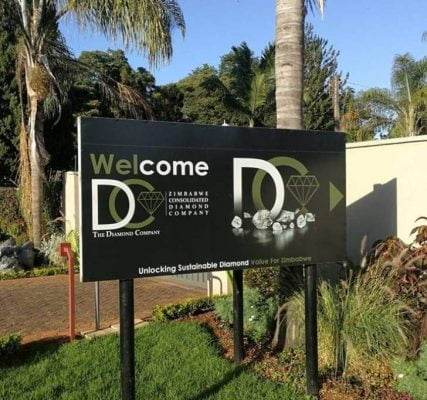
ZIMBABWE CONSOLIDATED DIAMOND COMPANY (ZCDC)
Zimbabwe Consolidated Diamond Company (Pvt) Ltd (ZCDC) is a diamond mining company wholly owned by the Government of Zimbabwe.
The Company has mining operations in Manicaland in Mutare’s Chiadzwa area and Chimanimani. The Company is conducting exploration and resource evaluation programs across Zimbabwe and expects to open new mines in other parts of the country soon.
ZCDC was issued with Special Grants 6026 and 6460 which vests mineral rights to carry out mining operations for diamonds in Chiadzwa and Chimanimani respectively.
The company has a 30 per cent stake in Alrosa Zimbabwe diamond exploration.
Anjin Investments
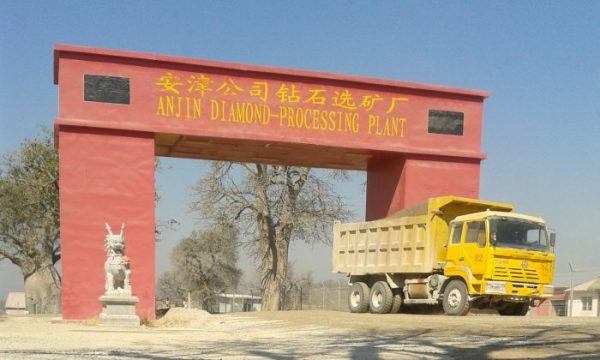
Anjin Diamond Mine
Controversial Chinese mining company, Anjin operates diamond mining in Zimbabwe at the Chiadzwa mining fields in Marange. Anjin had to shut operations back in 2015 after the Mugabe administration forced the closure of seven mining companies and the subsequent merger of their assets into the Zimbabwe Consolidated Diamond Company (ZCDC).
The company is reported to be selling diamonds without the involvement of the Mineral Marketing Corporation of Zimbabwe (MMCZ) allegations the company has disputed.
Caledonia Mining
Caledonia Mining owns one of Zimbabwe’s largest gold producers, Blanket Mine which produces around 60 000 ounces by 2022 the Company plans to increase its annual production by 45 percent up to 80,000 ounces.
Caledonia is committed to evaluating investment opportunities in Zimbabwe and has entered into two option agreements to acquire the mining claims over Glen Hume and Connemara North in the Midlands province.
Falcon Gold
Falcon Gold Zimbabwe Limited is a gold mining and exploration company in Zimbabwe.
The company owns Golden Quarry mine in Shurugwi. Founded in 1991, Falcon Gold Zimbabwe is a subsidiary of New Dawn Mining Group. New Dawn Mining Corp. is involved in the exploration, development, extraction, processing and reclamation of precious metal deposits in Zimbabwe.
It primarily explores for gold, base metals and precious metals. Falcon Gold Zimbabwe Limited also has an operational processing plant and ancillary infrastructure which supports a central processing plant that treats ore from Pickstone.
In 2016, Falgold sold one of its investment vehicles, Palatial Gold Investment (Private) Limited, which owns the Dalny Mine Complex (DMC), to RioZim.
Duration Gold Mine
Duration Gold Limited offers gold exploration and production services. The company owns 5 core assets with historic production of 4.6 million oz. It also sells gold at international spot prices. The company was founded in 2006 and is based in Bulawayo, Zimbabwe. Duration Gold Limited operates as a subsidiary of Clarity Enterprises Limited. One of its flagship gold mines is Vubachikwe, which is one of Zimbabwe’s oldest gold mines and also Gaika, Queens mine among others.
Dallaglio Investments
Dallaglio is a gold mining company with the potential to become Zimbabwe‘s largest producer, producing 4 tonnes of gold annually. The firm owns Pickstone Peerless Mine and The Giant gold claims in Chegutu District in Mashonaland West Province and Eureka Gold Mine in Guruve District, Mashonaland Central Province.
Bilboes Gold
Bilboes Gold Ltd, a subsidiary of Bilboes Holdings. Bilboes Holdings (Pvt) Ltd (Bilboes) owns and operates the Isabella-McCay’s-Bubi Oxide Complex, which comprises three existing gold mining operations. The company also owns When, Bubi and McCays gold mines in the southern region of the country.
Unki Mine (Anglo American)
Unki Platinum mine, Zvishavane Zimbabwe
Unki Mine is owned by Amplats and is located in the southern half of Zimbabwe’s Great Dyke geological formation–widely recognised as the second-largest resource of PGMs in the world. The Midlands-based miner is currently Zimbabwe’s second-largest PGM producer after Zimplats.
Venice Mine
Venice Mine Complex (VMC) is a complex of mines in Zimbabwe that holds 106 mining blocks covering an area of approximately 2,664 hectares. It has extensive underground and surface infrastructure and over 100 years of recorded production. VMC was closed down in 2002 whilst under the management of Falcon Gold Zimbabwe Limited citing a lack of adequate exploration and development on the mine, the deteriorating economic climate in Zimbabwe and a low gold price.
VMC was acquired by Maris in 2015, with a plan for reinvigoration in a phased approach. In 2013, in partnership with managing director David May, Maris invested in a group of 32 mining blocks covering 5 mines, which had laid dormant since the 1980s: Bee Mine, Bee Eater Mine, Pamela Mine, Commoner Mine and Welcome Back Mine in Zimbabwe.
VMC is an investee company of the Maris Group, an Africa-focused holding company that has been managing investments since 2006.
Golden Valley
Golden Valley mine is a gold-producing mine located in Patchway, approximately 18km from the City of Kadoma. It is currently owned by John Mack company with Head office located in Harare. The mine is one of the biggest producers of gold in Mashonaland West province.
Mimosa
Implats and Sibanye-Stillwater owned Mimosa mine in Zvishavane is Zimbabwe’s third platinum producer after Zimplats and Amplats’ Unki mine, as of 31 December 2020 Mimosa has 1.5 million oz of 4E PGM mineral reserves and 6.2 million oz of 4E PGM mineral resources.
The Mimosa mine is situated in the Wedza subchamber of the Great Dyke of Zimbabwe.
At Mimosa, the focus is being given to developing the Mtshingwe Shaft and further evaluating the Mtshingwe Block, extending the life of mine, stabilizing production profiles at current performance levels, and fast-tracking the conversion of mineral resources to mineral reserves.
Alrosa (Russian: АЛРОСА)
Alrosa is a Russian group of diamond mining companies that specialize in the exploration, mining, manufacture, and sale of diamonds. Alrosa is Russia’s leading diamond mining and distribution company, accounting for 95% of Russian diamond production and 27% of global diamond extraction.
Hwange Colliery
Hwange Colliery Company Limited is the leading coal producer in Zimbabwe and supplies the nation’s requirements, including low phosphorus coal and coke.
Hwange’s mining operations are predominately open pit. The company owns, the Hwange Coalfield and Chaba Mine located in the north-western region of Zimbabwe; its head office is in the capital city, Harare.
Makomo Resources
Makomo Resources is the largest privately owned coal producer in Zimbabwe.
The coal miner is located in Matabeleland. The company is 60 percent owned by a group of Zimbabweans, while British and South African investors hold the rest. In July 2014 the company said it has plans to spend US$1.5 billion on a 600-megawatt power plant in Hwange. Construction was planned to start in 2018. Makomo would finance the plant together with Chinese investors. Makomo would mine the fuel for the power station; it also supplies the nearby state-owned Hwange power station.
Zambezi Gas
Zambezi Gas Zimbabwe (Pvt) Ltd is a wholly-owned Zimbabwean private limited company operating in the coal mining and coalbed methane exploration industry since its incorporation on August 1st, 2002. Zambezi Gas explores mine, process, and market coal, coke, and their associated by-products. The company has in its portfolio an operating mine with a mining license expiring in 2042 as well as an on-going CBM exploration project both of which are situated in the Entuba Coalfields in Hwange Matabeleland North Province. The Entuba Rail Siding is located just 2km from the Company’s mining operation which is approximately 12km from Hwange town.
Chilota Colliery
Chilota Colliery began operations late last year and is now producing 30,000 tonnes of coking coal per month used to produce coke; the high-quality fuel needed by smelters. Chilota colliery is producing 30,000 tonnes of coking coal and about 30,000 tonnes of thermal coal for Zimbabwe Power Company (ZPC), which they are producing at Chaba Mines under a contract mining arrangement with Hwange Colliery.
The colliery has also deployed some of its equipment to Hwange Colliery Company, the country’s oldest coal mine where it is producing thermal coal under a mining contract.
Zimasco
The Zimbabwe Mining and Smelting Company (Zimasco) operates ferrochrome mines in Mashonaland West and the Midlands provinces. It also operates Zimbabwe’s largest ferrochrome smelter in the Midlands town of Kwekwe.
ZIMASCO owns Mutorashanga, Valley Mine, Ironton Mine, Railway Block Mine and Peak Mine
The Kwekwe-based ferrochrome smelting company has six operational furnaces and each has the capacity to produce 200 tonnes of ferrochrome a day.
Bikita Minerals
The Bikita mine is the largest lithium mine in Zimbabwe. Bikita is owned by Southern Africa Metals and Minerals Limited chaired by investor Mr. Wilfred Pabst. The mine holds the world’s largest-known deposit of lithium at approximately 11 million tonnes. The mine is located in southern Zimbabwe in Masvingo Province.
How Mine
How mine is owned by Metallon Corporation. How Mine has been in operation since 1942 and has produced over a million ounces of gold to date. It comprises a single underground operation, where ore is processed at a central processing facility, using a combination of conventional milling and a carbon-in-leach process.
Redwing mine
Redwing Mine is owned and operated by Metallon’s King’s Daughter Mining Company Limited. Redwing Mine resumed production in 2015 following dewatering. The mine is located in Manicaland province in the east of Zimbabwe, about 20 kilometres northeast of the city of Mutare and 265 kilometres southeast of Harare.
Freda Rebecca
Bindura based Freda Rebecca gold mine was previously owned by Freda Rebecca Holdings (Pvt) Limited and ASA Gold Limited (formerly Mwana Africa Ltd). The mine is one of the country’s leading gold and silver producer.
The mine is situated on the Mazowe-Bindura greenstone belt. The belt’s surrounding area is characterised by shamvaian sediments, diorite and granodiorite that are traversed by dolerite dykes. Ore bodies are located within two major mineralised envelopes.
The envelopes are characterised by shears. The two shears unite in the southwest and flatten at a height of about 850m before extending into metasediments. They are defined by a number of anastomosing shears that are separated by under-formed rocks.
Sabi Gold
Sabi Gold mine is a gold mine owned by Anesu Gold and the State of Zimbabwe. Includes Sabi Extra, Canada, and White Sabi to the north and Monte Carlo and Hazard to the south, all located within the main shear. The mine is one of the country’s largest producers of the yellow metal.
Dorowa Minerals
Dorowa Minerals is wholly owned by Chemplex Corporation and is the only phosphate mine in Zimbabwe. Mining is by opencast method and involves ripping and dozing in soft rock and drilling and blasting in hard rock.
The Dorowa deposit is volcanic and exists within a horseshoe-shaped range of hills. It is very fortunate that the deposit is only 5 kilometres from the Save River from which water is extracted at the rate of five million litres per day for use on the flotation plant.
The beneficiation plant consists of milling and flotation processes to produce phosphate concentrates which are converted into superphosphates at ZimPhos, a sister company. Ore from the pit is at 6, 5% P2O5 and the concentrates being dried and sent to Zimbabwe Phosphate Industries (ZimPhos) are at 37% P2O5.
The dried concentrates are sent to the railhead at Nyazura along the Mutare highway, some 65km away, by road and 190km to Zimbabwe Phosphate Industries, in Harare by rail.
SAMREC VERMICULITE
Samrec Vermiculite Zimbabwe (Pvt) Ltd are the owners of the Shawa Vermiculite Mine. The Shawa Vermiculite Mine is located near the township of Dorowa, approximately 300 kms South East of Harare, the capital city of Zimbabwe.
The Shawa deposit is one of the largest vermiculite deposits in the world located within a 5.5 km radius alkali ring complex. The deposit was formed 209 million years ago, with the vermiculite being hosted within ijolite rocks.
Much is being talked about the mine’s contribution to the national fiscus but it, however, remains one of the largest vermiculite mines in the world.
Bindura Nickel Corporation (BNC)
Bindura Nickel a Nickel producing mine based in Bindura
ZSE listed BNC is operated and 73.64% owned by Kuvimba Mining House. The Mine is located, in Bindura Mashonaland East Zimbabwe. Its Smelter and Refinery Complex is located south of Bindura. The smelter
produces nickel cathodes, copper sulphide and cobalt hydroxide. BNC is the country’s largest nickel producer
Kuvimba Mining House
New player Kuvimba was established last year and is 65 percent owned by the government with the balance held by management through a Mauritius-based company Quorus.
Kuvimba is also the majority owner of listed Bindura Nickel Corporation and is seeking to acquire chrome and more gold assets. The company is also linked to Darwendale platinum mine and owns Shamva, Jena, Golden Kopje, Elvington, ZimAlloys and Sandawana mines. Kuvimba already has interests in mining assets, including gold, chrome, nickel, gemstone, platinum group metals (PGMs) and chrome.
The company according to experts has the potential to become Zimbabwe’s biggest miner at the same time becoming the largest producer of gold, PGM and Chrome among other minerals. It is set to embark on exploration works at Golden Kopje and Elvington gold mines to establish their commercial viability and It wholly controls gold mines, Freda Rebecca.
TN Gold
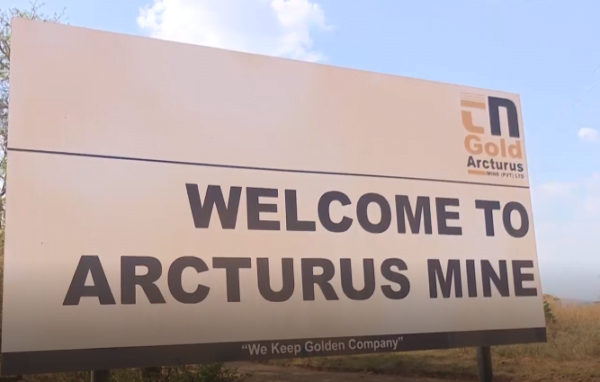
TN gold is a mining company owned by Business mogul Tawanda Nyambira. The company owns Arcturus Gold Mine which previously belonged to Britain-based Metallon Gold. The Goromonzi based Arcturus mine is one of the oldest operating mines in Zimbabwe and has the potential to produce one tonne gold per annum.
Pretoria Portland Cement (PPC)
PPC Ltd, a leading supplier of cement, lime and related products in southern Africa.
The company owns Colleen Bawn mine in Matebeleland South. PPC Has two plants in Bulawayo and Colleen Bawn. The two PPC Zimbabwe plants are among the most modern in southern Africa and well located to serve both the Zimbabwean and neighbouring export markets. Combined, they have an annual capacity of 760 000 tons of cement. The Bulawayo plant can produce another 300 000 tons of cement per annum with clinker supplied from PPC’s South African operations, while the installation of a new cooler and upgrade to the kiln at Colleen Bawn increased capacity by around 20% in 2010.
PAN AFRICAN MINING (PVT) LTD
The company owns Muriel Mine, Aryshire Mine and AMT 97 Mine.
Lafarge
Lafarge Cement Zimbabwe is one the leading cement and allied products producers in Zimbabwe.
The company has two mining operations where limestone is extracted. These include Mbubu in Mashonaland East Province and Sternblick quarry in Harare. Lafarge Cement Zimbabwe has an installed Plant Capacity of 500 000 tonnes per annum.
Conclusion
Despite facing economic challenges for over a decade, mining in Zimbabwe is still going strong. It is an undisputed fact that some mines and mining companies need to up their game to increase production which currently the national focus as companies move to achieve the 12billion Mining Industry by 2023. The government can also necessitate increased production by maintaining consistency and improving service delivery which is seriously lagging behind in the Mines and Mining Development Ministry (MMMD).
Diversified mining group, RioZim has announced a 27 percent decline in gold production as some constraints at its linchpin Cam & Motor Mine affected 2020 output.
The group’s gold production declined from 1,66 tonnes achieved in the prior year to 1,21 tonnes.
Of RioZim’s three gold mines, only Renco posted positive production numbers in FY2020.
“Throughout the current year, the group’s flagship operation Cam & Motor Mine carried out mining activities from the nearby One Step Mine hauling low grade ore to the Cam & Motor plant for processing.
“This resulted in a drastic fall in gold production compared to the prior year when the mine processed higher grade ore from its Cam pits,” said RioZim chairman Rashid Beebeejaun.
Production at Cam & Motor Mine for the period under review closed at 427kg, a sharp 42 percent decline compared to 738kg in the prior comparable period.
Management said the depletion of oxide ore resources at the mine necessitated the migration of mining operations to the group’s nearby One Step Mine.
RioZim is currently hauling ore from One Step Mine to the Cam & Motor processing plant.
“The ore resources at One Step Mine have significantly lower grades than those at the Cam & Motor pits and this negatively affected production output,” said the chairman.
“The mine is, however, focused on completion of its BIOX plant project which will enable the resumption of mining and processing of high grade refractory sulphide ores from the Cam pits.”
Gold output at Dalny Mine was also significantly lower, down by a hefty 46 percent in the current year to 198kgs from the comparative period production of 364kg as the mine” “suffered major breakdowns in the milling section of its ageing plant which directly impacted milled output.”
Dalny currently relies on near the surface open pitable ores which have lower grades that culminate in low production volumes.
According to management, the medium-to-long term plan for the mine is to complete the de-watering and resuscitation of its underground shafts in order to access the higher-grade ore that is deposited underground.
With regards to the group’s gold operations, Renco Mine was the only bright spot as the mine recorded aggregate gold output of 580kgs, which was 4 percent above the prior year’s gold output of 556kgs.
The increased gold output was at the back of higher milling throughput, which was achieved as the mine implemented its ‘high volume low grade’ strategy which yielded positive results.
The overall depressed gold output was offset by firming gold prices during the year under review.
The gold price maintained a growth trend throughout the year recording a 27 percent growth from the prior year’s average price of US$1 395/oz, to an average price of US$1 765/oz in the current year which counteracted the impact of lower production volumes.
As a result of the improved gold price and currency depreciation locally, RioZim’s revenues totalled $3,1 billion in comparison to $577,1 million in the prior year.
Although the Covid-19 pandemic was not a factor in the group’s mining operations, the pandemic affected progress on the BIOX Plant Project, with funding opportunities remaining clogged throughout the year.
“Progress on the BIOX project was negatively affected by the Covid-19 pandemic which brought the project to a standstill as key suppliers were affected by lockdowns and travel restrictions in the first half of the year.
“Project activities resumed in the second half of the year albeit at a slow pace after lockdown measures were eased.
Despite the relaxation of lockdown measures, the movement of goods and people remained constrained due to the various Covid-19 restrictions and protocols that remained in place both locally and in South Africa where most of the equipment suppliers are housed thereby limiting the smooth flow of project activities,” said Beebeejaun.
“External funding for the project remained elusive throughout the year as lenders took a conservative approach in light of the uncertainties brought about by the Covid-19 pandemic.
“This left the Company primarily dependent on internally generated funding.
“Despite the funding and Covid-19 challenges, the company managed to steam-roll the project to bring civil works to near completion and managed to take delivery of the bulk of the equipment by year end. Installations commenced post year end and are progressing well.”
RioZim added that as at the end of 2020, the company was engaged in discussions with potential lenders to secure the remaining funding requirements to complete the project, and is hopeful of reaching financial closure.
Management expects the project to be commissioned in the current year.
The group’s associate, Murowa (Pvt) Limited, produced 579 000 carats from 685 000 carats produced in the comparative period, largely attributable to the processing of the low grade K2 resources after the high grade K1 resources had been depleted in the prior year.
Murowa continued to contribute positively to the Group’s profitability with a share of profit of $494,8 million compared to $22,9 million in the prior year.
The Empress Nickel Refinery remains under care and maintenance.
RioZim’s chrome claims in Darwendale are still under a legal dispute and we await finalisation of the court case.
Management said it continues to monitor the chrome prices with the aim of resumption of mining operations once the legal case has been finalised.
Going forward, the group is focused on the completion of the BIOX project
“The success of this project will be pivotal for the sustenance of the Cam & Motor mine,” said the chairman.
The board did not declare a dividend for the period.
To provide the best experiences, we use technologies like cookies to store and/or access device information. Consenting to these technologies will allow us to process data such as browsing behavior or unique IDs on this site. Not consenting or withdrawing consent, may adversely affect certain features and functions.
Functional
Always active
The technical storage or access is strictly necessary for the legitimate purpose of enabling the use of a specific service explicitly requested by the subscriber or user, or for the sole purpose of carrying out the transmission of a communication over an electronic communications network.
Preferences
The technical storage or access is necessary for the legitimate purpose of storing preferences that are not requested by the subscriber or user.
Statistics
The technical storage or access that is used exclusively for statistical purposes.The technical storage or access that is used exclusively for anonymous statistical purposes. Without a subpoena, voluntary compliance on the part of your Internet Service Provider, or additional records from a third party, information stored or retrieved for this purpose alone cannot usually be used to identify you.
Marketing
The technical storage or access is required to create user profiles to send advertising, or to track the user on a website or across several websites for similar marketing purposes.