Home Blog Page 510

Lithium deficit a boon for Zim

0

Zimbabwe is set to draw significant benefits soon, as one of the world’s major lithium producers – not least because of the number of fledgling local lithium projects – but the forecast near term global supply shortage.

Already, the Southern African country is the world’s fifth largest producer of lithium, albeit with only a single producing mine. It holds extensive deposits of the on-demand mineral widely used in the automotive and glass industries.

Currently, Zimbabwe has a single active lithium mine, Bikita Minerals, but a number of Greenfield and Brownfield projects at various stages of development, priming the country as one of the biggest producers very soon.

After realising the growing demand for lithium, the Government has classified the commodity as one of the strategic minerals towards achieving its vision of transforming mining into a US$12 billion industry by 2023.

Prospect Resources, which is listed on the Australia Stock Exchange (ASX), operates the Arcadia lithium mine near Harare, which is the world’s seventh largest hard rock lithium asset, with a 16 year life of mine.

As of 2017, Arcadia had a joint ore resources committee (JORC 2012 edition) mineral resource of 43,2 million tonnes, as well as approved and controlled mineral resource of at least 37,4 million tonnes and pre-mining reserves of 15.8 million tonnes.

Arcadia is also Africa’s most advanced lithium project. Other fledgling projects in Zimbabwe include Zulu, Kamativi projects, while Bikita is working on expanding production.

But even the most optimistic would not have seen the possibility of better fortunes for Zimbabwe come so early, and interestingly, via anticipated shortage of the high value mineral by 2022.

Lithium-ion batteries experienced a compound annual growth rate of 25 percent from 2015-18, driven primarily by an uptick in electric vehicles (EVs).

Last year, global lithium demand had reportedly jumped to 49 000 tonnes, with 60 percent for use in battery-related products.

Experts say with around a billion light-duty vehicles on the roads, and the number set to rise to 3 billion by 2050, electrifying the global fleet could put a huge squeeze on lithium supply.

Once it goes into production, Prospect will produce both chemical and industrial grade lithium, namely spodumene and petalite and stands to benefit from global shortage along with major producers like Australia, Chile, China and Argentina.

The only African nation on the list of active producers, Zimbabwe produced 1 600 tonnes of lithium in 2018 – doubling the previous year’s total.

One of the country’s most promising lithium projects developers, Prospect Resources Plc, says the global market will fall into short supply by 2022, if the existing capacity is not expanded.

The company said for additional producers to meet the demands of 2022, mine development would have had to start in 2019.

“Therefore, without further investment in new projects, there will be supply shortage by 2022, where EV (Electric Vehicles) will accelerate as they reach cost parity with ICE (Internal Combustion Vehicles) vehicles,” Prospect Resources.

Lithium’s appeal, now being one of the world’s most sought after commodities, has not gone unnoticed and suitors have been knocking at the door.

Prospect has already inked one of the world’s largest ultra-low iron lithium off-take agreements with Sibelco, and the deal entails the supply of 100 000 tonnes for the next seven years.

Sibelco is the largest distributor of ultra-low iron petalite in Europe and possibly the world and we believe that this is the largest ultra-low iron petalite offtake agreement ever signed.

“Arcadia now has 100 percent petalite production secured under off-take for the first seven years. Sibelco’s facility has been processing petalite for over 20 years and will be the facility for further processing and distribution to European customers.”

Uranium One Group, an international mining company of ROSATOM, the Russian State Corporation for Nuclear Energy with a diverse portfolio of assets worldwide, has also shown keen interest.

On the 12 December 2019 Prospect signed a Memorandum of Understanding with Uranium One to afford the Russian firm an opportunity to complete due diligence on the company and its Arcadia Lithium Mine.

And subject to satisfactory due diligence, the parties may then negotiate an Equity investment terms in Prospect or its subsidiaries; and off take terms for at least 51 percent of the company’s future lithium production.


Business Weekly

Lafarge in US$25 million Capex

0

LAFARGE Cement Zimbabwe Limited is implementing a US$25 million capital expenditure programme expected to improve the company’s milling capacity and automating the Dry Mortar Mix (DMX) plant.

A statement accompanying the cement manufacturing company’s financial results for the half year ended June 30, 2020, indicates the DMX plant would likely be commissioned before the end of the year.

“The business continues with the implementation of the previously announced US$25 million capital expansion programme.

“This investment is earmarked to improve cement milling capacity and automate the DMX plant.

“In addition to the expected increase in production capacity, the programme will also create infrastructure to improve power supply and cement storage,” said the company.

Currently, the DMX plant is being installed while the Vertical Cement Mill supply contract was signed last month. During the period under review, the business did not have any new borrowings.

However, in April Lafarge successfully registered a legacy debt in line with the Reserve Bank of Zimbabwe (RBZ) Exchange Control Directive of 2019.

The cement producer said it started the year on a satisfactory note with first-quarter volumes marginally exceeding the 2019 comparable period by 1,4 percent.

But the onset of the Covid-19 pandemic lockdown caused a significant drop in the monthly volumes of April by 71,4 percent compared to the same month in the prior year.

“The volumes recovered in May and June 2020, leading to total volumes for the period closing at 14,1 percent lower than the same period last year.

“This performance is largely in line with market trends as there is an overall market decline of 13 percent compared to the same period last year,” it said.

“The rebound continued into July 2020, further narrowing the volumes decline to only 6,4 percent lower than those achieved in the same period to July last year.”

Lafarge anticipates that recovery for the remainder of the year is likely to be slower due to the planned plant shutdown scheduled for the last quarter of the year.

Volumes for the DMX business, however, grew by over 100 percent compared to the same period in prior year.

“This remarkable growth comes ahead of the commissioning of the new DMX mortar plant set for December 2020,” said the manufacturing company.

During the period under review, Lafarge revenue grew by 27 percent to ZWL$1,1 billion (June 2019: ZWL$0,9 billion).

The firm’s cost rationalisation, innovation and efficiency initiatives helped to improve gross profit margins by eight percent to 50 percent (June 2019: 42 percent).

The same initiatives also resulted in an overall decline in the company’s operating costs by 10 percent.

Lafarge’s operations were weighed down by foreign currency shortages, which drove up foreign exchange losses to ZWL$367 million compared to a gain of ZWL$18 million in the same period last year.

“However, the recent policy changes, which include the foreign currency auction have seen improved foreign currency inflows and the company has made significant strides in settling foreign obligations.

“The conclusion of the Blocked Funds registration process strengthened the company’s financial position as foreign denominated liabilities and capex commitments amounting to US$31 million were registered with RBZ.

“The process was concluded in April and the required cash cover of ZWL$31 million was lodged with RBZ,” it said.

In the outlook, Lafarge said as uncertainty about the duration and severity of the coronavirus spread remains high, the World Bank expects the economy to contract by between five percent and 10 percent this year.

“Recent economic data also shows that demand has started to decline in response to these new fundamentals.

“However, there will be new opportunities in the coming year as the economy continues to evolve and adapt to operating in the context of the Covid-19 pandemic.

“With a robust and ambitious strategic agenda in place, as well as the capital investment to support it, the business is poised to mitigate the negative effects of the difficult economic environment and grow shareholder value,”


The Chronicle

Gold Miner Plunges To Death, Authorities Worried Over Spike In Mine Accidents

0

A 23-year-old Kadoma miner, who was working in an underground gold mine, plunged to his death after slipping from a rope attached to a hoist that was transporting workers to the surface.

The now deceased, Aaron Pirikisi fell to his death 20 metres down a shaft at Discovery 112S mine situated at Eiffel Flats, Kadoma, last week.

Mashonaland West acting police spokesperson, Assistant Inspector Ian Kohwera confirmed the incident.

He said the hoist which carries workers from underground to the surface malfunctioned, leading to the tragedy.

“The hoist took a few minutes to start moving, prompting the now deceased to disembark from the hoist cage intending to signal those operating from the surface that something was wrong,” Kohwera said.

“All of a sudden, the hoist started moving while Pirikisi was still outside the cage. Fearing that he would be left underground, Pirikisi grabbed a rope which was attached to the hoist cage with the hope to go all the way up to the surface, but he lost grip and fell into the shaft 20 metres down and died instantly.”

Pirikisi’s body was retrieved by fellow mine workers before a report was made to Eiffel Flats police.

Without giving exact figures, the police spokesperson said there was a worrisome trend signalling an increase in the occurrence of occupational mishaps at gold mines in Mashonaland West province.

Kohwera appealed to mine owners and managers to ensure strict adherence to safety standards by employees to avoid unnecessary loss of lives_NewZimbabwe.com

‘Zim oil and gas mix boon for investment’

0

Invictus Energy, the Australia Stock Exchange (ASX) listed firm exploring for oil and gas in Muzarabani, says the portfolio in Cabora Bassa, with a predominant gas and liquids mix, appeals to a wider range of energy industry partners and investors, and the company is thus well positioned to monetise the resource if proven to nearer-term cash flow.

Already, two MOU’s have been signed with Sable and Tatanga Energy to secure both a market and lock in a premium value to near-term cash flow for some 15 percent of the likely gas resource.

Invictus said the demonstration that there is a lower risk gas market, in addition to strong ESG (Environmental, Social, and Governance) credentials provides investors and stakeholders confidence on routes to monetisation, both domestically and in the wider region.

The firm also said the cost of drilling test wells to investigate the existence of oil and gas in Muzarabani falls within the global range and what is generally considered to be in the relatively low-cost threshold, the company doing the exploration, Invictus Energy, has said.

Drilling of oil/gas test wells and evaluation of the results thereof, will likely be the end of the exploration programme before moving to actual production of oil and gas, assuming that a commercial discovery is achieved.

Test well drilling is scheduled for October next year and it is estimated that the programme will cost up to US$20 million.

The bulk of work done over the last three years, has centered mostly on reprocessing secondary data relating to the Muzarabani prospect, which forms part of extensive exploration works to be completed next year, and it is expected that commercial discovery of oil and gas will be a huge game changer for Zimbabwe.

The Austria Stock Exchange (ASX) listed junior exploration firm, has done extensive reinterpretation of secondary data set compiled by Mobil in 1992 using modern technology, which has produced strong evidence backing the existence of oil and gas.

In today’s money the investment by Mobil would have exceeded US$30 million and thus the data has provided Invictus Energy with a unique, broad and powerful dataset to carry out its forward exploration campaign.

In the past year Invictus has been progressing the development of the Cabora Bassa Project in Zimbabwe that encompasses the Mzarabani Prospect, a multi-trillion cubic feet (Tcf) conventional gas-condensate target, which is potentially the largest, undrilled seismically defined structure onshore Africa.

Invictus said in its 2020 annual report that it had received an independent drilling cost estimate for a range of well designs (vertical and directional) with the total depth (TD) ranging from 2 000 metres down to 4 000 metres.

“The drilling cost estimates range from US$5,2 million (2 000m vertical well – low side estimate) to US$16,4 million (4 000m directional well-high side estimate) are consistent with the company’s internal estimates.

“The best estimate for a 3 200m directionally drilled well to test the 8.2 Trillion cubic feet (Tcf) plus  249 million bbl (barrels) Muzarabani Prospect is US$11,7m (excluding mobilisation), which confirms the ability to test a world class, material target at relatively low cost,” Invictus said.

Invictus said the portfolio in Cabora Bassa, with a predominant gas and liquids mix, appeals to a wider range of energy industry partners and investors and the company is thus well positioned to monetise the resource if proven to nearer term cash flow.

“Two MOU’s were signed with Sable and Tatanga Energy to secure both a market and lock in a premium value to near-term cash flow for some 15 percent of the likely gas resource should the exploration campaign be successful.

“The demonstration that there is a lower risk gas market, in addition to our strong ESG (Environmental, Social, and Governance) credentials provides investor and stakeholder confidence on routes to monetization, both domestically and in the wider region,” Invictus Energy said.

The company has received approval for its Environmental Impact Assessment (EIA) and commenced the EIA survey in the project area.

The company through local majority shareholder, Geo Associates, provided traditional leaders in Muzarabani with an overview and update of the project and is moving to on the ground activity (geophysics) that will commence following the approval of the EIA, which is expected to be approved shortly.

Among other milestone achievements, Invictus said its special grant had been extended by a further three years while it had also been issued with a licence by the Zimbabwe Investment Development Agency.

Further, Mines and Mining Development Minister Winston Chitando said that a production sharing agreement (PSA), which entitles the State to a share of the oil or gas from Muzarabani, was almost complete and currently being reviewed by the Government.

The commercial discovery of oil and gas will change the economic face of Zimbabwe through new job creation, energy security, growth of exports, and downstream industries.


Business Weekly

Great Dyke platinum project due diligence study complete

0

THE African Export-Import Bank (AfreximBank) has completed a due diligence study for Great Dyke Investments’ platinum project paving way for the regional financier to proceed with a US$500 million syndicated funding programme.

Great Dyke Investments is a joint venture between Russia’s Vi Holdings and Zimbabwe’s Landela Mining Venture (Pvt) Limited and is investing US$3 billion into the operation presently under development in Darwendale.

Bloomberg quoted Great Dyke Investments (GDI) chief executive officer, Mr Alex Ivanov, saying AfreximBank has completed a due diligence study allowing it to proceed with a US$500 million syndicated funding programme.

“The project funding structure envisages participation of various types of equity investors as well as lenders.

“The specific stake to be acquired by potential investors would largely depend on their overall appetite for the project,” he was quoted as saying.

The publication said Mr Ivanov confirmed the completion of the due diligence programme and hinted they expect the AfreximBank funding to be in place by year end.

Last month, GDI announced that the first phase of the new platinum mine on its Darwendale concessions was on course, with the box cut for the second portal having been opened in July.

A box cut is a single rectangular hole made on the surface as the opening of new shafts and provides a secure and safe entrance to an underground mine.

Already, more than US$25 million has been spent in the development of the mines this year and the total invested so far is US$110 million.

Under the first phase, Great Dyke is expected to develop two mines, a concentrator, engineering workshops, storerooms, staff change rooms, portal offices and fuel storage.

Meanwhile, the platinum miner has announced that it is working with relevant Government departments to relocate the households that have been affected by the development of the mines. The mine which is planning to invest in the construction of houses for its staff, expects to employ 4 000 during the first phase.

When fully operational, the two mines will produce up to 4 million tonnes of ore per annum.

Platinum is expected to contribute US$3 billion to Government’s target of a US$12 billion mining industry by 2023, with GDI a critical contributor.

The Chronicle

Covid-19 forces private diamond auction

0

The Minerals Marketing Corporation of Zimbabwe (MMCZ) has been forced to conduct private sales for diamonds as auction sales are now difficult to conduct due to the outbreak of the Covid-19 pandemic.

Bernard Rinomhota

MMCZ is the country’s exclusive agent for selling and marketing all minerals produced in the country except gold and silver.

Due to the travel restrictions that countries across the world have imposed to fight the spread of the highly infectious respiratory disease which was first detected in China last December, potential buyers for Zimbabwe diamond from around the globe have not been able to come into the country for diamond auction sales.

MMCZ general manager Mr. Tongai Muzenda said as a result of the negative impact of Covid-19, his organisation was now resorting to conducting private sales of the diamond.

“We are now trying to do a few private sales in the sense that auction sales are now a bit difficult to conduct these days because of the Covid-19 pandemic.

“People (prospective buyers) cannot travel into the country for the auction,” he said.

Mr. Muzenda said MMCZ was also using the digital platform by sending the prospective buyers pictures of the diamond Zimbabwe was selling because some customers are knowledgeable of the quality of the local gemstones.

“We have not yet held the diamond auction this year but what we have done is, we conducted private local sales last week.

“However, l don’t have off-hand the exact quantity of the carats that were sold,” said Mr. Muzenda.

Meanwhile, MMCZ has announced that it was set to appoint mineral agents for semi-precious stones to empower small-scale miners to extract and trade in the gemstones while also boosting the mining sector’s contribution to the fiscus.

The mining sector contributes about 70 percent of Zimbabwe’s export earnings.

Recently, the government announced that it was liberalising gemstones trading to allow individuals and corporates to participate in the buying and selling of the semi-precious stones.

Such semi-precious stones include heliodor, aquamarine, tourmaline, amethyst, goshenite, and iolite.

The gemstones, which are used in the manufacturing of jewellery and decorative purposes are strewn all over the country in areas such as Gutu, Mutoko, Hurungwe, Zvishavane, Mutare, and Rusape, among others.


This article first appeared in the September 2020 issue of Mining Zimbabwe Magazine

Beirut Explosion – The Lethal downside of Ammonium Nitrate

0

What started as a normal day in the port of Beirut, Lebanon ended in serious turmoil.  A devastating explosion, on the 4th of August, 2020, suspected to have been caused by large volumes (2750t) of Ammonium nitrate (AN), stored unsafely in a warehouse, ripped through the city, and shook it to the core. Lebanese authorities say the giant blast, killed at least 200 people, injuring more than 5000 people, and left an estimated 300 000 homeless. The blast also left Lebanon in political limbo, the whole cabinet resigning amid widespread anger over the blast.

The Beirut disaster has left many people asking, what really is ammonium Nitrate?

Ammonium nitrate is a crystal-like white solid that is made in large quantities all over the world. Its common use is in agriculture, where it is used as a top dressing. The nitrogen-rich compound is also commonly used to make commercial explosives. Ammonium Nitrate acts as an oxidiser, supplying oxygen in the propagation of the explosive reaction. It is the most common ingredient in many modern explosives on the market, including emulsions, water-gel explosives, and the main component of the explosive composition known as ANFO- Ammonium Nitrate Fuel Oil.

Ammonium Nitrate has the chemical formula NH4+NO3, which contains two nitrogen (N) atoms, four hydrogen (H) atoms, and three oxygen (O) atoms. In this formula, the ammonium (NH4+) ion and nitrate (NO3) ion are bonded together by an ionic bond.

A closer look at the amateur video footage doing rounds on social media platforms, two explosions can be seen. At first, white smoke could be seen wafting from the roof of the warehouse, and a large initial explosion was heard. Seconds later, a second colossal explosion came, which sent a reddish-brown plume above the city’s port and creating a supersonic blast wave radiating through the city.

The reddish-brown fumes characterise all Ammonium Nitrate explosions. Upon ignition, Ammonium Nitrate produces lots of oxides of nitrogen (commonly known as nitrous fumes). Once initiated, a self-supporting reaction is sparked, ammonium nitrate explodes rapidly and violently decomposing into large volumes of nitrous oxides and water vapor.

In its pure state, Ammonium Nitrate is relatively stable and not classified as an explosive. However, ammonium nitrate is classified as an oxidiser according to the UN classification of dangerous goods. In simpler terms, ammonium nitrate increases the burning reaction of fuels by increasing the amount of oxygen available for the reaction. To initiate the reaction, ammonium nitrate needs to come in contact with an open flame or a source of ignition. In the case of the Beirut explosion, preliminary investigations are pointing to the presence of fireworks in the vicinity.

A quick trip down memory lane, ammonium nitrate is known to have caused serious accidental detonations in the past.

  • The Texas City disaster of 1947, which is considered to be the deadliest industrial accident in US history, quickly comes to mind. At least 581 people were killed when more than 2300tonnes of Ammonium nitrate detonated on-board a ship that had docked in the port. The detonation is said to have been sparked by a carelessly tossed cigarette which started a fire aboard the ship.
  • In 1921, in Oppau, Germany, about 4500tonnes of ammonium nitrate caused an explosion at a plant and more than 500 people were killed during the disaster.
  • In China, more recently in 2015, a similar incident involving ammonium nitrate and other chemicals killed around 170 people in the port of Tianjin in Northern China

Not all disasters involving Ammonium Nitrate are accidents: Terrorists also take advantage of the readily available explosive ingredient to cause anarchy. The 1995 bombing of the Federal Building in Oklahoma City by terrorists, left around 168 people dead. In 2002, a nightclub bombing in Bali killed 204 people. In the 2011 Oslo bombing by Anders Behring Breivik, which killed eight people, and in numerous other terrorist attacks that use the product. All these attacks were perpetrated using ammonium nitrate as the main explosive ingredient.

Ammonium nitrate is relatively cheap to buy and usually safe to handle compared to other explosive ingredients, but storing it can be a problem. Overtime the prills combine to form lumps. The lumps are more sensitive and when subjected to the intense heat it can trigger a massive explosion.

In Zimbabwe, it is common to find ammonium nitrate stored in significantly large quantities by farmers, miners as well as in industries and other commercial depots or warehouses. Do people really know the hazards?

Many times I have visited my Grandpa in the rural areas, only to find his Ammonium Nitrate fertiliser for the coming season, stored together with other combustible materials such as grain, packaging material, and in some cases with diesel for tilling the land. In some instances, the deadly oxidiser is found in the open and not properly stored. In the event of a fire outbreak, the severity of that fire will be amplified. My Grandpa and others alike should be assisted with the basics of proper handling and storage of ammonium nitrate to avoid similar disasters in the future.

With proper handling, ammonium nitrate continues to play an imperative role in our lives, helping us feed the nations and unearthing wealth, but with a little laxity in our controls, the product can cause large scale destruction, the Beirut incident and history has taught us.


This article first appeared in the Mining Zimbabwe Magazine September 2020 issue

50MW power plant commissioning postponed

0

The Zimbabwe ZhongXin Coking Company (ZZCC) has postponed to early next year the commissioning of 50MW under the first phase of its US$10 million 300MW thermal power plant presently under construction in Hwange.

Bernard Rinomhota

The Zimbabwe ZhongXin Electric Energy (ZZEE), a subsidiary of ZZCC had targeted to produce 50MW by October this year from the first phase of the power project.

ZZCC has since established that the initially planned targets would not be possible due to the Covid-19 pandemic, which has caused travel restrictions as the world battles to contain the spread of the deadly global contagion.

“We are not able to meet our initial deadline to have the project produce 50MW by October this year under the first phase of the project.

“This is because our engineers who are supposed to work on the project are still stuck in China following the outbreak of the Covid-19 pandemic,” ZZEE project manager Mr. Bob Wang in an interview last week.

Among other major technical works, the engineers from China are expected to erect electrical boxes at the thermal power plant.

The Covid-19 pandemic was first detected in China last December and so far the deadly infectious disease has spread across all continents infecting more than 20 million people while the global death toll is now close to one million.

“As our engineers are still stuck in China we have postponed the commissioning of this project under the first phase to February or March next year,” he said.

ZZCC is a joint venture project between Qualisave Mineral Resources of Zimbabwe and Yuxia ZhongXin Coking Company of China.

The colliery is building its thermal power station whose full construction is expected to be complete by 2023 producing electricity to support its coal mining operations while also feeding excess power into the national grid.

The thermal power plant, which is being done in phases of 50MW, has in terms of construction work progress seen boilers and turbines, among other critical equipment, installed.

Upon completion, the power plant is expected to consume 300 000 tonnes of coal annually.
Meanwhile, ZZCC has applied from Government for a Coal Special Grant Grant (CSG) to enjoy economies of scale once the firm starts producing coal to support its operations.

Currently, ZZCC has hinted that it is receiving inadequate coal supplies from Makomo Resources and Hwange Colliery Company Limited.

The company has two plants requiring 15 000 tonnes of coking coal per month.


This article first appeared in the Mining Zimbabwe Magazine September 2020 issue

The government should restrategise promoting young miners

0

Zimbabwe Miners Federation (ZMF) Youth in Mining Chairperson Mr. Timothy Chizuzu has said that the government of Zimbabwe needs to rethink how youth in mining are promoted in order to strengthen the growth of the small-scale sector to medium.

The government according to Chizuzu should revisit their mining financing strategy to create successful mining ventures where the youth will be the leading force in coming up with new ideas as well as being in the position to oversee the growth of the sector.

He urged the government to adopt an approach whereby the government will finance limited youth operations because mining is capital incentivize hence needs a lot of funding.

According to the ZMF youth boss, the government needs to finance at most ten projects per every province than to fund over 500 youth with very inadequate resources.

He also urged the government to create workshops where the youth will be taught to be financial and business literate before taking government loans.

“In terms of financing, the government should take an approach whereby they offer loans a small number like financing 10 people in each province than financing 500 youth with very little or insufficient funds.

“The government should not just give loans for the sake of giving loans, the government also needs to teach youth in mining financial and business management before giving them financial assistance.” He said.

According to Chizuzu, many Youths in the mining sector in Zimbabwe are not progressing well in the process some lose their mining concessions because they are at most incapacitated to run a successful mining operation.

Chizuzu said that many youths in mining who would have ventured into the sector to alleviate poverty and to create employment for themselves usually lack the experience to run an operation except the theoretical aspects they learned at school.

“We have several youths that are in mining but not progressing well. Most of them are not yielding the expected outcome as a result their claims are left to forfeit.

“Youth in Mining is incapacitated, most of them lack the experience to mine, some of them just come from school and start mining without proper knowledge of mining except for the theoretical aspects they learn from school,” Chizuzu said.

The ZMF youth boss also urged small scale miners who are doing well to employ college mining graduates for skills exchange programs whereby the young miners will bring in with them fresh ideas from school while at the same time learning how to run a successful small to medium mining operation.

He also urged young graduates to form syndicates and acquire mining concessions in the country at the same time seeking government and experience miners help in running those operations.

“There should be a skill exchange program in the sector, all small-scale miners should employ graduates to curb unemployment at the same time exchanging ideas with the youth people hence promoting the growth of small scale mining to medium scale.

“Young mining graduates should also form syndicates to acquire claims and start mining as professionals,” Chizuzu said.

Chizuzu also urged the government to preserve such mining as Quarry mining to locals particularly the youth because Quarry mining is not much complicated when it comes to exploration.

“Quarry mining should be reserved to locals, the government should empower young people to do quarry mining, those kinds of projects should be given to the indigenous citizens especially the youth,” the ZMF youth boss said.

Potential to revive million-dollar mica industry

0

Zimbabwe has the potential to revival the million-dollar mica mining sub-sector which was prematurely abandoned in the early 1970s.

By Rudairo Dickson Mapuranga

The country’s Mica during the late 1920s was on-demand on the international market, the mineral which is worldly sort after in the electrical and construction industry has the potential to be revived again provided large-scale exploration and extraction is promoted.

According to experts, the country can become one of the leading producers of Mica in the world if large scale extraction of the mineral is sponsored.

Mica in Zimbabwe is found in Hurungwe, Rushinga, Kariba and Hwange.

The biggest Mica mine in Zimbabwe during the 1920s, Grand Parade employed more than 360 workers and was valued at £200,000 which when converted amounts to over USD120 million today, yet the mine had only reached a depth of 70 metres which indicates it was operating at small-scale.

The country received revenue of £304,907 through Mica sales between 1919 and 1929, the value of the revenue the country amassed is nearly USD400 million today.

According to John Wiles former military cross who geologically mapped the Mwami area in Hurungwe, many mica mines were abandoned prematurely, without the full extent of their potential being evaluated. He included the Grand Parade, which had reached an underground depth of 130m, and singled out the Gil Gil, which had been reported on under option by Max Mehlis of Goldfields.

Indigenous mica miners have been encouraged since 1961, and renewal of small-worker interest could be fostered given the advent of the new Mining Promotion Corporation initiative by the Government, which seeks to provide professional advice in support of small-scale miners.

The promotion of mica mining could also help the country achieve the president’s USD12 billion mining sector by 2023 because the mineral could be on-demand due to the increase in construction and electric applicants like motor vehicles.

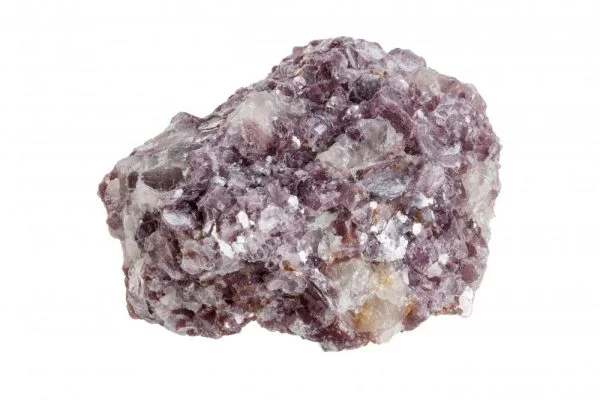
Mica is a shiny silicate mineral structured with a layer of granite and other rocks or crystals. Highly translucent, tough, stable, durable, and electrical resistant are the advanced properties of mica, which makes it widely used in several applications across various industries.

The global mica market is projected to witness the highest growth over the forecast timeline, owing to the surging mica applications in the electronics industry. Mica is an important compound for the electronics industry due to its chemical, physical, and electrical properties, perfect cleavage, flexibility, elasticity, low electrical and thermal conductivity, and high dielectric strength.

Additionally, mica is widely used in electronic consumer goods, such as hairdryers, toasters, LED lights, other lighting equipment, smoke detectors, and acoustic guitars. Moreover, rapid industrialization in emerging countries of China, India, and Brazil are likely to propel the mica applications in the construction industry. However, due to the stringent environmental regulations and fluctuating mica prices may hamper the global mica market in the future.


This article first appeared in the September 2020 issue of Mining Zimbabwe magazine