

Home Blog Page 511

Minister Chitando Expected In Hwange To Quell Chinese, Locals Fight

0

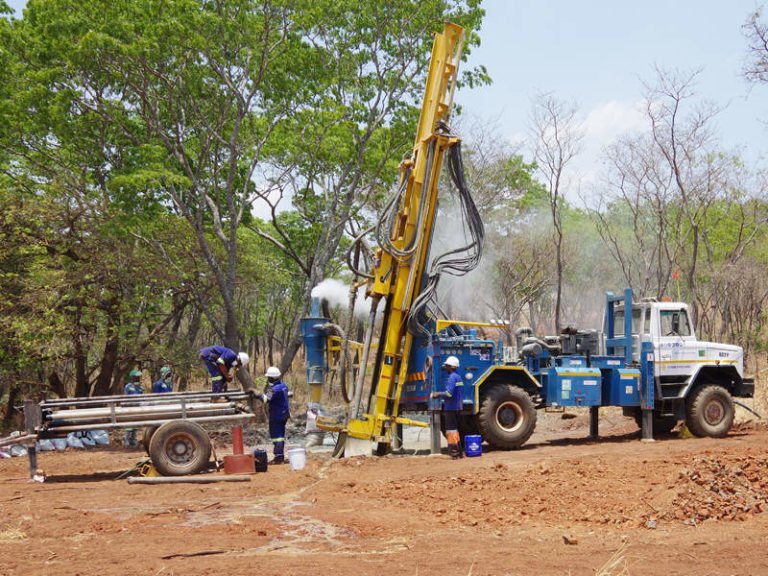
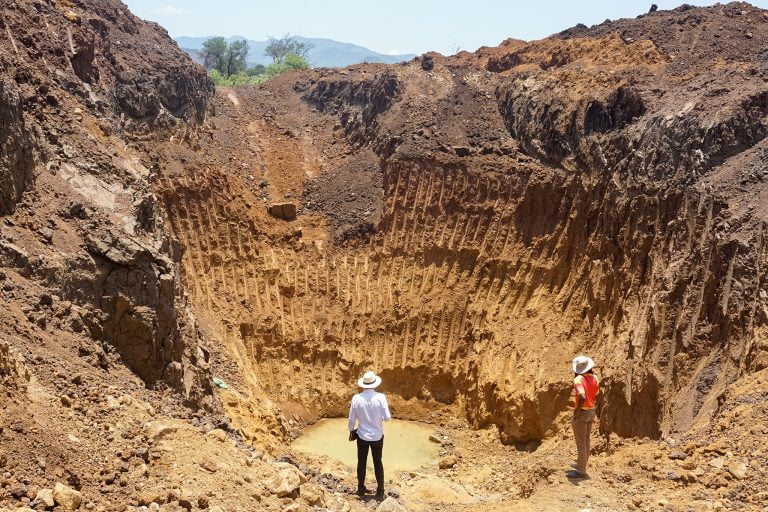
HWANGE: Mines Minister Winston Chitando is expected to visit the Dinde community here Thursday to quell a potential storm where villagers have vowed not to allow a Chinese company set up a coal and gold mine in the area.

Villagers fear they will be displaced by a coal mine being set up by the Chinese, once again without following proper procedures of consulting locals and carrying out an environmental impact assessment.

There are more than a dozen Chinese companies exploring for coal in Hwange.

However, they have become unpopular with a series of abuses on workers and massive environmental and infrastructure destruction.

In September last year, two Chinese companies courted the anger of not only Hwange community, but a cross section of Zimbabweans and wildlife activists as well as conservationists after they explored for coal in the protected Hwange National Park.

Workers from the two companies were discovered by ZimParks rangers while drilling in the game park and were handed over to police, but the Asian nationals produced a permit showing they had been granted a special grant by President Emmerson Mnangagwa.

However, the special grant was later revoked following widespread outcry from a cross section of people.

Now, some Chinese are reportedly exploring for coal and gold in Dinde, Dete and Makwandara areas just outside Hwange and have courted the ire of local villagers who also believe their community leaders are involved in the illegal activities.

Villagers said they fear Chinese “carelessness” in mining will lead to land degradation, pollution of the nearby Inyantue River, which is their main source of water for livestock and also the displacement of the community.

“Everybody knows how the Chinese have destroyed instead of enhancing livelihoods in Hwange. Deka River is highly polluted while all roads are destroyed.

We can’t allow that to happen to Inyantue River,” said one of the village leaders Never Mhlanga.

He said communities in Hwange district have for decades been displaced several times and cannot allow it anymore.

According to a communique from the Mines Ministry, Chitando is expected to meet the villagers at the VDC premises near Dinde Business Centre Thursday.

The meeting with Chitando was aborted two weeks ago after the villagers declined to be divided into smaller groups that comply with the Covid-19 regulations.


New Zimbabwe

Illicit gold trade hits Zim

0

Zimbabwe is losing millions of dollars through side marketing and smuggling of gold, Reserve Bank of Zimbabwe governor John Mangudya has said, as deliveries by small scale miners decline.

Analysts, however, said government policies were promoting illicit financial flows and smuggling of gold outside the country.

Last year, gold output plummeted 31% to 19.052 tonnes from 27.66 tonnes recorded in 2019.

Consequently, export receipts for the yellow metal fell 16% to US$891.5m from US$1.064.5bn in 2019 due to a decrease in gold deliveries in the country.

“Side marketing of the precious metal could have contributed to the decline in deliveries as a result small scale contributed 48.89% of the total deliveries to Fidelity Printers and Refiners (FPR) from 63.19% in 2019,” Mangudya said.

In 2018, Zimbabwe’s gold export receipts reached US$1.33bn but fell to US$1.064bn in 2019 and to less than US$1bn last year owing to unfavourable mining policies, side marketing and delays in payments by the country’s sole buyer of gold, the FPR.

The alternative market created lucrative opportunities for gold miners.

The Covid-19 exacerbated the situation following restrictions to curb the spread of the virus. This severely impacted the supply chain.

Analysts say the poor performance in the gold sub-sector, was a cause for concern since Zimbabwe heavily depends on the earning from the yellow metal. Gold is Zimbabwe’s single largest foreign currency earner after platinum.

Government recently approved the unbundling of FPR into two entities, a gold refinery and printing company.

Mangudya believes the move will help increase gold production given that the gold producers will be involved in the production through their 60% shareholding in gold refining business.

But, Gold Miners Association of Zimbabwe chief executive Irvine Chinyenze said the total liberalisation or courting more players was to solution to enhance gold production instead of the consolidation of various players into FPR.

“Despite the pronouncement of partial liberalisation of the gold sector, deliveries plummeted 61% as FPR is still the sole buyer of gold,” Chinyenze said.

Experts said instability in the gold sector has eroded the gold export revenue that the government urgently needs to keep the country’s struggling economy afloat.

Mining experts said the artisanal miners should be given cooperatives legal standing, pay gold producers at world prices and strengthen mining dispute resolution.

A recent mining report said the development of the gold sector was crucial to help turn the fortunes of Zimbabwe’s ailing economy around.

The sector used to contribute more than US$2bn in earnings annually.

But, it has been hit by smuggling.

Business Times

Invictus begins rig sourcing for oil project

0

Australian Stock Exchange-listed Invictus Energy has commenced rig sourcing aimed at kick starting the drilling of two wells at its Muzarabani Oil and Gas Project expected to commence this year.

The miner has also selected its preferred contractor to undertake a seismic acquisition campaign in 2021.

Invictus Energy is undertaking the highly prospective Muzarabani oil and gas project in Mashonaland Central Province in partnership with local consortium One Gas Resources which holds 20% stake.

The Muzarabani Oil and Gas Project is held under Special Grant No4571 issued to a locally-registered company, Geo Associates (Pvt) Ltd.

The two shareholders in Geo Associates are the ASX-listed Invictus Energy (80%) and the local partner One Gas Resources (Pvt) Ltd (80%).

Geo Associates executive chairman Paul Chimbodza told Business Times this week that the project partners were bullish despite the Covid-19 pandemic and rig sourcing for the project has since commenced.

The project partners have also progressed with the Production Sharing Agreement which is nearing finalisation for signing.

“We got a three year tenure extension to our Special Grant. We are moving to do more seismic surveys after the rains and rig sourcing is in progress to drill the first two wells this year,” Chimbodza said.

“We haven’t been impacted that much by the pandemic and we have progressed with the Production Sharing Agreement which is nearing finalization for signing and completed and got EIA license.”

Following the completion of the field reconnaissance programme and after receipt of submissions from multiple vendors, the company has selected its preferred contractor to undertake a seismic acquisition campaign in 2021.

The company will commence detailed planning post formal contract award to enable the acquisition campaign to commence following the conclusion of the rainy season.

Invictus Energy is planning to acquire a minimum of 400 line km of 2D seismic which exceeds the work program obligations for the current (2nd) exploration period.

During the quarter the company completed a further placement (Second Tranche) under the share subscription agreement announced on April 30, 2020.

The placement raises the equivalent of A$222,148 through the placement of 3,404,186 shares at a share price of A$0.066; a 9% premium to the last closing price.

The shares issued to Mangwana will be held in escrow for 6 months from the date of completion. The agreement makes provision for a further equity investment by Mangwana for the project over the next 12- 24 months as well as assisting the company in achieving its strategic goals in the country.

Invictus Energy has plans to invest about US$40m on initially drilling two wells at its Muzarabani oil project. To date the company has invested close to US$3.5m towards preliminary works at the site.

The company has started to aggressively move towards operationalising the oil and gas project where the Australian Stock Exchange listed firm is boasting of immense financial muscle to undertake the project which is expected to run into billions.

Invictus Energy targets to drill two wells in 2021- a move expected to determine the future of the project.


Business Times

BREAKING: Mines Ministry reverts to old mining fees

0

Mines and Mining Development Ministry has repealed the recent Mining fees increase that saw an upwards of 800% hike in some instances. The fees have been reverted to the old ZWL rates.

The hike had created an uproar in the Small-scale mining sector with the Henrietta Rushwaya lead Zimbabwe Miners Federation (ZMF) announcing it was engaging Minister Chitando to have the hike reviewed.

Pressure from Rushwaya seems to have the government rethinking the hike as experts had cautioned it would create pandemonium in the mining sector.

See rates below:-

S.I. 46 of 2020 Mining (General) (Amendment) Regulations, 2021 (No. 25) (1)

More to follow…


Amplats to raise output after high metals prices boost profit

0

Anglo American Platinum (Amplats) on Monday posted a price-driven jump in annual profit and set its sights on boosting output by 20% while looking to capitalises on global decarbonisation efforts.

Precious metals miners have been a bright spot in South Africa’s battered economy, reporting surging profits as higher metals prices cushion the impact of the coronavirus crisis, with a strong outlook for autocatalyst metals such as platinum and palladium in the global push to reduce carbon emmissions.
TOTAL OUTPUT OF PGM CONCENTRATES DURING THE YEAR FELL 14% TO 3.808 MILLION OUNCES BECAUSE OF CORONAVIRUS LOCKDOWN RESTRICTIONS IN SOUTH AFRICA AND ZIMBABWE

Platinum is also used in hydrogen fuel cells, increasingly seen as a key technology in the battle to reduce emissions.

Johannesburg-listed Amplats, one of the world’s largest platinum producers, said it plans to increase output of platinum group metals from 3 million ounces to 3.6 million ounces by 2030, with the bulk of the increase coming from its Mogalakwena open-pit platinum mine in Limpopo province.

“Climate change is rapidly accelerating global decarbonisation efforts, which will increase the long-term demand for our metals,” said Amplats Chief Executive Natascha Viljoen.

To help it to meet its target, Amplats is undertaking modernisation and mechanisation work at all operations, it said.

Amplats reported headline earnings per share rose 63% to 115.54 rand ($7.83) in 2020 as supply shortfalls drove up prices of metals including platinum, palladium and rhodium.

Amplats said the average dollar basket price of the platinum group metals (PGM) increased by 51% year on year. A weaker rand, which reduces production costs, further boosted full-year earnings.

Total output of PGM concentrates during the year fell 14% to 3.808 million ounces because of coronavirus lockdown restrictions in South Africa and Zimbabwe, but revenue increased by more than 38% to 137.8 billion rand.

The precious metals miner said it had a build-up of work-in-progress inventory of about 1 million PGM ounces owing to disruptions caused after an explosion at its Anglo Converter Plant (ACP) processing site last year.

Amplats said it expects the inventory build-up to be released by the end of 2022 and declared a final dividend of 35.35 rand per share. Last year the miner announced a base dividend of 16.60 rand and a special dividend of 25 rand.

($1 = 14.7628 rand)

Reuters (By Tanisha Heiberg; Editing by Sherry Jacob-Phillips and David Goodman)

Copper price soars past $9,000 in record run

0

Mining.com-Copper kept its momentous run going on Monday, now closing in on an all-time high set in 2011, as investors bet that supply tightness will increase as the world recovers from the covid-19 pandemic.

March contracts rose 1.0% to $4.1155 per pound ($9,073.13 per tonne) by 11:45 a.m. in New York, leading a broad rally in commodities that saw the bellwether industrial metal rise 17% year-to-date.

Since its nadir last March, copper prices have nearly doubled, boosted by rapidly tightening physical markets, prospects for rebounding economic growth and the expectation that a years-long era of low inflation in key economies may be ending.

Click here for an interactive chart of copper prices.

Investors are also piling into copper on a bet that demand will surge in the coming years, as governments worldwide unleash unprecedented stimulus programs targeting renewable energy and electric vehicles, which will require huge volumes of the metal.

“The list of bullish factors for copper is extremely long,” Max Layton, head of EMEA commodities research at Citigroup Inc., told Bloomberg by phone, adding that:

“A lot of the most bullish developments are really going to play out in the next few months, and therefore we think it’s going to be sooner rather than later that it gets to $10,000.”

In some areas of the physical copper market, supply conditions are at the tightest in years and may come under even more pressure as smelters in top consumer China face shrinking profit margins for processing raw ore into refined metal.

Copper treatment charges, an indicator of refining margins, are at $45.50 a tonne, the lowest since 2012. One leading supplier is considering cutting output, in a potential blow to buyers, Bloomberg reported.

Surging prices have given miners a boost, driving up stock prices and raising the prospect of more returns to shareholders. Some of the top copper stocks have risen by double digits over the past month.

Jiangxi Copper, China’s top producer, gained as much as 20% in Hong Kong to the highest level since 2012, while US producer Freeport-McMoRan closed last week the highest since 2014.

(With files from Bloomberg)

Mining fees hike a bad move, ill timed and a no brainer

0
Letter to the Editor: An increase in mining fees when currency is stable a no brainer
As a small-scale miner, I do find those fees rather exorbitant in the sense that it is a very high and significant increase in USD terms, given that our local currency is now quite stable.
By Concerned
To give an example of just one of the fees which affect small-scale miners, the fee to inspect a 10ha gold block is now $400usd. At the height of dollarisation around 2012 or thereabouts, it used to be $100usd and the highest it went to during the USD era was $200 USD. Now, what is the justification for doubling even that to $400? If our local currency had been depreciating fast as it was prone to do before the stabilization set it, then one would assume that the authorities are building in the anticipated loss of value due to inflation as time goes on, but that is not the case at all with a stable currency as is the case now. Unless whoever pushed for those increases knows something that the generality of the population is not aware of?
The annual inspection fee by the way is the yardstick that most other stakeholders like the rural councils use to set their own annual charges for mining projects within their area, so the effect of these increases is bound to lead to a general increase across the board and many small mining projects will collapse as a result.
This goes against the stated aim of the Mines Ministry itself to fully formalise artisanal and small-scale mining projects. Unless they are not telling us the truth and their real aim is to push out the majority of small-scale miners from the sector to allow their claims to be taken over by the larger players who are already formalized and can afford those exorbitant fees? That’s how a lot of the artisanal and small-scale miners are seeing this move which seems to have been done without consulting the representative body of the artisanal and small-scale miners, given the sharp and swift objection by the ZMF President Ms. Henrietta Rushwaya, immediately these fees were announced as gazetted.
Should the mines ministry insist on keeping these fees increased as they have gazetted them, illegal mining will increase because a lot of small-scale mining projects will stop operating! Jobs will be lost but those gold-rich areas and mines will not stop being mined by those who would have lost their jobs.
So in short, those increases are a bad move and at the wrong time as well during the height of these Covid-19 induced challenges.

Gokwe artisanal miner dies in 7-metre shaft

0

AN artisanal miner was allegedly trapped by rocks in a seven-metre shaft he was working in after it collapsed in Gokwe South leading to his death last Friday.

Police in the Midlands are now appealing to members of the public to identify the body which is at Gokwe South District Hospital mortuary.

The artisanal miner was only known by fellow miners as Foster and had no identification particulars.

Midlands Provincial Police spokesperson Inspector Emmanuel Mahoko confirmed the incident.

“ZRP is calling for assistance from the members of the public in identifying the remains of a male adult who died after being trapped by rocks after the mine shaft he was working in collapsed. The incident occurred at Gazemba C Mine in Gokwe South on Friday at about 3PM,” he said.

Insp Mahoko said the now deceased was working in a seven-metre deep shaft in the company of one Lazarus Mangwana (18) of Ngoni Village under Chief Jahana in Gokwe South when the incident happened.

He said police attended the scene and found Foster already dead.

“Foster was allegedly trapped between stones from the collapsed mine shaft walls. Members of the public missing a relative may approach Nembudziya Police Station or any nearest police station,” said Insp Mahoko.

Meanwhile, Insp Mahoko said there was an explosion at a chrome smelting plant in the heavy industrial site in Gweru on Friday evening which shattered window panes of one of the company’s buildings as well as windows of a car parked within the company premises.

While no one was injured, Insp Mahoko said the explosion was felt by residents from nearby suburbs.

“ZRP confirms having received a report of an explosion incident which happened on Friday around 10PM at Serandex Investments, a chrome smelting plant In the Heavy industrial site.

“It was reported that one Lovemore Darara (41) during his course of work went to a dump site within the company premises to empty some slag which had accumulated in an industrial pot. He left the pot for about an hour to cool,” said Insp Mahoko.

He said when Darara emptied the pot, the contents fell on wet ground resulting in a heavy explosion.

“The force from the explosion shook a nearby company building resulting in eight window panes being shattered as well as windows of a vehicle parked within the company premises,” said Insp Mahoko.

The Chronicle

Illegal gold panners invade Bulawayo suburb

0

RESIDENTS of Queens Park East in Bulawayo have expressed concern over the emergence of omakorokoza panning for gold on the suburbs’ outskirts, saying their presence is a threat to the peace and social fabric in the area.

The invasion of the suburb by omakorokoza is a continuation of a trend that has seen them move into areas within cities.

Instead of farms and remote areas, panners are moving onto the outskirts of city suburbs thought to be gold-rich. When Sunday News visited the suburb last week, all seemed quiet and normal in the afternoon.

The only signs of life were a few women pulling down clothes from a washing line as a few clouds threatened to bring rain. At night however, residents say the area, sandwiched between Mahatshula and Queens Park East is transformed into a hive of activity.

They fear that this could change the way of life in the suburb and with reported incidents of muggings and alcohol-fueled brawls, some say that this may already be happening.

“We have always heard about panners but we never thought we would find them on our doorstep,” a resident, Mr Amon Dube told Sunday News.

“The sad thing is that we have always known the ills that gold panning comes with but now that it is happening here, we feel powerless to prevent it. We don’t want the violence associated with these people and their presence here will lead to other social ills which will lead to the death of the suburb. There is no place that has omakorokoza that I know of that has a great reputation.”

Another resident who spoke to Sunday News anonymously said they feared that the presence of gold panners could bring to an end the relative peace and low levels of crime in the suburb.

Of great concern is that most of the panners are not even from the area and are sometimes only known by their first names or nicknames, making them hard to track should they commit any crimes. This is also a continuation of a trend seen elsewhere around the country.

“We are seeing an increase in crime incidents and I blame that on them. If authorities don’t act soon, we will lose the suburb to those people most of whom are not from around here. These are strangers who can’t seem to live well with other people,” the resident said.

Ward Three caretaker Councillor Silas Chigora said he has been receiving complaints from residents about noise levels, particularly at night.

“I think what is happening there is very unfortunate. Firstly, we have had a lot of complaints from residents from Queens Park and Mhlangeni about the noise coming from that area. Every night they say there is a lot of noise that comes from there and it seems there is some kind of grinding that happens during the night,” he said.

Clr Chigora said the panners not only posed a danger to the environment but to themselves as well, as their panning could trigger land collapses that are potentially fatal. Mine collapses have increased since the onset of the rainy season around the country.

“There is also a lot of environmental degradation that is happening in the area. It is important to note that these illegal panners are also a danger to themselves.

“Imagine, right now with the kind of rain that we have received, they still go digging deep underground. We are likely to receive an unfortunate report in the coming days that maybe 10 have been buried under there,” he said.

Clr Chigora said while authorities had tried to police the area, this had proved futile as the panners always went back after a while. He said the only solution might be to seal the areas where the miners operated.

“The problem is that even when council sends rangers to chase these people away, somehow, they find themselves back there again. So, the council’s ranger department should make sure that they go there and enforce the eviction of those people.

“I think it would be helpful for the Environmental Management Agency (EMA) to also go there and give their opinion on what must be done to bring sanity to that place again. Maybe those holes should be filled up. I hear that in the old days that place used to be a mine. Perhaps the only thing that EMA can do on their side is to restore the area there to what it was in its original state before mining took place,” he said.


The Sunday News

Artisanal miners urged to invest in machinery

0

AN organisation which advocates the maximum utilisation of the country’s natural resources has called upon artisanal miners to desist from squandering the money they would have realised and instead use it to buy machinery.

The call was made by Paulus Emias Nyathi, a miner and mining researcher who is also the president of Serious Monitoring All Resources Together (SMART).

Nyathi made the call after SMART acquired, from Germany, a technologically advanced gold hunting device.

The machine, the Gold Hunter GR 1000 five series, has the capacity to locate, not only gold but other precious minerals such as diamonds, silver, copper and even hidden treasures.

The machine can also detect precious minerals in all soil types as opposed to other machines which can only function in certain soil types.

“I am saying, it is high time artisanal miners stop digging anywhere and everywhere in search of gold. Instead, they must invest in machinery such as this one which locates the exact spot where the gold will be located and the quantities involved,” Nyathi said.

Nyathi said most artisanal miners are capable of acquiring such a machine.

“The problem with artisanal miners is that the majority of them spend their money on beer, cars and women. If a miner gets 350 grammes of gold for example, that miner can be able to buy such a device as this one. Our miners have misplaced priorities,” added Nyathi.

The Sunday Mail