Home Blog Page 512

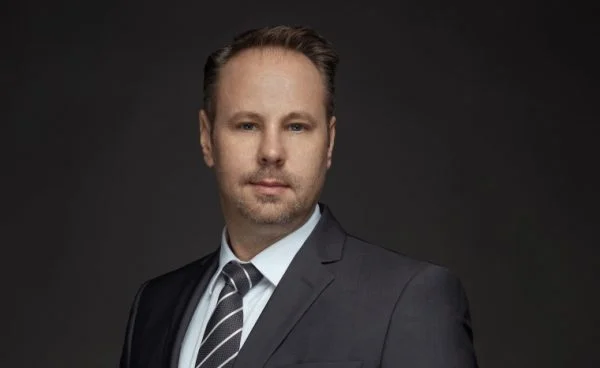
Vast Resources wishes Mabhudhu well

0

Vast Resources plc, the AIM-listed mining company, is pleased to update the market on its operations in Zimbabwe.

The Company is proud to announce that Mark Mabhudhu, Executive Director of the Company’s Diamond Division, has received an offer to join the Government-owned Zimbabwe Consolidated Diamond Company “ZCDC” as Chief Executive Officer starting immediately. Following a period of consultation with both the Company and the relevant Government of Zimbabwe Officials, a process that included a full disclosure as part of averting any possible conflict of interest, Mark Mabhudhu has accepted this role. As a result, he will leave his current role with the Company.

The Company can confirm that its highly skilled geological and technical team remain employed by the Company and that it has identified a high-level COO to manage the project who shall be engaged upon confirmation of the signing of the Joint Venture.

Mark Mabhudhu’s primary role will be to focus on the diamond sector’s contribution towards the  Zimbabwean Government’s 2023 $12bn mining vision which is also driven by the attendant implementation of Joint Ventures between the ZCDC and investors in the diamond sector.

The Company can also confirm that this personnel change in Zimbabwe will not pose any impediment to the finalisation of the anticipated Joint Venture Agreement between the Company’s Subsidiary in respect of the Chiadzwa Community Diamond Concession.

Further details regarding the finalisation of the Chiadzwa Community Diamond Project will be communicated to the market as and when they occur.

Andrew Prelea, Chief Executive Officer of Vast Resources PLC Commented:

“Whilst we are of course sad to see Mark (Mabhudhu) leave Vast Resources PLC, we are extremely excited that we will be able to continue to work with him in his new role within the diamond mining sector in Zimbabwe. We are confident that with Mark in his new role, the diamond mining sector in Zimbabwe will be set for a new high.

“On behalf of the Board and Management Team, I would like to thank Mark for all of his efforts and wish him all the best for the future and stress that he will always have an open door to return to the Company when he finalises his mandate at the ZCDC.”

$500 million funding for Great Dyke Investments (GDI)

0

Great Dyke Investments (GDI) has cleared an important hurdle to develop what would be Zimbabwe’s largest platinum mine.

GDI, 50% owned by Russia’s Vi Holdings and Zimbabwean investors, said the African Export-Import Bank had completed a due diligence study allowing it to proceed with a $500 million funding program for the Darwendale project’s first phase.

The JV, which plans to start mining platinum ore in 2021, has already spent $100 million to date on geological exploration and construction of two mine portals and surface infrastructure.

The $2 billion projects, located about 65 km from the capital Harare, is expected to produce 860,000 ounces of platinum group metals (PGM) and gold per year at its peak. That would make it the no.1 PGM mine in Zimbabwe, which holds the world’s third-biggest platinum reserves after South Africa and Russia.

“The project funding structure envisages participation of various types of equity investors as well as lenders,” GDI’s chief executive officer, Alex Ivanov, told Bloomberg News. “The specific stake to be acquired by potential investors would largely depend on their overall appetite for the project.”

Zimbabwe, dealing with its worst economic crisis in more than a decade, is pursuing an ambitious plan to boost mining output and earn the country $12 billion a year. Platinum mining is seen as a major anchor of that drive.

The country’s platinum is mostly found on the Great Dyke belt, which stretches for more than 500 km and contains an estimated 96 million ounces of platinum group metals. Mining.com

New ZESA Mining, Industrial, Commercial & Pumping Works tarrifs

0

ZESA has increased tariffs by 50% effective 23 September 2020.

In a Statement has said, “The Zimbabwe Electricity Transmission and Distribution Company (ZETDC) has adjusted the electricity tariffs by 50%. This is in accordance with the Tariff Award of 2 October 2019, which approved the implementation of monthly tariff indexation formula for changes above 10%. Below are the tariffs in ZWL that will be applicable effective 23 September 2020”.

ZESA Tarrif increase for Mining, Industrial, Commercial & Pumping Works

4kV Supply
E3.1.04 ,E4.1.04
11kV Supply
E3.2.11, E4.2.11
33kV Supply
E3.2.33, E4.2.33
Secondary
Distribution E6.1a
E6.1a) Fixed Monthly Charge$66.44$66.44$66.44$66.44
A monthly capacity charge per unit of demand$196.11$170.31$124.94$79.98
An interruptable demand chargen/n/an/an/a$59.99
On-Peak Energy charge per kWh$4.01$4.01$4.01$4.01
Standard Energy charge per kWh$2.15$2.15$2.15$2.15
Off-Peak Energy charge per kWh$1.23$1.23$1.23$1.23
Reactive Energy charge per KVArh$$0.35$0.35$0.35$0.35

Notes
i) The rates are exclusive of the 6% Rural Electrification Levy and 14.5% VAT. In terms of Statutory Instrument 168 of 2012, electricity charges for Domestic customers are zero-rated for VAT and in terms of Statutory Instrument 215 of 2005, fixed charges on Commercial and Domestic electricity are zero-rated for VAT.
ii) Maximum Demand (MD) customers are urged to peak during off-peak periods. For a customer who attains MD during off-peak, the applicable MD is the one attained during the peak or standard period.
iii) Reactive energy charge shall be applied to any reactive energy in excess of 48% ( power factor less than 0.90) of the active power recorded (kWh) during a billing period

An online petition directed at Mines Minister surfaces online

0

An online petition requesting the Mines and Mining Development Minister to genuinely consult artisanal miners for their input in the Mines and Mineral Bill has surfaced online. The petition created by an individual or group called “Mining Forum” by the time of publishing had been signed by over 80.

The petitioner/s’s main contestation points are the right to access mining rights by ordinary citizens that are provided for in sections 20, 21, 23, 24, 26 & 27 of the Act, that they claim is to be repealed in the new bill.

“With reference to the above, we petition the minister to genuinely consult artisanal miners and for their input in the Bill,” read the introduction to the petition.

“Our understanding is that the Bill was sponsored by foreign powers whose loyalty to our nation is dubious and hence their desire to sideline miners. The Bill’s contents are against both indigenous miners and the spirit of liberation for which many sacrificed their lives. Of particular concern to miners, is Bill’s spirited efforts to take away mining rights (inclusive) and give them to a board which will grant the same to a favoured few as (exclusive) privileges ignoring the fact that this nation was founded by miners, mineral fabricators and exporters and therefore such act is in effect theft of the essence of our heirship to national heritage”.

“If the Bill passes, mining rights for artisanal miners are gone. We will have mining privileges granted to the well-financed players only. So it’s noble for us to help our own government to come up with a better mining policy. The right to access mining rights by ordinary citizens is provided for in sections 20, 21, 23, 24, 26 & 27 of the Act. The Bill proposes to repeal them and replace them with a board which will grant these rights to candidates whom it considers fit to mine. Let us put our signatures against this proposed Bill Amendment”

Recently the Zimbabwe Miners Federation (ZMF) released a statement cautioning their members from being misled by a “Mines Bill” circulating online which the body says is not an official document.

“The ZMF Executive and Management Board would like to correct the persistent, ingrained misinformation
proliferating on social media spread by individuals/groups or associations about The Mines and Minerals Amendment Bill” read the statement.
“The facts are as follows: there is a committee that is currently working on the Mines and Minerals Amendment Bill.
This committee involves
• The Ministry of Mines and Mining Development legal department and
• The Attorney General’s office.
The draft is yet to be submitted to Parliament by the 30th of September 2020 subject to confirmation by the Ministry of Mines and Mining Development. We urge our members to ignore the purported bill in circulation and not be misled by certain malcontents who are bent on misleading our membership. We are yet to have sight of the draft,” concluded the ZMF statement”.
The highly anticipated draft bill is expected to be presented in Bulawayo on the 27th of September 2020.

Timothy Chizuzu – Miner, Mining Consultant and Environmentalist

0

At the beginning of August 2020, I travelled to Kadoma the “City of Gold” popularly known for its rich gold reserves and wealthy flamboyant gold buyers and miners. The town has well-known names like Cossy Rules, B Majari, Mrasta, Zvidzai, and many more.

A highly regarded figure in the City is a down to earth, a quiet, humble gentleman well respected in the mining circles. Timothy Chizuzu is the founder of Timella Mining Consultancy an organisation that has for the past decade provided quality mining services to hundreds of miners not only in Kadoma but Mashonaland West Province. He also is the founder of the National Environment Awareness Trust (Neat), the Secretary-general of the Zimbabwe Prospectors Association, and ZMF National Youth Chairperson.

Here is how the interview went

Mr. Chizuzu a bit of information about yourself?

My name is Timothy Chizuzu I was born in Kadoma, I’m a mining consultant I started mining consultancy in 2006 that is when I was registered by the ministry of mines.

What made you venture into the mining business and why?

I ventured into the mining sector due to my passion for exploring and researching the mining sector as well as to earn a living. I had an appetite to know about mineral governance, how the system goes about in assisting the sustainability of the mining sector to economic resuscitation. I’m also in the mining sector to assist in how policies should be drafted to improve the country’s mining investment thereby eradicating poverty through employment creation.

You seem to be prioritising gold mining yet Mashwest has vast minerals. Why?

For the past 12-13, I have been concentrating mainly on mining consultancy. Two years ago I ventured full-time into mining extraction and I was attracted to gold mining because in Kadoma it is the mineral everyone is mining. I am also in the process of acquiring claims to venture into other minerals like gemstones and chrome.

How has Kadoma benefited from Timothy’s mining ventures?

In Kadoma, I have assisted several miners including MuRasta, Tshuma Milling, companies, and small-scale individual miners. I have also helped many miners and many have applauded my services as a renowned mining consultancy and prospector.

Tell us about Timella Mining Consultancy

Timella Mining Consultancy is an independent Consultancy company that provides focus, advice, and instruction in the mining industry. It offers services from mining rights acquisition, exploration through feasibility mine planning and production to mine closure. We also assist with disputes and legal matters concerning the mining industry in Zimbabwe. We also advise on environmental issues to miners and our mission is to provide expert solutions in the mining sector. Our philosophy is, we believe that to succeed we must contribute to the successes of our clients. We prioritize our clients; our performance is only good as our clients and as the staff, we are able to attract development and returns. The cornerstone of our philosophy is to develop and embrace new technologies and methodologies to the advantage of our clients and our business. It is our view that the growth of our business should be in response to our clients. Our values are integrity, client focus, accountability, and innovation.

What are the benefits of engaging Timella Consultancy services?

The advantages of engaging Timela mining consultancy is that we have professional and qualified people from different departments of the mining sector, who have much experience in the acquisition of mining rights, surveyors and geologist who help in exploration. Timella helps by giving the correct information because we have qualified and professionals who will be there to help you professionally execute your endeavours.

Kadoma is well known for Machete gangs. Have you ever encountered any attacks at your site? If so were you able to get assistance from the police?

Since my claims are in Battlefields, a hotspot for machete gangs, we encounter them from time to time. At one time we had to inform the police after a gang armed with machete and hand catapults was giving us problems. The police managed to contain the situation and most of the guys were arrested.

I have visited your mine sites and its impressive and very professionally set up. How long did it take you to have such facilities?

As I said before, I have less than 2 years in full mining (claim ownership). I’m therefore developing my claims to medium scale. I’m currently carrying out exploration so that the mining at my claims will be standard and by the book.

What five things would you say need to be improved or fixed to attain a better ASM

  1. The number one thing for artisanal miners is for them to quickly register and standardize their mining operations. The government should implement a model like that of the Ministry of Agriculture. if we get field officers who will be helping and giving advice to small scale miners, helping them to adapt to proper mining and advising them to mine safety as well as helping with exploration, mineral leakages would be minimized.
  2. The government needs to assist ASM with loans that will be monitored by the field officers for the money to be used for mining prospecting and exploration (and not to be misused).
  3. Most of the small-scale miners are in rural areas, for the government to protect them, the police need to be well resourced especially when it comes to mobility. Most police stations in the rural areas have no cars to patrol especially in the mining communities.
  4. The government should legalise artisanal miners so that they would sell their gold to the right market. There is a danger in illegalising their operations because they will always sell their products to the alternative market.
  5. Small scale miners need to be mechanised, by this, the government needs to make sure that our mining claims are bankable so that they can be collateral for bankers.

You are also the chairperson of the Zimbabwe Prospectors Association tell us about that.

I am the secretary for the Zimbabwe Prospectors Association an organisation that registered on the 26th of March 2018.

The main mission and mandate of the ZPA is to empower Zimbabwean prospectors to be professionally competitive in mining consultancy and also to represent them on all mining platforms as well as the Ministry of mines. It is easy for them to engage the ministry of mines and other stakeholders in the mining industry. ZPA represents the interests of all prospectors in Zimbabwe and abroad and pursuing their recognition and acceptance as vital and pivotal stakeholders and qualified professionals in the mining industry.

How does one know if they have engaged services of professional prospection services? We have heard of people paying thousands for mining services and not get any meaningful returns. What methods do you use to ensure people get value for their money.

If you want to know that you are engaging a professional prospector one has to have a crap number which shows they are an Approved Prospector. Currently, we have a problem because the ministry does not have the material to make the I.Ds but prospectors carry letters from the Ministry. Before miners engage prospectors they should ask for their Crap number so that they won’t be duped by bogus and unscrupulous prospectors.

Artisanal miners and Chinese have been blamed for the largest chunk of environmental degradation, do you have a strategy or model to decrease land degradation?

The issue of land degradation is a high thing of concern, especially in Zimbabwe. The main challenge is the monitoring of small scale and artisanal miners. The number of small-scale miners is more than the staff we have at the Ministry of Environment and the Ministry of Mines. That’s why I said before that the government needs to employ field officers who will be monitoring the activities of ASM teaching them how to preserve and rehabilitate the environment. Tickets should therefore be issued after a thorough awareness; many miners don’t know how they can rehabilitate the land.

You are also the founder of National Environment Awareness Trust (Neat). What is NEAT all about?

NEAT is a Non-Governmental Organisation that deals much with environmental activities. Our main activities are awareness and advocacy. We move around educating people on safe practices of mining, how to keep our environment safe and clean, how to manage our affluence as miners. We are there to be engaged in all environmental management and mining-related issues.

There are many mining graduates without jobs what advice would you give to them, and how do you intend to help them as ZMF Youth in Mining leader?

To mining professionals who have no jobs, the best way is they need to come up recruit, and form syndicates acquire claims then look for grants or working capital from financial institutions. These guys can do a feasibility study on their claims so that their claims would be nearly bankable therefore attracting funding.  The graduates need to create their own employment to advance the professionalized and standardized small-scale mining sector.

Besides mining what else does Timothy do?

I am looking forward to venturing into the Agriculture sector, focusing on Animal husbandry. I have seen that the best way to go in Zimbabwe is to increase food production.


You can get in touch with Timothy Chizuzu [email protected]

10 Benefits of Investing in the Coloured-Gemstone Mining sector in Zimbabwe

0

10 Benefits of Investing in the Coloured-Gemstone Mining sector in Zimbabwe

by Maison Phiri

  1. Diamond vs. Coloured stones.

The diamond has been perceived by investors as the king of gemstones due to its gem characteristics that exceed other stones. However, investors ought to know that there are coloured stones which can exceed US$10,000/carat. This is a price that most fine varieties of diamonds cannot exceed.  Bixbite (red beryl) and Alexandrite, can exceed this price and both findings have been reported in Zimbabwe. It should also be taken seriously that the diamond has suffered a serious blow from synthetics. This has caused the diamond prices to plummet, especially for the small stones and low grades. Perhaps, it is time for gemstone investors to begin assessing the potential of rare coloured gemstones such as the ones in Zimbabwe.

2. Zimbabwe: The finest candidate for a SADC gemstone Hub.

The centrality of the gemstone industry in the region is of paramount importance. This brings the attention of additional investment, marketing, and partnerships to one place. Zimbabwe is that fine candidate to hold regular gemstone fairs, establish cutting centres, schools, and certifying laboratories for the region. Zimbabwe should become the trade centre for the gemstones in the region. This is because the country has deposits for more than 90% of all gems found in the region. The country is also central to the region, making easy accessibility. Any investor serious in gemstone mining in Zimbabwe should consider the prospects of developing their product value chain towards the idea of a hub.

  1. Multi-commodity deposits.

The advanced technology in exploration has not been fully exercised for gemstone prospecting in Zimbabwe. Much of the current workings are artisanal small scale mining. This brings the idea that gemstones are under-explored in Zimbabwe. However, the small scale miners have established a presence of multi-commodity deposits. The pegmatite gemstones in Karoi are usually beryl and tourmaline with mica as a bi-product. In the Makaha area, the beryl is also associated with some tantalite. These Zimbabwean deposits are therefore multi-commodity and this is ideal for any investment.

  1. Investing in a “Blue Ocean” strategy.

Investors willing to explore an unchallenged industry in Zimbabwe should consider gemstone mining. The gold mining is definitely a “Red ocean” strategy. However, there is no major company in Zimbabwe which is currently mining gemstones. There is no major company developing the value chain either. Therefore, this is a sector where a focused investor is capable of establishing a controlling stake in the industry.

  1. Low-Cost Mining.

The basics of gemstone mining in Zimbabwe are currently pit mining. This can be expanded into wholesome open cast mining depending on the extent and geometry of each resource. The cost of mining is relatively low compared to other mineral commodities which are usually hosted in complicated deposit geometries.

  1. Easy and low-cost processing.

The processing of gemstones is usually crushing, washing, and picking. This is relatively easy and cheap as compared to other commodities that may require the establishment of flotation cells, leaching tanks, and the consumption of sophisticated chemicals. In gemstone processing for the production of rough, there are no complicated processes, chemicals nor excessive specialist labour.

  1. Ready synergies with ASMs

The Artisanal and Small Scale Miners, through the Zimbabwe Miners’ Federation, is open to joint ventures, partnerships, and sponsorship of their current mining activities. This serves as a low hanging fruit for investors who are eager for production and quick turnaround for their investment.

  1. Prospective for secondary business. (Vertical integration)

Mining alone cannot achieve optimum profits for an investment in the gemstone industry. The rough stones can be polished, set in jewellery and sold on local or international auctions as a finished product. These secondary businesses are also potential for investment. An investor should be capable of developing their product from mine to the factory and finally to the market.

  1. Keystone to the development of other industries.

Apart from the vertical integration prospects, other businesses such as precious metals mining, tourism, and freight may boom from gemstone mining alone. This gives rise to other business investment potential in dependant but different streams.

  1. Sustainable development.

The Gemstone mining industry lacks sustainable development. It is hoped that as more investment is brought in, more formalisation of the sector occurs. It would then be correct that each investor develops the current mining to sustainable levels and therefore invests in the future of the environment and society. Investors are encouraged to put their capital where community development and limited environmental harm is the first priority.


Maison Phiri

BSc, MBA, GG

Mark Mabhundu appointed ZCDC substantive CEO

0

THE Zimbabwe Consolidated Diamond Company (ZCDC) board yesterday appointed Mark Mabhudhu as the substantive Chief Executive Officer (CEO) for the diamond-producer.

[pdf id=8474]

Impoverished teachers turn to illegal mining

0

Impoverished Zimbabwean teachers have resorted to “Chikorokoza” as they try to make ends meet, a body
representing them has claimed.

Zimbabwe Teachers Association Bulawayo chair, Wilson Mangena, shocked delegates attending an education indaba organised by Women of Zimbabwe Arise in Bulawayo yesterday that tutors have joined the bandwagon of
illegal mining.

“Teachers are now makorokozas and I saw it for myself. In Bubi District, there is a place near Gloag High and I saw teachers gold panning alongside some of the students they teach,” said Mangena much to the bewilderment of the delegates who included senior education ministry officials in Matabeleland and civil society leaders.

“Teachers are seriously demotivated and we ask that their remuneration be reviewed,” he added.

Mangena went on to accuse some schools in Bulawayo of mistreating teachers. “I have seen some teachers
cleaning schools and I told them that they do not know their jobs. The government should avail funds so that
schools hire people to clean,” he said.

Meanwhile, candidates begged the government to postpone December examinations. Bridget Jackson, a Form 4
student said she has been idle since the inception of the lockdown in late March.

“We are opening on September 28 and we only have two months to learn and prepare for exams and that is
insufficient time and it will be difficult for us to pass,” said Jackson.

“We were told to look for our notes by our teachers and this has been a challenge for us because most notes are
in soft copy and we don’t have phones and computers to access them. I stay in Robert Sinyoka where there is no
electricity and I failed to do online lessons nor listen to radio lessons.

“We don’t have running water so, I spend most of my time looking for water. All said, I do not think I am ready to
write,” added Jackson.

Another candidate, Eveline Ndlovu, a Form 4 student at Cowdray Park High School concurred with Jackson,
urging authorities to open schools but delay examinations.

“I say yes to opening of schools but no to the December exams. The timeframe for learning before writing is way
too little and I think I will not be ready to write by December,” said Ndlovu.

The government recently set dates for the reopening of schools and the sitting of exams by December, after six
months of closure due to Covid-19 and has set aside $600 million for schools to improve sanitisation and
preparedness to resume teaching

Legislator Priscilla Misihairabwi-Mushonga, chair of the Parliamentary education portfolio committee, who was
present, said she was apprehensive for rural candidates and those from poor backgrounds.

“This was very emotional and I am concerned about the haves and have-nots. I am concerned about students
from Bulawayo. I am also worried about students in the rural areas. This is why we are here to engage with all
stakeholders,” said Misihairabwi-Mushonga. Daily News


Ignore fake Minerals Amendment Bill circulating on social media – ZMF

0

The Zimbabwe Miners Federation (ZMF) today released a Press statement addressing speculation of the Mines and Minerals Amendment Bill.

“Mining” Social Media is awash with insinuations that the Bill seeks to introduce stringent measures that make it almost impossible for locals to operate in the mining industry (amongst other things) yet the bill has not been availed to any institution, individual or made public.

The ZMF released the Statement below:-

[pdf id=8456]

Fidelity official gold buying prices Friday 21 September 2020

0

Fidelity Printers and Refiners (FPR) official gold buying prices Friday 21 September 2020

SG 90% AND ABOVE $55.71/g
SG ABOVE 85% BUT BELOW 90% $54.78/g
SG ABOVE 80% BUT BELOW 85% $53.53/g
SG ABOVE 75% BUT BELOW 80% $52.91/g
SAMPLE BELOW 10g BUT ABOVE 5g $54.15g
FIRE ASSAY CASH $56.03/g

Exchange rate: 80.4820

Cash available. Fidelity Printers and Refiners prices will be changing daily in relation to world market prices.


Contact FPR

No. 1 George Drive, Msasa, Harare, Email: [email protected], Telephone: +263 242-486670, +263 242-486694, +263 242-487131, +263 242-447810-5