Home Blog Page 518

Magaya invades Blessing Hungwe’s mine in Mazoe

0
Prophetic Healing and Deliverance (PHD) Ministries founder and leader Walter Magaya’s appetite for free money has manifested when he invaded a mine belonging to Zimbabwe Miners Federation (ZMF) Women in Mining member and a representative of regional women in mining Ms. Blessing Hungwe.

Magaya allegedly invaded the mine with the help of a former farmer of the land and a local legislator who both were given shares of the mine by Hungwe.

It is believed that Magaya knew that the mine belonged to Hungwe but wanted these two to push Hungwe out so that he would take full control of the mine, Hungwe is the major shareholder and the holder of the mining certificate of the mine.

When Hungwe spoke to Mining Zimbabwe she said that she had never met Magaya before and only knew him as a popular televangelist.

“I have never met Magaya, I only knew him as a prophet, not as a mine grabber,” Hungwe said.

According to reports received by Mining Zimbabwe, the PHD leader is in the habit of taking over mines owned by women under the pretense of investment. He is reportedly working with a popular small scale miner and pegger who is based in Mazoe.

Zimbabwe Miners Federation ZMF through their President Ms. Henrietta Rushwaya said they were following and monitoring the events closely, and promised to protect Hungwe from any invasion since she is the owner of the miner according to the law.

“We are closely following and monitoring the events as they unfold. As always, we shall safeguard and protect the interests of our ZMF members and in this case, it is Blessing Hungwe who is the holder of the mining certificate.” Rushwaya said.

Mining Zimbabwe’s effort to get a comment from the PHD founder were fruitless as his mobile phone went unanswered.

Breaking: Walter Magaya invades a woman’s mine in Mazoe

0

Prophetic Healing and Deliverances Ministries founder Walter Magaya has reportedly invaded a mine owned by a member of the Zimbabwe Miners Federation (ZMF) women in Mining, Blessing Hungwe.

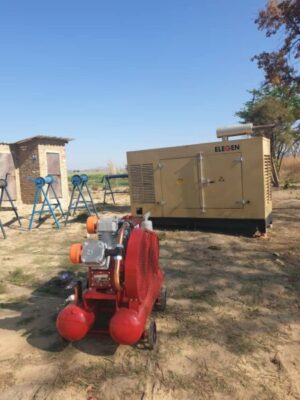
Magaya reportedly came with mining equipment and strategically put the equipment including generators in a bid to mine without Hungwe’s consent.


More to follow….

Chinese Hwange National Park SG, the ivory mining risk!

0

The Special Grants given to two Chinese mining firms Afrochine and Zhongxin Coal Mining Group in Hwange National Park for coal exploration and mining have been labelled as an evil genius move that increases the chances of Ivory “mining” risk.

Rudairo Mapuranga

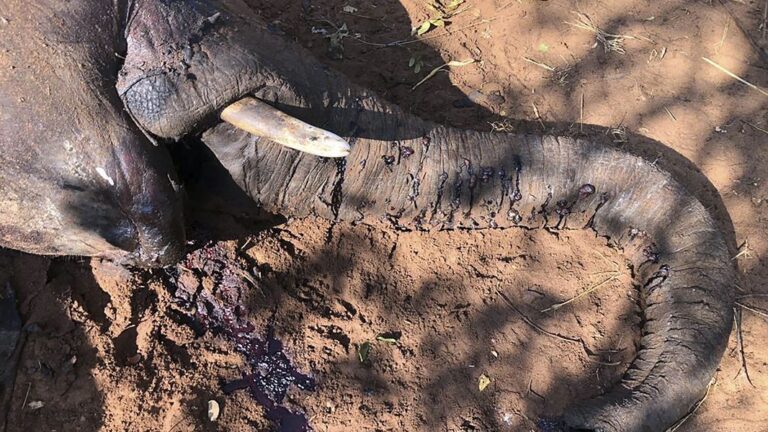
The news about the Special Grants that were issued to the two mining firms has come at a time Zimbabwe is losing its elephants under unclear circumstances in Hwange National Park. The national park is home to 10 percent of Africa’s last wild elephants.

Last week Friday about 11 elephants were found dead in Pandamasue forest located between Hwange National Park and Victoria Falls and investigations are currently underway to determine the mysterious cause of death.

China is the biggest ivory consumer in the world and reports from different countries in Africa and Asian have implicated the Chinese in most wildlife poaching activities, a fact which has made many Zimbabweans be pessimistic about the Chinese owning a mining concession in the wildlife zone.

Is the SG necessary?

Like many African countries, Zimbabwe is under serious electricity shortages, desperation for power supply has therefore led the country to push for more coal production.

According to reports, all the planned new coal projects combined could add up to 3000MW of power by 2023 a move which will make the country an exporter. According to experts, the country needs a maximum of 1700 MW the issuing of the Special Grants by the president is therefore justified.

However, according to a local energy expert who spoke to Mining Zimbabwe, the granting of the SGs to the two firms was not necessary as this would trigger poaching in the area. He also added saying that all the coal projects that are currently in the country besides the two are enough to feed the national grid if run properly.

“The government is fully geared to say goodbye to the Hwange National Park. The Chinese will be mining elephant tusks and rhino horns. Already, with Hwange Coal Mine in Matebeleland North and Chisambiji Coal Mine in Chiredzi, Zimbabwe has surplus coal for its needs.” He said.

Small scale miners also expressed concern to the developments saying that the government is prioritizing Chinese miners over locals who contribute significantly to the country’s foreign currency earnings.

According to miners, it was not necessary for the government to award Afrochine a Special Grant in Hwange National park because they have proven to be notorious in land degradation in the Chegutu/Selous area where they have chrome mining ventures.

The miners said that the firm has done absolutely nothing years in operation to the Chegutu community where its chrome ventures are located.

“Certificates for Small scale miners are not being issued but Chinese special grants are issued in record time. Chinese miners in Zimbabwe have no justice to the environment. One of the SG holder Afrochine has done absolutely nothing to the Chegutu community for years, then grant them game park expecting miracles is nonsensical” the miners said.

Are the SGs justified?

According to the Mines and Minerals Act, the president of The Republic of Zimbabwe has the power to issue a special grant to a mining firm he sees fit to carry out mining operations on reserved land.

The act was given the power to supersede all other bills such as the water act and the environmental act, in 2015 an amendment bill was crafted trying to correct that but it was crushed and thrown out in 2018.

However, the same Mines and Minerals act section 2  gives room for consultation. The act acknowledges existing surface rights by way of engagement and also the same act provides for reservations where areas such as National Parks are placed under reservation and the only way to acquire mining rights in these areas are by applying for a special grant and the terms are, SG holders get consent from the owner of the reservation. It is, however, yet to be known that the National Parks were consulted and agreed to the grants issued to the two.

The concessions according to reports were granted back in 2019. Concerns mount as it’s not clear that EIA’s were done prior to the drilling operations.

Earlier this year, villagers in Lukosi in Hwange wrote to the Hwange Rural District Council to complain about air and land pollution caused by Zhongxin trucks along Nekabandama road. The community says pollution has put homes, schools, clinics, and irrigation schemes at risk. Communities around the Deka River have also protested about the pollution of water by mining companies upstream.

“We beseech the Hwange Rural District Council to exercise its constitutional role and ensure the company engages in dust suppression, secure sustainable development through the surfacing of the road leading to Zimbabwe Zhongxin Coking Company plant in the shortest possible time and ensure that the company fulfills its obligation to the community as per their pledge during consultations with the community.” Reads the petition by the community.

An increase in mining and mining-related activities in the Hwange National park is displacing animals from their natural habitats to human settlements, leading to frequent human-animal confrontations.

Allowing the Chinese to mine in Hwange National Park would be deliberately destroying the environment, rare wildlife species, and their habitat. The government should not be abetting the destruction of wildlife habitats by granting special mining concessions to Chinese companies to mine in protected areas given the history of Chinese firms’ failure to adhere to environmental rights.

Ivory Trade in China

China has the biggest ivory trade in the world and wildlife experts believe that around 70 percent of the world’s ivory ends up there.

In China and Hong Kong, ivory is seen as precious material and is used in ornaments and jewellery. It’s also sometimes used in traditional Chinese medicine.

Ivory smuggling in Zimbabwe

In 2018 former first lady Mrs. Grace Mugabe was investigated by the Zimbabwe government for illegal ivory smuggling after investigations by Australian wildlife photographer Adrian Steirn.

“Ivory was being sourced either from the national park’s vault, being thieved or pilfered or from live elephants being killed by poaching syndicates. The syndicate would then sell to Grace Mugabe’s clientele,” he said.

No to mining projects in national parks, Maguwu

0

The environmental watchdog, Center for Natural Resource Governance (CNRG) Executive Director Farai Maguwu said the issuance of Special Grants to two Chinese Mining firms, Afrochine and Zhongxin Coal Mining Group in Hwange Nation Park is an attack on the tourism sector.

Rudairo Mapuranga

According to Mugawu, the tourism sector has the potential to be a multibillion-dollar industry if it is well funded and invested into, he said that the move by the government to turn the Hwange National Park into a mine will chase away many tourists from visiting the country.

“That’s an attack on the tourism sector which has the potential to be a multi-billion economy if well developed.

The tourism sector is very sensitive, these reports will turn a significant number of tourists away and render thousands jobless in addition to the loss of revenues.” said Muguwu.

Zimbabweans across the political, social, and economic divide have expressed concern over the government’s decision to issue a special grant in Hwange National Park, the park which is home to 10 percent of Africa’s last wild elephants.

Earlier this year, villagers in Lukosi in Hwange wrote to the Hwange Rural District Council to complain about air and land pollution caused by Zhongxin trucks along Nekabandama road. The community says pollution has put homes, schools, clinics, and irrigation schemes at risk. Communities around Deka River have also protested about the pollution of water by mining companies upstream.

“We beseech the Hwange Rural District Council to exercise its constitutional role and ensure the company engages in dust suppression, secure sustainable development through the surfacing of the road leading to Zimbabwe Zhongxin Coking Company plant in the shortest possible time and ensure that the company fulfills its obligation to the community as per their pledge during consultations with the community.” reads the petition by the community.

An increase in mining and mining-related activities in the Hwange National park is displacing animals from their natural habitats to human settlements, leading to frequent human-animal confrontations.

According to Zimbabweans, allowing the Chinese to mine in Hwange National Park would be deliberately destroying the environment, rare wildlife species, and their habitat. The government should not be abetting the destruction of wildlife habitats by granting special mining concessions to Chinese companies to mine in protected areas given the history of Chinese firms’ failure to adhere to environmental rights.

Jena Mine leader dies after inhaling toxic gases after blast

0

A Jena mine gang leader Godfrey Ganagana died on duty whilst inspecting the safety of passage for his colleagues after the morning blast on Thursday at the Mine’s N15 section Zimbabwe Diamond and Allied Workers Union has said.

The following is a statement issued by the Union.

“The Zimbabwe Diamond and Allied Workers Union has leant with great sadness the death of Godfrey Ganagana at Jena Mines in a suspected case of suffocation after inhaling dangerous gas emission whilst conducting inspections underground.

It is unfortunate that Ganagona, a gang leader met his fate while he had gone to inspect the safety of passage for his colleagues after the morning blast on September 3, 2020, at the Mine’s N15 Section and was at level 210 metres from the surface.

It is believed that he died from inhaling carbon dioxide after he entered a zone with broken pipes containing compressed air and water further, exposing him to serious occupational hazards.

The union is disturbed that the victim was forced to perform that task without the required gas monitor device which is used to detect the presence of dangerous gas emission in the underground mine shafts.

This negligence on the part of the employer for failing to provide such lifesaving equipment amounts to committing constructive murder and the mine authorities should be held accountable for the death of this innocent worker who has left behind two children.

It is said that employers have chosen to neglect the issues of safety and health of their workers ahead of profits, a situation which has led to continuous silent and callous deaths in most mining companies across the country.

Given this sad development, the union is calling on the company to institute an independent investigation by inspectors from the National Social Security Authority and officials from the trade union to establish the exact circumstances leading to the death of Ganagana who was also a strong member of the union who fought tirelessly for the rights of his peers.

We are calling on mining companies to stop mortgaging the lives of their workers by exposing them to avoidable occupation risks by ensuring that watertight safety measures are put in place to safeguard their workers against such avoidable accidents during the line of their duties.

It is also worrying that this year alone, more than 10 workers have died in occupation accidents in both conventional and artisanal mines across the country yet nothing meaningful is being done by relevant authorities to address these callous acts which have not only taken away innocent lives but have robbed families of their breadwinners.

The union warns employers that it will take stern penalties on employers found on the wrong side of the law and if these acts of unnecessary loss of lives continue, it will not hesitate to mobilize its members and stage targeted protests at the premises of these profit-oriented capitalists who do not respect the sanctuary of human life by continuing to put the lives of workers on the “firing line”.

Zimplats’ capital expenditure dropped 9.3 percent to US$104 million

0

Platinum group metals (PGM) producer, Zimplats’ capital expenditure dropped 9.3 percent to US$104 million in the year to June 2020, compared to the same period last year, according to a preliminary report released by the group on the Australia Stock Exchange where its shares are listed.

Zimbabwe’s largest PGMs miner said the expenditure on capital projects, which covered stay in business programmes, replacement mines and expansion projects, fell short of the US$115 million spent in 2019.

This came as the group sailed over the uncertainty caused by the outbreak of the coronavirus to post sterling financial performance largely on account of better metal prices.

Zimbabwe is the world’s second largest known PGMs deposits after South Africa and platinum, which is the second largest mineral export after gold, together they account for over half the mineral exports.

A total of US$69 million was spent on stay-in-business projects during the year, down from US$82.5 million invested the prior year. This included expenditure on the Bimha Mine redevelopment and the furnace rebuild and improvements project.

Zimplats said the Bimha Mine redevelopment was progressing according to the plan. The south underground crusher and ore-conveyance system were commissioned in December 2019.

The group aims to complete outstanding underground workshops in the north and south sections in December 2020, which will complete the full scope of the project.

“During the year, US$15 million was spent on this redevelopment project, bringing the total project expenditure to US$98.8 million as of 30 June 2020 compared to a total project budget of US$101 million,” Zimplats said.

The furnace rebuilds and improvements project, which commenced in 2019 were completed and commissioned in the first half of 2020.

A total of US$7.1 million was spent in 2020 bringing the total expenditure to US$20.4 million while US$16.4 million from US$18.6 million was spent on the replacement of trackless mining machinery including ancillary support equipment in the previous financial year, in line with the current replacement philosophy.

A total of US$33.6 million was spent on replacement mines during the year, 20 percent higher than the US$28.1 million spent in 2019.

Development of Mupani Mine, a replacement for Rukodzi and Ngwarati mines, which deplete in 2022 and 2024 respectively, is progressing well and on schedule.

A total of US$32.1 million was spent on this project during the year, taking the overall project cost to US$99.5 million as at 30 June 2020.

The Mupani Mine is scheduled to reach full production of 2.2 million tonnes per annum in July 2024 at an estimated cost of US$264 million.

Zimplats said the revised phase two expansion project was now substantially complete. An amount of US$1 million was spent on the Mupfuti Mine stockpile cover during the year, bringing the project total expenditure to US$463 million against authorised budget of US$492 million.

Operationally, Zimplats said mining and milling operations performed very well during the year, producing 7.2 million tonnes (2019: 6.7 million tonnes) and 6.8 million tonnes (2019: 6.5 million tonnes) respectively.

The group’s 6E head grade at 3.48g per tonne, was the same as the previous year.

Ore mined and milled increased by seven and 5 percent, respectively from the previous year benefiting from ore from Mupani Mine and fleet productivity enhancement initiatives that began towards the end of 2019, which have now been rolled out to all the underground mines.

The concentrator plants throughput, Zimplats said, was better than the previous year due to higher running time and milling rate.

The group’s operations were not affected by the Covid-19 pandemic as all the mines and the processing plants continued operating throughout the year with no confirmed cases within the workforce.

Total 6E metal produced for the year (including metal sold as concentrate) increased marginally from 579 591 ounces in 2019 to 580 178 ounces in 2020.

Revenue increased by 38 percent to US$868.9 million from US$631 million in 2019 mainly due to the increase in average prices of rhodium, palladium, gold and nickel.

The 6E ounces sold decreased by 3 percent from 573 009 ounces in 2019 to 554 944 ounces in 2020.

This was mainly due to the force majeure notice issued by parent firm Impala Platinum Limited, which resulted in the suspension of PGM sales for more than a month in the final quarter of the year.

“The force majeure notice was in response to the Covid-19 pandemic induced lockdown in South Africa,” Zimplats said.

Gross profit margin improved to 45 percent this year from 30 percent in 2019 mainly due to the improvement in metal prices.

Operating cash cost per 6E ounce increased by 2 percent from US$602 in 2019 to US$613 in 2020 mainly due to inflation.

Profit before income tax for the year increased to US$374.2 million from US$205.3 million in 2019. Income tax expense for the year increased to US$112.4 million from US$60.5 million in 2019 mainly driven by the increase in taxable profit.

Resultantly, profit after tax for the year increased to US$261.8 million from US$144.9 million in 2019. Net cash inflow from operating activities increased to US$258.4 million from US$241.5 million in 2019.

The group also paid dividends of US$45 million (2019: US$85 million) and repaid bank borrowings of US$42.5million (2019: US$42.5 million).

At year end, the group said it had bank borrowings amounting to US$7.2 million (2019: US$42.5 million) and a cash balance of US$135.8 million (2019: US$67 million)_Business Weekly


Implats earnings up nearly 400% on weak rand, costly metal

0

South Africa’s Impala Platinum’s (Implats) annual earnings jumped by nearly 400% after higher metal prices and a weaker rand offset the impact of the covid-19 pandemic, the company said on Thursday.

Mining in South Africa has been hit hard by covid-19 as lockdowns led to mine closures and miners contracted the disease, but a weak local currency that reduces local costs limited the impact of reduced output.

High prices for palladium and rhodium, which Implats extracts together with platinum, also boosted profits as the miner said the dollar basket price of the main minerals it mines rose by 46% year-on-year.

THE PERFORMANCE REPRESENTS A TURNAROUND FROM 2018 WHEN IMPLATS PLANNED TO RESTRUCTURE ITS RUSTENBURG OPERATIONS AND CUT THOUSANDS OF JOBS

It posted headline earnings per share (HEPS), the preferred profit measure in South Africa, of 20.75 rand ($1.23) for the year ended June, 391% higher than the 4.23 rand a year earlier.

The performance represents a turnaround from 2018 when Implats planned to restructure its Rustenburg operations and cut thousands of jobs.

“The progress made in the strategic repositioning of Implats over the past several years enabled the group to successfully navigate the challenges created by the unprecedented external shock of the covid-19 pandemic,” Implats CEO Nico Muller said.

Implats, which resumed dividend payments this year, declared a final dividend of 4.00 rand per ordinary share in line with its policy of around 30% of free cash flow, bringing the total dividend to 5.25 rand per share.

Muller said it was “highly likely” more value would be returned to shareholders if prices remain high and the rand exchange rate favourable.

“If we can’t find growth opportunities that would add incremental value, the bulk of the cash then would be returned to shareholders,” Chief Financial Officer Meroonisha Kerber said, adding that it could be through a special dividend, increased dividends or share buy-backs.

During the year, free cash flow reached 14.4 billion rand compared with 7.7 billion rand a year ago.

Implats said pandemic-related disruptions had a 9%, or 290,000 ounce, impact on production during the period.

Along with other miners, it faces the prospect of further disruption as South African state utility Eskom struggles to generate sufficient power.

For the longer term, Implats operations in Zimbabwe and Canada could provide the best growth opportunities, but Muller said he would like to see a more stable policy and regulatory environment in Zimbabwe before investing significant growth capital.

($1 = 16.8449 rand)

Reuters

De Beers uses geofencing to protect crew on world’s largest offshore diamond mining vessel

0

A new IoT solution that provides geofencing to maintain safe work distances for crew operating heavy equipment has been installed at De Beers’ marine diamond mining operations.

The system relies on Bluetooth low energy locators and wearable sensors as precision crew locator tools, integrated with onboard antennas and a software engine. It has been jointly developed by Orange Business Services, a network-native digital services company, and De Beers Marine South Africa.

According to the companies, the solution was successfully piloted on board the MV Mafuta, which is currently the world’s largest offshore diamond mining vessel owned and operated by Debmarine Namibia, a 50/50 joint venture between the Government of the Republic of Namibia and De Beers Group.

The vessel operates up to 150 kilometres off the coast of Namibia.

THE SYSTEM RELIES ON BLUETOOTH LOW ENERGY LOCATORS AND WEARABLE SENSORS AS PRECISION CREW LOCATOR TOOLS

In this pilot, Orange Business Services imported the Mafuta’s AutoCAD files and undertook an onboard site survey to map antenna locations to geofence a predetermined area on the vessel. Ten crew members were equipped with wrist sensors. If one of the crew breached the geofenced area onboard the vessel, the ship’s bridge was alerted immediately.

“Debmarine Namibia has a very clear aim of ‘zero harm’ across all our operations, and we are constantly looking at ways of enhancing employee safety and especially around the heavy machinery required for diamond recovery operations,” Gerhardus Theron, Vessel Manager of the MV Mafuta, said in a media statement.

“[The] pilot phase has now confirmed the potential of this innovative approach that we could embed within our existing safety processes and procedures.”

Since the geofencing pilot has already proved successful in one of the most challenging heavy industrial environments – a floating diamond mine at sea, with prolonged exposure to strong vibration and corrosive saltwater, the companies believe the next phase of this development will aim to refine the interface and data collection capabilities, and include testing a trigger function to deactivate machinery in the event of a breach of the geofence by a crew member_Mining.com

Fidelity gold buying prices Friday 4 September 2020

0

Fidelity Printers and Refiners official gold buying prices Friday 4 September 2020.

SG 90% AND ABOVE $55.83/g
SG ABOVE 85% BUT BELOW 90% $54.90/g
SG ABOVE 80% BUT BELOW 85% $53.65/g
SG ABOVE 75% BUT BELOW 80% $53.02/g
SAMPLE BELOW 10g BUT ABOVE 5g $54.27g
FIRE ASSAY CASH $56.15/g

Cash available. Fidelity Printers and Refiners prices will be changing daily in relation to world market prices.


Contact FPR

No. 1 George Drive, Msasa, Harare, Email: [email protected], Telephone: +263 242-486670, +263 242-486694, +263 242-487131, +263 242-447810-5

Post Mine Registration Guidelines

0

Most people after being granted their mine registration certificates, they are not aware of the regulatory requirements thereafter and they are mostly found wanting. In law, they say “ignorantia legis neminem excusat,” meaning ignorance is no excuse at law hence you are penalised for breaching the law even if you are not aware of it. Some of the penalties of failing to adhere to the mining regulations include loss of title (forfeiture), fines or even imprisonment.

In this article I will highlight some of the important regulations, although not conclusive, that need to be adhered to after registering as a miner:

  1. Appointment of mine manager – SI 109 of 1990

Upon registration, the miner is expected to, within 7 days appoint a mine manager who will be accountable for all activities at the mine. Failure to do so the owner automatically becomes the mine manager. The mine manager should be a competent person with a blasting licence though in some instances someone with vast mining experience can be considered and he/she has to be granted an appointment letter from the Ministry of Mines.

2. Approved Environmental Impact Assessment (EIA)

Before any mining takes place the miner should have an approved EIA from the Environmental Management Authority (EMA). An EIA identifies any possible environmental impacts associated with your intended mining activities and how these impacts can be mitigated. For small scale mining an EIA can be attained through a less rigorous and cheaper Environmental Management Plan and for larger projects or projects with huge environmental implications it is attained through hiring a consultant which is costly and takes longer.

3. Submission of monthly returns

Before the 10th day of every month, a miner is supposed to submit monthly production returns of output realised at their mine to the respective Provincial Mining Office. Declaration of returns should be done even if nothing was produced. Failure to do so is an offence liable to a fine not exceeding level five or to imprisonment or to both fine and imprisonment.

4. Payment of royalties

Mining depletes the resource and for this reason miners are expected to pay royalties when they dispose their output. The rates of royalties vary per mineral and are collected at export and disposal. On behalf of Government Fidelity Printers and Refiners collects royalties for gold and silver when it disposed to them and Minerals Marketing Corporation of Zimbabwe for all other minerals when export receipts are received.

5. Payment to Rural District Councils (RDCs)

Most mining is undertaken in rural areas and according to Section 255 of the Mines and Minerals Act upon registration a miner is expected to pay a statutory fee at stipulated intervals to the relevant RDC depending on the mining location. Failure to do so, the debt accumulates to the RDC and the RDC is empowered to recover the debt from the miner through a competent court.

6. Preservation of Mining rights

To preserve your mining rights from forfeiture, applications for inspections should be submitted to the Provincial Mining Director. The first inspection certificate should be applied for, six months from the date of registration and this blocks the claim from forfeiture for twelve months from date registration.

Twelve months from date of registration, the miner should apply and obtain the second inspection certificate and this protects the claim from forfeiture for twelve months from date of first inspection. Subsequent inspections will be for twelve months from expiry of the first inspection.

Inspection certificates are granted by the Provincial Mining Director on the basis of work done, production or capital expenditure and payment of a gazetted fee. In the case of base metal inspection certificates can be granted by just paying the gazetted fee (inspection by payment) because of the nature of the minerals.

First Published by ranga mhazo

An Economist in the extractive sector with over seven years experience in public sector policy formulation, investment promotion and ASM. Ranga is currently employed by the Ministry of Mines and Mining Development as a Principal Policy Planning & Coordination Officer, based in Harare, Zimbabwe.