Home Blog Page 519

MSU Mining Student in pursuit of curbing mining accidents

0
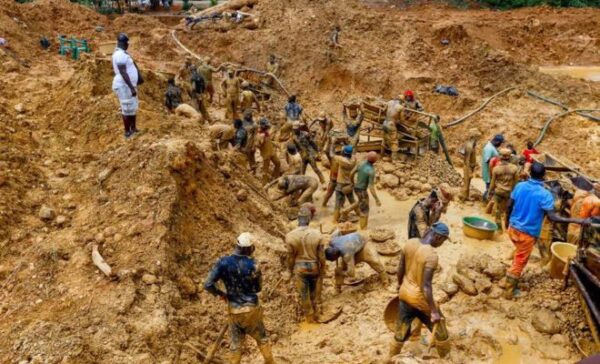
What a man can do, a girl can do it better, the saying has proven true for  Midlands State University (MSU) metallurgical mining student Tanyaradzwa Makotore in partnership with Young Miners Foundation (YMF) and the MSU faculty of engineering and geosciences who managed to launch a mining safety campaign with the objective of educating small-scale miners on how to curb mining accidents from occurring.
Shantel  Tyne Chisango
Miss Makotore told Mining Zimbabwe that the surge in mining accidents prior-year drove her into capacitating miners with education through safety awareness campaigns.
“Reading about all the casualties that were recorded especially during the end of last year drove me into mobilizing a team that assists in helping miners to be knowledgeable realizing that most of the mine accidents victim are youths.”
She further added that youths are opting to mine as it is considered a fast way to make money in dire times.
Makotore pointed out that making this vision tangible has been quite challenging because of the lack of funding in most of the requirements considering that the team comprises small-scale miners.
The best way that these safety campaigns can be a success is through having mobile training truck, a vehicle fitted with teaching equipment that can conduct training in areas viable to roads.
Having managed to launch the safety campaign, Miss Makotore said it is not easy working in a male-dominated industry for she has to work extra hard to prove that she is able to achieve anything despite the stereotypes towards women in the industry.
“As a woman, it’s hard because this is a male-dominated industry and I have to do more to prove my worth and capabilities so that I am deemed competent.”
The government can offer funding towards this initiative as it is really a matter of emergency that needs to be addressed as soon as possible, said Tanyaradzwa.
Tanyaradzwa Makotore is a part 3.2 student at MSU who is also an advocate for Human Immune Virus (HIV) prevention amongst adolescent girls and young women_@ShantelTyne

Govt withdraws indigenisation amendment

0

Government has deleted Section 36 of the Finance (No 2) Act of 2020 which it says had caused some misconception to some investors and stakeholders in the mining sector.

In a joint statement, the Ministries of Finance, Industry, and Mines said the clause has been misinterpreted as a departure from the government policy of “Zimbabwe is open for Business” and opening up the mining sector.

“The provision 36 of the Finance (No 2) Act of 2020, to the effect that the minister responsible with Indigenization and economic empowerment Act (IEE) may, in consultation with the ministers responsible for Mines and Finance prescribe a mineral, the extraction of which would be subject to 51% shareholding by the designated entity has been interpreted by some to represent a departure from Government stated position to open the mining sector to investment without the requirement for 51 %of the shareholding being held by the designated entity,

“To enhance certainty in relation to investments in the Mining sector and consistent with Government
policy, this insertion will be deleted,” read the statement.


The government was accused of bringing the indigenization policy through the backdoor with legal watchdog civil society organization Veritas describing it as “legislation by stealth”

“The way the amendment was slipped through Parliament is deplorable. Finance Acts are enacted each year to provide a legal framework for the Government to raise revenue through taxes, customs
duties, and other imposts.

“Finance Acts are supposed to deal with taxation and the collection of revenue by the State, not with broad matters of economic policy such as indigenization. Members of Parliament cannot be expected to scrutinize Finance Bills to check that there are no clauses that stray outside the Bills’ legitimate scope,” said Veritas in a statement.

However, The Chamber of Mines, in a recent note to members, says the changes had intended to lift empowerment requirements on platinum and diamonds.

“This amendment brings into force the policy to remove diamond and platinum from complying with the equity provisions of the IEE Act. This brings to closure the Chamber appeal to ensure that the policy is enshrined into law,” the Chamber of Mines says in an advisory to its members.

This however has not allayed the fears of miners that the wording of the Finance Act leaves the industry exposed to expropriation.

If maintained the clause would give the government the prerogative to indigenise a controlling equity in any mineral in the country taking the country back to the indigenization policy of the old dispensation.

Soon after assuming power in 2017, President Mnangagwa undertook to relax a 2008 law that required majority local shareholding in all major businesses. The government amended the Indigenization and Economic Empowerment Act through the 2018 budget.

The Anchor

Covid-19 pandemic slams door on mining exploration in Africa

0

Travel restrictions, supply chain disruptions and risk aversion since the start of the Covid-19 pandemic have slammed the brakes on mining exploration in Africa, jeopardising the minerals supply pipeline.

Inward investment will be a key focus at the annual Investing in African Mining Indaba virtual conference to be held on Tuesday and Wednesday, with companies looking to capitalise on higher metals prices and the transition to green energy.

Without exploration, the continent’s rich mineral resources are at risk of being unutilised as older mines become unviable.

Mining companies’ exploration budgets for Africa fell 10 percent to a four-year low in 2020, according to S&P Global Market Intelligence.

“Covid-19 has had an impact on all aspects of the mining value chain, and exploration is no exception,” said Alex Khumalo, head of social performance at the Minerals Council, South Africa, an industry trade group.

While Africa did not fare as badly as Latin America, where budgets fell by 21 percent, the sharp decline was in marked contrast to the 1.5 percent dip in the United States and Canada.

In many cases companies have been turning more towards their home jurisdictions and what they see as their safe-haven investments, said Chris Galbraith, senior metals and mining analyst at S&P Global.

“With many of these companies based in Canada, the US and Australia, more of their exploration has been focused on domestic exploration … and oftentimes that has come at the expense of African development,” he said.

For junior explorers and miners, raising capital on public markets has been a challenge while the pandemic has made it even more difficult to access private equity capital.


Reuters

Tesla gets lofty US$1,200 price target as ‘fireworks’ not over

0

Last year’s gains in Tesla are far from over as the company consolidates its leadership position in the EV industry in multi-trillion dollar markets, one Wall Street analyst said on Monday.

Piper Sandler’s Alexander Potter more than doubled his price target on the electric vehicle maker to US$1,200 from US$515, the latest in a string of similar moves by several analysts, who expect the Elon Musk-led company to grow aggressively. Potter’s target is now the highest among the more than 40 analysts who cover the stock, according to Bloomberg data.

“With Tesla’s target industries still embracing outdated business models, it may be decades before this company runs out of new opportunities to pursue,” Potter wrote in a note to clients. The analyst maintained his buy-equivalent rating on the stock.

After rising more than 8-fold last year, Tesla shares are up an additional 19 percent in 2021 after reporting strong delivery numbers for the fourth quarter. However, the stock pared some of its best gains after profit for the period disappointed and the company refrained from providing a specific delivery guidance for 2021.

Tesla shares rose 5.8 percent to US$839.81 on Monday.

Analysts have yet to catch up with the rapid gains in Tesla shares over the past 12 months, with the average price target on the stock still far below the levels at which the shares are currently trading. Moreover, opinions among analysts about how much Tesla’s stock should be worth — with Potter’s US$1,200 at one end and J.P. Morgan analyst Ryan Brinkman’s US$135 target on the other — vary widely.

The surge in Tesla’s share price led investors to hunt for smaller EV players and startups, at a time when the sector also benefited from a growing acceptance among analysts and others that electric cars will dominate the automotive industry, with governments around the world announcing policies to encourage the phasing out of gas-fueled cars.

Potter expects Tesla to deliver 894 000 vehicles in 2021, eventually increasing to more than 9 million units in 2030, making it among the top-3 automakers globally. The analyst also expects to see a steady ramp up in the adoption of Tesla’s full self-driving (FSD) software starting in 2030, with more than half of all Tesla owners using the FSD package by the end of 2040.

Morgan Stanley analyst Adam Jonas also raised his price target on Tesla to US$880 from US$810 on Monday, citing expectations of higher revenue from the core automotive business and the potential growth of the company’s energy segment. Jonas maintained the buy-equivalent rating on the stock.


Bloomberg News

Corruption in mining sector: Several officials implicated

0

SEVERAL officials in the mines and mining development sector including some in the Parliamentary Portfolio Committee have been implicated in corruption involving claims and mines.

Chairman of the Portfolio Committee on Mines and Mining Development, Mr Edmond Mkaratigwa, confirmed the development saying complaints over the matter have been tabled before his team.

“We have received complaints in our committee. We called the implicated as well as the ministry officials for oral evidence sessions, which in some instances shamed the perpetrators and sometimes in camera where we felt the matters were not that big,” he said.

Mr Mkaratigwa said the oral evidence sessions were done to ensure accountability and transparency in the sector, where some players stand accused of fanning corruption and inefficiency.

He, however, could not be drawn to disclose more details of the nature of cases involved and the names of alleged perpetrators.

The committee, he said, also conducted inquiries and tabled reports with appropriate recommendations in the National Assembly, to ensure implementers took note of claims that had been made.

“Off the cuff it may be difficult for me to state (the number and names of officials implicated) because some of those charged may not be so direct but as a result of the committee expositions, registration of disappointment and pressure, it is more of the impacts sometimes than the output,” said Mr Mkaratigwa.

He said the Mines and Mining Development Committee is focusing on the legislation of the sector, which is informed by the Mines and Minerals Amendment Bill.

The Bill is still being fine-tuned after it was returned by President Mnangagwa for further amplification.

“In that regard we are now awaiting the final Draft Bill from the Ministry of Mines and Mining Development in conjunction with the Attorney General. We were supposed to have the all stakeholders conference in December and we anticipate the event to take place early this year. The budget for that is in place,” said Mr Mkaratigwa.

He said they have also created an adhoc committee that superintendents the Draft Bill process instead of just waiting for the Ministry and Attorney General’s drafters.

“Hence we became part of it through delegating the task to the adhoc committee. The Committee also conducted inquiries and tabled reports with appropriate recommendations in the National Assembly, to ensure implementers took note and on that one, we make constant follow-ups,” said Mr Mkaratigwa.


The Chronicle

Metallon accused of shortchanging artisanal miners

0

PAN-African natural resources company, Metallon Corporation has been accused by artisanal miners of shortchanging them through its subsidiary King’s Daughter Mining Company Limited, which owns and operates Redwing Mine.

Redwing Mine is located in the Penhalonga and Tsvingwe wards in Mutasa district, Manicaland province, about 20 kilometres northeast of Mutare and 265 kilometres southeast of Harare.

In a report titled Penhalonga and Tsvingwe Community Opposition to Destructive Mining Impacts by the two communities in those wards, they stated that artisanal miners were subjected to human rights abuses.

The report was made in 2018, but was only released recently.

“We used to be illegal miners and we would be chased away by law enforcement agents because it was illegal. But after that, Redwing Mine, together with Primeraw, came together and employed us to work for them legally under Redwing Mine,” a miner from Penhalonga, who did not name himself, said in an interview with Transparency International Zimbabwe in its new documentary titled Towards Accountable Mining in Zimbabwe.

“So, now that we work under Redwing Mine, we take our ore to the mine, but they do not pay us as much as we used to earn when we were mining illegally at the river. The upside to working for the mine is that we are no longer being chased by law enforcement agents, but the downside is that the mine only wants what we mine. But the company does not give us anything to make the mining process safer, like food or protective clothing.

“This is strenuous because we do all the hard work, and they benefit more than we do. They take 70% and we get only 30% of the proceeds. But we received identification cards which protect us from law enforcement agents.”

The report says local artisanal miners caught panning in the so-called “premises” of Redwing Mine were often severely beaten by mine security, resulting in more than 15 documented deaths since 2005 to the time the report was released.

Others were thrown down disused shafts and gullies, only for their corpses to be discovered later by their colleagues, according to the report.

“Since time immemorial, our community has survived through artisanal mining, iron smelting and agriculture (growing crops and raising livestock). Mining has impacted negatively on our environment and livelihoods. We have been effectively dispossessed of both our farming land and access to our minerals,” the communities said in the report.

“We have been made into criminals on our own land. When we engage in mining we get arrested and charged for being ‘illegal miners’. We have even lost members of our community for alleged trespassing or for ‘illegal mining’. Our community is in distress. We are now a community of jobless poor people.”

King’s Daughter Mine is the largest mining company in Penhalonga, with both underground operations and surface sand/slime retreatment operations.
The company uses cyanide in gold processing.

Another miner, DTZ-Ozgeo — a joint venture between the Development Trust of Zimbabwe and Russia’s Econedra — was forced by the Environmental Management Agency to stop its operations in 2013 due to an outcry from locals regarding the environmental catastrophe it was causing along Mutare River.

Redwing Mine production in 2016 was 10 106 ounces (286,5 kilogrammes) with the mine believed to have 2,5 million ounces of gold (nearly 71 tonnes) with a life expectancy of 20 years.


NewsDay

US approves Australian company to operate rare earths facility

0

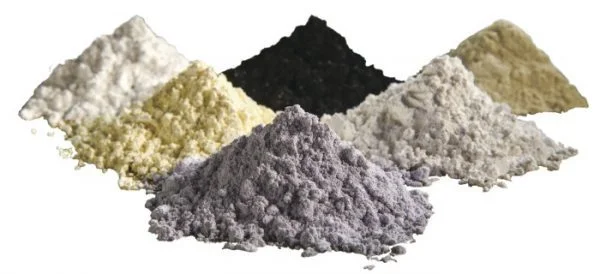
The Pentagon said on February 1 it had awarded $30.4 million to an Australian company to build a Texas facility for processing rare earths used to make weapons, electronics and other goods. It was one of two deals the US military sealed Down Under this week.

China is the world’s largest producer of rare earth minerals and has threatened to stop their export to the United States, fuelling a push inside the US government to seek alternative suppliers and boost domestic production.

Lynas Rare Earths, based in Western Australia, will process so-called light rare earths, the commonest type often found in consumer goods such as cellular phones for the US Department of Defense.

Amanda Lacaze, Lynas’ chief executive, said the company was pleased to have been selected, adding the plant “will ensure the US has a secure domestic source of high-quality separated light rare earth materials.

This is the second award Lynas has received from the Pentagon. Last year, the company and Texas-based Blue Line Corp received funding for production of so-called heavy rare earths, a less-common type of the mineral elements used in weaponry.

Last year, Lynas Corp secured US government funding to design a $36 million processing plant, which was held up after Congress members argued such a strategic contract should be awarded only to domestic companies. But fear of a Chinese stranglehold on rare earth processing forced them to relent.

SECOND VICTORY

Both facilities are planned for Hondo, about 70km west of San Antonio. Lynas aims to ship rare earths from its mine in Mt Weld, Western Australia, for final processing in Texas. The company said it will produce a quarter of the globe’s demand for rare earths when the facilities are operational.

The Mt Weld central lanthanide deposit is one of the highest grade rare earth deposits in the world, the company said. The area also has deposits of niobium, tantalum, titanium, zirconium and phosphate.

Lynas shares rose nearly 2% in trading on February 2 to A$4.915.

It is the second victory at the Pentagon for Australian companies this week. The US Department of Defense also awarded a contract worth $230 million to Brisbane-based biotech firm Ellume to ramp up production of its Covid-19 home testing kits.

The tests detect fragments of the virus from a nasal swab that can be performed in 15 minutes with results reported via a smartphone app. It can be purchased without a prescription in the US.

Ellume founder and chief executive Sean Parsons said the company would construct a US manufacturing plant and deliver 8.5 million tests for federal use.

 With reporting by Reuters

Global gold output to rise 5.5% in 2021 – report

0

After declining in 2019, global gold production was adversely affected by the covid-19 pandemic during 2020, while the suspension of expansion works and contractions from mines nearing closure also exacerbated the decline. Overall output in 2020 was estimated to have declined by 5.2% to 108 million ounces (moz), according to UK-based analytics company GlobalData.

This year, however, total production is expected to bounce back and increase by 5.5% to 113.9moz and then grow to 124.1moz by 2024 – a 2.9% compound annual growth rate (CAGR).

Indonesia, Peru and the US will be the key contributors to this growth, GlobalData says. Combined production in these countries is expected to recover from an estimated 20.1moz in 2021 to 25.3moz in 2024.

Key projects

Key projects expected to commence operations during the forecast period include Barrick and Newmont’s Turquoise Ridge underground expansion project in Nevada, which is currently undergoing construction. With an annual gold production capacity of 500koz, the project is expected to be commissioned in late-2022.

The Salares Norte project in Chile, which is wholly owned by Gold Fields, is also under construction. With an annual gold production capacity of 450koz and a development capital expenditure of about $860m, the project is expected to begin operations in 2023.

The greatest impact of covid-19 on gold production was observed during the first half of 2020, when six of the top 10 gold producers reported a collective 8.4% year-on-year fall in their output. Major declines were from Barrick (12.3%), Newcrest (15%), and Agnico Eagle (8.4%). Major contributors offsetting the declines were Kirkland Gold (48%), due to the acquisition of the Detour Lake project by Detour Gold in January 2020, and Zijin (5.9%).

Several gold mines were forced to suspend operations temporarily due to the pandemic, including Barrick’s Veladero, Pueblo Viejo and Porgera mines, and Agnico’s Nunavut, Quebec and Mexican mining operations.

Regional production

China, after reporting an all-time high of 16.7moz of gold production in 2014, has been on a downtrend ever since, as a consequence of policy changes and depleting ore reserves. Adding to these factors, the pandemic struck the country’s output hard during the first quarter of 2020. Therefore, China’s gold production is estimated to have declined by 7% to 12.4moz in 2020, according to GlobalData.

The pandemic also had a significant impact on African operations mainly during the second quarter of 2020, where gold production is gradually shifting its base towards Western African countries.

Gold mines that were temporarily suspended in Africa include Mponeng, Kalgold and Zondereinde in South Africa, Obuasi in Ghana, Hounde in Burkina Faso and Fekola in Mali. Overall, gold production from South Africa is expected to have declined by 10.9% in 2020, with declines also in Guyana (15.9%), Ghana (7.5%) and Mali (5.6%).

In Indonesia, production is expected to have declined by 28.9%, owing to the transition of the Grasberg open-pit mine, the country’s largest producer.

Unlike other key producers, GlobalData reports, Australian gold miners remained largely unaffected by the outbreak, as stringent measures were adopted by the government to contain the outbreak enabling minimal disruptions to mining activities.

State governments, including Western Australia, South Australia, Tasmania, and the Northern Territory, began to close their borders from late March, with certain exceptions for essential service workers. Overall, gold production in Australia is expected to have grown by 4.3% in 2020, reaching 12moz.

Mining.com

Reddit traders swarm silver and SPACs, Robinhood raises $2.4 bn

0

(ATF) Silver buying driven by Reddit investors is picking up pace, while SPACs that haven’t identified target acquisitions are also being bid up by online retail traders. Robinhood has raised another $2.4 billion to meet the continuing boom in demand.

A rise in the price of silver that started in the Asian morning continued throughout the global trading day on Monday February 1, as buying that was coordinated on Reddit forums sparked reaction from other market players.

Silver prices reached a fresh eight-year high above $30 an ounce and a global shortage of physical bars and coins exacerbated buying that was also seen in silver derivatives and related ETFs and mining stocks.

There was growing speculation that hedge funds and other institutional traders were trying to game the most recent speculative bubble by using ‘bots’ to post on Reddit forums and drive up prices in silver and other assets.

The US Commodity Futures Trading Commission “is communicating with fellow regulators, the exchanges, and stakeholders to address any potential threats to the integrity of the derivatives markets for silver, and remains vigilant in surveilling these markets for fraud and manipulation,” its acting chairman Rostin Behman said in a statement.

There was some selling of gold to fund silver purchases but a shift towards buying of gold – which is a hugely popular physical investment with Chinese and Indian customers – would not be a surprise if silver sustains its gains.

SPAC buying

The GameStop phenomenon of online retail investors trying to identify the next stock or asset to buy that has previously been shorted by hedge funds is also now spreading beyond this goal to the special purpose acquisition company (SPAC) market.

SPACs are normally listed with a nominal $10 share price and trade close to that level while the sponsors look for a suitable target firm to take public.

A rise in the price of a SPAC much beyond $11 would in the past indicate that there had been leakage of information to the market ahead of a deal that is imminent.

But the Reddit-fuelled buying by retail investors is now spreading to SPACs that have shown no sign that they are about to close an acquisition.

SPACs formed by high profile investors like former Facebook executive Chamath Palihapitiya and ex-Citigroup banker Michael Klein are seeing buying from retail investors simply on the back of name recognition.

This has led to some SPACs being added to the list of names that have trading restrictions from popular online trading platforms, including Robinhood.

The surge in trading volumes on Robinhood has led to a sharp increase in its own capital needs to fund margin requirements with clearing houses, but the platform is managing to meet this demand for now.

Robinhood has raised another $2.4 billion in its second capital infusion within a week to meet its financing requirements.

Robinhood also continued to try to explain its policies to its retail investor users and to address concerns that it is changing trading limits to help the market makers who supply its revenue.

“Simply put, Robinhood limited buying in volatile securities to ensure it complied with deposit regulations,” it said in a blog post on February 1.

“Robinhood is about expanding everyday investors’ ability to invest. To be the trusted and responsible platform you can rely on, Robinhood has to operate within the existing regulatory environment.”

ATF

ZESA seeks 30 years jail for copper thieves

0

ZESA Holdings is seeking a review of the mandatory sentence for criminals convicted for stealing power cables and transformers from 10 to 30 years to curb the vice that is prejudicing the power utility of more than US$2 million annually.

The parastatal is now in the process of replacing copper cables with aluminium.

Zesa requires more than US$14 million to procure intruder detection gadgets to fight the scourge that continues to bleed the power utility. This comes as police in Bulawayo have smashed a well organised copper theft racket, arresting two suspects and recovering 150kg of overheard copper conductors worth US$12 000.

The latest arrest brings to four, the total number of suspects nabbed within the same weeks as police step up efforts in the fight against rampant copper theft in Bulawayo and its vicinity.

Thieves are taking advantage of the 6pm to 6am curfew to steal copper cables.

A number of suburbs in the city including one of the largest referral health institutions in the country — Mpilo Central Hospital — often go for weeks without electricity following theft of cables.

Simon Tapfuma (32) of Magwegwe and Police Ncube (25) of Lobengula West were arrested on Sunday in the early morning hours while their two accomplices are still at large. Tapfuma and Ncube, who were part of a group of five suspects, were arrested when detectives caught them red-handed, leading to the recovery of the loot. The tools used in the commission of the offence were, however, not recovered.

Police impounded the suspects’ vehicle, a Toyota Hiace kombi, which was carrying the stolen cables.

The suspects were targeting areas around Mpopoma, Magwegwe, Njube and Lobengula suburbs.

Bulawayo provincial police spokesperson Inspector Abednico Ncube confirmed the arrests yesterday, saying investigations were ongoing. “We arrested two suspects whom we suspect operated as a syndicate. Our officers from the CID MFFU (Minerals Flora and Fauna Unit) received information that the suspects who were using an orange Toyota Hiace registration number ACL 4787 were in possession of stolen overheard copper conductors,” he said.

The cables belong to the Zimbabwe Electricity Transmission and Distribution (ZETDC), a subsidiary of Zesa Holdings.

“The detectives reacted to the information and located the vehicle and the suspects in the bush in Pelandaba West.”

Insp Ncube said upon spotting the detectives, the five men disembarked from their vehicle and took to their heels abandoning their car in the bush.

Police pursued the suspects and managed to catch up with Ncube and Tapfuma leading to their arrest.

“We recovered six rolls of overheard copper conductors valued at US$12 000 weighing about 150kg hidden inside their kombi. Investigations revealed that the suspects pulled down the cables on Sunday at around 1AM at Congo Beerhall in Mpopoma,” said Insp Ncube.

Upon arrest, the two suspects led detectives to the scene.

The suspects are linked to a series of copper theft cases which occurred in Mpopoma, Magwegwe, Njube and Lobengula suburbs.

Tapfuma and Ncube are expected to appear in court today facing charges of cutting, damaging and interfering with any apparatus for generating and transmitting electricity in violation of Section 60 A (b) of the Electricity Act.

Bulawayo has of late been hit by a series of power outages mostly due to copper cables theft, with suburbs such as Hillside, Burnside and Killarney being the worst affected.

Last week, Sunninghill residents woke up without electricity after thieves stole overhead copper cables worth an estimated US$15 000. On the same day Entumbane residents had also reported that some copper cables were found hanging from a guava tree.

During the same week, another suspect linked to an organised copper theft syndicate that stole cables worth US$36 000 from Zesa power lines in Bulawayo and surrounding areas, appeared in court.

Wisdom Ngwenya (26) of Mandisi Village in the Sigola area of Umzingwane District, who was arrested following a raid, allegedly ganged up with Tony West, Passman Kuneta and Alfred Phiri and pulled down 1 800 metres of overhead copper cables along Maggie Road in Kensington. Ngwenya’s accomplices are still at large.

Zesa’s acting western region general manager Engineer Lloyd Jaji said most of the power outages in the city resulted from copper cables theft.

Eng Jaji said the major challenge is that whenever they replace copper cables, thieves go and attack another area.

In April last year, about 950 metres of copper cables were stolen in Njube resulting the suburb including neighbouring Old Lobengula, Lobengula Extension and Mpopoma going for days without electricity.

Last May, police in Bulawayo arrested two serial copper cable thieves after using sniffer dogs to fish the two men out of a manhole while busy cutting copper cables. One of the suspects has since appeared in court and was sentenced to 70 years in jail over the US$20 000 copper theft case.

Zesa Holdings has since invited whistle-blowers to curb the upsurge in vandalism and theft of electricity infrastructure witnessed in the last few months_The Chronicle