Home Blog Page 520

Esigodini artisanal gold miner dies in shaft collapse

0

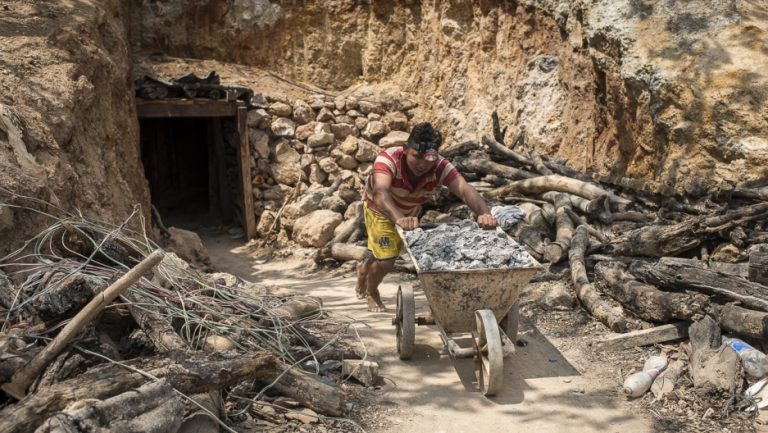
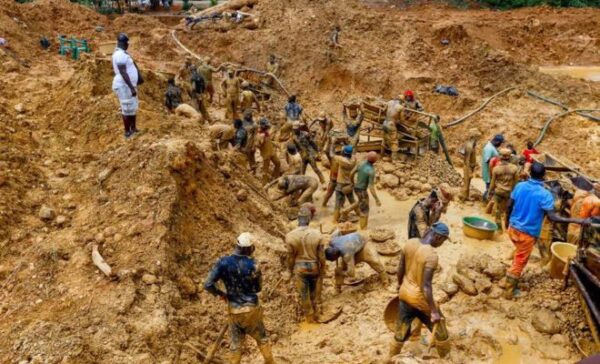
AN illegal gold panner died while his counterpart sustained injuries after a shaft they were working in collapsed on them at a mine in Esigodini.

Matabeleland South provincial police spokesperson Chief Inspector Philisani Ndebele confirmed the incident which occurred on Monday at around 4PM in Falcon Mine area.

He said Mzingaye Talent Mafohla (35) died on Tuesday while admitted to the United Bulawayo Hospitals.

“I can confirm that we recorded a sudden death case where an illegal gold panner died while his counterpart sustained injuries after a shaft they were working in collapsed. Mzingaye Talent Mafohla and his mate were illegally panning for gold in a 12-meter-deep shaft when it collapsed and buried them.

“They were rescued by villagers who dug them out while they were both still alive. Mafohla who was in a critical state was rushed to UBH where he died on the following day while his counterpart was treated and discharged at the Gwanda Provincial Hospital,” he said.

Chief Insp Ndebele urged members of the public to desist from engaging in illegal panning activities as they were putting their lives in danger in addition to violating the law.

He said people that wanted to engage in mining activities had to formalise their operations and follow the correct procedures in order to acquire necessary papers before operating.

“It’s sad that we continue to record a number of mine accidents as a result of illegal mining activities which are rampant in the province.

“If people want to engage in mining, they should formalise their operations. By engaging in illegal mining, they will not only be committing an offence but they will also be putting their lives at risk as they will be operating without necessary equipment and protective clothing.

“Some of these illegal miners operate in the early hours of the days in order to evade police not knowing that they will be risking their lives,” he said.


The Chronicle

Weak dollar ignites gold

0

Gold is rebounding, with Comex futures climbing back to US$2 000 an ounce, as the dollar extended its slump and investors bet US interest rates would stay lower for longer.

The dollar dropped to the lowest in over two years, fuelling a broad advance in commodities.

Spot gold gained more than 3 percent over the past three sessions, following its first monthly loss since March, as the Federal Reserve’s new approach on inflation added support. That came after a slowdown in buying from bullion-backed exchange-traded funds raised concern that a key driver of the metal’s record rally may be losing momentum.

Bullion is benefiting from the dollar’s weakness coupled with continued risk hedging, and a breach of the US$2 000 mark will “fan the flames of interest”, said Rhona O’Connell. — Bloomberg.

Fidelity gold buying prices Wednesday 2 September 2020

0

Fidelity Printers and Refiners official gold buying prices Wednesday 2 September 2020.

SG 90% AND ABOVE $55.95/g
SG ABOVE 85% BUT BELOW 90% $55.02/g
SG ABOVE 80% BUT BELOW 85% $53.77/g
SG ABOVE 75% BUT BELOW 80% $53.14/g
SAMPLE BELOW 10g BUT ABOVE 5g $54.39/g
FIRE ASSAY CASH $56.27/g

Cash available. Fidelity Printers and Refiners prices will be changing daily in relation to world market prices.


Contact FPR

No. 1 George Drive, Msasa, Harare

Telephone: +263 242-486670, +263 242-486694, +263 242-487131, +263 242-447810-5

Virtual reality gaming moves into mine safety training

0

Training miners for real-life blasting experiences often involves taking workers up to 3,000 feet underground, and actual training can be tedious, costly, and dangerous.

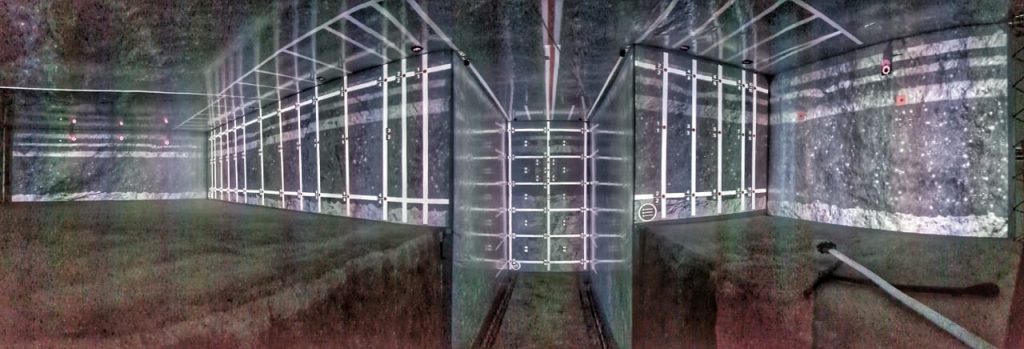
In a recent case study, Anglo American began implementing motion capture technology at some of its platinum mines in South Africa, where they paired virtual reality to create a real-life simulation through a world-first virtual stope, recreating situations where miners encounter real time blast walls.

Motion capture technology originated in the life science market for gait analysis but is also used by visual effects (VFX) studios, sports therapists, neuroscientists, and for validation and control of computer vision and robotics.

SESSIONS TAILORED TO MINERS ARE A LIFELIKE “GAME” FOR TRAINEES THAT NEED TO ADAPT TO THE HARSH CONDITIONS OF MINE BLASTING

Anglo engaged Pretoria-based STS3D, a company specializing in safety training solutions for the mining industry, and STS3D partnered with Vicon, a motion capture developer with offices in the US and UK to create virtual reality (VR) training experiences.

Sessions tailored to miners are a lifelike “game” for trainees that need to adapt to the harsh conditions of mine blasting.

Tim Massey, Vicon product manager, said the use of the technology has great potential in mining, and a key differentiator is that trainees learn from mistakes made during gaming.

“You can be in a different scenario just by changing the setting. [It] has an emotional impact – which is hugely relevant in building an effective training experience. It has a huge impact on learning,” Massey told MINING.COM.

Johan Bouwer, head of new product development at STS3D, said the team aimed to apply the idea of video gameplay to mine safety training.

“Animation play made it easy to create. With the revitalization of VR, [it] became cost-effective for the enterprise community,” Bouwer said.

Bouwer said training centers are built around the need to train miners how to block off a blast wall, and drill on red dots, and tight timing sequencing was an issue.

“The problem was people were not marking properly.  If you can get your blast correct – the value saves money,” Bouwer said.

Vicon and STS3D developed the VR wall, and used basic tracking technology to simulate painting on the wall – they have planted six VR walls for training in South Africa.

Vicon virtual reality
Image from Vicon.

“Anglo needed a VR stope – the problem was we needed to tag direction, centre lines, and that has to be precisely accurate,” Bouwer said.

This technology, when used in the VR stope creates an experience that is visceral, and when tests go wrong – there is a virtual blast, complete with sound effects, and within the frame of the VR game, the trainee experiences a  ‘virtual death’, which Bouwer said, “you can’t possibly forget.”

“This gives the miners a real fright. They’ll remember their error. Since you are fully immersed in the virtual mine, there’s no room for distraction. You’re on high alert all the time while marking a pattern on the rock face for the drill operators. And when you detonate the blast, the rock flies – creating a very vivid, a very memorable experience,” said Bouwer.

When a trainee makes a ‘fatal’ mistake – the rules of the game are that the miner has to start over.

Bouwer said he believes this approach can revolutionize how people are trained in mines, and can have the greatest impact where miners aren’t fully literate, as there is no need to read training manuals.

“It’s ‘serious games’ – you get so engrossed in the game you forget virtual reality and the audience watching – you get so engrossed in the program it becomes reality,” Bouwer said_Mining.com

Gem Diamonds finds 233 carat rough at Letšeng mine

0

Africa-focused Gem Diamonds (LON: GEMD) has found a 233-carat type II white rough at its iconic Letšeng mine in Lesotho.

The finding follows the discovery of a 442-carat type II white rough at the same mine last month.

Since acquiring Letšeng in 2006, Gem Diamonds has found more than 60 white gem-quality diamonds over 100 carats each, which makes the mine the world’s highest dollar per carat kimberlite diamond operation.

IT’S THE SECOND TYPE II WHITE DIAMOND OVER 100 CARATS RECOVERED IN LESOTHO IN TEN DAYS

At an average elevation of 3,100 metres (10,000 feet) above sea level, Letšeng is also one of the world’s highest diamond mines.

The biggest rough ever found was the 3,106-carat Cullinan, dug near Pretoria, South Africa, in 1905. It was later cut into several stones, including the First Star of Africa and the Second Star of Africa, which are part of Britain’s Crown Jewels held in the Tower of London.

Lucara Diamond’s (TSX:LUC) 1,758-carat Sewelô, found in 2019, holds the second-biggest diamond in record title, while the same company’s 1,109-carat Lesedi La Rona and the 995-carat Excelsior are considered the third- and fourth-largest diamonds ever found.

In October, Gem Diamonds announced that the Lesotho government had renewed the Letšeng mining lease for another 10 years, and granted it exclusive rights for further renewals_Mining.com

Great Dyke to secure phase 1 funding by end of year

0

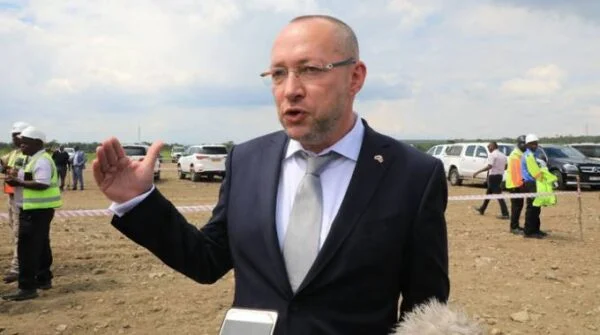
Russian-Zimbabwean platinum venture Great Dyke Investments (GDI) expects to raise up to US$500 million in funding it needs for the first phase of its mining project by the end of this year after the coronavirus delayed talks with lenders, its CEO said on Tuesday.

GDI is 50 percent owned by Russia’s Vi Holding, through its JSC Afromet subsidiary, and 50 percent owned by Zimbabwe’s Landela Mining Venture (Pvt) Ltd and plans to start mining platinum ore in 2021.

GDI’s Chief Executive Alex Ivanov said five institutions were participating in a syndicated funding led by African Export-Import Bank (Afreximbank), including from Zimbabwe and Russia, but declined to name them.

“While some delays in funding arrangements caused by the Covid-19 (and) associated disruptions have indeed been encountered since the beginning of 2020, financial closure is now expected by the end of the year,” Ivanov said in an emailed response to queries from Reuters.

Afreximbank had initially targeted raising US$500 million by March 31, 2020.

Zimbabwe, grappling with its worst economic crisis in more than a decade, is pursuing an ambitious plan to raise mining output and earn the country US$12 billion a year, and platinum mining is seen as a major anchor of that drive.

Ivanov said GDI had passed technical, commercial and financial due diligence arranged by the lenders.

The funding would be in the form of debt and equity.

GDI has to date spent about US0 million, including on geological exploration and construction of two mine portals and surface infrastructure, said Ivanov.

He added that GDI had picked an Italian company, FATA, part of Danieli Group, to construct a platinum concentrator.

GDI expects to mine the first ore in 2021 and at its peak produce 860,000 ounces of platinum group metals and gold per year, making it the biggest mining venture in Zimbabwe.

Anglo Platinum and Impala Platinum already mine platinum in Zimbabwe. Impala also owns a joint-venture mine with Sibanye-Stillwater.

Karo Mining Holdings, which is part-owned by South Africa’s Tharisa Plc, is pursuing a US$4.2 billion platinum mining project. – Reuters

Artisanal miners scramble to dig up Chiadzwa graves

0

This came out during a meeting of traditional leaders in Chiadzwa last week. The leaders ordered the illegal miners to stop the act which they described as taboo.

CHEEKY illegal diamond miners have reportedly invaded and dug up some graves in search of the precious stone in Chiadzwa.

Headman Robert Chiadzwa told NewsDay yesterday that they had since reported the matter to police.

“We are worried as traditional leaders because we have noted with concern that illegal diamond miners have invaded graves with our ancestors, some of them who are founders of this area,” he said.

“The area with graves has precious diamonds; l am told the illegal miners are being aided by traditional healers to easily gain access to the sacred area.”

Spiritualists leader Mathew Mundondo said the illegal miners raied the Banya area, where there are graves of Chiadzwa founders.

“I was part of the meeting in Chiadzwa by the traditional leaders as we wanted to solve the issue of illegal miners who are tampering with graves of our ancestors,” he said.

“I want to issue a strong warning that those people who are tampering with the graves will be in trouble since it is a taboo. Illegal panners are warned against panning in Chiadzwa, especially where there are ancestors’ graves.

“Attacking the Banya area is a taboo. This is where Chichaya and Nyakutakurwa were buried. These are founders of Chiadzwa.”

Mundondo, however, appealed to President Emmerson Mnangagwa to dispatch security forces to drive out the illegal miners.

“We are appealing to President Emmerson Mnangagwa to flush out all illegal panners because we are very angry with the way they desecrated graves in the Banya area which is rich in diamonds. Something should be done to arrest the illegal miners.”_NewsDay

Women in mining conference: Creating a balance between gender and mining

0

In celebration of women’s month.

From the moment a woman decides to venture into any field dominated by her male counterparts, she faces relentless pressure to prove her worth, her capabilities, and her position. She is required to do more and move that extra mile so that she is deemed capable and competent. This however comes in at a time when the world is pushing for gender equality in all walks of life, be it in the household, the community, or at work. Mining is no exception as there are various challenges stemming out from gender disparities in the workplace. So, the big question then comes in, how can a woman contribute as much to mining regardless of her gender for the industry’s sustainable development?

By Tanyaradzwa Makotore

Friday the 21st of August marked the beginning of a three-day online conference targeting women in mining. It was hosted by a student from the Midlands State University named Tanyaradzwa Makotore. Her audience mostly comprised of students in mining-related disciplines i.e. mining engineering, metallurgical engineering, surveying, geology, and many others. The objective of the workshop was to educate these women on key challenges that are faced in the industry, opportunities available to them as well as how best they can be actively involved in artisanal and small-scale mining.

Day 1

Mrs. Njike, a surveyor from ZIMASCO, gave the first presentation and her topic was “Key challenges facing women in mining and the solutions to these challenges”.  She divided the challenges into three main groups which are self, colleagues, and environment.

Self

“Self”, was the term she used to describe the intra-personal struggles a woman goes through before joining the industry. Having low self-esteem, for example, results in one pulling herself down and not allowing herself to blossom to the fullest potential. Low self-esteem affects decision making as well as service delivery.  Mrs. Njike advised women to push themselves out of their comfort zones and take up the challenges of the industry. Another challenge that most women find themselves in is that of their physique. Naturally, our bodies retaliate to a mounted pressure against them. In Mrs. Njike’s words she says, “the first time I went up a chain ladder, I got so scared but I had to pull myself together and with time I found myself adjusting. Be the kind of woman who works hard, so gentle and yet so strong. Do not get into the industry because you want to prove a point. Work in such a way that you don’t push yourself to the edge and end up sick!

Colleagues

Being a woman in a male-dominated environment sometimes draws disrespect from male colleagues. This disrespect can come in the form of foul language or sexual advances. Mrs. Njike spoke about how sometimes in the industry a woman can find herself in a situation whereby she receives romantic proposals from her workmates or bosses in return for promotions or pay raise. To counteract this challenge, she advised that women not flirt with their male colleagues or wear revealing clothes that might convey the wrong message and put them in difficult positions. She stressed that the way one carries oneself attracts a certain degree of respect from all around.

Environment

The mining environment can be a torrid place for a woman to be. From the amount of work to the surroundings, it requires dedication and strength so that one is able to take up this challenge. One of the biggest challenges is of ablutions. Sometimes when working underground, they might be located at a distance from where you are working. Unlike for the males, a woman’s biology makes it difficult for her to relieve herself anywhere, and at the end of the day she has to either hold or move that long distance to relieve herself. According to Mrs. Njike, as a woman who has taken it upon herself to join this industry, one should be prepared for such challenges and work with what is available while pushing for changes that suit her biology.

The mining environment again comprises of long shift hours and sometimes night shifts. It can be therefore a challenge for a woman to balance her work and her home. However, this does not mean a woman cannot balance it all. It just requires extra effort and commitment for it has been proven that when a woman sets her sights on something, she strives to achieve it. In conclusion, Mrs. Njike encouraged women of all ages to join the mining industry, for that’s where the money is and everyone should follow the money for the betterment of their livelihoods.


Day 2

The second speaker on the 22nd of August was Tanyaradzwa Makotore and she was standing in for the chairperson of Women in Rural Mining Zimbabwe, who unfortunately could not make it on the day. Her topic was, “Opportunities for women in mining: How can women contribute to the industry for its sustainable development?” The first area she spoke about was small scale mining.  A woman can create opportunities for herself by getting a claim which she rents out to miners for a certain percentage of income. In this way, she is not directly going underground herself but still making money.

The other potential area of investment in service provision. This can be in the form of crushers, grinders, leaching tanks, pumps, compressors, etc. This machinery she hires out to miners again for a certain fee and makes money. However, these are capital intensive projects which are quite difficult for a graduate to pursue. For starters, a graduate or even a student can visit mines and try to identify problems they are facing in terms of their output and try to do some RESEARCH on ways to curb these problems. In return, she can get paid for her research and earn some income. One should be careful however that their research is not stolen from them by getting patents to protect their information. This ensures that even if some other mine wants to use their research, they pay.

Another area of interest is consultancy. Being a graduate one obviously has information on certain aspects of the mining industry. She can then use this to her advantage and advise small scale miners on decisions while getting paid for it. However, as with any other industry, the experience is the best teacher. Before offering any advice, acquire the necessary experience so as to be able to deliver the right solutions.  You might end up creating a bad reputation for yourself by offering the wrong advice.

Creating partnerships is one other way of integrating into the mining industry. Such partnerships can be used to raise funding for building metallurgical labs, acquiring claims, and buying machinery. If one ever decides to get a loan, they should be sure that they are able to pay it back because mining is a risky industry.

Day 3

The final presentation of the conference was done by Dadirai Mbalaka, the vice president of the Young Miners Foundation. This was on the 23rd of August. Her topic was, “Women in Artisanal and Small-Scale Mining: With the reduced job offers in Zimbabwe, how can women become actively involved in small scale mining?”. To start off, she defined a small scale/ artisanal miner as a subsistence miner not officially employed by a mining company but working independently. According to statistics, in Zimbabwe there are over 500 000 ASM miners, 40-50% are women. With the current economic situation in the country, employment levels are quite low but women face a more torrid time to get jobs as there are still being marginalised in the industry. The mining industry however has a lot to offer in terms of job creation and as a source of wealth.

To achieve success in this industry, one should look at the whole cycle of mining i.e. from exploration to consumption. Women are encouraged to form small corporations or syndicates of around 5-12 people. Through these syndicates, savings can be created from which claims are purchased. An example is of the Mthandazo Women’s Mining Association based in Gwanda which came together and sourced funding. To date, each individual owns at least three claims. In her words Dadirai says, “I strongly urge all the women who would want to venture into mining as a business, to register and regularise their operations which enables them to have access to loans and possibly equipment that opens up opportunities”. There are organisations such as WILSA (Women in Law in Southern Africa) which provide education and outreach to ensure women in the extractive industry understand the legal framework of mining. Before one decides to take a loan, it is encouraged that they do thorough research. This is because you might end up finding it difficult to pay up. Dadirai encouraged women to take the minimum amount possible as a loan and to always have a backup plan because as the 2nd speaker said, mining is a risky industry. There are banks such as the Zimbabwe Women’s Bank and the Youth Empowerment Bank which have reasonable rates of return. Recently, the Zimbabwe Youth Council rolled out funding in support of small projects.

In conclusion, Dadirai encouraged women to join women’s mining programs. There are a number of organisations that are seeing the value of women in mining such as Togabless as well the Young Miners Foundation which host various seminars and assist women with legal advice and environmental advice so that they can penetrate the market.

As a student and potential woman in mining, I encourage women out there to take up the challenge!


Tanya Makotore is a Student at the Midlands State Univesity, she can be contacted on [email protected]

Zimplats profit up 81 percent

0

Platinum giant Zimplats recorded a net profit of US$261.8 million for the financial year ended June 30, 2020, an 81 percent increase compared to the same period last year.

The profitability was on the back of an increase in mineral prices, particularly rhodium, palladium, gold, and nickel, that saw revenues going up from US$631 million to US$868,9 million.

“The group’s operations were not affected by the Covid-19 pandemic as all the mines and the processing plants continued operating throughout the year with no confirmed cases within the workforce,” the company said.

“Total 6E metal produced for the year (including metal sold as concentrate) increased marginally from 579 591 ounces in 2019 to 580 178 ounces in 2020.”

The miner opted not to declare a dividend for the period to preserve cash and maintain liquidity in light of the economic uncertainties posed by the Covid-19 pandemic.

Last year, Zimplats declared a dividend of US$45 million.

The company managed to reduce workplace injuries to 10 from 14 in the comparable period last year, with 6,8 million tons of ore having been milled, up from 6,5 million the previous year.

“The concentrator plants throughput was better than the previous year due to higher running time and milling rate,” it said. The firm spent US$104,2 million on capital projects, down from US$115 million in the previous period.

“Development of Mupani Mine, a replacement mine for Rukodzi and Ngwarati mines which deplete in 2022 and 2024 respectively, is progressing well and on schedule,” it said.

“A total of US$32,1 million was spent on this project during the year, taking the overall project cost to US$99,5 million as at 30 June 2020.

The mine is scheduled to reach full production of 2,2 metric tonnes per annum in July 2024 at an estimated total project cost of US$264 million.” — New Ziana

Govt set to regularise solar energy systems installation

0

GOVERNMENT is set to regularise installation of solar energy systems and license technicians for both domestic and commercial purposes to protect users of the alternative energy in line with global standards.

Solar equipment installers who will violate the upcoming law, will be fined or prohibited from providing the service.

Consultations for the new law are underway and various professional bodies and stakeholders have been urged to make their submissions before September 30 to the Zimbabwe Energy Regulatory Authority (Zera).

Over the years, more power consumers have resorted to solar energy due to power cuts.

Failure by the Zimbabwe Electricity Transmission and Distribution Company to timely provide power to customers especially in new residential areas has also led to the rise in domestic users opting for solar energy.

Zera revealed the latest development through a statement posted on it’s website.

It said the measures are part of the solar photovoltaic system (PS) that the energy regulator has designed.

“Installers of solar energy systems at household and commercial level shall require licences to operate as part of measures aimed at improving service delivery and to protect consumers from substandard workmanship in the wake of increased uptake of renewable energy technologies.

“The proposed regulations, which apply to solar photovoltaic PV system manufacturers, importers, vendors, technicians, contractors, system owners, a solar PV system installation and consumer devices are provided for under section 65 of the Electricity Act [Chapter 13:19]” reads the statement.

Zera stated that four types of licences will be issued starting with those who can install systems at domestic and commerical levels.

The licences will be issued depending on the installer’s capacity to fix the system in terms of wattage and voltage.

“The entry level, Class ST1, is for solar PV technicians qualified to design, install, commission, maintain, and repair solar PV systems with a single inverter, single charge controller, single or multiple solar PV modules not more than 400 watts. The highest level is Class ST4, which is for technicians who are able to design, install, commission, maintain, and repair grid-tied or hybrid or solar water pumping systems with installed capacity of at least 50kW,” read the statement.

The energy regulator noted that placing regulations will bring relief to consumers as some of them have suffered losses due to poor workmanship.

“Solar PV electrical wiring at domestic and commercial level requires qualified personnel as any mishap can be fatal and costly hence the need for licensing. A list of licensed installers will be published on the Zera website and technicians who violate the licence conditions will be blacklisted, their licence being revoked, cancelled or pay a prohibitive fine,” read the statement.

Zera said it was taking a leaf from countries such as Kenya, Australia and the United Arab Emirates which have similar laws.

“Zimbabwe’s vision is to ensure increased access to modern energy for all by 2030 and renewable energy sources such as solar are expected to play a significant role in catalysing the uptake,” read the statement_The Chronicle