


Home Blog Page 531

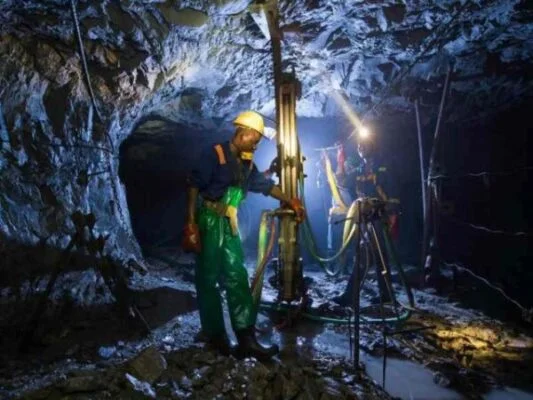
Caledonia Mining Corp secures Connemara

0

CALEDONIA Mining Corporation Plc has secured exclusive rights to explore and acquire the mining claims in the gold-rich Connemara North area in Gweru as part of efforts to expand its operations.

This comes after the company announced a similar arrangement at Glen Hume in the same district where airborne geophysics indicates attractive exploration targets.

In October, the company signed a memorandum of understanding with the government to boost investment, including the possible takeover of StaWWWWWte mining assets. Previously, the company indicated it was eying a number of brownfield gold mines in the country, but faced challenges in concluding deals.

In terms of the multimillion-dollar Connemara North agreement, Caledonia has the right to explore the area for a period of up to 18 months and if exploration is successful and at its sole discretion acquire the mining claims in the area.

The total consideration is an initial payment of US$300 000, followed by a further payment of US$5 million in cash or shares at the discretion of the vendor which would be payable should Caledonia decides to exercise its right to acquire the mining claims, Caledonia said.

“Caledonia has also agreed to the payment of a one percent net smelter royalty to the vendor on the gold it produces from Connemara North,” the company said in a statement.

Connemara North is the northern section of the closed Connemara mine which was previously owned by First Quantum Minerals (“First Quantum”). It was placed on care and maintenance in 2001 and subsequently disposed of in 2003.

Caledonia said the area had not been commercially mined since that time but before being placed on care and maintenance Connemara mine produced approximately 20 000 ounces of gold per annum from an open-pit heap leach operation. Public disclosures made by First Quantum in 2001 indicated that they had plans to expand the existing open pit operations at Connemara mine when gold prices were approximately US0/oz.

“At this stage, it is not possible for Caledonia to verify any of the work performed by previous owners or to ascertain what proportion of any purported resource lie within the boundaries of the Connemara North property over which Caledonia has secured the option,” the company added.

The new property is approximately 30km from Glen Hume with good road access between them offering the potential of operating synergies should Caledonia decide to develop both areas.

Caledonia chief executive Steve Curtis said the property was part of a wider area that contained a previously operational mine which showed great potential and has been lying untapped for 20 years.

“Connemara North is also in close proximity to the Glen Hume property over which we have already acquired an option. We are excited at the prospectivity of these two properties and if evaluation work proves successful and our exploration programmes deliver favourable results, Caledonia will have a great opportunity to establish a footprint in the highly prospective Zimbabwe Midlands which could deliver operating synergies between the two sites,” Curtis said.

“This has been a busy year for Caledonia and with the completion of the central shaft in sight I am pleased that we are now able to start delivering on the other components of our corporate strategy.”

Caledonia recently announced the completion of its US$60 million central shaft project which is expected to see the company ramp up production significantly.

Caledonia said the phase of fully equipping the central shaft from its base to the surface collar was complete and it was on track to be commissioned in the first quarter of 2021.

Key features of the central shaft project, which was started in August 2015, include increased exploration by providing access for further deep-level examination which, if successful, may extend Blanket mines, life to beyond 2034. Caledonia recently said the shaft allowed the company to build another mine below the existing one.

Production is expected to be increased by  around 45% from approximately 55 000 ounces of gold in 2019 to the target rate of 80 000 ounces from 2022, while economies of scale and operational efficiencies arising from the new feature are expected to reduce the all-in sustaining cost per ounce of gold from US$8 551 in 2019 to between US$700 and US$800 per ounce.

The scope of the central shaft project was extended from an initial target depth of 1 089 metres to a final depth of 1 204 metres. NewsDay

Zimbabwe the alternative rare earth global supplier?

0

Zimbabwe could emerge as one of the world’s top suppliers of rare earth elements as tensions escalate in the ongoing US-China trade war, Mining Zimbabwe reports.

Rudairo Mapuranga

Zimbabwe sits on vast and lucrative deposits of rare earth minerals. Reports suggest that Zimbabwe’s reserves could be second only to China’s, although exploration activities are still ongoing. Rare earth elements are now widely used in automobiles, electronic equipment, and other advanced technologies.

Earlier this year, China Central Television’s military channel reportedly stated that the United States was planning to invoke a 1950s-era law to “militarise” rare earth production in an effort to counter China’s global monopoly on the supply of these critical minerals.

Former US President Donald Trump reportedly signed an executive order declaring a “state of emergency” and authorised the use of the National Defence Production Act to accelerate the development of mineral resources. This law was previously used to speed up the production of medical supplies during the COVID-19 pandemic.

Rare earth minerals play a crucial role in military technology. Reports indicate that manufacturing an F-35 fighter jet requires approximately 417 kilograms of rare earths, while a Virginia-class nuclear submarine uses about four tonnes.

It has been reported that 80 per cent of the rare earth minerals used in the US are imported from China. Although the US extracts its own rare earths in California, the materials are typically shipped to China for processing.

Rare earth elements used in batteries and electronics are among the 35 minerals the US government considers vital to national security and economic stability. Of these, 14 are not produced domestically. As the trade war between the US and China deepens, Zimbabwe may become a viable alternative source for some of these critical elements.

Zimbabwe’s position as a potential rare earth supplier gained further traction when China implemented its new Export Control Law this month. This law is expected to significantly impact the global rare earth market.

The legislation stipulates that the Chinese government will control exports of dual-use items—including military products, nuclear materials, technologies, services, rare earths, and other goods linked to national security and international obligations such as non-proliferation.

According to Netease News, the law gives China a mechanism to further limit rare earth exports. Should China decide to curb exports as part of its trade conflict with the US, Zimbabwe, speculated to have the world’s second-largest reserves, stands to benefit.

Currently, according to President Emmerson Dambudzo Mnangagwa, Zimbabwe lacks the technical capacity and resources to extract and process these minerals. However, as global demand surges for electric vehicles and defence technologies, the country is likely to attract significant foreign investment in rare earth mining and processing.

Premier African Minerals, listed on the Alternative Investment Market (AIM) of the London Stock Exchange, is reportedly prospecting for rare earth elements in Matabeleland North, near the Zambian border.

The 17 rare-earth elements are cerium (Ce), dysprosium (Dy), erbium (Er), europium (Eu), gadolinium (Gd), holmium (Ho), lanthanum (La), lutetium (Lu), neodymium (Nd), praseodymium (Pr), promethium (Pm), samarium (Sm), scandium (Sc), terbium (Tb), thulium (Tm), ytterbium (Yb), and yttrium (Y).


This article first appeared in the December 2020 issue of Mining Zimbabwe Magazine

Can raw lithium survive the test of time, beware Zimbabwe!

0

Its quite clear that Lithium has attracted world recognition as a significant mineral playing a substantial role in electric cars and other clean tech gadgets. However, Europe which the world has been eyeing as the consumer of raw lithium is changing goalposts by promoting the recycling of vital elements such as lithium.

Rudairo Dickson Mapuranga

The European Union has been tipped by the European Raw Materials Alliance (ERMA), a partnership of over 300 companies, business associations and governments, to break Europe’s dependence on imports from China and other resource-rich countries.

The EU reportedly imports around 98 percent of rare earth from China. Turkey supplies 98 percent of its borate, while Chile meets 78 percent of Europe’s lithium needs. South Africa provides 71 percent of its platinum and Brazil supplies 85 percent of the old continent’s niobium, a crucial part of steel alloys used in jet engines, girders, and oil pipelines.

Zimbabwe is the world’s fifth-largest producer of lithium, albeit with only a single producing mine and could soon regret to have invested in the sector because the popularity of lithium in clean energy and tech gadgets could soon be wiped out.

However, political analysts have interpreted ERMA’s move has a way of trying to dismantle China from controlling the whole world market through identifying African countries like Zimbabwe that can be able to supply lithium and raw earth minerals to the rest of the world.

Zimbabwe has the potential to supply over 20 percent of the world’s lithium appetite and potentially able to supply over half of Europe’s demand for the next 30 years.

Renowned research groups have predicted that the European Union will need about 60 times more lithium than it is currently consuming and 15 times more cobalt for electric vehicles (EV) batteries and energy storage by 2050. It is estimated that the demand for rare earth minerals used in high-tech devices and military applications will increase 10-fold in Europe over the same period.

The European Union will not be able to ditch out lithium and raw earth imports due to the world’s adoption towards clean energy and the fact that recycling of elements could be deemed a danger to the climate.

Bikita Minerals is the only active lithium mine in Zimbabwe with several other lithium projects at various stages of development, establishing its position among the major producers in the world.

Lithium was classified by the government as strategic in helping the country achieve US$12 BILLION mark by 2023 with the mineral fetching half a billion.

The country also boasts of MIRRORPLEX (Pvt) Limited’s lithium project in Shamva which is postured to become Zimbabwe’s biggest hard rock lithium resources has the potential to grow into a world-class lithium mine with Results from 240 Rock Chip samples taken from the exposed Bonnyvale pegmatite body at the Shamva Lithium Project provides high-grade lithium assay results up to 3.13% Li2O and surface sampling at the Loch Ness prospect has revealed two more pegmatites containing high Li2O grades up to 4.82% Li2O.

Other lithium projects are Arcadia by Prospect Resources, Zulu and Kamativi projects which would cement the country’s position on the world lithium market.

Zimbabwe should now focus on value addition through reopening closed factories thus becoming one of the largest suppliers of lithium batteries and clean energy.

Spare a thought for Zimbabwe, which reportedly has the potential to supply roughly 20 percent of global lithium compounds, yet little effort has been made towards venturing in the making of environmentally-friendly lithium-ion batteries for electric cars and various other electronic components. Beware, just in case we could be floating in what will later turn out to be a bubble that will finally burst, and that is if fears by analysts are anything to go by.


This article first appeared in the December 2020 issue of Mining Zimbabwe magazine

The Mincon MP40MQ is a next generation DTH hammer in the Mincon range of 4” hammers

0

With the world of drilling demanding higher production rates, lower overall cost per meter and greater efficiency Mincon stepped up to the challenge with the MP40MQ.

The target is to achieve higher penetration rate and longer internal component life, raising production and lowering cost per meter, this will be achieved by excellent design and manufacture of Mincon tools along with expert advice and guidance and a continued improvement program.

The following three case studies prove this Hammer truly is the “The Driller’s Choice Worldwide”

Dubai (on going trial)

August 2020 Mincon deployed the MP40MQ after the Driller was experiencing high cost per meter and low production from their current supplier.

Current supplier

DR43 Epiroc D55 an average penetration rate of 0.79 meters per minute was recorded.

Feed: 75 Bar

Rotation: 55 Bar

Air Pressure: 24 Bar

Mincon MP40MQ

DR47 Epiroc D50 an average penetration rate of 0.95 meters per minute was recorded.

Feed: 85 Bar

Rotation: 35 Bar

Air Pressure: 22 Bar

This is an increase of 20% penetration rate, the MP40MQ was then put on DR43 the air pressure increased to 30 Bar and an average penetration rate of 1.1 meters per min was achieved, giving an increase of 40%.

The customer also reported changing failed major internal parts 3-4 times in the hammers life of 20,000 metres, the MP40MQ Internals are currently at over 5,000 meters and still going strong.

Senegal – Pre-splitting holes – 20 m @12 degrees January 2020

Mincon deployed the MP40MQ after experiencing broken pistons and broken strike face on bits. Not only has this problem now been totally eradicated but the penetration rate has improved from 16 meters per hour to 18 meters per hour that is an increase in penetration of over 12%.

The customer was extremely impressed with the results and now the MP40MQ is the only 4” hammer they purchase.

UK (ongoing trial)

July 2020 Mincon deployed the MP40MQ as an alternative to the 4HRTD. We compared both hammers side by side on 2 Epiroc D55’s The rock here is a medium to hard granite that is extremely abrasive, the drilling is very challenging with up to 7 meters of broken rock at the start of the hole and a high ingress of water.

This type of drilling can be very punishing on the rock tools causing a high amount of back hammering/free hammering whilst try to get through the broken ground, normally resulting in shanked bits and broken pistons.

When using the MP40MQ for over 20,000 meters we have not experienced any breaking of internal components.

As can be seen in the table opposite the MP40MQ has achieved 12% increase in penetration rate 11.5% decrease in litres of fuel per hour 8% decrease in engine load This is one of the MP40MQ pistons used in the UK trial at 10,304 meters, when compared to a new piston there has been zero OD wear and very minimal impact damage to the strike face.

This is the reason the hammer is still performing and consuming same amount of air as when new.

Conclusion

The MP40MQ has proved to be a high performing hammer in some very demanding drilling conditions.

  • Consistent high penetration rate

  • Reliable and robust internal components

  • Lower air consumption

  • Lower fuel usage

  • Lower engine load


It is important to note as this is a high performing hammer, drill parameters will need to be adjusted to suit increased penetration rate also ample amounts of high quality hammer is to be used, on all of the case studies feed pressure was increase by 10-20 Bar

Future

Mincon is currently running extensive trials on coated chucks as part of our continuous improvement program this is with a scope to improve overall hammer life by up to 40% in abrasive conditions.

Combined with high performance of the MP40MQ it will be “The Drillers Choice Worldwide.”

About Best southern drilling supplies (PVT) Ltd (BSDS)

Best Southern Drilling Supplies (PVT) Ltd is a proudly Zimbabwean company that opened for business in 2013 to supply the Zimbabwean drilling sector with quality drilling equipment. Together with Yours Finesse in Botswana, affiliated company, BSDS are the official agent for some of the big brands in the industry, namely, Mincon, AMC and Boart Longyear. BSDS business strategy focuses on cost reduction management and after-sales services which has turned out mutually beneficial and is taken in high regard by our customers over the past 5 years.

BSDS offers a high standard of after-sale service. Someone from BSDS will be available to advise or assist any drilling company which is in need of assistance. We come out to drilling sites on request to give drillers advice on drilling techniques and equipment maintenance to get the most out of every piece of equipment. We offer bit sharpening and hammer services as well.


Contact BSDS on 0242 74 5388 0771567 532 0777 884 954 [email protected] or visited their website www.bsds.co.zw for more information

Covid-19’s impact on the mining sector in 2020

0

Despite being exempted from operating throughout the Covid-19 pandemic period, the mining sector faced several challenges that saw the chrome industry grinding to a halt. Unki Mines, Hwange Colliery Company Limited and How mine confirmed some of their staff tested positive for Covid 19.

By Shantell Chisango

According to 2020, Survey Data, miners pointed out that their operations were significantly impacted by the pandemic which resulted in higher output costs and the expense of unplanned spending for covid19 on protective materials.

“All respondents (100%) indicated that their cost of production increased due to unplanned expenditures on preventive material including face masks, hand sanitisers and testing kits. All respondents (100%) also highlighted increased importation logistical costs due to increased insurance and transportation costs as some transit areas were closed.” Source: Survey Data 2020

Moreso, another obstacle brought by Covid19 was sluggish commodity demand and market shutdown which harmed mineral demand, survey findings indicate that the most affected were base metals and ferrochrome producers.

Covid19 resulted in a decline in mineral output due to depressed mineral prices, with the majority of miners suspending their operations except for gold miners who registered an increase in gold prices amid the covid19.

Survey findings show that 40% of respondents indicated that their performance was weighed down by depressed mineral prices, with most ferrochrome smelters suspending their operations. On the contrary, gold producers reported that gold prices surged during the covid-19 pandemic and therefore were little affected.

Furthermore, the mining industry had the challenge of importing explosives and fuses needed for drilling and blasting processes due to travel restrictions resulting in the reduction of production capacity.

Speaking to Mining Zimbabwe, a small-scale miner in Mashonaland Central complained about the explosives shortage, saying, “Mining business currently is low, we have had challenges of acquiring explosives and fuses thus it has reduced the production capacity and in some cases leading to downtime of tools and equipment.”

ZIMPLATS

However, despite the negative effect brought by Covid19 to the mining industry, some mining companies like Zimplats (leading Platinum mining company in Zimbabwe) recorded positive results.

Commenting on the performance of the company, Zimplats Chairman Fholisani Mufamadi said the company performed exceptionally well regardless of Covid19.

“I am excited to be writing to you, our valued stakeholders, as your Company posted excellent results despite the challenging environment in which the COVID-19 pandemic wreaked havoc the world over,” he said.

The Company recorded a profit of US$261.8 million for the year, an improvement of 81 per cent from US$144.9 million in the previous year due to the rise in revenue from improved metal prices and the decline in exchange losses from US$20.2 million in FY2019 to US$4.8 million (US$868.9 million in FY2020 as opposed to US$631 million in FY2019).

Furthermore, the company managed to pay the final instalment of US$42.5million on the Revolving Credit Facility with Standard Bank of South Africa.

“I am happy to report that your Company paid the final instalment of US$42.5 million on the Revolving Credit Facility with Standard Bank of South Africa. In addition, the Group generated enough cash to pay dividends amounting to US$45 million,” said Mr Mufamadi.

Zimplats is progressing with all its major projects which include the US$264 million Mupani Mine development project and completion of the US$101 million Bimha redevelopment project.

Currently, US$99.5 million has been invested in the construction of the Mupani Mine and US$98.8 million has been invested in the redevelopment of the Bimha Mine.

CALEDONIA

Zimplats is not the only company that managed to produce positive results during the Covid19 era, Caledonia Mining Corporation, a gold producer, which operates Blanket Mine in Gwanda has also succeeded in defying the impact of Covid19 by recording enormous production.

Chief Executive Officer (CEO) Steve Curtis applauded the wonderful work the company managed to produce despite the Covid19 impact on business.

Mr Curtis said “The production of 13,499 ounces in the second quarter is an outstanding achievement given the challenges faced during the quarter as a result of the COVID-19 Pandemic. To have achieved a 6.2% increase in the comparable quarter of 2019 during a period where our workforce and supply chains were disrupted is a performance of which every employee should be justifiably proud. Thankfully the virus has not affected our operations or the broader Zimbabwean gold mining sector too seriously although we remain vigilant.”

Currently, the company is working on the production guidance for 2021 which is 61 000 ounces to 67 000 ounces while guidance for 2022 is about 80 000 ounces.

On a positive note, surveys in the mining sector 2020 State of the Mining Industry Survey Report 27 has shown that employment in the mining sector was not that much affected for 80% of miners indicated that their employees were only affected by 0-10%, while the remainder were affected by 10-20%.

The government continues to ensure that the Covid19 initiatives are practised by all business sectors as a way to curb the spread of the pandemic and also to avoid the closure of industries if the pandemic continues to rise.

ZIMASCO and Afrochine

On the 25th March 2020, Portnex shut down its Zimasco ferrochrome plant in Kwekwe after prices of the alloy fell to four-year lows on weak demand caused by the coronavirus outbreak. Afrochine downgraded and started operating below 50% of installed capacity. Production at the miners has since increased.

ZCDC

COVID 19 pandemic struck affecting China which accounts for 15% of the global diamond market. The lockdown in China not only meant that diamond sellers had to close shop for at least 2 months but buyers could also not get out and shop for jewellery. The development hit the diamond producer hard to the point that ZCDC failed to pay salaries.

ZCDC spokesperson said “We had problems paying our salary arrears to workers and we have been updating them on the challenges that we had which were emanating from Covid 19 challenges. These challenges are not peculiar to ZCDC but have been felt across the whole sector, it’s a situation that we are addressing actively. We have been optimistic in our outlook and we have resumed diamond sales so we are actively addressing those constraints, we can safely say we are finally navigating out of the woods,” Chagonda concluded.


This article first appeared in the December 2020 issue of Mining Zimbabwe Magazine

List of the certified Covid-19 testing centres

0
It has come to the attention of the Ministry Of Health and Child Care that there are Laboratories carrying out Covid 19 testing without the prior requirement of assessment and certification.
The Ministry of Health and Child Care wishes to advise the public that only Laboratories that have been assessed and certified by the Ministry of Health and Child Care in collaboration with the Medical Laboratory and Clinical Scientists Council of Zimbabwe and the World Health Organization are the only laboratories approved to carry out Covid 19 testing and publish results.
Any Laboratory that wishes to carry out Covid 19 testing should apply to the Medical Laboratory and Clinical Scientist Council of Zimbabwe.

Below is the authorised list of assessed and certified medical Laboratories for Covid 19

Private Laboratories

1. Lancet laboratories
2. PSMI Harare Branch
3. Cimas Harare laboratory
4. Diagnopath laboratory Harare
5. Klosad Laboratory Harare
6. Mater Dei Hospital Laboratory (DLS)
7. Multi Tech
8. Flow Cytometry
9. Haematology Centre
10. Bioexpress Laboartory
11. Genau Laboratory
12. Patholgy Laboratory
13. Unki Mine Laboratory

Government Laboratories

1. National Microbiology Reference Laboratories
2. National TB Reference Laboratory
3. Plumtree District Hospital
4. Gwanda Provincial Hospital
5. Beitbridge District Hospital
6. St Lukes Mission Hospital
7. Victoria Falls Hospital
8. Gutu Mission Hospital
9. Masvingo Provincial Hospital
10. Gweru Provincial Hospital
11. Chinhoyi Provincial Hospital
12. Kadoma General Hospital
13. Marondera Provincial Hospital
14. St Alberts Mission Hospital
15. Bindura Provincial Hospital
16. Rusape General Hospital
17. Mutare Provincial Hospital
18. Chipinge District Hospital
19. Sally Mugabe Central Hospital
20. Parirenyatwa Central Hospital
21. National Virology Reference Laboratory
22. Chitungwiza Central Hospital
23. Chikurubi Maximum Prison
24. Thorngrove Hospital Laboratory
25. Beatrice Road Infectiuos Diseases Hospital
26. Josiah Tongogara Magama
Research and Non-Governmental Organizations
1. Population Service International (PSI)
2. Biomedical Research and Training Institute (BRTI)
3. African Institute Of Biomedical Sciences and Technology (AIBST)

Collection Points authorised

1. Lancet
2. Genau
All results from any unauthorized laboratory shall be regarded as invalid and of no use for the purposes for which they were intended to serve.
Any health institution concerned which contravenes Part XVII, section 99(1) of the Health Professions Act [Chapter 27:19] shall be dealt with in terms of section 99(2) of the same Act.

Invent Insurance Agents call for collaboration between Insurance players & Mining Business

0

Insurance is not always something people can think about when the mining business is mentioned. It is common knowledge however that the mining business is a risky business and risky business is the reason insurance companies are in business. As such, there is a great need for the collaboration of the two industries, with the view of protecting the growth of the mining industry.

A market intelligence report by Willis Towers Watson in 2020 shows that insurance companies paid about a US 1.3 billion in claims in 2019 from global mining losses caused by several factors including machinery breakdown, fire and explosion, natural catastrophes, derailments, and strikes & riots. To some, claims payments of US1.3 billion might seem like a lot but one has to wonder how much more losses did mining companies experience which was uninsured. It is not clear how much in insurance claims payments Zimbabwean miners have received, but we have realized a fair share of accidents in the mining industry of late.

Just like with any other business, insurance is key in protecting the financial security of the mining business and it can also be used as a growth agent. Zimbabwe’s mining landscape has a mixture of larger mining companies, small scale miners, and illegal miners. Larger mining companies have shown a great understanding of the need for comprehensive risk management, which includes the need for insurance. It is however the smaller mining companies that are not taking full advantage of insurance solutions available to them.  This could be because the local insurance industry has not done much in terms of product development concerning the setup of the mining sector in Zimbabwe.

The need to turn the mineral wealth of Zimbabwe to profitable enterprises has been a major thinking point for policymakers in the nation. One way of achieving this is developing the potential production of the small-scale mining sector, which in itself is turning risk into a path of growth.  The stepping up of insurance players to design and deliver solutions that manage risk and optimize benefits for the small-scale miners will take Zimbabwe’s mining sector on a growth trajectory. However, insurance companies in Zimbabwe have had a limited appetite to insure small scale mining risks.

It is the duty mainly of insurance agents and brokers to step up in designing industry-specific policies and guarantees that optimize operating risk and expand the power to obtain capital, which will strengthen the small-scale miners’ business. This on its own is not possible unless the insurance players take time to study the mining sector with the view of having a deep technical understanding of the sector. Keeping up with the pace of changes in the mining sector will have to be one of the key attributes of the insurance players who seek to take the lead in this. Mining sites by their nature operate like moving construction sites as such there are always problems in defining property such as underground works and roadways and things such as the unpredictability of rock material behaviour never make it easy for insurance players.

The nature of the unpredictability of most of the risks in mining is a good reason for insurance product developers to support miners, particularly the small-scale miners. This can be done through conducting risk assessments with specialist mining engineers, where major risk exposures and their potential damage will be identified, and major recommendations done which will make the risk attractive to insurers and reinsurers. It will always be a good thing to structure insurance policies according to the mining clients’ needs and therefore one size fit all policies will not be ideal, but rather bespoke solutions. There is, therefore, a need for mining associations and mining companies to have close collaboration, open communication which will lead to sustainable partnerships that will not only benefit the mining entities but the Zimbabwean economy. Invent Insurance is beginning an exploration into the mining industry which will cause a drive for well-balanced risk transfer mechanisms to the insurance carriers.

Invent Insurance can be contacted at [email protected] or +263 732441441

Small-scale mining – the baby that needs serious attention

0

Artisanal and small-scale mining (ASM) has become an important sector in Zimbabwe, creating jobs for the rural communities, contributing to the country’s economic development, sustaining livelihoods among other important things.

But despite all this, the sector is not being fully supported in Zimbabwe especially in terms of funding and capacity building.

It is facing challenges such as gold marketing, lack of mechanised equipment and finance, perceived lack of recognition and consultation, high charges, absence of a clear mining policy that promotes small-scale mining and centralisation of mining services among a plethora of challenges.

In fact, the sector is drowning in serious challenges that need urgent attention for it to continue playing its role.

Why should the government pay attention to this sector?

A report by the International Labour Office (ILO) says small-scale mining needs to be supported because it helps to stem rural-urban migration, maintaining the link between people and the land and it makes a major contribution to foreign exchange earnings.

It also enables the exploitation of what otherwise might be uneconomic resources, and it has been a precursor to large-scale mining.

The report also says “small-scale mining can and should be encouraged by creating the operating environment that encourages the use of best practices for mining and occupational health and safety and environmental protection.”

The sector has become of paramount importance for the country to achieve its US$12 billion mining industry by 2023. The gold small scale mining sector is expected to contribute up to 12% of total exports.

Job creation

Globally, artisanal mining has grown from 10 million in 1999 to potentially upwards of 20-30 million, according to reports. This increase provides a rich policy ground for promoting a good job agenda. In Zimbabwe, more than 500 000 people are believed to be employed in this sector. Researchers also have estimated that the small-scale and artisanal mining sector in Zimbabwe benefits over 1,5 million people excluding equipment and service providers.

Rural development

Linked to the job creation is artisanal mining’s added value as part of rural livelihood diversification strategies where it is one avenue of income generation, another report reveals. Research has shown how artisanal mining assists rural households in building more dynamic and resilient livelihood strategies portfolios by, for instance, ‘dovetailing’ artisanal mining and farming economies. Further, it is a stimulus for trade and subsidiary business development around mine sites just as evidence in industrial or larger-scale mining operations, it said.

Source of revenue

Reports also say small scale mining is also a major producer of minerals indispensable for manufacturing popular electronic products, such as laptops and phones. For example, 26% of global tantalum production and 25% of tin comes from small scale mining.

On the global front, small scale mining is recognized as a considerable source of revenue for millions of people in about 80 countries worldwide.

In 2016, Zimbabwe’s gold mining sector as a whole, consisting of both artisanal and small-scale mining and large-scale gold mining, contributed 2.6% of gross domestic product (GDP), 18% of exports, 28% of mining output, and 1% of government revenues (royalties only) and employed 7.1% of the labour force. ASM is perceived to contribute significantly to these figures and, therefore, to the growth and development of Zimbabwe’s economy.

What does the government need to do?

The government can support the small scale mining sector through making payments on time, end Fidelity Printers and Refiners (FPR) monopoly, provide funding for small scale miners, proper formalisation among other interventions. These interventions are, however, not exhaustive.

Make payments on time

Fidelity Printers and Refiners (FPR), the country’s sole gold buyer, needs to reduce the turnaround time for payment of gold delivered by both large and small-scale producers. Currently, the turnaround time for payment is not sustainable. It forces producers to sell their gold in the black market.

In his 2021 national budget, Finance minister Mthuli Ncube acknowledged this and promised to rectify it. He said lead times will be reduced from maximum of two weeks to a week for large scale producers and on spot payments will be done to small scale producers from the current maximum lead time of five days.

End FPR monopoly

The southern African nation currently forces gold miners to sell their bullion to FPR and then it pays them 70% in dollars and the remainder in local currency. Parliamentary Portfolio Committee on Mines and Mining Development chairperson Edmond Mkaratigwa last year revealed that the current monopoly “is breeding inefficiencies within Fidelity and the black market is capitalising on these, for example, we are told in some cases Fidelity is taking up to four weeks to pay for deliveries and the miners are saying this is unacceptable.”

“So our view is that there is a need to liberalise the marketing of gold. Fidelity Printers should not remain the sole buyer of gold in the country in order to attract investment into the industry,” he said.

Gold output plunged 30% in the first 10 months of 2020 from a year earlier while exports of the precious metal slumped 23% to $697.7 million during that period, according to the Reserve Bank of Zimbabwe.

Hence, there is a need for the government to end the FPR monopoly over the marketing of gold in the country.

Make funding available

Small scale miners need to be supported financially. They need finance to kick start their dream projects and buy equipment, machinery and tools. Without these things, the sector is bound to collapse.

Refreshingly, Ncube hinted in his budget that he will introduce the Mining Industry Loan Fund which supports small-scale miners through prospecting grants, mining establishment loans, plant and equipment procurement loans, among others. He, therefore, capitalized the Mining Industry Loan Fund with 198.5 million.

As a way of conclusion, the government needs to pay serious attention to the small scale mining sector due to its contribution to the economy in terms of job creation, forex earnings among others. The sector should be supported also because it is drowning in challenges.

Without the government’s full support, the sector is bound to fail and for crying out loud government should invest in FORMALISATION.


This article first appeared in the December 2020 issue of mining Zimbabwe Magazine

Govt to shut down all unsafe mines

0

President Mnangagwa has instructed the Mines Ministry and security arms of the state to shut down all unsafe mining operations that endanger lives.

This was revealed by the Presidental spokesperson Mr. George Charamba through his Twitter account. Said Charamba,

“Reacting to repeated tragedies in the informal mining sector, the President revealed that he has directed the Mines Ministry and Security Arms of State to move in and close all operations which endanger life. While this might not be sweet news to makorokoza, or informal miners, the President maintained life was more precious than livelihoods wrung from dangerous practices.”

“The government owns 65% of the mine which had to be resuscitated after security reports indicated the suffering of workers who had been laid off. Mzi Khumalo who had taken over the mine lacked capital, resulting in many litigations,” he continued.

Shamva is set to contribute about 13% of the targeted US $12bn set for the mining sector.

Moving with the US$12 Billion target

0

Late last year, the president of Zimbabwe Emmerson Dambudzo Mnangagwa unveiled the US$12 billion road map with aims to developing the mining sector in Zimbabwe to a US$12 billion industry by 2023. However, mining performance in 2020 has left a lot to be asked when it comes to the attainment of the vision.

Rudairo Dickson Mapuranga

The mining sector is already Zimbabwe’s biggest foreign currency earner. Experts and the government are of the view that the sector is the leading horse towards the revival of the economy.

The President’s US$12 billion roadmap, has put a target of US$4 billion for gold producers while platinum and diamonds will weigh in US$3 billion and US$1 billion, respectively. Chrome, Nickel, and Steel are expected to generate US$1 billion, coal and hydrocarbons are also expected to produce US$ 1 billion. Lithium at the moment is expected to produce US$0.5 billion while other minerals are forecast to produce US$1.5.

For the government to achieve the President’s vision of turning the mining industry to fetch US$12 billion annually by 2023, exploration and reopening of closed mines should be at the epicentre of increasing the country’s mineral production.

However, very little has been done in 2020 in making sure that old mines are functional, at the same time the government has not been transparent on exploration investments happening in the country.

The Minister of Finance and economic development Prof Mthuli Ncube last year allocated $293.2 towards exploration to promote the Mining sector, however, many geologists in the country mocked the minister for investing very little in exploration. Zimbabwe, therefore, remains hamstrung by lack of exploration.

However, announcing the 2021 National budget the Finance Minister allocated US$1,4 BILLION to the mining sector with much of it expected to be channelled towards mineral exploration.

Gold performance in 2020

Fidelity Printers and Refiners (FPR) the country’s sole gold buyer and exporter had projected gold output to reach 35 tonnes this year owing to increase in fuel allocation to miners, however, by the end of October only 16.12 tonnes were delivered.

With two months to year-end, FPR now expects deliveries to reach 18 tonnes, the lowest national output since 2015. Last year, miners delivered 27.6 tonnes, reflecting a 35 per cent decline.

The country’s bullion export receipts also retreated 23 per cent to US$697 million in the first 10 months of this year from US$906.7 million earned during the same period last year.

Gold performance in 2020 should be a wake-up call to the President towards the attainment of the US$4 BILLION gold industry by 2023, according to the statistics this year, it will be very difficult for the sector to realize a billion-dollars.

For the gold sector to achieve the US$4 billion mark, the government would need to address various factors affecting gold production and deliveries to the country’s sole gold buyer and exporter.

What needs to be done?

Curb Gold smuggling

International Crisis Group (ICG) reportedly indicated that Zimbabwe is losing $1.5 billion of gold through smuggling, Home Affairs Minister Kazembe Kazembe had earlier said that the country was losing US$100 MILLION worth of gold every month due to smuggling.

The country’s centralized gold buying scheme which underpays producers is largely to blame because it encourages smuggling and erodes industrial mining profits. Payments to small-scale and artisanal miners are very low pushing them to look for more lucrative markets.

The government, therefore, needs to employ measures that discourage smuggling of gold in order for the sector to realize the President’s target.

(b) Invest in gold mining

The reopening of viable closed mining assets, ramping up of production in all existing mines, opening new mines as well as value addition and beneficiation is essential for the sector to achieve the US$12 BILLION mark.

The government through the open for business mantra is pushing for the mining industry to attract investors both local and foreign promoting the President’s vision for Zimbabwe becoming an upper-middle-income earner by 2030.

(c) Invest in exploration

Zimbabwe is limited by a lack of exploration. Identifying new mines in the mining sector is key, the government should therefore make it their duty to invest in exploration through granting as many EPOs as possible to various Exploration companies. However, those have to be closely monitored to avoid closing down of areas like what has happened in Matebeleland with the land just lying idle

Reports have it that the government has granted EPOs Nicodemously with no activities showing that indeed the country is being explored.

PGM performance in 2020

Zimbabwe hosts the second-largest platinum group metals (PGMs) resource in the world. An estimate of 2.8 billion tonnes PGM ore at 4g/t 4e are estimated to lounge on the Dyke. The grade and thickness of ore body persist over large areas.

Platinum performance in 2020 was encouraging with the country’s largest platinum producer, Zimplats recording 81 percent profits during the final year 2020.

Despite the threatening of the Covid-19 pandemic to many businesses in the world, The Platinum mines operations were not affected by the pandemic as all the mines and the processing plants continued operating throughout the year with no confirmed cases within the workforce except for a few who tested positive at Unki Mine in Shurugwi.

Unki Mines a subsidiary of the Anglo-American Platinum which is Zimbabwe’s second-largest PGM producer increased production by 14 per cent in the quarter ended 30 September 2020 compared to the comparable quarter in 2019.

The increase in PGM production could be further be advantaged by the new operations in Great Dyke Investments’ Darwendale mine which is expected to become Zimbabwe’s leading Platinum Producer by 2023.

However, data released by ZimStats in August show that platinum was urged by diamonds in export sales with diamond ranking US$71 MILLION during the first 8 months of the year while platinum realizing US$66 MILLION excluding other PGM during the same period.

Diamond performances in 2020

Due to the effects of the pandemic, diamonds sale worldwide declined rapidly. Zimbabwe exported diamonds worth $71 million between January and August this year. Diamonds only edged platinum, which earned Zimbabwe $66 million during the same period. This is despite the fact that the diamond mining companies such as the Zimbabwe Consolidated Diamond Company (ZCDC) and Anjin continued operating during the lockdown. However, due to continuous production, Zimbabwe most likely had a surplus stock of rough diamonds without an obvious market to sell to.

Due to the decline in the diamond marketing world due to the pandemic, Minister of Finance and Economic Development Prof Mthuli Ncube announced that the government was going to promote value addition and beneficiation of diamonds through local diamond polishers and jewellers. As the demand and price for diamonds on the international market have slowed down due to the coronavirus pandemic, the solution to a global reduction in prices lies within the country’s policies. All along, Zimbabwe’s policies have been outward-looking, but the pandemic impels the country to craft policies that focus on the internal value addition of diamonds.

The diamond sector performance can further improve to reach the US$1 BILLION target by 2023 through producing 10 million carats a year, however, its performance this year leaves a lot to be desired.

The Minerals and Marketing Corporation of Zimbabwe (MMCZ) managing director Tongai Muzenda said then that they were expecting to rake in up to $100 million from the sale of the diamond stockpile.

Zimbabwe produced 2.1 million carats last year valued at $141.1 million or $67.09 per carat, according to data released by the Kimberley Process earlier this year.

Zimbabwe in the Marange field has the largest diamond field in the world in terms of carats produced, estimated to have produced 16,9 million carats in 2013 that is about 13 per cent of the global rough diamond supply. However, the diamond production at Marange is estimated at under USD 60 per carat while some diamond mines in the world produce rough diamonds valued at over USD 1000 per carat.

Zimbabwe has other diamond reserves in Masvingo, that is Chivi, Beitbridge, Mwenezi, and Mazvihwa in Zvishavane where the diamond miner RioZim’s Murowa diamond is the miner, Murowa diamond at its Mazvihwa reserves has a record high of 740,244 carats in 2018.

Chrome, Nickel, and Steel performance in 2020

Nickel mattes and Chrome performed significantly by August 2020 raking US$605 MILLION and US$88 MILLION respectively.

Zimbabwe has the second-largest high-grade chromium ores in the world after South Africa with reserves of approximately 10 billion tonnes. The country has more untapped than tapped Nickel deposits.

Steel production can reach the target in this category if plans are in place to revive the sector.

The government also need to address issues of predatory chrome pricing to generate more interest and also for miners to invest in the sector.

Lithium performance in 2020

Zimbabwe is the world’s fifth-largest producer of lithium, albeit, with only a single producing mine, the country has the potential to produce 20 percent of the world’s total lithium.

The environment in Zimbabwe is not appropriate for lithium projects development, due to poor governance Zimbabwe is in an economic crisis.

On paper, Zimbabwe has the potential to earn over a billion in lithium sales especially when the world is putting a focus on clean energy especially in vehicles.

The government has projected lithium to earn US$0.5 BILLION by 2023.

Other minerals performance

The government is expecting minerals other than the above mentioned to earn US$1.5 in export sales by 2023.

The coloured gemstone industry in Zimbabwe has been tipped to earn over a billion in export sales but very little has been done to make sure that the potential of the industry to economic revival has been recognised. The performance of the sector in 2020 has somehow been disappointing with MMCZ which is responsible for the marketing of the stones not ready to ensure that a vigorous marketing strategy has been met.

Zimbabwe has one of the largest copper and cobalt reserves in the world and experts believe that Zimbabwe can earn as much as Zambia through its minerals, however, no efforts are done to attract investments in the sector. Copper and Cobalt can be of significance in achieving the US$12 BILLION target.

What is needed to achieve the US$12 BILLION mark?

Mining Zimbabwe still recommends the government of Zimbabwe to adopt the following 10 points to make sure that the mining sector moves towards the US$12 billion industry by 2023.

End corruption – Although not muchly recorded corruption in the sector is too prevalent and the cancer of corruption needs to be dealt with once and for all. To end corruption, the government will be to create and adopt a digital cadastral system that increases transparency.

(ii) Institutionalise the rule of law to end statutory risk – there should be no changes to rules and regulations without stakeholder consultations and advance notice.

(iii) Stable economic environment – A stable economy where property rights are respected and policy is consistent will help stabilize the mining sector, thereby leading to the growth of the sector by attracting the right investment.

(iv) Currency must be free-floating and tradable – A floating exchange rate is a regime where the currency price of a nation is set by the forex market based on supply and demand relative to other currencies. This is in contrast to a fixed exchange rate, in which the government entirely or predominantly determines the rate.

(v) Economic growth – Capital Flows Foreign capital tends to flow into countries that have strong governments, dynamic economies, and stable currencies, therefore, Zimbabwe needs to have a relatively stable currency to Attract investment capital from foreign investors.

(vi) Absolute minimal restrictions on lines of communication, especially the internet – The government of Zimbabwe reportedly lost millions of dollars through delayed Revenue inflows due to the slow processing of imports and exports after the switching off internet services countrywide early last year.

(vii) Improve geoscientific knowledge by revamping and recapitalising the Geological Survey Dept.

(viii) Partially privatise ZMDC – ZMDC is reportedly dead broke which led to speculations that they cannot afford to explore their numerous claims. Many assertions are constantly being thrown around which are of the view that ZMDC is sitting on dead assets and the government has no money to give to carry out high-risk exploration. Therefore, this has led experts into believing that, ZMDC must be listed on the stock exchange to raise money, and the government gets diluted to less than the controlling shareholder.

(ix) Promote exploration seriously with good tax breaks for companies who put a high-risk exploration $ into the ground.

(x) Digitalise mining rights, title registration, and all payments – Amidst reports of corruption, money laundering, externalization, and other unscrupulous behaviour by mining personnel, all transactions which are mining-related in Zimbabwe need to be done digitally to avoid corruption and Improve transparency.

The government of therefore needs to prioritize these 10 points for the sector to achieve the 12-billion-dollar status without which it will be just another project that will never yield results like the other targets previously set by the government.


This article first appeared in the December 2020 issue of Mining Zimbabwe Magazine