Home Blog Page 536

Upsurge in ASM deaths a cause for concern – ZELA

0

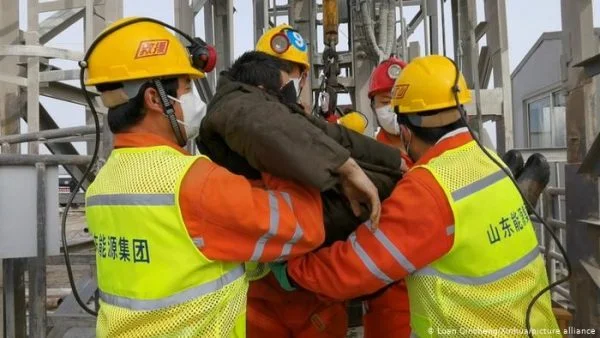
Zimbabwe Environmental Law Association (ZELA) has shown its concern over the upsurge of accidents in small-scale mines due to a lack of knowledge among mining communities.

By Shantel Chisango

On its Twitter platform, ZELA has accredited the increase in accidents to a lack of knowledge, so they have engaged with miners and mining communities to educate them on technical knowledge on how to manage unstable mining grounds in a way to counteract the increase in these deaths.

“We have noted that lack of knowledge has been a major cause of mine accidents and thus we have been engaging a number of miners and mining communities giving them technical knowledge on how to manage unstable ground,” said ZELA.

Despite the ministry’s efforts to stop small-scale miners from operating illegally, mining accidents have been sky-rocketing.

Furthermore, ZELA said they have managed to educate mining players in the small-scale mining sector on ways of curbing opportunities of flooding and inundation in the mining sector.

“We have also managed to capacitate the mining players in the #ASMINZIM sector on how to eliminate chances of flooding and inundation.

ZELA reported that Midlands Province has recorded a total of sixty mine-related deaths.

Mining Engineer Paul Matshona yesterday presented a virtual meeting on ZIDAWU MONITORS FORUM on the issue of Health and Safety in the mining sector as a way to reduce mining accidents.

Gweru ZMF meeting illegal, Rushwaya threatens legal action

0

Zimbabwe Miners Federation (ZMF) President Ms Henrietta Rushwaya through her lawyers D Mthombeni legal practitioners has advised ZMF to cancel the illegal meeting which is scheduled for tuesday 24th of November 2020 at 11 am in Gweru due to its limitations and negligence to inform her of such a crucial meeting since by law she’s still the President of the ZMF.

Rushwaya also advised the organisation that, all processes that have been instituted without following due process shall be challenged in court.

“We have since been instructed to act for and on behalf of our above-named client Ms. Henrietta B Rushwaya the ZMF President, kindly note our professional interest.

“We are instructed to write to you and advise that it came to our client’s attention this morning that a ZMF special General Council Meeting was called for by one Philemon Mokuele the Secretary of the General Council.

“The said meeting is reportedly scheduled to be held tomorrow 24th of November 2020 at Gweru Theatre at 11 am.

“This has caught our client by surprise because she was never notified of same.

“As a matter of extreme urgency kindly forward to us the notice, agenda of the said meeting as well as all associated documents and applicable previous minutes/resolution (if any) relating to same so that client can participate via proxy.

“We are instructed to advise through you that, should Mr. Philemon Mokuele, yourselves or anyone proceed to host, convene, and hold the said meeting cause remedial legal action.

Last but not least we are instructed to advise that all processes that have been instituted without following due process shall be challenged in court to safeguard client’s rights.” Rushwaya said through her lawyers.

What the ZMF Constitution says about Special general Meetings

The holding of tommorrow’s ZMF meeting is likely to be in direct violation of chapters 9.2.10.1, 9.2.10.2, 9.2.10.3 and other parts of chapter 9.
The below is what the ZMF constitution says about Special general meetings!
9.2.10.1 The National executive may at an time through the Secretary call a Special General Meeting of members by giving notice not less than fourteen days to members specifying the object or objects the meeting is called.
9.2.10.2 The Secretary shall convene a Special General Meeting of members of  the Federation upon receiving requisition on that behalf signed by not less than five members specifying any resolution or resolutions proposed
to be moved or other business to be discussed. The Secretary shall post to each member at its registered address a copy of such notice at least fourteen days prior to the holding of the meeting.
9.2.10.3 The omission to send by post any such notice to any member shall invalidate the holding the holding of the meeting or the passing of any resolution thereat.
9.2.10.4 The quorum for the general meetings of members shall be two thirds of the members entitled to vote thereat provide that if no quorum be present within thirty minutes after the time fixed for the meeting ,it shall , in the case of Annual General Meeting or Special General Meeting called by the National Executive, be postponed to the same day and hour in the following week and such adjourned meeting the members present shall be deemed to be a quorum for the transaction of the business of the meeting. In the case of a Special General Meeting called by requisition of members ,if no quorum is present upon the date fixed and within thirty minutes after the time fixed for the meeting it shall be dissolved.
9.2.10.5 The Chair at all General Meetings of the members of the Federation shall be taken by the President or in his absence by one of the Vice Presidents. Should both be absent ,the members present shall elect a Chairman for
the meeting from among the other members of the National Executive present, if any, or failing their presence, the Chairman shall be elected, being the person entitled to vote at an Annual General meeting from among those members present
9.2.10.6 Every member shall have one vote at the Annual General Meeting and no voting by proxy shall be permitted.
9.2.10.7 The Returning Officer has no voting power whatsoever nor may he contest in elections at any time.
Rushwaya has been held in custody for the past month after being accused of attempting to smuggle 6kg of gold out of the country, allegations that she has dismissed. She has since appealed to the high court for bail after she was denied the same by Harare magistrate Ngoni Nduna recently.

Gold Smuggling: Time government introduces free gold trade within Zimbabwe

0

Zimbabwe is reportedly losing more than US$100 million a month through gold smuggling, according to Home Affairs Minister Kazembe Kazembe.

The government has been, for eons, trying to fight gold leakages but with little success. This article will look at why gold is being smuggled out of the country and possible solutions.

Why gold is being smuggled

Fidelity Printers & Refiners (FPR) monopoly

Gold export in Zimbabwe is only done by Fidelity Printers and Refiners, an arm of the Reserve Bank of Zimbabwe (RBZ). Gold producers sell their bullion to Fidelity who in turn pay an amount below the international market price. One can only surrender their gold to Fidelity even if they have a better market outside the country. The monopoly enjoyed by Fidelity Printers and Refiners has allowed it to dictate everything, including foreign currency surrender thresholds for bullion deliveries to the RBZ unit.

Gold fetches a better price outside Zimbabwe

The price of gold being offered by FPR is lower compared to the one obtaining in the international market. For instance, a gram of gold in Zimbabwe hovers around US$53 while on the international market it is US$63 with beneficiation buyers known to pay even more.

Laxity on the issuance of mining titles

The Mines Ministry is creating illegal mining activities by its delays in issuing out mining titles. The lack of seriousness on the issuance of mining titles is creating a fertile opportunity for unscupulous buyers. Unregistered miners constitute the majority of ASM. Tens of thousands have submitted all required paperwork to the Mines Ministry which in turn sit in the provincial offices for years and at times getting lost. This, in turn, forces miners to operate without Mining Titles. These miners are reluctant to take their gold to Fidelity for fear of prosecution so they sell the little they get to the nearest cash buyer. The buyers go to miners directly and usually buy for less than what Fidelity is offering. It is usually these buyers that smuggle the gold of the country for a wider profit margin.

Lack of Fidelity branches

Fidelity has eleven branches country-wide. In areas where they do not have branches, the country’s sole buyer has licensed buyers and millers who buy on their behalf. There are many areas that have no Fidelity branch and or registered buyers. Deputy Minister of Mines and Mining Development Hon Polite Kambamura in an interview with Mining Zimbabwe last year said, the Makaha, area near Mutoko, for example, has small-scale mining activity taking place but there is no Fidelity Agent near the area or nearby Mutoko centre. The miners are therefore expected to board a bus to Marondera the capital of Mashonaland East province which is 148km away. Can we expect a miner to go that far to sell only a gram of gold?

A rich gold area like Chegutu that houses successful mines like Pickstone Peerless bizarrely does not have a Fidelity branch but has licensed buyers who are also suspected to be major contributors to gold smuggling.

Untrusted banking system

Last year without warning, the government ordered all forex accounts to converted to be RTGS. Companies who wanted to purchase machinery from outside of Zimbabwe had to approach (and still do) the RBZ for their transaction to be approved and processed. This to a certain degree takes away the freedom to use one’s money as one wishes without having to fill out forms or speak to someone on why you are buying from outside.

It is a well-known fact that keeping funds in USD is much safer as it maintains value than the local currency. In Zimbabwe forex is liquidated in 30 days to local RTGS. Just like in South Africa. However, unlike Rand, the downside of the local currency is that it is still yet to gain trust due to its tried and tested instability. It is also much more expensive to purchase in local currency than in USD, therefore, the US$ is currently the most preferred currency of transaction.

Inconsistency with Fidelity payment

Complacency by Fidelity Printers in pricing, payment method and period, encourages stiff competition from black or parallel markets. Fidelity Printers and Refiners, especially during the lockdown period, regularly ran out of cash, paying miners after weeks. This disrupted some mining operations with some ASM opting to sell their gold to any buyer they see as long as a fair price is on offer.

Recently RioZim stated that the Reserve Bank of Zimbabwe (RBZ) owed it US$2.4 million while Fidelity Printers and Refiners (FPR) owed it US$ 65.5 million.

Metallon gold in 2019 sued the government saying it had been forced to put its mines on care and maintenance because of the unsustainable costs of running them without proper compensation for its proceeds from the Government of Zimbabwe. Where payments were received, they would only amount to a third of the total owed, the company said. Between 2016 and 2019, Metallon lost US$82m and Metallon was claiming US$132m for the lack of profit and procurement, including interest. One of the key issues raised by Metallon in its notice to the Governor of the RBZ and the Fidelity is that while the Company issued its invoices in USD, the Foreign Currency Retention Scheme saw Metallon being paid in RTGS. The disparity in the purchasing power resulted in the corporation being unable to procure machinery, equipment and operational goods at competitive prices. This seriously affected the production capacity of its various mines, leading to huge losses.

What the government should do

Liberalise gold trading

The major reason why there is gold leakage/smuggling is restrictions on gold trade. The monopoly enjoyed by Fidelity Printers and Refiners has allowed it to dictate everything, including foreign currency surrender thresholds for bullion deliveries to the RBZ unit.

The government should consider allowing free trade of gold within the borders of the country. The government can allow the setting up of free trade markets whereby foreign nationals can walk into gold trade markets that can be located at the country’s international airports to purchase their gold and take-off. Liberalising the market will likely end the cat and mouse game between law enforcement officials and miners.

Liberalising the gold market will “help improve the competitiveness of financial markets” and “help expand investment channels to meet domestic investor needs,” the People’s Bank of China once said in a statement. So can we as Zimbabwe.

Dubai has built itself as a major gold trading centre by sourcing its raw materials from Africa and selling the finished products to buyers in the expanding economies of India and China. Dubai owns 29% of the gold trade market in the world, with almost 1,200 tons of the metals traded in the city’s gold souks. Instead of gold leaving Zimbabwe unofficially, the government can turn this around and let those who want to buy do so freely, openly and those who can source buyers from outside Zimbabwe trade at designated well secure points with revenue collection officials present.

Considering the internet age we are in, the world is now a global village. Outsiders are approaching locals for gold. Trading openly is much more advantageous to the economy than continuing with security operations that have failed and continue to fail, costing the country over a billion annually (100million monthly) enriching corrupt officials in the process.

Fidelity should always pay on the spot

It’s simple really. Pay the miner on the spot when they deliver. Delayed payment has dire consequences on mining operations.

Gold Trade in other Western countries

United States
From 1933 to 1974 it was illegal for U.S. citizens to own gold in the form of gold bullion, without a special license. On January 1, 1975, these restrictions were lifted and gold can now be freely held in the U. S. without any licensing or restrictions of any kind.

Gold coins, medals, and bullion may be brought into the U.S. However, under regulations administered by the Office of Foreign Assets Control, such items originating in or brought from, Cuba, Iran, and Sudan* are prohibited entry.

The United Kingdom
There is no limit on the amount of gold a tourist can bring into the UK. There are, however, customs fees and taxes that apply for items with a value of over £390. Tourists bringing gold into the UK from Dubai are limited by a 10-kilogram cap.

Letting Zimbabwe be economically dominated and controlled by other states makes independence a mere illusion

0

Christopher Columbus once said, “those who had something of gold were in possession of something of great value on earth and a substance to even help souls to paradise.”

By Sharon Tsuro

Gold is a non-reactive transition metal with an atomic number 79. It has a density of 19.30 g/cmin solid form and 17.31 g/cm3 in a liquid state. Gold boils at 2970 °C and melts at 1064.18 °C. This metal is a chemical element with the symbol Au which is derived from its Latin name, Aurum. Gold is rated 2.5 on Moh’s scale of hardness. It is an inert metal but dissolves in aqua regia. Gold is converted into a water-soluble coordination complex by cyanide and binds with mercury to form an amalgam. This yellow metal is diamagnetic, malleable, ductile and a good conductor of heat and electricity. Its characteristics make it suitable for application in various industries. It is used in dentistry, aerospace, medicine, electronics, jewellery and as a currency. The value of gold is usually determined by demand. Zimbabwe is one of the countries that are rich in gold. Unfortunately, the economic situation of the country is poor and a very small percentage of the Zimbabwean population actually own a stake in this wealth.

Gold is found in reef or placer deposits. Each type of deposit demands a different type of mining method. A gold reef is where gold is found in its original rock host. In this article particular reference will be made to placer deposits. These are found in the form of alluvial, residual and bench deposits. Alluvial deposits are the most common type of placer gold deposits and are often the richest. They contain pieces of gold that have been washed away from the lode by the force of water and have been deposited as sediments in or near water bodies, hence they are mostly found in valleys or flood plains. Alluvial gold is present along all the major rivers draining the greenstone belts in Zimbabwe. This type of gold mining attracts many prospectors due to its low demand in capital costs and the simplicity of the gold processing techniques involved. Sluicing, dredging or panning are the most used methods of gold recovery in which the density of gold is manipulated in the classification process.

According to the 1961 Mines and Minerals Act which still governs mining law, any individual, provided they are a permanent resident of Zimbabwe is allowed to apply for a mining license. This entails that anyone interested in building the economy of Zimbabwe through mining is welcome to do so. However, in the case of the majority of Zimbabweans, financial constraints are usually a stumbling block. Most Zimbabweans cannot afford the capital required to do mining. Although all these factors justify why we need foreign investments, nationalization of our mineral resources is a critical matter which can be addressed if placer deposits are reserved for Zimbabweans particularly alluvial gold mining.

Owing to the great demand in capital investments in reef gold mining, it is quite understandable that we would need foreign investments, however, where alluvial gold mining is concerned, the first preference should be given to the locals. The month of September saw the Mazoe river heavily populated by gold panners. Many purchased engines, bought PPE and food for the workers in preparation for the mining activities. For a moment, everyone wondered where the authorities were to stop these “illegal” mining activities. Food stalls were built along the river banks and a whole community was formed in a matter of days. Just as they had started extracting gold, the national security forces were deployed to clear everyone out, no considerations were made for the investments made by the people, they were all chased like criminals because the Chinese owned company which has rights to mine in that area could not approve. It was quite a sorry sight as some had sacrificed the little they could to invest in this, others even sold their livestock to get capital. Most of the people of Uzumba-Maramba-Pfungwe district, particularly Maramba incurred huge losses. In as much as these activities were not justified, it is quite difficult to understand why the authorities waited until people had invested so much only to then chase them out before they got value for their efforts.

In an article published by Manicapost Rumbidzai Zinyule said, “… a Belarus mining company is coming in to sustainably mine alluvial gold along the Pungwe and Rusitu riverbeds to regularize illegal mining activities by gold panners that have contributed to significant pollution of both rivers”. It is from this development that one is compelled to wonder if the Zimbabwean government is so poor that it cannot afford to fund alluvial gold mining projects to economically empower the Zimbabwean people. Have we developed a dependence syndrome so bad that we need foreign assistance in the carrying out mining activities as simple as alluvial gold mining? For as long as we as people get comfortable with the idea of working for and submitting to aliens in our own country, we are bound to be impoverished forever.

Mr Seenza also said, “JOC made efforts to contain the illegal gold miners but they came back and continued polluting the environment…” as if our own people’s dirt is too bad as compared to foreign investors’ dirt. He continued, “The plan now is to bring in companies that will mine sustainably along the riverbeds. The company will employ those miners who have been working there so they can continue to make a decent living through formal employment” An assessment if this statement would make one wonder if Zimbabwe as a nation has lost hope in the indigenization of its own resources. Are we ever going to believe in our own capabilities as a people if we continue to get comfortable with the idea of “making a decent living through formal employment? Financial independence is a dream that will never come true for Zimbabwe for as long as we lack the courage to take the bull by its horns. We are more comfortable with the idea of being employed. It is quite sad to realize we have been so brainwashed that we demonize ourselves for extracting resources that are rightfully ours. Why has it become so easy to refer to our own as “illegal gold miners”, “makorokoza”, “maGweja” who are incapable of sustainably mining along river beds? In any case, these are hardworking people who aren’t stealing from anyone but rather, exploiting their own resources with limited funds. All they require are pieces of paper to legitimize their operations as well as facilitate accountability and help in tax collection and EMA regulations. It would help if the government did more to help legalize alluvial gold mining activities as well as fund them. This is where the essence of organizations such as the Zimbabwe Miners Federation and others come in handy. The gold that lies in abundance beneath our feet is our birthright. Its high time we made efforts to curb imperialism by standing on our own feet.


When they said Zimbabwe is open for business, I would like to believe it was open for the ordinary Zimbabwean as well. This idea is synonymous with the IMF-funded Economic Structural Adjustment Programme (ESAP) which was pursued in the nineties. Its major aim was to take Zimbabwe’s tightly controlled economy and convert it into an open, market-oriented one. The restructuring was aimed at inducing higher economic growth by reducing poverty and unemployment through four main streams: Reducing fiscal and quasi-public shortfalls as well as institute prudent monetary policies, liberalization of trade policies, carrying out domestic isolationism and setting up social safety nets and training programs for vulnerable groups. According to Raftopoulos & Compagnon- 2003, this was intended to reduce unemployment by increasing the size of Zimbabwe’s economy with the intention of creating new black-owned businesses rather than inheriting existing white and foreign-owned businesses.

With the current financial state of Zimbabwe, it may be hard to fathom that we will be able to attain financial independence, however, a step in the right direction will guarantee the much needed economic liberty in the long run. While it may be quite complicated to nationalise most of the gold mines in Zimbabwe at the moment due to lack of funds to expropriate the existing mining firms let alone fund the projects, reserving alluvial gold mining rights for Zimbabweans only can be the first step. It does not require as much capital as mining in reefs demands. Nationalisation allows profits to be equitably distributed amongst more people and the country as a whole. It can lead to regional economic development of Africa as a whole. This concept prevents private monopolies, hence protecting consumers from restricted quantities and inflated prices. Nationalisation’s objective is social welfare, wealth or profit maximisation, therefore more people benefit. It can lead to economies of scale, improved quality and greater efficiency resulting in increased employment and greater job security.

In short, it is vital to curb imperialist motives. This advocacy of being economically dominated and controlled by other states makes Zimbabwean independence a mere illusion. Unless efforts are made to indigenize our resources, we will never be free!

Mining bill in progress all stakeholders to be consulted – Mkaratigwa

0

The Mining and Minerals bill is still in the drafting stage and in that process, all key stakeholders’ representatives have been involved, the Parliamentary Portfolio Committee on Mines and Mining Development is now looking forward to an all stakeholder conference that will broadly incorporate all stakeholders, the Committee chairperson Edmund Mkaratigwa has said.

Rudairo Dickson Mapuranga

The Mines bill has of late attracted criticism from different stakeholders in the mining sector who had a feeling that its grafting has produced loopholes around consultation yet the committee is yet to conduct any public consultations.

Bills are drafted by Attorney General’s Office Drafting Section but they are instructed and work hand in glove with the responsible parent Ministry which in this case is the Ministry of Mines and Mining Development on behalf of the Executive. However, because the Bill was returned to Parliament, Parliament has become much involved in supervising the process to ensure issues raised by the President HE Emmerson Dambudzo Mnangagwa are addressed in toto to avoid the previous eventuality.

Bill drafting is therefore in the domain of the Executive, the Ministry of Mines being the technical parent Ministry on issues of mining while the AG’s Office does the technical legal drafting, as Parliament collaboratively input and supervise efforts to ensure timelines are met.

According to the Parliamentary Portfolio on Mines and Mining Development Chairperson Hon Edmund Mkaratigwa the bill which is still in the grafting stage will be presented to an all stakeholders conference that will largely incorporate all stakeholders whose suggestions will be incorporated into bill after that it goes before the Parliamentary public participation and law-making processes.

“The all key stakeholders conference is coming and we have reiterated to that effect over and over again. No one will be left behind. The misconstrue came about from the fact the Kariba Workshop we had was jointly a result of a petition from ZELA that was calling on Parliament to quickly consider the Bill. We have received many requests for consideration for an invitation to the all stakeholders conference and, we will involve all key stakeholders and, some will also be engaged through the normal parliamentary legislative process.” Hon Mkaratigwa said.

The bill is looking forward to addressing the issue of informal mining in the small-scale sector by trying to regard mining even as artisanal level as a business, hence offering opportunities for growth, development, and formalization of the small-scale and artisanal mining sector.

Mkaratigwa said the bill was going to have a look on private property rights an issue that has created debates and public scrutiny because the subject created disputes and gold leakages due to informal mining which managed to penetrate in the chaos caused by misuse of private properties in mining.

“The main emphasis of the Bill is on private property rights which is the main contentious issue in the sector. Mining disputes have been rampant, environmental sustainability weak, and gold leakages rife as a result of informal mining which is being promoted even further by the thriving violation of land property rights and mining title. In that regard mining even at a small-scale level, will be taken as business hence would offer the opportunity for growth through easier support models.” Said Mkaratigwa.

The Parliamentary Portfolio Committee on Mines and Mining Development Chairperson said the Bill is more of the parent mining law and it will address key aspects in the sector. The indigenization laws which previously bedeviled the mining sector is already amended and value addition which is already a government policy position is a particular issue that will broadly addressed as it is not best to target one aspect when legislating but creating an enabling environment.

“Value Addition is among the broader objectives of the Bill and that is also implied in creating an enabling business environment which this Bill and the New Dispensation, in particular, seeks to attain.

There are various policies and programmes for the promotion of value addition in the country and they are already being rolled out in support of both big and small scale mines, for job creation and, for minerals handling responsibility and accountability, curbing illicit financial flows and underreporting as well as for the unnecessary costs cutting.’’ he said.

Scout Aerial Geophysics a cut above the rest

0

Due to modern technological advancements and over 12 years of experience in Australian exploration, Our technologies are able to sample data at a very high resolution compared to traditional methods (Ground mag and Aeromag) at a lower cost and without having to resort to line cutting.

These surveys make it possible to effectively cover large areas that may be inaccessible or even dangerous without requiring any line cutting, thereby dramatically reducing overheads and pinpointing drilling targets accurately and efficiently. The resolution we are able to provide is much higher than that of terrestrial geophysical surveys and can be collected rapidly and accurately, identifying underground structures and informing exploration programs.

Our surveys can be used directly or indirectly to identify several different types of deposits and are especially effective in detecting iron-copper-gold oxide deposits (IOCG), iron deposits, titanium deposits, kimberlitic pipes (sources of diamond deposits), bauxite deposits and rare earth elements (tantalum and niobium) linked with carbonatites.

They are also widely used to identify and locate chromium and nickel deposits associated with ultramafic rocks, volcanogenic massive sulphide (VMS) deposits, and porphyry copper. Our exploration program allows miners, stakeholders and investors to assess tenements for mineralization before having to break ground.

About Scout Aerial

Scout Aerial Group has a diversified portfolio of market-leading businesses and targeted investments in Remote Sensing and Remotely Piloted Aircraft Systems (RPAS).

Scout Aerial Group is committed to providing safe aerial solutions for all its clients, with reduced delivery times, cost savings and minimal environmental impact.

For more information contact the team at Scout Aerial Africa today.

[email protected]

[email protected]

The role of safety training in the reduction of workplace accidents

0

Occupational Safety, Health and Environmental Management remain a fundamental aspect of any organization. Zimbabwe is still recording a very high number of occupational fatalities and major injuries. The trend is disturbing therefore calling for very serious interventions by employers, workers and government.

By A Magawa (Amosa Safety)

When an occupational injury occurs, the micro and macro-economic status get disrupted. Occupational injuries bring direct and indirect costs including medical costs, costs of recruitment and retraining, disruption in the work cycle as it also brings pain and suffering. The reputation and public relations of the company suffers.

Employers, therefore, have moral, financial and importantly legal obligations to create working environments that are safe and without risks to the health of workers.

With the coming in of the European Union Conflict Minerals Regulation effective January 2021, with a provision of worker safety and health, it becomes paramount that our mining industry players align to this to remain competitive and be able to continuously and easily access that European market.

DOES TRAINING REDUCE ACCIDENTS? – WHY THE REQUIREMENT OF COMPETENT (ADEQUATELY TRAINED) PERSONS?

One of the leading causes of workplace accidents is lack of training – incompetency. It is for this reason that the Mining (Management and Safety) Regulations: SI 109 of 1990 provides that the Mine Manager appoints only “competent persons” (section 7) – (person who has had adequate training…). Another legal responsibility of the Mine Manager in terms of Section 9 (j) is not to permit any “incompetent” or inexperienced workmen to be employed on dangerous work or upon the proper performance of which the safety of persons depend. This implies that appointments should be done to those who would have received adequate training. This is an essential component of any accident prevention programme.

The Ministry of Mines and Mining Development through the Chief Government Mining Engineer’s Office (CGME) as well as the National Social Security Authority (NSSA), has accredited AMOSA SAFETY (Pvt) (Ltd), to conduct workplace training which promotes safety and health towards accident-free workplaces thereby strengthening the government’s commitment to push the workplace safety agenda. AMOSA SAFETY (Pvt) Ltd has had its courses also accredited by the South African Institute of Occupational Safety and Health (SAIOSH) the most recognised safety and health body in Africa.

Basic Rigging & Slinging Training Course

Training may range from that of First Aiders, Fire Marshal, SHE Representatives, Supervisor’s Safety Training, Hazard Identification and Risk Assessment (HIRA), scaffolding erectors or inspectors, working at heights and many others. Training must also be done to the equipment operators like the forklift, front end loader, mobile crane, excavator, dozer, truck mounted crane operators and training may also be advanced like that of ventilation technicians, mine blasting, shoring masters etc.

However, for training to be effective and meeting the legal provisions, it should be conducted by accredited and recognised providers like AMOSA SAFETY ACADEMY.

Worker safety training results in more production, there will be less accidents, improved employee retention, less machine maintenance costs, improved emergency preparedness, less medical costs so as quality within the organisation – an informed worker respond better to workplace situations.


By A Magawa: +263 771 491 365/[email protected]

Fidelity official gold buying prices friday 20 November 2020

0

Fidelity Printers and Refiners (FPR) official gold buying prices friday 20 November 2020

SG 90% AND ABOVE $53.44/g
SG ABOVE 85% BUT BELOW 90% $52.54/g
SG ABOVE 80% BUT BELOW 85% $51.35/g
SG ABOVE 75% BUT BELOW 80% $50.75/g
SAMPLE BELOW 10g BUT ABOVE 5g $51.95/g
FIRE ASSAY CASH $53.74/g
EXCHANGE RATE 81.7102


Cash available. Fidelity Printers and Refiners prices will be changing daily in relation to world market prices.


Contact FPR

No. 1 George Drive, Msasa, Harare, Email: [email protected]Telephone: +263 242-486670, +263 242-486694, +263 242-487131, +263 242-447810-5

MMCZ ASM training in progress at Zvishavane

0

The Minerals Marketing Corporation of Zimbabwe (MMCZ) today is in Zvishavane conducting ASM training on financial management, safety and health, mining as a business and environmental management.

MMCZ has been on a tour hosting training for ASM stakeholders since the 16th of November 2020 in Karoi, Zvishavane, Gweru and Harare areas.

The mineral marketer has been hailed by experts for the initiative and commended for following through on its promise.

“This will go a long way in informing the ASM community on how to effectively conduct business with the Corporation. As an advocate of ASM formalisation, I believe this kind of training initiative will provide hints on what is required in conducting formal mining business. The long-term effects of this will be an effective mining revenue system & also the elimination of leakages (so-called black market),” said a local expert.

About MMCZ

Minerals Marketing Corporation of Zimbabwe (MMCZ) was established through an Act of Parliament (MMCZ Act Chapter 21:04) and began operations in March 1983. It is 100% owned by the Government of Zimbabwe and falls under the ambit of the Ministry of Mines and Mining Development. It is an exclusive agent for marketing and selling of all minerals produced in Zimbabwe except silver and gold.

Its mission is to maximize returns to all its stakeholders through efficient marketing services and national mineral resource accounting.

Govt to authorise riverbed mining in Angwa and save rivers

0

Industry and Commerce Minister, Nqobizitha Mangaliso Ndhlovu has announced that Angwa River and Save River are mature enough to sustain riverbed mining.

By Shantel Chisango

Speaking on riverbed mining, Minister Ndlovu opined that there are two rivers that are sufficiently mature to support mining on riverbeds, which are Angwa and Save River.

“I want to thank the Hon. Member for both the compliment and the question. I said that there are two rivers that are mature enough to sustain riverbed mining which is Angwa and Save, stated Minister Ndlovu on his Twitter account.

He added that no company has yet been chosen to start riverbed mining in the two rivers, arguing that all who have been granted special grants to mine in the rivers must visit the Mines Ministry for approval.

“There are no companies yet that have been identified to undertake riverbed mining in these two rivers, all those who have been granted special grants to mine in our rivers will have to make submissions to the Ministry of Mines,”

“Upon which they will have to undertake a pilot project, closely monitored which will not be on the river itself where they will have to satisfy both the Ministry of Mines and EMA that they can do so sustainably, only then will they be given permission to mine in the rivers,” added the Minister.

All companies that have been conducting riverbed mining have stopped, he said.

Minister Ndlovu, responding to the query addressed to him as to what a mature river is, said he was unable to provide a technical description stating that only EMA could do that.

“This is a technical definition from the Environmental Management Agency.  I might not be able to give the specific details,” said Ndlovu.

Commenting on what Minister Ndlovu said, Harare Mayor Jacob Mafume said this idea was a huge disaster.

“Now where are environmentalists, surely this is a disaster, how does one say a river is mature enough to be mined,” he said.