



WATCH LIVE: HERE
Gold buying prices in Zimbabwe per gram/ ounce, 27 May 2026

Gold buying prices in Zimbabwe per gram/ ounce, 27 May 2026, from the official gold buyer and exporter Fidelity Gold Refinery (FGR).
1 oz = 31.1035 g
| Category | Price ($/g) | Price ($/oz) |
|---|---|---|
| SG 90% and above | 134.48 | 4,182.66 |
| SG 85% but less than 90% | 133.05 | 4,138.18 |
| SG 80% but less than 85% | 131.63 | 4,094.01 |
| SG 75% but less than 80% | 130.21 | 4,049.85 |
| Sample (5–10g) | 128.07 | 3,983.28 |
| Fire Assay CASH | 135.19 | 4,204.74 |
Note: The Fire Assay cash price applies to gold above 100g, with no sample deduction.
A sample of not more than 10g is deducted for the Fire Assay Transfer price.
#GoldPrices #GoldBuying #GoldMarket #GoldTrading #GoldRate #GoldPriceToday #GoldNews #PreciousMetals #GoldIndustry #GoldEconomy #FidelityGoldRefinery
The Forgotten Red Metal: On the Copper Frontier, a Community Waits for Its Share
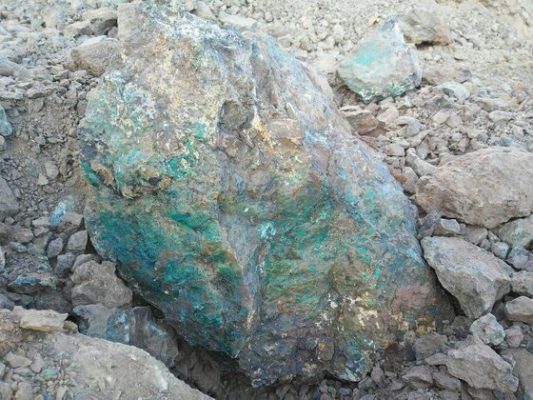
The morning sun bears down on the Gwayi Valley. Just 14 kilometres north of the main Victoria Falls road, in the scrubland of Matabeleland North, an old copper mine sits on land that, before 2020, belonged to the community. Women and youth made a living here, panning, collecting, and trading. It wasn’t formal. But it put food on the table.
By Rudairo Mapuranga
Then came the promise of something bigger. A multi-million-dollar copper venture. Jobs. Water projects. Development. The community was told that Gwayi River Mine could become one of the biggest copper producers in Zimbabwe.
Years later, the community is still waiting.
“We Had a Life Here Before the Takeover”
Before 2020, the area around Cross Mabale and the Gwayi River was a quiet source of survival. Artisanal miners, chikorokoza, worked the old spoil heaps. Women collected copper-bearing rocks. Young men dug tunnels that were dangerous but productive. It was not dignified mining, but it was a living.
Then the company came. The land was taken over for formal exploration. The community was told to step back. In return, they were promised jobs, clean water, and community projects.
None of that has arrived.
“When they started, they promised big, but the benefits are not for us to see,” a young man from the community says. He gives his name as Eric Tshabala. “They have been telling us. I don’t think they have enough investment to take the mine. As the youth, we were optimistic about this mine, but the way it’s been operated, we will find ourselves left with pits.”
His fear is simple: the company will dig, test, and leave. And the community will have neither the old life nor the new one.
15 Local Jobs, All in the Lab
Ward Councillor Ugine Mabale walks the site with a careful, diplomatic tone. He reports what he has seen. “Around 15 local guys are working at the mine currently, with the company promising to take on another 30. To me, that is positive,” he says.
But those 15 are not miners. They work in the laboratory, handling samples from the exploration drilling. The operation is still in the exploration phase. The company is collecting rock, crushing it, and testing it. They are looking for a copper percentage that satisfies them.
“It appears that in current operations, foreigners are not many. A few, about three. That is a ratio that we would want,” the councillor adds. But he qualifies: “Others are coming from places like Gwanda. They were told that they are technical people. If that is true, then it is okay.”
During a second visit, accompanied by the village head, engagement with mine management confirmed the situation. The majority of workers are from outside the area—operators and drivers, they say. “The employment ratio is not as good as we want,” the councillor admits. Management told them they are still collecting samples. They are not sure if they are going to continue mining. They promised that if they get what they want, they will employ more.
The Community’s Lens: No Benefit. The Company’s Lens: Still Testing.
Here is the tension. The community sees no benefit. The mine has taken their land, promised them jobs, and delivered 15 lab positions while outsiders drive the trucks and operate the machines. The community believes the company is stealing, taking copper samples, maybe more, without giving back.
But the reality of a copper project is slower. Gwayi River is estimated to host between 300,000 and 600,000 tonnes of copper ore, which would rank it among the country’s larger deposits. That scale requires serious investment. Exploration can take years. Grades have to be proven. Patience, from a technical standpoint, is necessary.
But try telling that to a woman who used to feed her children from this land and now watches strangers in hard hats walk past her without a greeting.
“We Want Training. We Want to Be Part of It.”
Zenzo Tshuma and Sfiso Mudenda, two other community members, speak with one voice when the subject turns to the future. They are not against the mine. They want it to succeed. But they want to be inside it, not watching from outside.
“We want to be trained,” one says. “Our women should be taught. Even now, during exploration, we can be part of that work. They should take our people for courses. In case they start operating, we are ready.”
This is the corporate social investment the community is asking for. Not a borehole. Not a donation of cement. Training. Skills. A certificate that says a local woman can run a lab test or operate a crusher. That is an investment in human lives, in people who have lived on this copper ground for generations.
“Can they invest in us?” The question hangs.
The Forgotten Frontier
Zimbabwe’s mining discourse is dominated by gold, lithium, and platinum. Copper, the red metal that once built towns like Mhangura, gets less attention. But at Gwayi River, a community sits at the edge of what could be a national asset—or another abandoned pit.
They have been told to wait. The company says it needs good grades. The councillor says patience. The youth say they are tired of promises.
Behind them, the old mine waits, its three ore shoots—Adder, Puff Adder, and Gaboon Viper—still holding their copper. Ahead of them lies a question: will the company that took their land now take their people into the future, or leave them with nothing but pits?
Ariana Raises Dokwe Gold Project Value to US$1.06bn in Updated Zimbabwe Study
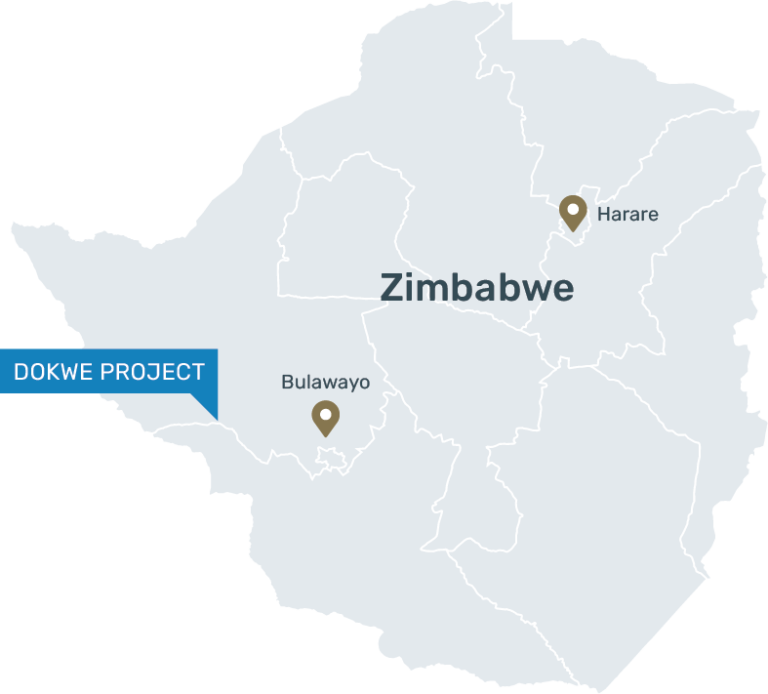
Ariana Resources says its updated pre-feasibility study (PFS) for the Dokwe Gold Project in Zimbabwe has significantly strengthened the project’s economics, with the mine now carrying a pre-tax net present value (NPV10) of US$1.06 billion, Mining Zimbabwe can report.
By Ryan Chigoche
The revised study positions Dokwe among Zimbabwe’s emerging large-scale gold development projects, underpinned by higher reserves, improved production forecasts, and stronger returns driven by elevated gold prices.
According to the updated PFS, the project is expected to produce 1.06 million ounces of gold over a 20-year life-of-mine through a two-phase development plan.
The first phase will involve a 12-year open-pit mining operation producing approximately 80,000 ounces of gold annually, while a second eight-year stockpile processing phase is projected to yield around 20,000 ounces per year. Peak annual production is forecast to reach 100,000 ounces.
Managing Director Kerim Sener described the updated study as a significant step forward for the project.
“A major milestone” as Ariana progresses the definitive feasibility study, which is due in the first quarter of 2027.
He added that the reserve increase “sets the scene for a significantly expanded mining and processing rate”.
The company said ongoing metallurgical and geotechnical drilling programmes are already ahead of schedule and are expected to support further reserve upgrades during the second half of 2026, potentially strengthening the project economics further ahead of the definitive feasibility study.
The updated study already reflects a significant increase in the project’s mineral inventory, with ore reserves at Dokwe North rising 42% to 1.13 million ounces of gold, while the combined mineral resource estimate for Dokwe North and Dokwe Central increased 13% to 1.6 million ounces.
Ariana estimates pre-production capital expenditure for the project at US$164 million, with the mine projected to achieve payback within one year of commissioning, underscoring the project’s strong financial profile.
Using a gold price assumption of US$4,250 per ounce, Dokwe delivers a pre-tax internal rate of return (IRR) of 92%, highlighting the project’s substantial leverage to elevated bullion prices.
The strengthened economics come at a time when global gold prices continue trading near historic highs amid sustained investor demand, central bank buying, and ongoing geopolitical uncertainty, conditions that have improved financing appetite for high-margin gold development projects globally.
Benchmarking Dokwe Against Zimbabwe’s Leading Gold Producers
At peak production of 100,000 ounces per year, Dokwe would rank among Zimbabwe’s larger gold mining operations and place Ariana Resources PLC within the country’s emerging mid-tier producer category.
By comparison, Caledonia Mining Corporation’s Blanket Mine produced 76,213 ounces in 2025, making it one of the country’s most consistent large-scale underground operations.
Padenga Holdings Limited’s Dallaglio gold business also remained a key mid-tier contributor, producing about 82,000 ounces in 2025 across its Eureka and Pickstone operations, supported by strong gold prices and improved plant stability.
At the upper end of Zimbabwe’s gold industry, state-linked Mutapa Gold Resources, which operates Freda Rebecca, Shamva, and Jena, produced approximately 104,000 ounces in the 12 months to March 2026, according to company reporting.
However, Mutapa is already in an aggressive expansion phase. The group is targeting a major production ramp-up to around 300,000 ounces per year within the medium term, driven by optimisation at Freda Rebecca and a planned US$150 million redevelopment of Shamva Mine, alongside upgrades at Jena aimed at lifting recoveries and throughput.
Against this backdrop, Dokwe’s projected 100,000-ounce peak output would sit just below the current Mutapa cluster but above most individual Zimbabwean gold mines, positioning it firmly within the country’s strategic mid-tier production band and underscoring its potential importance in expanding national output capacity.
Meanwhile, the advancement of Dokwe also comes as Zimbabwe continues pushing to expand large-scale gold mining capacity, with gold remaining the country’s single largest mineral export earner and a major source of foreign currency.
Zimbabwe’s gold production reached an all-time high of 46.7 tonnes in 2025, surpassing the government’s 40-tonne target and marking a 17% increase from the 36.48 tonnes produced in 2024.
For 2026, the government and Fidelity Gold Refinery have set a national production target of 50 tonnes, underscoring the country’s drive to expand output through both existing producers and new large-scale projects.
Dokwe is located approximately 110 kilometres west-northwest of Bulawayo and is held under mining claims wholly owned by an Ariana subsidiary.
BREAKING: Zimbabwe Government, Geo Associates to Sign Petroleum Production Sharing Agreement

The Government of Zimbabwe and Geo Associates, Invictus Energy’s 80%-owned subsidiary, will sign a Petroleum Production Sharing Agreement on Wednesday, ending years of negotiations and establishing the legal template for the nation’s nascent oil and gas industry, Mining Zimbabwe can report.
By Rudairo Mapuranga
The ceremony is scheduled for 14:30 in Harare. The state will be represented by Finance Minister Mthuli Ncube, the Minister of Energy and Power Development, and the Minister of Mines and Mining Development, Dr Polite Kambamura. Executives from Geo Associates and Invictus will attend.
The PPSA governs exploration, development, and production-sharing terms for the 360,000-hectare Cabora Bassa Project. Once executed, it will also serve as Zimbabwe’s model contract for all future petroleum agreements, providing the legal certainty international investors demand.
Geo Associates is jointly owned by Invictus Energy (80%) and Zimbabwe’s Mutapa Investment Fund (20%). The PPSA clarifies revenue sharing and operational control between the state and private partner, a critical requirement for financing the project’s next phase.
Invictus has already begun well pad preparation for the Musuma-1 exploration well, which targets 1.2 trillion cubic feet of gas and 73 million barrels of condensate. Drilling is planned for the second half of 2026, with rig contracts expected in June.
The Cabora Bassa Basin contains the Mukuyu gas field, rated by Wood Mackenzie as Sub-Saharan Africa’s second-largest petroleum find in 2023. Independent estimates suggest up to 20 trillion cubic feet of gas and 845 million barrels of condensate.
Finance Minister Mthuli Ncube has previously described the PPSA as reflecting “international best practice while safeguarding Zimbabwe’s long-term national interests.” With the signing now set, Invictus can accelerate its permitted gas-to-power pilot project at Eureka Gold Mine.
More details are expected to emerge following the official signing ceremony tomorrow.
Gold buying prices in Zimbabwe per gram/ ounce, 26 May 2026
Gold buying prices in Zimbabwe per gram/ ounce, 26 May 2026, from the official gold buyer and exporter Fidelity Gold Refinery (FGR).
1 oz = 31.1035 g
| Category | Price ($/g) | Price ($/oz) |
|---|---|---|
| SG 90% and above | 136.02 | 4,230.74 |
| SG 85% but less than 90% | 134.58 | 4,185.95 |
| SG 80% but less than 85% | 133.14 | 4,141.15 |
| SG 75% but less than 80% | 131.70 | 4,096.36 |
| Sample (5–10g) | 129.54 | 4,029.17 |
| Fire Assay CASH | 136.74 | 4,253.14 |
Note: The Fire Assay cash price applies to gold above 100g, with no sample deduction.
A sample of not more than 10g is deducted for the Fire Assay Transfer price.
#GoldPrices #GoldBuying #GoldMarket #GoldTrading #GoldRate #GoldPriceToday #GoldNews #PreciousMetals #GoldIndustry #GoldEconomy #FidelityGoldRefinery
ZMF supports Minister Kambamura’s bold ban on foreigners in small-scale gold mining

The Zimbabwe Miners Federation (ZMF) has thrown its full weight behind Mines and Mining Development Minister Hon. Polite Kambamura’s landmark decision to immediately ban foreigners and foreign-owned entities from participating in the country’s small-scale gold mining sector, a policy shift that the federation describes as a long-overdue victory for citizen empowerment and economic justice, Mining Zimbabwe can report.
By Rudairo Mapuranga
The new policy, announced by Minister Kambamura with immediate effect, reserves the small-scale gold mining sector exclusively for Zimbabwean citizens and wholly Zimbabwean-owned entities, while providing a transitional period for existing foreign operators until 1 January 2027 to either scale up into the large-scale category or exit entirely. Any non-compliant mining title will be liable to cancellation or other regulatory action. Under the new framework, small- and medium-scale gold mining operations are classified as projects producing up to 20 kilograms of gold per month and/or involving capital investment of up to US$15 million.
For the Zimbabwe Miners Federation, the representative body of the country’s artisanal and small-scale miners, the announcement represents the culmination of years of relentless advocacy.
A long-standing call finally answered
Long before Minister Kambamura’s decisive action, the ZMF had been at the forefront of the campaign to protect the small-scale mining space for indigenous Zimbabweans.
At the ZMF Strategic Meeting in 2025, ZMF President Ms Henrietta Rushwaya delivered an impassioned plea that presaged the government’s current position. She stated that foreign investors operating on claims of less than 50 hectares should no longer be tolerated in the sector.
“If an investor’s claim is less than 50 hectares, they cannot call themselves an investor. They must pack their bags and go,” Ms Rushwaya declared at the time. “This is our country, and we will not tolerate foreigners fighting with us over small pieces of land.”
The federation’s push had been consistent. For years, the ZMF argued that small-scale mining should be reserved for locals, with foreigners barred from operating on land of 50 hectares or less. They also requested that small-scale miners be given priority in pegging claims before they are opened to foreign investors. This request was formally presented to the government at Mine Entra 2024, where then-Minister Winston Chitando confirmed that the forthcoming Mines and Minerals Amendment Bill would officially recognise and protect the small-scale mining sector for local miners. Speaking at the event, Minister Chitando acknowledged that there was currently no legal framework reserving small-scale mining for the local sector, a gap the amendment bill was intended to fill.
Minister Kambamura’s immediate ban therefore comes as a direct response to these long-standing concerns, addressing issues of environmental degradation, weak regulatory compliance, and recurring conflicts involving local miners, farming communities, and surrounding residents.
ZMF President Ms Henrietta Rushwaya has been the unrelenting voice of the small-scale miner, consistently championing the cause of local empowerment. Her leadership extends beyond advocacy, however, as she has been instrumental in transforming the federation into a strategic partner for national development.
In January 2026, addressing the ZMF strategic meeting, Ms Rushwaya outlined a comprehensive blueprint designed to formalise and empower the nation’s artisanal miners, declaring that the federation’s core mission is to transition miners “from informal survival to professional, profitable and safe businesses.”
Under her stewardship, the small-scale mining sector has flourished. In 2025, the country delivered 46.7 tonnes of gold to Fidelity Gold Refinery, with artisanal and small-scale miners contributing 34.9 tonnes, approximately 75 percent of total output. Ms Rushwaya has set an ambitious target of 45 tonnes from small-scale miners alone in 2026.
In a recent statement, Ms Rushwaya expressed gratitude for the government’s decisive action. While specific comments on the ban are still forthcoming, her previous advocacy and her ongoing engagement with government on regulatory matters leave little doubt about her support. She has previously emphasised that “the law should apply equally to all” and called for stricter regulations to ensure foreign investors follow ethical practices and benefit the local economy.
Beyond the ban, Ms Rushwaya continues to drive the formalisation agenda through initiatives such as the ZMF–FGR Gold Card, a digital registration system designed to improve traceability of gold from mine to refinery in line with global responsible sourcing standards.
Chizuzu welcomes policy from the ground
In Mashonaland West Province, a key gold-producing region, the new policy has been met with particular enthusiasm. ZMF Mashonaland West Provincial Chairperson Mr Timothy Chizuzu has been a consistent advocate for the empowerment of local miners and has praised the sector’s resilience and potential.
Mr Chizuzu has previously noted that small-scale miners in Kadoma have proven that they can sustain the economy of Zimbabwe, with some operations mining over 50 tonnes of gold ore per day. He has called for the proper structuring, monitoring, and regulation of small-scale mining, stating that it has proven to have the potential to emancipate many people from poverty.
A Master of Science degree holder in Natural Resources Management and Environmental Sustainability from Bindura University of Science Education, Mr Chizuzu brings technical expertise to the federation’s leadership. He has also been active in championing responsible mining practices, environmental compliance, and community safety, having been involved in coordinating responses to mining accidents in the province.
Welcoming Minister Kambamura’s announcement, Mr Chizuzu described the ban as a game-changer for grassroots miners. He emphasised that the new policy will eliminate unfair competition from foreign actors who have historically used their financial muscle to displace local miners. He noted that the provision requiring verification of citizenship and beneficial ownership as part of the re-registration process will finally close the loopholes that allowed proxy ownership structures to circumvent the law.
Mr Chizuzu has also called on small-scale miners in Mashonaland West to take advantage of the transitional period to regularise their operations, ensuring compliance with environmental, tax, labour, and mineral marketing laws, and to prepare for verification of production levels and capital investment thresholds.
ZMF acting Treasurer Mr Prosper Shumba has emerged as the federation’s architect of financial modernisation and strategic infrastructure development.
Speaking at the ZMF 2026 Strategic Meeting, Mr Shumba announced a dual initiative aimed at reinforcing accountability and boosting production. The federation will introduce mandatory independent financial audits and establish strategic cluster processing plants along the country’s mining borders.
To cement this commitment, Mr Shumba declared that the ZMF will now publish annual budgeted financial statements audited by a firm registered with the Institute of Chartered Accountants of Zimbabwe (ICAZ), marking a definitive shift in the federation’s operations. “We are committed to a new standard of governance,” he stated, emphasising that this move ensures the highest level of integrity and accountability to members and the public.
Concurrently, the federation unveiled a major industrial strategy: the creation of cluster mining central processing plants in every province to provide miners access to modern equipment, coordinated ore processing, and improved financing opportunities. “We are going to come up with cluster mining and processing plants that we will put in every province,” Mr Shumba said. “This will capacitate artisanal miners to fund their activities, process their ore efficiently, and deliver gold directly to the formal market.”
Mr Shumba also proposed the innovative concept of a Miner’s Bank, an institution that would depart from traditional collateral-based lending, instead using mineral assets as the basis for funding projects. “This bank will only take minerals, not dollars,” he said, arguing that this model would finally provide miners with capital matched to their project’s potential.
These strategic initiatives complement Minister Kambamura’s ban by creating an enabling environment for compliant local miners to thrive, with formalised infrastructure and access to capital.
A unified front for citizen empowerment
The convergence of government policy and federation advocacy represents a historic moment for Zimbabwe’s small-scale mining sector. Minister Kambamura’s ban, supported by the ZMF’s leadership, establishes a clear and enforceable framework that prioritises citizen participation while maintaining space for large-scale foreign investment in higher-capital projects.
The re-registration process, which includes verification of citizenship and beneficial ownership, disclosure of corporate and financing structures, confirmation of compliance with environmental and other laws, and verification of production levels, will ensure that only genuine Zimbabwean operators remain in the sector.
Zimbabwe bans raw exports of 14 metals after lithium revenues jumped 106%

Zimbabwe has formally classified 14 minerals as “critical,” banned the export of all raw or unbeneficiated forms, and mandated state shareholding through special-purpose vehicles, a long-awaited codification of industrial policy that follows a dramatic 106% surge in lithium revenue on virtually no volume growth, Mining Zimbabwe can report.
By Rudairo Mapuranga
Mines Minister Dr Polite Kambamura signed the Mineral Classification and Declaration on 22 May 2026, ending months of ad hoc directives and giving investors, diplomats, and mining executives the first comprehensive written strategy for the country’s resource wealth.
The timing is no accident. Just weeks earlier, first-quarter data showed that lithium, Zimbabwe’s most advanced critical mineral success, earned US$178.6 million on 240,826 tonnes, a 2% volume increase but a 106% value jump from US$84.2 million a year earlier. That performance came despite no raw concentrate exports for most of March, after Kambamura imposed an immediate ban on 26 February.
“The era of shipping raw rock for marginal returns is over,” Kambamura said in an interview following the gazette. “This classification gives legal teeth to everything we have been building since the lithium ban.”
The Lists: 14 Critical, 1 Special, 10 Strategic
The schedule attached to the declaration names lithium, nickel, cobalt, graphite, copper, rare earth elements, chrome, platinum group metals (PGMs), manganese, antimony, uranium, ruthenium, tungsten, and niobium as critical minerals.
Metallurgical coal is declared a “special critical mineral,” reflecting its role in steelmaking and energy-intensive processing.
Separately, limestone, potash, phosphorus, iron ore, pyrites, oil and gas, coal, gold, and diamonds are designated as strategic minerals.
Each classification carries distinct regulatory consequences, but the core restrictions apply to all critical minerals.
No Raw Exports Without a Beneficiation Plan
Under the new rules
No person may export any listed mineral in its raw or unbeneficiated form unless authorised under a conditional transitional plan approved by the Minister, with a specific timeline for local beneficiation beyond the concentrate stage.
Exports must be at approved government beneficiation levels, a direct response to the under-invoicing and middlemen abuses that Kambamura has repeatedly cited.
Any application for mining rights on these minerals now requires prior ministerial approval.
These provisions codify the logic that drove the February lithium ban: stop resource depletion, capture value locally, and force foreign miners to partner on processing.
“What we did for lithium in February was a necessary emergency measure,” Kambamura said. “Now we have a permanent legal framework for all critical minerals.”
State shareholding through SPVs
The most far-reaching long-term provision is the introduction of mandatory minimum state shareholding in the exploitation of all listed critical minerals.
The State will exercise this shareholding through designated Special Purpose Vehicles (SPVs). The declaration does not specify the percentage; that will be determined by separate regulations, but the principle is now law.
This is not nationalisation. It mirrors the model that transformed Indonesia into a nickel-processing powerhouse. Jakarta banned raw ore exports, forced smelter construction, and negotiated equity stakes through state-owned enterprises. Today, Indonesia controls over 40% of global nickel refining.
Zimbabwe is following the same playbook but moving faster. Indonesia took nearly a decade. Harare has gone from a lithium ban to full critical minerals classification in under three months.
Five Criteria, Not Guesswork
The declaration also spells out, for the first time, exactly why a mineral becomes “critical” in Zimbabwe’s eyes:
- Vulnerable supply chains with the potential to cause conflicts.
- High international demand where Zimbabwe holds significant reserves or production dominance.
- Essential raw materials for domestic manufacturing and local beneficiation.
- Capacity to generate substantial direct and indirect employment and national economic benefits.
- Low occurrences and low grades, but of high value.
These criteria remove the opacity that previously frustrated investors. Any company can now assess whether its mineral falls under the new rules and why.
The Lithium Data That Proved the Concept
The declaration did not emerge from a vacuum. It is the logical culmination of a policy experiment that began with lithium and delivered stunning results.
MMCZ data for Q1 2026 showed:
- Exports: 240,826 tonnes (up just 2% from 224,610 tonnes in Q1 2025)
- Value: US$178.64 million (up 106% from US$84.19 million)
- Daily pre-ban extraction rate: 4,300 tonnes (72% higher than Q1 2025’s 2,496 tonnes/day)
- March 2026 exports: near zero due to the 26 February ban
Had the ban not been imposed, the quarterly volume would have exceeded 387,000 tonnes, a 72% surge that would have accelerated depletion. Instead, Zimbabwe earned more money from almost the same tonnage, proving that value, not volume, is the future.
Kambamura reinforced that message in response to a question from Mining Zimbabwe. “After setting up lithium salts beneficiation facilities, the quota system and beneficiation tax will be scrapped,” he said.
That pledge is now reinforced by the new declaration, which offers a durable legal home for the transitional nature of quotas and taxes.
What Comes Next
The declaration is a framework, not the final word. Several implementing regulations are still needed:
- SPV shareholding percentages for each mineral.
- Beneficiation level schedules specifying what counts as “processed” versus “raw” for each metal.
- Transitional plan templates that companies must submit to continue exporting during plant construction.
- Penalties and enforcement mechanisms for violations.
Kambamura’s ministry has indicated these regulations will be published within 90 days.
A Question for the Industry
With the strategy now spelt out, the remaining question for mining CEOs, especially those in cobalt, rare earths, and PGMs, is no longer “What is the policy?” It is: How fast can you build your processing plants?
The lithium path is clear: build a lithium sulphate or carbonate facility, and quotas and taxes disappear. The new declaration extends that logic to 13 other critical minerals.
Zimbabwe has moved from ad hoc directives to a codified strategy. The ball is now in the boardrooms of every mining house operating in the country.
The Bottom Line
Zimbabwe is no longer a passive pit. It is a sovereign actor with a published, legally enforceable critical minerals strategy. The classification of 14 metals, the ban on raw exports, and mandatory state shareholding through SPVs collectively represent the most comprehensive resource governance framework in Southern Africa.
The lithium success proved the concept. The 22 May 2026 declaration makes it permanent.
For investors, the message is clear: partner on local processing, accept the State as a minority shareholder, and export only beneficiated products. Those who comply will find a predictable, transparent regime. Those who do not will find no export licence.
The minerals are in the ground. The strategy is on paper. The only missing piece is execution, and Zimbabwe has already shown it can move fast.
