Home Blog Page 541

Zim to promote nuclear power

0

Zimbabwe will have a draft sustainable energy policy by year end that among other critical issues, will promote greater use of renewable sources including nuclear power, according to Energy and Power Development Minister Fortune Chasi.

Chasi disclosed the policy dubbed – National Integrated Energy Resource Plan in Parliament on Wednesday.

Zimbabwe is now being assisted by the World Bank and the African Development Bank to develop the policy.

“We are working on a National Integrated Energy Resource Plan,” said Chasi. “We had a false start with regards to this process and we are now working with development agencies like the World Bank and the African Development Bank who are helping us to come up with the policy.

“I am not able at this moment in time to precisely say when this work will be concluded but all of us who are involved in this matter understand the urgency of the matter and I am very hopeful that by year end we will have our first draft.”

Zimbabwe, which currently generates about half of its electricity from coal with a number of thermal projects lined up for implementation, is holding in check the use of coal for power production in line with its pledge to reduce its carbon footprint.

Zimbabwe is a signatory to the Paris climate change accord agreed in 2015, which seeks to hold the increase of the global average temperature to below 2 degrees Celsius.

Coal generation needs to fall by 11 percent a year to keep within a warming limit of 1,5 degrees Celsius.

According to research by independent climate think tank, Ember, global carbon dioxide emissions from the power sector fell by 2 percent last year, the biggest fall since 1990 due to reduced coal usage in Europe and the United States.

Thermal power generation fell by 3 percent globally, with Europe registering the biggest fall of 24 percent due to shift to renewables, while US registered a 16 percent drop because of more competitive gas.

China was responsible for half of global thermal generation.

The International Renewable Energy Agency’s Renewable Capacity Statistics 2020 shows that new renewable power — principally hydro-power, wind, solar, geothermal, and bio-energy — accounted for 72 per cent of all power expansion last year.

Renewable energy expanded by 7,6 per cent in 2019, adding 176 gigawatts (GW) of generating capacity globally, marginally lower than the 179 GW added in 2018.

But that electricity accounts for only about 20 per cent of energy used. The rest is mainly fossil fuels: coal, oil and gas.

Solar and wind dominated renewable capacity expansion, jointly accounting for 90 per cent of all net renewable additions in 2019.

Hydro-power accounted for the largest share of the global total, with a capacity of 1,190 GW. It increased minimally by 12 GW (up 1 per cent on 2018), possibly because some large projects missed their expected completion dates. China and Brazil accounted for most of the expansion, IREA said.

Other renewables included 124 GW of bio-energy, 14 GW of geothermal, and 0.5 GW of marine energy.

Off-grid capacity grew by 160 MW (up 2 per cent) to reach 8,6 GW in 2019. Bio-energy accounts for 40 per cent of off-grid capacity. China accounted for half of all new capacity in bio-fuel use.

Asia accounted for 54 per cent of new capacity in 2019 or 44 per cent of the global total.

Capacity in Europe and North America expanded by 6,6 and 6 per cent respectively.

Oceania and the Middle East were the fastest growing regions (up 18,4 and 12,6 per cent respectively), although their share of global capacity is small.

Africa only increased by 2,0 GW (up 4,3 per cent) to reach 48 GW.

Over the past few years, Zimbabwe has witnessed modest increase in renewable energy investments, particularly solar, large and mini hydro projects.

Some of the notable climate smart projects include the expansion of the of Kariba hydroelectric plant, Harava 20 MW solar project in Seke which is nearing completion and Centrigand’s Nyabira solar plant which is feeding 2,5 MW onto the national grid.

In light of rolling power cuts, some corporates and households invested in solar .

The development of wind power generation has, however, moved at a snail space. In 2017 Zimbabwe abandoned the exercise to conduct a wind resource measurement on identified three sites with highest energy potential as the price bids received from companies that tendered to carry out the feasibility study were too high.

The purpose of the project was to create an accurate knowledge base of the wind resource available in Zimbabwe through measurement and analysis to help the country plan for renewable energy projects. The intention was to measure wind speed and direction at the sites and remotely collect data for 24 months at a hub height of 100 meters.

The data and information generated was expected to be used in designing large scale wind power projects, off grid or mini grid electrification, water pumping and climate research.

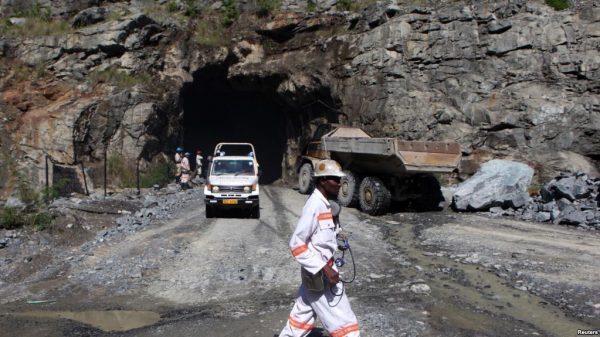
Minister Chasi said plans remain of course to develop power by processing uranium. Zimbabwe, previously not known to have any deposits of uranium discovered some deposits in Hwange and Binga.

Last year, Zimbabwe agreed terms with Russia to engage in uranium exploration and enrichment for power generation_Business Weekly

Gold rallies to $1 800 an ounce

0

Gold’s allure is only getting stronger as 2020 unfolds. Spot prices reached $1 800 an ounce and year-to-date inflows into bullion-backed exchange-traded funds have topped the record full-year total set in 2009.

Investors have favoured havens this year as the coronavirus pandemic rips through economies, spurring sustained inflows into gold-backed ETFs as central banks and governments unleash vast stimulus programs.

States across the US recorded new highs in cases and deaths on Tuesday, and Federal Reserve Bank of Atlanta President Raphael Bostic said the resurgence of the virus may be threatening the pace of America’s recovery.

“A massive investor response to Covid-19 has pushed ETF holdings to record levels, the impact of which has outweighed the decline in jewelry demand and absorbed increases in recycling,” said James Steel, chief precious metals analyst at HSBC Securities (USA) Inc. Further inflows are expected “as investors respond to elevated risks and low yields,” he said in a note.

Holdings in gold-backed ETFs rose to 3 234.6 tons on Tuesday, according to initial data compiled by Bloomberg.

That’s up 655.6 tons so far in 2020, topping the rise in tonnage terms seen in 2009. The total has risen each month this year.

Spot gold was up 0.2 percent at $1 798.55 an ounce at 9:36 a.m. in London, after climbing above $1 800 to reach the highest since November 2011.

In other precious metals, silver and platinum were higher while palladium was little changed.

Bullion prices and holdings are widely expected to extend gains, with Goldman Sachs saying the metal could reach a record $2 000 in the next 12 months and JPMorgan Chase & Co. recommending investors stick with bullion.

“Short-term price risks remain skewed to the upside as long as the virus does not come under control,” said Carsten Menke, head of Next Generation Research at Julius Baer Group.

“The near unprecedented fiscal and monetary peacetime response to Covid-19 supplies gold with two substantial bullish inputs: liquidity and debt,” HSBC’s Steel said. “Low interest rates, monetary accommodation including balance-sheet expansion and heavy fiscal spending globally for the foreseeable future will cement and extend gold’s rally.”

More Fed support may be on the way. Vice Chairperson Richard Clarida said that policy makers would likely turn to additional forward guidance and asset purchases if the economy needs more aid. “There is more that we can do,” he told CNN International. News24.com

Mangwana raises stake in oil, gas project

0

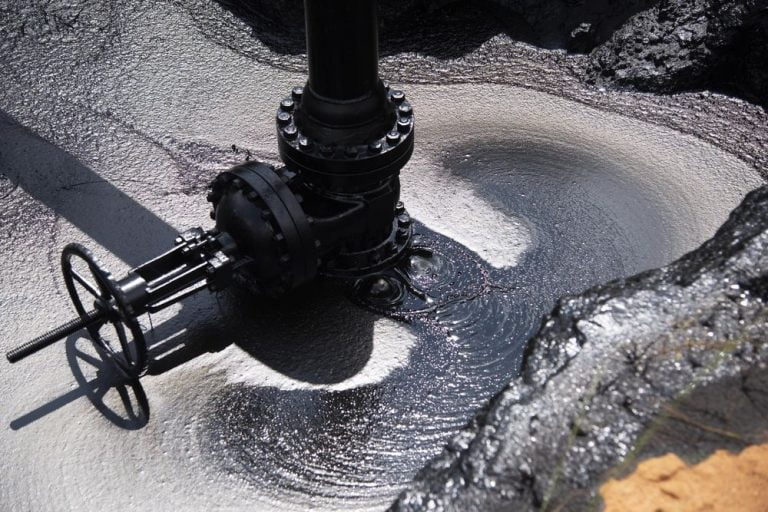
Mangwana Opportunities, a Zimbabwean private equity fund, has an opportunity to increase its stake in gas and exploration junior miner, Invictus Energy Limited, after recently completing the acquisition of an unspecified shareholding in the company.

Completion of the equity transaction, through the placement of 12,5 million shares with Mangwana Opportunities for $440 000 (Australia Dollars), saw the simultaneous appointment of former Delta chief executive Joe Mutizwa to the board of Invictus Energy.

The capital raised will be used for further exploratory and project development work relating to Invictus Energy’s oil and gas project in Muzarabani.

Invictus Energy is an Australia Stock Exchange listed independent oil and gas exploration company focused on high impact energy resources in sub-Saharan Africa.

Its asset portfolio consists of a highly prospective 250 000 acres within the Cabora Bassa Basin in Zimbabwe.

The Special Grant 4571 contains the world class multi-trillion cubic feet Mzarabani and Msasa conventional gas condensate prospects.

Mangwana Opportunities Fund is an investor owned, closed end investment company, which is managed by Mangwana Capital.

It is funded by Zimbabwean institutional investors including pension funds and invests primarily in the fields of Agriculture, Mining and Tourism with an investment horizon of 10 years.

The fund has prescribed asset status and has been granted tax exempt status by the Ministry of Finance and Economic Development.

The shares were placed at a price of $0.035 per share; a 91 percent premium to the preceding 5-day volume weighted average price (VWAP) of $0.0183 when the placement was announced on 30 April 2020.

The placement is a 20 percent to premium to the last closing price of $0.029. The shares issued to

Mangwana Opportunities will be held in escrow for six months from the date of completion.

“The agreement makes provision for a further equity investment by Mangwana for the project over the next 12-24 months as well as assisting the company in achieving its strategic goals in country,” Invictus said.

The shareholding acquisition saw the appointment of respected Zimbabwean business person Mutizwa, current chairman of Mangwana Capital, as a director of the Company’s 100 percent owned local subsidiary Invictus Energy Resources Zimbabwe.

Mutizwa served for 10 years as chief executive officer of Delta Corporation, one of Zimbabwe`s largest listed companies before taking early retirement in 2012.

The Cabora Bassa project encompasses the Mzarabani Prospect, a multi-TCF and liquids rich conventional gas-condensate target, which is potentially the largest, undrilled seismically defined structure onshore Africa_Business Weekly

Falgold mine issues cautionary statement

0

AILING gold mining firm, Falcon Gold Zimbabwe Limited (Falgold), has issued a further cautionary statement relating to cash offer to minority shareholders and its suspension from the Zimbabwe Stock Exchange.

The struggling gold miner was again suspended from the Zimbabwe Stock Exchange early this year after it failed to publish financial results for the year ended September 30, 2019.

The suspension was done voluntarily after Falgold sought permission from the regulatory authorities. In February 2019, the mining firm was suspended by the local bourse for failing to publish audited financial results for the year ended September 30, 2018.

The suspension was lifted seven months later after the gold miner fulfilled the listing requirements.

In a cautionary statement released this week, Falgold said: “The directors of Falcon Gold Limited wish to advise all shareholders and the investing public that the company is still engaged in discussions that involve a potential transaction that may have a material impact on the value of the company’s shares.

“The transaction relates to a cash offer to minorities and the termination of the ZSE listing.”

It said further details of the transaction will be provided once discussions have been finalised.


The Chronicle

Machete gang members arrested

0

TWO machete gang members have been arrested for allegedly attacking two mine workers in Gwanda and fleeing with 460 kilogrammes of gold ore and three cellphones.

Michael Gambiza (30) from Filabusi and Nkosinamandla Ncube (20) from Mberengwa were not asked to plead when they appeared before Gwanda magistrate, Mr Ndumiso Khumalo facing robbery charges. They were remanded in custody to July 17.

Prosecuting, Mr Silent Shoko said Gambiza and Ncube together with two accomplices who are still at large went to Marble Mine in Gwanda while armed with machetes, axes, knobkerries and catapults on July 1 at around 2AM.

“They forced open a steel cabin door in order to gain entry and assaulted two mine workers. They ordered them to lie down and tied their hands and legs using a safety belt which was inside the room,” he said.

“The gang further stole three cellphones which were in the room before loading about 460kgs of gold ore into a truck which they had parked outside and then fled the scene. The gang proceeded with the stolen gold ore to Hammer Mill in Dubane area to have it processed.”

Mr Shoko said the police received a tip off that the accused persons were at Hammer Mill and proceeded there resulting in the arrest of two of the accused persons and recovery of the gold ore and cell phones.

The Chronicle

Fidelity Printers and Refiners Mining Loan Application Checklist

0

Fidelity Printers and Refiners Mining Loan Application Checklist

GET FULL DOCUMENT HERE

Gold deliveries down 13% in H1

0

Zimbabwe’s gold deliveries have gone down 13% to 10.597 tonnes in the first six months of 2020 from 12,294 tonnes achieved in the same period last year as the sector takes a hit from foreign currency constraints and Covid-19 restrictions which affected small scale producers, latest data has shown.

The development comes at a time when the economy is suffocating from foreign currency constraints and relies on the yellow metal for the greenback required to oil the economy.

Gold is the highest forex earner and contributes 38% of the country’s total earnings and more than 60% to the mining sector which is the highest forex earning sector in the country.

Zimbabwe’s gold exports were up in January and May with the rest of the months down during February, March, April, and June due to lockdown restrictions which limited artisanal miners to operate.

Government has increased fuel allocations to gold miners from last year but the lockdown and the effects of coronavirus have thwarted miners to get useful consumables from China.

Experts say gold mining especially (small scale) was greatly affected by lockdown regulations as social distancing needs to be observed.

Fidelity Printers and Refiners general manager Fradreck Kunaka told Business Times that the gold deliveries are likely to go up in July after miners familiarise with the new gold trading regulations.

“Gold deliveries were 6% down to 1,409 tonnes in June 2020 from 1,501 tonnes in June 2019. From 1,409 tonnes, small scale miners extracted 0,539 tonnes and secondary miners hauled out 0,869 tonnes.

“Deliveries during the month of June were recorded at 1.4 tonnes, the reason behind this decline could be Gold deliveries down 13% in H1 attributed to the fact that deliveries for the month coincided with the release of the new Gold Trading Framework published on May 26,” Kunaka said.

“Many stakeholders are still trying to understand the implications of the new payment method, hopefully, with time they will adjust and start bringing in their gold using the formal channels.”

The country’s gold export earnings have gone up 2,7% to US$409.7m from January 2020 to May 2020 from US$398.6m earned during the same period last year due to the review of foreign currency retention threshold and increased fuel allocations this year.

In January, gold export earnings were US$98m in January 2020 from US$70.4m, while in February export earnings were US$56.1m from US$77.8m.

In March, yellow metal export receipts were US$71.9m from US$88m in March last year and during April 2020 gold exports were down to US$63.4m from US$76.4m.

In May 2020, exports were up to US$120m from US$85.8m last year. Gold deliveries were down 31% in April to 1,46 tonnes from 2,12 tonnes in March due to the Covid-19 pandemic which had already started affecting the countries from which mining chemicals such as cyanide are sourced thus negatively affecting operations of various mines.

Movement of chemical consignments from the said countries were affected as early as February, with the ripple effects beginning to be felt by March. Gold deliveries surged 44% to 2,54 tonnes during the month of January from 1,77 tonnes during the same period last year due to increased fuel allocations to miners.

In February, gold deliveries fell 34% to 1,403 tonnes in February 2020 from 2,136 tonnes during the same period in 2019.

Zimbabwe’s gold deliveries fell 32 % to 1,77 tonnes in March 2020 from 2,61 tonnes in March 2019.

In December 2019, the yellow metal was up 72% to 2,77 tonnes from 1,6 tonnes during the same period in 2018.

Cumulative gold deliveries fell 16% to 27.6 tonnes in 2019 from 33.2 tonnes
in 2018 due to suspected smuggling and hostile mining policies.

Mines and Mining Development minister Winston Chitando said Covid-19 has affected the operations and a plan needs to be worked out to ensure miners recover from the big slump. Last year gold export receipts, slumped
28% to US$946m in 2019 from US$1,33bn in 2018, leaving the country with no alternatives for foreign currency as the second-highest forex earner tobacco also tumbled 7% to US$846.7m from US$907.8m due to prolonged droughts and unfavourable payment policies.

Since 2017, the economy has been grappling with foreign currency shortages, inefficient mining and processing technologies but the reduction of the forex retention levels by the Reserve Bank of Zimbabwe is believed to have impacted negatively on the deliveries. This has created arbitrage opportunities for miners to smuggle gold outside the country’s borders.

Over 34 tonnes are believed to have been smuggled out of Zimbabwe. Gold Miners Association of Zimbabwe chief executive Irvine Chinyenze said:“Covid-19 has negatively affected our operations as small scale miners were restricted to go to mines due to the ongoing restrictions.”

He said the underlying problems of forex retention continue to affect production as miners look for alternative markets. Some miners, especially large scale are believed to be selling their gold to the suspected smugglers to get more forex for their operations.

Zimbabwe is targeting 100 tonnes of gold per year by 2023, a figure which is expected to help the sector to earn US$12bn yearly and only if forex retention threshold, fundamentals and funding issues are addressed.

Gold is expected to lead the charge with US$4bn. Business Times

RioZim hopeful over RBZ debts

0

ONE of Zimbabwe’s largest gold miners, RioZim, says it has received an insignificant amount from funds owed by gold buyer, Fidelity Printers and Refiners (FPR), while delayed payment has put the firm under ‘enormous financial stress’.

FPR is the country’s sole authorised gold buyer and it is a division of the Reserve Bank of Zimbabwe (RBZ). The listed mining company said last month it was owed US$2,46 million and $68,48 million (Zimbabwean dollars for gold deliveries.

The gold mining entity said it last month was struggling to pay for electricity, salaries and fuel, costs it said were all denominated in US dollars.

However, RioZim said there was no dispute between the company and FPR or the central bank on the amounts owing and that discussions regarding the overdue payment were still in progress between itself, FPR and the RBZ.

“It is therefore the company’s hope that the issue can be resolved expeditiously to capacitate the company to meet its operational expenditure requirements,” said RioZim company secretary Per Chiurayi in a statement yesterday.

RioZim said it was confident the amount owing will be received eventually, but the delayed in payment was “placing the company under enormous financial stress”. RioZim operates three gold mines namely Renco in Masvingo, Cam and Motor in Kadoma and Dalny Mine in Chegutu.

Apart from the three gold mines RioZim also operates RioZim Energy, which is developing a 2 000 megawatt power plant in Sengwa, Gokwe North, Rio Base Metals comprised solely by Empress Nickel Refinery and Murowa Diamonds, a small-scale but efficient and viable open cast diamond mining operation in Zvishavane.

One of Zimbabwe’s biggest gold miners and ZSE listed entity last month said it had been forced to stop gold mining operations due to inability to meet operating costs.

RioZim attributed the challenges to the RBZ’s retention threshold and the pegged exchange rate, an arrangement that has since been removed and replaced with a weekly auction system.

Following a revised framework, gold miners are required to surrender 30 percent of their foreign currency earnings to the RBZ, which is then liquidated at the ruling exchange rate and paid in local currency.

So contentious has been the issue of delayed payment that in 2018, RioZim suspended operations at Cam and Motor, Dalny and Renco Mine after claiming it had run out of money to import “cyanide, activated carbon, explosives, as well as spares for the repair of equipment among other items”.

Again in February 2019, RioZim suspended operations saying it had “experienced significant and persistent delays in payment of its foreign currency allocation for deliveries made to FPR.

Gold production is key to Zimbabwe’s export performance, raking in US$1,3 billion in export earnings from 27,6 tonnes of gold in 2019, up from US$1,1 billion recorded from an all-time high output of 33,2 tonnes in 2018_Business Weekly

Towards a workable Gold Producers payment model

0

Primary producers of gold in the country would have felt some respite in the wake of the inaugural Reserve Bank of Zimbabwe (RBZ) foreign currency auction, held on the 23rd of June 2020, when it was announced that the interbank foreign exchange rate had shot up by 128%,  from Zwl$25 : US$1 to Zwl$57 : US$1.

By: Daniel Nhepera

The new exchange rate was a representation of the weighted average of the bids placed by prospective foreign currency buyers at the auction, and it would be similarly adjusted on the Tuesday of every week to represent the weighted average of bids at the auction held on the day. As such, the producers would have been buoyed further by the results of the 30 June 2020 auction, when the weighted average of bids nudged up by a further 11.8%, landing the week’s exchange rate at Zwl$63.7: US$1. As symptomatic of an ailing domestic currency as this inflating of the exchange rate might be, the narrowing of the disparity between the interbank and parallel market exchange rates pleasantly represents prospects for increased earnings from gold deliveries to Fidelity Printers and Refiners (FPR) for primary producers of gold.

The FPR gold trading framework, which took effect on the 26th of May 2020, instructs for 30% of the value of gold deliveries from primary producers to be paid in local currency at the prevailing interbank foreign exchange rate. Prior to the first RBZ foreign currency auction, the interbank foreign exchange rate of ZWL$25: US$1 was pitted against an adversary parallel market exchange rate of about ZWL$100: US$1. Making us of the June 2020 average London Bullion Market Association (LBMA) gold price of about US$59 per gram, it is notable that primary producers stood to receive an effective payment of US$45.73 per gram (US$41.30 and a Zwl equivalent of US$17.70 converted at the interbank exchange rate). This represents about 77.5% of the international value of their gold. Under the new interbank exchange rate, however, the producers are now set to receive an effective US$52.57 per gram, making up 89.10% of the international value of their gold. The situation is set to improve further for the producers as the foreign currency auction system progressively readjusts the interbank exchange rate towards convergence with the parallel market rate.

Amidst the pomp of an improving trading environment for primary gold producers, it is imperative to spare a thought the Artisanal and Small Scale miners (ASM), who, while stuck at a fixed price of US$45 per gram in 100% hard currency, evidently got the short end of the FPR gold trading framework stick. The ASM sector has seen no benefit from the bullish international gold prices, nor the welcomed introduction of the weighted average interbank foreign exchange rate, which has both evidently improved conditions for their fellow producers in Zimbabwe’s gold sector.

In the wake of FPR’s announcement on the gold trading framework, the Zimbabwe Miners Federation, an umbrella body for over 50 small scale mining associations across the country, refuted the imposition of a fixed price system and proposed for the ASM sector to be placed on the same gold trading framework as the primary producers. The disparity between the market clearing LBMA price and the FPR fixed price was cited as an arbitrage opportunity for illegal gold buyers. To exacerbate the problem, ASM gold producers have an inherently high marginal propensity to gold prices, meaning they would sooner sell their product to a buyer offering US$45.50 per gram over one offering US$45 per gram as they look to gain maximum value from their toil. Resultantly, with the increasingly widening gap between the ASM fixed price and alternative payment options, the gold leakage problem may in fact degenerate than relent under FPR’s new gold trading framework.

Credit remains due for FPR’s efforts, however, as the price-fixing model they adopted mimicked the somewhat successful Gold-Stabilization Scheme which was introduced by the Government and the Reserve Bank of Zimbabwe (RBZ), in partnership with the mining industry in 1984. Under this scheme, the RBZ would buy gold from producers at a floor price of Z$16.07 per gram (US$14.30), where global prices at the time average about US$12.50 per gram. In the event that the market price soared above the floor price, the RBZ would pay producers the Z$16.97 per gram plus 75% of the market differential. The remaining 25% was retained by the RBZ to liquidate the account they used to pay producers from when the market price fell below Z$16.97 per gram. The Gold-Stabilization Scheme is credited for aiding in maintaining gold production at a respectable average of 14.8 tonnes per year between 1984 and 1988.

The allure of the scheme to gold producers was that the floor price was initially set lucratively above the prevailing global price, albeit in an exceedingly fluctuating market. ASM producers, in particular, stood to immediately gain from formalising their operations and affiliating with the RBZ. A further appeal of the scheme was the security offered RBZ’s retention of 25% of the price differential during a price boom. This gave the producers assurance that during a price slump RBZ would still be able to meet its floor price obligations. By contrast, FPR set its 2020 fixed price well below the global price, in a strengthening market. This is unlikely to trigger the mass formalisation of operations by informal miners, nor set off gold deliveries to FPR in hordes from ASM producers. Given the liquidity challenges in the country presently, there is also the concern on whether FPR would be able to maintain payments of US$45 per gram should global prices fall below the fixed price. Suffice to say, the fixed price model by FPR has not won over many hearts among ASM gold producers.

There is a silver lining however in that FPR has stated that it is willing to take notes from stakeholders and observe trends in the market to the end of making necessary and appropriate adjustments to the gold trading framework. The continued strengthening of gold prices would thus be expected to prompt such adjustments. Taking from the submission by the ZMF, an adjustment in the ASM framework to match that of the primary producers should take precedence. This is because it allows for the strengthening gold prices to add impetus to ASM mining activity as miners will look to ramp up output to optimise resource rents. Narrowing the gap between the effective payment received by the miners and the LBMA price, US$54.94 per gram, and US$61.64 per gram, as at 30 June 2020 PM, respectively, would also close out some opportunities for arbitrage buy illegal buyers. A progressive convergence between the interbank and parallel market exchange rates is expected the close the gap further.

In appreciation of the hardship likely to fall upon FPR in meeting ASM payments in 100% foreign currency under the 70%: 30% framework, a conversation has to begin over the payment of ASM producers electronically via FCA Nostro Accounts. This will, of course, be a particularly contentious topic, given the banking public’s frail confidence in the banking system at present, as well as the numerous barriers to financial inclusion for the miners in the hinterlands who would have scant access to electronic points to make use of their funds. It would be a long road, but one worth being ventured valiantly by FPR and the RBZ for two reasons in particular, among many: 1) to imperatively meet the Eastern and Southern Africa Anti-Money Laundering Group’s requirement for Governments to minimise the use of cash in making large sums of payment as this makes the countries vulnerable to money laundering, terrorist financing, and proliferation financing; and 2) to ease the requirement for the importation of hard currency into the country, where financial embargoes have seen the process become increasingly difficult.

There is therefore much need for effort, will, and cohesion between all stakeholders in the gold sector if a workable producer payment model is to be achieved for the country’s top and most important foreign currency earner.


This article first appeared in the Mining Zimbabwe Magazine July 2020 issue

INTERVIEW: Sophia Takuva not just the beauty but brains and hard work

0

Sophia Takuva not just the beauty but brains and hard work.

When one hears the term small-scale mining the first thing that comes up is dirty and fierce men who are well known for violence. Little is known about women taking a leading role in the Zimbabwe mining industry.

Mining Zimbabwe met Sophia Takuva a small scale miner in her early thirties who is not just the beauty but brains and hard work. She specialises in gold, chrome, and gemstone mining. On chrome and gemstones, Sophia Takuva is in a partnership or a syndicate (as its popularly referred to in mining) with other women. Here is how our interview went.

Why did you venture into Mining and why specifically gold mining?

I ventured into mining because of the benefits. I take mining as a business, though I am still small I’m trying to do it sustainably and build something great out of it. I’m more into gold mining because it is easier and requires less capital than other minerals.

What have been your achievements since venturing into mining?

I have managed to live /survive in a respectful way. I work to earn a living that’s my number one achievement. I’m working on building a home, I’m taking care of my family including paying fees for less fortunate kids. I am currently building a mining equipment and motor spares business. I have and I’m still empowering women in the mining sector and mining communities through educating them on sustainable mining and sustainable livelihoods. I dedicate time to empowering women and girls to stand up for themselves and build their life through the hard work of their hands.

What has been your biggest challenge in the Zimbabwe Mining Industry?

My biggest challenge has been financing business and exploration. Mining is capital intensive and it is not easy getting a loan especially without production and exploration records.

Have you tried approaching Fidelity for the Gold Initiative Development Fund

Personally No, but I have helped other established women who had a good fidelity record to apply for GIDF but they were not successful in acquiring the loan.

How is it working with men and being the one in charge?

As a woman, I work and oversee my mining business and my experience in working with men has truly been a journey and a hard one. Men are tough human beings. Even if they are your employees they sometimes challenge you. So as a woman, I have managed to work well with men while respecting them as men, and keeping my values as a woman. At work, I deliver and take control of my ground. We set ethics and values that are followed as we work.

How is it in general for women working in the mining industry

The mining industry is now flocked with women though most women’s work in ASM is relegated at the back, women are big players in the sector. They are mine owners who employ. They supply equipment and machinery. Some are into artisanal mining and they work hard there producing gold, chrome, gemstones and they contribute immensely to the development of the country through foreign currency earnings and revenue.

Considering you come next door to a place famed for Machete gangs how is has it been for you as a woman in the mining industry?

The machete wars are a threat to every miner, men, and women. We survive machete gangs by God’s grace because no-one can predict when or where the gangs can force their way into your mine. Miners work with the police though it is taking longer to resolve the gang issues we hope for the better.

Mining is getting popular by the day and there are some women out there who may be interested but fear the negativity associated with mining. What is your advice to them?

My word to women out there is “Women can do it, come let us work together and build our society and change lives. Wherever you are engaged in women miners forums, mining institutes, online, social media platforms to learn and get mining experience. For those who want peg, go to the mines office purchase a prospecting license, and get a pegger, peg your mine. For women who want to supply chemicals and equipment follow the business procedures and come to mining districts and do business”.

Some men say women should not be near mines at that time of the month. Has it ever been an issue to you, and what do you say to those with such beliefs?

On that myth, I say it is not true. Women should not listen to those because it’s a discriminatory door that will open other doors of theft and overpowering by males who want women to believe that how God created them is a curse on other days. Periods happen to everywoman even those who work in big mining companies and they go to work like that its a natural order of things that we need to embrace.

The world is currently battling Covid-19 Pandemic. How are you ensuring your workers are safe from the pandemic?

I ensure the safety of my workers by following recommended health regulations, washing hands, sanitizing, social distancing, and above all wearing PPE.

You are a popular miner in Zvishavane and Zimbabwe as a whole. What have you done to encourage more women to venture into mining?

I am a member of the Zvishavane Women Miners Association. We accommodate every woman who wants to learn about mining, ASM women miners, and aspiring miners to empower them to see through us that it is also possible for them to do mining.

Mining has a stigma of violence attached to it and all sorts of negative stories. What you say to a Lindokuhle who is overseas or Paidamoyo in Harare to assure her it’s a safe industry that she can invest in.

In every business there are challenges but winners don’t walk away or hesitate. They walk through them to success. Mining is a business and it accommodates everyone. As women don’t fear the written or reported violence, come let us stand together and fight the violence against women against humanity in all sectors so we can pave a way to our future generation, and create a space for our sisters and our young girls tomorrow for successful women businesses. Venture into mining and be financially free.

Besides mining what does Sophia enjoy doing?

Sophia Takuva enjoys reading and writing, she is a blogger on extractive industries and women’s rights. “My blog is Sophytak Sophia Takuva @mining Blog”.