Home Blog Page 56

AI, Machine Learning, and Young Professionals Take Centre Stage at ZINIRE Annual Symposium

0

Artificial intelligence, machine learning, and the pivotal role of the next generation of engineers were the key issues raised at the recent annual symposium hosted by the Zimbabwe National Institute of Rock Engineering (ZINIRE) at the Elephant Hills Hotel in Victoria Falls on Friday, Mining Zimbabwe can report.

By Rudairo Mapuranga

The event, which served as a critical nexus for industry veterans, suppliers, and academia, was overwhelmingly defined by a palpable shift towards digitalisation, driven by the innovative contributions of young professionals.

The consensus among leadership and attendees was clear: the future of Zimbabwean mining is being written in code and algorithms, and it is the country’s emerging talent that is leading this technological revolution to solve perennial challenges like rock support design and fall-of-ground incidents.

Speaking to Mining Zimbabwe on the sidelines of the symposium, ZINIRE President, Mr. Omberai Mandingaisa, set a tone of profound optimism and acknowledgement for the fresh perspectives brought to the fore and highlighted that the event marked a significant milestone in the industry’s ongoing evolution.

“The involvement of youngsters that are in college, that are our upcoming rock engineers and the future of the mining industry, has been exceptional,” stated Mandingaisa. “They have brought up so many presentations that have to do with applications of AI into rock support, applications of AI into the design of support systems and all the applications of new technology, new state-of-the-art equipment. This has come at a stage where the mining industry in Zimbabwe is being revolutionised.”

This sentiment underscores a strategic pivot. For an industry historically grounded in empirical methods and experience-based judgement, the enthusiastic embrace of data-driven technologies by students and young professionals signals a foundational change in how rock engineering challenges will be approached in the decades to come.


The Technical Imperative of AI and ML in Rock Engineering

The presentations delivered by the young professionals moved beyond theoretical discussion, delving into specific technical applications that are poised to enhance safety and efficiency. The core technical issues addressed revolved around several key areas:

  1. AI-Powered Rock Mass Characterisation and Classification: Traditional methods like the Rock Mass Rating (RMR) or Q-system, while effective, involve a degree of subjectivity and are time-consuming. Engineers and service providers presented research on using convolutional neural networks (CNNs)—a class of deep learning algorithms—to analyse digital images and LiDAR point cloud data of rock faces. These systems can be trained to automatically identify discontinuities, joints, fractures, and rock types, calculating parameters such as roughness, persistence, and spacing with superhuman consistency and speed. This leads to a more objective, rapid, and continuous assessment of ground conditions, allowing for real-time adjustments to support plans.

  2. Machine Learning for Predictive Analysis of Fall-of-Ground (FOG): This was a recurring and critical theme. Fall of ground remains a primary safety risk in underground mining. Presentations focused on using machine learning models for predictive maintenance and hazard forecasting. By feeding historical and real-time sensor data—from microseismic monitoring systems, stress meters, extensometers, and even drone-based photogrammetry—into algorithms like recurrent neural networks (RNNs) or support vector machines (SVMs), models can learn to identify subtle precursor patterns that human analysts might miss. These systems can then provide early warning signals of impending instability, predicting the probability of a FOG event with a significantly higher lead time, thereby enabling pre-emptive intervention and evacuation.

  3. Optimisation of Support System Design: The design of ground support systems, including bolt patterns, shotcrete thickness, and cable bolt density, is a complex engineering problem influenced by a multitude of variables. Young professionals showcased work on using generative design algorithms and reinforcement learning. Instead of a single solution, AI can generate thousands of viable support design options based on desired outcomes (e.g., maximum safety factor, minimal material cost). The algorithm iteratively learns which combinations of parameters are most effective, optimising the design for both safety and economic efficiency in ways that were previously computationally prohibitive.

  4. Interoperability and Data Standardisation – The Hidden Challenge: A more nuanced technical issue raised, often implicitly, was the challenge of data infrastructure. For AI/ML models to be effective, they require vast amounts of clean, standardised, and labelled data. A significant hurdle for the industry is the legacy of siloed data systems—where geological data, geotechnical monitoring data, and production data exist in separate formats and databases. Several presentations touched on the need for integrated data platforms and standardised protocols (akin to ISO standards for data exchange in mining) to fully unlock the potential of these advanced analytics tools. This highlights a sophisticated understanding among the youth that the technology is not just about the model itself, but the entire data ecosystem that supports it.


A Platform for Networking, Commerce, and Career Development

The symposium’s value extended beyond pure academia, serving as a vital commercial and professional nexus. Mr. Wayne Mudamburi, President of the Association of Junior Mining Professionals of Zimbabwe, emphasised this multifaceted role.

“The importance of ZINIRE is that it’s giving us a platform to actually network and it’s giving suppliers the platform to present their goods,” Mudamburi noted. “And then the mines can actually choose the best support elements that they want from these suppliers… it’s also giving the young rock engineers an opportunity to showcase themselves.”

This ecosystem is crucial for technological adoption. Suppliers showcasing state-of-the-art equipment—from smart bolts with embedded sensors to advanced drone-based monitoring solutions—provide the tangible tools that make the algorithms useful. The direct interaction between mines (the end-users), suppliers (the tool providers), and young engineers (the innovators and future operators) creates a powerful feedback loop that accelerates the practical implementation of research.


Shaping Minds and Aligning Futures

For the individual attendee, the impact was deeply personal and professional. Ope Muranda, Vice President of the Association of Junior Mining Professionals of Zimbabwe, articulated how the symposium is shaping the career trajectories of young professionals.

“As an individual, I’m gaining knowledge on how important the rock engineering department is to the mining industry as a whole,” Muranda said. “And also it’s helping me in shaping my future and shaping my direction, my thinking, my mind and also trying to align my goals to what I actually want.”

This speaks to the event’s role in not only disseminating knowledge but also in inspiring and focusing the ambitions of the next generation, ensuring the long-term health and innovation capacity of the field.


The Inevitable Future: Embracing the Digital Shift

Perhaps the most powerful takeaway, echoed by Muranda and many others, was the sense of inevitability and urgency surrounding this technological shift.

“The key takeaways from this was basically, there’s no way we are going to run away from artificial intelligence, machine learning, because the world, the future is artificial intelligence. The future in mining is going to be machine learning,” Muranda asserted. “So one way or the other, we need to, we are going to be forced to embrace and adopt machine learning and artificial intelligence… it’s about time that we take it serious and learn to implement it.”

This is no longer a question of if but how quickly the industry can adapt. The ZINIRE symposium demonstrated that Zimbabwe’s young rock engineers are not waiting to be forced; they are actively leading the charge, acquiring the skills, developing the applications, and building the networks necessary to ensure the domestic mining industry is not left behind but is instead at the forefront of this global transformation.


A Confluence of Talent and Technology

The annual ZINIRE symposium successfully illuminated the path forward for rock engineering in Zimbabwe. It was a powerful demonstration that the industry’s future is in capable hands. The fusion of youthful innovation with cutting-edge technology like AI and ML is creating a new paradigm for mine safety and efficiency.

As President Mandingaisa concluded, the goal is to “manage fall of ground” and other critical challenges. With the passion displayed by the young professionals and the powerful tools they are mastering, the symposium made it clear that this goal is increasingly within reach. The event was not merely a conference but a declaration: a new, digital era for Zimbabwean mining has begun, and its architects are already hard at work.

Gold buying prices in Zimbabwe per gram/ ounce, 22 September 2025

0

Gold buying prices in Zimbabwe per gram/ ounce, 22 September 2025, from the official gold buyer and exporter Fidelity Gold Refinery (FGR).

CategoryPrice ($/g)Price ($/oz)
SG 90% and ABOVE111.293,462.16
SG 85% and above but below 90%110.113,424.65
SG 80% and above but below 85%108.933,387.13
SG 75% and above but below 80%107.763,350.50
Sample 5g and above but below 10g105.993,295.77
Fire Assay CASH111.883,480.41


NB: Fire Assay cash price is for gold above 100g, no sample is deducted.

A sample of not more than 10g is deducted for the Fire Assay Transfer price

Zimplats A4 Crowned Champions of the 2025 Chamber of Mines Jumbo Golf Tournament

0

After two days of thrilling golf, Zimplats A4 emerged victorious, claiming the Chamber of Mines Jumbo Golf Tournament coveted championship title for 2025.

By Kelvin Sungiso

The prestigious 2025 Tournament took place on September 20–21 at the scenic Bulawayo Country Club, bringing together top golfing talent from across the mining industry.

This year’s tournament was proudly hosted by Mimosa Mining Company, the defending champions from the previous edition.

First held in 1972, the tournament was originally introduced by the Mine Manager of Mazowe Mine and has since become a key fixture on the mining industry’s calendar.

Played in the popular 4-ball better-ball Stableford format, the event offered a mix of friendly rivalry, camaraderie, and competitive spirit — all set against the backdrop of vibrant fairways and enthusiastic supporters.

RESULTS

1. Zimplats A4
2. Freda Rebecca B
3. Hwange Colliery Chaba
4. Mimosa B
5. Zimplats A6
6. Zimplats A2
7. Zimplats A1
8. Caledonia A
9. Hwange Colliery Malasha
10. Mimosa C
11. Old Nic Mine
12. Zimasco A
13. Hwange Open Pit
14. Zimplats A5
15. How Mine A
16. How Mine
17. Zimplats A3
18. Freda Rebecca C
19. Freda Rebecca A
20. Mwami Resources
Congratulations to all the participating teams for making this a memorable and colourful sporting occasion!

Breaking: Omberai Mandingaisa Appointed ZINIRE President

0

The Zimbabwe National Institute of Rock Engineering (ZINIRE) has appointed Mr Omberai Mandingaisa as its new President.

The change of guard marks the conclusion of the term of outgoing President, Mr Renias Tirivabaya, whose tenure officially ended today.

By Rudairo Mapuranga

The succession plan, designed to ensure continuity and stability within the institute’s leadership, saw Mandingaisa elevated from the role of Vice President, a position in which he was directly understudying the President. This structured handover is a cornerstone of ZINIRE’s governance, ensuring that incoming leaders are thoroughly prepared to steer the organisation’s critical mission of advancing rock engineering and safety in the Zimbabwean mining industry.

According to the institute’s constitutional procedures, the newly installed President, Mandingaisa, will now be supported by an advisor in the form of the immediate past president. Consequently, Mr Renias Tirivabaya will remain on the council in an advisory capacity, offering his wealth of experience and institutional knowledge to the new presidency.

The focus now shifts to the election of a new Vice President, a role that carries significant weight within ZINIRE’s structure. As demonstrated by Mandingaisa’s own path, the individual elected to the Vice Presidency is being expressly groomed as the next President-in-waiting, under the current President’s tutelage to ensure a seamless future transition.

The council, which will oversee this crucial election, comprises a roster of esteemed professionals in the field. The full list of council members is as follows:

· Omberai Mandingaisa (President)
· Adias Mudzovaniswa
· Rangarirai Mahove
· Freddy Chikwiri
· Abercon Mbedzi
· Ngonidzashe Mutanga
· Brian Mlambo
· Michael Bvekerwa
· Patrick Mushangwe
· Ambition Mubvumbi

Furthermore, the council has moved to co-opt two additional members to its ranks. Their official membership, however, is contingent upon their formal acceptance of the roles. Once confirmed, the expanded council will constitute the electoral body for the upcoming internal elections.

The immediate task for this council will be to conduct votes for three key executive positions: the Vice President, the Secretary-General, and the Treasurer. The election of the Vice President is of particular importance, as it sets the definitive line of succession for the institute’s future leadership.

This leadership renewal comes at a pivotal time for Zimbabwe’s mining industry. With a continued emphasis on safety, technological adoption—such as artificial intelligence and machine learning in rock support design—and the pressing challenge of reducing fall-of-ground incidents, particularly in the artisanal and small-scale mining sector, President Mandingaisa and his soon-to-be-elected executive team are expected to provide decisive direction and innovative solutions for the national mining community. The industry will be watching closely as ZINIRE solidifies its new leadership structure under President Mandingaisa’s guidance.

Zimbabwe’s Rock Engineering Sector Gathers for Landmark Symposium

0

The Zimbabwe National Institute of Rock Engineering (ZINIRE) will today (September 20, 2025) host its annual symposium at the Elephant Hills venue in Victoria Falls. Under the theme “Managing Fall of Ground into the Future,” the event will bring together leading Engineers, Mine managers, Safety professionals, and solution providers to address critical challenges in rock engineering and ground control.

By Rudairo Mapuranga

The symposium will feature a full-day program of technical presentations, product demonstrations, and networking opportunities designed to advance safety and innovation across Zimbabwe’s mining and construction sectors.

Event Program Highlights:

The day will begin with registration at 7:30 AM, followed by official proceedings including a safety induction, an address from the ZINRE President, and a keynote from the Guest of Honour. Technical sessions will commence at 9:00 AM, featuring expert presentations from industry professionals, including Pader D. Oconor (Pump & Steel), Dade N. Dzimunya, W. Mudamburi, and B. Mlambo.

Leading industry suppliers, including Geobrugg, SRK Consulting, Fabchem, Timrite, Rocloc, and Videx, will showcase the latest advancements in ground support technology, monitoring systems, and engineering solutions throughout the day.

About ZINRE:

The Zimbabwe National Institute of Rock Engineering (ZINRE) is the nation’s leading professional body dedicated to advancing the science and practice of rock engineering. Through education, standards development, and industry collaboration, ZINRE works to enhance safety, efficiency, and innovation in mining and geotechnical engineering.

Gold buying prices in Zimbabwe per gram/ ounce, 19 September 2025

0

Gold buying prices in Zimbabwe per gram/ ounce, 19 September 2025, from the official gold buyer and exporter Fidelity Gold Refinery (FGR).

CategoryPrice ($/g)Price ($/oz)
SG 90% and ABOVE110.703,443.26
SG 85% and above but below 90%109.533,406.32
SG 80% and above but below 85%108.363,369.42
SG 75% and above but below 80%107.183,332.04
Sample 5g and above but below 10g105.433,276.87
Fire Assay CASH111.293,463.23


NB: Fire Assay cash price is for gold above 100g, no sample is deducted.

A sample of not more than 10g is deducted for the Fire Assay Transfer price

Govt, Banks, Private Sector Collaboration Key to Fast-Track Women in ASM Formalisation and Access to Finance

0

With informalisation remaining high and funding access limited, partnerships between the government, financial institutions, and the private sector have been identified as key to the formalisation of women in ASM as well as expanding their access to finance, Mining Zimbabwe reports.

By Ryan Chigoche

This was one of the key takeaways at the ongoing Intergovernmental Forum on Mining, Minerals, Metals and Sustainable Development (IGF) Gender Equality and Artisanal and Small-Scale Mining Capacity Building and Strategy Workshop, where several SADC women in mining associations gathered to chart a way forward towards a formalised, gender-inclusive ASM sector.

Over the years, women in ASM and other marginalised groups have struggled to access funding from financial institutions. This is largely because banks often lack knowledge of how ASM permitting and revenue cycles work, resulting in loans that are not tailored for the industry. At the same time, women miners may not fully understand the benefits of formalisation, limiting their ability to qualify for financing and expand operations.

Faced with this challenge, IGF Senior Policy Advisor Ege Tekinbas, in an interview with Mining Zimbabwe, urged governments, financial institutions, and large-scale mining (LSM) companies to work together to improve access to finance for women in ASM in Zimbabwe and across the SADC region.

“We believe that there could be some collaboration, some programs that could help realising these policies, implementing these policies through also infrastructure and support from LSM. If the dialogue can be enhanced between those three different types of stakeholders, they can better understand, women miners can understand the financial instruments better, they can understand better how women are struggling to access those instruments, and the government stakeholders can also understand how to better work across those three different groups of people,” Tekinbas said.

Strengthening partnerships between governments, financial institutions, and LSM companies is seen as a key solution, not only to expand financing options but also to provide infrastructure, mentorship, and technical support that enable women miners to formalise operations and improve productivity.

Beyond financing, the IGF, which supports 68 member countries, including Zimbabwe, also highlighted other challenges, including limited technical training, gaps in data collection, and insufficient government support for capacity-building programs.

Adding to that, other key issues identified were restrictive cultural norms and beliefs that limit women’s participation, and complex formalisation requirements that make it difficult to operate legally.

Gender-based violence in ASM was also flagged as a critical concern, highlighting the need for coordinated action across stakeholders.

The IGF Zimbabwe workshop is expected to feed into a regional policy framework, or “white paper,” aimed at promoting more equitable participation of women in ASM.

In Zimbabwe, women make up roughly 10–15% of the ASM workforce, with higher participation in some SADC countries.

PLZ Commits to Infrastructure development as it Advances in Key CSR Project

0

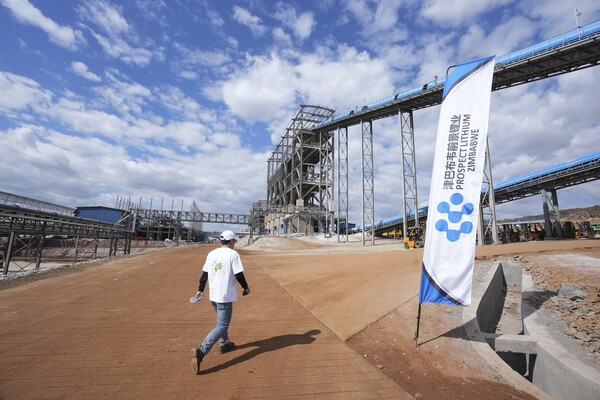
One of the country’s leading lithium producers, Prospect Lithium Zimbabwe (PLZ), is ramping up its Corporate Social Responsibility (CSR) initiatives, underlining its commitment to infrastructure development and community upliftment.

By Ryan Chigoche

This was a major highlight of the recent media tour of the company’s operations, where PLZ also showcased progress on its soon-to-be-completed US$400 million lithium sulphate plant.

In recent years, CSR has become a cornerstone of responsible mining, ensuring that companies create lasting benefits for the communities where they operate. Through its ongoing initiatives, PLZ has demonstrated that its operations benefit not only the national economy but also grassroots communities in Goromonzi, where the company is based.

The media tour spotlighted PLZ’s road construction project, which complements government infrastructure development efforts. The expansion of the Goromonzi road has improved connectivity, easing the transportation of goods and people. This development is expected to boost the district’s appeal to investors and drive further economic growth.

“The road network construction in Goromonzi District is a testament to our commitment to improving infrastructure and supporting economic development,” said Yu Long, PLZ’s ESG Director. “We believe that this investment will have a lasting impact on the local community and contribute to Zimbabwe’s economic growth.”

With the year drawing to a close, PLZ Public Relations Manager Patience Chizodza confirmed that the company is on track to complete its 4km target for the project, reaffirming PLZ’s commitment to infrastructure development.

“It is one of PLZ’s elite projects, which began in 2024. We did 4km from Majuru Growth Point to Kubatsirana Clinic. When that was done, we started on the next 4km, which we are currently doing from Majuru Growth Point to Arda Farm. This project will be completed this year. We are hoping that we will be able to do the next 4km again next year, 2026, until the whole road has been tarred. We are huge on infrastructure development as PLZ,” Chizodza said.

The tour also featured PLZ’s women’s empowerment program, launched in December 2024 under the banner “Weaving the Future.” The initiative is aimed at improving the livelihoods of local women, and it has already yielded significant results.

Felistas Rutanhira, the group’s leader, said, “We are thrilled by what PLZ has done for us, our lives have improved dramatically. We are now well known, and we receive new sewing orders on a daily basis.”

Since beginning operations in 2022, PLZ has invested more than US$3 million into various CSR projects in Goromonzi.

These include the construction of classroom blocks and staff quarters at Vhuta Primary School. Vhuta and other schools, including Ivordale, Musirikwi, Belmont, and Mwanza, have also benefited from new furniture and textbooks.

PLZ has additionally embarked on its ongoing “energy equity” project, aimed at improving access to reliable power for surrounding communities.

Arcadia Mine Launches Continent’s First Lithium Sulphate Plant, Ahead of Export Ban

0

In a landmark development for Zimbabwe’s mining sector, Huayou Cobalt’s subsidiary, Arcadia Technology Zimbabwe (ATZ), is in the final stages of constructing a groundbreaking US$400 million lithium sulphate processing plant at its Arcadia Mine, strategically positioning the operation ahead of the government’s January 2027 ban on lithium concentrate exports, Mining Zimbabwe can report.

By Rudairo Mapuranga

The state-of-the-art facility, hailed as the first of its kind in Africa and only the third globally, represents the most significant step yet in Zimbabwe’s push to move beyond mere extraction and capture greater value from its mineral resources.

The project has been represented as a direct physical manifestation of the National Development Strategy 1 (NDS1) and the government’s broader policy of beneficiation, which seeks to transform the nation from a raw material exporter into a manufacturer of semi-processed and finished goods.

On Thursday, officials from Huayou’s local subsidiaries, Prospect Lithium Zimbabwe (PLZ) and Arcadia Lithium Zimbabwe (ATZ), led a media tour through the sprawling plant. The tour showcased the advanced technology that will transform spodumene concentrate into 50,000 tonnes of battery-grade lithium sulphate annually—a critical precursor chemical for the lithium-ion batteries that power electric vehicles and renewable energy storage systems globally.

Mr. Henry Zhu, ATZ’s Managing Director, framed the massive investment as a direct and proactive response to national policy and a boon for the local economy.

“The lithium sulphate plant is a game-changer for our economy,” Zhu stated. “Not only has this plant created jobs and stimulated local economic activity, but it also showcases Zimbabwe’s potential as a major player in the global lithium market.”

According to Yu Long, Prospect Lithium Zimbabwe’s ESG Director, the economic implications are already being felt. Beyond the capital investment, the plant’s construction has created numerous employment opportunities for residents of Goromonzi District, with further hiring expected upon operational launch.

He said the development is complemented by a significant company-funded road construction project, which has improved connectivity and is set to enhance the district’s attractiveness to more investors.

“The road network construction in Goromonzi District is a testament to our commitment to improving infrastructure and supporting economic development,” said Yu Long, PLZ’s ESG Director. “We believe that this investment will have a lasting impact on the local community and contribute to Zimbabwe’s economic growth.”

The launch solidifies the Arcadia Mine’s status as a cornerstone of Zimbabwe’s lithium future. This is further bolstered by PLZ’s extensive corporate social responsibility (CSR) initiatives, which have seen over US$3 million invested in the district since 2022. The tour showcased the progress of the women’s empowerment project “Weaving the Future”, launched in December 2024. Group leader Felistas Rutanhira attested to its impact: “We are thrilled by what PLZ has done for us, our lives have improved dramatically.”

Other initiatives include constructing classroom blocks at Vhuta Primary School, providing furniture and textbooks to multiple schools, an “energy equity” project for youth entrepreneurs, and a skills development program training young people in welding, electrical work, and forklift driving to combat drug abuse, with successful graduates absorbed into the workforce. A new police base has also been built in Ward 13 to curb crime.

The project is amplified by the global reach of its parent company, Huayou Cobalt. Its recent accession to China’s prestigious Green and Low-carbon Advanced Technology Innovation Platform directly links Zimbabwe’s lithium output to the highest international environmental and technological standards, ensuring the product is destined for the world’s leading electric vehicle manufacturers.

Investment, Sustainable Mining Twins, Mtisi

0

The Deputy Director of the Zimbabwe Environmental Law Organisation (ZELO), Shamiso Mtisi, has said investment and sustainable development in the mining sector are inseparable “twins” that must work together for the benefit of the economy, communities, and the environment, Mining Zimbabwe can report.

By Rudairo Mapuranga

Speaking at the Zimbabwe Alternative Mining Indaba (ZAMI), Mtisi said while mining companies often showcase their corporate social responsibility (CSR) projects like building schools, it is crucial to create platforms for communities to voice their concerns over environmental degradation and pollution.

“Definitely, mining companies will be able to share their corporate social responsibility activities and programmes. But at the same time, communities will also share some of their experiences when it comes to some of the areas where there is need to improve,” Mtisi said.

“When it comes to environmental degradation, pollution of rivers and also issues to do with how mining companies can plough back into the communities… that’s quite important. So those discussions will definitely help us in shaping different policies and laws in the country.”

He revealed that ZELO has been working closely with the Ministry of Mines to refine the long-awaited Mines and Minerals Amendment Bill. The ZAMI platform, he said, is designed to help investors understand the expectations of communities for responsible investment.

“Zimbabwe is definitely in need of responsible investments and there is need for all stakeholders to advance responsible investments discussions in the country,” Mtisi stated, endorsing the government’s “Zimbabwe is open for business” mantra while stressing the need for sustainability.

Addressing the link between profitability and responsibility, Mtisi argued that they are not mutually exclusive.

“If you mine sustainably, you are likely to also generate good profits, you will also be improving the lives of people, you will also be protecting the environment as a miner. So I take investments, sustainable development as twins, things that move together,” he said.

With many new businesses entering the country, Mtisi emphasised the urgency of encouraging responsible and sustainable practices in the mining sector.

On the perennial issue of illegal mining, Mtisi called for a nuanced approach, suggesting a move towards formalisation. He proposed categorising artisanal miners and providing them with the necessary support to operate within the law.

“For us as an organisation, formalisation of artisanal mining is very, very key… through categorising different levels of payments or certificates that can be given to individuals or cooperatives,” he said.

“Then the other thing is to provide the artisanal miners or small-scale miners with equipment, finance, and other supportive infrastructure… For us, we believe that it’s important for our people to mine, and mine responsibly, whether as individuals, as cooperatives, but also generating income and creating jobs for themselves. That’s quite important, but it has all to be done responsibly.”