Home Blog Page 561

ZCDC terminates De Pretto’s contract

0

The Zimbabwe Consolidated Diamond Company (ZCDC) has terminated the employment contract for its acting chief executive Roberto De Pretto.

De Pretto has been acting chief executive since May 16, 2019 following the ouster of Moris Mpofu over abuse of office allegations.

Mpofu was fired alongside six other executives as part of measures to refocus the business in light of the “prevailing operating environment”.

Since the departure of Mpofu, the state-owned diamond miner has been searching for a new chief executive.

A well-placed source at ZCDC told Business Times that De Pretto’s contract was terminated last week.

“De Pretto is no longer acting chief executive for ZCDC and he left on Friday last week,” the source said. Contacted for comment De Pretto confirmed saying: “Affirmative.”

ZCDC spokesperson Sugar Chagonda had promised to respond but could not do so by the time of going for print.

Business Times is informed that the search for a new chief executive has since been completed. ZCDC was established in 2015 after government consolidated all diamond operations in Marange to stem loopholes amid claims diamond proceeds were not reaching Treasury coffers.

ZCDC has operations in Chiadzwa and in Chimanimani in Manicaland Province.

It is conducting extensive exploration and evaluation across Zimbabwe. The debt-ridden state-controlled enterprise has been haunted by scandals and under-performance ever since its formation leading to perennial losses of more than US$50m in the period between April 2015 and May 2016 alone.

According to the AMG Global audit report on the diamond firm, the company has been operating at a loss since its inception in 2015.

In May, the ZCDC board resigned en masse in alleged protest over the government’s decision to award part of Chiadzwa diamond fields to the Chinese firm, Anjin, citing lack of consultation.

The former board consisted of Killian Ukama (chairman), Ellah Muchemwa, Elizabeth Nerwande Chibanda, Zenzo Nsimbi, Esau Chiadzwa, Alexander Mukwekwezeke, and Niya Mtombeni.

At its peak in 2012, Zimbabwe produced 12m carats, but in 2018 production was low as 2.8m carats.

The government is amending its earlier decree of prescribing a single diamond producer in Marange following the return of the Chinese government-backed Anjin and the coming on board of Russian producer, Alrosa.

Zimbabwe is believed to have the potential to account for 25% of the global diamond production and it is targeting to expand its diamond industry to 10 million carats by 2023_Business Times

Gold deliveries to Fidelity drop 22 percent in seven months

0

GOLD deliveries to Fidelity Printers and Refiners (FPR) dropped by 22 percent to 12,018 tonnes in the first seven months of the year compared to 15,4 tonnes during the same period last year.

The latest data from FPR, the country’s sole gold buying unit under the purview of the Reserve Bank of Zimbabwe, indicates that the bulk of the deliveries during the period under review came from small-scale miners who delivered 7,128 tonnes while large scale producers accounted for 4,89 tonnes.

Last year, the small-scale mining sector contributed over 60 percent of the yellow metal that was delivered to the formal market.

Small-scale miners, despite accounting for the bulk of the gold delivered to the formal market, have lamented a number of challenges bedeviling the sector.

These include delays in payment for gold deliveries to FPR as well as fuel shortages.

Meanwhile, FPR has started paying out small-scale miners all arrears for the yellow metal they delivered.

This follows last week’s assurance to the Zimbabwe Miners Federation (ZMF) by the Reserve Bank of Zimbabwe that small-scale miners would start receiving their dues this week.

“We are pleased to announce that FPR gold buying centres began paying out all outstanding arrears for gold bullion to them by Tuesday the 1st of September 2020.

“This set up of prompt payment by FPR after receiving bullion shall be the order of the day going forward,” said ZMF in an internal memo to its members.

ZMF, the mother body of all small-scale miners in the country, had received concerns from its members over delays by FPR to effect payments for gold deliveries.

The gold buying agent attributed the delays in settling the gold payments to shortage of foreign currency following the outbreak of the Covid-19 pandemic which has seen restrictions on international flights that transport the hard currency into the country.

The Chronicle

Outrage as power-hungry Zimbabwe allows coal exploration in biggest game reserve

0

In its rush to develop new coal mines to end its power crisis, the Zimbabwe government is handing out concessions to miners in conservation areas, outraged environmentalists say.

Conservationists in Hwange say that the Zimbabwe government may have granted concessions to two Chinese companies allowing them to explore for coal inside the Hwange National Park, the country’s biggest game reserve.

The Bhejane Trust, which works with Zimbabwe’s National Parks and Wildlife Management Authority in conservation in the Hwange area, says two concessions given to Afrochine Energy and the Zimbabwe Zhongxin Coal Mining Group are located inside park and safari areas. Bhejane says it made this discovery after its monitoring teams intercepted the two companies’ workers conducting exploratory drilling in the area.

“We followed up on this and discovered the Government has allocated two coal mining concessions in the middle of Sinamatella and Robins. The mining concessions are Special Grants which apparently can only be issued by the President, and both been granted to Chinese companies,” Bhejane said in a statement Tuesday.

Afrochine Energy is the local unit of Tsingshan, the global stainless steel company that has recently been allowed grants to prospect for both coal and lithium in Zimbabwe. Tsingshan’s Afrochine already runs a ferrochrome plant at Selous.

Last year, energy regulator the Zimbabwe Energy Regulatory Authority (ZERA) announced a new joint venture with Zhongxin Electrical Energy for coal exploration. The license, issued on November 22 in 2019, allows the firm to operate for 25 years.

SustiGlobal, a company contracted to do an environment impact assessment for the projects, has since sent Bhejane and other conservation groups a questionnaire on their response to the claims. One of the forms, Bhejane says, shows that Afrochine’s concession SG7263 incorporates Deteema Dam and Masuma Dam. Zhongxin holds the other concession, SG 5756.

“However, they have started exploratory work in the Park, so it is not sure if an EIA permit has been granted or not,” Bhejani says.

Power hungry

Desperate for power supply, Zimbabwe has been pushing for more coal production. In August, President Emmerson Mnangagwa toured several of the new Hwange projects. Combined, all the planned new coal projects could add up to 3000MW of power by 2023, the Ministry of Mines says.

[Click to read: The companies still digging Zimbabwean coal despite global campaign]

Zhongxin plans to build a 300MW power plant and is currently building a coke plant.

Most of the new projects are outside reserve areas, but environmentalists and community groups say some of them may be placing conservation and local communities at risk.

Earlier this year, villagers in Lukosi in Hwange wrote to the Hwange Rural District Council to complain about air and land pollution caused by Zhongxin trucks along Nekabandama road. The community says pollution has put homes, schools, clinics, and irrigation schemes at risk. Communities around Deka River have also protested about the pollution of water by mining companies upstream.

A petition by the community said: “We beseech the Hwange Rural District Council to exercise its constitutional role and ensure the company engages in dust suppression, secure sustainable development through surfacing of the road leading to Zimbabwe Zhongxin Coking Company plant in the shortest possible time and ensure that the company fulfills its obligation to the community as per their pledge during consultations with the community.”


NewZwire

Chinese invade Hwange National Park for coal mining

0

TWO Chinese companies are reportedly exploring for coal in the protected Hwange National Park, raising concerns from wildlife activists.

Zimbabwe Parks and Wildlife Management Authority (Zimparks) rangers reportedly arrested some Chinese nationals inside the game park after finding doing some drilling.

The parks rangers handed them over to police only to be released and returned to the site with a permit allowing them to dig.

A statement from one of the leading wildlife conservation organisations, Bhejane Trust, stated that SustiGlobal and Zimbabwe Zhongxin Coal Mining Group are mining in Sinamatela and Robins Camp between Hwange and Victoria Falls.

Bhejane Trust, which confirmed authoring the statement, said SustiGlobal had circulated questionnaires seeking the views of concerned stakeholders about establishing a mine in the game park.

“Our Rhino monitoring team recently found some Chinese in Hwange National Park. We managed to ascertain they were drilling core samples for coal. Zimparks arrested them and took them to police.

“However, they soon reappeared with a permit giving them the right to carry on in the Park with exploratory drilling,” said Bhejane Trust which is based in Victoria Falls.

The trust said it was worried because the exploration work was being done without any consultation, as even Zimparks area manager was not aware of the goings-on.

“They seem to feel they have a right to go wherever they like to. We followed up on this and discovered the Government has allocated two coal mining concessions in the middle of Sinamatela and Robins Camp.

“The mining concessions are special grants which apparently can only be issued by the President and both have been granted to Chinese companies. A company called SustiGlobal has subsequently sent us stakeholders’ questionnaire forms.

“One map shows the coal mining concession SG7263 that incorporates Deteema Dam and Masuma Dam out of a company called Afrochine Energy of the Tsingashan Group of China.

“The other concession SG5756 granted to the Zimbabwe Zhongxin Coal Mining Group has also contracted SustiGlobal to do an EIA again with an undated stakeholders’ questionnaire and again to cover initial exploratory drilling and opening of roads, building camps.

“However, they have started exploratory work in the park,” Bhejane Trust added.

The questionnaires are reportedly for an environmental impact assessment for the concessions but only to cover the initial exploratory drilling and opening of roads, building camps.

Bhejane Trust said their findings were that the concessions were granted late last year and was not sure if the EIA certificate had been granted.

“We are not certain to whom else the questionnaire have been sent and the questionnaires are not dated. Bhejane Trust has responded to the questionnaire and waits to hear back from SustiGlobal. We will be ready to support Zimparks where required,” read the statement.

The issue has raised emotions in Hwange where residents, tour operators, and wildlife activists have vowed to block any mining in the national parks to protect wildlife_NewZimbabwe

Several coal mines operated by Chinese have opened in Hwange around the Hwange Colliery Company concession over the years.

Striving for green recovery, EU adds lithium to critical materials list

0

The European Union needs to diversify its sources of materials, ranging from silicon to rare earths, the Commission said, an issue highlighted after global supply chains were disrupted when the COVID-19 pandemic struck.

The EU executive, which first drew up a list of critical raw materials in 2011 in response to booming commodity prices, said it had added lithium, aluminium ore bauxite, titanium – used in aerospace and for orthopaedic implants, and strontium.

Helium was dropped from the list of now 30 materials.

Lithium was highlighted by the Commission as essential for a shift to environmentally-friendly transport and energy storage. These fields mean Europe would need up to 18 times more lithium by 2030 and 60 times more by 2050, Commission Vice President Maros Sefcovic said in a statement.

The bloc aims to cut its net greenhouse gas emissions to zero by 2050.

“We cannot allow to replace current reliance on fossil fuels with dependency on critical raw materials. This has been magnified by the coronavirus disruptions in our strategic value chains,” Sefcovic said.

To this end, the Commission aims to create a European raw materials alliance in the coming weeks, focusing first on a pressing need for rare earths and magnets, vital to renewable energy, defence and space.

It has also set goals to increase the EU’s recycling of critical materials, forge supply partnerships with Canada and African countries, and determine whether such materials can be mined in Europe.

The EU relies now for much supply on China, Turkey, South Africa, and, in some cases, single companies_Reuters

Nigeria says can tap mineral wealth despite covid-19, unrest

0

Nigeria aims to have 50 mines in operation by 2023 and can make up for time lost because of the impact of Covid-19 on development of the nascent sector, the country’s mining minister said in an interview.

Africa’s largest oil producer is banking on mining to diversify its income and revive its finances following a collapse in crude prices, which earlier this year hit two-decade lows.

“The pandemic has slowed things down, but we can still catch up,” Minister of Mines Olamilekan Adegbite said.

Nigeria hopes mining will grow tenfold in five years to account for 3% of the economy and that Nigeria can process as well as mine, which generates increased profits compared with shipping raw minerals.

NIGERIA AIMS TO MOSTLY PROCESS BARITE, USED IN DRILLING FOR OIL AND GAS, AND SELL IT TO COUNTRIES SUCH AS GHANA AND SOUTH AFRICA

In particular, he said Nigeria aimed to process barite, used in drilling for oil and gas, and sell it to countries such as Ghana and South Africa, which need the mineral to exploit new oil discoveries.

In common with other African countries, Nigeria is also seeking to formalise artisanal mining, which could generate tax and royalties from gold.

Adegbite said Nigeria was encouraging small-scale miners to form cooperatives and sell at government-buying centres, where prices are closer to global values than those illegal buyers offer.

While oil prices have been weak because of the impact of the pandemic on movement and industry, which has curbed fuel demand, gold in August hit record highs.

A problem for Nigeria is that its gold lies mostly in the northwest, where, humanitarian organisations say it has helped to fuel violence attributed to armed groups.

Adegbite said security had improved and buying centres would stop artisanal miners dealing with criminals: “By weaning them off the illegal people and (making) sure they sell to government-approved centres, you take off that linkage.”

He also expects more commercial gold miners to be attracted once Thor Explorations’s gold mine in Nigeria’s southwest starts producing. Its first gold is expected in the second quarter of 2021.

Malte Liewerscheidt, vice president of London-based risk consultancy Teneo Intelligence, said the plans were likely to be undermined by “structural challenges pertaining to insecurity and infrastructure deficiencies”_Reuters

Cobalt prices surge on electronics boom, tight supply

0

Benchmark Mineral Intelligence reports cobalt hydroxide prices surged by more than 22% to more than $26,000 per tonne in August from July, while cobalt sulphate prices jumped 18.5% to average over $8,000 a tonne on the back of supply disruption and strong demand from the consumer electronics sector.

The London-based battery supply chain and price discovery agency reports the price rally came despite lacklustre demand from the electric vehicle industry throughout the month.

Benchmark says the soft downstream environment was most notable in top Chinese cobalt refiner GEM’s announcement that its NCM (nickel-cobalt-manganese) battery precursor shipments fell by more than 50% during the first half of the year:

GEM has adjusted its output increasingly towards consumer electronics, the main consuming market in the first half of the year.

The uptick in cobalt demand from the consumer electronics industry this year has been driven by increased laptop and tablet sales, linked to the rise of remote working, and rising penetration rates for 5G enabled smart phones, which require larger batteries typically, so contain greater volumes of cobalt on a per unit basis.

While mine output has been largely undisturbed in Congo – responsible for two-thirds of global cobalt production – during covid-19, most of the material is shipped through the South African port of Durban, which had been in lockdown for extended periods earlier this year.

Mining.com

Danakali flags improvements to Eritrea potash project

0

Australia’s Danakali (ASX, LON:DNK) said on Wednesday it has completed an updated process plant and infrastructure study for its Colluli potash project in Eritrea, which has identified optimization opportunities for the proposed mine.

The Perth-based company, which has completed phase two of engineering, procurement and construction management (EPCM) work at Colluli, said main potential improvements are related to the environmental and economic aspects of the project.

Upgrades include a beach well intake for the water intake treatment area, which has a lower environmental impact and was found preferable to a subsea intake pipeline.

A third-party review of the work by DRA Global found the beach well intake minimised risk to subsea and coastal habitats by avoiding onshore pipeline construction and offshore installation.

Another optimization was dry harvesting from back end recovery ponds, resulting in a less complex processing design.

A THIRD-PARTY REVIEW OF THE WORK BY DRA GLOBAL FOUND THE BEACH WELL INTAKE MINIMISED RISK TO SUBSEA AND COASTAL HABITAT

Danakali has also selected RA International as camp provider which will give the project a fit for purpose manufactured camp.

Chief executive officer Niels Wage said the assessment provides “increased certainty and understanding” of the project and its schedule.

“The detail review process again validates the robustness of the project and previous technical studies,” he said.

“It is also pleasing to see that a number of optimisation opportunities in the process are established that will further de-risk the project,” Wage added.

Game changer

Colluli, a 50:50 joint venture between Danakali and the Eritrean National Mining Corporation (ENAMCO), is on track for production in 2022.

In the initial phase of operations, the mine would produce more than 472,000 tonnes a year of sulphate of potash (SOP), a premium grade fertilizer.

Annual output could rise to almost 944,000 tonnes if Danakali decides to go ahead with a second phase of development, as the project has a possible 200-year plus mine-life.

The company will now begin phase three of construction at the project, which has been called “a game-changer” for the East African nation’s economy.

Danakali’s further de-risk of Colluli coincides with the move towards diplomatic relations between the once feuding countries of Eritrea and Ethiopia, which officially declared peace in July 2018.

Until that year, Eritrea was on the United Nations’ sanctions list.

Mining.com

Ivanhoe expects first copper at Kakula in less than a year

0

Canada’s Ivanhoe Mines (TSX:IVN) expects to begin producing copper at its Kakula project in the Democratic Republic of Congo in less than a year, as total underground development to date has surpassed the 20 km mark – about 6 km ahead of schedule.

Kakula, the first mine planned at the Kamoa-Kakula concession, is initially forecast to generate 3.8 million tonnes of ore a year at an average feed grade “well in excess of 6% copper” over the first five years of operation.

THE MINER AIMS TO ISSUE AN INDEPENDENT DEFINITIVE FEASIBILITY STUDY FOR KAKULA MINE LATER THIS MONTH

The Vancouver-based miner aims to issue an independent definitive feasibility study for the development of the six-million-tonne-a-year Kakula mine later this month.

It also expects to issue a prefeasibility study, including mining the 1.6-million tonnes a year from the Kansoko mine, in order to “take full advantage of an expanded plant capacity of 7.6-million tonnes a year at Kakula.”

Ivanhoe’s co-chairperson Robert Friedland, who made his fortune from the Voisey’s Bay nickel project in Canada in the 1990s, has been working on Kamoa-Kakula for ten years.

The mining veteran believes the project, being developed in partnership with China’s Zijin Mining Group, will become the world’s second-largest copper mine.

World’s “greenest” copper

Ivanhoe said it will soon announce the appointment of an environmental consultant to audit Kamoa-Kakula’s greenhouse-gas intensity metrics.

The firm’s report would provide environmental, social and governance investors with independent and transparent verification of the project’s contribution towards Ivanhoe’s goal of producing the world’s greenest copper, the miner said.

It also noted it was in “detailed discussions with a number of parties” about marketing and smelting its copper concentrates.

Last month, the company struck a strategic partnership with China Nonferrous Metal Mining (CNMC) to explore opportunities, including exploration and smelting, in Africa.

In January, CNMC opened Congo’s first large-scale copper smelter, the Lualaba Copper Smelter, 45km from the Kamoa-Kakula copper joint venture in the country’s southern copperbelt.

Kamoa-Kakula is a strategic partnership between Ivanhoe Mines (39.6%), Zijin Mining Group (39.6%), Crystal River Global Limited (0.8%) and the DRC government (20%).

The company is exploring for new copper discoveries on its wholly-owned Western Foreland exploration licenses, adjacent to the Kamoa-Kakula mining license.

Ivanhoe is also advancing the Platreef palladium-platinum-nickel-copper-gold-rhodium discovery in South Africa and upgrading its historic Kipushi zinc-copper-silver-lead-germanium mine, also in the DRC_Mining.com

Esigodini artisanal gold miner dies in shaft collapse

0

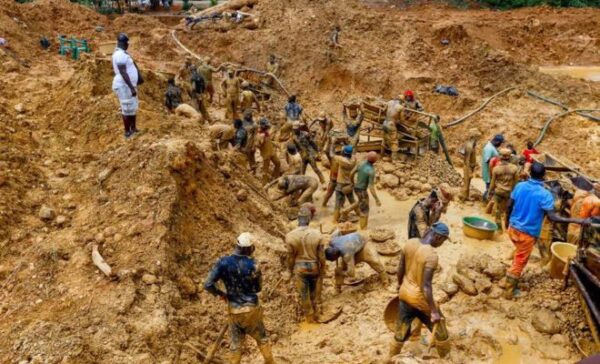
AN illegal gold panner died while his counterpart sustained injuries after a shaft they were working in collapsed on them at a mine in Esigodini.

Matabeleland South provincial police spokesperson Chief Inspector Philisani Ndebele confirmed the incident which occurred on Monday at around 4PM in Falcon Mine area.

He said Mzingaye Talent Mafohla (35) died on Tuesday while admitted to the United Bulawayo Hospitals.

“I can confirm that we recorded a sudden death case where an illegal gold panner died while his counterpart sustained injuries after a shaft they were working in collapsed. Mzingaye Talent Mafohla and his mate were illegally panning for gold in a 12-meter-deep shaft when it collapsed and buried them.

“They were rescued by villagers who dug them out while they were both still alive. Mafohla who was in a critical state was rushed to UBH where he died on the following day while his counterpart was treated and discharged at the Gwanda Provincial Hospital,” he said.

Chief Insp Ndebele urged members of the public to desist from engaging in illegal panning activities as they were putting their lives in danger in addition to violating the law.

He said people that wanted to engage in mining activities had to formalise their operations and follow the correct procedures in order to acquire necessary papers before operating.

“It’s sad that we continue to record a number of mine accidents as a result of illegal mining activities which are rampant in the province.

“If people want to engage in mining, they should formalise their operations. By engaging in illegal mining, they will not only be committing an offence but they will also be putting their lives at risk as they will be operating without necessary equipment and protective clothing.

“Some of these illegal miners operate in the early hours of the days in order to evade police not knowing that they will be risking their lives,” he said.


The Chronicle