Home Blog Page 566

Africa needs more private investment in energy – President Mnangagwa

0

Africa is in need of increased private investment in its energy sector which is a bridge to modernisation and industrialisation, President Emmerson Mnangagwa said on Tuesday.

Speaking at panel discussion at the Africa Business Forum organised by the United Nations Economic Commission for Africa (Uneca) in Addis Ababa, he said energy was a key enabler for African economies to diversify and move from being producers and exporters of primary goods.

“Because most of our economies are primary economies, we need to move from that and process our goods, value add our goods and that cannot be achieved until and unless we have energy,” President Mnangagwa told the forum.

“It is critically important that we begin at the correct level which is (power) generation.”

President Mnangagwa is in Addis Ababa where he was attending the 33rd African Heads of State and Government Summit which ended on Monday.

He said while African economies were not all at the same level, the continent’s leadership was agreed on a vision to create a prosperous Africa.

“The question of vision, will power, I do not think we have a deficit in that area,” he said.

Sharing of ideas, he said, was as a result critical in ensuring coherence in coming up with a road map to achieving energy self sufficiency.

He welcomed investors to explore investment in the energy sector in Zimbabwe, which is currently battling a chronic deficit.

Power shortages were impacting on the country’s ability to fully produce in agriculture, exploit its vast mineral resources and value-add its resources.

“For the last two decades, our industry, our manufacturing sector collapsed as a result of the sanctions which we had. But now to revive it, we need energy,” he said.

Uneca Executive Secretary, Vera Songwe said Africa had over the years made progress in improving access to energy, with some countries now at over 50 percent.

In light of climate change which has seriously hit energy production in some countries, she said it was critical for the continent to diversify its energy mix and focus on clean energy.

“We need to make sure that the regulatory environment is good,” she said, adding investors must explore the continent as it currently offered the highest return of between 10 and 12 percent in energy investments.

Investors at the forum, which ran under the theme, “Investing in people, planet and prosperity,” stressed the need for African governments to ensure stability in their economies, and share risk with investors by also taking up private/public partnerships.
New Ziana

1 000 ex-Zimasco workers face eviction

0

MORE than 1 000 former Zimasco (Pvt) Ltd workers in Shurugwi face eviction from company houses after their ex-employer reneged on a pledge to sell the houses to them.

The mining company has since served the former workers with eviction notices.

The fight over ownership of the dilapidated houses, some of which were built in the 1950s, has seen Zimasco also increasing rentals from $95 to $503 per month, a move tenants say is well calculated to push them out after failing to pay the new rentals.

Mr. Jaison Moyo, who chairs the Chrome Mine Residents’ Association (CMRA) said more than 1 000 families face eviction.

“From 2014, the company has been retrenching and most of the people occupying these houses are retrenched workers. We were promised houses as retrenchment packages and we signed agreements of sale to that effect,” he said. 

Mr. Moyo said the former workers were therefore shocked when management changed goalposts and said the houses were not for sale.  

 He said the company had agreed to sell the houses for an average of $4 700 per unit.

The company has however announced that it is working on turnaround strategies that include disposing of its houses and other assets.

Documents on the proposed turnaround strategies indicate that Zimasco intends to sell absolute inventory and residential properties. 

The company said it is working on restructuring and re-organising through utilising idle assets and disposing of non-core assets. 

These include residential properties in Harare, Kwekwe, Shurugwi, and Mutorashanga.

It also plans to lease out its facilities such as hospitals, clubs and guest houses.

According to a letter written to tenants from the manpower services manager, Mr. Fungai Manyau, Zimasco, has since increased rentals.

“Your new rental fees shall be $503,38 per month and that is effective March 1, 2020. The rental shall be reviewed periodically going forward taking into account inflation and cost trends,” reads part of the letter to the sitting tenants signed by Mr. Manyau.

Mr. Jonathan Javangwe, coordinator of the CMRA said this was a well-calculated move to evict the former employees for failing to pay rentals.

“We haven’t been employed for over six years and some of us are still waiting for our retrenchment packages. Where do they expect us to get the money for rentals from? They are looking at ways of legalising our evictions,” he said. 

Mr. Javangwe said the company attempted to evict them in 2018 and the then Provincial Affairs Minister, Cde Owen Ncube, intervened and stopped the evictions.

He said some tenants had spent money on electrification of the houses on the understanding that they were going to buy them.

“After such an investment it is unfair for the company to renege on the agreement to sell the houses to sitting tenants,” said Mr. Javangwe.

Asked to comment, Zimasco general manager in charge of marketing and administration, Ms. Clara Sadomba, said the matter was under judicial consideration.

“Thank you for your email below. I have consulted internally on this issue and Zimasco, therefore, needs to advise in response as follows: Please be advised that the matter to which you are referring is sub-judice as it is under judicial consideration at the High Court.”


The Chronicle

Hwange Colliery suspended from London Stock Exchange

0

Ailing Hwange Colliery Company Limited (HCCL) has announced its voluntary suspension from the London Stock Exchange (LSE) with effect from Monday this week.

The temporary suspension of the company on the LSE comes after the colliery was suspended in 2018 from trading on the Zimbabwe Stock Exchange (ZSE) and the Johannesburg Stock Exchange (JSE) after it adopted a reconstruction path.

“Hwange wishes to advise shareholders that following the suspension of trade on the JSE that has been in force since November 2018, it has successfully requested that the FCA (Financial Conduct Authority) in the UK suspend its listing on the UK Official List, which suspension also suspends Hwange’s trading on the London Stock Exchange. 

“The request for suspension was approved by the FCA on 10 February 2020, with the suspension effective from 10 February 2020. Shareholders will be updated in due course,” it said in a statement issued on behalf of the board by a JSE sponsor, Sasfin Capital, a division of Sasfin Bank Limited.

A statement released by RNS, the news service for LSE, also confirmed the development.

“The Financial Conduct Authority temporarily suspends the securities set out below from the official list effective from 10 February 2020 at the request of the company,” reads the statement.

The suspension from ZSE and JSE followed the placement of the coal miner under reconstruction by its major shareholder, the Government, to save it from liquidation. 

The decision was done in terms of the Reconstruction of State-indebted Insolvent Companies Act.

According to the Reconstruction Act, every disposition of the property, including rights of action of the company and every transfer of shares or alteration in the status of its members made after the commencement of the reconstruction, shall unless the administrator otherwise orders, be void.

HCCL’s suspension on the ZSE is for the duration of the administration. The government has justified its decision to place the ailing coal producer under reconstruction, saying as a majority shareholder, it had noted that there was no sense in continuing with the business. One of the major reasons was that the company was operating on a gross loss with the cost of production alone, before factoring other overheads, outweighing sales revenue.

Further compounding to its placement under reconstruction at the time was a US$42 million debt to Mota Engil. 

Meanwhile, HCCL in the first half year of 2019 posted a profit of $3,5 million recovering from a loss of $23 million recorded in the previous year.

The troubled firm had been in the red for successive years as it struggled with viability and corporate governance issues and constant changes in management has not helped the situation. 


The Chronicle

Zim women arrested with R1,2mil worth of explosives in SA

0

Organised Crime Investigation unit of South Africa, the Hawks, arrested two Zimbabwean women for smuggling contraband of explosives with an estimated street value of R1, 2million.

The suspects aged 27 and 41, whose names are yet to be released, were arrested on Wednesday in Thohoyandou under Limpopo province as they were about to board a bus to Johannesburg.

Hawks spokesperson for Limpopo, Captain Matimba Maluleke said the women would soon appear in court on charges of unlawful possession of explosives and contravention of the Immigration Act.

The official said the duo was arrested following a tip-off.

“The team received a tip-off about two women from Zimbabwe who were in possession of explosives destined for Gauteng,” said Capt Maluleke.

“The two people matching the description of the suspects were spotted in one of the lodges in Thohoyandou and their movements were constantly monitored.

“The suspects were arrested as they were about to board a bus to Gauteng.  

Explosives, emulsion blasting cartridges and case fuses with the estimated street value of over R1.2 Million were seized”.

The smuggling of explosives into South Africa through Beitbridge gas become a perennial headache for border authorities.

This paper is reliably informed that the explosives are used mainly for Automated Teller Machines (ATM) bombings and for blasting during illegal mining activities which is rampant around Gauteng and Free State provinces.

More than 50 suspects have been arrested between 2015 and 2019 while smuggling similar contraband between the two countries.

JUST IN: Mines Minister Winston Chitando jailed

0

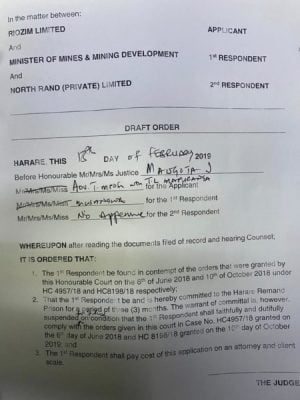
Justice David Mangota has this afternoon jailed mines minister, Winston Chitando, and committed him to Harare Remand Prison to serve three-months for disobeying two court orders issued by Justice Munangati-Manongwa to mining conglomerate, RioZim!

Chitando arrested

https://t.co/7ObPJkormO

More to follow

Brief information on the Caesium mineral, found at Acardia Mine

0

Prospect Resources recently discovered a much sought after chemical element or metal used mainly in high temperature or high-pressure oil and gas drilling, Caesium at Acardia Lithium. We did a bit a research to find out more about the mineral and here is brief info on the mineral.

Caesium is a chemical element with the symbol Cs and atomic number 55. It is a soft, silvery-golden alkali metal with a melting point of 28.5 °C (83.3 °F), which makes it one of only five elemental metals that are liquid at or near room temperature. Caesium has physical and chemical properties similar to those of rubidium and potassium. The most reactive of all metals, it is pyrophoric and reacts with water even at −116 °C (−177 °F). It is the least electronegative element, with a value of 0.79 on the Pauling scale. It has only one stable isotope, caesium-133.

Caesium is mined mostly from pollucite, while the radioisotopes, especially cesium-137, a fission product, are extracted from waste produced by nuclear reactors.

Physical properties

Caesium is the softest element (it has a hardness of 0.2 Mohs). It is a very ductile, pale metal, which darkens in the presence of trace amounts of oxygen. When in the presence of mineral oil (where it is best kept during transport), it loses its metallic lustre and takes on a duller, grey appearance. It has a melting point of 28.5 °C (83.3 °F), making it one of the few elemental metals that are liquid near room temperature. Mercury is the only elemental metal with a known melting point lower than Caesium. In addition, the metal has a rather low boiling point, 641 °C (1,186 °F), the lowest of all metals other than mercury. Its compounds burn with a blue or violet color.

Production

Mining and refining pollucite ore is a selective process and is conducted on a smaller scale than for most other metals. The ore is crushed, hand-sorted, but not usually concentrated, and then ground. Caesium is then extracted from pollucite primarily by three methods: acid digestion, alkaline decomposition, and direct reduction.

In the acid digestion, the silicate pollucite rock is dissolved with strong acids, such as hydrochloric (HCl), sulfuric (H2SO4), hydrobromic (HBr), or hydrofluoric (HF) acids. With hydrochloric acid, a mixture of soluble chlorides is produced, and the insoluble chloride double salts of Caesium are precipitated as Caesium antimony chloride (Cs4SbCl7), Caesium iodine chloride (Cs2ICl), or Caesium Hexachlorocerate (Cs2(CeCl
6)
). After separation, the pure precipitated double salt is decomposed, and pure CsCl is precipitated by evaporating the water.

Applications

Petroleum exploration, Atomic clocks, SI Units, Electric power and electronics, Centrifugation fluids, Chemical and medical use, Nuclear and isotope applications.

About Prospect Resources

Prospect is an Australia listed firm involved in the exploration and mining of lithium, used to make electric vehicle batteries and in the ceramics industry.


Trafigura has a monopoly on the feruka fuel pipeline?

0

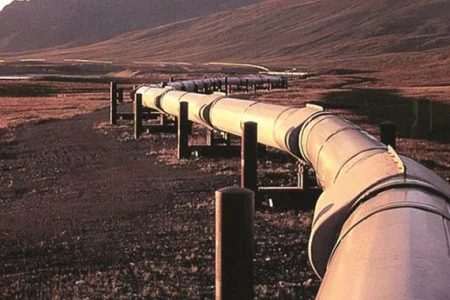
The agreement between the Zimbabwe Government through the National Oil Infrastructure Company and Trafigura does not permit the commodities firm to exceed 40% market share. This has resulted in capacity utilization of the pipeline averaging around 65% over the past six years.

It has also emerged that the Government owes Trafigura US$174 million for fuel not yet paid for under a US$224 million credit arrangement.

According to statistics obtained from the Ministry of Energy and Power Development according to an online news provider The Anchor, the country has over the past six years failed to fully utilise the Feruka pipeline which has an annual pump capacity of 2.16 billion litres. Yet Trafigura, the global commodities trader, has faced sustained accusations that it used Sakunda Holdings connections to ZANU PF to gain an unfair advantage in the supply of fuel to the country.

Figures indicate that in 2014, Trafigura used 39.44% of the pipeline after pumping 852 million litres of fuel while other players pumped 540 million litres leaving an unutilised gap of 35.56%.  In 2015, the company channeled 924 million litres through the pipeline while other oil companies pumped 605 million litres. This left the pipeline unutilised by 29%.

The trend continued in 2016 and 2017 with Trafigura pumping 717 million and 639 million respectively. Other players pumped 591 million litres and 535 million litres for the two years. In 2018, Trafigura put through 768 million litres while other players pumped 842 million litres. That year the pipeline was not utilized by 25%.

In 2019 Trafigura pumped 889 million litres of fuel through the pipeline while other players pumped 575 million litres of fuel leaving underutilised capacity of 32.22%.

Information obtained shows that in 2017, Trafigura was requested by the government to bring fuel into the country under a credit arrangement where Zimbabwe would receive 12 months of fuel, which would be paid over 24 months. This was meant to ease pressure on foreign currency shortages and give Government ample time to rebuild its export receivables over 18 months to cover the loans. Other players in the fuel sector have similar arrangements though structured at small-scale.

The deal was fulfilled but by December last year Trafigura was owed US$224 million which was to be paid against future government receivables as there was an anticipation of an economic boom. However because the economy failed to take off as anticipated, government agreed to pay Trafigura US$22.5 million monthly while the parties renegotiated the deal to give government breathing space as there were other needs for foreign currency.

“Of the US$224 million,  US$50 million was paid in cash by Afreximbank while it was agreed that the balance would be paid in US$3 million installments over five years such that government would have latitude to use $19 million foreign currency for the importation of maize and paying for imported electricity,” said a  source privy to the arrangement.

Zimbabwe needs US$110 million dollars monthly for fuel. Source: The Anchor

ZDAMWU demands a national minimum wage, urges workers to reject anything lower

0

The Zimbabwe Diamond and Allied Minerals Workers Union (ZDAMWU) through it’s General Council received a report back on the recent Tripartite Negotiating Forum (TNF) outcomes and processes where the Union General Secretary was part too.

1. Noted that working people of Zimbabwe have suffered immensely as wages have failed to keep pace with the inflationary trends.
2. The situation has worsened rendering it practically impossible for workers across all sectors to earn the current salaries and sustain their families or be able to go to work.

3. Reaffirmed its position for Mining Industry to use retention ratio of 55:45% as the best salary structure that benefits not only the employer but workers as well. alternative,
4. Ratified labour’s negotiating team’s position of a minimum wage of ZWL$ 3 800.00 -ZWL$4500.00 as proposed by the government and agreed by labor as relief measure while the government stabilises the currency within six months.
5. The minimum wage has to be implemented through the promulgation of a Statutory Instrument under the country’s labor laws.
6. Failure of which workers of the Industry would not receive or accept any insulting wage from the employer but instead will pursue its earlier position of embarking on collective Job Action

ZDAMWU noted with disappointment that although the industry is receiving it’s share after selling Minerals in foreign currency US dollar and as well as interbank rate exchange rate, they continue to pay their workers slavery wages.

The Union noted with concern the high levels of accidents that have been happening across all mines big and small and urge the ministry of mines to act urgently on inspection and certifying mines.

7. Corruption in the country has reached unprecedented levels and the union resolved to join other progressive organisations in fighting this scourges bleeding the country by naming and shaming all forms of corruption happening at the workplace.

In the meantime, the union will be on the ground, as usual, educating its members and seek to have their views on the form of action to be taken if the demand is not met.

Justice Chinhema
GENERAL
SECRETARY

Cops among arrested MaShurugwi

0

Assistant Commissioner Paul Themba Nyathi confirmed that an undisclosed number of police officers are among 2 852 people who have been arrested for illegal gold mining or being part of the machete wielding gangs.

He was speaking on the sidelines of a media training on community reporting organised by the Zimbabwe Union of Journalists (ZUJ) Wednesday in Harare.

“We have had arrests in Jumbo, Mazowe and Shamva of illegal artisanal miners. I admit we have arrested (police) officers at Jumbo, the law will take its course,” said Nyathi.

“The Home Affairs Minister has said it before and I repeat – if there is a police officer who is involved in mining activities, they must stop because they will be arrested and eventually lose their jobs.”

A high number of cops, correctional services officers and soldiers have been implicated in cases of illegal gold mining across the country.

Nyathi referred queries on whether they had also arrested any members of the military or Prison Service to respective spokespersons.

“I cannot comment on behalf of the Zimbabwe National Army (ZNA) and Prisons, you will have to call them respectively.”

This week, 13 police officers, including a chaplain, were arrested after allegedly trying to extort cash from illegal miners they had been sent to arrest in Chakari, Mashonaland West.

Commonly referred to as Mashurugwi, the machete wielding gangs have been terrorising innocent citizens in mining communities and surrounding towns where they have robbed, maimed, raped and killed for gold claims, gold ore and money.

On Tuesday, police arrested 319 illegal miners in Odzi, Manicaland province in the ongoing clampdown.

Newzimbabwe

ZIDA Bill signed into law, GET DOCUMENT

0

ZIMBABWE now has a one-stop investment center after the Zimbabwe Investment Development Agency (ZIDA) Bill was last week signed into law, consolidating previous agencies and simplifying the process of registering a new business.


zida bill cover-merged