Home Blog Page 569

Ex-Wenela workers inch closer to receiving millions in compensation

0

At least 8 000 Zimbabweans who worked in South African gold mines during the 1960s will this week inch closer to receiving millions in compensation and unclaimed benefits from six gold mining companies in line with a court ruling made last year.

It is understood that some of the former Witwatersrand Native Labour Association (Wenela) employees will receive pay-outs of up to 500 000 ZAR. Lawyers representing the ex-Wenela workers and the gold mining companies reached a historic 5 billion ZAR settlement agreement in 2016, before the South Gauteng High Court approved the settlement in July last year.

This paved the way for the workers and their dependants to start receiving the windfall. Thousands of Zimbabweans migrated to South Africa during the mid-century gold rush to work in gold mines owned by African Rainbow Minerals, Anglo American, AngloGold Ashanti, Gold Fields, Harmony and Sibanye-Stillwater.

However, as a result of poor ventilation in the mines, many of the employees contracted respiratory diseases such as tuberculosis and silicosis. Also, the migrant workers were not paid employment benefits accrued during their years of service.

Ex-Wenela Miners Association of Zimbabwe president Mr Lungelwe Mkwananzi told our Harare Bureau that a meeting has been scheduled for this week with Abrahams Kiewitz Incorporated, the lawyers representing the Zimbabwean former Wenela workers.

The meeting seeks to tie up any loose ends to pave way for the release of payments. He said all claimants were being taken through Benefit Medical Examination (BME) at the Occupational Health Service Centre (OHSC) in Kadoma to assess the extent to which they were affected during their time in the mines. The compensation, said Mr Mkwananzi, will be paid once claim forms and medical examination records are submitted to the Tshiamiso Trust — a Trust founded to handle the 5 billion ZAR.

“We are taking the local claimants to the OHSC in Kadoma for what they call Benefit Medical Examinations, which is used to assess the harm each individual suffered during the time. For anyone to claim compensation, they have to go through this exercise. There are two categories of payment — the unclaimed benefits and compensation. For compensation, you have to go through BME in order to assess the extent of one’s injuries or health complications. For the benefit medical aid, we have registered at least 8 000 people against the target of 10 000.”

Mr Mkwananzi said this week’s meeting with the lawyers in Cape Town indicates a momentous move towards the release of payments.

“The money is being administered by the Tshiamiso Trust. The Trust comes from the agreement between the mining companies, lawyers representing us and the South African Government through the Health Ministry. We signed a Memorandum of Understanding with Abrahams Kiewitz and I will be taking the names of all the people we have registered here to that meeting with the lawyers in Cape Town.”

According to the terms of the settlement agreement, every former Wenela worker will receive unclaimed benefits, while those who undergo medical examinations will also get medical compensation if it is proven that they contracted TB or silicosis-related diseases. The final tranche relates to the class settlement, which is an out of court settlement agreed by the mine owners. This will be determined by a Trust.

Compensation will be paid out to current and former workers who were employed from March 1965 and have contracted silicosis and TB. Former mine workers who are now late but were certified as having contracted silicosis and TB at their time of death will have their compensations passed on to their dependants.

The former Wenela miners were drawn from Botswana, Malawi, Mozambique and Zimbabwe. Mr Charles Abrahams of Abrahams Kiewitz Incorporated is responsible for the welfare of the Zimbabwean former mine workers while Richard Spoor Incorporated Attorneys and Legal Resources Centre are handling affairs for workers from the other countries. Our Harare Bureau reached out to Mr Abrahams for a comment. However, he had not responded by the time of going to print.


The Sunday News

Kariba water levels worsen

0

WATER levels at Kariba Dam, home to the country’s biggest and only hydro-electric power station, have started going down.

 the dam is left with power generation water that is at one metre level, it has been learnt.

Over the past few weeks, there has been hope that water inflows into Kariba, which is fed from the Zambezi River, had started rising, but latest statistics from the Zambezi River Authority which manages the dam on behalf of Zambia and Zimbabwe, showed that levels had started going down, further dampening hopes of adequate power generation.

According to the statistics, water level in the Kariba Dam was at 476,75 metres translating to 8,64 percent of the dam capacity on Thursday last week. 

The water level was 1,25 metres above the minimum 475,50m recommended for power generation.

“The Kariba Lake is designed to operate between levels 475,50m and 488,50m (with 0,70m freeboard) for hydro-power generation. The lake level has been decreasing due to reduced rainfall activities around and on the lake to close the period under review at 476,75m (8,64 percent usable storage) on 30 January 2020. Last year on the same date, the lake level was 481,73m (44,83 percent usable storage),” Zambezi River Authority said in the update. 

According to the figures, inflows into the dam increased from 476,67m (8,09 percent full) from 17 January to 476,82m (9,18 percent full) on 25 January. 

However, since 26 January levels started going down, dropping to 476,75 metres by Thursday.

Compared to last year, the water levels are a massive 36 percent apart. 

Kariba has the capacity to produce 1 050MW of electricity but on Friday it was only generating 306 MW, according to the Zimbabwe Power Company. 

Energy and Power Development Minister Fortune Chasi told Sunday News yesterday that it was unfortunate that the country and others in the region that feed into the Zambezi River have not received significant rains that have brought notable changes to the water levels in the lake.

“Of course, the rains that we have been receiving have not brought much change to the levels in Kariba Dam so we still do not have enough water to improve power generation at Kariba. We are still hopeful but remember the issue of rain is also beyond our control.”

According to the Zambian Meteorological Department, in the period between December and this month, no meaningful rainfall is expected in the country. Zambia also feeds water into Kariba.

“The northern half of the country has a high chance of receiving normal to above normal rainfall while the southern half is likely to receive normal to below normal rainfall. This part of the season will be characterised by reduced rainfall due to dry spells around February,” the department announced in its forecast for the December to February period.

However, Minister Chasi said the Government will not sit and mourn about Kariba as it has put in place alternatives to improve power generation in the country.

“There are efforts that are underway to mitigate the low power generation at Kariba and the one I can safely say is in the pipeline is the Mozambique deal.”

Zimbabwe is importing power from Eskom of South Africa and Hydroelectrica de Cahora Bassa (HCB) of Mozambique to mitigate challenges. However, the imports are not enough due to a debt overhang that the country has battled to clear over the years.

“We are expecting the deal with Mozambique to come through by March or April. Right now, I wouldn’t want to divulge much as the negotiation teams are still liaising but I can promise the nation that in one or two months, the power situation would have changed,” he said.

It has also been reported that the deal between Zimbabwe and Mozambique is hinging on Harare clearing its arrears through a US$100-million facility it secured from Afreximbank. 

The deal is set to revive a 30-year agreement between the two neighbouring countries as part of immediate-term solutions to stabilise local power supplies. 

President Mnangagwa discussed the matter with his Mozambican counterpart, President Filipe Nyusi, during his visit to Maputo last month.

Finance and Economic Development Minister Professor Mthuli Ncube last week added that Government has set aside $8,5 billion to support electricity generation and imports, as part of efforts to ease load shedding.

The Sunday News

Zisco seeks clarity on debt

0

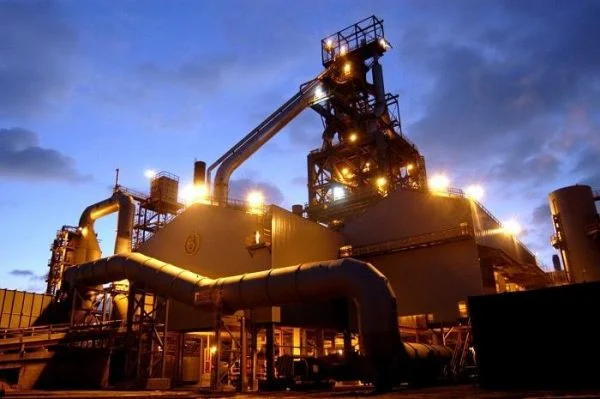
The Zimbabwe Iron and Steel Company (Zisco) board has written to Government seeking confirmation of transfer of the US$225 million debt owed to a German bank by the company to ZimCoke, an investment vehicle that acquired some of the mothballed former steelmaking giant’s assets.

This comes as Government has ordered the deal to be reviewed following its termination by the new board, chaired by economist Dr Gift Mugano.

The board had resolved that the ZimCoke deal, struck in 2017, impinged on Zisco’s revival as an integrated steelworks company.

Zisco stopped operations in 2008 after it was plagued by a lack of funding to recapitalise its operations.

Before then and with a capacity to produce up to one million tonnes of steel per year, the company was among the country’s major foreign currency earners.

Under a debt/asset swap, ZimCoke bought some of Zisco’s assets, equipment and infrastructure, which saw ZimCoke assuming the debt owed to a German bank, KFW.

Under the deal, other key assets to be taken over included the coke oven battery, rail infrastructure, coal handling facilities, residential houses and gas storage facilities.

The US$225 million transaction was signed in July 2017 when Dr Mike Bimha was the Minister of Industry and Commerce. Cabinet gave the deal its seal of approval on May 4 last year. The transfer of the assets was signed for a month later.

But upon assuming office, the current Zisco board directed management to look into the ZimCoke deal and determine its potential impact on the resuscitation of the firm..

The management presented a paper to the board in October 2019, detailing its observations.

It was observed that the ZimCoke deal impinged on the resuscitation of the company. In fact, Zisco’s revival as an integrated steelworks company would be difficult since most of the important components would be inaccessible.

In addition, revival of Zisco would necessitate building of new coke ovens or relying on ZimCoke for coke and coke oven gas.

In an interview, Dr Mugano said the Government had formally responded, directing the deal to be reviewed.

“It is a matter we are seized with,” Dr Mugano said.

“We have written a letter to (the Ministry of) Finance through our parent ministry (of Industry and Commerce) to furnish the board with the confirmation that the debt was indeed transferred from the Government to the private sector. That will form the basis for negotiations with Zim-Coke.

“We also have other processes that will follow, including conducting a proper valuation of the assets to establish if the deal is fair. Things have to be done properly.”

ZimCoke director Mr Eddie Cross recently said some of the acquired assets, including the coke oven battery, were completely “derelict” and had not functioned for over 12                                             years.

He said Zisco itself remained heavily in debt and had not functioned since 2008 and hence it had no capacity to raise the funds to settle its own obligations or to rebuild the plant.

Mr Cross said ZimCoke had plans to invest over US$500 million to revive the coke oven battery. According to him, it would further invest in clean water supplies, power generation, railways and coal mining.

“When this investment programme is complete, ZimCoke will be the largest industrial exporter from Zimbabwe.”

He said the rebuilding of the coke oven plant was the first stage of the long process of resuscitating Zisco.

“The plant cannot function without coke and ZimCoke will make the restart of steelmaking much easier. Clearly both companies will have to work closely together to achieve that. The directors are well aware of the obligations,” he said.

Recently, ZimCoke appointed a nine-member board comprising Dr Nicholas Ncube, a former deputy governor of the RBZ, as chairman.


The Sunday Mail

ZCDC expects 3 million carats

0

The Zimbabwe Consolidated Diamond Company (ZCDC) says production is expected to increase to 3 million carats this year following a number of initiatives put in plce to improve operational efficiency and productivity.

Last year, 1,6 million carats were achieved.

ZCDC acting chief executive officer Mr. Roberto De Pretto told The Sunday Mail Business that the company had put in place strategies to ramp up production after failing to meet its 2019 target.

“In 2020, ZCDC is targeting to produce 3 million carats buoyed by several strategic initiatives aimed at improving operational efficiency and productivity. Among these strategies are the following key initiatives — access to international markets, sustainable alternative power solutions, enhanced investment in exploration, business processes optimization as well as capacity optimisation and utilisation,” he said.

The company had projected to produce 3 million carats in 2019 but fell short of its target owing to a myriad of challenges.

“Production for 2019 declined to 1,6 million carats from the 2,8 million produced in 2018.

“This was due to several challenges experienced in 2019, chief among them power outages, inadequate fuel supply in the local market, effects of Cyclone Idai to both Chimanimani and Chiadzwa operations,” said Mr De Pretto.

He said the diamond mining firm had started the process of offsetting the huge legacy debt it assumed from the seven diamond mining companies that operated before its establishment in 2016.

The seven firms that mined diamonds in Marange and other areas had their licences withdrawn. Their operations were consolidated under ZCDC.

“Following the resumption of sales in June 2019, ZCDC’s financial position has improved and the company’s cashflow capacity is sufficient to meet its financial obligations as they fall due.

“A comprehensive legacy debt management framework was submitted to the Ministry of Mines and Mining Development to deal with legacy debts incurred before the establishment of ZCDC,” said Mr. De Pretto.

ZCDC is in the process of scanning the whole country to identify potentially viable diamond deposits as part of its efforts to increase the gem’s output.

“Since its inception, ZCDC has been investing in exploration projects across Zimbabwe. Last year, the company completed an airborne survey in Mwenezi during a kimberlite mapping exercise. Several exploration targets have been identified across the country and are at various states of evaluation,” said Mr De Pretto.

The company has also engaged strategic partners through joint ventures to undertake exploration projects in the country, among them is the one with Alrosa.

As part of its corporate social responsibility, ZCDC is undertaking various projects aimed at ensuring that communities around its operations benefit from the natural resource.

“ZCDC works closely with local communities, undertaking sustainable community development projects aimed at uplifting local communities.

“Approved projects are undertaken in communities where mining operations are taking place.

“The company follows a three-tier corporate social responsibility policy which looks at the immediate community, Manicaland Province and the nation in tiers one, two and three respectively.

“To date, several projects in the education, agriculture, enterprise development, health and infrastructure clusters have been undertaken. This is always in consultation with the local communities,” said Mr De Pretto.


The Sunday Mail

Govt pushes for PGM beneficiation

0

Government is in talks with local platinum producers under the ambit of the Platinum Producers’ Association (PPA) for the establishment of platinum smelters as well as base and precious metal refineries. The talks are part of the Ministry of Mines and Mining Development’s plans for the mining sector to contribute towards the attainment of Vision 2030.

Zimbabwe is working towards attaining Upper Middle Income status in the next 10 years.

The Mining Ministry is already chasing a 2023 milestone for the mining sector to generate US$12 billion in annual exports.

Mines and Mining Development Minister Winston Chitando revealed this in Norton last Thursday when he officiated at the first box cut function which signalled the commencement of Great Dyke Investments (GDI)’s mine design at the Darwendale platinum project.

The Darwendale platinum project is a US$2 billion joint venture between Russia’s Vi Holdings and Zimbabwe’s Landela Mining Venture (Pvt) Ltd.

Its implementation was accelerated after President Mnangagwa visited Russia last year in search of investments to kick-start the country’s economic revival.

Minister Chitando said while Government was concerned with meeting its 2023 milestone in the short term, plans were afoot to further boost the mining sector’s economic footprint, with Vision 2030 in mind.

The minister’s sentiments are in sync with President Mnangagwa’s push for local mineral beneficiation and value addition so as to boost earnings and create more jobs.

One of the country’s three existing PGM mines —Unki Mine — last year launched a US$62 million smelter which has a 61 000 tonnes annual capacity and can meet the miner’s current output. However, it has the potential to be upgraded to meet future increased mine production.

The miners have in the past justified their indifference to beneficiation investments citing lack of viability concerns, especially given their production figures.

However, they have agreed on different expansion drives to meet Government’s 2023 target. Platinum is expected to contribute US$3 billion.

In this regard, Government has gone further to look beyond smelters. It has initiated discussion around the setting up of base and precious metal refineries.

“Part of the strategy of the 2030 vision and part of the value addition strategy is to ensure that for all the minerals (being mined in the country), there is value addition and beneficiation (before export),” said Minister Chitando.

“The platinum members have formed what is called the Platinum Producers’ Association (PPA) and we have said to them, as Government, we would like you to come up with a value addition strategy.

“Platinum value addition starts from the concentration to produce the concentrates, back to the smelter to produce matte, then base metal refinery to extract the base metals and then a precious metal refinery to extract the precious metals.

“When you now take new production from Great Dyke Investments, when you take the new production coming from Karo Resources and the expansion from some of the existing ones, there is sufficient mass for the establishment of base and precious metal refineries.

“I am pleased to say that as Government, we are working closely with the PPA to ensure that there is establishment of a base and precious metal refinery,” he said.

In their three-stage project implementation outline, GDI have already indicated that they would want to establish a smelter in their second stage of implementation, which is expected to start after 2022.

GDI chief executive officer Mr Alex Ivanov told this publication (See Q &A on Page B4) that the miner plans to increase its production from an initial estimate of about 180 000 tonnes of concentrate per year to a stage where production can justify the setting up of a smelter.

Mr Ivanov spoke glowingly of the Darwendale project, describing it as one that will change the face of Norton and also position Zimbabwe as a key global platinum player.

“There are basically three stages of production which we are working on,” said Mr Ivanov.

“On the first stage we seek to achieve 180 000 tonnes concentrate per annum. On the second stage we will increase production to a stage where we will start to build our own smelter. However, for now, I would want to limit our view to the first stage because it’s a very big investment and it takes time.

“For now it’s not best to talk much about it (smelter) because it is still in the investigation process,” said Mr Ivanov.

Minister Chitando advised that there were other platinum investors on the horizon and these could further boost the country’s PGM output.

“In platinum, we are going to achieve over 50 tonnes per year by 2023. There are a number of interventions, Karo Resources is coming on board, Great Dyke Investments and the Todal shaft are coming on board.

“We have other investments coming on stream but these are not captured in the US$3 billion by 2023. The long and short of it is that Zimbabwe is poised to be a major force in platinum production. Our being here is part of the journey,” said Minister Chitando_The Sunday Mail

Anglo American Platinum earnings double

0

The world’s leading primary producer of platinum group metals, and parent company for Unki Mine- Anglo American Platinum, expects its earnings to more than double for the financial year to December 31, 2019 on steady operational performance.

Financials for the year under review will be released on February 17. The group is listed on the Johannesburg Stock Exchange (JSE).

Anglo issued a profit warning as it anticipates headline earnings and headline earnings per share for the period are to increase by between 131 percent and 151 percent respectively compared to the prior year.

According to the platinum giant, headline earnings are likely to be between R17,545 billion and R19,055 billion  from prior year’s R7,588 billion.

Headline earnings per share are seen increasing to between 6,689 cents and 7,265 cents per share compared to 2,893 cents in 2018.

For the period under, basic earnings and earnings per share for the period are likely to increase by between 157 percent and 177 percent respectively compared to the prior year.

Anglo indicated that basic earnings are likely to be between R17,545bn and R18,900bn from R6,817bn in 2018 last year while earnings per share should be between 6,689 cents and 7,205 cents per share compared to prior year’s 2,599 cents.

“The expected increase in headline earnings and basic earnings is primarily driven by a 38 percent increase in the rand basket price and continued steady operational performance, notwithstanding the loss in production (38 000 PGM ounces) and deferred refined production (89 000 PGM ounces to be refined in 2020) due to Eskom power outages,” said Anglo in a notice to its shareholders.

Production wise, Anglo’s metal in concentrate platinum and palladium production both increased by 10 percent, to 531 700 ounces and 360 400 ounces, respectively.

Own mined platinum production increased by 18 percent to 361 900 ounces and palladium production increased by 17 percent to 275 000 ounces.

Refined platinum production decreased by 18 percent to 629 700 ounces and refined palladium production decreased by 20 percent to 396 600 ounces.

“Excluding the impact of the tolled volumes that were previously purchased as concentrate, refined platinum production was flat and palladium decreased by 6 percent as improved operational performance at the processing facilities was offset by the impact of Eskom power outages.

“These power outages in Q4 resulted in an inventory build-up of circa 45,000 platinum ounces and circa 27,000 palladium ounces. Platinum sales volumes decreased by 14 percent to 668,300 ounces and palladium sales volumes decreased by 4 percent to 435,800 ounces due to lower refined production in the period.

The local unit, Unki Mine’s 2019 platinum output rose 4 percent to 89 400 ounces from 85 900 ounces in 2018.

For the fourth quarter of 2019 production declined 2 percent to 23,300 ounces from 23,700 in the previous quarter.

But in terms of a year-on-year quarterly comparison, the local unit’s fourth quarter output was up 6 percent compared to the 22 000 produced in the prior comparable period in 2018.

Unki’s palladium output also jumped last year from 2018, rising 5 percent to 79 200 ounces from 75 500 ounces.

However, the mine’s palladium output declined by 6 percent in the fourth quarter to 20 000oz from 21 300 ounces in the previous quarter.

On a year-on-year (quarterly basis) comparison, the local platinum producer’s palladium production rose 2 percent from 19,6 percent in the fourth quarter of 2018_Business Weekly

China coal imports to rebound

0

LAUNCESTON, Australia. — China’s coal imports are likely to show an impressive bounce in January after customs delays crimped December clearances, but questions remain as to the outlook for 2020 as a whole.

December imports were just 2,27 million tonnes, according to customs data released on January 14, taking the full year figure to 299,7 million tonnes, up 6,3 percent from 2018.

It’s clear that most cargoes that arrived in December weren’t cleared by customs, most likely as part of efforts to limit growth in annual coal imports.

Without setting a formal target, the message from officials in Beijing to the coal industry had been that they wanted 2019 imports to be much the same as the 2018’s 281,2 million tonnes. While 2019’s imports were 18,5 million tonnes higher, the slowing of clearances in December did mean the total for the year stayed below the big round figure of 300 million tonnes.

Nonetheless, coal imports were the highest since a record 327,2 million tonnes in 2013.

With cargoes being held up in December, it’s likely that January’s imports will see a surge, assuming much of the backlog is cleared.

About 20,2 million tonnes of coal arrived at Chinese ports in December, according to vessel-tracking and port data compiled by Refinitiv. Given that only 2,27 million tonnes were cleared by customs, around 18 million tonnes from December still likely need to be processed this month.

There may even be more given that the Refinitiv data is for seaborne arrivals only, and excludes overland imports from neighbouring countries such as Mongolia.

Seaborne arrivals for the first 19 days of January were around 13,5 million tonnes, according to Refinitiv, meaning there is potential for January to show a significant surge in official imports.

It’s likely the backlog will be cleared over the first quarter, rather than all at once, but the risk is that China’s official coal imports show strength in the first three months of the year.

Imports to slow?

This doesn’t mean China’s coal imports will inevitably show growth for 2020 as a whole, and there are several factors that suggest they may not.

The first is that official guidance is likely to be for utilities and traders to show restraint, especially for thermal coal imports used for power generation.

The authorities generally prefer utilities to use domestic coal, and local production has been trending higher. Output reached 331,7 million tonnes in December, up 2,4 percent on the same month of 2018, while full-year production in 2019 was 3,75 billion tonnes, up 4,2 percent from 2018.

It’s likely China will also try to increase the use of cleaner fuels and renewable energy to limit pollution and be seen to be doing more to combat climate change. This should result in more natural gas being used in boilers for residential heating, as well as for industrial uses such as making cement, ceramics and fertilisers. Then there is the role of seaborne prices versus domestic prices, with imports tending to grow when they are cheaper relative to domestic costs.

The main seaborne prices in Asia, however, have had a strong start to the year. The Argus weekly Newcastle index , benchmark for Australian thermal coal, rose to $69,59 a tonne in the week to January 17, a third consecutive gain and the highest since late July 2019. — Reuters.

The Argus index for Indonesian 4,200 kilocalorie per kg coal , a benchmark for lower-quality fuel, rose to $35.08 a tonne in the week to Jan. 17, the highest since Nov. 1.

Rising seaborne prices may serve to erode competitiveness, although Chinese domestic prices have been gaining recently as well. SteelHome reported coal at the port of Qinhuangdao SH-QHA-TRMCOAL at 559 yuan ($81.60) a tonne on Jan. 17, up from a recent low of 547 yuan on Dec. 24.

At current seaborne prices, low-rank Indonesian coal will still find buyers in China, especially for blending with higher sulphur domestic coal, but Australian thermal supplies may be struggling to compete, once shipping and import taxes are taken into consideration.

Ultimately, the main determinant of China’s coal imports this year will be policy, and the question is just how seriously Beijing will try to enforce a cap on imports. This should become clearer by the second quarter.

De Beers diamond sales jump

0

De Beers sold the most diamonds since April in a sign the industry is starting to recover from a slump in demand last year, though the market will require more evidence of a sustained rebound.

The Anglo American unit sold $545 million of diamonds in its first sale of the year, traditionally one of the strongest buying periods as the industry restocks after the crucial holiday selling period.

There was little good news for the diamond industry last year. An oversupply of rough stones, a surfeit of polished gems and falling prices piled pressure on the companies that mine diamonds, as well as the lower-profile businesses that cut, polish and trade them. The results from the sale last week will encourage some in the industry that things are improving.

“Continuation of De Beers’s sales recovery is a positive sign for the rough diamond market, which we expect to recover in 2020 supported by reduced diamond supply and midstream destocking,” said Kirill Chuyko, chief strategist at BCS Global Markets.

There were other positive signs from the sale. De Beers slightly raised prices in some categories, especially larger stones, according to people familiar with the situation. Margins also recovered in the so-called secondary market — where buyers sell to gem manufacturers who don’t have direct access to De Beers.

That meant buyers were able to make a profit on boxes they sold on, the people said, asking not to be named as the process is private.

A lack of profit for the diamond midstream, the industry’s link between African mines and jewelry stores in New York, London and Hong Kong, forced De Beers to make major concessions last year as buyers balked at the prices being asked.

While the improved demand at the latest sale is a positive sign, industry participants will want to see a more prolonged recovery.

After rough diamond sales slumped in the second half of last year, manufacturers are low on inventory and were compelled to restock or face having to shutter factories.

Polished diamond prices have edged higher since bottoming in December, but there is still little sign of a sustained recovery.

“Rough price increases in the market are likely a combination of better polished sell-through and the need for more manufacturing stocks,” said Anish Aggarwal, a partner at specialist diamond advisory firm Gemdax.

“It’s too early to tell the weighting of these factors.”

De Beers sells its gems through 10 sales each year in Botswana’s capital, Gaborone, and the buyers — known as sight-holders — generally have to accept the price and the quantities offered.

The sight-holders are given a black and yellow box containing plastic bags filled with stones, with the number of boxes and quality of diamonds depending on what the buyer and De Beers agreed to in an annual allocation.

“Demand for rough diamonds increased during the first sight of 2020 following the end of year selling season and subsequent inventory restocking,” De Beers Chief Executive Officer Bruce Cleaver said in a statement Wednesday.  — Bloomberg.

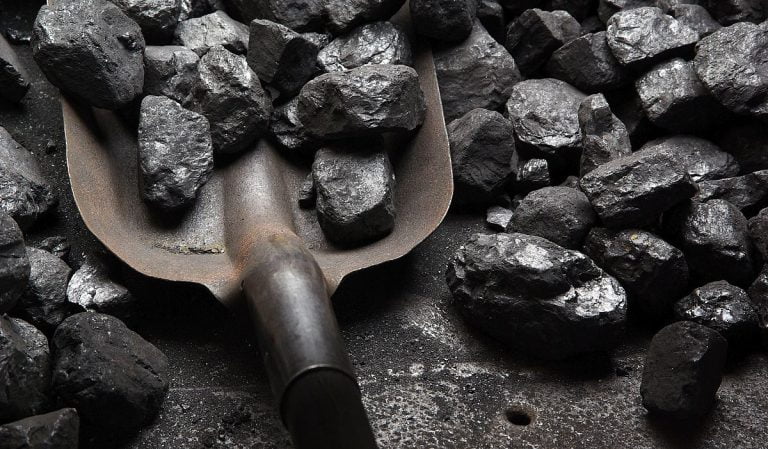
How hard is it to quit coal?

0

Germany announced two weeks ago that it would spend $44,5 billion to quit coal — but not for another 18 years, by 2038.

The move shows how expensive it is to stop burning the world’s dirtiest fossil fuel, despite a broad consensus that keeping coal in the ground is vital to averting a climate crisis, and how politically complicated it is.

Coal, when burned, produces huge amounts of the greenhouse gas emissions that are responsible for global warming.

Germany doesn’t have shale gas, as the United States does, which has led to the rapid decline of coal use in America, despite President Trump’s support for coal. Germany also faces intense opposition to nuclear power.

After the Fukushima disaster in 2011, that opposition prompted the government to start shutting down the country’s nuclear plants, a transition that should be complete by 2022.

The money announced is to be spent on compensating workers, companies and the four coal producing states — three in the country’s east and one in the west. It followed months of negotiations between regional officials and Chancellor Angela Merkel’s government.

“Germany, one of the strongest and most successful industry nations in the world, is taking huge steps toward leaving the fossil fuel era,” finance minister Olaf Scholz said at a news conference in Berlin.

Germany’s timetable, though, could present challenges to the European Union’s efforts to swiftly cut its greenhouse gas emissions, as the bloc’s new leadership has announced.

Countries around the world are watching how quickly the 28-country union, which, taken together is currently the third-largest emitter of planet-warming gases, can reduce its carbon footprint. Germany is the largest economy in the European Union.

Environmental organizations criticised the government plan for being too slow and for not expanding renewable energy sources quickly enough.

“The majority of the necessary reductions are being pushed to the end of the 2020s,” said Christoph Bals, policy director for the environmental group Germanwatch.

Coal is at a turning point globally. Renewable energy is getting cheaper. Private investors are shying away from new projects.

There is far greater awareness of the deadly particulate matter pollution that comes out of coal-fired power plants.

Yet coal remains ascendant in some parts of the world, in part because it has been the go-to fuel for so long, it employs millions of people globally, and because the industry often enjoys robust political backing.

Eastern European countries, particularly Poland and the Czech Republic, still rely heavily on coal. The European Union this week created a €100 billion fund to aid their transition to cleaner fuels.

The Asia-Pacific is where coal continues to grow. China, which consumes half of the world’s coal, continues to build more coal plants at home and abroad.

According to the International Energy Agency, China’s domestic coal demand is projected to keep growing for at least the next two years, before it levels off.

China’s coal expansion puts its own climate targets at risk, though, according to a recent study partly written by the government-backed Energy Research Institute.

Not least, China’s ambitious global infrastructure building drive knows as the Belt and Road Initiative includes at least 63 coal-fired power plants.

India also continues to rely on coal. It has recently relaxed rules to encourage foreign investment in the Indian coal mining sector, and has been in talks to import metallurgical coal, used to make steel, from Russia.

And even as it reels from wildfires made more intense by climate change, Australia, one of the world’s biggest coal exporters, is digging for more, encouraged in part by the growing Asian market. Among the most contentious projects is a new $2 billion coal mine in the country’s northeast.

The German plan says lignite, also known as brown coal — which is abundant, cheap and dirty — could be phased out by 2035, depending on the progress made in the coming years.

Germany shuttered its last hard-coal mine in December, but has continued to burn lignite. In the third quarter of 2019, about 42 percent of the country’s energy came from renewables, 28 percent from coal and 14 percent from nuclear.

Some of the country’s richest coal regions are in states in the former Communist East, where the industry is a key provider of jobs.

Leaders in the region had been reluctant to shut down coal production without pledges of economic investment to compensate for the loss of income.

As part of the plan, energy providers in all of Germany will receive $4,8 billion over the course of the next 15 years in compensation for shuttering their coal-burning plants, some of which will be replaced by natural gas-burning generators. The plan foresees taking 19 coal-burning power plants offline in the coming decade, beginning with the dirtiest plants later this year.

Further investment includes setting up research institutes in the east for medicine and hydrogen power and retraining for miners and other workers in the industry. — New York Times.

Zim misses out on gold price boom

0

Last year, gold had its best price performance since 2010, rising by 18,4 percent in US dollar terms.

It outperformed major global bonds and emerging market stock benchmarks over that period.

It also reached record highs in most major currencies except the US dollar and the Swiss franc.

Gold rose mostly between early June and early September last year as uncertainty increased and interest rates fell.

Investors’ appetite for gold was apparent throughout the year, as seen by strong Exchange Traded Fund flows, and robust central bank demand.

However, Zimbabwe is likely to have missed this boom after gold deliveries slumped 16,8 percent in 2019 to 27,7 tonnes due to a number of reasons including smuggling and subdued performance by big producers.

Once again, small scale miners produced the bulk of the metal, accounting for about 63 percent of output or 17,4 tonnes against big producers, which delivered 10,1 tonnes.

While the value of gold delivered to Fidelity Printers and Refiners is about US$1,3 billion, a significant amount was sold through the black market depriving the country of the much-needed forex.

“There is need to re-organise the sector from the production and marketing perspective,” said Noah Remba, a mining consultant based in Harare.

“Given that the country is losing a lot through smuggling, there is need to plug the loopholes.”

Disturbances happening in the small scale gold mining sector, where armed and organised crime gangs are wreaking havoc, invading mines and robbing people of gold could also further contribute to decline of deliveries from the sector already affected by smuggling.

Gold mining and deliveries in Zimbabwe have also suffered due to concerns among the miners, who cite it as the motivation to smuggle, due to the 55 percent forex retention threshold.

The miners get 55 percent of their deliveries to Fidelity Printers and Refineries in hard currency and the balance is paid out in local currency, with the forex going to meet critical national requirements.

With Zimbabwe becoming increasingly import-dependent, dealing with issues that are weighing down production and deliveries becomes paramount for the country not to miss out on the price boom.

Positive outlook

In its latest report, the World Gold Council (WGC) believes global dynamics seeded over the past few years will generally be supportive for gold this year.

“In particular, we believe that financial and geopolitical uncertainty combined with flow interest rates will likely bolster gold investment demand,” said World Gold Council.

“Net gold purchases by central banks will likely remain robust even if they are lower than the record highs seen in recent quarters.

“Momentum and speculative positioning may keep gold price volatility elevated. And that gold price volatility, as well as expectations of weaker economic growth, may result in softer consumer demand near term but structural economic reforms in India and China will support demand.”

One of the key drivers of gold, especially in the short and medium term, is the opportunity cost of holding it relative to other assets, such as short-dated bonds, the report said.

Unlike bonds, gold does not pay interest or dividends because it does not have credit risk.

This perceived lack of yield can deter some investors. But in an environment where a whopping 90 percent of developed market sovereign debt is trading with negative real rates, World Gold Council believes the opportunity cost of gold almost goes away.

“It may even provide what can be seen as a positive “cost of carry” relative to bonds.”

Smuggling syndicates

Zimbabwe earns much of its foreign currency from mining, with gold being the major contributor, but the sector is facing a myriad of challenges including power cuts, which have seen large scale producers struggling. The prevailing foreign currency shortages have also hobbled imports of spare parts and consumables.

On the other hand, a significant amount of gold is being sold through the informal channels to illegal buyers who them smuggle the mineral outside the country.

Gold worth billions of dollars is being smuggled out of Zimbabwe every year through neighbouring countries used as a gateway to overseas markets. Illegal gold trading is being run by a smuggling ring controlled by foreign criminal syndicates, mainly from Asia and the Middle East who are disposing of their US dollar for gold.

They are understood to be working with influential individuals.

Authorities estimate gold being sold through shadowy channels could be around 100 tonnes.

The black-market trade in gold is being largely driven by informal miners — commonly known as artisanal miners who prefer to sell their metal to illegal buyers who then fly the gold out directly or take it out it through Zimbabwe’s porous borders.


Business Weekly