

National Employment Council Mining wage rates increments 1 JULY 2020 document.
[pdf id=7673]
[pdf id=7673]
SG 90% AND ABOVE $56.33/g
SG ABOVE 85% BUT BELOW 90% $55.38/g
SG ABOVE 80% BUT BELOW 85% $54.12/g
SG ABOVE 75% BUT BELOW 80% $53.49/g
SAMPLE BELOW 10g BUT ABOVE 5g $54.75/g
FIRE ASSAY CASH $56.64/g
Cash available. Fidelity Printers and Refiners prices will be changing daily in relation to world market prices.
No. 1 George Drive, Msasa, Harare
Telephone: +263 242-486670, +263 242-486694, +263 242-487131, +263 242-447810-5
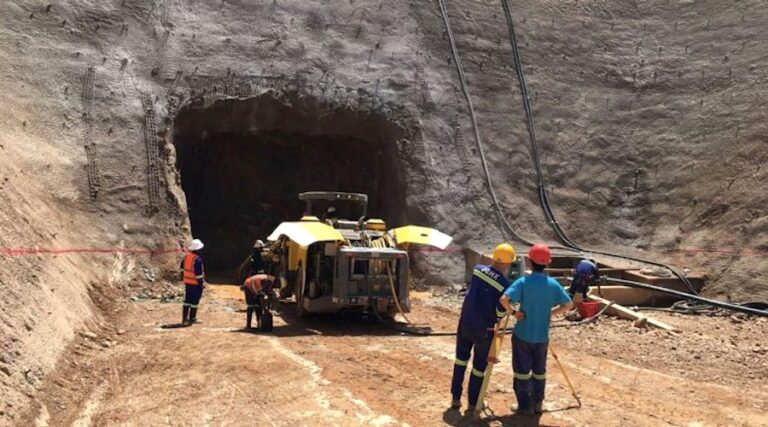
An Unki Mine employee has tested positive for Covid-19. The mine worker was tested after exhibiting symptoms of the virus.
The Platinum miner confirmed in a statement by its CEO that the worker is receiving the necessary care and wished the employee a speedy recovery.
“In line with our protocols, we are busy tracing all his close contacts. All affected staff will receive the necessary support” Anglo CEO Natascha Viljoen said.
“Our transmission mitigation measures remain in place and it is through these that we are able to identify potential cases, ensuring that we are able to keep our employees, their families, and communities safe,” continued the statement.
“We have seen with other cases across the group that we have the measures in place to ensure we deal with suspected infections in a safe and timeous manner, that we can trace possible contacts where needed, that we can get people tested and provide the necessary support where required”.
“The most important thing we can do to guard against contracting Covid-19 is to make sure we do six things and that we make these habits – Cough correctly, Wash well, Wear a mask, Keep your distance, follow the rules and Monitor myself”.
Covid-19 this week hit the mining sector with Fidelity Printers and Refiners Harare office having two infections, one at Hwange Colliery, two at How Mine, and one at Unki.
[pdf id=7666]
Please be advised that effective 27 July 2020 the following are the new requirement for payment of inspection fees.
Contact Ministry of Mines and Mining Development on Phone: 0242 777 029
A Hwange Colliery Company Limited employee tested positive for Covid-19. The coal miner spokeswoman Rugare Chikede Dhobbie confirmed the development and released the press statement below:-
Hwange Colliery Company Limited wishes to advise stakeholders that it has recorded its first COVID-19 case, an underground employee.
He is clinically stable and is self-isolating at home. Our Rapid Response Team is monitoring the employee following national guidelines.
As per Ministry of Health and Child Care guidance the company is also implementing contact tracing to facilitate the identification of individuals who might have been exposed to the affected employee. HCCL is also implementing measures on disinfection and testing.
This decision was taken in compliance with section 6 of the Statutory instrument 174 of 2020, public health (COVID-19) Prevention, Containment and Treatment (National Lockdown) (Amendment ) Order, 2020 (No. 14).
The well-being of all staff is our primary concern. For this reason, going forward all staff with remote work capabilities are expected to work from home. Only critical staff will physically report for duty. As the situation evolves stakeholders will be updated via the usual communication platforms.
As HCCL, zero harm continues to be our mantra: We eat, live and breathe safety in all our operations. Proudly providing so much more than just coal.
Meanwhile, a circular making rounds on social media alleges two employees at Metalon gold’s How Mine tested positive for Covid-19. However, bizarrely, listed numbers on the flyer refused to confirm the development as has other mining companies that have workers testing positive.
In an industry that was once male-dominated, women are slowly making a name for themselves and have proved to be a force to reckon.
49-year-old small scale miner, Ms. Sanelisiwe Maseko who owns Vectis 20 Mine in Colleen Bawn told the Chronicle her achievements were a sign that women could equally be as successful as men in the industry.
Ms Maseko started her mining activities in 2006 working alone but now has 19 employees. She has also managed to purchase equipment and machinery that has enabled her to process ore at her mine.
“When I started, I was working alone and I was merely collecting stones on the surface and I hadn’t started opening up shafts. After some time I started digging but my operations were really insignificant because I wasn’t making much. I was doing the digging myself and I barely had the necessary protective clothing and working tools,” she said.
“My breakthrough was in 2013 as I gained a better understanding of the industry. I started expanding my operations and employed five people who were assisting me in extracting gold. At the moment I have opened four shafts and I now have 19 workers and of these three are women. I have also managed to buy mining equipment, machinery and other valuable assets, built offices and staff quarters using the money I have made through mining. I have shifted from being a labourer to being an employer.”
Ms Maseko said in a month she can realise about 110 tonnes of gold ore which could give her 110 grammes of gold. each gramme is sold for about US$55 per gramme which gives her slightly above $6 000 per month.
She said she had managed to set up a cyanidation plant at her mine and a stamp mill. She said she had managed to buy livestock and other valuable assets using the proceeds she made through mining.
Mrs. Sithembile Ndlovu (44) who is the founder of the Mthandazo Women Miners Association in Gwanda owns four claims in Colleen Bawn.
Having started her mining activities in 2004, she is one of the women who fought to ensure females gained recognition in the mining sector. Mrs. Ndlovu has gone a step further to ensure more women and youths are empowered through mining.
Mrs. Ndlovu said the Zimbabwe Women Miners’ Association played a significant role in ensuring the participation of women in the mining industry in the early 2000s.
She said the association had been empowered with among other things a stamp mill and compressors and they had also received training from the Zimbabwe School of Mines.
She said she has a total of about 40 workers at her four claims and stamp mill.
Mrs. Ndlovu said she is also a co-owner of a claim in Filabusi.
“I have gained a lot of experience in the mining industry over the past years. As women, we were trained under the Zimbabwe School of Mines on various topics such as Geology, surveying, mining and meteorology. I now have four claims which belong solely to me and I’m a co-owner in another claim. In a month I realise about 100 tonnes of gold ore. I now have my own processing equipment at my mine, vehicles, offices, staff quarters. I have acquired a number of assets using the proceeds I get from mining,” she said.
Mrs Agnes Katerere the owner of Hay Gold Mine in Lalapanzi in the Midlands province said she employs 16 people and is proud to be playing a role in economic development through selling her gold to Fidelity Printers and Refineries (FPR).
Because of her involvement in mining, Mrs Katerere now sits on mining boards thus creating a network with other miners and Government.
Mrs Katerere – a mother of four children, three boys and a girl – who ventured into mining in 2012, said she was optimistic that with the support they were receiving from Government, the mining sector is going to empower a lot of women and change their livelihoods.
“I have managed to tap into the Government’s initiative of creating employment, right now there are 16 people working at the mine. The local community has also benefitted through the provision of water and electricity. We had electricity installed a few months ago so the locals will benefit as we can share the transformer. My way of living has since changed ever since l started mining. I have managed to empower several other women through the various platforms I’m involved in,” she said.
Mrs Katerere said she is also encouraged by the fact that her daughter and last-born Lisa – a medical student at a local university- has shown love and appreciation for mining.
“I am happy that my daughter is now loving mining. She is doing her final year in Medicine and she loves mining. She is always with me and you will forget that she is training to be a doctor because of her passion for mining. I think I set a good example for her. She is a total package; she is bold and not afraid. She goes for what she wants and doesn’t look back and every time am surprised, it’s not only mining, she was crowned Miss Gweru just last year,” said Mrs. Katerere.
A Shurugwi miner, Mrs. Joice Chivendere said women however face a lot of challenges in the sector.
Mrs. Chivendere said it’s also disheartening to note that when they apply for a block, male counterparts seem to be considered ahead of women.
“When we apply for loans from financial institutions, they speak of collateral, if I have a mine why can’t I be allowed to use it as collateral,” she asked.
Mrs. Chivendere who employs 19 workers said with all the challenges she is facing, her whole family including her sons in law had all taken up mining as a source of livelihood.
“As I said earlier, I am going into quarry mining this year. The market is good and we are happy that President Mnangagwa’s Government is supporting us all the way to make sure that our side is ok. We used to face diesel challenges but since we started buying the commodity in US dollars, supply has improved,” she said.
Chronicle
PLATINUM producer Anglo America’s production slumped by 25% in the first half of 2020 due to lockdowns imposed in Zimbabwe and South Africa to contain the coronavirus scourge.
The two countries have imposed national lockdowns since March this year due to the advent of the coronavirus pandemic, otherwise referred to as COVID-19.
The pandemic, which has claimed more than 600 000 lives globally, has affected more than 2 500 in Zimbabwe with 34 fatalities.
South Africa has more than 445 000 affected by the pandemic with more than 6 700 fatalities.
President Emmerson Mnangagwa imposed a national lockdown on March 30 this year before easing restrictions.
However, the upsurge in coronavirus infections has resulted in the Zimbabwean government tightening restrictions, which include a curfew between 6 pm and 6 am.
“Operationally, total PGM production (expressed as platinum, palladium, rhodium, gold, iridium and ruthenium metal in concentrate, including joint ventures and third-party purchases) declined by 25% year-on-year in the first half to 1 619 900 ounces, mainly due to the impact of Covid-19 lockdowns in South Africa and Zimbabwe,” the platinum miner revealed in its interim report for the six months ended June 30, 2020.
It also revealed that total refined production, including tolling, declined by 46% to 1 246 900 ounces, as the temporary closure of the ACP and load-shedding in the first quarter impacted production.
“Work is well underway to repair Phase A of the ACP, which is expected to be completed by the year-end. A cautious approach has been taken with the ongoing operation of the Phase B unit during this period, with increased monitoring likely to result in intermittent stoppages to inspect the plant until the repairs to Phase A are completed,” the mining outfit said.
“As a result of the ACP process interruptions, there was a build-up of work-in-progress inventory of around 500 000 PGM ounces. It is expected that approximately 45% of this build-up in inventory will be released in the second half of 2020.”
In line with the 25% decrease in mining production, the unit cost of production per PGM ounce increased by 26% to R12 555 (H1 2019: R9 951), the platinum miner said.
Anglo American said at the end of June, production levels at its managed operations were at around 80% of normal capacity in aggregate, with expectations that this would increase to over 95% by the end of the year as it benefits from a high proportion of open-pit and mechanised production.
“While the early stages of recovery are underway in many geographic regions, there remains a great deal of uncertainty, with limited visibility beyond a few months. Mine supply is expected to be sharply lower this year due to the impact of COVID-19, while global recycling volumes are expected to be less affected. PGM demand will be impacted by the decline in global car and commercial vehicle sales and production, weaker sales of platinum jewellery, and softer industrial demand,” Anglo American said. ”Despite the impact on demand, we expect platinum, palladium and rhodium to remain in deficit this year. Longer-term, the company remains committed to expanding the role PGMs can play in enabling a lower carbon economy and we continue to lead the industry’s demand creation efforts across the industrial, investment and jewellery demand segments.”
Anglo American recorded net cash of R11,3 billion (H1 2019: R6 billion) and declared a dividend for H1 2020 of R2,8 billion, or R10,23 per share, based on a 40% payout ratio of headline earnings.
It recorded earnings before interest, tax, depreciation and amortisation of R13,1 billion (H1 2019: R12,4 billion).
Newsday
Zimbabwe’s miners want to be allowed to use their gold output as security for foreign credit, saying increased country risk and central bank’s foreign currency regime has stalled expansion projects.
The government has targeted mining as its main route out of the deepening economic crisis, but a new petition sent to government by miners shows how the country’s own policies – from forex laws to taxation – are hurting the industry’s prospects for growth.
The Chamber of Mines, which represents large-scale miners, says they are finding it harder to raise money for expansion in Zimbabwe.
“Mining companies are struggling to raise capital due to increased country risk. This has seen most expansion mining projects put on hold as most financiers are demanding offshore collection accounts as guarantor for capital. In the case of gold, investors are also insisting on gold output as security for capital, in line with global practice,” the Chamber said in the report, prepared for government earlier this month.
The miners want government to allow mining companies to hold offshore collection accounts guarantor of capital and to let gold producers use their gold as security in raising funding for investment.
Reserve Bank of Zimbabwe’s foreign currency retention system allows miners to retain 70% of their forex earnings. According to the Chamber, this is not enough for miners to pay for raw materials.
“Foreign exchange retentions for the mining sector are inadequate to meet regular operational requirements including importation of critical raw material supplies. The situation has been exacerbated by requirement to pay for electricity bills, royalty and other taxes in foreign currency which have significantly reduced the effective retention from around 50% to around 30%,” says the Chamber.
The miners want to be allowed to keep at least 80% of their export earnings. They also want the option to pay for local expenses such as electricity and taxes in Zimbabwe dollars.
Under RBZ laws, exporters are required to liquidate any unused forex received in their accounts within 30 days. For miners, this is out of sync with a mine’s production cycle. The working capital cycle for mining companies averages between 60 and 90 days. This means a mining company needs excess balances in its nostro accounts beyond the 30 days.
“Also to note, some mining companies that experienced production disruptions during the COVID-19 era may have seen increase in excess balances in their nostro accounts. These balances remain strategic as decoupling cash reserves to augment working capital requirements to meet expansion in capacity utilisation in line with improvement in the COVID-19 situation,” say the mines.
The Chamber wants the time limit extended in line with miners’ production cycles.
“While we appreciate that the reintroduced auction system may see some mining companies voluntarily offloading their excess balances, we appeal to the Government to guarantee minimum working capital cycle for sustenance and expansion projects.”
Miners are also facing payment delays of up to eight weeks from Fidelity Printers and Refiners, the RBZ arm that is the country’s sole gold buyer. This has affected output by as much as a quarter.
Says the Chamber: “This has resulted in working capital shortages and production disruptions, weighing down potential gold output to as much as 25%. Gold producers are appealing for a payment turnaround of not more than a week as per agreed payment framework with RBZ.”
The Chamber of Mines warns that power cuts may worsen as more operations resume work, increasing demand. However, ZESA has failed to meet its end of deals with miners to guarantee supplies.
Here are the Chamber of Mines’ other grievances:
“To sum up as the mining industry is set to increase capacity utilisation and gain momentum towards the US$12 billion mining sector by 2023, it is imperative for the government to address the above challenges. Critical to this are policy consistency and predictability that promote certainty and investor confidence,” the Chamber said.
In June, RioZim, the country’s biggest producer, said it had faced delays on its new US$17 million BIOX plant at Cam & Motor due to forex shortages. Once completed, the plant would ramp up production by at least 50%.
In contrast, Caledonia Mining is due to complete equipping of the new central shaft at Blanket Mining, by the end of the year. The project will increase annual output by 30% to 75 000 oz in 2021 and 80 000 oz from 2022.
Zimbabwe generated US$2.91 billion in mineral exports in 2019, 55.2% of total exports, but output is expected to fall this year due to a combination of COVID-19, foreign exchange shortages and power outages.
Two illegal gold panners died on the spot while another escaped with minor injuries after a shaft they were working in Kwekwe collapsed on Tuesday. Police confirmed the incident.
“Police are investigating the death of two gold panners who died after a shaft collapsed on Tuesday morning in Mbizo 15,” said Midlands police spokesman Assistant Inspector Joel Goko.
He said a third panner was rescued alive and rushed to Kwekwe General Hospital where he later disappeared.
“We are not yet sure of the motive behind him running away, we will share more information as investigations unfold,” he said.
A local news crew visited the mining site in Mbizo and police were taking away the second body that had been retrieved by residents.
The shaft, located between Mbizo 15 and Mbizo 8 suburbs is within residential stands.
Sources said there might be another body trapped underground.
“We knew this crew from way back, they have always worked as a group of four. Only three have been accounted for. We strongly suspect there might be another body underground,” said a source on condition of anonymity.
Zimdaily