Home Blog Page 578

Prospect Resources appoints Renaissance as advisor for MoU

0
  • Prospect Resources (PSC) has appointed Renaissance Securities as its exclusive merger and acquisitions advisor in relation to an agreement with Uranium One Group
  • This agreement is in relation to the potential sale of Prospect’s Arcadia Lithium Project in Zimbabwe

Prospect Resources (PSC) has appointed Renaissance Securities as its exclusive financial advisor in relation to an agreement with Uranium One Group.

On December 12 2019, Prospect entered a memorandum of understanding (MoU) with Uranium One, a global energy company and one of the world’s largest uranium producers. The MoU relates to Prospect’s flagship Arcadia Lithium Mine in Zimbabwe.

Uranium One was given a 90-day exclusivity period, however, on March 13, the MoU was extended until April 30.

As the expiry date was looming, the company further extended the MoU term to August 10. Prospect attributed this decision to “logistical challenges facing all companies during the COVID-19 lockdown.”

The MoU discussions are reportedly travelling well, and Renaissance will provide merger and acquisitions advice on the potential sale, directly or indirectly, of Prospect’s Arcadia Lithium Project.

Renaissance is an independent investment bank that provides access to over 50 markets across the world.

The discussions with Uranium One are ongoing, however, there is no guarantee that these discussions or MoU will result in a formal binding agreement or proposal in regards to the Arcadia Lithium Project.

Additionally, Prospect has advised that despite receiving a number of enquiries regarding the placement of the remaining shortfall shares from the rights issue completed in May, it won’t be placing the shortfall. The rights issue is fully closed.

Company shares are up a slight 1.43 per cent and are trading for 7.1 cents each at 10:08 am AEST.

Suspect arrested with chrome worth 70k USD

0

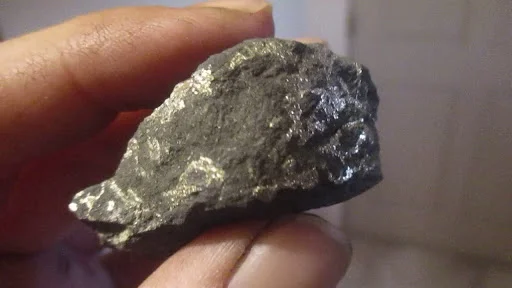
The South African Police’s Serious Organised Crime Unit in Rustenburg arrested a man in possession of chrome with an estimated street value of (R1.2million) US$70751.

He is due to appear in the Mogwase Magistrates’ Court in the North West province of South Africa on Monday, 6 July to face charges of contravention of the National Environmental Management Act, and illegal mining of chrome as per the Minerals and Petroleum Resources Development Act.

POLICE AND MINERALS RESOURCES OFFICIALS DISRUPT ILLEGAL MINE

According to South African Police Service statement, a multi-disciplinary team, including officials from the Department of Mineral Resources (DMRE), went to a farm at Witrantjies Village and proceeded to a site on the property where illegal chrome mining allegedly takes place.

There they found the suspect with a mined stockpile of chrome weighing 136 tons.

“The suspect had previously been warned by DMRE members not to mine without environmental authorisation or a mining permit from the Department of Mineral Resources and Energy (DMRE), but ignored the warning and continued with illegal activities, police said.

IN MAY THE HAWKS SEIZED CHROME VALUED AT R2.6-MILLION

In late May, the Directorate for Priority Crime Investigation (Hawks), assisted by Rustenburg Flying Squad, the Department of Mineral Resources and the South Africa National Defence Force (SANDF) conducted what they called “disruptive operations” at several locations believed to be involved in illegal mining in Rustenburg.

Upon arrival at one of the locations, the suspects spotted the law-enforcement team and fled the scene. However, a 57-year-old suspect was arrested and police seized a number of trucks that were loaded with chrome worth R2.6 million.

ILLEGAL MINING FLOURISHING DUE TO SOCIO-ECONOMIC CLIMATE

The Minerals Council of South Africa says the growth in illegal mining in the country can be attributed to the combination of a difficult socio-economic climate and limited resources at the disposal of law enforcement agencies.

Approximately 75% of global chrome resources are in South Africa and, accordingly, South Africa is the largest chrome concentrate, producer.

About 85% of all chrome produced is converted into ferrochrome by a smelting process. Ferrochrome is a raw material used in the manufacturing of stainless steel. Chrome is also used in the chemical and foundry industry.

The South African

Metal prices rise

0

SINCE lockdown measures to contain Covid-19 around the world have eased industrial metal prices have begun to rise.

This was said by ratings and research agency Standard & Poor’s Global (S&P Global).

However, even though industrial metal prices have risen from the lows experienced in the first quarter of the year, there remains a possibility of a second wave of Covid-19 infections as lockdowns are eased.

“It nevertheless remains a significant downside risk to industrial metal prices for the rest of the year, despite local supply-side impacts that could provide some price support for particular commodities,” the agency states.

S&P Global Market Intelligence commodity analyst Jason Sappor says base metals demand has mostly been supported by China as it started reopening its economy and ramping up production.

China’s purchasing managers index has expanded to above 50, compared with a low of 37 in January.

S&P Global expects the global economy to contract by 2.4% this year, while the Organisation for Economic Cooperation and Development (OECD) expects at least a 4% contraction.

This is under a single hit scenario, but should a second wave hit, it would cause a deeper economic contraction, with the OECD forecasting an 8% contraction should that occur.

Sappor notes that the dollar – which is normally a safe haven asset – index weakness has supported commodity prices. However, the metal industry will still experience pressure this year.

He says the metals sector has yet to recover from Covid-19; metal prices have moved higher but demand and supply, especially, have scaled-down significantly since the start of lockdowns globally.

IRON-ORE & GOLD

Sappor highlights that iron-ore and gold stand out as the London Metal Exchange’s (LME’s) best-performing metals at the moment, with prices increasing on the back of stimulus and lockdowns easing.

Gold has enjoyed increased demand particularly, increasing by about 15% since the start of this year.

S&P Global Market Intelligence commodity analyst Thomas Rutland explains that iron-ore prices have been faring better than the LME prices, mainly owing to surging Chinese production as it ended its lockdown and the negative impact on Brazilian ore supply.

Rutland notes that iron-ore’s demand side has a China-centric recovery, with steel production reaching a monthly record of 92-million tonnes in May to meet pent-up demand. May saw iron-ore stocks in China at lows last seen in 2016.

“The surge in Covid-19 infections in Brazil has stoked iron-ore supply concerns, with Brazilian exports dropping by 29% year-on-year in May. Brazil’s supply has since risen 40% month-on-month between May and June, but we still expect close to 4% lower production in 2020, or 14-million tonnes less, compared with 2019.

“We expect Australia and India to plug this hole in the market, albeit with lower grade material from India’s side,” he states.

Rutland adds that the restocking boom has driven iron-ore prices to above $100/t in June, with only a modest surplus expected this year, as the depth of global recession will weigh on prices in the second half of the year.

On the other hand, gold has traded at above  650/oz for nine weeks and has been supported by fears of a second wave of Covid-19 infections. “We expect this newfound momentum to drive the gold price to more than $1 800/oz,” says Rutland.

He adds that uncertainty around upcoming elections in the US has also driven investors to gold as a safe-haven asset.

ZINC & NICKEL

Sappor says zinc and nickel prices are still lower, owing to the negative impacts on demand that have prevailed in the last few months.

In November, S&P had forecast a rise in the prices of zinc and nickel this year; however, it says zinc and nickel prices have instead been slashed by 14% and 21% year-on-year this year.

Global nickel demand is due to drop by 8.5% year-on-year this year. On the supply side, surging Indonesian primary output will heap additional downward pressure on prices.

The primary nickel market will move to a 100 000 t surplus this year, with the average LME nickel price expected to decline by 9% year-on-year to $12 750/t.

Sappor says Indonesian primary production will surge by 46% year-on-year this year to 550 000 t, while the global primary nickel market will likely record a 100 000 t surplus this year.

Sappor says global zinc demand this year will fall by 409 000 t to 13.3-million tonnes. On the supply side, rising Chinese smelter inventories of metal are supporting supply, while global refined zinc output will likely decrease to 13.4-million tonnes.

This while global mine output for zinc will decrease to 13.3-million tonnes, lead by the drag in Chinese mined production. However, there will still be a global supply surplus of 115 000 t of zinc, with a lower price of $2 000/t.

COPPER & BATTERY METALS

The LME copper price is still down 5% year-on-year since January, with demand continuing to be impacted by reduced economic activity globally. However, stimulus packages in China are expected to bolster demand for copper in the near term.

Sappor and Rutland agree that neither mined nor refined copper was impacted as much as expected by the pandemic, and therefore was the strongest performing metal on the LME during Covid-19.

S&P maintains its 2020 refined copper market balance estimate at 182 000 t surplus and the price forecast of about $5 700/t.

Copper prices are expected to increase in the second half of the year and throughout 2021, supported by large decreases in mined copper supply this year.

Should a second wave of Covid-19 infections hit the world, especially China, copper is likely to again withstand adverse impacts.

Cobalt prices have been cut by 20% since November last year, but are expected to rise before the end of the year.

Covid-19 has slowed growth in the electric vehicle (EV) industry. Sappor says passenger plug-in EV sales will decline by 7.6% year-on-year this year to 1.9-million units, owing to lower global sales and reduced subsidies in China.

The lithium market will enter a low price environment, given the sustained surplus.

The cobalt market will experience recovered prices from 2021 and likely remain above $20/lb from 2022 onwards, sustained by a market deficit. This should induce more cobalt production and mining.

EXPLORATION & CAPITAL EXPENDITURE

Sappor and Rutland anticipate that exploration budgets will have experienced a 29% year-on-year decline to $6.9-billion by the end of the year, as a result of Covid-19 delays and restrictions.

Copper budgets are expected to be hit hardest, and will likely fall by 40% year-on-year this year, while gold exploration budgets are projected to decrease by 20% year-on-year.

The global nonferrous exploration budget is likely to drop by 29% year-on-year this year.

S&P says the amount of drilling done globally remains near multiyear lows, especially in Australia and Canada, owing to their big junior mining sectors.

The agency finds that all capital expenditure budgets have been slashed owing to Covid-19 and all sub-industries have dropped guidance expectations as a result of the pandemic.

Base metals have been hardest hit in terms of capital expenditure, expected to be down 19% year-on-year this year, and precious metals capital expenditure expected to be down 6% year-on-year this year.

Sappor and Rutland conclude that copper, nickel and zinc prices will recover during the third quarter, but warn that there remains a downside risk to price forecasts, considering a potential second wave of Covid-19 infections.

Mining Weekly

Fidelity Gold Refiners (FGR) gold buying Centres (branches)

0

Fidelity Gold Refiners (FGR), a subsidiary of the Reserve Bank of Zimbabwe (RBZ), has decentralized its gold buying operations from Harare to strategically cover all gold-producing regions across the country. This move aims to reduce security risks linked to the transportation of gold over long distances.

To further improve accessibility, FGR has appointed licensed gold buying agents in remote and mining-intensive areas, making it easier for artisanal and small-scale miners to sell their gold legally and safely. The initiative is expected to boost formal gold deliveries while enhancing transparency and efficiency in Zimbabwe’s gold trade.

The current gold buying centres are:

BULAWAYO

Address: ZB Bank Fife Street Branch Corner 10th Ave / Fife St
Phone: +263 292 880175/80, +263 292 68766
Email: [email protected]

GWANDA

Address: ZB Bank Shop No 8 NSSA Complex
Phone: +263 284 20957
Email: [email protected]

KADOMA

Address: ZB Bank No 42 Robert Mugabe Street
Phone: +263 68 212004
Email: [email protected]

MUTARE

Address: ZB Bank 88 Herbert Chitepo Street
Phone: +263 20 2061006
Email: [email protected]

BINDURA

Address: ZB Bank No 28 Robert Mugabe Way
Phone: +263 66 2106854
Email: [email protected]

GWERU

Address: ZB Bank No 69 Robert Mugabe Way
Phone: +263 54 2220328
Email: [email protected]

KWEKWE

Address: ZB Bank No 90 Robert Mugabe Way
Phone: +263 55 2526084
Email: [email protected]

ZVISHAVANE

Address: ZB Bank No 86 Robert Mugabe Way
Phone: +263 39 2353539
Email: [email protected]

CHINHOYI

Address: ZB Bank No 47 Magamba Way
Phone: +263 67 2121010
Email: [email protected]

FILABUSI

Address: Insiza RDC Offices, Stand 171B Mthwakazi
Phone: +263 84 2801527
Email: [email protected]

MASVINGO

Address: ZB Bank No 39 Robert Mugabe Way
Phone: +263 39 22265288
Email: [email protected]

For further assistance in the Southern Region, contact Mr Bhekilizwe Manyathela on +263 774 111 473, and for the Northern Region, contact Mr Brian Maradze +263 772 950 426

BREAKING: Fidelity clears ASM gold payment arrears

0

Zimbabwe’s sole gold buyer, Fidelity Printers and Refiners (FPR) has cleared close to US$3 million in outstanding arrears for gold sale proceeds by the small-scale miners.

Benard Rinomhota

Under the gold trading framework, FPR is required to effect instant pay-outs at a flat rate of US$45 per gramme to small scale miners for the yellow metal sales while primary producers have 70% of their sale proceeds receipted into their respective Nostro Accounts.

In recent months, the gold buyer has been delaying effecting spontaneous payments to small-scale miners delaying by at least a week.

FPR has attributed this to the global lockdown which adversely impacted on the transgression of commodities including forex into the country.

Speaking by telephone, FPR general manager Mr Fradreck Kunaka said the situation has normalised as they have cleared all the outstanding arrears that have been dating back to June.

“We have cleared all the arrears that had accumulated for gold sales by the small-scale miners.

“The outstanding payments had risen to just under US$3 million as of June and all that, as of yesterday (Thursday), we were up to date with the arrears and we were paying even walk-in customers across all our networks in the country,” he said.

Of late, the small-scale miners have expressed displeasure over payment delays saying production was also being affected as they were failing to procure mining consumables on time.

Mr Kunaka said it was FPR’s hope that the operating environment was reverting to normalcy as global markets have begun reopening facilitating the movement of cargo including hard currency, which the institution was importing.

“I think you would also appreciate that the bulk of most commodities’ movement has been affected by the lockdown.
“And that has not also sparred us in terms of the movement of the commodity that these small-scale miners want to be paid in,” said the FPR boss.

Following the outbreak of the Covid-19 pandemic, which was first detected in China in December 2019, countries around the world went on national lockdown as part of measures to contain the viral infection.

In Zimbabwe, the disease was detected towards the end of March forcing the country to embark on national lockdown, which has since been relaxed.

Council, Mines Ministry clash over land

0

Chaminuka Rural District Council (RDC) in Shamva has accused the Mines Ministry of dubiously allocating mining claims on land earmarked for commercial projects.

Council chairperson Nevson Zhizhinji revealed this at a stakeholders’ meeting.

“We are having problems with one miner, one Mazembe who was given a prospecting licence and allocated a mining claim on land that was gazetted as commercial stands about four years ago. Businesspeople had already begun constructing their business premises,” Zhizhinji said.

The dispute arose after Mazembe, who was recently issued a mining licence at Bent Farm, threatened to demolish shops, a clinic and church building under construction and refused audience with the council, saying he had higher connections.

Zhizhinji added that the stands were pegged a long time ago, in accordance with Lands ministry statutes.

“These stands were pegged years back with other commencing construction. Mazembe began fencing off the area and operating at night after he was issued mining papers, but after complaints were raised we were ordered to stop, of which as council we obliged,” he said.

“To our surprise, he didn’t receive any letter to stop operations; he continued to pump money on disputed land.

That is when all this chaos started.”

Mashonaland Central provincial mines director Tariro Ndlovu said his office was aware of the conflict.

“We had a meeting yesterday where you gave us your grievances, now we are going to compare what is on the ground and on paper and decide on what needs to be corrected,” he said.

Bent Farm was gazetted as a business centre in 1995, however, the policy shift on land use is causing confusion in the community and local authority.

Newsday

Use it or lose it, SA investors to lose big

0

Major South African investors stand to lose big in Zimbabwe this August when they forfeit unused mining claims through the government’s “use it or lose it” policy.

Because of the country’s lax licensing laws, several mining firms hold cheaply-acquired claims with no pressure to develop them into operational mines.

Mines Minister Winston Chitando told SowetanLIVE’s sister publication TimesLIVE that some firms were holding on to mining claims that could take about 500 years to mine.

As such, parcelling them out to other players would result in increased mining activity – and in turn, stir economic growth. This means the mining sector could increase its export invoices and improve from its 16% contribution to the national GPD.

“Gold, coal and platinum are the particular areas of interest. We will cut concessions in the hands of mining firms and give others who are willing to work as soon as August this year,” he said.

South African and Chinese firms are the biggest investors in Zimbabwe’s mining sector.

While the Chinese are mostly concentrated on coal and diamonds, leading South African firms Sibanye-Stillwater and Impala Platinum own Mimosa Platinum in a 50/50 partnership.

The second-biggest platinum concern, Zimplats, is owned by South Africa’s Impala Platinum. Other numerous South African entities are involved in gold mining, while Metallon Gold, owned by Mzi Khumalo, is winding up operations.

Finance minister Mthuli Ncube told TimesLIVE that while the government would be reducing the size of concessions, it will make the mining sector attractive to more foreign investors. This, he said, had already shown positive signs in the diamond sector.

“We lowered taxable income in the diamond sector and that is set to spread through to all minerals,” he said.

Royalties on diamonds were reduced from 15% to 10% as of January 1 2020.

President Emmerson Mnangagwa set out on an ambitious economic turnaround project to make Zimbabwe a middle-income nation by 2030. However, corruption, policy inconsistency and an unstable political climate stand in his way.

Chronicle

Hwange US$10m power plant construction under way

0

CONSTRUCTION of a US$10 million 300MW power plant by Zimbabwe ZhongXin Electric Energy (ZZEE) in Hwange, Matabeleland North Province is underway with the first phase of the project expected to produce 50MW by October this year.

ZZEE is a subsidiary of the Zimbabwe ZhongXin Coking Company (ZZCC), a joint venture project between Qualisave Mineral Resources of Zimbabwe and Yuxia ZhongXin Coking Company of China.

Briefing Mines and Mining Development Minister Winston Chitando and his Finance and Economic Development counterpart Professor Mthuli Ncube during a tour of coal and coking coal companies in Hwange on Friday, ZZEE assistant plant manager, Andreas Hlabangana, said despite investing in coking coal production, they were also building a 300MW power plant whose construction began last year.

“ZZCC has embarked on building a coal-driven power station on the outskirts of Hwange along the Hwange Victoria Falls road, which when completed will contribute 300MW into the national grid,” he said.

Later an interview with Business Chronicle, Hlabangana said: “Construction of Zimbabwe ZhongXin Electric Energy (ZZEE) began in February 2019 with a capital injection of US$9,99 million and the whole construction should take three years but we are striving to complete in two and half years”.

The project is being done in phases of 50MW with the first phase to be completed in October 2020, he added.

In terms of construction work progress, he said boilers for the thermal power plant have been built and are 60 per cent complete while turbines are 10 per cent complete.

“Due to the Covid-19 pandemic, activity on the thermal power project has been affected by the Covid-19 pandemic. While the electrical connection boxes that are supposed to be installed at the power plant are already in the country, the engineers who are supposed to do the installation works are still locked down in China because of the Covid-19 pandemic,” said Hlabangana.

He said on completion the power plant will consume 300 000 tonnes of coal annually and ZZCC has applied to Government for a Coal Special Grant Grant (CSG) in order to enjoy economies of scale once the firm starts producing coal to support its operations.

During his briefing to Ministers Chitando and Prof Ncube at ZZCC before a tour of the power plant, Hlabangana said they were presently receiving inadequate coal supplies from Makomo Resources and Hwange Colliery Company Limited and hence ZZCC has applied for a CSG from the Ministry of Mines and Mining Development.

“The company has two plants requiring 15 000 tonnes of coking coal per month sourced from Makomo Resources and Hwange Colliery Company Limited, but due to their challenges, they have both failed to meet the demand.

“The supply of raw materials is our major challenge hence a CSG claim application, which is still with the Ministry of Mines and Mining Development. Once approved this challenge will be a thing of the past,” said Hlabangana.

It is hoped that once granted the CSG, ZZCC will cut dependency from other players for coal supplies for its coking coal and thermal power station projects.

Hlabangana appealed to Government to increase the retention on export proceeds for coking coal, which was presently pegged at 50 per cent in US dollar and 50 per cent in local currency.

“The suppliers of all raw material and consumables are now requesting that we pay in US dollar so that that they are able to import machinery, equipment and spares for their mines to keep running.

“Considering the exchange rate of the RTGS offered by the Reserve Bank of Zimbabwe versus raw material and consumables that we buy locally, our profit margins are shrinking.

“We propose that our export US dollar retention be reviewed to 80 per cent and 20 per cent RTGS,” he said.

The tour of the coal and coking coal producing firms in Hwange was a fact-finding mission on the challenges bedevilling players in the sector.

The visit is also a precursor to President Mnangagwa’s tour tentatively planned within the next four weeks.

Responding to the issues raised by the business, Minister Chitando said Government will in the next four months through the “Use-it or lose-it” policy repossess underutilised mining titles, which would be reallocated to prospective investors.

In an interview with journalists after the tour, Prof Ncube said he was impressed by the coal and coking mining activities being undertaken in Hwange.

He said the tour was also an eye-opener as Government through his ministry will fine-tune the policy framework to foster productivity by players in the coal sector and the mining industry at large.

“At least l have understood what their issues are and l also appreciate the investments that are taking place in this area.

“For instance, the investors in the production of coke are big employers and their activities will go a long way in contributing to the US$12 billion mining economy by 2023.

“So, my office being in charge of the taxes as you can imagine, l am always trying to see where we can fine-tune the tax incentives for investment,” he said.

Chronicle

Mugano resigns from ZISCO board

0

Professor Gift Mugano has resigned from the ZISCO Board. In a letter addressed to the Minister of Industry and Commerce Mrs Sekesai Nzenza the renowned Professor cited the response on public comments he made on government policies were viewed to be a direct conflict to his role as a board member of a State Enterprise.

Below is the letter he penned to Minister Nzenza

As a follow up to our conversations over my comments on public media on Government policies which are viewed by some sections of Government as in direct conflict with my role as a board member of a State Enterprise, I took a reflection of the concerns and decided to resign from the ZISCO board.

The decision to resign is built on a firm view that I believe that my contribution on the policy discourse is of primary importance which cannot be forfeited in favour of maintaining a micro role as the interim Chairman and Board member of ZISCO.

For the avoidance of doubt, notwithstanding the arguments that my comments are negative and retrogressive,
evidence shows that in a number of times policymakers regularly took up my submissions.

In any way, the Second Republic, in line with the provision of the Constitution of Zimbabwe on freedom of
expression, which is outlined in the Transitional Stabilisation Programme paragraph 1766, has opened the
space for citizens which include commentators such as economists to freely express themselves.

It is on the basis of the foregoing that I took a firm view that it is in the best interest of the country that I
continue to provide uninterrupted and constructive views on various policies without any constraint for the
the interest of our beloved country.

It is my sincere hope too that Government will remain open to divergent views on various policies and pieces
of legislations.

Please accept the assurance of the highest consideration.
Professor Gift Mugano (Ph.D)