Home Blog Page 582

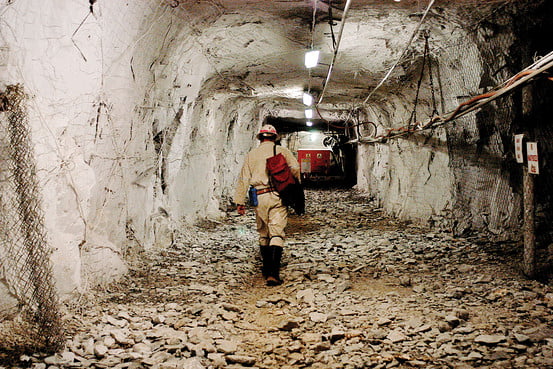
Top ten deepest mines in the world

0

The list of the deepest mines in the world is dominated by South African gold mines with a whooping 6 mines on the list. Of the six South African mines top four are from the Southern neighbor.

If the list was to be of the top ten deepest operating mines then another South African mine South Deep mine with a depth of 2.99 km would also make that list.

See the list of the deepest mines in the world below:

RankName of mineDepthLocationPrimary resourceActive / closed
1Mponeng Gold Mine4.0 km South AfricaGoldActive
2TauTona Mine3.9 km South AfricaGoldActive
3Savuka Gold Mine3.7 km South AfricaGoldActive
4Driefontein, Gauteng3.4 km South AfricaGoldActive
5Empire Mine3.355 km United StatesGoldClosed 1956
6Kusasalethu mine3.28 km South AfricaGoldActive
7Kolar Gold Fields3.2 km IndiaGoldClosed 2001
8Laronde Mine3.2 km CanadaGold, copper, silver, zinc Active
9Moab Khotsong mine3.05 km South AfricaGoldActive
10Morro Velho3.0 km BrazilGoldActive

The Bagger 288 – the largest land vehicle

0

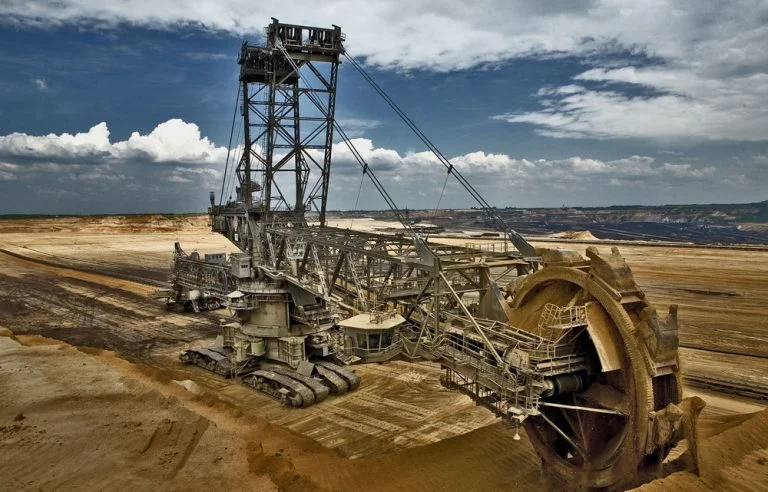
Bagger 288 (Excavator 288), built by the German company Krupp for the energy and mining firm Rheinbraun, is a bucket-wheel excavator or mobile strip mining machine.

QUICK INFO

1. It can excavate 240,000 tons of coal DAILY
2. Is up to 220 m long
3. Is approximately 96 m high
4. Requires 16.56 megawatts electricity to operate
5. Travels 2 to 10 m per minute
6. Traveled 22km in 3 weeks

When its construction was completed in 1978, Bagger 288 superseded Big Muskie as the heaviest land vehicle in the world, at 13,500 tons. It took five years to design and manufacture, and five years to assemble with total cost reaching $100 million.  In 1995, it was itself superseded by the slightly heavier Bagger 293 (14,200 tons). NASA’s Crawler-Transporter still remains the largest self-powered land vehicle in the world, since bucket-wheel excavators are powered by an external power source, and the Overburden Conveyor Bridge F60s holds the title of the largest land vehicle of any type by physical dimensions.

The Bagger 288 was built for the job of removing overburden before coal mining at the Hambach strip mine in Germany. It can excavate 240,000 tons of coal or 23,240,000 cubic metres of overburden daily[3] – the equivalent of a football field dug to 30 m deep. The coal produced in one day fills 2400 coal wagons. The excavator is up to 220 m  long (slightly shorter than Baggers 287 and 293) and approximately 96 m high. The Bagger’s operation requires 16.56 megawatts of externally supplied electricity. It can travel 2 to 10 m per minute (0.1 to 0.6 km/h). The chassis of the main section is 46 m wide and sits on 3 rows of 4 caterpillar track assemblies, each 3.8 m wide. The large surface area of the tracks means the ground pressure of the Bagger 288 is very small (1.71 bar or 24.8 psi); this allows the excavator to travel over gravel, earth, and even grass without leaving a significant track. It has a minimum turning radius of approximately 100 meters and can climb a maximum gradient of 1:18 (5° incline).

The excavating head itself is 21.6 m in diameter and has 18 buckets each holding 6.6 cubic meters of overburden.

SEE THE BAGGER 288 in ACTION

By February 2001, the excavator had completely exposed the coal source at the Tagebau Hambach mine and was no longer needed there. In three weeks it made a 22-kilometer (14 mi) trip to the Tagebau Garzweiler, traveling across Autobahn 61, the river Erft, a railroad line, and several roads. The move cost nearly 15 million German marks and required a team of seventy workers. Rivers were crossed by placing large steel pipes for the water to flow through and providing a smooth surface over the pipes with rocks and gravel. Special grass was seeded to smooth its passage over valuable terrain. Moving Bagger 288 in one piece was more economical than disassembling the excavator and moving it piece by piece.

The Bagger 288 is one of a group of similar-sized and built vehicles, such as Bagger 281 (built-in 1958), Bagger 285 (1975), Bagger 287 (1976), Bagger 293 (1995), etc.

BelAZ 75710 – world’s largest, highest payload capacity dump truck

0

BelAZ 75710 is the world’s world’s largest, highest payload capacity dump truck.

The 75710 can carry a 450-tonne (440-long-ton; 500-short-ton) load. With an empty weight of 450 tonnes (440 long tons; 500 short tons), it is much more heavily built than the previous model, which weighed 240 tonnes (240 long tons; 260 short tons) when empty. It is 20.6 m long, 8.16 m high, and 9.87 m wide. The bed is relatively shallow, limiting the volume of material that can be carried.

Instead of a single-engine, the Siemens MMT 500 drive system is powered by two MTU 65-litre 16-cylinder four-stroke diesel engines, each with 2,300 horsepower (1,700 kW). These are coupled to two AC alternators and four AC traction motors (two in each axle. Fuel consumption (according to company data) is 198 g/kWh (1.94 oz/MJ) per engine, with the option to run on only one if carrying less than capacity loads. The maximum speed is 64 km/h (40 mph), and economy maximum speed (when fully loaded and on a 10% gradient) is 40 km/h (25 mph).


TypeHaul truck
ManufacturerBelAZ
Production2013–present
AssemblyZhodzina, Belarus
Body and chassis
ClassUltra class
LayoutFront-engine, four-wheel drive
Powertrain
Engine2 × MTU DD16V4000 V16 diesel
TransmissionSiemens MMT500
PropulsionDiesel-Electric
Dimensions
Wheelbase8 m
Length20.6 m
Width9.87 m
Height8.26 m
Curb weight360 t

See video below

https://www.youtube.com/watch?v=638zMKTb4WI

AUDIO: Police to shoot to kill mashurugwi – Ziyambi

0

Minister of Justice Legal Parliamentary Affairs Hon Ziyambi Ziyambi has warned that anyone who attacks and or kills using machetes will be arrested, denied bail and if reported dangerous will be shot by Police as the country will not tolerate terrorists.

Listen to the AUDIO interview by VOA (shona language used)

Is the violent use of Machetes now part of our lives – Mliswa

0

Fire-brand Norton member of Parliament Temba Mliswa has accused the government of not taking action against the continued violent use of machetes in the country.

Mliswa lamented that little has been done by the government to curtail the increasing problem and has blasted law enforcement agents for being part of the problem.

The Member of Parliament continued on saying that “I have pushed this agenda in the National Assembly and have spoken about the introduction of Statutory Instrument being put in place to ban their use and introduce stringent measures against those arrested’.

He went on saying “Government can do these things anytime but they are not doing so. The President has spoken about it but there is no traction at all from the Ministers to curtail this. Are they part of this? They can only be part of this”.

Recently, President Emmerson Mnangagwa publicly tasked Chegutu West MP Dexter Nduna (Zanu PF), to end the chaos in the artisanal mining sector, raising speculation that the parliamentarian was partly responsible for the machete wars that have unsettled the country.

Machetes violence particularly associated with the small-scale mining industry has been on the rise country-wide. Machete-wielding gangs usually pounce on rich small-scale mines confiscating gold ore robbing and maiming even killing in the process. Experts have warned if the terror gangs are not contained the possibility of terror groups like notorious Alshabab of Somalia will be born.

Drought, mounting debt leave Zambia, Zim in dark

0

Drought has plunged millions of Zambians and Zimbabweans into darkness as hydro-power dams drain, and their governments’ debt is making matters worse.

Rolling electricity blackouts lasting 18 hours a day have choked the two economies.

Ballooning debt has left them unable to afford to import enough power to help cushion shortages.

Even if they could, the region’s biggest supplier, Eskom Holdings SOC Ltd, doesn’t have enough capacity to keep the lights on in its home market, South Africa.

The power crises in the three countries has exacerbated economic strain. Zimbabwe’s gross domestic product is expected to shrink this year, Zambia is on course for the slowest expansion in more than two decades and South Africa is staring down a second recession in as many years.

The downward spiral has been years in the making, as cash-strapped electricity utilities failed to replace aging plants and build new ones fast enough to keep up with demand, according to Kay Walsh, managing director at Nova Economics Ltd in Stellenbosch, near Cape Town.

The drought has only magnified the problem, she said.

“Everything has come to a head at a very unfortunate time, but the problems had been brewing,” Walsh said.

“They can’t actually afford to replace their capacity. It’s either a sharp increase in tariffs or it’s got to be funded by the taxpayer.”

Shut Kariba

Turbines at Kariba, the world’s biggest man-made reservoir, could be forced to shut completely after water levels dropped to the lowest level in 23 years, and continue to fall.

A disastrous scenario for both economies.

Electricity prices will need to rise, Walsh said.

That would add to inflation woes — Zimbabwe’s consumer prices surged an estimated 481 percent, last months according to independent estimates, and in Zambia price growth is at a three-year high.

Historically, the two countries have relied on cheap electricity from Kariba. As populations have grown and more people are connected to the grid, Governments didn’t raise tariffs enough to afford to build new production capacity.

Borrowing more to pay for plants will be difficult.

Zambia’s sovereign debt will reach 96 percent of gross domestic product next year, while Zimbabwe can’t take on more debt until it settles its arrears with international lenders.

By 2017, Zesco Ltd, Zambia’s State-owned power supplier, was in breach of seven loan agreements with banks including the Bank of China and Standard Chartered Plc, according to its latest annual report.

Zimbabwe more than tripled power tariffs in October and will need to act again, while Zambia has warned that an announcement on prices is imminent.

Only Option

That Zambia “is in a debt-induced crisis implies that very few external, and some domestic, suppliers of electricity are willing to guarantee additional supply without onerous demands which Zambia is unlikely to satisfy,” said Grieve Chelwa, a senior economics lecturer at the University of Cape Town.

“So the sum total of this has made the situation worse now than before.”

People including Brown Liamba, a 30-year-old who owns a printing shop in Lusaka, Zambia’s capital, would rather pay higher prices for electricity if it meant more reliable supply.

It will still cost less than the fuel he has to buy to run a generator.

“If that’s the only option to sort out the load-shedding, and me running my business, I’d rather pay double,” he said, using a regional term for rolling blackouts.

Even with higher prices, the power deficits in Zambia and Zimbabwe won’t disappear overnight.

It will take at least a couple of years for hydro-power dams to recover. And small businesses like Liamba’s that account for the bulk of economic activity in the two nations will continue to struggle.

“The impact is going to be substantial,” Chelwa said.

“Electricity, is the lifeblood of any economy.” — Bloomberg.

ZMF to name and shame claim barons

0

Zimbabwe Miners Federation (ZMF) President Ms. Henrietta Rushwaya will name and shame a cartel of mining claims that has deepened its claws in the mining sector through engaging in unscrupulous hoarding of mining claims for resale.

Rudairo Mapuranga

Speaking to Mining Zimbabwe, Rushwaya condemned and labeled these claim barons as conmen who have contaminated the whole mining sector.

“We condemn this unscrupulous practice with utmost disgust. These are con men and people should be wary of such people. As ZMF we shall name and shame” said Rushwaya

The growth in mining sector has seen the rise of claim barons who acquire over 50 claims each in order for them to sell the claims to people who want to invest in the small scale mining sector at very high prices, ranging from over USD 4000 to USD10 000, when acquiring a claim from the Ministry of Mines and Mining Development would just be ZWL400.

According to distant observers, the rise of mining claim barons has seen the rhetoric against Exclusive Prospecting Orders which are issued in order for the country to have an assessment of the minerals they have in finer details and possibly discovering new mines.

Mining claims barons are reportedly threatened and the issuing of EPOs will put them out of business because they will have nowhere to peg and acquire claims for resale.

Social media has reported many complains from miners who were duped by claim barons under the pretense of being sold a rich claim while on the ground, it could be an unviable claim with operational cost higher than what is realised by the mine.

Only a handful of EPOs have been granted, further, when an EPO is granted, EPO holders allow miners to peg in areas they don’t have interest in after our first pass exploration.

Stopping EPOs means the country is getting left behind in discovering new deposits from new EPOs. Only 10 percent of the EPOs according to world statistics will return viable projects suitable for the establishment of world-class mines.


This article first appeared in the December 2019  Mining Zimbabwe Magazine.

Assistance to People with Disabilities in Mining

0

My name is Moses Marufu Zimbabwe Miners Federation (ZMF), Secretary for People with Disabilities in Mining.

I just want to make this reminder to all Miners that the of 3rd December of each year is a special day for *People with Disabilities* called International Day of People with Disabilities. It’s a day as miners that we should commemorate as our operations have a 15% say mine accidents causing disabilities.

Causes of Disabilities

Disabilities are caused by many factors that include health issues: road accidents mining and late the scourge of machetes. Let’s all reflect on the day and give all the support to victims of mining: bus accidents etc.

This could be in the form of miners advocating for mining policies that support disabled people. The current returned Mines and Minerals bill 2015 is such a good chance for all to put inputs. Your inputs in embracing People with  Disabilities in mining: a new baby in the mining industry is most welcome. We need more inputs from your peer established miners.

Disabled miners are often taken away from their area of interest ie “vachinzi chigarai kumba maremara hamuchagone”. Translated “you must now Stay at home you are no longer able as you are now disabled”

As Secretary of People with Disabilities, I urge you all to give us a chance in mining. We want all structures in the ministry of mines to have a disability desk at the district, provincial and national levels. This also includes the Chamber of Mines.

NB. Zimbabwe Miners Federation has set the right cue.

Assistance to People with Disabilities in Mining

Established miners and suppliers of mining equipment and services should also come on board to assist the new baby in mining. Established miners must cede some of their tributes to Pwds and give all the necessary support in terms of management for a period until PWDs grasp mining. Suppliers of services and equipment are also asked to partner Pwds in mining.

And in turn, the Government should reward such companies in the form of juicy rebates for other big mines to follow suit. That’s empowerment to Pwds in miming.
Security of Miners especially PWDs

As miners we aren’t safe, the issue of machete is yawning disability on its own. Both non-disabled and Disabled miners need protection. We call upon legislators to enact laws that are deterrent that include no representation at court.

Policies

The policymakers should take heed of this as they will benefit too when disabled. We wish no one that condition but what’s good for a disabled person is good for everyone that includes ramps automatic cars and cellphones.
Appeal to Provincial Mines Directors.

It is very encouraging that two Provincial Mines Directors are embracing People with Disabilities who are keen to go into mining as they have accepted our appointment to see them especially on the allocation of claims. We appeal to other PMDs in other regions to do the same.

Appreciation to Ministry of Mines

In the same vein, our Ministry of Mines should be recognised for giving one of us employment in Mashonaland Central. We appreciate that heartily as we feel accepted in our endeavors. PWDs should be made aware of extension services by the Ministry of mines that include reconnaissance geological and induced Polarisation. All we need is to get up and be involved in mining.

United Nations Convention on Rights of People with Disabilities (UNCRPD)

This document gives rights to PWDs welfare. As people with disabilities, in general, we need this piece of document’s domestication. Its non-domestication affects our rights. Disabled people have been marginalised for too long a time.

Solidarity messages could be sent to 0713840078 App Please note this is not a SONA but a reminder that the disability box is a bottomless pit.

Time is running out for deal to merge African gold mines

0

Endeavour Mining Corp. suggested the chances of a deal with Centamin Plc are shrinking as the other company seems unwilling to explore the benefits of combining the two Africa-focused gold producers.

Endeavour will only proceed if it can complete a proper and comprehensive due diligence process, which is not possible for now, it said in a statement Thursday.

There’s not enough time to conduct the necessary work before a Dec. 31 regulatory deadline for Endeavour to either commit to making an offer or walk away, the company said. Endeavour said earlier this week it won’t make an offer before that date without the backing of Centamin’s board.

Endeavour is urging Centamin to ask the U.K. Takeover Panel for an extension on the timeline to the end of January. However, Centamin said Wednesday it first wants information such as Endeavour’s financial model.

If the deadline passes without a firm offer, Endeavour won’t be able to bid for Centamin for six months under the U.K. takeover code.

“Given the situation and tone of the recent releases, we think it is becoming more likely that Dec. 31st passes without further progress,” James Bell, an analyst at RBC Capital Markets, said in a note.

“This would be disappointing but potentially understandable given the circumstances,” Bell said.

Endeavour went public with its all-share $1.9 billion takeover proposal for Centamin earlier this month, saying efforts to engage with its board were unsuccessful. Endeavour runs mines in Ivory Coast and Burkina Faso, while Centamin’s flagship asset is the large Sukari gold operation in Egypt_Mining.com

Zimbabweans negative perception, a blow to mining investment

0

Investment in any sector takes confidence for the investor to contemplate on working for any project even though there is a clear picture that the structure to be worked on has encouraging outcomes, negative intuition by Zimbabweans has been branded as one of the reasons why investment in the coming sector is at its lowest when the government is pushing a narrative that encourages investment in the sector.

Rudairo Dickson Mapuranga

Participation of citizens in day to day running of government business should take the foremost protagonist stance to improve transparency and investment environment in the country. The citizens of Zimbabwe are investing in dubious businesses instead of making an upturn into the mining sector or the agriculture sector to advance industrial growth.

The perception and attitude by most Zimbabweans on laughing and resigning in wait and see attitude when news of government deals with other countries are at the forefront of being announced is more dangerous and needs to be addressed.

The apathy of citizens is very treacherous to the future of the country, this is how a few individuals mainly foreigners are left to loot because it is them that structure and influence mining policies without the people of Zimbabwe moving in to show their disaffiliation in new policies the government always introduces willy-nilly.

It is of paramount importance for Zimbabweans to show interest in every deal the government sign on behalf of the citizens of Zimbabwe, showing interest is a good start and then interrogate the parties in the deal, demanding development and results the country craves for.

For example, people laughed when the current President announced oil and gas reserved in Muzarabani. It was of uttermost importance for the people to investigate the possibility and viability of the information considering the fact that exploration in the area was at its initial stages, Invictus Energy and Exploration, the company operating in the area has now confirmed good source potential for gas and liquids generation.

It is important to note that, if the area is rich in oil, the country has no plans on who should get a prospecting license on the land and what Invictus Energy and Exploration is getting for carrying out exploration of the rich gas claim, there is a possibility that ordinary Zimbabweans will not benefit anything from the oil and gas from Muzarabani even residents who will be affected by mining operations on the oil and gas concession.

It, therefore, becomes important for the citizens of Zimbabwe to advocate for the opening up of mining agreements to public scrutiny and must not be treated as sacred information so that development and growth in the mining sector should be realized.

There should be a community or all stakeholders participation in negotiating mining agreements because they are on the receiving end of the mining activities.

The wait and see attitude on things of national growth is a blow to both local and international investment, it attracts bogus and unscrupulous investors leaving genuine investors in doubt and fear of investing in an industry or country where more people are pessimistic of the future.