Home Blog Page 583

Important priorities to a more progressive mining sector in 2020

0

Consequences of the Mining sector in Zimbabwe both small scale and large are very large especially in old mines, although all the people are on their heads up expecting an economic resuscitation led by the mining sector, the sector, however, seem to lack positive energy that can make it possible for it to solely reinvigorate the economy due to the prevailing socio-economic and political realm.

Rudairo Dickson Mapuranga

Taking a closure analysis of the mining sector in Zimbabwe it doesn’t take one to conclude that the potential of the sector into becoming the backbone of African economic reinforcement need to be detected by pushing for constructive policies that aim to the wholly functioning of the mining sector and conspicuously helping in both community development and fiscus returns.

The advancement of the mining sector in Zimbabwe into a competitive sector in both explorations, granting of prospecting licenses, mining environment (taxes and loans) and pricing of minerals should be prioritised going into the coming year for the country to improve in mining investments.

Many things need to be addressed going into next year for Zimbabwe to have a meaningful mining sector that has the balls to resuscitate the economy.

The following are points necessary for the sector to become a leading for in the nation’s redevelopment and growth.

Political correction

The political climate in Zimbabwe is very toxic and unhealthy for any meaningful business venture, there are extremely obvious differences in the political space. Elites sabotage each other on political grounds in the process disadvantaging national growth.

Despite fairly complex political and institutional challenges, many opportunities may facilitate an improvement in the governance of the mining sector, they may include among others,
(i) The shift – in power after these largely disputed 2018 elections to political dialogue between the two main actors, which may allow the government to explore practical ways of implementing its election manifesto and improving the economy through the mining sector;
(ii) Engaging large scale miners to review terms of their investment agreements and pay them on time;
(iii) The constructive initiatives from the Ministry of Mines and Mining Development, Chamber of Mines and Zimbabwe Miners Federation to initiate a dialogue and move towards development-friendly solutions.

Redollarisation

It is a well-known fact that for any economy to compete and be stable, money should be free-floating and tradeable. The money we have in Zimbabwe is indeed free-floating but at the same time, it is not tradable. By mid-July 2019 inflation had increased to 175 percent sparking concerns that the country was entering a new period of hyperinflation, the government has since stopped releasing inflation figures. The Zimbabwean dollar is not legal tender outside Zimbabwe which means that it cannot be regarded as money outside the country but just a paper.
Re-Dollarisation will help bring confidence at the same time stabilising business from unfortunate loss caused by hyperinflation. This will not only substantially decrease inflation and interest rates, but it will also contribute to promoting saving, investment, economic growth, and employment. It will, furthermore, stabilise the dysfunctional Zimbabwean credit system, enhance long term lending contracts and correct the misallocation of resources caused by hyperinflation.

Dollarisation will also enable the availability of loans for miners, since the money used, will be stable and sustainable.

Re-industrialisation

It is without a doubt that Zimbabwe is one the richest country in the world regarding mineral resources and is one of the leading exporting countries in respective resources. Industrialisation is associated with higher productivity growth and structural economic transformation and development.

Exportation of raw minerals has been regarded by many scholars as extremely dangerous and a blow to economic growth, mineral exports are negatively correlated with growth, but only for the relatively mature mineral-based economies and only for certain periods.

Zimbabwe is exporting all of its chrome raw to China and then import chromium steel from the same China, it should be noted that Zimbabwe being the host of chrome should just manufacture steel then export it to China.
There is a need, therefore, for Zimbabwe to move the mining industry beyond extracting and exporting raw materials but rather, use the revenue accrued in a strategic process of industrialisation and structural transformation.

Revise payment issues

The government needs to consider putting mechanisms to pay producers on time and giving small scale and artisanal miners once-off payment in cash, this will help reduce leakages and operational down times.
It is believed that the majority of gold mined by small scale and artisanal miners is being shipped away from the country through unscrupulous means thus it becomes important for the government to look into their payment systems and then consider paying miners considerable amounts.

Chrome miners in Zimbabwe have been complaining of predatory pricing unless the issue is solved the majority of chrome miners will underproduce and others shutting down operations until things stabilise, which means that the president’s USD12 billion road by 2023 will be disadvantaged.

Recently Bindura Nickel Company approached the government seeking foreign currency retention of not less than 80 percent and early payments from the country’s central bank.

Adhere to the rule of law

Zimbabwe’s constitution has been hailed as a very upright and democratic mechanism that dictates the transparency of decision-making processes and it is rich in determining the degree to which politicians are held accountable. However, the majority of Zimbabweans feel that the constitution is being largely neglected for the benefit of a few oligarchs. For example, recently Mutumwa Mawere through his Twitter handle accused the government of abusing the constitution and laws of the land to suit their gains.

Despite making progress in democratic consolidation and well organised 2018 elections, the challenges Zimbabwe is facing right now seem to be coming from a democratic point of view. Many people who were supporting the current regime turned back due to different reasons including renowned journalist Hopewell Chin’ono who accuses the government of its continual disrespectful of human rights. Perhaps some sector challenges are arising due to the remaining democratic weaknesses of the political field.

It is therefore important for the government of Zimbabwe to come to terms with the constitution of Zimbabwe and make strides that will effect change in investors and citizen attitude towards the government.

For example, regarding EPOs, the government should consider working towards revealing these EPOs to accommodate the small scale and artisanal miners. EPO holders must not be granted over 3year like it currently is so that actual mining can take place. The government should also raise taxes for an EPO holder after 1 year if it fails to gazette geological results for some of the lands under their exploration zone. The government needs to ensure that exploration does take place and at the same time production should not stop.

End corruption

Corruption in the mining industry in Zimbabwe is not well documented but too prevalent.
This year a forensic audit by Reynolds Tendai Muza, a forensic auditor and investigator with Ralph Bomment Greenacre and Reynolds unearthed massive corruption at Hwange Colliery Company Limited in which the Minister of Mines Hon Winston Chitando was implicated. Investigations by the Mines portfolio committee also exposed that the once-thriving mine was actually destroyed by very powerful persons, some of whom are currently serving in government.

Corruption is bad for business and it reduces investment, both foreign and local, therefore a direct insult to the “Open for Business” mantra, corruption will also hinder the vision towards a USD12 billion industry.

As the former United States, Vice President Joe Biden said “Corruption is cancer: cancer that eats away at a citizen’s faith in democracy, diminishes the instinct for innovation and creativity; already-tight national budgets, crowding out important national investments. It wastes the talent of entire generations. It scares away investments and jobs.”
Corruption in the mining sector needs to be entirely cracked down to create a conducive environment for all miners to work without fear or favor. According to Biden, fighting corruption is not just good governance, it is self-defense and patriotism.

The government of Zimbabwe needs to reduce the risk and incidence of corruption in the mining sector by improving the transparency of decision-making regarding granting of mining exploration and extraction licenses; public and stakeholder access to mining revenue information, including where companies are based and where they operate, and public disclosure of the payment and application of mining revenues.

Improving electricity and fuel supply

Due to the continued power cuts and fuel problems facing the country, the industry’s predicted growth might be thrown into an abyss of no hope.

Zimbabwe is experiencing serious power and fuel shortages which contributed significantly to the nation’s downfall economy.

Unstable power supply married with fuel shortages are a direct blow to mineral production, the government of Zimbabwe should, therefore, prioritise electricity generation and fuel availability to ensure that the economy of Zimbabwe doesn’t lack these needs.

Promote Exploration

It is a well-known fact that Zimbabwe is hamstrung by a lack of mining exploration, it, therefore, becomes important for the country to invest in exploration through Exclusive Prospecting Orders (EPOs) and Special Grants (SGs), however, the way EPOs are carried out should also be looked into in order to accommodate small-scale and artisanal miners.

It should, however, be noted that according to the Director of Geological Survey of Zimbabwe Forbes Mangubate the structure of the mining industry in Zimbabwe is highly skewed. There is a gap between thousands of small-scale miners and a few large mines. There are many small-scale mines with the potential to develop into medium and large-scale that’s where exploration should come in.

It should be noted that over 3000 gold deposits in Zimbabwe are known through ancient works than exploration.
Digitalise mining rights, title registration, and all payments.

Amidst reports of corruption, money laundering, externalisation and other unscrupulous behavior by mining personnel, all transactions which are mining-related in Zimbabwe need to be done digitally to avoid corruption and

Improve transparency.

The registration of mining rights and titles should be digitalised to improve administration and avoid double title allocations. There have been reports of disputes emanating from double title allocations, digitalisation will eliminate such issues with ease.

There should be an open to public geographical locations, ownership and time validity of mining rights and titles, mining rights and title registration and payment of registration fees should be digitalised for online processing.
Improve technical staff in the ministry of mines

The Ministry of Mines and Mining development has been accused of being slow in terms of addressing the grievances of miners. Some have accused the ministry officials of their desire to be worshipped for them to do the work they are paid for by taxpayers.

The ministry of mines technical departments are reportedly understaffed because of low salaries, hereafter the experienced staff leave for the private sector for example there is no geologist in Kadoma mines offices. Consequentially, the ministry hires those that are unskilled or those without adequate experience.

There are technical people in the ministry who have never worked on a mining project yet they make decisions concerning exploration and mining projects. It is reported that, best technical skills left the country in the past 20 years and continue to leave for greener pastures.

The ministry must hire competent individuals to professionalise the mining sector ensuring that the industry will achieve its 2019 production target.

For the mining sector to reignite the sector going into next year, it becomes important for the government to take into consideration the steps above for the country to improve in mineral production subsequently economic growth and see the 12 billion mining industry by 2023 come to fruition.


This article first appeared in the December 2019  Mining Zimbabwe Magazine

The water ASM are pumping away can be worth a fortune

0

Mining Zimbabwe has been visiting a lot of small scale miners and one thing we always noticed was water being pumped from the ground and wasted away onto the surface.

This is a very common practice with the exception of one Mr Fletcher Mbizo a Norton miner who is rather not just wasting the water away but assisting ZRP Norton with the much-needed water which created an open door for others who are presently engaging in Horticulture at the site.

With the water challenges some town councils are facing other than just wasting the water away, small-scale miners can bottle this water for sale in retail outlets. If more and more of them engage in this practice bottled water will flood the market thereby bringing the prices down.

Rather than the small-scale miners bottling the water, they can also sell to bottling water companies too.

“Normally water found in mine shafts is regarded as a major problem to handle by artisanal and small scale miners as it requires expensive pumping equipment which they would rather avoid to buy if they could. However, this could change if the pumped out water is regarded as one of the products of mining and it is exploited for agricultural production. If the water is provided to local farmers within the vicinity of a mine, a new concept of “agro-mining” could be developed and may actually lead to the mitigation of climate-change-induced droughts and hence greater agricultural production around mines. This will result in the reduction of farmer-miner conflicts that occur quite frequently around the country” said Legendary miner Engineer Chris Murove.

Norton miners association chairman Mr. Previlage Moyo said “Value addition is a very good idea”

“It is a business opportunity that has the potential to bring us added revenue rather than just waste the water away. When we pump water from the ground and onto the surface it just goes to the next miner and next and next so preserving it will help reduce waterlogging.

Miners closer to schools and hospitals can also assist if there are challenges who can collect water to deliver to schools or hospitals across neighborhoods. Or if close enough they can even build tanks that can have water being pumped directly to council reservoirs.


This article first appeared in the December 2019 Mining Zimbabwe Magazine

ACHIEVING THE 50-TON PLATINUM TARGET BY 2030: CHALLENGES AND GROWTH IMPERATIVES

0

ACHIEVING THE 50-TON PLATINUM TARGET BY 2030: CHALLENGES AND GROWTH IMPERATIVES

by Lyman Mlambo

Introduction

Zimbabwe has the world’s second-largest reserve of PGMs in the Great Dyke after South Africa’s Bushveld Complex. There is also potential elsewhere outside the great Dyke as evidenced by 16 platinum EPOs granted in the 1990s. Thus, the geological prospectivity for PGMs in Zimbabwe is undoubted. Zimbabwe ranks third after South Africa and Russia. For example, in 2018 South Africa, Russia, and Zimbabwe’s production figures stood at 110 tons, 21 tons and 14.7 tons respectively. The platinum sector has the greatest potential to expand, besides gold, judging by its geological prospectivity, the several expansion programs by the current three producers (Zimplats, Mimosa and Unki), and the influx of new entrants into the sector (Great Dyke Investments, Karo Resources and several other projects which are at various stages of planning and evaluation). It is no wonder that the Ministry of Mines and Mining Development targets the industry to achieve a quarter of the US$12 billion mining industry target by 2023.

Looking at 50 tons of platinum by 2030 – what is really the magnitude of the task ahead in the context of the production trend we have seen in recent years? In the last five years (from 2014 to 2018), platinum production has grown by an average of 2.63% yearly. Assuming the average growth rate continues, platinum production would grow to about 20t by 2030, which falls far short of the 50-ton target. To achieve our target we need to grow the sector by an annual average of 10.78%. This requires a significant transformation of the current conditions under which the platinum sector is operating.

Production for platinum was on a generally upward trend from 2000 (at 0.51 tons) to 2018 (at 14.7 tons) with the highest recorded in 2016 at 15.1 tons. Over the same period, the international price for the precious metal was initially on an upward trend from US$544.03/ounce in 2000, peaked at US$1,721.86/ounce in 2011 and went on a monotonic decline to US$880.53/ounce in 2018. Clearly, production trends have not strictly followed price trends. Therefore, the achievement of the 50t by 2030 cannot be premised on either the existence of large reserves of platinum in the country (comparative advantage) or an assumed increase in the world market price of platinum. The sufficient conditions for the growth of the platinum sector include deliberate actions to influence the competitive advantage of the sector from within (that is, independent of world price). In short, we must create conditions that make it greater business sense to invest in the Zimbabwe platinum sector than in other countries or other sectors.

Challenges

International perception of the investment environment in the Zimbabwe mining sector, in general, is bad, with the Fraser Institute ranking the country 5th last on Policy Perception Index (PPI) and 2nd last on Taxation Regime Index (TRI) in 2015. PPI looks at the whole policy environment in the country’s mining sector, while TRI (which is micro-perception index) looks at the taxation regime applicable to the sector. Platinum along with diamonds have now, like the rest of the minerals, been pronounced to be exempt from the indigenization policy requirement. However, clarity on this matter needs to be established by regularization of the Act, otherwise, the tag of indigenization could continue to linger. Perceptions themselves may not be accurate, being perceptions (not measured), but unfortunately, they drive investment decisions.

With regard to the royalty component of the fiscal regime, a comparison between Zimbabwe and other countries in the Southern African Region is instructive. Platinum royalties in Zimbabwe are based (charged) on gross sales revenue rather than on profit. This obligates even marginally economic and loss-making firms to pay them; makes them a variable cost (as they are exacted also on the cost component of gross revenue); is a drift away from the general global shift towards the profit basis, and is less competitive compared to neighboring South Africa. In SA, while it is revenue-based, it provides some formula to link the actual rates exacted to mine profitability, so that the rates vary by mine, thus taking into the accountability to pay. Zimbabwean rates are currently the highest in the Region at 10% compared to a range of 0% in South Africa (for marginal and loss makers) to 6% in Mozambique and Tanzania. The royalty regime does not provide for stability clauses, unlike in countries like Mozambique and South Africa. There is also generally a high burden of fiscal compliance due to a multiplicity of tax heads, regulatory/legislative instruments and collecting agents.

The serious power shortages being experienced in the country have also affected the platinum sector. In general, a mine requires on average at least 16 hours of uninterrupted power supply every day to ensure that production levels are maintained and that machines run optimally (frequent power outages affect machines). In 2008 the International Monetary Fund estimated that the cost of power outages to a mining firm could be as much as 5-6 % of revenue. It is common knowledge that all forms of infrastructure including transport – road, railway, and air have suffered dilapidation over the years.

Access to finance is the greatest obstacle to doing business in Zimbabwe due to limited opportunities for offshore lines of credit coupled with inadequate local funding at very high-interest rates. This has not been helped by the lower forex retention for the PGM miners at 50%. Much of the forex is on the parallel market where rates are much higher than the interbank market rates. This has resulted in mines failing to secure inputs in time, and in local inputs being very expensive. Generally, the sector is plagued by high costs of all sorts including electricity tariffs, fuel, funding, labor, consumables, and other materials and high fiscal and administered charges.

Zimbabwe has lost mining skills (geologists, engineers, technicians, and managers) to the region and to the broader international community due to a protracted general economic recession in the country. Zimbabwe’s capacity to develop more skills in the sector has suffered due to a decline in the capacity of the country’s training institutions. Funding and modern skills challenges have adversely affected the capacity of the Zimbabwe Geological Survey to generate new information including geological maps. There is a need for funding of more detailed exploration (beyond reconnaissance).

Growth imperatives

There are five things that Zimbabwe needs to do to achieve the 50-ton platinum target by 2030 or even earlier by 2023. These include:
(1) improvement in the attractiveness of Zimbabwe as an investment destination;
(2) Improvement in infrastructure development framework in the country;
(3) Promotion of beneficiation and value addition in the platinum sector;
(4) General linkage promotion in the sector; and
(5) Attracting and retaining capital in the platinum industry.

In order to address imperative
(1) we need to improve our country international rankings through addressing the policy vacuums, finalizing the legislative/regulatory framework in the platinum sector, providing a robust framework for the protection of private property rights and ensuring that these policies, legislations, regulations, and rights are stable. We also need to improve the ease of doing business (expedite the ongoing reforms), increase forex retention levels in the sector from 50% to 85%, make the fiscal regime more competitive especially by reducing the royalty rate to the regional average and improve the availability of geological information in order to effectively reveal the country’s propectivity.

Improvement in infrastructural development can be achieved through several measures. We need to integrate the production expansion plans (consistent with the 50-ton target) with infrastructural development plans so they speak to each other. Local financial institutions such as IDBZ, RBZ can play a key role if they are capacitated enough to fund infrastructure development. It is also probably time that mines are incentivized to participate in infrastructure projects that will ensure long-term service supply, through Public-Private Partnership (PPP) or in their own right. There is a need to develop an energy pricing model that strikes a balance between the sustainable supply of power and competitive pricing.

The promotion of beneficiation and value addition in the platinum sector is a critical element of national industrialization. The government needs to emphasize more on the carrot (incentives) than on the stick (tax penalties) until such a time that lack of compliance is deemed clearly deliberate (for example, when the mooted national centralized beneficiation facilities are in place). The infrastructure imperative alluded to above applies here too. Further dialogue on this matter through a beneficiation conference, to clearly define targets and implementation milestones, is imperative. Associated with this is the need to promote the development of upstream, downstream, side-stream, spatial and knowledge linkages in the PGM sector. In particular platinum mines should be incentivized to support local enterprise development and increase the local procurement of materials and consumables. The mutual feedback effects of these linkage industries to the primary production of platinum are obvious.
The PGM sector is currently operating at almost full capacity, which implies that the growth to 50 tons would be achieved only if adequate net capital is attracted. Required capital for the sector over the next five years, both for sustenance and ramp-up, stands at about US$7 billion. It is imperative that the Government facilitates the acquisition of cheap capital for the platinum industry through loan guarantees or other instruments. This, coupled with an increase in the forex retention level, will improve the financial standing of the platinum producers.

Lyman Mlambo is the Chairman of the Institute of Mining Research at the University of Zimbabwe he writes in his personal capacity.


This article first appeared in the December 2019 Mining Zimbabwe Magazine
Privelage Moyo goes to China in search of Gemstone markets

0

Privelage Moyo’s journey to China in search of Gemstone markets.

As a gemstone consultant for ZMF I Mr Privelage Moyo, early last month took time to visit China in search of markets for our upcoming gemstone sector so that we align ourselves to the 2023 vision of 12 billion United States dollars. The journey was an eye-opener as it proved that there is great economic potential in the semi-precious sector.

gemstones in China
Gemstone market in China

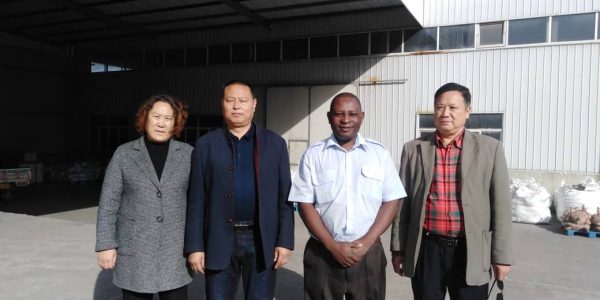
My first point of call was to look for strategic business people and partners willing to work with Zimbabwe ASM and the know-how of our situation and challenges. I did meet up with a team of businesspeople in Ningbo who are happy to be working with all the relevant Zimbabwe departments. The whole idea is to place Zimbabwe’s stones direct onto the world market than wait for the market or buyers to look for Zimbabwe. This sector has various traditional players who had been dealing with stones for centuries, making Zimbabwe a newcomer in the business.

Meeting with Chinese community
Meeting with Chinese gemstone business community

Our aim for placing Zimbabwe directly onto the market is such that it may quickly catch up with the rest of the world in terms of market specifications and requirements. Countries like Brazil, Pakistan, India Madagascar, and China itself had been mining semi-precious stones for centuries now meaning that their quality had improved, clarity and sizes.

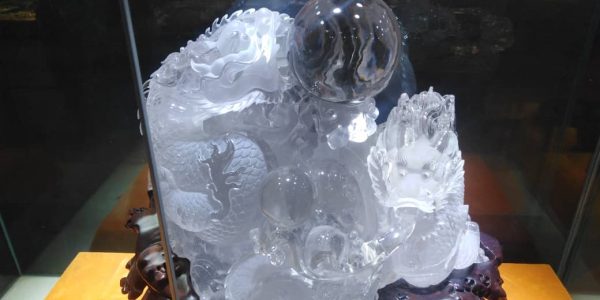
Beautiful gemstone in China
Beautiful gemstone display in China

Donghai county visit

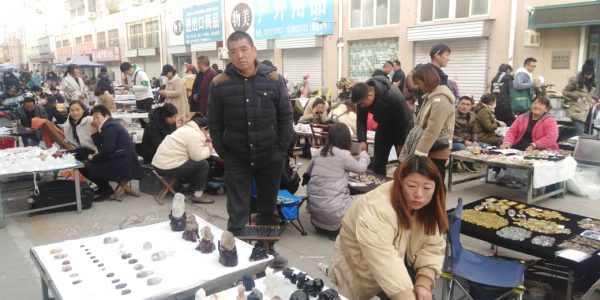
The final place I went to was in Jiangsu province called Donghai county, 70% of its income is through the trade of semi-precious stones. A newly built crystal market or mall in 2018 made trade sales of 14.5 billion yuan (usd2.1 billion), just one market alone. They have embraced the concept of an open market or just like our own model of Mbare Musika whereby more than 7000 dealers are given space to sell their stones from all over the world. So, Zimbabwe needs to align itself with the rest of the world by first visiting our rules and regulations, our export conditions, our way of doing business. It’s time banks are enticed to get involved and be partners in the sector as there is much needed foreign currency. Miners do not have the capital, but banks have super-local profits, which can be turned into working capital and turned into forex.

gemstones market in China

It’s time ZMF is given the go-ahead to spearhead this sector as MMCZ is overwhelmed with responsibilities. ZMF has over 1.5 million miners and this gemstone sector alone may triple as more players are willing but there is no framework or clear trade laws.


Written by Privelage Moyo. Moyo is Chairman of Norton Miners Association and ZMF National Secretary for semi-precious and gemstones.

MMCZ opens-up the Gemstone market

0

Minerals Marketing Corporation of Zimbabwe (MMCZ) has opened up the gemstone buying and selling market by inviting interested citizens to be agents who will buy and sell gemstones on behalf of the Corporation. The move which aims at bringing in transparent and curb corruption in the gemstone market has attracted attention of Miners and Zimbabwean citizens from all walks of life.

Rudairo Dickson Mapuranga

Zimbabwe has for a long-time lost millions of dollars when gemstones were being picked and shipped out by foreign nationals without the knowledge of the government of Zimbabwe through MMCZ.

The recent gemstone policy which has seen MMCZ inviting citizens of Zimbabwe to become sub-agents will curb the leakages of gemstones in Zimbabwe at the same time expanding the sector.

The coming in of the policy has been hailed as a move to increase mineral production in the country thereby a move which aids to the USD 12 billion mining industry by 2023.

The following is the Invitation by MMCZ to local gemstone marketers.

Interested Zimbabwean citizens (individuals and Corporate) are invited to submit expression of interest to be considered and licensed as MMCZ sub-agents to purchase colored gemstones around the country and selling same through the Corporation as per MMCZ act chapter 21:04 MMCZ Gemstones sub agents are appointed in terms of SI 256 of 2019. The function of an MMCZ gemstone sub-agents is to buy colored gemstones from small scale miners within Special Grants as defined in the SI 256 of 2019 and sell the colored gemstones through Minerals Marketing Corporation of Zimbabwe.

Terms of reference of the MMCZ Gemstones Sub-agents:

1. The MMCZ Gemstone Sub-agent shall keep in the prescribed from a register in which he/she shall enter, in respect of the colored gemstones dealing, such details relating to-

(a) the amount thereof purchased during the month

(b) the amount thereof held by him/her at the end of the preceding month

(c) the date of transaction

(d) the name and address of the other party to the transportation

(e) the nature and mass of the coloured gemstones involved

(f) the price, if any paid or received

2. The MMCZ Gemstone Subagent shall later than the tenth day of each month submit monthly returns to MMCZ in prescribed format in respect of gemstones purchased in the prior month.

3. If the MMCZ Gemstone Subagent is in possession of coloured gemstones in excess of what is recorded in his/her register in terms of SI 256 of 2019 he/she shall be deemed to be in unlawful possession of such excess unless he proves to the contrary

4. An MMCZ Gemstone Subagent shall be obliged to sell whatever he/she would have acquired as per Minerals Marketing Corporation of Zimbabwe (MMCZ) act Chapter 21.04

5. Any person who contravenes subsection (1) shall have their licences cancelled.

To be considered for selection, prospective citizens must meet the following criteria:-

1. Must be Zimbabwean Citizen (individual or Corporate)

2. Have sufficient knowledge of gemstones e.g identifying, grading and pricing.

3. Ability to self fund operations (proof of funds)

4. No criminal record- police clearance

5. Adequate understanding of the Mines and Minerals Act and MMCZ Act

6. Proof of resident/ secure offices.

Politicians Continue To Siphon Millions From Redwing Mine As Workers Go For Two Years Without Pay

0

Scores of workers at the troubled Redwing Mine, owned by South African Mogul Mze Khumalo, have raised an appeal over unpaid wages stretching for over two years now.

The disgruntled workers aired out their grievances during a labour rights training workshop organized by the Zimbabwe Environmental Law Association (ZELA) in collaboration with the Zimbabwe Allied Diamonds Workers Union (ZIDAWU).

The affected workers said efforts to engage the Redwing mine management which is under the AngloAmerican Mettallon group, have continued to hit a snag as the management continue to play a cat and mouse game.

Ministry of Mines and Mineral Development, provincial human resources officer Murapa said the situation was emanating from the operational challenges being faced by the miner.

Murapa said the mine was failing to pay its workers as it was under the Anglo-American group of companies that are under sanctions.
“We are aware of the situation, the company in question is under care and maintenance, they made this declaration because of the prevailing political situation is not conducive for them to operate optimally.

“They are failing to meet their dues because the challenge they are facing is political emanating from the sanctions and this is affecting the operations of Anglo American group, they cannot sell their produce,” said Murapa.

ZIDAWU president, Cosmus Sunguro said they have approached the management to resolve the impasse but to no avail.
He said management was failing to pay their workers simply because powerful politicians are busy siphoning money from the entity for their individual interests at the expense of workers.

“We have tried several times to engage the management but what we have found is that the issue tends to be political in the sense that there are some hidden individuals that are controlling behind the scenes.

“These politicians are the ones that are siphoning money from Redwing Mines, we engaged the Human Resources personnel and they said the mine had change names to King’s Daughter, the reason being to run away from their financial obligations,” said Sunguro.


263CHAT

Mining operations should be environmentally friendly

0

The resource-rich Southern African country, Zimbabwe has managed to attract new mining sector investors and for several communities, their wish is to see the good investment climate contributing to economic recovery.

Several companies have shown interest to invest in the Southern African country with the platinum sector expected to contribute three billion mark according to the $12 billion mining industry road map presented by the President of the Republic, Emmerson Mnangagwa.

Minerals such as gold will contribute $4 billion while diamond and chrome will contribute $1 billion each. This entails an increase in production by the mining companies in these sectors to meet the recommended contribution.

This increase overally means an upsurge in the rate of the impacts of mining on resource-rich communities. Therefore, it is imperative for mining investors to ensure that   mining communities are protected against human rights violations including protection of the ecosystem.

International standards on the other hand also encourage and promote corporate social responsibility. Standards such as the Initiative for Responsible Mining Assurance (IRMA) acknowledge the transformational changes that mining companies bring to the lives of host communities. IRMA highlights that it is possible to reduce the negative impacts of mining and uphold the positive impacts through conducting operations in an environmentally sustainable, socially equitable, economically beneficial and  ethical manner.

The IRMA is undergoing its first third party audit in Zimbabwe and Mexico. Anglo American Unki Mine located in Zimbabwe is currently undergoing an audit which started on the 29th of November and ran until the 6th of December 2019. The Scientific Certification Services (SCS) Global Services an IRMA approved certification body conducting the Audit sent out invitations for comments to be submitted before the audit process begins.

Unki Mine must be applauded for this noble move to undertake the audit. It is imperative to note that with Zimbabwe’s $12 billion mining strategy and Vision 2030 which are anchored at increasing mineral production to boast economic recovery, International standards like the IRMA and Extractives Industry Transparency Initiative if implemented can enhance development in the country. Unki’s move should be commended and this sets a good example for other investors   to follow suit.

Mining operations should be environmentally friendly according to ISO 14001 to earn a good corporate reputation.  Using initiatives such as Socio-Economic Assessment Toolbox(SEAT), Anglo-American Unki Mine provides their mining operations with detailed guidance on how to manage social impacts and deliver socio-economic development.

On the 23rd of November 2019, 150 Tongogara community representatives  gathered for a community engagement meeting to understand the IRMA standard courtesy of the Zimbabwe Environmental law Association (ZELA) an organisation which seeks to promote environmental justice, sustainable and equitable use of natural resources, democracy and good governance in the natural resources and environment sector. The communities were drawn  from local development committees, traditional leadership, local leadership, District Administrator’s office and Parliament Portfolio Committee on Mines.

Benefits of IRMA to The Company

Improved corporate reputation

Better market access for products and responsible sourcing.

Company appearing on the Responsible Mining Map

Benefits of IRMA to Civil Society Organisations, labour unions and communities

Being part of the responsible mining dialogue

Improved profits for the company due to better market access which will increase fund on Corporate Social Responsibility development projects that will benefit the community and the country at large.

Fadzai Lydia Midzi Zimbabwe Environmental Law Association

Mining sector incentives to promote new investment

0

Tax incentives, which the government extended to the mining sector are meant to attract new  investment while ensuring maximum utilisation of the country’s mineral  resources to achieve a US$12 billion mining industry by 2023, a Cabinet  Minister has said.

Gold production of 100 tonnes and earnings of US$4 billion per annum as well as production growth across other high value minerals such as  platinum, diamonds, lithium and chrome, will anchor the attainment of the US$12 billion milestone.

Finance and Economic Development Minister Mthuli Ncube said tax incentives that the mining sector enjoyed were not because it was being favoured.

In his 2020 National Budget, Prof Ncube announced a cocktail of new and extension of existing, duty free and tax rebates across many sectors to drive economic recovery.

Specifically for the mining sector, Prof Ncube allowed mining houses to bring in “tangibles and intangibles around computer software as tax-deductible items” and reviewed downwards the royalty on diamonds from 15  percent to 10 percent.

This was on top of other already existing tax incentives being applied to the mining sector.

“Chair, we are not being soft on the mining sector or favouring it. You know, we are trying to promote investment in the sector and incentivise  the sector. We are trying to grow our export earnings in the sector (so) really we do not want the tax to be an impediment towards that kind of  investment,” he told Parliament.

“We want to make sure that investment flows in. It is our desire that  we have an investment of US$500 million equivalent between now and the  year 2023 in the lithium sector for example. We believe that through these tax incentives in the form of a tax exemption is one way to  attract investment.”

Ncube said the government would not hesitate to pass on incentives  because this would in turn assist in creating jobs and drive foreign  currency earnings. “We have been very clear that the mining sector is a key sector and I  think that we all agree that Zimbabwe has so many minerals and we desire  to have those minerals exploited to the benefit of Zimbabweans but the  investors also want to earn a fair return and why not?,” he asked.

“That the mining sector is not paying enough taxes — again you know we  benefit a lot from foreign direct investment from the jobs that the  mining sector creates.  We benefit a lot from the exports and forex that  the mining sector generates. The mining sector is the largest generator  of foreign currency into Zimbabwe, showing we ought to recognise that  this is an important sector for driving our exports.”

The country’s mining representative body, Chamber of Mines of Zimbabwe has since welcomed Government incentives to the sector.

Zimbabwe is facing an acute foreign currency challenge and many companies have been sourcing the money on the unofficial market, pushing the prices of other consumables northwards.

Some of the Fiscal incentives for the Mining sector according to the Ministry of Mines and Mining Development website

Income Tax

Taxable Income of a Holder of Special Mining Lease

l A holder of a special mining lease, corporate income is taxed at a special rate of 15% instead of the general tax rate of 25%.

l However, holders of a Special Mining Lease are liable to Additional Profits Tax (APT). The tax is payable upon attaining a formula based level of profitability.

Exemption from Certain Taxes

l After consultation with the Minister responsible for the administration of the Mines and Minerals Act, the Minister of Finance may declare the holder of a Special Mining Lease to be an approved holder of a special mining lease for the purposes of exemption, wholly or partly, from the following taxes:

Non-Residents shareholders tax;

Non-Residents tax on Fees;

Non-Residents tax on Remittances;

Non-Residents tax on Royalties

Allowable Deductions/ Expenditure

Deductions on all capital expenditure on exploration, development, and operations incurred wholly and exclusively for any mining operations are allowed in full.

Expenditure incurred during a year of assessment on surveys, boreholes, trenches, pits and other prospecting and exploratory works undertaken for the purpose of acquiring rights to mine minerals in Zimbabwe or incurred on a mining location in Zimbabwe, together with any other expenditure that is incidental thereto.  The taxpayer may elect to have the expenditure allowed in the year of assessment in which it is incurred or carried forward and allowed against income from mining operations in any subsequent year of assessment.

Assessed Losses

There is no restriction on carry over of tax losses; these can be carried forward for an indefinite period.

Royalty on gold for small scale miners

In order to support this sector, Government levied a lower rate of royalty of 1% on small scale gold producers whose output does not exceed 0.5 kg per month.

Support for small scale miners

The capital-intensive nature of mining activities poses challenges to operations of many small-scale miners. This is notwithstanding that; small-scale mining activities employ many people in the country.

In order to encourage the participation of financial institutions in supporting small scale mining activity, Government has put in place tax incentives for financial institutions who accept geologically surveyed claims as collateral for small scale miners’ borrowing requirements

Customs duty

Rebate of duty on goods for the prospecting and search for mineral deposits-: Rebate of duty is granted on goods which are imported by a person who has entered into a contract with the Government for the prospecting and search for mineral deposits.

Rebate of duty on goods imported in terms of an agreement entered into pursuant to a special mining lease: Rebate of duty is granted on goods which the Secretary for Mines certifies as eligible for a rebate of duty in terms of an agreement in the special mining lease.

Suspension of duty on goods imported for specific mine development operations: Customs duty suspension is granted to a holder of a mining location importing specified goods during the project’s life cycle for mining development operations such as sinking shafts, installation of machinery, construction and erection of facilities for the production and conveyance of minerals.

Deferment of Value Added Tax: VAT deferment is granted to mining companies on capital equipment imported for a period of ninety days subject to the conditions set by ZIMRA Commissioner-General.

Rebate of duty on goods for use in petroleum exploration or production: Rebate of duty is granted to the grantee of a special grant issued under the Mines and Minerals Act authorizing the exploration or production of petroleum.—

Business Weekly/New Ziana

Palladium gains 60pc

0

This year has been good for commodities, with palladium leading the way with a gain of nearly 60 percent. The precious metal has continued to notch new highs, stealing the spotlight from cheese and milk prices.

Commodities’ performance in 2019 has been affected by distortions created by protectionist tariffs, moderation in the pace of global gross-domestic-product growth, higher geopolitical risk, and strong growth in some metal-consuming sectors, says Cailin Birch, global economist at The Economist Intelligence Unit.

The S&P GSCI Total Return Index, which tracks 24 commodities and is heavily weighted in energy, was up about 17 percent so far this year to December, 18, while the Bloomberg Commodity Total Return Index, which tracks 22 commodity futures contracts, added 6,6 percent as of December 18.

“Global growth expectations were very low coming into 2019,” with commodities, as measured by the Bloomberg Commodity Index, having been the “worst performing asset class over the past seven years,” says Chris Gaffney, president of World Markets at TIAA Bank. However, an overall improvement in global growth prospects helped the commodities rally this year, he says, pegging the sector’s performance as “good, but not great.” — Reuters.

Gold price forecast 2020

0

Gold looks set to end the year with double-digit gains and is likely to maintain its upward trajectory in 2020.

At press time, the yellow metal is trading at $1 477 per Oz, representing 15,25percent gains on a year-to-date basis. Anything above 13,2percent would be the biggest yearly gain since 2010 when prices had rallied by 29,6percent.

Trade war, recession fears, and dovish Fed pushed gold price higher in 2019

The year gone by will be remembered for the US-China trade war escalation, persistent recession fears and more importantly, for the US Federal Reserve’s remarkable dovish U-turn.

The Fed had raised rates by 25 basis points in December 2018 and pencilled in two rate hikes for 2019. However, the central bank reversed course in the first quarter and officially confirmed rate hike pause. The metal gained just 0,76 percent in the first quarter, as the rate hike pause was already priced in the last quarter of 2018, but picked up a strong bid and rose 9 percent in the April to June period with markets increasingly betting on rate cuts.

The Fed reduced borrowing costs by 25 basis points in July — the first rate cut since 2008 — and announced quarter-point reductions in September and October. As a result, gold eked out 4,48percent gains in the third quarter.

Apart from the Fed’s dovish turn, the metal also drew haven bids, courtesy of the US-China trade war and the resulting fears of recession in the world’s two biggest economies. — Reuters.