Home Blog Page 585

Oil prices fall

0

Oil prices fell on Wednesday after U.S. industry data showed a surprise build up in crude inventories but losses were kept in check by expectations for an uptick in demand next year on the back of progress in resolving the U.S.-China trade row.

Brent crude futures dropped 41 cents, or 0.6%, to $65.69 a barrel by 0940 GMT on Wednesday. West Texas Intermediate (WTI) crude futures fell 52 cents, or 0.9%, to $60.42 per barrel.

Prices had risen more than 1% in the previous session after the announcement last week of the so-called Phase One of a U.S.-China trade deal, which lifted global economic prospects and improved the outlook for energy demand.

“The sizzling oil market rally came to a grinding halt after an unexpected climb in the weekly U.S. crude inventory report,” said Stephen Innes, market strategist at AxiTrader, although he said figures for stocks were “unlikely to be a game-changer.”

“Investors have transcended the trade deal-inspired relief rally euphoria, and are now banking on a fundamental demand-driven shift that could quicken the pace of the oil market rebalancing in the first quarter of 2020,” he said.

U.S. crude inventories climbed 4.7 million barrels in the week to Dec. 13 to 452 million, compared with analysts’ expectations for a draw of 1.3 million barrels, data from industry group the American Petroleum Institute showed.

Data from the U.S. Energy Information Administration (EIA) is due later on Wednesday.

“As much as the API has taken the wind out of bulls’ sails, the lull in upside is expected to be short-lived. After all, recent positive developments have given oil fundamentals for next year a supportive shot in the arm,” said Stephen Brennock of oil broker PVM.

Deeper production cuts coming from the Organization of the Petroleum Exporting Countries and its allies, such as Russia, which make up a group known as OPEC+, also continued to offer some support and prevented a further slide in prices.

OPEC+, which has cut production by 1.2 million barrels per day (bpd) since Jan. 1 this year, will make a further output cut of 500,000 bpd from Jan. 1, 2020, to support the market– Reuters

ZERA licenses 50MW thermal plant project

0

The Zimbabwe Energy Regulatory Authority (Zera) said yesterday it has licensed a joint venture between locals and Chinese investors, the Zimbabwe Zhongxin Electrical Energy Private Limited (ZZEE), to establish a coal fired power plant that will produce 50 megawatts.

The project, to be based in Hwange, joins the long list of independent power projects the energy regulator has licensed over the years.

The ZZEE license, issued on November 22 this year, allows the firm to operate for 25 years.
“The generation is hereby granted to Zimbabwe Zhongxin Electrical Energy Private Limited . . . to construct, own, operate and maintain the 50MW coal-fired thermal power station, which would be located at Deka Bridge Farm in Hwange District in Matabeleland North Province for the purposes of generation and supply of electricity,” ZERA said.
The license allows ZZEE to produce and sale electricity to any customers, with Zera’s permission.

With Zimbabwe battling crippling electricity shortages, the coming to fruition of the project would add the much-needed power to the Zimbabwean grid.

Faced with drought that has resulted in reduced power generation at the country’s main hydro-electric station and antiquated equipment at the second biggest plant, the country has a deficit of over 1 000MW that has forced power utility, ZESA Holdings to introduce intensive load shedding schedules of up to 18 hours a day in some areas.

ZERA has in the past five years licensed over 50 small IPP projects with a capacity to produce around 1 300MW but most of them remain non-operational due to funding challenges.
The IPPS are mainly in renewable energy, mostly solar and small hydros. — New Ziana.

Mineworkers throughout the country are at serious risk, ZDAMWU

0

The Zimbabwe Diamond and Allied Minerals Workers Union (ZDAMWU) is shocked over the decision by the Ministry of Mines to halt search operations for one of the trapped workers at Eskoveni Mine in Esigodini.

The union fully appreciates the efforts by co-workers,the employer who was very cooperative and some members of the community to retrieve the bodies of four trapped workers who met their fate after a shed they were working in collapsed into a disused mine shaft.

The union is disturbed that some Ministry officials, who are supposed to be professionals acknowledged that they did not know about the existence of the shaft because they did not have maps and other vital paperwork about the mine.

This to us, demonstrate beyond any reasonable doubt that the lives of mineworkers throughout the country are at serious risk since the responsible authorities might not be aware of the physical and geological state of these establishments.

We are also surprised as to why the Ministry officials lied that the Civil Protection Unit was on the ground helping with the rescue efforts when they were nowhere near the incident.

This development does not only expose the unprofessional conduct of ministry officials and other arms of government but has a serious bearing on investor confidence to say the least.

Instead of showing efficiency in conducting rescue operations in times of disasters like this, most of the officials from the Ministry’s inspection department are only visible in their sojourns of double allocation of claims and planting illegal gold miners in areas with rich gold deposits.

We are very disturbed that ministry officials have abandoned their duties of ensuring that proper safety and health measures are in place at every mine by resorting to collect bribes from mines to line their pockets.

We are as well worried about the continued existence of mining cartels which are sponsoring illegal mining activities because they are benefiting from the chaos.

They are spurning the formalisation of artisanal miners which is their creation in order to advance their economic interests.

We are therefore calling on Minister Chitando to read the riot act on these unscrupulous cartels leaders who are promoting the illegal mining activities which have cost the country millions of dollars in foreign currency.

The union will not hesitate to mobilise its members against anyone who fails to guarantee their safety at mining establishment throughout the country and engage in form of corruption

Lastly the union joins the families of the deceased in mourning their loved ones and also comfort the family of Andrea whose body remain buried in the shaft because of insensitive ministry officials who have prematurely abandoned the search when other options to retrieve the body were not fully exhausted.

Justice Chimhema

General Secretary

Why Is Iron Ore Vietnam’s Treasure?

0

Vietnam’s energy development level has started late and has developed rapidly, providing significant opportunities for the development of the oil and gas industry, as well as the mining and processing technology and service industries.

The distribution of iron ore resources in Vietnam is mainly in the northern region. According to the iron ore plan approved by the Vietnamese government, the annual iron ore mining volume in Vietnam will increase to 9 million tons by 2010, from 14 million to 15 million tons from 2011 to 2015, and from 2016 to 2020. The volume increased to 15 million to 16 million tons.

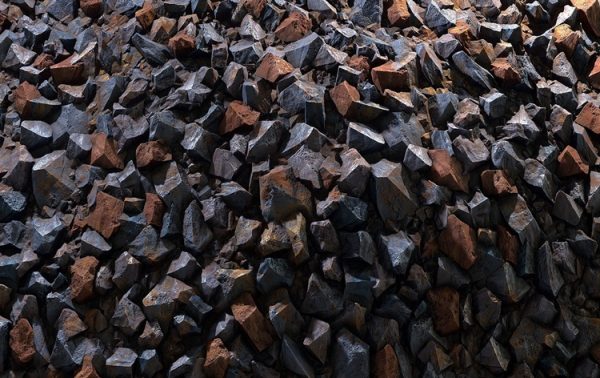
Iron ore is an important raw material for iron and steel production enterprises. Natural ore (iron ore) is gradually selected from iron through procedures such as crushing, grinding, magnetic separation, flotation, and re-selection. % 0A% 0A Any ore containing economically available iron is called iron ore. There are many types of iron ore. Magnetite (Fe3O4), hematite (Fe2O3) and siderite (FeCO3) are mainly used for ironmaking.


The grade of% 0A% 0A iron ore refers to the mass fraction of iron element in iron ore. In general,% 0A% 0A means iron content. For example, the grade of iron ore is 62, which means that the mass fraction of iron is 62% 25% 0A% 0A. For hematite (the main component is Fe2O3), the theoretical highest grade is 70% 25% 0A% 0A For magnetite (the main component is Fe3O4), the theoretical maximum grade is 72.4% 25% 0A% 0A For siderite (main component is FeCO3), the theoretical maximum grade is 48.3% 25% 0A% 0A for limonite (mainly The composition is Fe2O3.H2O). The theoretical maximum grade is 62.9% 25% 0A% 0A. Iron ore is an important raw material for iron and steel production enterprises. Generally, iron ore below 50% and 25 grade needs to be processed to be smelted.


The higher requirements of the iron and steel industry for iron concentrates have brought new challenges to ore dressing workers. Therefore, there is a deeper development requirement for the metallurgical mine beneficiation technology, which is followed by the further improvement of beneficiation equipment. % 0A% 0A beneficiation process should be as efficient and simple as possible, such as grasping the development of energy-saving equipment, and using the most suitable process to achieve the best results. In the ore dressing plant, the equipment investment, production cost, electrical energy consumption and steel consumption of the crushing and grinding operations often account for the largest proportion. Therefore, the calculation and selection of the crushing and grinding equipment and the management of the operation are good or bad. Determines the economic benefits of the ore dressing plant.

Govt Challenged To Align Forestry, Mining Policies To Allow Co-Existence

0

The Forestry Commission has called on the government to come up with legal reforms that will pave way for the co-existence of mining and forestry management.

Provincial Forestry Commission extension manager Philip Tom, made the remarks while addressing a policy dialogue organized by the Centre for Research and Development, to critique the current mining legislative framework.

Tom said the current mining laws are placing vast plantations at the mercy of prospecting miners, including unlicensed artisanal miners with no capacity to do rehabilitate after mining activities.

He said allocation of mining claims should be interrogated to ensure that they do not prejudice other sustainable land uses.

“Miners are leaving areas that they would have done mining processes without rehabilitation despite making commitments to rehabilitate after the cycle, however this doesn’t happen in most cases.

“We should balance benefits from mining natural resources and the cost on other natural resources, we have lost a lot of forests due to mining, vast lands of plantations lost to illegal mining.

“Both mining and forestry are currently not compatible unless there are measures put in place to ensure that the two co-exist in harmony.

“The way mining is being done now, we thought that the two land uses would co-exist, in this current state we see that some mining methods show that these activities cannot co-exist, as mining largely remains a threat to forestry,” said Tom.

Tom called for due diligence in the granting of mining licenses to ensure those awarded mining rights have the capacity to rehabilitate the environment. He said the threat to forest management in Manicaland was pronounced as timber industry is a major economic contributor, revealing that currently there are several attempts to invade various plantations and conservancies by miners.

“There are several applications from prospective miners, some wanting to invade forestry plantations with the aim of extracting natural resources, in Manicaland it is an economic unit because it is the biggest employer in terms of numbers.

“Allocation of claims should be interrogated, because the two policies do not speak to each other, there is no convergence between the two policies impacting very negatively on forest management.

“If mining is done properly we believe that these two policies can co-exist if there is proper management, this would provide a win-win situation, it might require upfront investment which some artisanal miners may not have,” said Tom.

He added, “Miners engage the Environment Management Agency (EMA) when they do their Environmental Impact Assessments but the documents have just been perfunctory as miners are leaving without proper rehabilitation of the area.”

Centre for Research and Development director James Mupfumi said given the commitment of the presidium to institute amendments in several areas including mining there should be cohesion in these policies.

He said the legal reforms should be aligned to the constitution, enhance collaboration among government departments, to curb illicit financial flows and promote transparency and accountability.

“In his SONA, the President was on record that there will be alignment of the laws to constitutional provisions as well as amendment of policies which also include mining policies.

“In this regard, we believe as an organization that governance should be participatory involving citizens, civic society and government to enhance collaboration and cooperation.

“The Forestry Bill was also tabled to address challenges in the sustainable management of forest resources, as well as the Gold Trade Act to curb illicit financial flows in the gold sector, but all these acts should be in harmony.

“Constitutional provisions that protect the socio-economic rights of communities are already enshrined and we believe that the new laws or policies are simply aligned to the constitution,” said Mupfumi.


263Chat

Chamber of Mines praise existing laws governing EPOs

0

THE Chamber of Mines of Zimbabwe (CoMZ) has hailed the existing legal and institutional framework governing Exclusive Prospecting Orders saying it promotes the growth of the mining sector if properly enforced.

The remarks by CoMZ follows on-going debate on the importance of EPOs in the development of the mining industry and particularly on whether the above instruments would require restructuring or removal.

In a statement, the CoMZ said based on Zimbabwe’s past success stories and international best practices, it recommends that the EPOs be maintained.

“Our current functional legal and institutional framework, if properly enforced, can promote the critical role of EPOs in the development and growth of the mining industry. The current framework encourages both small scale and large scale (miners) to co-exist – ensuring optimal development of the mining industry.

“The current system, plus the additional provisions on reduced EPO size, limiting the number of EPOs a person may hold and relinquishment provisions, should adequately deal with access to ground by all investors,” it said.

CoMZ noted that this would ensure ground is released for other interested investors to acquire for purposes of mineral prospecting and exploration.

It said the enforcement of the ‘Use it or Lose it’ framework, as provided in the Act will require strong and effective institutions to monitor and supervise activities.

“We further recommend that the Geological Survey Department be strengthened to better monitor exploration activities. This will ensure that the quality of reports are at the highest standard and the country and any future investor can benefit from work of the previous investor who would have worked the same ground,” said CoMz.

EPOs are essentially exploration titles for undertaking geo-scientific investigations that reveals the mineral potential of a defined area.

The Chamber of Mines said the country was not unique in availing to potential investors such titles as they also exist in many other mining jurisdictions.

EPOs were introduced into the mining law of Zimbabwe in 1947 and since their inception there have been significant transformation in the title management system which has influenced the growth of the mining industry, said CoMZ.

It said the existing provisions on prospecting and exploration titles were designed to accommodate small-scale and large-scale investors.

“Work carried out during the tenure of EPOs has, over the years, been translated into numerous successful mining ventures. Records of these successes are held at the Geological Survey Department.

“EPOs have been granted over ground where mineralisation was not known (green field) and ground where mineralisation was known to be present (brownfields) resulting in some discoveries of deposits that have been developed into major mines.

“The success rate for exploration in Zimbabwe was at 3,9 percent by 1984, which is quite high by global standards. Success rates for mineral exploration are generally in the order of 0,1 percent.”

The Chamber of Mines highlighted that some of the successes include Murowa Diamonds, Trojan Nickel Mines, Freda Rebecca Mine, Blanket Mine extension, Marange Diamonds, Mhangura Copper Mines, Kanyemba Uranium Deposit and Great Dyke Platinum-Nickel-Copper deposit, among others.

“Further to say that in achieving these successes, the small-scale mining sector has grown, having co-existed with the EPOs. Those who have requested to access ground with EPOs in accordance with the provisions of the Mines and Minerals Act have largely been accommodated,” said the Chamber of Mines.

The world over, there has been competition for ground to explore for and mine minerals among investors large and small.

EPOs have been pivotal in generating geo-scientific information which has been archived and used for mining and other land uses.

The CoMZ said it is the duty of the regulator to craft policies, laws and the necessary institutional framework to ensure that activities are conducted in an orderly manner and they are aligned to the developmental thrust of the country.

It said important considerations include reducing the impact of mining on the environment, ensuring co-existence with other land and desired structures of the mining industry_

The Chronicle

Gold steady

0

Gold prices were rangebound yesterday, as lack of concrete details about the interim US – China trade deal kept investors from making firm bets, while palladium was just $2 away from surpassing key $2 000 per ounce level for the first time.

Spot gold rose 0,1 percent to $1 477,15 per ounce by 0610 GMT. US gold futures gained 0,1 percent to $1 481,50.
Palladium was up 0,9 percent at $1 995,83 an ounce, after scaling an all-time peak of $1 998,43.

“The trade situation is improving . . . but the weaker dollar is counter balancing that. So, we’re seeing tight ranges for gold prices with these two factors running in opposite directions,” said Michael McCarthy, chief market strategist at CMC Markets.
The dollar index was little changed after posting losses in the previous two sessions, making gold cheaper forholders of other currencies. — Reuters.

ZIMASCO force out Ngezi Chrome miners, Police deployed

0

Mining Zimbabwe has received a distress call from a concerned miner who claims ZIMASCO is chasing out all small scale chrome miners in the Ngezi area and has initiated the deployment of Police Support Unit who are now in the area.

More to follow….

Police respond to gold buyer assault case, arrest and release buyer

0

A video of a well known Gweru gold buyer Mr Tichaona Darangwa and unidentified man assaulting a suspected conman (according to the Police) which went viral the past few days caught the attention of the Zimbabwe Republic Police who released a statement and clarity on the issue.

Responding on their twitter handle the Police said,”Police investigations have revealed that a group of men who were driving an unregistered Toyota Funcargo approached a business person in Gweru with an offer to sell cyanide for USD1 200, 00. The chemical purported to be cyanide was tested and turned out to be fake and the business person demanded his money back. One of the men in the Toyota Funcargo took off while his colleague was then assaulted by the business person and his colleagues. On being taken to the police station the assault victim jumped off a moving vehicle and escaped. Tichaona Darangwa was arrested for the assault case, however the case cannot proceed as the complainant is not available. We encourage the public to continue supplying information to ensure the law takes its course”.

Energy Challenges Sinking Zimbabwe’s Economy

0

The 2019 survey report by the Zimbabwe National Chamber of Commerce (ZNCC) on the impact of energy challenges on business paints a grim picture of the state of production in the economy.

Unrelenting power cuts and fuel shortages have devastated the local economy with the value of
exports and production capacity taking a huge knock.Foreign currency receipts for the first half of 2019 dropped to US$2.6 billion from US$3.4 billion same period in 2018.

Capacity utilization in key economic sectors such as mining, manufacturing and tourism has dropped by 15 to 30 percent, while the cost of production has signicantly gone up due to the use of equally scarce diesel in generators to power production lines and business operations.

The Treasury department predicts that production in mining will decline by 12.3 percent, while manufacturing and tourism will contract by 4.3 percent and 9 percent respectively.

The 2019 ZNCC survey points that almost all producers on the local market rely on electricity to produce and 85 percent of them are only getting electricity for a period ranging between 6 to 12 hours per day (less than half a day). This has resulted in massive job losses to cut operational costs and fit contracted manpower to single shifts of five hours per day. Heavy consumers of electricity such as mines and manufacturers are feeling the heat to scale back their operations thereby managing energy related production costs.

The Chamber of Mines recently warned that production could slump by at least 30 percent if the sector is not prioritized on electricity distribution. Zimbabwe’s miners are lobbying the government to allow the sector to import its own power so as to guarantee production, instead of the current situation where they face blackouts for about three days per week.

In terms of the monetary losses to producers, the survey points out that business entities are losing at least Z$20 000 worth of output and Z$300 000 worth of sales in one month due to energy challenges. Other losses include loss of key customers (especially in the export market), production stoppages, reduced labour productivity and reduction of profits.

Zimbabwe is currently generating less than 650MW from three power stations (Hwange, Kariba and Munyati Power Stations) against daily peak demand of at least 1800MW in winter and 1400MW in summer. Harare and Bulawayo power stations are not generating any electricity at the moment due to equipment breakdown and lack of investment over the years. The 800MW plus decit is closed by power imports from the region and load shedding schedules varying between six to 18 hours per day to dierent consumers. Kariba Power Station with a capacity of 1050MW can only generate less than 190MW at present due to the droughts that affect generation capacity.

According to Q3 imports data from the Zimbabwe Revenue Authority (ZIMRA), Zimbabwe is consuming 89 million litres of Diesel and 36 million litres of Petrol per month. ZIMRA 2018 data also points that the country consumed 1.06 billion litres of Diesel and 570.12 million litres of Petrol in 2018, worth US$1.12 billion. This means that average consumption per month in 2018 was 70.2 million litres for Diesel and 47.5 million litres for Petrol.

The drop in the consumption of Petrol can be attributed to the decline in demand on the back of falling consumer incomes, while the increase in the consumption of diesel by close to 20 million litres per month is caused by the use of Diesel to power production and meet daily energy demands.

Demand might also have gone up due to reported cases of smuggling of fuel to neighboring countries and high demand from regional truckers who pass through Zimbabwe through the north to south trade corridor.

The statistics from ZIMRA show that consumption for diesel is marginally going up every month and Zimbabwe is forking out at least US$13 million (US$0.64 FOB Price) on Diesel per month in 2019 as compared to 2018. The government (through the Central Bank) can therefore redirect that amount of foreign currency to import at least 500MW/day of power during O-Peak periods (10am-4pm) from Hidroelectrica de Cahora Bassa (HCB) of Mozambique. Production in the local economy has been affected by power cuts especially during Zimbabwe’s working hours that run from 8am-5pm. Improved power supply during these off peak hours will shore up economic production and ZESA’s incomes from prepaid metering.

In the medium to long term, the government needs to channel funding to the repowering of Harare, Bulawayo and Munyati thermal power stations while taking decisive action on overdue green energy projects such as Munyati, Gwanda and Insukamini to achieve a blend of power supplies to the national grid. The three renewable energy projects can be undertaken through Public Private Partnerships (PPPs) in order to improve transparency in the projects and achieve cost to productivity efficiency. To undertake these projects, consumers need to pay competitive prices for electricity which will allow the state utility to import power or pay its huge debts to regional suppliers such as Eskom of South Africa.

In line with this, ZNCC recommends that the power utility adheres to strict “Pay or get disconnected” principle to weed o free riders from the national grid and guarantee supplies to paid up consumers. It has been observed that ‘free riders’ are getting preferential treatment from government at the expense of paid up customers or exporters who are paying in advance.

Companies surveyed strongly feel that political interference is impacting ZESA operations through the awarding of unjustied subsidies to un-deserving consumers or shielding non-paying consumers for political reasons. They also pointed that political interference and collusion between fuel cartels and government officials is rife in the importation and pricing of fuel on the local market.

To deal with both aspects there is need for independence of ZESA and Zimbabwe Regulatory Authority (ZERA) so that they carry out their constitutional mandate efficiently for the benefit of all economic sectors. Previous calls to partially liberalize the importation of fuel and allow petroleum companies with free funds to import the commodity fell on deaf ears as the government is determined to control the allocation of foreign currency and the pricing of the commodity. Business leaders also feel that Zimbabwe does not have a foreign currency generation problem but a foreign currency allocation issue, with bulk of the generated forex being channeled to government recurring expenditure and other o-shore commitments by the government.

The government should therefore take the survey and its recommendations seriously to address the economic ills bedeviling production in the local market and curb further economic decline in 2020. Without deliberate efforts to fix energy challenges, the local economy will sink deeper in the coming year.

Victor Bhoroma is a freelance economic analyst. He holds an MBA from the University of Zimbabwe (UZ). For feedback, mail him on [email protected] or follow him on Twitter@VictorBhoroma1.