Home Blog Page 589

Endeavour bid for Centamin will boost mining interest in Egypt – minister

0

Egypt said on Wednesday it welcomed Endeavour Mining’s bid to takeover Centamin Plc, saying it would encourage foreign investment in the country’s mining industry.

Centamin rebuffed the 1.47 billion pound ($1.9 billion) all-stock takeover proposal on Tuesday, saying it did not offer enough value to Centamin shareholders.

Centamin’s assets include Egypt’s Sukari mine and Cleopatra project, as well as exploration projects in West Africa.

Egyptian Petroleum Minister Tarek El Molla said in a statement the government had no role in the bid but added that “we welcome new investment by international companies in exploring gold and mineral wealth.”

He said the bid would “give a positive message about the desire of an international company to be present in Egypt … and encourage other companies to come to Egypt.”

Egypt introduced a new mining law this year but has yet to publish the executive regulations. The government wants to unlock investment in Egypt’s mineral wealth, which has stalled under what explorers say are discouraging terms_Mining.com

Mliswa urges ban in the carrying of machetes

0
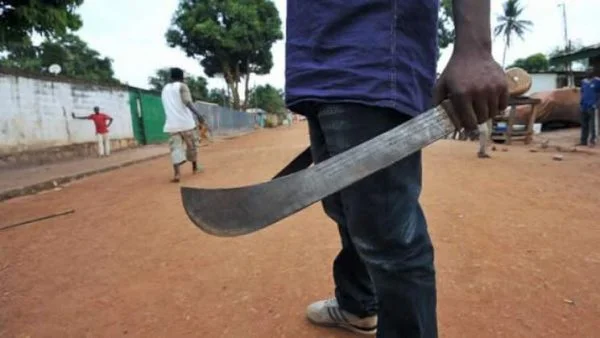
INDEPENDENT MP for Norton, Temba Mliswa says the government must ban the carrying of machetes which have been used by illegal mining gangs to hack down each other and other citizens with nothing to do with the wars.

Mliswa was speaking in parliament on Thursday.

The outspoken legislator condemned the government for its propensity to issue Statutory Instruments one after the other on currency matters while ignoring loss of life.

According to a recent report by the Zimbabwe Peace Project (ZPP), atleast 105 people died in a space of two months as a result of turf wars among notorious gangs within the country’s mining sites.

Machete wielding gangsters are also reportedly maiming people and confiscating gold from fellow gold panners.

Mliswa said in the house that President Emmerson Mnangagwa had ordered a ban on the carrying of machetes, but no action has been taken to date by the relevant authorities.

“His Excellency has been very clear that people are being killed and there is no action being taken,” Mliswa said.

“Government is quick to issue Statutory Instruments (SIs) on monetary issues but when life is being lost, nothing is done. Why do we not ban that?

“His Excellency has been very clear that these machetes must be banned and there must be a statutory instrument that empowers the police to arrest anybody with a machete until a certain time these issues are out because people are dying in Norton and everywhere in the country.

“They come and they disrupt business. They go into clubs and so forth and they are known as people from Shurugwi. I am from Shurugwi and the Shurugwi people do not behave like that.

“I would also like to clear that they are called ‘Mashurugwi’ because there was a lot of illegal mining in Shurugwi.”

He also accused some unnamed government officials for sponsoring the killings through sending the gangs to seize gold from small scale miners or panners.

He added, “I would like to protect the people that I lead as a village head that the Shurugwi people are great people. They do not do machetes.

“Can the government move in quickly to also come up with a Statutory Instrument to also block that because some of the leaders in Zanu PF are the ones doing illegal smuggling of gold and that is the reason why the Government is not keen on it, so why are people dying?”

Home Affairs Minister Kazembe Kazembe Thursday threatened arrest on politicians sponsoring machete gangs.

This comes as police have arrested over 5 000 people in eight months for offences ranging from illegal mining to possession of dangerous weapons.

Addressing a media conference in Harare, Kazembe said the issue of machete gangs was now worrisome and a serious security threat.

Under an operation dubbed “No To Anarchy by Artisanal Miners” police have since March this year, arrested 3 471 people for possessing dangerous weapons, among them, machetes_New Zimbabwe

New environmental policy to deal with rogue miners

0

RUNDE Rural District Council has adopted a new environmental policy that would enable the local authority to impose heavy fines and cease operations of rogue miners who fail to comply with environmental laws as it moves to address perpetual land degradation and deforestation due to mining activities.

The local authority approved the policies in a full council meeting held on Tuesday in Zvishavane as councillors concurred that the miners were now an environmental menace. Runde RDC chief executive officer Mr Godden Moyo said the local authority was working with organisations such as Centre for Conflict Management and Transformation (CCMT) to craft environmental policies to address issues of deforestation, land degradation among other issues that are being caused by mining and farming activities.

“Zvishavane is a mining community and we have serious challenges of lack of compliance by miners in the area. We passed environmental policies that compel miners to comply with environmental laws as well as practising sustainable mining that preserves the environment. Issues of land degradation as a result of mining activities are on record and we have been grappling with miners to comply with environmental laws and Environmental Management Agency (Ema). The policies are not restricted to mining but cover a wide spectrum although mining is one of the areas,” he said.


The Sunday News

Chasi spells out terms for Zesa board

0

IT will no longer be business as usual for boards under the purview of the Ministry of Energy and Power Development, as Government is crafting a raft of measures to monitor their performance including subjecting them to routine public scrutiny.

Within the cocktail of measures, the Minister of Energy and Power Development, Advocate Fortune Chasi, has also demanded that the boards especially that of the power utility, Zesa Holdings, regularly appraise the Government and the public of any developments being undertaken at the parastatal.

He said a comprehensive document spelling out the guidelines and mandates to be adhered to by the boards would be released this week.

This comes as Minister Chasi’s appointment of Dr. Sydeny Gata as executive Zesa chairman continues to attract sharp criticism from corporate governance proponents who argue such positions should cease to exist in public entities.

But argues Minister Chasi: “We have given the new board a huge task, a new mandate, which I’m looking forward to release on Monday (tomorrow). I will release a clear document, which will detail what the Government expects from them as to their short-term, medium-term and long-term plans. We have already agreed in principle with them and we are now expecting the implementation matrix and I will be meeting them once a month to be appraised on progress and their intentions so that we manage the process,” said Adv Chasi.

He said members of the public should be privy to the operations being undertaken by the Zesa board since electricity plays a vital part in national economic development.

“The board is expected to reveal everything that it will have undertaken. There won’t be anything that will be hidden because they (board) should appraise the public as well. Industrialists should always be aware of what’s taking place around them, to enable them to plan effectively and they should be aware that at such a particular time there will be no electricity so that they inform their workforce not to report for duty. Information should be in the public domain within the shortest of periods so that members of the public will have confidence on the utility and build that continuity,” said Adv Chasi.

The recently appointed Zesa board is chaired by Dr. Gata with the other board members being Professor Ashok Chakravati, Ms. Rosemary Siyachitema, Mrs. Caroline Mathonsi, Mr. James Muzangaza, Mr. Jonathan Wood, Ms. Stella Nkomo, Mr. Wadzanai Chigwa, Mr. Peace Rugube, and Mr. Eliab Chikwenhere.

Adv Chasi also said the Government was making concerted efforts to offset its outstanding debt to the South African power generator, Eskom.

“We are still committing ourselves to paying Eskom and we are making payment of about US$900 000 (a month) and at the present moment there are no hiccups with regards to payment of the debt, but we are working on coming up with structures in ensuring that we expedite clearing the debt so that we start afresh to negotiate for a new deal.

“It won’t be easily achievable, but we hope to have settled it next year. It’s also important to note that the power we are importing is very expensive and if we pay up, we will also concentrate on working on various projects to improve our supplies . . .,” he said.

Zesa owes Eskom about US$22 million, but has promised to regularly make payments in order to keep the power imports flowing.

Adv Chasi further noted that the power utility was also making concerted efforts to recover more than $1 billion from defaulting customers.

“The debt owed to Zesa by consumers stretches for a number of years and they are trying their best to recover these debts and, in the process, also facing litigation from a number of customers who are not satisfied with the process.

“However, the whole idea is not to threaten people, but we should bear in mind that the debt is very huge and cuts across various categories such as commercial, mining, agriculture and domestic. Government (departments) has fully settled its debt but industry, local authorities and domestic consumers are the ones that still owe Zesa,” he said.

Government departments owe Zesa Holdings more than $100 million.


The Sunday Mail

Crisis:Indigenous fuel importers’ licences expire

0

IMPORT licences for most indigenous oil companies are lapsing at the end of this month, fuelling panic in the critical industry, it has emerged. Zimbabwe is facing erratic fuel supplies against the backdrop of low exports, a weakening domestic currency and rolling power outages.

The situation worsened over the past few weeks as most fuel stations ran out of stocks, immediately evoking yesteryear memories. It also emerged the energy sector regulator, the Zimbabwe Energy Regulatory Authority (ZERA) is dragging its feet, reluctant to renew the licences.

Zimbabwe has six major oil-importing entities. Apart from the Indigenous Petroleum Association of Zimbabwe (IPAZ), five others are international oil companies and some indigenous players who are not members of IPAZ.

IPAZ, which was formed in 2004 after a nasty fallout between local and international oil companies, is the biggest importer of fuel into the country providing 11 700 000 litres of diesel a year and 8 000 000 litres of petrol. Sakunda and Redan, are no longer IPAZ members, after their take over by Singaporean headquarted Trafigura group and Puma.

Sakunda has been accused of monopolising fuel foreign currency allocation, a claim the central bank denies. There is now panic in the critical industry ahead of the festive season. The crisis explains, in part, the current fuel supply deterioration in the country. Zimbabwe’s fuel supply situation has deteriorated sharply in the past fortnight. It is expected to worsen further as the country heads towards the festive period.

The industry has also not been spared as most companies have been running on diesel generators due to crippling power cuts, which is ravaging the already frail economy.

Business Times can report that indigenous fuel players have since approached ZERA with the view to renew their licences. But, players in the industry told this publication this week that there is now “hide and seek between indigenous players and ZERA” with regards to the renewal of their licences. There is suspicion that there may be certain big players in the fuel industry frustrating the licensing system, according to players in the industry.

IPAZ chairman, Aaron Chinhara confirmed the latest development to Business Times this week. “The issue that has caused panic in the fuel industry has been the fact that most import licences for indigenous players are lapsing on December 31, 2019,” Chinhasa revealed. “So we have managed to engage ZERA and were issued with invoices to pay but the invoices have since been regarded as not genuine.

Chinhara added: “I have since paid for the renewal of the import licence but to date we have not received anything. This has massive ramifications on our part in terms of trading because our trading will be made difficult when operating with expired import licences.”

All efforts to get a comment from ZERA were futile. Eddington Mazambani, ZERA acting chief executive officer and spokesperson Gladman Njanji, had not responded to inquiries from this publication by the time of going to print. Zimbabwe’s fuel situation has continued to deteriorate despite weekly price increases. Currently, petrol is trading at ZWL17.44 while diesel is trading at ZWL17.90.

On the black market petrol and other designated fuel stations, the commodity is being sold in hard currency. Petrol is trading US$1.20, which is equivalent to ZWL$27,60, while diesel is trading at US$1.50, which translates to ZWL$34,50. Energy and Power Development Minister, Fortune Chasi, this week told Cabinet: “The fuel supply situation was constrained in the past week due to the depressed uplifts which were experienced early in the week and the previous week.”

However, Chasi said: “It was pleasing to note that the situation improved as the week progressed after the interventions which were done by the National Oil Infrastructure Company (NOIC).”

He indicated that NOIC implemented 24 loadings at its depots, resulting in the daily uplifts surpassing the daily consumption rates of five million litres of both petrol and diesel. The fuel crisis has resulted in most retail outlets closing doors even during the day due to rising costs of running generators.

“The industry has been badly affected by electricity shortages which has seen most industry players resorting to diesel powered power sources,” the Confederation of Zimbabwe Industries president Henry Ruzvidzo told Business Times this week. He added: “But availability of diesel has been a challenge and it is safe to say industry is in deep problems right now.We are always told various stories on power but no solution has come on sight at the moment. It is a sad chapter for the industry.”_Business Times

Ferrochrome producers push for energy tariff reduction

0

FERROCHROME producers are lobbying the government to reduce energy tariffs for bills paid in foreign exchange as the sector suffers from price fluctuations on the international market. Zimbabwe has one of the biggest chrome reserves in the region and is pinning its hopes on the mining sector to spur economic growth.

The ferrochrome producers also proposed the setting up of an Inter-Ministerial Committee to address the matter that is now threatening the viability of the industry.

In a letter addressed to Energy and Power Development Minister Fortune Chasi by Portnex International managing director Frikkie Laubscher citing concerns of the industry, ferrochrome producers are in urgent need for a review of the power tariff structure.

“Indeed, the entire ferrochrome industry is on the verge of total collapse and one simply needs to have regard to the significant outstanding foreign currency remittance (CD1 acquittals) position from the sector alone and every producer is in arrears,” said Laubscher. He said depressed prices for ferrochrome and the current tariff regime would reduce output of the sector.

Laubscher implored Chasi to set up an inter-Ministerial Committee to review a proposal submitted to the Ministry of Energy, ZETDC and also discussed briefly with Vice President Kembo Mohadi on November19, 2019.

“We are confident, a review of the tariff (or introduction of set-off incentives) is for the sustainable viability of all ferrochrome producers,” he said.

Chasi could not be reached for comment as his phone went unanswered and he did not respond to text messages sent to him. The cost of power in the country has drastically affected some mining operations that require uninterrupted and cheap power supplies. It has been established that power is critical to economic development and that there is a positive correlation between cheap power supply and growth in gross domestic product.

Therefore, cost of power has remained a nightmare for most mining companies especially for those with high power consumption operations. Despite calls to review downwards the cost of power, cost of electricity has been on the rise amid public outcry. Such a scenario, according to the miners has proven to be unsustainable for mining companies who are already suffering from low commodity prices.

Zimbabwe is facing rolling power outages following a sharp decline in generating power capacity at the country’s hydro-powered station. Water levels at Kariba Dam this year plunged following one of the worst droughts in living memory.

A steep electricity tariff increase and removal of subsidies has to date failed the country to raise enough foreign currency to cover for power imports or to fix its power plants which are in constant need for repairs due to old age. This has forced government to turn to mining companies especially those that export to pay for their electricity in foreign currency_Business Times

Bindura Nickel profit up 136pc

0

Zimbabwe Stock Exchange listed nickel miner, Bindura Nickel Corporation, has posted a 136 percent increase in profit after tax to US$6,6 million for the half year period to September 30, 2019 from US$2,8 million the same period in 2018.

In a statement accompanying the financial results for the period, group chairman Muchadeyi Ashton Masunda, indicated the positive movement in profits emanated from “exchange gains and a decrease in the cost of sales which in turn, was attributable to the ongoing efforts to contain costs as demonstrated by the decrease in cash costs, year on year.”

Growth in profit after tax also seem to have been impacted by a significant 1 percent increase in average nickel price to US$9 052 per tonne from US$9 001 per tonne in prior year comparative.

On a general note, however, the prices “remained subdued into the year due to weak stainless steel demand, overstocking and the lack of real demand in class 1 nickel in the automotive industry.”

The remarkable movement in average nickel price had, in turn, translated to an 8 percent boost in revenue for the period to US$28,3 million from a comparative figure of US$26,2 million.

This boost in turnover had resulted in the group recording a 47 percent increase in gross profit to US$12 million against US$8,2 million in prior year comparative.

Profit growth was further a result of an increase in the tonnage of nickel concentrate sold to 3 002 tonnes against 2 980 tonnes in 2018. This was despite a 4 percent decrease in nickel production to 2 943 tonnes from a commendable tonnage of 3 076 tonnes in prior year comparative. The decline, according to Masunda, was “in line with the lower ore grade achieved, year on year.”

Ore mined during the period under review was 215 338 tonnes while ore milled was 215 728 tonnes.

Head grade at 1,34 percent was lower than the year-end of 1,64 percent, reflecting “the mining mix whereby more of disseminated ore was mined than the massives. Recovery was 86,1 percent compared to 86,3 percent achieved as at 31 March 2019.”

With a boost in profits, total equity also soared by 11 percent to US$66,1 million from US$59,5 million as at 31 March 2019. Current assets increased by 33 percent to US$29,3 million from prior US$22,1 million, reportedly due to “an increase in trade and other receivables.”

Meanwhile, Bindura Nickel projects gobbled a total US$3 million during the period under review. Of the total, shaft re-deepening took US$1,2 million while New LHDs and New Dumb Trucks cost US$0,7 million each. The Smelter Restart Project is reportedly still stationed at 83 percent complete while the Refinery and Shangani Mine, as usual, remain under care and maintenance. Going forward, the company places hope of an improvement in nickel prices in global dynamics.

Masunda indicated that prices given a boost above US$18 000 per tonne after the Indonesian government announced that it would bring forward the raw ore exports ban to 1 January 2020 from 1 January 2022.

India supplies 12 percent of the global nickel and its withdrawal of raw ore exports will effect a movement in prices. Phillipines, another global supplier expected to fill the void, reportedly produces low grade ore.

As with other businesses, Bindura Nickel also banks on the fruition of the ongoing United States of America / China trade talks. The talks have been disturbed by the recent Hong Kong  unrest.

“Nickel demand is expected to remain high, with a projected average growth in excess of 4 percent per annum year on year. Stainless steel will remain the main consumer of nickel and is expected to average 67 percent while the use of Nickel in the production of electric vehicles is expected to increase to 18 percent by 2025,” and here lies Bindura’s growth prospects_Business Weekly

Zisco terminates US$350 ZimCoke deal

0

The Zimbabwe Iron and Steel Company board has resolved to terminate the controversial takeover deal of some of the firm’s key assets by ZimCoke, an investment vehicle fronted by businessman Eddie Cross on suspicion the transaction was flawed, Business Weekly can exclusively reveal.

ZimCoke bought Zisco assets related to the production of coke on the understanding that when the steel plant is revived, it will get its coke needs from ZimCoke.

Zisco stopped operations in 2008, plagued by a lack of capital to recapitalise and mismanagement. With its furnaces having the capacity to produce up to one million tonnes of steel per year, the company was among the country’s major foreign currency earners.

According to Cross, the ZimCoke deal, valued at US$225 million was signed in July 2017, when Dr. Mike Bimha was Industry and Commerce Minister. It was given final approval by Cabinet on May 4 this year and the transfer of the assets was signed a month later.

The transaction was a debt/asset swap involving Zisco assets and Zisco steel debt owed to the German bank KfW GMBH in Frankfurt. Cross claims that the Zisco debt was valued, at the time of the transaction, at US$225 million but will exceed US$350 million by the time the debt is expunged by payments from ZimCoke.

Several people with the knowledge of the deal, however, revealed to Business Weekly that the Zisco board resolved to terminate the deal citing serious corporate governance inadequacies since the arrangement was entered into without the knowledge of the former board, led by former CBZ Holdings chief executive Nyasha Makuvise.

However, Makuvise could not be reached on his phone yesterday.

It is also alleged that the legal team at the Ministry of Industry and Commerce was not involved in crafting the contract as “Bimha personally handled the transaction.”

The sources said there was no proper due diligence conducted prior to the sale of the assets, while no professional evaluation was done to ascertain the debt to the Germany bank.

This comes at a time when R&F, the Chinese investor, which was looking at acquiring a shareholding in Zisco recently advised the Government that it was pulling out.

The collapse of the R&F deal became the third after similar transactions involving Indian firms, Global Steel Holdings, and Essar Holdings, failed in 2006 and 2015 respectively.

R&F had agreed to acquire Zisco’s majority shareholding to pave way for resuscitation of its Redcliff-based integrated steelworks plant at a cost of about US$1 billion.

“The governance procedures were flawed as the Zisco board was not involved in this ZimCoke transaction. The board has the fiduciary role to protect the assets of the company and this alone makes the whole transaction flawed,” said one source who requested not to be named because is not authorised to talk to the media.

“After reviewing the deal, the new board established that about 20 key items including the rail tracks, gas cylinders, coke oven battery, and conveyor belts had been taken over.

“Zisco is an integrated plant…it’s a system and stripping it off some of its components is tantamount to incapacitate the company. Coke oven is the most important asset of Zisco so technically, Cross and his guys had literally taken over the company.”

While Cross said there was an undertaking that when the steel plant is revived, Zisco will get its coke needs from ZimCoke, sources said there was no clause in the agreement that ZimCoke will prioritise coke supplies once the steel plant is revived.

Another source said the fact that due process was not done since the board was not involved, it was clear corporate governance procedures were flouted, thus making the deal null and void.

“Economically, Zisco is an integrated steel industry, which cannot do without coking ovens and as such to take over the ovens is as good as incapacitating Zisco,” another source said. “ZimCoke has over and above to the coking oven taken vast assets of Zisco which ranges from railway line, conveyor belt, library, slag, houses which has nothing to do with the coking ovens. This is not an investment but asset stripping.

“It is clear the intention of ZimCoke is beyond operationalising coking ovens but taking over Zisco.”

Zisco acting chairman Dr. Gift Mugano, declined to disclose details on the deal and simply said his board would issue a comprehensive comment at an appropriate time.

“We have a lot of issues that we are dealing with so at this stage it will be premature to comment on the affairs at Zisco. We will do so at the right time.”

However, Cross defended the deal, saying it was the first full privatisation of a State asset under policies adopted by the new administration in line with state enterprises reforms.

“The plant is completely derelict and has not operated for over 12 years,” said Cross. “Zisco itself remains heavily in debt and has also not functioned since 2008. It has no capacity to raise the funds to settle its own obligations or to rebuild the plant.

“The shareholders in ZimCoke are going to invest over US$500 million to get the coke plant back into operating condition. In addition, the company will have to invest in clean water supplies, power generation, railways, and Hwange Colliery.

“None of which are able at present to meet the needs of the plant. When this investment programme is complete, ZimCoke will be the largest industrial exporter from Zimbabwe.”

Cross said the rebuilding of the coke oven plant was the first stage of the long process of resuscitating Zisco. “The plant cannot function without coke and ZimCoke will make the restart of steelmaking that much easier than if the project had not been initiated. Clearly, both companies will have to work closely together to achieve that and the directors are well aware of the obligations,” he said.

Asked what role ZimCoke would have in deciding the investor for Zisco given that the company already owns part of the company’s key assets, Cross said: “No role whatsoever – that is up to the Government of Zimbabwe and the Zisco Steel board of directors. We would, however, ask to be consulted if that was possible.”

Cross said the subdivision of the plant was complete and was awaiting transfer of assets by year-end. This would enable “us to secure financial closure and to start the rebuild.”Business Weekly


Zera in petrol blending U-turn

0

HARARE – The Zimbabwe Energy Regulatory  Authority (Zera) on Friday made a dramatic U-turn on its earlier decision to reduce petrol blending levels to E10 from E20.

Zera said it had rescinded the directive announced on Thursday after consultations with stakeholders.

“Further to the earlier communication reducing blending levels from 20  percent to 10 percent, consultations were held with government and ethanol suppliers indicating that the 20 percent blending levels can be sustained,” the regulator said.

“Kindly disregard the earlier circular and continue to blend at 20  percent.”

There are two major producers of ethanol in the country and 11 licensed fuel blenders.

Changes in blending levels have been a common feature depending on the availability of ethanol since the system was introduced in 2008.

The government introduced fuel blending with the twin aim of cutting the import bill, and averting shortages.

But motorists still complain that petrol blended at higher level is costly for them as more is required to cover a particular distance,  compared to unblended petrol.

There have also been perceptions that blending levels are not uniform and at times go above-stipulated ratios, but Zera has insisted that compliance among blenders was 100 percent.

Despite the introduction of blending fuel remains a scarce commodity to due to foreign currency shortages to import the commodity.

Long queues at filling stations remain a major feature across the  country. – New Ziana

Gvt opens Gwayi Project to new investors, As Chinese investor fails to move funds

0

The government has opened up the Gwayi Coal-Electricity Integration Project to new investors amid revelations that the Chinese investor, the Yunnan Linkun Investment Group, has failed to move funds from China because of an unpaid Sinosure debt.

The project, China Africa Sunlight (CASECO), is a joint venture between the Ministry of Defence’s Old Stone Investments and Yunnan Linkun. The joint venture has failed to take off since 2015 due to an unpaid US$60m Sinosure debt by the Chinese government.

Sinosure is a state-funded policy-oriented insurance company established and supported by the Chinese government to promote foreign economic and trade development and cooperation.

The failure by the Chinese investor to move funds from the China Import and Export Bank (China Exim) left Zimbabwe with no option but to look for alternative funders who have no problems in moving funds to Zimbabwe.

A new investor will make it a three-shareholder agreement, which will mean a dilution or a complete exit of the Chinese investor from the deal. Four investors of Middle Eastern, African, and Australian origins have since been identified, Business Times was told.

The head of the Ministry of Defence’s Department of Economic Development, Brigadier General Chris Mupande, told Business Times that the project had had challenges but current efforts would bring it to fruition. The project requires about US$2bn to take off.

“The current Chinese investor has failed to move funds from Chinese banks because they need insurance from Sinosure. That means we have had to look for other alternative investors,” Mupande said.

“So the government is in discussions with four potential investors and this means we are likely to have three shareholders on the project or a dilution. But the arrangement at the moment is to make sure the project takes off, considering the potential that it possesses.

“There are many possibilities around this project considering that there is coal mining to be done, together with coal-bed methane gas. This project is the future of Zimbabwe as it is an integrated project on both power generation and mining.”

Mupande said the CASECO project would culminate in the construction of multi-million dollar cement and fertiliser manufacturing facilities, which would bring a dramatic change in the Gwayi landscape.

The coming in of Yunnan Linkun followed the termination of a joint venture between Old Stone Investments, local shareholders in the China Africa Sunlight, and Shandong Taishan Sunlight Investment Company Limited, the initial partners in the project.

Shandong Taishan, which was supposed to mobilise the funding needed for the project, has failed to raise the money, resulting in the termination of the joint venture.

The project, already granted National Project Status by the government, will result in the setting up of coal mines and the construction of a 600MW thermal power station.

Zimbabwe is currently grappling with severe power shortages worsened by significant reduction in generation capacity at the country’s two main power stations, Kariba and Hwange.

Low water levels at Kariba have seen capacity dropping to around 200MW, while production at Hwange Thermal Power Station, the largest in the country, has also declined due to recurrent breakdowns_Business Times