

Home Blog Page 588

Zimbabwe Needs US$20 Million For Exploration

0

Speaker of Parliament Jacob Mudenda has chided the Ministry of Mines for its continued reliance on old topographical maps when an investment of US$20 million could cover comprehensive exploration.

Mudenda says Zimbabwe should domesticate the African Mining Vision, a pan African blueprint which guidance on how economies can leverage mineral resource endowment and translate into sustainable economic development.

The AMV highlights

“AMV highlights that most African countries lack basic geological mapping and are poorly mapped.

“Ministry continues to rely on old topographical maps in the issuance of mining claims. Those maps are really antiquated, some of these maps are barely visible hence the need for the Min of Finance need to sponsor the completion of the mining cadastre system.

“This system would not cost more than 20 million USD, we can make savings and ensure the ministry if operational as far as the cadastre.

“It is imperative that we know the minerals that we have especially along the great dyke this is important in signing of agreement without which the country could be prejudiced,” he said.

Mudenda said Zimbabwe was almost duped into a predatory arrangement for the Zimbabwe Iron and Steel Company (ZISCO) which could have prejudiced the country millions in revenue from its iron ore.

He said during the Government of National Unity (GNU) the country almost entered into this misdirected investment because there was not enough geological information on the minerals.

Mudenda said the country should make use of its institutions of higher learning to launch an accelerated exploitation of minerals, with a balance for protection of the environment and economic benet.

“ZISCO during the GNU we signed some agreements only to realize that we had sold tonnes and tonnes of our minerals to this company, there was a lot of fanfare in the launch of that misdirected investment arrangement because we had not done our due diligence.

“The Ministry of Mines should engage UZ to leverage on its ICT for accelerated exploration of our minerals.

“We must now comply with the best international practices to achieve a comparative and competitive advantage. We must strive for that balance between protection of the environment and economic benet,” said Mudenda.

Ministry of Mines says it has purchased hardware for the establishment of a cadastre system to digitalize the record of its mining claims in conjunction with the Ministry of Higher at a lower costs and cheaper running costs on a year to year basis but civic society is uncertain.

Zimbabwe Environmental Law Association (ZELA) director Mutuso Dhliwayo expressed skepticism of these government plans saying only tangible action on the ground can be assessed rather than mere pronouncements.

He said the country has already been mining its minerals without proper records of mining titles which can be easily done through the cadastre system to ensure that we derive full value from our mineral endowment.

“We are already mining already but we have not done comprehensive exploration but it’s critical in terms of access of information which will help us in terms of negotiation of these mining contracts and deals but we are not doing that.

“We also have the cadastre system which is critical any country that has succeeded in terms of getting benefits from its exploration of its minerals has a cadastre system and we don’t have that.

“We need action to follow through with action rather than mere pronouncements,” said Dhliwayo.

263Chat

OPEC trims 2020 oil demand, sees virus fears weighing on prices

0

OPEC on Wednesday said world oil demand will fall more steeply in 2020 due to the coronavirus pandemic and said next year’s recovery faces large uncertainties, pointing to growing headwinds for the group and its allies in supporting the market.

World oil demand will fall by 9.06 million barrels per day (bpd) this year, the Organisation of the Petroleum Exporting Countries said in a monthly report, more than the 8.95 million bpd decline expected a month ago.

“Crude and product price developments in the second half of 2020 will continue to be impacted by concerns over a second wave of infections and higher global stocks,” OPEC said in the report.

OPEC stuck to its forecast that in 2021 oil demand would rebound by 7 million bpd but said the view was subject to large uncertainties that may result in “a negative impact on petroleum consumption”. – Reuters

SA power system severely constrained: Eskom

0

Eskom warned yesterday of a “severely constrained” power system after the return to service of five generation units was delayed, while a further two units went offline.

“We urge the people of South Africa to reduce electricity consumption in order to help us power the country through the evening peak,” it said in a statement.

The power utility said the return to service of two generation units at Tutuka power station, as well as one unit each at the Duvha, Matimba and Kusile power stations had been delayed.

Meanwhile, one unit at the Tutuka power station tripped yesterday, while Kusile’s Unit 1 had been shut down. Eskom did not immediately say what caused the units to go offline.

“Eskom teams are hard at work to return these units to service. These breakdowns have added to the approximately 5 500 MW of capacity out on planned maintenance, while unplanned maintenance has risen to almost 11 000MW.”

The utility said the constrained system may persist for the rest of the week. — News24.

Botswana diamond exports nosedive

0

Botswana diamond sales have been greatly affected by the Covid-19 pandemic that has seen sales volume dropping by two thirds, Reuters reports. This according to the publication was caused by low demand which was also exacerbated by travel restrictions which grounded many operations.

Statistics show a worrisome trend as Bostwana’s borders remain closed since March 2020 as a Covid-19 containment measure. Reuters reported that exports of diamonds from Debswana, a joint venture between Botswana and diamond mining giant De Beers, a unit of Anglo American, stood at US$293 million in the second quarter of 2020, from US$916 million in the preceding period.

No exports were recorded in May, while only US$20 million worth of diamonds were exported in June, the Bank of Botswana’s data showed. — Reuters.

Exploration beckons for Invictus as EMA gives environmental green light

0

Invictus Energy can now start exploration at its Muzarabani project after the Environmental Management Authority (EMA) approved the company’s Environmental Impact Assessment (EIA) plan.

A certificate has been issued to Geo Associates, which is 80% owned by Invictus and is the holder of the special grant over the site. This gives the company permission to start fieldwork in the area, including preparations for exploration drilling. This is the key step that would confirm the resource.

“The approval of the Environmental Management plan concludes the permitting requirements and enables the Company to commence and undertake activities in the field including seismic acquisition and exploration drilling,” Invictus said in a statement Monday.

The Scientific and Industrial Research and Development Centre (SIRDC) conducted the EIA.

The EIA included field surveys and baseline measurements of hydrology, ecology, environmental, archaeological, hydrogeological, soil surveys and community consultations. These public consultations, the company says, included community meetings that attracted up to 1,000 participants at some meetings.

“The issuing of the EIA license is a significant milestone for the Cabora Bassa Project and marks the progression from the primarily desktop studies phase to the on-ground activity phase of our exploration campaign,” Invictus Managing Director Scott Macmillan said.

Last week, the Zimbabwe Investment Development Agency (ZIDA) renewed Invictus’ investment licence. The Mining Affairs Board also extended the company’s tenure on the special grant by a further three years.

Invictus: COVID-19 impact

COVID-19, which has disrupted business worldwide, has delayed the company’s progress on the project. However, Macmillan says talks are continuing on a production sharing agreement with the Zimbabwe government.

The pandemic has also slowed investment in oil and gas around the world. However, in April, Macmillan told newZWire that the company had enough capital to fund operations in the country. Completion of a farm out deal, he said, would bring additional partners and capital to the project.

[Click to read – INTERVIEW | Invictus Energy: What does the world oil crisis mean for Zimbabwe’s Muzarabani prospect?]

Independent surveys have pointed to good prospects for the project. However, only the drilling of an exploration well can confirm the resource. The company has initially set 2021 for drilling, but this may depend on the impact of COVID-19 this year.

“Mobilising a drill rig, equipment and skilled personnel is a massive endeavour involving hundreds of truckloads of equipment, and the rotation of hundreds of people through the operation over several months, the majority of which will be imported,” Macmillan said in the interview.

In its last quarterly report, Invictus said the best estimate it had received for drilling was US$11.7 million. This was for a 3,200m deep well which would be enough to test a prospect the size of Muzarabani at relatively low cost.

newZWire

Gold panners wreak havoc along Bulawayo’s major supply dams

0

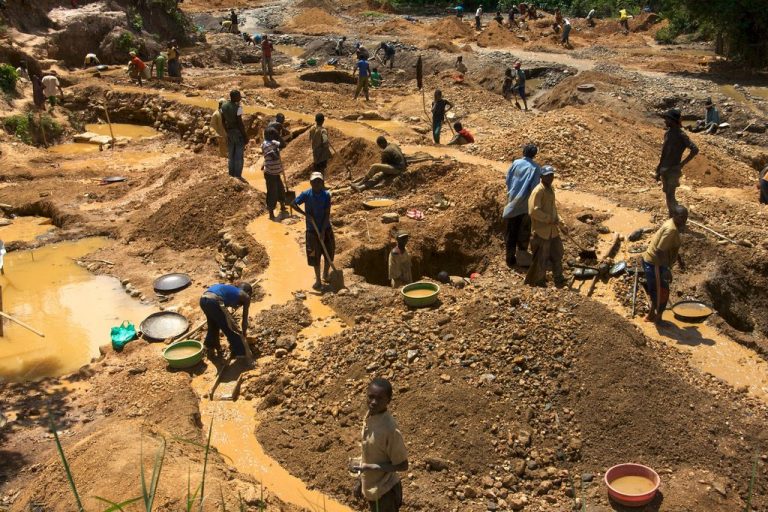
ILLEGAL gold panners continue to wreak havoc along the banks of Bulawayo’s major supply dams, targeting mostly decommissioned ones such as Upper Ncema Dam in Esigodini, and in the process threatening Bulawayo’s water supplies.

In June, nine illegal gold panners were arrested, bringing the total of arrests since January to 68.

Illegal gold panning activities are posing a serious threat to Bulawayo’s water supplies as the panners are even digging in the dams that have dried up, something that is likely to cause heavy siltation.

Bulawayo Town Clerk Mr Christopher Dube recently said the illegal gold panning activities could affect the city’s water supplies for a prolonged period.

He said in the event that a pipe was to burst at the dam due to the activities of the gold panners, the city would go for close to a month without water.

The gold panning activities are rampant in Upper Ncema, Inyankuni and Umzingwane dams that reportedly have alluvial gold deposits.

In February, police in Matabeleland South arrested 51 illegal gold panners who were operating at Upper Ncema Dam in Esigodini.

According to the latest council minutes, illegal gold panners are mainly targeting decommissioned dams.

However, due to inadequate resources, Bulawayo City Council (BCC) rangers and police are struggling to effectively conduct routine patrols in the affected areas.

“Routine patrols were conducted by the rangers and the ZRP in Esigodini.

“The invasion of decommissioned dams seem to be on the upward trend. Most of the patrols are conducted on foot due to shortage of fuel and patrol vehicles,” read the report.

“A total of nine illegal gold panners were arrested during the month of June, bringing the total to 68 as from January 2020.”

Gold panning activities affect the city’s supply dams and the activities in and around the dams are loosening the soil, leading to heavy siltation_The Chronicle

Zera warns errant service stations

0

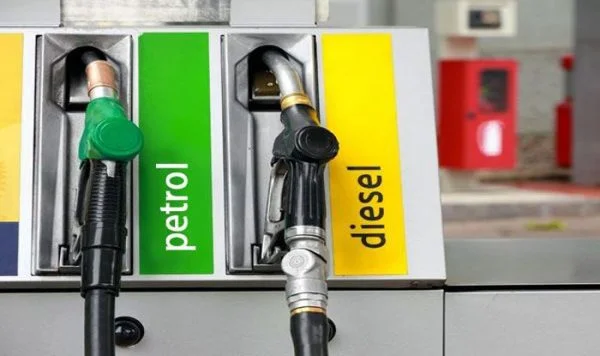
THE Zimbabwe Energy Regulatory Authority (Zera) has warned service stations not using their own offshore funds against charging fuel in forex only.

Zera said it is illegal for service stations that buy fuel using local currency to refuse to accept all forms of payment including mobile money platforms from motorists. The energy regulator said it is now working with law enforcement agencies to ensure compliance in the sector so that every motorist has access to fuel.

The development comes amid concerns from motorists in the country who are failing to fuel their vehicles as most service stations are demanding payment in forex.

In response to written questions, Zera chief executive officer Engineer Eddington Mazambani, said only operators who would have used their own offshore funds to source fuel may sell the product in the currency of their choice.

He said all operators are compelled to prove that they indeed used their own foreign currency sources to buy fuel should they be caught selling in foreign currency.

“It is illegal to refuse to accept all forms of payment (if fuel was purchased using local currency) and Zera is working with law enforcement agencies to ensure compliance in the sector. Only operators who would have used their own offshore funds to source fuel from the traders may sell the product in the currency of their choice,” said Eng Mazambani.

He said the country is saving about 20 percent on all fuel imports through blending.

While not giving exact figures, he said the savings are in the form of scarce foreign currency which would have been paid to fuel traders.

“The blending programme is indeed viable. Fuel blending is a Government programme which is in synch with regional and global trends as countries are shifting towards cleaner, renewable and environmental friendly fuels,” he said.

National Oil Company of Zimbabwe (NOIC) chairperson, Engineer Daniel Mackenzie Ncube said there must be a law that compels service stations to implement dual pricing. He said dual pricing using the interbank rate of the day should be considered for ordinary people without access to foreign currency.

“We must see a pricing policy which enables motorists to buy using swipe or any other form of payment using local currency at the prevailing interbank exchange rate. We not saying service stations should run at a loss, no, we want dual pricing because we all don’t have access to foreign currency,” he said.

Eng Ncube said the Reserve Bank of Zimbabwe must give a directive on the issue of dual pricing.

“There should be a legal instrument to compel the service stations to implement dual pricing for the benefit of all people who need fuel,” he said_The Chronicle

Worst case after oil spill

0

A Japanese ship that ran aground on a reef off Mauritius two weeks ago has now stopped leaking oil into the Indian Ocean but the island nation must still prepare for “a worst case scenario”, Prime Minister Pravind Jugnauth said late on Monday.

Conservationists said they were starting to find dead fish as well as sea-birds covered in oil, increasing fears of an ecological catastrophe despite a massive local clean-up operation that includes making floating booms from leaves and human hair.

Jugnauth said the leak from a damaged oil tank on board the stricken vessel, the MV Wakashio, had stopped but that it still had 2 000 tonnes of oil in two other, undamaged tanks.

“The salvage team has observed several cracks in the ship hull, which means that we are facing a very serious situation,” Jugnauth said in a televised speech, parts of which were made available to Reuters by his office.

“We should prepare for a worst case scenario. It is clear that at some point the ship will fall apart.”

Mauritius has declared a state of emergency and former colonial ruler France has sent aid in what environmental group Greenpeace said could be a major ecological crisis. Japan has also sent help. Tourism is a major contributor to the Mauritius economy, generating 63 billion rupees (US$1.6 billion) last year. — Reuters.

EMA Shuts Down Four Gold Mines For Operating Without EIA Papers

0

THE Environmental Management Agency (EMA) has forced the shutdown of four mines in Mashonaland Central province for operating without the mandatory Environmental Impact Assessment (EIA) certificate.

In a statement, EMA spokesperson Joyce Chapungu said the mines were closed last week after the environmental watchdog’s board, sitting as a court, found them guilty of violating regulations.

“The agency closed four mines in Mashonaland Central province during the week for operating without EIAs. The defaulting mines are, Pecho Minerals located in Galiver Farm in Bindura, Ruvimbo Mining Syndicate located in Mountanview Farm, Red Steel Mining Syndicate in Umfurudzi and Duiker 2&3 Gold Mining located in Wilowdean Farm,” Chapungu said.

“The defaulting projects were issued with fines between level 6 and 7, amounting to $4 800 and $ 9 600 respectively,” she said.

Mining is a prescribed project listed in the First Schedule of the Environmental Management Act 20:27 of 2002.

“All prescribed projects have the potential to cause environmental degradation hence should undergo the Environmental Impact Assessment process before implementation. This is in accordance with section 97 of the Environmental Management Act, and anyone found in violation of this, is liable to a fine of up to level 14,” Chapungu added.

An Environmental Impact Assessment (EIA) is a process which identifies the environmental impacts of a development project and clearly outlines measures to mitigate the negative impacts caused during project construction, implementation and decommissioning.

“The four projects were found to be operating without EIAs, and mining in a manner that harms the environment, causing massive land degradation in the environment. It is unfortunate that most of these projects are located in farming areas meaning that the amount of degradation they are causing will render the land unsuitable for farming purposes as well.”

“On that note, the agency is urging all those implementing prescribed projects to do so under an EIA as a way of promoting sustainable development; development which does not harm the environment.

“The agency will remain alert on the ground to stop any such activity, hence calling all developers to seek for guidance from the agency before implementing any projects that are likely to cause harm to the environment. The cost of rehabilitating, and living in a degraded environment, is more costly than preventing its degradation, hence the need to implement environmental sound projects,” she said. NewZimbabwe.com

Government Mortgages Chiadzwa Diamonds?

0

…return of Anjin castigated by experts

Government critics, and natural resources experts say the new dispensation has gone the full circle of facilitating natural resources plunder by foreigners, rubbishing the return of Chinese firms to mine diamonds as retrogressive.

This follows the official return of Anjin Diamond Company to Chiadzwa after it injected US$38 million, in an opaque arrangement touted to change Zimbabwe’s fortunes despite the miner listed as one of diamond companies which externalized forex during its first stint.

Before it stopped operations in 2015 Anjin was also sued by the local community, through the Zimbabwe Environmental Law Association (ZELA), for releasing effluent and polluting Odzi and Save Rivers.

Anjin also failed to produce audited annual financial statements since 2010 when the entity started mining diamonds in Marange and also failed to compensate families that were relocated to pave way for its operations.

Several natural resources experts, politicians, and civic society players took to micro blogging site Twitter to question the prudence of granting Anjin a new concession when there is currently no binding policies and the Mines and Minerals Act is yet to be amended.

Centre for Research and Development (CRD) said Anjin did not undertake due diligence processes including an Environmental Impact Assessment (EIA), “Mnangagwa blessed Anjin mining without binding policy reforms in diamond mining. Prior to opening Anjin did not undertake due diligence processes that will protect human rights.”

Outspoken opposition politician Tendai Biti said Zimbabwe has mortgaged its resources after allowing the Chinese miner, which was part of a coterie of companies disbanded in 2015 and consolidated for failing to remit to the national fiscus.

Biti called this rape and pillage of Zimbabwe’s natural resources which he said should be quantified in
the future through a review and audit of all mining contracts.

“A future democratic government in Zim must review & audit all mining contracts and concessions dished out by this regime. Further there must be an international audit of Zimbabwe’s diamond Earnings since 2010. The rape and pillage of Zimbabwe commodities must stop

“Zimbabwe’s alluvial Diamonds could have lasted 25 years but in under 5 years Anjin & others had stripped same and Zimbabwe has nothing to show for its diamonds. Looting of commodities (gold, diamonds, platinum, chrome, and gas) under (President Mnangagwa) Emmerson is criminal and should be stopped.

“Despite the fact that Anjin was the country’s largest diamond producer, averaging a million carats a month it hardly contributed anything to the fiscus. Of the $15 billion worth of diamond revenue lost between 2010 and 2015 Anjin was the biggest looter much worse than Mbada Diamonds and DMC,” said Biti.

Reas Sithole a resident of Chiadzwa said, “Returning Chinese Anjin Company after they failed to remit to the Zimbabwean national treasury and to look after communities in Chiadzwa is really worrisome. What has changed?” he queried.

Others said the government should have done its due diligence to check their Environmental Management Plans and Systems, their Corporate Social Responsibility and Tax remittances to treasury before Anjin began with mining and ensure that it compensate resettled families.

With this deal placing transparency and accountability off the table the international coalition the Extractive Industry Transparency Initiative (EITI) chair Helen Clark said Zimbabwe would greatly benefit from signing transparent deal and joining the initiative dominated by its African peers.

“(The) Extractives Industry Transparency Initiative which I chair is global initiative supporting transparency and best practice governance in extractive sectors. Around half of countries implementing EITI standard are in Africa. Zimbabwe would benet from implementing it,” she said.

Shamiso Mutisi who leads a civil society coalition of the Kimberly Processes Certification Scheme (KPCS) said the government should consider adopting diamond trading principles to safeguard revenue from diamonds and to ensure accountability.

Mutisi, is also deputy director of ZELA, said there are ‘a few insights from the Kimberley Process on trade of diamonds for Anjin and government to consider’.

“Diamond companies required to facilitate the audit of companies for traceability of rough diamonds. All
cash purchases of rough diamonds be routed through official banking channels supported by
veriable documentation.

“Effective security standards is a requirement. Records of diamond buyers, sellers, and exporters
including amounts and values sold, purchased, or exported required,” said Mutisi_263Chat