Home Blog Page 596

Does budget have mining fiscal scaffolds?

0

A few days after the release of the 2020 National Budget Statement, the Zimbabwe Environmental Law Association (ZELA) received an invitation from the Clerk of Parliament, to share its insights from a mineral resource governance lens. The mining sector’s economic footprint has been growing over the years. Its significant contribution though has been magnified by shaky performance of other economic sectors – agriculture and manufacturing industries mainly.

Part of ZELA’s mission is to influence policy and practice reforms that help to deliver greater transparency, citizen participation and accountability in the management of public revenue generated by mining.

As such, analysing the National Budget and publicly sharing insights is a pivotal process in ZELA’s quest to follow money generated from mining, gauging how efficiently resources are generated and allocated to revamp public services that are currently in a despicable state.

Interestingly, the 2020 National Budget came at a time when the Government, in the previous month of October, launched its mining strategy to hit a target of US$12 billion by 2023.

A 344 percent spike from US$2,7 billion earned in 2017. This has firmed up public interest on whether Government is scaffolding the National Budget on the US$12 billion mining strategy.

Another angle explored in this analysis is how far the Government has gone to implement the mining fiscal transparency reform agenda set by the previous 2019 National Budget.

Among others, the measures included joining the Extractive Industry Transparency Initiative (EITI) and monitoring and evaluation of tax incentives.

It is worth mentioning that ZELA had made use of the pre-budget public consultations to input into the National Budget formulation process.

This is also another basis within which the 2020 National Budget will be evaluated against. It is also necessary to highlight this analysis of the 2020 National Budget comes after ZELA’s scrutiny on how agile or fragile the mining fiscal transparency reform agenda pivoted on the 2019 Midterm Budget Review is.

Tiptoeing around EITI implementation

Government interest to join the EITI was reignited by the 2019 National Budget Statement. Previous Government intentions, since 2011, to join EITI failed to yield any tangible results. The 2020 Pre-Budget Strategy Paper recommended “ . . . the 2020 National Budget should proffer specific steps on Zimbabwe joining the Extractive Industries EITI as a way for enhancing transparency and curbing any corruption activities in the sector that may deter investment.”

A positive sign that the Government intended to build on its interest to join EITI. The 2020 National Budget, however, only gave a light reference to continued multi-stakeholder discussions on joining EITI.

Unfortunately, this did not meet the bottom bar for specific steps on joining EITI as recommended in the Pre-Budget Strategy Paper.

Without appearing to discount the importance of multi-stakeholder engagement process in preparations to join EITI, one year has almost lapsed, and the set target for next year is continued the multi-stakeholder dialogue. As the Chinese cautions, “talk does not cook rice”. We expect more from the Government.

Importantly, it must be flagged out, mining sector transparency reforms are a constitutional requirement. Therefore, the Government can afford to tiptoe around implementation of EITI, but the Constitution compels Government to deliver on mining sector transparency reforms.

A point we emphasised in our submissions during the pre-budget public consultations — Convergence of principles between the Constitution and EITI offers an opportunity for the Government to hinge mining sector transparency on the global standard, EITI. For instance, public financial management principles embodied in the Constitution under section 298 requires transparency and accountability in all public financial matters which resonate with EITI.

Therefore, the National Budget must put a mechanism to ensure mining sector contribution to the national purse is accounted for per revenue head annually, and per major mineral sector – gold, platinum, diamonds, chrome and coal. Currently, royalties are the only revenue head where mining sector performance can be picked.

As it stands, it is difficult to track the contribution of the mining sector to revenue heads like corporate income tax, customs duty, withholding taxes, and pay as you earn.

Disclosure of tax incentive,

a full picture not shared

Partly, the Treasury honoured a commitment made by 2019 National Budget to monitor and evaluate the impact of tax incentives — tax revenue forgone to incentivise the industry. Only one revenue head, duty concessions given from January 2011 to May 2019 were disclosed and total revenue forgone amounted to. During the same period, duty concessions to the mining sector summed up to US$103  837 015,9, constituting 7,16 percent of the total revenue forgone (US$1 449 367 688,13).

As much as the disclosure of duty concession is commendable, however, it does not give a full picture of revenue forgone through tax incentives.

Other areas where transparency is critical, for example, include the impact of stabilisation agreements, and thin capitalisation exemptions. Stabilisation agreements or clauses generally freeze the agreed tax rates for an agreed period.

As a result, when tax rates increase as prescribed by the Finance Act, the stabilisation clauses cushion the concerned company from honouring tax obligations arising from upward adjustment of tax rates. Given a situation where a stable tax rate undermines the country’s tax adjustments, tax revenue is forgone.

Because mining agreements are not public, there are high risks that some clauses included can undermine the debt-equity ratio of 3:1 required by the Income Tax Act for the purposes of managing thin capitalisation risks.

When a company takes the route of financing its operations through debt rather than equity, it has a leeway to use a related party to get returns through financing costs – interest on loans that are deducted for the purposes of calculating taxable income. Such practices have an effect of eroding taxable profit.

To help citizens appreciate the impact of tax incentives, the National Budget missed the opportunity to disclose what has been earned by the mining sector per revenue head since January 2011 against tax revenue forgone per revenue head. On a positive note, the Treasury hinted “ . . . Government, going forward, will streamline incentives with a view to prioritise the development of local value chains and exports.”

This falls into line with Africa Mining Vision’s thrust to ensure that where necessary, the tax should be used as a tool to promote local value addition and beneficiation as well as mining linkages with other economic sectors.

Enhance fiscal linkages from “use it or lose it” principle

Obviously, the “use it or lose it” principle is key to ensure that mineral claims that are not going to be utilised in a foreseeable must be forfeited to allow new players to unlock the stranded mineral assets. Use it or lose it principle offers Government an opportunity to optimise tax revenue from the disposal of released mining blocks which have proven the geological potential.

However, because of the opaqueness of the current system in which mineral rights are granted, first come first serve basis, cronyism and corruption are unchecked. Last year (2018) Zimplats released roughly 24 000 hectares of platinum claims to Government.

The Great Dyke is known as a mineral pregnant belt which cut across Zimbabwe. In this instance, the Government must have auctioned the mineral blocks released by Zimplats in an open manner. As recommended by the Africa Mining Vision (AMV), competitive bidding allows the Government to pick a bidder who offers a greater development dividend – tax revenue, infrastructure, skills transfer, local supply chains, and value addition and beneficiation. Without discrediting the US$4,2 billion Karo platinum deal, based on mineral blocks released by Zimplats, it is hard to assess if the deal offers optimal developmental returns to the nation.

This is so because there is no basis to compare the $4,2 billion Karoo deal with what other investors were willing to offer. A good glimpse of the fiscal impact associated with released mineral blocks can be taken from the below statement by Anglo American company, extracted from the company’s 2011 Integrated Annual Report.

“The Government of Zimbabwe has also agreed to ensure that the Company will receive payment of the amount of $142 million due to it for the cession, in March 2008, of the Kironde and Bougai mineral right claims.

“This payment will be in lieu of empowerment credits due to it as per the 2008 cession of claims agreement and is in addition to the amounts that will be receivable in respect of the disposal of the 51 percent equity in Unki.”

Clearly, the statement above illustrates why the Treasury must have an interest in the “use it or lose it principle” as leverage for domestic resource mobilisation by curbing opaqueness which breeds cronyism in the disposal of released mineral blocks.

Another development that buttresses why the Treasury must harness fiscal linkages from “the lose it or use it principle” is Mimosa’s interest in purchasing or leasing platinum blocks owned by Unki.

Be open about mega mining deals, are they tailored to deliver mega or meagre national benefit?

During the pre-budget public consultation, we demanded all mining mega deals be presented in Parliament for scrutiny to ensure the deals are well aligned with national development interest.

The 2020 National Budget disclosed that “ . . . investment agreements in platinum, gold, and chrome, which have been concluded, are expected to boost output in the sector.”

The Constitution, Section 315 (2) (c) requires an Act of Parliament to guide negotiation and performance of mining agreements to ensure transparency, honesty, cost-effectiveness, and competitiveness. Worryingly, the 2020 National Budget failed to push for contract transparency and to support Parliament scrutiny on the fiscal terms and conditions of the mega-mining deals.

For Zimbabwe, the 1888 mining agreement, the Rudd Concession, is a stern reminder of how far mining agreements can prejudice national interests. It is easier for some to dismiss reference to the Rudd Concession. Some might argue, the agreement was signed a century ago, so much have changed, Government is now better placed to negotiate good deals.

With Honourable Winston Chitando at the helm of the Ministry of Mines and Mining Development, a man with an impeccable mining experience as the former executive chairperson of Mimosa, what can go wrong, one can argue. Yet, secretive mining agreements, it must be noted, allows corruption to fester. Even if we discount corruption, the huge financial transactions involved, must not lack checks and balances to ensure mega mining deals are tailored to deliver mega and not meagre benefits to citizens.

Constitutional right for communities to benefit from resources in their areas ignored

The 2019 Midterm Budget Review issued a death certificate to the indigenisation and economic empowerment framework which also included community share ownership schemes. Constitutionally, “The State must ensure that local communities benefit from the resources in their areas.”

To address the gap created by the scrapping of the indigenisation of economic and empowerment framework, we demanded the inclusion of revenue sharing arrangements between central and resource-rich local governments. For example, 20 percent of mineral royalties must be ploughed back in areas where the resources are extracted. That way, CSOTs will have a sustainable revenue stream to finance local socio-economic development.

Treasury continues to renegade on its promise to review platinum royalties

Part of our contribution during the formulation of the 2020 National Budget was the need for the Treasury to honour a commitment made in the 2018 National Budget to review platinum royalties in August 2019.

A commitment made because the platinum royalties were deflated from 10 percent to 2,5 percent to ensure fairness and equity among the platinum producers.

Prior to this arrangement, ordinary platinum leaseholders like Mimosa were paying 10 percent royalties while special leaseholders – Zimplats and Unki were paying 2,5 percent. The reason for the August 2019 deadline for the review of platinum royalties was that the stabilisation agreement between Government and Zimplats was set to expire in that period.

Hence an opportunity for the Government to increase royalties without renegotiating its way out of the stabilisation clause.

Currently, platinum royalty rates are now half the rate of the gold sector and marginally higher than base metals by 0,5 percent. Regrettably, the Treasury continues to renegade on its promise to review platinum royalties.

Parliament can still

salvage the situation

Disclosure of duty concessions given to the mining sector is the only silver lining in the National Budget from a good mineral resource governance lens. The Treasury failed to demonstrate how the 2020 National Budget is scaffolded on the US$12 billion mining strategy by 2023. Our input during the pre-budget public consultations was largely ignored. No safeguards were put in place to ensure communities benefit from resources in their localities as required by the Constitution.

On EITI, the National Budget failed to meet the bottom bar set by the 2020 Pre-Budget Strategy on coming up with clear milestones for implementing EITI.

Reference to the use it or lose it principle is made only from the productivity point. Yet the National Budget can leverage on competitive bidding to curb rent-seeking behaviour in the disposal of mineral blocks with which have significant interest from several investors.

The plans by Mimosa to purchase or lease platinum claims are a reminder to Government that there is potential to raise revenue from released platinum claims, for example. There is a lack of urgency to comply with the Constitution when it comes to transparency and accountability in the negotiations and performance monitoring of mining agreements.

As such citizens do not have a clue whether the US$12 billion mining sector will deliver optimal benefits to the nation. Since this is a budget proposal, Parliament must stand its ground to ensure that the 2020 National Budget is well hinged on the US$12 billion mining strategy and the delivery of necessary mining fiscal transparency reforms.
India readies US$500m for power projects

0

India is ready to extend nearly half a billion United States dollars to support three key power projects in Zimbabwe, an Indian diplomat has revealed, adding the concessional loans either awaited signatures of parties or project tenders.

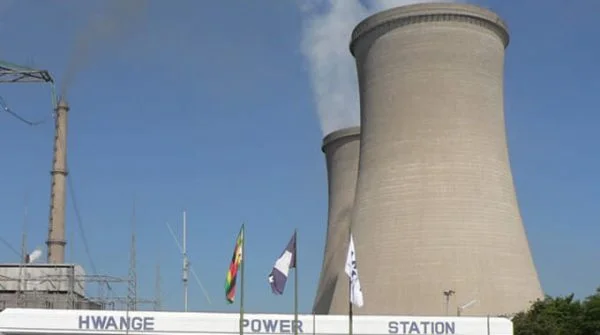
At Hwange Power Station, for which the largest chunk of the loan facilities is earmarked, advanced age, technical problems due to neglect of maintenance, parts replacement and failure to upgrade have made the plant prone to frequent breakdowns.

The other project is the Bulawayo Power Station repowering.

Indian Ambassador to Zimbabwe Rungsung Masukui, said Delhi was ready to extend US$310 million for upgrading of Hwange Power Station, US$110 million to re-power Bulawayo Power Station and US$45 million for upgrading the Deka project.

India and Zimbabwe have enjoyed very strong cordial socio-economic and political relations since the Southern African country gained independence from Britain in April 1980, which continues to manifest in various ways.

Zimbabwe urgently needs to increase internal power generation to bridge an acute demand-supply mismatch worsened by the drought of last year, which has reduced water levels in the Kariba Dam and curtailed hydro-power generation capacity at the country’s single largest power plant.

Demand for power at peak periods in Zimbabwe roughly stands at 1 800 megawatts (MW) against internal electricity generation capacity of 700MW to 800MW at the height of the plant’s reliable generation capacity.

Ambassador Masukui said the loans were being processed with the tender for Bulawayo power plant re-powering having been issued in India, while the loan for Hwange upgrading only awaits the signatures of parties.

The loan for the Deka Lift Pump upgrades and laying of a second water pipeline from the Zambezi River to Hwange Power Station awaits ongoing tender processes to enlist contractors in India.

There is need to increase water pumping and transportation to the power station given that Hwange is having its capacity expanded by 600 MW.

“At Government to government level, there are several projects. Just at the Hwange power plant; two projects are there; the US$310 million one, which is for the upgrade of six units,” he said.

Hwange Thermal Power Station used to be the biggest power plant in Zimbabwe, before Kariba South had units 7 and 8 added for 300MW, with an installed capacity of 920MW. But can only do 550MW at best, if most of its 5 functional generators are working, which is very rare these days.

“The other one is laying of a water pipeline from the Zambezi River, which is the Deka Pumping Station (project), to Hwange power plant; that is another separate project for around US$45 million,” Ambassador Masukui said.

From the river, water for the boilers and cooling towers is drawn by both high and low lift pumps to a storage reservoir located adjacent to the station and conveyed by gravity to the station.

“The third one is at Bulawayo Power Station; that again is for the refurbishment of that power plant for US$110 million.

“So that put together at Government to government level, which is at concessional terms, amounts to nearly US$500 million,” he said.

Ambassador Masukui said to demonstrate support for Zimbabwe and the strong cordial relations between the countries; India sends business delegations to scout for investment opportunities during every major exhibition that Zimbabwe hosts.

Registrations with Zimbabwe Investment Authority (ZIA) by Indian firms for investments in various sectors, including mining, energy, education and agriculture, have fallen from 16 to 7 in 2017, picked up to 37 in 2018 and reaching 25 by June 2019. They are seen at over 50 by year-end.

Ambassador Masukui said the concessional loans will be ready soon, as India was committed to support the projects since energy is a key enabler Zimbabwe needs to resolve urgently to end disruptive load shedding.

“The quicker we move the better it is,” he said_Business Weekly

RBZ, gold miners to meet as forex retention debate rages on

0

The Reserve Bank of Zimbabwe (RBZ) will meet gold mining players next week to resolve differences on forex retention levels as it moves to boost sales through the formal channels amid rising leakages of the yellow metal.

The sector is battling leakages amid claims by Finance Minister Mthuli Ncube that over 34 tonnes of gold were smuggled to neighbouring South Africa which is offering a 15% rebate to miners who sell gold to them.

In February, RBZ lowered the forex retention levels to 55% from 70%, raising the ire of gold miners who warned that leakages would persist. Save for October, monthly gold deliveries to Fidelity Printers and Refiners (FPR) have been low compared to the same period last year. RBZ governor John Mangudya told Business Times that the monetary authorities would continue to discuss with miners to bring the forex retention issue to finality.

“Next week we will meet the Chamber of Mines of Zimbabwe, Zimbabwe Miners Federation (ZMF) and other gold mining affiliates to discuss the forex retention threshold as we move to ensure that gold comes through Fidelity Printers which is the sole buyer of gold in the country,” he said.

“We are free to discuss with the miners to find common ground on retention levels but what we always remind each other is that minerals in Zimbabwe under the Mineral Act are for the people of Zimbabwe, therefore everyone has to benefit from the minerals through the purchasing of critical raw materials from the balance of [the forex retention levels that] we would have agreed upon,” Mangudya added.

Gold is now the highest single foreign currency earner for Zimbabwe ahead of tobacco, but its subdued performance continues to shatter the country’s hope of turning around the economy. Gold contributes 38% of the country’s total earnings and more than 60% to the mining sector, the economy’s highest forex earning sector.

Mangudya, who equated gold’s importance to the country as oil is to Nigeria, said gold was the most liquid asset and most important to Zimbabwe and should be handled with care. Last week, he ruled out 100% retention for gold miners saying the forex from gold was needed to meet the economy’s critical imports, such as fuel and medicines.

In Australia, gold is placed under the Crown and in South Africa, it is under the President’s jurisdiction.

“In as much as we would like our miners to bring the gold to Fidelity to increase productivity, we can’t lie to each other saying that we will give them a 100% percent forex retention level, because we have the people of Zimbabwe to feed through grain importation, we have agriculture productivity to increase through fertiliser and fuel importation, and we have the people to heal through medicine importation,” Mangudya argued. “We can’t afford to give them 100%, we just can’t.”

During the inaugural ZMF conference in Gweru a fortnight ago, President Emmerson Mnangagwa pleaded with the monetary authorities to increase forex retention levels to 60% to woo more miners to sell their produce to Fidelity. That offer was openly rejected by the miners who want over 70%.

Irvine Chinyenze, the CEO of the Gold Miners Association of Zimbabwe, said the monetary authorities should increase forex retention to above 60%. “The monetary authorities should just raise the forex retention levels to around 80% to motivate miners to sell their gold through the formal channels. We would want the FPR to pay miners timely to continue with production,” Chinyenze said. “Most importantly, we would want the FPR to improve on efficiency and the rest will follow as trust should be the first thing that miners should have towards the refinery.”

Gold deliveries decreased 23% to 23.03 tonnes during the first 10 months of 2019 from 30.13 tonnes during the comparative period last year due to currency shortages, power outages, and poor mining policies.

A further decline was caused when the country’s power utility intensified power outages during the month of June, resulting in some companies working only four days a week. Experts warn that the US$4bn export earnings target by 2023 will not be realised if the country does not resolve the electricity problem, and the forex retention level.

Zimbabwe is targeting to increase production to 100 tonnes of gold per year by 2023, a figure which the country may reach if all gold is accounted for_Business Times

High cost of diesel forces miners to go green

0

When one buys a vehicle, especially in Zimbabwe where fuel prices keep soaring and the supply of the precious liquid is erratic, the size of the engine is critical. This informs fuel consumption of the vehicle in terms of kilometres per litre in simpler terms.

Currently, vehicles with smaller engines such as the 0.99cc, 1.3cc and 1.5cc which can do 20 km per litre, 18 km per litre and 15 km per litre respectively, on a combination of highway and urban driving, are proving to be popular.

On the other hand, the fuel guzzlers with engines such as 3.0cc and 4.5cc are a preserve for the big boys in town with deeper pockets. These are the guys who do not check their fuel gauge while driving, they have excess. Zimbabwe’s energy crisis has seen miners and other corporates now considering using solar in place of diesel generators.

This comes at a time when the power utility ZESA Holdings has been rationing electricity with blackouts sometimes lasting 18 hours due to a low water level in the Kariba dam and obsolete equipment at the Hwange Power Station.

As of Tuesday, ZESA was generating below 600MW against a national demand of 1800MW. Other countries are making a positive score to sustainability as they push for environmentally friendly energy production solutions with even credits in taxes and other incentives offered.

In the case of Zimbabwe, miners have been forced to ditch diesel powered generators, as the cost of fuel soared in the past year. Diesel opened 2019 at just above US$1.50 per litre before increasing sharply to about US$3.50. The country abandoned dollarisation in Februry 2019, but fuel costs have increased steadily since then.

Now, diesel costs about ZWL$17.74 per litre. This has left many motorists unable to afford fuel as the rate of wage increases remains far below the inflation rate. As corporates and individuals are finding the going tough, having to suffer increasing operating costs in fuel. Miners, in particular, depend on a globally-set price for commodities, as such they want to manage costs in order to retain reasonable margins.

Fungai Makoni, MD for Mimosa Mining Company, told journalists recently at the company’s mine in Zvishavane that cost optimisation was key to managing a mining operation given that no mining company control prices. As the cost of fuel pushes up overall costs, miners have been pushed to a tight corner and have had no option than to set up solar power plants. In the long run, the solar solution is cheaper, and critically the cheaper option coincidentally is green and a score in sustainability.

Mark Learmonth, the chief financial officer of Caledonia Mining Corporation, says the company will establish a 6.5MW solar plant worth US$8m at the Blanket Mine due to unsustainable fuel costs. The company recently installed diesel generators which consume 3,600 litres of fuel per hour, translating to one litre per second to power the plant. “We use 3,600 litres per hour and the cost is too high,” says Learmonth.

“The other problem is that the fuel is not available reliably.” At current costs, the generators cost ZWL$17.74 per second and ZWL$63,864 per hour. Learmonth says the solar project will be implemented in three stages.

“The first stage generates enough power to meet Blanket Mine’s requirements, then we move on to the second stage.” The solar plant will be situated on 40 hectares near the mine in Gwanda. At the second phase, the power will be enough to meet Blanket Mine’s demand at peak time. The surplus will be fed to the national grid. Zimbabwe’s largest platinum producer Zimplats also says it is considering solar energy as a solution to its power crisis.

However, company spokesperson Busi Chindove says security of power supply is a critical component of Zimplats business operations. Power problems are proving to be a headache for business with a need for a viable long term solution.

Lafarge recently reported in its half-year results that profits fell short of expectations due to significant macroeconomic challenges, including erratic power supply.

Lafarge chairman Kumbirai Katsande said: “The rapid escalation of the exchange rate has significantly impacted business performance in terms of cost structure and revenue. Unreliability of electrical power significantly compromised performance as a result of increased downtime due to over and under voltages experienced.

“This resulted in refractory failure and a decline in our kiln’s operating efficiency. The shortage of fuel also affected production as diesel to fire the kiln as well as to run various mobile equipment was not readily available, thereby resulting in lost production time.”

S.Africa’s Eskom needs $12 bln to comply with new emissions laws

0

South Africa’s power utility Eskom needs around 187 billion rand ($12.60 billion) to comply fully with existing legislation curbing harmful emissions, a government presentation to parliament showed on Wednesday.

Eskom, which uses mainly coal-fired power plants to generate electricity, was one of 37 top domestic polluters, including Sasol, granted a five-year reprieve by the government until 2020 to meet air emission standards.

The new minimum emissions standards for air quality laws in South Africa, which cover particulate, sulphur dioxide and nitrogen oxide emissions, came into effect on April 1, 2015.

“Complete compliance with the 2010 Minimum Emission Standard would require an estimated 187 billion rand,” the presentation by the Department of Public Enterprises said.

Africa’s biggest public utility supplies over 90% of South Africa’s electricity, relying largely on ageing, heavily polluting coal-fired power stations but does not generate enough cash to meet its debt servicing costs.

Project delays and cost overruns at Medupi and Kusile, two mega-coal plants currently being built by Eskom, largely contributed to Eskom’s debt ballooning to 440 billion rand.

“Given the current financial constraints, at this stage, Medupi will be prioritised to be retrofitted with Flue-Gas Desulphurisation (FGD technology),” the department said.

South Africa has said any new coal plants would need to have emission-reducing technology, such as FGD.

In September, Eskom said it might have to shut some plants if it fails to reduce emissions, raising the prospect of further power cuts in the county and also putting more pressure on the government which has had to bail out the debt-ridden company to keep it afloat.

Eskom has applied to the Department of Environmental Affairs for rolling postponements of its obligations under the legislation to meet the emissions and air standards.

Ageing plants and poor maintenance have triggered several power cuts throughout the year, putting pressure on key economic industries, such as mining, as the country skirts a recession.

The latest bout of nationwide blackouts come after repeated power cuts in February and March, which hit the economy and pushed the government to grant Eskom a $4 billion bailout on top of a $16 billion bailout spread over the next 10 years. – Reuters Africa

Zim trades diamonds for fuel

0

THE government is on the cusp of signing an estimated US$1.4bn three-year sale-purchase agreement with Russia’s diamond producer and a Swiss firm that will result in the state securitising precious stones for fuel supplies, the Business Times has established.

Since the start of the year, Zimbabwe has been battling erratic fuel supplies, rolling power outages and a weakening domestic currency. Compounded by a drought and a cyclone that ravaged some areas in the eastern highlands, the economy is expected to shrink by 6.5% this year.

The government has already instituted a new pricing framework for fuel that reflects costs, including those resulting from changes in import prices and exchange rate fluctuations.

The framework also ensures that the local pump price remains comparable to regional peers, and has been going up almost every week. Information at hand shows that the government is finalising a sale-purchase contract with a Swiss firm, Tatneft, which will provide diesel in exchange for diamonds from the Zimbabwe Consolidated Diamond Company (ZCDC).

The deal, sources said, is expected to be signed by the end of this month.

“The deal is expected to come into effect in 2020 and the diesel supplies will run for a period of three years,” a source familiar with the developments said. The world’s largest diamond producer, Alrosa of Russia, will receive diamonds from the ZCDC every month with an estimated value of US$40m, insiders have said.

The Russian firm, sources said, will also estimate the value of the gems and inform the buyer and the seller accordingly.

“Due to fluctuations on the global market, Tafneft will have the liberty to reduce the value of the diamonds by 30%. The diesel will be supplied via the Port of Beira,” a source said. “Under this arrangement, Tatneft is expected to deliver high quality diesel 50 ppm [parts per million] after Alrosa pays for the commodity 30 days after delivery. The Reserve Bank of Zimbabwe is expected to sign this contract on behalf of Zimbabwe.”

Contacted for comment, Finance Ministry spokesperson Clive Mphambela referred questions to the Energy Ministry. Energy and Power Development minister Fortune Chasi said: “I am sorry, I wasn’t part of the delegation that went to Russia, I was in Mozambique so I cannot comment on that. But if you try after two days, I might help you.”

The cabinet will meet today following President Emmerson Mnangagwa’s return from the United Arab Emirates. Questions sent to Alrosa and RBZ governor John Mangudya were not responded to at the time of going to print.

Zimbabwe has been battling a fuel crisis for one year now, which has manifested in queues at service stations. Diesel shortage has hampered industry as it has become an alternative source of energy to power generators in the wake of the electricity cuts that sometimes last for 18 hours.

This is not the first time that Zimbabwe has resorted to barter to resolve the fuel crisis. At the turn of the millennium, Libya bailed out Zimbabwe with fuel in return for beef and agricultural products such as coffee and tobacco. The government sees diamond output rising this year following a proposal by Finance Minister Mthuli Ncube to reduce royalty on the precious stones to 10%, from 15%, of gross revenue to reduce the cost of extracting deep- seated kimberlitic gems.

Zimbabwe is targeting to ramp up diamond production from 3.2m carats to 6m carats by the end of 2023 after the country launched a diamond mining policy recently. In March this year, the Russian state-controlled miner, Alrosa, announced that it would assess the quality of Zimbabwe’s diamond reserves over the next six months but would only start mining if it could take a majority stake in such a project. It has partnered ZCDC for diamond mining in Marange.

Zimbabwe has relaxed its indigenisation law as it seeks to attract investment. “Of course we will only be ready to participate in projects in cases where we can have management control and operational control of the assets,” Alrosa chief executive Sergey Ivanov told Reuters.

That would mean a stake of at least 51%, he said, adding that he would be confident of achieving that if it gets to the stage of detailed discussions on how to advance the project. Russia, along with China, has been a political ally of Zimbabwe since the days of its independence war against British rule, and this year Zimbabwe selected Alrosa and China’s Anjin Investments to partner ZCDC.

Alrosa, the biggest diamond producer by volume, as well as Anglo American’s De Beers, the biggest in value terms, both say supply will shrink in the coming years as mines, such as Rio Tinto’s Argyle project, become deplete_Business Times

Illegal miner shot at Eureka Gold Mine

0

One of the artisanal miners reportedly wreaking havoc at Eureka Gold Mine in Guruve was last week shot on the leg after trying to attack security guards in a gold ore scuffle.

Chriswell Mushongahande (27) of Muroiwa village under Chief Chipuriro in Guruve is recovering at Guruve District Hospital after he was shot by a security guard Paradzai Nyamutsenga (51).

Police officer commanding Guruve district Robert Torevasei confirmed the incident.

“One of the artisanal miners was shot by guards after he tried to attack them using an iron bar. Last week, the police had to use tear smoke to disperse them as they ran amok,” Torevasei said.

He said illegal miners were slowly giving up on the mine after police intervention although the law enforcers were slowly moving away to focus on their core business.

“Illegal miners are now coming in small numbers since our intervention and most of the crushing machines were removed, but we are also slowly withdrawing our services because it is not our core business,” Torevasei added.

The mine is currently under care and maintenance, hence many illegal miners are flocking to the place, prospecting for gold.  Source: Newsday

Breaking: Shots fired at Jumbo mine

0

Shots were fired yesterday at Jumbo, Metalon Mine which is now a hotspot for artisanal miners looking for a quick buck.

Our source said they were digging for gold and could not hide their happiness and some colleagues shouted they had stuck lots of gold. This attracted attention from an interested buyer who offered to buy from them.

In no time a Mercedes Benz pulled up on them started shooting and our source and his friends bolted. “Handizivi chakasara chichiitika but takamhanya” (I don’t know what happened after but we ran for it).

The place is a magnet for the criminal “Mashurugwi gangs” who masquerade as miners with the intention of robbing unsuspecting victims usually at machete point.

Former mine authorities and security are reportedly charging US$15 per head to allow the illegal gold miners into the mineshafts during the night.

lt is said they rake up to US$1 500 per night through the practice.

Mazowe Mine is one of the oldest mines in Zimbabwe, and exploration and development in this region dates back to 1890, with over 1.4 million ounces of gold produced to date. Mazowe Mine comprises two underground operations, Mazowe and the BSV sections. The mine has a total of 247 claims over 2,939 hectares of landholding. Ore is processed in a single plant which consists of conventional crushing and milling and a carbon-in-leach facility.


ZESA delivers fatal blow to miners

0

ZESA Holdings has disregarded an agreement with miners to ensure uninterrupted power supply, a situation which has cost the resources industry millions of dollars in potential lost output, Business Times can report.

ZESA imposed the worst power cuts in three years early this year following reduced output at its largest power plant, the Kariba South Power Station, due to dwindling water levels. The situation has been exacerbated by poor generation at ZESA’s ageing thermal power stations in Harare, Hwange, Bulawayo and Munyati.

Zimbabwe last experienced such serious blackouts in 2016 following a devastating drought. As part of diligence, the mining industry, which contributes about 15% to the country’s GDP and more than 60% of the foreign exchange earnings, signed an agreement with ZESA for uninterrupted electricity supply. Under the agreement, the miners pay for electricity in advance in US dollars, and in return, they expect to get dedicated power supply.

But ZESA has not been honouring its side of the agreement, and continue to load-shed the mining sector. This has angered the miners who say ZESA’s failure to honour the agreement will put the economy in peril. Miners are among the biggest consumers of electricity in the country and are already grappling with weak profits that could be compounded by the potential output loss due to power outages of up to 40%, according to the latest survey.

If ZESA’s continued power generation problems destabilise the mining industry, the economy will feel the pinch, especially if the power crisis forces the sector to shed jobs. The monetary authorities will also take a hit as mineral exports are one of the leading foreign currency earners for Zimbabwe.

In a survey conducted by consultants Albert Makochekanwa and Caren Pindiri, which was released last week, all mining houses indicated that despite paying for electricity in advance and in foreign currency under the agreement, ZESA has not been honouring the signed agreement, causing irreparable damage to the mining sector.

The consultants are Economics lecturers at the University of Zimbabwe. Almost all the miners said they were experiencing regular and prolonged power outages. Some had been cut off for up to three days a week, the survey showed.

“Almost 60% of respondents were facing power outages of up to 3 days a week, while 30% were facing between one and two days. About 10% were facing power outages of less than one day per week,” the survey said.

“The majority of respondents indicated they signed agreements with ZESA and were making advance payments in foreign currency for the supply of dedicated power. Almost all respondents indicated that the power outages have resulted in production stoppages and output losses of between 1% and 40%.

“About 80% of respondents also indicated that the revised tariff framework for the mining sector is high. Approximately 70% of respondents were of the view that the power situation would deteriorate in 2020 while 30% indicated that the power situation will remain the same.” Miners want ZESA to respect the signed ringfencing contract.

“Almost all respondents underscored the need for ZESA to honour and respect the contract signed with the mining houses and provide dedicated uninterrupted electricity as per the agreement,” the survey said.

Almost all mining companies also want to be allowed to import electricity directly for their consumption, according to the survey. Half of the miners have proposed a tariff between US$0.07 per kWh and US$0.09 per KWh, while 40% recommended a tariff between US$0.05 per KWh and US$0.07 per KWh. Approximately 10% recommended a tariff of between US$0.09 per KWh and US$0.10 per KWh.

Isaac Kwesu, the Chief Executive of the Chamber of Mines, said mining was a critical sector which should be spared the crippling blackouts. “Mining requires electricity for both operations 24/7 and the safety of workers. It is very costly to have production stoppages. The safety of workers also needs to be guaranteed,” Kwesu told Business Times.

Responding, Owen Mavengere, the retail manager of the Zimbabwe Electricity Transmission and Distribution Company (ZETDC) said the power utility had prioritised the mining sector “because they have supported us to anchor electricity imports, which are very expensive. We are currently engaging stakeholders for further imports. Unfortunately, where we are coming from, we nearly collapsed, but we are now back on our feet as consumers are now paying the correct tariff,” Mavengere said.

“As far as the ring-fencing agreement is concerned, where miners have paid in advance, I will agree that we should give power to the miners 24/7. However, we have two components of imports, that is, firm where electricity is guaranteed and non-firm where it depends on availability. The firm component is the way to go. We need to correct that. To say we have reneged on the ringfencing agreement, no, we will honour that.”

Business confidence index in the mining sector now stands at +2.2 for 2020, falling from +8 in 2019. This means mining executives are slightly confident about their business in 2020. Statistics show that the 2020 index was weighed down by various variables such as access to capital, political and country risk, and economic prospects.

The mining industry is expected to record decline in output growth with the majority of respondents (80%) indicating that their output for 2019 will be less than 2018 by a range between 10% to 40% on the back of the above challenges. Gold miners expect a negative output change of between -5%, to -35%; platinum 0% to -7%; diamond -30% to -40%; chrome ore -10% to -20%; nickel -2% to -10%; and coal -10% to -40%.

Currently, most miners’ average capacity utilisation is at around 70%, compared to 75% this time last year. This is due to the power outages, inadequate foreign exchange allocations, capital shortages, high cost structure, and obsolete equipment. However, the platinum group metals (PGMs) continue to operate at 100% capacity utilisation.

Almost half of the miners projects to record marginal to significant profits in 2020, while 30% and 20% expect to post flat and a contraction in profitability respectively in 2020. At the moment, the mining industry has slightly above 35,000 formally registered employees, a figure which excludes small and artisanal miners and other unregistered mining employees.

About 60% of respondents indicated that they had lost some critical skills during 2019, citing erosion of incomes because of inflation as well as government policy that disallows payment of salaries in forex. About 60% of supplies and consumables were sourced off shore and 40% were locally procured. Of the 40% sourced locally, about 30% were manufactured in Zimbabwe_Business Times

Gold gains on concerns over U.S.-China trade deal, Hong Kong protests

0

Gold inched up on Wednesday after U.S.President Donald Trump threatened to raise tariffs on Chinese imports if no deal is reached with Beijing and as the U.S. Senate passed a bill backing human rights in Hong Kong.

Spot gold rose 0.1% to $1,473.98 per ounce by 0341 GMT. U.S. gold futures was flat at $1,474.40 per ounce.

The U.S. Senate also passed a second legislation to ban the export of certain munitions to Hong Kong police forces. China condemned the moves and said Washington should stop interfering.

Trump on Tuesday threatened an escalation of the U.S.-China trade spat that has damaged economic growth worldwide. “There are concerns that the latest bill passed in the U.S. in support of the Hong Kong protesters might derail the progress in the U.S.-China trade deal,” Ilya Spivak, a senior currency strategist at DailyFx said.

However, gains in gold are limited as investors are “not quite prepared to take a firm bet ahead of the U.S. Federal Reserve’s minutes, which will probably confirm that the Fed is on hold for now and that’s not good news for gold,” Spivak added.

Investors are awaiting minutes from the Fed’s October policy meeting, due at 1900 GMT, for further cues on the monetary policy outlook.

The U.S. central bank cut interest rates thrice this year to help sustain U.S. growth, but had signalled last month that there would be no further cuts unless the economy takes a turn for the worse.

Lower interest rates reduce the opportunity cost for holding the non-yielding bullion.

Asian shares moved lower on conflicting messages on the trade front, in contrast to the strong rallies seen recently in global equities markets. “The precious metal, though facing bearish pressures over a strong rally in the equities market, will remain vigorous over subdued global growth and geopolitical uncertainties in Q4,” Phillip Futures analyst Benjamin Lu said in a note.

In Hong Kong, the last band of anti-government protesters trapped inside a besieged Hong Kong university were weighing a narrowing range of options as police outside appeared ready to simply wait them out. Spot gold may rise into a range of $1,480-$1,485 per ounce, according to Reuters technical analyst Wang Tao. Elsewhere, silver was unchanged at $17.14 per ounce, while palladium fell 0.1% to $1,760.80 per ounce. Platinum was down 0.6% to $904.52 per ounce_Reuters