


Home Blog Page 597

Vast responds to allegations

0

Vast Resources has responded to allegations that made headlines in the press last week. A online mining publication ran an article entitled “Vast chasing a pie in the sky“. The article alleges the Vast deal was marred by corruption involving pending courts cases, alleged forged documents and fake stamps.

The AIM listed company released a Press Statement below.

Vast Resources plc, the United Kingdom AIM-listed mining company with mines and projects in Romania and Zimbabwe – focused on the rapid advancement of high-quality projects by recommencing production at previously producing mines in Romania and the commencement of the joint venture mining agreement on the Chiadzwa Community Concession Block of the Chiadzwa Diamond Fields in Zimbabwe – wishes to comment on the articles published in the Zimbabwean online press during the course of the week commencing 27 April 2020 by way of providing an update on the anticipated Joint Venture between the Company’s subsidiary Katanga Mining Pvt Ltd and the Zimbabwe Consolidated Diamond Company Pvt Ltd (the Joint Venture) in light of the said articles.

As the Company awaits finalisation of the Joint Venture in the post-Covid-19 lockdown period, the Company continues to engage with the Zimbabwe Government,  which has warmly welcomed the investment and expects the project to play its part and be a contributor to the country’s economic recovery programme post the pandemic in line with the Governments USD 12Bil Mining Road Map.

Vast Resources PLC and its subsidiaries have, throughout the Joint Venture process, maintained constant dialogue and interaction with the Community and all stakeholders who have formally written to the Company maintaining their support.

The Company continues to act in good faith to the benefit of the Republic of Zimbabwe and the entire community, and always in accordance with the instructions and direction of the relevant governmental authorities.

The Company has always provided updates to the market based on information provided by the relevant Government bodies and backed by documentation, the most recent being the announcement made by the Company on 3rd March 2020.

The Company remains confident that despite the recent COVID19 lockdown and other delays that have arisen in recent months due to matters unrelated to the relationship between the Zimbabwean Government and Vast Resources PLC, the project will be continued to the benefit of all stakeholders

We look forward to providing further updates as we receive official communication from the authorised bodies in Zimbabwe.

Hwange Colliery Company output remains subdued

0

COAL Miner, Hwange Colliery Company Limited (HCCL) has recorded a 27 per cent increase in coal output without the involvement of a contractor, Mota Engil, with overall output, however, remains subdued in the year ended December 31, 2019.

HCCL was placed under administration by Government in 2018 following gross and persistent losses, as well as technical insolvency with liabilities exceeding assets, among others.

In a statement accompanying financial results for the period under review, HCCL administrator Mr Bekhithemba Moyo said the strategic focus was on increasing production and sales of high-value coking coal.

“It was encouraging to note that own production increased by 27 per cent during the period under review, despite the overall production decreasing by 43 per cent mainly as a result of contractor production, which decreased by 75 per cent.

“Over time, less reliance should be placed on contractors with own mining being a priority as it is cheaper and generally more reliable,” he said.

However, the major challenge in achieving this is largely due to lack of financial and human capital, aspects which will continue to be prioritised going forward, said Mr Moyo.

“Own open cast operations at JKL Mine produced 449 454 tonnes in 2019, which was an increase of 22 per cent from 2018 production of 366 959 tonnes.

“Production by the contractor at Chaba Mine dropped by 75 per cent from 1,2 million tonnes in 2018 to 306 825 tonnes in 2019,” he said.

As a result, overall opencast mine production in 2019 was 52 per cent below that of 2018. This was mainly attributable to low contractor activity and working capital challenges, shortages of diesel in the market and foreign currency to buy spares and explosives.

The underground operation at 3 Main Mine produced 268 603 tonnes in 2019, which was an increase of 37 per cent from 2018 production of 196 060 tonnes.

“The increase was attributable to improved operational funding support and the credit facility availed by the major original equipment manufacturer, Komatsu South Africa, which has been working well.

“This was, however, below the 2019 annual target of 409 500 tonnes, attributable to a shortage of working capital and foreign currency for spares and consumables, mainly imported from South Africa,” said the company.

Total coal mined by opencast operations totalled 756 279 tonnes, a 52 per cent decline in production from the previous year. Total coal from HCCL pits was 449 454 tonnes, a 22 per cent increase in production from 2018 while the contractor Mota Engil mined a total of 306 825 tonnes, which was a 75 per cent decline in production.

A total of 554 619 tonnes of coal was delivered to Hwange Power Station during the course of the year. During the period under review, the mine received and commissioned the 18-seater personnel carrier, which Mr Moyo said reduces fatigue on underground employees who were travelling a long distance.

“The Continuous Miner (CM) had a major breakdown towards the end of 2019 and was subsequently trammed out of the mine in December 2019 for repairs and opportunistic maintenance works. The CM resumed work in March 2020,” he said.

On a historic cost basis, the company’s performance improved from a gross loss of ZWL$3,3million for the year ended December 31, 2019, to a gross profit of ZWL$182 million for the year under review. The net loss position, however, increased from ZWL$78 million to ZWL$91 million due to an exchange loss of ZWL$322 million on legacy foreign creditors.

On an inflation-adjusted basis, the performance improved from a loss of ZWL$21 million and a net loss of ZWL$487 million to a gross profit of ZWL$422 million and after-tax profit of ZWL$1,5 million.

“Revenue increased by 105 per cent from ZWL$429 million to ZWL$881 million in 2019 on an inflation-adjusted basis and on historic it increased by 54 per cent from ZWL$69,1 million in 2018 to ZWL$422 million in 2019.

“This was largely due to a combination of an increase in high-value coking coal sales as well as frequent adjustment to product prices in line with changes to the interbank rates, which were introduced in February 2019,” he said. _Chronicle

BREAKING: Zimbabwe reduces lock-down to level two

0

President Mnangagwa has announced reducing the Lock-down to level 2. This is what he said.

• Lockdown continues for 2 weeks. But at Level 2. Industry and other companies allowed to operate
• Operating hours 8 am – 3 pm
• Mask compulsory for all going out
• Informal sector remains closed except agric
• Public buses only allowed. Taxis and omnibus remain banned.
• Social distance, temp check and sanitising for all passengers in buses
• Industry to be checked for compliance. The health inspection team will randomly check
• Quarantine 21 days for returning people
• Churches, gym, bottle stores remain closed
• Gathering of less than 50 people only

more to follow…

Ten cops arrested for illegal mining in Chegutu

0

Ten police officers have been arrested for allegedly prospecting for gold without a license at David Whitehead Textiles effluent ponds in contravention of the Mines and Minerals Act.

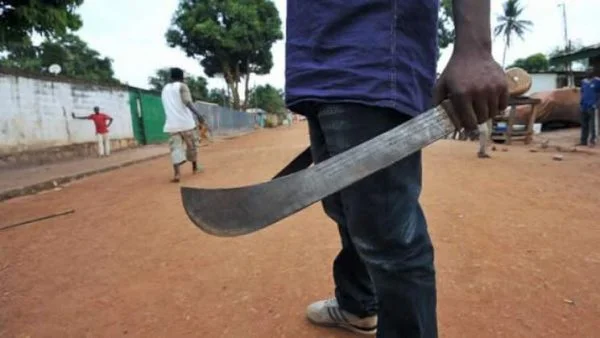
David Whitehead Textiles effluent ponds were invaded by illegal gold panners during a gold rush late last year, during which a machete gang leader Taurai Mutandwa was fatally shot by police.

Members from the Police Support Unit and Duty Uniform branch were then deployed to protect the ponds.

Constables Bernard Musindo Hwenga (34), Munyaradzi Mandibvira (30), Dzidzai Bamu (35), Mathew Shumbairerwa (33), Stephen Shambare (31), Emmanuel Mashiringo (35), Priscilla Matione (34), Dickson Mugwagwa (33), Wilson Kurwara and Blessing Sakarombe, who were on duty at the ponds, reportedly failed to give satisfactory answers after it was discovered that gold ore had been extracted from the pit.

National police spokesperson Assistant Commissioner Paul Nyathi confirmed the arrests.

“As ZRP, we do not condone any criminal activities by the police or members of the public,” he said.

It is alleged that on April 27, 2020, Superintendent Chibira of Operations Chegutu District, visited the site to check on the police officers and discovered that illegal mining activities had been taking place while Hwenga, Bamu and Shumbairerwa were on guard.

A team of top officers from the police intelligence office, Criminal Investigation Department; Minerals, Flora and ;Fauna Unit and Crime and Operations Unit visited the site and found indicators that mineral ore had been extracted from the pit.

Officers from the Ministry of Mines and Mining Development Mashonaland West Province visited the site to establish whether the ground had been tampered with since it was last inspected in November 2019.

The accused police officers reportedly tried to cover their tracks by refilling the pit before pouring water on top, but anomalies were found and they failed to give satisfactory answers on what had happened._ Nehanda Radio

ZCDC board members resign en-masse, cite lack of consultation

0

Zimbabwe Consolidated Diamond Company (ZCDC) board members have resigned en-masse in alleged protest over government’s decision to award part of Chiadzwa diamond fields to Chinese firm, Anjin, citing lack of consultation.

Anjin Investments, jointly owned by Anhui Foreign Economic Construction Company Ltd of China and Matt Bronze, an investment vehicle controlled by the army is expected to resume diamond extraction in July this year after being controversially barred from operating in the resource-rich Chiadzwa area in 2016.

Business Times is reliably informed that the decision to award Portal B (rich in resource), which is part of Chiadzwa diamond fields, was communicated through Mines and Mining Development Minister Winston Chitando.

In protest to the decision by the Ministry, the ZCDC board members led by chairman Killian Ukama tendered their resignations citing lack of consultation.

They said the unilateral action undermined the authority of the board.

“ZCDC board members resigned recently registering their displeasure over the parcelling out of Portal B in Marange to Chinese Anjin.

The directive is said to have come from President Mnangagwa through Mines Minister Chitando after his trip to China in 2018,” the source said.

The ZCDC board consisted of Ukama (chairman), Ellah Muchemwa, Elizabeth Nerwande Chibanda, Zenzo Nsimbi, Esau Chiadzwa, Alexander Mukwekwezeke and Niya Mtombeni.

Ukama referred all questions to the Mines and Mining Development Ministry.

“I cannot comment on that issue because the appointment of boards is the prerogative of the ministry through the minister,” Ukama said.

Mines and Mining Development minister Winston Chitando told Business Times that the Ministry was currently reviewing board composition in all its parastatals and companies under its wing, adding that a “statement will be issued when the process is complete”.

Asked whether the resignation of the board relates to the awarding of mining concession to the Chinese firm, Chitando said: “There is a section in the mining concession which will be developed with a share scheme involving the Chiadzwa community.

This was approved by Cabinet and announced last year so there is no relationship between the two.”

Business Times is informed that a new interim board for the state diamond miner will be announced soon.

Last year, villagers complained that they have been observing in dismay unregistered diamond mining activities taking place in Chiadzwa by Anjin Diamond Company, particularly in Ward 30.

The affected villages in the Portal Q were Chiadzwa, Mwaora, Makotame, Tinoingana and Vimbai.

The recent resignation of board members comes after they had ordered a probe into the operations of the state-controlled diamond miner as they wanted to ascertain the correct standing of the company.

The state diamond miner has been running under the stewardship of Roberto De Pretto in an acting capacity while the board was in the process of searching for a new chief executive.

This came after the diamond producers last year fired seven executives including then CEO Moris Mpofu as it moved to rebuild public and market confidence following allegations of rampant corruption and abuse of office by the executive team.

The debt-ridden state-controlled enterprise has been haunted by scandals and under-performance ever since its formation leading to perennial loses of more than US$50m in the period between April 2015 and May 2016 alone. According to the AMG Global audit report on the diamond firm, the company has been operating at a loss since its inception in 2015.

At its peak in 2012, Zimbabwe produced 12m carats, but in 2018 production was low as 2.8m carats. Zimbabwe is believed to have the potential to account for 25% of the global diamond production and it is targeting to expand its diamond industry to 10m carats by 2023.

ZCDC was formed in March 2015 after a government decree to consolidate all diamond mining companies in Zimbabwe to form a wholly-owned State firm.

Business Times

Gold still has important role to play despite Covid-19

0

Global gold holdings are said to have held firm at 1 083.8 t in the first quarter of the year, marking a rise of 1% on the same period last year, according to the World Gold Council’s (WGC’s) latest Gold Demand Trends report.

The global Covid-19 pandemic fueled the safe-haven investment demand for gold, with gold-backed exchange-traded funds (ETFs) attracting inflows of over 298 t to push global holdings in these products to a record high of 3 185 t.

In contrast, the consumer-focused sectors of the market weakened sharply during this period, with jewellery demand being hit the hardest by the effects of the outbreak, and subsequent lockdowns and physical distancing regulations. Here, the quarterly demand dropped by 39% year-on-year to a record low of 325.8 t.

The pandemic further cut demand, where the jewellery decline is led by a 65% drop in China – the largest jewellery consumer, and also the first market to succumb to the outbreak.

According to WGC market intelligence manager Krishan Gopaul, this is an “understandable” move as consumers have been confined to their homes for their own safety, and retailers having to close owing to various restrictions in efforts to curb the spread of the Covid-19 virus.

While “unsurprising”, he tells Mining Weekly in an embargoed interview that while it impacted on jewellery quite extensively, the sector was not the only one hard hit, as all areas “across the board” were impacted.

Although the decrease in demand is not confined to just that of the yellow metal, Gopaul believes a positive investor sentiment is still rife in the market, as while in contrast to demand numbers, “people were not able to operate normally as you would expect”.

In turn, he advises that the contraction in jewellery demand was “unavoidable” and that the gold market, and the rest of the world, are “facing very exceptional circumstances”.

However, the slump is not expected to last forever, as Gopaul states that the demand recovery rate will likely increase gradually over the course of the next few months.

Further, sharp investment inflows helped push the dollar gold price to an eight-year high, where demand, in value terms, reached $55-billion – the highest since the second quarter of 2013.

The gold price also reached a new record high in Indian rupees and the Turkish lira, besides others.

Central banks, meanwhile, continued to amass gold, although at a slower pace, considering the heightened volatility and uncertainty. Global gold reserves grew by 145 t in the first quarter.

Gopaul notes that this action “speaks to the way in which gold is viewed”, explaining that, despite central banks focusing on the economic impact of the virus and measures that are being taken to minimise and contain the impact thereof, “the need for robust, liquid and diversified reserves is still there, if not more so”.

In fact, he notes that with central banks remaining within the net purchase region, it “highlighted the fact that even in circumstances like these, central banks still feel that gold has a very important role to play in international reserves”.

The sentiment is similar to that of the last decade.

Russia has also announced that it would suspend its long-term buying programme, signalling a slowdown in global net buying for the second quarter and beyond.

Touching on supply, total first-quarter supply fell by 4% as the lockdowns imposed in response to curbing the Covid-19 virus disrupted mine production and gold recycling, as operations were halted at many projects in an attempt to curb the spread of the virus.

Meanwhile, with South Africa to head into a Level 4 lockdown from May 1, and mining companies expected to resume mining up to 50% capacity of their operations, Gopaul warns that, while the global gold supply market has “shown incredible resilience”, it may be too early to make predictions on what this could mean for the South African gold market, and international supply, during the rest of the year.

“However, it is reasonable to assume that South Africa’s production and supply will, overall, be lower year-on-year, but that’s because of the significant impact that Covid-19 has had.”

The council’s report indicates that bar demand weakened to 150.4 t in the first quarter, a year-on-year decline of 19%; while demand in the technology sector also fell, but by 8%, to a new low of 73.4 t.

Recycling, meanwhile, came to a near standstill towards the end of the quarter as consumers were more confined to their homes.

According to WGC market intelligence’s Louise Street, in a statement by the council published on April 30, the Covid-19 pandemic has “had a significant and unprecedented impact on global gold demand”.

She adds that gold demand will continue to feel the effects of the pandemic for the rest of this year.

“In particular, the divergence between investment in gold-backed ETFs and consumers via jewellery will likely continue until there is greater economic and market certainty,” she says.

However, to summarise what the industry has experienced in the first quarter of the year, Gopaul describes it as an example of the “self-balancing nature” of the gold market, where the yellow metal is “doing what it should be doing in the first quarter” – providing liquidity, and a safe haven, in the face of a tremendous amount of uncertainty.

“It’s key to always bear in mind that the safe-haven investment sentiment that we’ve seen in the quarter was particularly strong, despite the high levels of uncertainty,” he tells Mining Weekly, adding that the global financial stimulus from a monetary and fiscal level globally “has really helped fuel the sentiment of a safe haven demand, which is key to get an investor perspective on gold and shows that there’s still a huge level of positivity in the gold market”.

Chitando refutes diamond looting allegations

0

Minister of Mines and Mining Development Winston Chitando has refuted allegations of diamond looting in Chiadzwa and said there are only four authorised diamond miners in the country.

Business reporter

This was in response to online news that has been making headlines these past few days of how 12 diamond mining companies are clandestinely extracting diamonds worth billions of dollars in Chiadzwa.

An unnamed source told the Zim Morning Post that “The 12 mining companies have made easy the siphoning of billions of dollars in Chiadzwa diamond revenue into the pockets of some powerful individuals,”.

Speaking to the State broadcaster Chitando said, “In terms of of the provisions of the diamond policy, there are four companies who are allowed to undertake diamond mining in Zimbabwe. The first being Murowa Diamonds, second being ZCDC, the third being Anjin and the fourth being Alrosa. These are only four companies being allowed to undertake diamond mining in Zimbabwe”.

“Specific to the Marange Chiadzwa area there is the presence of only 3 companies. There is ZCDC which continues to mine, there is Anjin who have started limited mining and are also opening up other areas to increase their mining throughput. Thirdly there is Alrosa which is actually not in the Marange Chiadzwa area. They are undertaking exploration activities. They are outside the Marange/ Chiadzwa area and actually they are doing it throughout the whole country. They have up to seventeen sites throughout the whole country but which includes one or two areas in Marange area”.

Late former President of Zimbabwe Robert Mugabe once blamed corruption and looting for loss of revenue in Chiadzwa. He said the government had failed to account for diamonds worth more than US$15 billion “We have not received much from the diamond industry at all. I don’t think we have exceeded US$2 billion, yet we think more than US$15 billion has been earned,” Mugabe said.


Hunger or arrest? fears rise for illegal miners hiding underground

0

At least 100 illegal gold miners in South Africa are hiding underground, too scared to surface with police on patrol to enforce the coronavirus lockdown, according to industry sources.

Many illegal miners, known as Zama-Zamas – a Zulu expression for “taking a chance” – were underground in abandoned or disused mines in Gauteng province when the lockdown began on March 27.

Lawyers, activists and illegal miners told the Thomson Reuters Foundation that Zama-zamas had little choice but to continue working, worried about being arrested if they surfaced and knowing there was no other work.

“They are struggling to get to the surface (to buy food) as police are blocking the entrances and they fear arrest,” said Johannesburg gold miner Zach, whose name was changed to protect his identity.

“At least 100 (zama-zamas) that I know of are trying to earn some money during the lockdown,” said Zach, 29, adding he had been arrested many times since turning to mining six years ago.

Illegal gold mining has plagued South Africa’s mining companies for decades, robbing the industry and state coffers of billions of rand through smalltime pilfering as well as networks run by organised crime.

The Minerals Council South Africa estimates seven tonnes of gold – from total national production of about 135 tonnes – is lost each year to illegal mining, which is driven by the joblessness and economic hardship that prevail across the country.

HUNGER OR ARREST

Thousands of zama-zamas are thought to be operating at any one time, many of them undocumented immigrants from neighbouring countries who provided migrant labour for South Africa’s mines in the past but were then laid off.

Zama-zamas are now a permanent fixture of the shanties that ring Johannesburg and its satellite towns along the gold reef, and are blamed for outbreaks of violence, including underground shoot-outs between rival gangs.

Once the largest gold producer, South Africa now ranks about eighth globally with mining accounting for roughly seven-percent of GDP.

The sector braced for a heavy hit when the government last month ordered most underground mines and furnaces to be put into care and maintenance due to the coronavirus.

But after a lobbying campaign by miners, it said it would allow mines to operate at up to half capacity during the lockdown, recognising the chance of instability if deep-level mines closed for a long period.

Informal mining has continued nevertheless as it remains largely unrecognised by the government – just like many zama-zamas, who are unable to seek financial assistance, legal experts said.

Edwin Makwati, a lawyer from the Legal Resources Centre in Johannesburg said that “artisanal miners depend on mining to feed their families but they are categorised as criminals”.

“Now they have to face the decision: do they die of hunger or risk arrest for violating the COVID-19 regulations?” he said in a phone interview.

Yvette, 32, a zama-zama from Soweto township whose name has also been changed, also believed there were still “at least 100 zama-zamas underground” in Gauteng province alone, sifting for gold in tunnels no longer maintained and at risk of collapse.

“There are (abandoned) shafts throughout the country where there could be more,” she said.

‘SCARY TIME’

A 2015 report by South Africa’s Human Rights Commission identified 221 open holes and disused shafts alone in Gauteng, which is the most populous of the country’s nine provinces.

Some had been covered by the government, but zama-zamas would likely find other entrances into the mines, some of which run up to four km (2.5 miles) deep, the report said.

Police spokesman Brigadier Vish Naidoo acknowledged it was likely that some zama-zamas were underground, adding that “they stay underground for months, even before lockdown”.

“A crime is a crime. There are no good zama-zamas,” he said in a phone interview.

A spokesperson for the Department of Mineral Resources and Energy said the ministry only kept records of mineworkers from legal operations.

“Illegal mining … is fueled by highly organized dangerous, well-financed and complex local and international crime syndicates,” he added in emailed comments.

Charmane Russell, spokeswoman for the Minerals Council South Africa, said that “illegal miners are not screened or protected in any way … and the gathering of people clearly does not comply with social distancing requirements.”

Scores of zama-zamas die each year in the labyrinth of tunnels that stretch beneath the streets of Johannesburg and beyond, although police and the government admit they have no idea of the precise toll.

But Sindile, a female zama-zama from Soweto township who helps process gold above ground, said the money that could be earned made it worth the risk for many.

Artisanal mining can fetch Zach and Sindile up to R5,000 a month – more than the national minimum wage of roughly R3,600.

“You know hunger?” said Sindile, a single mother of three, who also asked not to be identified. “It is not your friend. This is why we take chances.”

The zama-zamas said that the lockdown and increased police presence have added additional challenges to their already dangerous work.

Reported cases of the coronavirus were close to 5,000 in South Africa and about 93 deaths, according to a tally by Johns Hopkins University.

“But we are more afraid of the police than the virus,” said Yvette.

David Van Wyk, lead researcher at Bench Marks Foundation, a church-linked group that monitors corporate responsibility, said it was working on setting up co-operatives with informal miners.

“The coronavirus pandemic is going to bring a lot more unemployment,” said Van Wyk, who predicted more South Africans desperate for work would take up illegal mining.

“We may even see informal mines collapse. This is a scary time for zama-zamas, especially those currently underground.

Source: Reuters

Mines Ministry website offline

0

Ministry of Mines and Mining Development website is offline and has been for days.

At a time when the country is seeking investment downtime for days, even hours should be avoided at all costs especially from the country’s main administrator of mining affairs. Anyone who visits the website will be greeted by the message

This page isn’t working www.mines.gov.zw is currently unable to handle this request. HTTP ERROR 500.

mines ministry


RioZim seals 2100MW power DEAL

0

Rio Energy, a unit of RioZim, will build a 2,100-megawatt thermal power plant with China Gezhouba Group Corporation (CGGC) in northern Zimbabwe at a projected cost of US$3 billion, Rio Energy has announced.

The power plant at Sengwa will be constructed in four phases of about 700 megawatts each, bringing total capacity to 2,800MW.

“CGGC will develop the project and assist with the fundraising,” said Caleb Dengu, chairman of Rio Energy. “We have coal reserves to support a 10,000-megawatt plant at Sengwa.”

CGGC is the subsidiary of the China Energy Engineering Corporation, one of the world’s largest construction and engineering firms.

A 250-kilometre pipeline will carry water from Lake Kariba to Sengwa. The pipeline, and a 420KV power line, will be built by PowerChina, said Dengu. The first phase of the project will cost about US$1.2 billion, he added. The Industrial and Commercial Bank of China has given a formal expression of interest in the project and is negotiating with Sinosure, also known as the China Export and Credit Insurance Corp, to cover country risk insurance costs, Dengu said.

A two-year drought blighted the country’s Kariba hydropower plant by draining the reservoir while ageing equipment at its main Hwange thermal plant causes incessant breakdowns and outages.

Sengwa potential

RioZim has tried for years to find a partner to launch the Sengwa energy project, which has been on the table for decades. The area has proven coal reserves of 1.3 billion tonnes, but these have remained unexploited as Zimbabwe struggled to attract investment. However, in 2018, RioZim reported that it had begun receiving letters of interest from potential investors.

In its annual results for 2018, RioZim, which operates gold and diamond assets in Zimbabwe, said it has signed “binding exclusivity and framework agreements with a renowned international player and investor in respect of its Sengwa Coal Mine resource which will see the commencement and ground-breaking ceremony of the Sengwa Power Station Project in the near future”.

RioZim, which operates the Renco, Dalny and Cam & Motor gold mines, earlier in 2018 also announced a separate deal to build 180MW of solar capacity to power up its operations. RioZim applied earlier this year to the Zimbabwe Energy Regulatory Authority for licences to build and operate four solar power plants.

In 2018, RioZim said the contractor for the solar projects was Spanish-Japanese company Univergy International. RioEnergy, the RioZim energy arm, is backed Denham Capital, a resources and energy-focused global private equity firm.

Bloomberg