Caledonia Mining says production at Blanket Mine rose over 7% in its latest quarter, despite power outages and rising costs.
In the three months to September, gold output dipped 2.4% year-on-year to 13,646 ounces, held back by lower mining rates. However, gold production was up 7.3% quarter-on-quarter.
Tonnes milled improved on the two quarters and the average milled grade for the quarter was 3.19g/t, an increase on the previous quarter’s grade of 3.11g/t. Low grades
In terms of costs, all-in sustaining costs – a key metric used by mines to determine all costs and efficiency – were 16% higher. However, the average realised gold price was 23% higher, offsetting the year-on-year drop in production to help Caledonia double profits to US$10.4 million.
“The third quarter of 2019 can be characterised by two distinct phases. The first six weeks of the quarter were seriously affected by power outages and by the continued effects of the unstable economic conditions in Zimbabwe on our employees; both of these factors had an adverse effect on production and financial performance,” says Chief Executive Steve Curtis.
“The last six weeks of the quarter showed a substantial improvement as the electricity supply improved, and measures taken in previous quarters to improve mining controls began to bear fruit. Notwithstanding further interruptions to the electricity supply in October, the excellent performance in the second half of the quarter has continued into October and early November,” Curtis added.
The company has increased its focus on minimising mining dilution, after lower grades forced it to cut production guidance for 2019 to between 50,000 and 53,000 ounces, down from previous forecasts of 53,000 to 56,000 ounces. Caledonia is still confident of meeting those targets, before lifting output to 80,000 ounces in 2020.
According to Curtis, while there is still work to be done on the grade front, Blanket has begun delivering improved grades, combined with higher tonnage and efficiencies.
“I am pleased to report that production in October has continued this positive trend with production of 5,596 ounces in October at a grade of 3.55g/t. I look forward to updating the market on the full year and we reiterate our full year production guidance of 50,000 to 53,000 ounces for 2019,” said Curtis.
The company has recently floated a tender for a solar plant to feed Blanket Mine, a way of solving the power crisis. According to Caledonia, the recent power tariff hike could stabilise supply.
“Although the electricity supply situation has improved, this problem has not been permanently resolved. As we have previously announced, the situation has improved following the introduction of a revised electricity tariff during the quarter which allows the funding of imported electricity which is used exclusively to supply participating mining companies.”
Zimbabwe’s mineral exports rose by 12,7 percent to US$1,59 billion in the first 10 months this year compared to the same period in 2018, according to Minerals and Marketing Corporation of Zimbabwe (MMCZ).
The MMCZ is the country’s sole minerals marketer except for gold and silver that fall under the ambit of Fidelity Printers and Refineries (FPR).
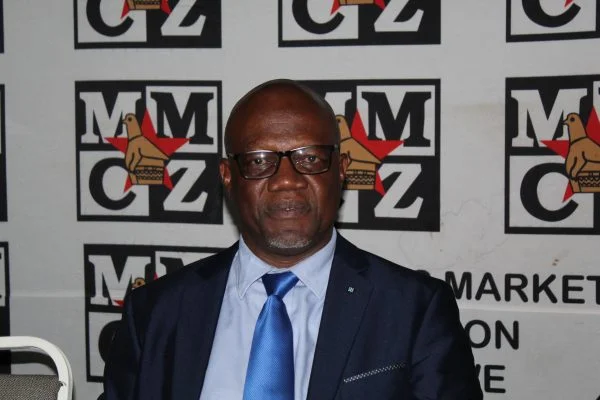
The figures were confirmed by MMCZ general manager Mr. Tongai Muzenda.
The increase would be seen as a tonic the mining industry is looking for as it gears towards the attainment of US$12 billion worthy of annual exports by 2023.
However, the MMCZ’s interest on the 2023 milestone is US$8 billion as the other US$4 billion is expected to be contributed by gold exports.
“Our total sales amounted to US$1,59 billion in the first 10 months of the year,” said Mr Muzenda.
“There are positive market takeaways in the third quarter in that we have seen some prices holding up compared to the first six months. The prices of PGMs, for example, have gone up and this is especially the case with rhodium,” said the MMCZ boss.
On specific mineral contributions, PGMs continue to dominate, having accounted for about US$1 billion of the total figure.
With beneficiation efforts now in full swing and private companies having bought into Government’s call to add value locally, high carbon ferrochrome continued on an upward trend and has so far raked in more than US$250 million, and expectations are high that this will continue in line with installed capacity for ferrochrome production.
“In terms of contribution to the total, almost a billion dollars is from PGM concentrates and PGM matte from the three producers — Zimplats, Unki and Mimosa in that order in terms of tonnage and value,” said Mr. Muzenda.
“On diamond sales, the total was US$142 million for the 10 months. Other metals of interest are high carbon ferrochrome, which was US$254 million, which is not bad.”
Despite the recorded increase in exports, the haul, however, fell 11 percent below set target of US$1,79 billion that the State marketer attributed to depressed PGM prices, particularly in the first half of the year.
Production has also been hit by incessant power cuts as a result of state power utility, Zesa Holdings’, rationing of electricity due to subdued production at its major plants.
Some mining houses have, however, not been affected by these power cuts as they have ring-fencing arrangements with the power utility.
However, just last week, Zesa said they were no longer able to guarantee supply even to ring-fenced customers as these too could be affected by internal challenges.
Concern overpower supply has resulted in the country’s mining confidence plunging to a two-year low with the miners’ lobby group — the Chamber of Mines of Zimbabwe — compiling a report that shows the Mining Business Confidence Index (MBCI) had declined to 2,2 percent this year.
Despite these challenges, Mr. Muzenda said MMCZ was still expecting a strong showing in the last two months of the year, with projections set at between US$200 to US$300 million in November and December.
In turn, the yellow glittering nuggets have detached the area from the rest of the country in terms of the medium of exchange.
Despite its dilapidated infrastructure and lack of development, the area is bursting with United States dollars.
Residents say when compared to the greenback, the local currency is in short supply there.
Various models of vehicles, fitted with local and foreign number plates, rumble up and down the dusty pathways day and night in search of gold and the United States dollar.
For any commodity that is sold at Jumbo Mine, prices are normally charged in United States dollars.
Vendors and ladies of the night are said to be making a killing.
“The hive of activity in this area is a testament of the economic activities here,” a resident only identified as Gilbert told The Sunday Mail Society during a recent visit to the mine. “Business is booming in this area, vendors come from far away places to sell basic commodities such as water, bread, and even ball lollipops.”
Conservative estimates by our team and small business operators in the area put the number of people that are currently living and panning gold at Jumbo Mine at around 5 000. To confirm the level of activity taking place at the defunct mine, it takes a minimum of two hours to catch a lift from Harare to Bindura these days.
What is the reason behind such a delay?
Well, almost every public transport vehicle going that direction is now plying the Harare-Jumbo Mine route.
“Jumbo Mine yabhadhara (Jumbo Mine is giving us brisk business). People are coming from every corner of this country to do business here. Not everyone is a miner, some sell different wares while others are sex workers.
“The only danger is that some of them are not genuine customers. It’s risky dealing with them but it’s a risk worth taking because our families have to eat and the money is good,” said a pirate taxi operator, who only identified himself as Kuda.
Curse
However, there is a trail of corruption, terror and violence beneath the gold riches.
On many occasions, security personnel in the area have been called to quell clashes between the illegal gold panners.
“I came here from Gokwe in search of gold,” Given Moyo, an illegal miner, told this publication. “Ever since I became a gold miner, I thought I had become brave. Mudslides or collapsing earth do not deter me from gold mining, but now with the violence, I have every reason to fear for my life.
“The MaShurugwi or Mabhudhi gangs are terrorising and robbing us of our gold.”
Former mine authorities and security are reportedly charging US$15 per head to allow the illegal gold miners into the mineshafts during the night.
lt is said they rake up to US$1 500 per night through the practice.
According to Given, most of the violent activities often play out underground.
“The surprising thing is that before entering the mine, we are searched for weapons by the security or mine authority,” he said.
“The least number of MaShurugwi that can enter a mine shaft is 50. The number is normally huge so as to outnumber us. They take away our torches, food, and gold. If you do not have any gold, they will enslave you to work for them, you will give up all the gold you would have worked for.
“They can keep you underground for up to four days. If you are lucky they will only beat you up. However, most of our colleagues are not so lucky and do not survive the beating. Most of these cases are not reported to the police,” said Given,who has since given up forays into the main shaft. Most fearful miners, like Given, have opted to dig up pits outside the mine. However, the pits are a stone’s throw away from the residential area.
“We are always pleading with these miners to stop their activities near our homes, but they tell us off. Some even say we should vacate or risk having the houses collapse on us,” said one resident who elected to remain anonymous for fear of victimisation.
Last month, residents in Glendale, near Mazowe, clashed with illegal gold miners, leaving a trail of destruction.
Minister of State for Mashonaland Central Provincial Affairs Cecilia Mavhunga said Government is working on re-opening the mine to eliminate the chaos.
“The situation at Jumbo Mine is really getting out control,” she said.
“Although the mine was closed, there was a gold rush and illegal miners have a way of getting into the mine. The police on the ground have been working to control the situation and I was there recently with the Minister of Mines and Mining Development to find a lasting solution on the issue.
“lncidents of violence and deaths are happening inside the shafts. We are working on re-opening the mine, some former mine employees are still based at that mine.”
Police spokesperson Assistant Commissioner Paul Nyathi confirmed the problems at Jumbo Mine and other mining communities countrywide. “We urge communities to resolve their differences amicably,” he said in a terse response. Despite the appeal, Jumbo Mine continues to be a place of terror.
ZIMRA has called on to Vehicle owners on a list of over 400, released recently to visit the main ZIMRA Head Office in Harare for vehicle registration verification.
The comprehensive list has names of registered owners, vehicle registration details and vehicle chassis numbers. On the list are notable institution like TM Supermarkets and number of small-scale miners are also on the list.
The ZIMRA statement reads as follows, “The Commissioner-General of the Zimbabwe Revenue Authority is hereby notifying the owners of vehicles listed below to visit ZIMRA Loss Control Offices at ZB Centre corner First Street and Kwame Nkrumah in Harare for vehicle registration verification. The vehicle owners are instructed to bring the vehicle together with all customs clearance documents pertaining to their vehicles no later than 23 November 2019″.
Last month the President of Zimbabwe Emmerson Dambudzo Mnangagwa unveiled the USD12 billion road map with aims at developing the mining sector in Zimbabwe to a USD12 billion industry by 2023. The mining sector is already Zimbabwe’s biggest foreign currency earner. Experts and the government are of the view that the sector is the leading horse towards the revival of the economy.
Rudairo Dickson Mapuranga
The President’s USD12 billion road-map has put a target of USD4 billion for gold producers which is a third of the target while platinum and diamonds will weigh in with US$3 billion and US$1 billion, respectively. Chrome, Nickel and Steel are expected to generate USD1 billion, coal and hydrocarbons are also expected to produce USD 1 billion. Lithium at the moment is expected to produce USD0.5 billion while other minerals are forecast to produce USD1.5 billion up to USD 2 billion.
It is a well-known fact that Zimbabwe is hamstrung by a lack of mining exploration, moving to the USD12 billion industry by 2023 and of course becoming a middle-income earner by 2030, investing in mining exploration is the key. However, it is also a known fact that tapping of the known deposits in the country should be of primary concern.
Investment in mining prospects should be the country’s number one concern towards improving the mining sector and the economy at large. Is it possible for the sector to earn 12 billion annually by 2023?
Is the USD12 billion target achievable?
With the copiousness mineral deposit, the country is sitting on both under exploitation and unexplored but known resources, the country has the potential to earn and turn the wheels of the economy and transform the country into an upper-middle-class earner not later than 2023. It is, therefore, Mining Zimbabwe’s opinion that the country can reach the president’s vision of the country becoming a middle-income earner by 2030 with the backup of the mining industry.
The miners’ support
The Miners in Zimbabwe have thrown their weight behind the USD12 billion roadmap for the mining sector in the next three years optimistic that the target was achievable, however, miners are of the knowledge that certain initiatives, policies, and reforms need to be looked into for the sector to achieve the USD12 billion fate.
USD 4 billion for gold, is it possible?
The mining sector last year earned US$3,4 billion, driven by the high performance of the gold sector, which delivered a record 33,2 tones. Overall last year the sector failed to earn USD 4 billion how can the sector as a whole achieve that feet?
Experts are of the view that the majority of Zimbabwe’s gold is being smuggled out of the country through different channels and the nation is losing millions due to rampant smuggling.
In order to achieve the USD 4 billion mark, there are various factors that need to be addressed by the government for the gold sector to achieve the target.
(a) Curb gold smuggling there are various reasons which have led to gold smuggling from Zimbabwe among them, the 55/45 per cent retention, late payments from Fidelity and various Statutory Instrument (SI) implemented by the government.
In order for the sector to achieve the target, it is of paramount importance for the government to consider paying gold miners what they are demanding, pay the gold producers on time to limit alternative markets and remove the current SIs gazetted by the Minister of Finance Mthuli Ncube which banned the use of foreign currency in all local transactions and pricing of equipment in foreign currency.
(b) Invest in gold prospecting – The government of Zimbabwe needs to revive the gold mining sector by investing in gold mining through Fidelity, supplying miners with equipment, make public the gold development fund and issue miners with prospecting licenses on time in order for them to acquire loans. Geologists believe that there is a little activity happening along the Great Dyke for the country to reach full gold exploitation.
(c) Invest in Exploration – Production in Zimbabwe is limited by a lack of exploration. Identifying new mines in the mining sector is key, the government should, therefore, make it their duty to invest in exploration through granting as much EPOs as possible to various EPO holders.
USD 4 billion nearly not possible
Identifying a gold mine is a daunting task, it can take up to 10 years for geologists, chemists, and engineers to examine a potential site. And even then, the likelihood of a mine being developed into a production gold mine is less than 0.1 per cent. Only ten per cent of these sites contain enough gold to justify further development. But above ground, gold is everywhere. New deposits of gold are increasingly hard to come by and increasingly difficult to locate. Geologists have estimated that only 55 tons remain buried away in the Earth’s crust. This means, if current global mining rates continued, we could run out of newfound gold in just 20 years. So as gold Mining continues to slow and the cost associated with mining increase to meet the challenge of extraction, gold could become even more expensive.
Can the intended target for PGM be reached?
Zimbabwe hosts the second-largest platinum group metals (PGMs) resource in the world on the Great Dyke. An estimate of 2.8 billion tones PGM ore at 4g/t 4e is estimated to lounge on the Dyke. Grade and thickness of ore body persist over large areas.
It is indeed true that the sector can contribute up to USD 3 billion and push the economy of Zimbabwe to yester year’s heights thereby helping the nation reach the USD 12 billion targets however it could be difficult for the country to reach by 2023 without the necessary steps taken by the government.
It is, however, of no doubt that the PGM sector has all it takes to contribute even more than its projected target through the coming in of projects like Karo and other platinum mining firms.
The possibility of diamond contributing USD 1 billion Is it very high?
Zimbabwe in the Marange field has the largest diamond field in the world in terms of carats produced, estimated to have produced 16,9 million carats in 2013 that is about 13 per cent of the global rough diamond supply. However, diamond production at Marange is estimated at under USD 60 per carat while some diamond mines in the world produce rough diamonds valued at over USD 1000 per carat.
Zimbabwe has other diamonds reserves in Masvingo, that is Chivi, Beitbridge, Mwenezi, and Mazvihwa in Zvishavane where the diamond miner RioZim’s Murowa diamond is the miner. Murowa diamond at its Mazvihwa reserves has a record high of 740,244 carats in 2018.
The President of Zimbabwe and the Minister of Mines and Mining Development were optimistic that the diamond sector will have an immense contribution than before through the coming in of world’s biggest miners in the diamond sector like Anjin, Alrosa, and Vast Resources.
It is, however, important to note that Zimbabwe is at loggerheads with the west, the selling of its diamonds is at risk with the US Customs and Border Protection ridiculously alleging the use of forced labour in Zimbabwe’s diamond mining sector. The sector could lose market if the government does not prove to the world that the allegations are malicious.
It is not a big target for Chrome, Nickel and Steel to generate USD1 billion?
Zimbabwe has the second-largest high-grade chromium ores in the world after South Africa with reserves of approximately 10 billion tones. The country has more untapped than tapped Nickel deposits with only Trojan mine in Bindura only mining the mineral at a very low scale.
Only steel production can reach the target in this category if plans are in place to revive the sector. However, as of now it could be just wishful thinking with no plans in place.
The government also needs to address issues of predatory chrome pricing in order for miners to invest in the sector.
Half a billion for lithium?
Zimbabwe has one of the world’s biggest hard rock lithium. The Arcadia lithium project located near Harare, Zimbabwe, is considered to be one of the world’s biggest hard rock lithium resources.
Prospect Resources fully owns the lithium project, which is estimated to produce an average of 75,000 tones per annum (TPA) of spodumene and 155,000tpa of petalite concentrates during its 20-year mine life.
In 2010, lithium was added to the United States governments’ list of critical minerals — minerals that are important to the country’s manufacturing and defence industries, highlighting its growing importance in the global economy.
Through the Arcadia Lithium project alone, the sector can generate more than half a billion per annum, however, the project could start kick to its full potential slightly after 2023 which means that the government’s target may fall by the wayside.
USD 1, 5 billion from other minerals?
The country has one of the world’s highest mineral deposits with records showing that the country has got almost all the minerals found on earth. There are various projects underway from oil and gas to gemstones.
According to one miner, the gemstone sector only has the ability to earn USD 2 billion annually if the government through Minerals Marketing Corporation of Zimbabwe (MMCZ) focuses on promoting the sector to attract buyers and value addition.
Overall conclusion, can the sector earn USD 12 billion per annum by 2023?
Mining Zimbabwe believes that it is possible for the sector to earn more than USD 12 billion per annum, however, certain points need to be addressed before the government starts on preaching about the USD 12 billion mining sector.
The government of Zimbabwe needs to take on the following 10 priorities which will get the mining sector moving towards the USD 12 billion industry.
(i) Eliminate corruption– although not muchly recorded corruption in the sector is too prevalent and the cancer of corruption needs to be dealt with once and for all.
(ii) Institutionalise the rule of law to end statutory risk– there should be no changes to rules and regulations without wide stakeholder consultations and advance notice.
(iii) Stable economic environment- A stable economy where property rights are respected and policy is consistent will help stabilize the mining sector, thereby leading to the growth of the sector through attracting the right investment.
(iv) Currency must be free-floating and tradable – A floating exchange rate is a regime where the currency price of a nation is set by the forex market based on supply and demand relative to other currencies. This is in contrast to a fixed exchange rate, in which the government entirely or predominantly determines the rate.
(v)Economic growth- Capital Flows Foreign capital tends to flow into countries that have strong governments, dynamic economies, and stable currencies, therefore, Zimbabwe needs to have a relatively stable currency to Attract investment capital from foreign investors.
(vi)Absolute minimal restrictions on lines of communication, especially the internet- The government of Zimbabwe reportedly lost millions of dollars through delayed Revenue inflows due to the slow processing of imports and exports after switching off the internet services countrywide early this year.
(vii)Improve geoscientific knowledge by revamping and recapitalising the Geological Survey Dept.
(viii) Partially privatise ZMDC- ZMDC is reportedly dead broke which led to speculations that they cannot afford to explore their numerous claims. Many assertions are constantly being thrown around which are of the view that ZMDC is sitting on dead assets and the government has no money to give so as to carry out high-risk exploration. Therefore, this has led experts into believing that, ZMDC must be listed on the stock exchange to raise money and obviously the government gets diluted to less than the controlling shareholder.
(ix)Promote exploration seriously with good tax breaks for companies who put high-risk exploration $ into the ground.
(x) Digitalise mining rights, title registration, and all payments – Amidst reports of corruption, money laundering, externalization and other unscrupulous behaviours by mining personnel, all transactions which are mining-related in Zimbabwe if done digitally this will avoid corruption and Improve transparency.
The government of Zimbabwe, therefore, needs to prioritise on these 10 points in order for the sector to achieve the 12 billion dollar status without which it will be just another project that will never yield results like the other targets previously set by the government.
Africa has been challenged to be vigilant in its negotiations with foreign investors to ensure that all
mining deals are beneficial to the continent.
At the same time, there is a need to create a conducive environment to attract investment to Africa.
This was said by Natty Davies, a former chairperson of the National Investment Commission of Liberia at the inaugural Africa Forum on Mining that is underway in Accra, Ghana.
The event that kick-started on 13 November will end on 16 November.
“We need to strike a balance in our negotiations for mining contracts,” said Davies, who is now the cochairperson of CONNEX Support Unit Advisory Committee, an independent international organization that provides assistance to governments of developing and emerging countries in negotiating, renegotiating or implementing large-scale, complex investment contracts, particularly in the extractive sector.
He said fair negotiations have the capacity to produce win-win situations for both the owners of the mineral resources as well as the investors, as opposed to the current state of affairs where most mining deals tend to favour foreign investors.
He challenged African countries to be aware of the exact quality and quantity of their mineral resources so that there are not short-changed in their negotiations.
Another critical aspect of negotiations is to develop vibrant legal policy frameworks that clearly dene the space in which sustainable management of the resource sector could take place.
“If a country has a good mineral and mining regulatory environment, then negotiations are easier as everyone is speaking on similar terms,” he said.
However, Davies noted that “no two mining contracts are the same,” hence it was also critical to not
compromise some of the demands that may be proposed by investors.
“Africa should also not be afraid to put across its demands,” he said, adding that the governments must not hesitate to use words such as “foreigners” or “outsiders” in some of the contracts to stamp their authority since they own the minerals.
Once the mining contracts are signed, he said an important process is to ensure that the agreement
is fully implemented.
As such, it was critical to invest in developing vibrant national implementation agencies that monitor and promote the smooth implementation of mining contracts.
“After investing so much time in negotiations, the same amount of time should focus on implementation so that the citizens benet,” Davies said.
The inaugural Africa Forum on Mining, which is running under the theme “Africa Mining Vision at 10: looking back, moving forward” aims to take stock on how the continent could fully utilize its mineral resources to nance its development agenda.
The meeting is organized by the African Union Commission in collaboration with various partners
such as UNECA, UNDP, AfDB and the Ghana Ministry of Lands and Natural Resources_263 Chat
Zimbabwe may have lost between 30 tonnes and 34 tonnes of gold to smuggling in neighbouring South Africa due to unfriendly mining policies that need urgent addressing, a government minister has said.
The development comes at a time when all the players in the gold sector are calling for the upward review of foreign currency retention levels to prevent arbitrage opportunities which lead to rampant smuggling.
“When we spoke to our colleagues in South Africa at the Rand Refinery in Cape Town, we saw a jewellery shop, they said that’s all your gold from Zimbabwe. A total of between 30 and 34 tonnes are smuggled into South Africa,” Finance Minister Mthuli Ncube said at the breakfast meeting organised by the Daily News and the Ministry of Mines and Mining Development.
“We will have a discussion with the [RBZ] Governor [John Mangudya] in terms of output and retention percentages to enable gold miners to sell their gold through proper channels. In terms of the gold output, we have seen some leakages but we are seeing [gold] production is actually going up.
“But the deliveries have been going down at Fidelity Printers because of leakages in the sector, which we are finding a way to plug so that output is accounted for in the formal sector,” the Finance Minister explained, adding that most smugglers go to South Africa as there is a rebate which attracts miners to sell gold.”
Ncube also said the country should come up with policies that encouraged miners to sell gold through the formal channels. Gold is now the highest single foreign currency earner in the country, ahead of tobacco. But gold’s subdued performance continues to shatter any hope of economic turnaround.
Since the RBZ decided on 55% forex retention in February this year, various gold miners have smuggled their produce to lucrative markets such as South Africa. The average price of gold is US$41 000 per kg, but with the 55% forex retention threshold, a miner will get around US$22 500 with the 45% being paid in Zimbabwean dollars.
Meanwhile illegal gold dealers pay around US$35 000 per kg. During the US$12bn roadmap mining conference yesterday, miners said gold production had not decreased as was said but they were diverting the yellow metal to informal channels to continue producing. Gold deliveries in Zimbabwe plummeted 19% to 2.80 tonnes in September, from 3.47 tonnes during the same period last year due to power outages, inefficient mining and processing technologies in use, foreign currency shortages, and suspected smuggling.
Cumulatively, gold deliveries decreased 26% to 20.63 tonnes during the first nine months of 2019, from 28.09 tonnes during the comparative period last year due to policy inconsistency in the forex retention threshold.
Mangudya has said the monetary authorities would soon discuss the win-win forex retention threshold with miners to woo them to sell to the formal channels in Zimbabwe.
“The country is losing a considerable amount of gold and revenue through smuggling via our porous borders but measures are in place to encourage miners to sell gold through Fidelity Printers and Refiners to boost exports,” Mangudya said. “Our door is still open for discussion as far as forex retention is concerned.”
Fradreck Kunaka, the general manager of Fidelity Printers and Refiners, said the country was now pinning hopes on new gold centres and small scale facilities to increase production.
Experts say the established mining companies with huge capital may be heavily involved in smuggling as they continue to be dominated by less-organised small scale producers who do not have basic machinery for mining. Zimbabwe is targeting 100 tonnes of gold per year by 2023, a figure which would increase the sector’s earnings to US$12bn a year.
Winston Chitando, the Minister of Mines and Mining Development, said yesterday that gold (at US$4bn by 2023) would be the leading mineral in the hunt for the US$12bn mining economy that the government wants to create, followed by platinum with US$3bn_Business Times
GOVERNMENT has set aside $8,4 billion for the rehabilitation and expansion of Hwange Thermal Power Station while it will support the use of alternative sources of energy through provision of several fiscal incentives for the importation of equipment.
Presenting his 2020 national budget in Harare yesterday, Finance and Economic Development Minister Professor Mthuli Ncube said Zesa will mobilise the local currency component with the Government providing the foreign currency.
This came out after legislators grilled Independent Power Producers for failing to take off despite being licensed several years ago. “The 2020 Budget seeks to alleviate power supply constraints through the following strategies, rehabilitation, and expansion of Hwange Thermal Power Station, $8.4 billion. We will support alternative sources of energy such as solar power projects through various fiscal incentives relating to importation of equipment and respective accessories,” said Prof Ncube. “20 IPP solar projects are already lined up for implementation. While Zesa will raise the local resource component through cost recovery tariff model, Government through the RBZ will assist to mobilise the requisite foreign currency from the market.”
He said there was a need for improved electricity supply through imports and other alternative sources of energy. “These include harnessing of emergency power generation capacity from Independent Power Projects,” he said.
“Infrastructure investments play a key role in enhancing competitiveness including growth. Underfunded and neglected infrastructure services results in the economy performing in a highly inefficient manner.”_The Chronicles
Zimbabwe will vigorously enforce a policy to force companies to develop their mining assets and not keep the land for speculative purposes, mines minister Winston Chitando said on Wednesday.
Chitando said some investors had not developed gold and platinum assets that they had held dating back to the 1960s and the mines ministry had asked some companies to justify why they should keep their claims to those assets.
“This is to prohibit the holding of mining title for speculative purposes. We will deal with that more vigorously,” Chitando told a meeting of the mining industry in Harare.
Chitando said the government had been lax in enforcing the “use it or lose it” policy but that would change as authorities pin their hopes on the sector to drive the recovery of an economy grappling with power cuts and acute shortages of U.S. dollars and fuel.
Miners have raised concerns over power cuts that have affected production and want to be allowed to keep all their foreign currency earnings because they are disadvantaged by having a proportion paid to them in Zimbabwe dollars.
But that request was shot down by central bank governor John Mangudya who told the meeting the miners could not keep all their earnings in forex because the government needed some of the money to fund crucial imports like fuel, power, and medicines.
Mining companies are only allowed to keep up to 55% of their foreign exchange sales and the central bank pays them in local currency for the balance at the official interbank rate.
Zimbabwe is home to the second-largest known platinum reserves and large lithium, gold, and diamond deposits, but many investors fret over whether they can take money out.
Chitando said platinum output was expected to rise to 1,023,000 ounces by 2023 from 917,000 ounces last year as the producers Anglo Platinum, Impala Platinum Holdings and Sibanye-Stillwater ramp up output.
Zimbabwe’s platinum production now justified the setting up of base metals and precious metals refineries, Chitando said. Miners currently process their raw platinum in South Africa_Reuters
The level of financial losses that Africa continues to experience due to illegal activities and dealings in the mining sector is undermining sustainable development in the continent, Trust Africa Programmes Director Briggs Bomba has said.
Speaking at the inaugural Africa Forum on Mining held in Accra, Ghana, Bomba said African resources are being siphoned out to benet other economies while the continent remained impoverished.
“Our resources are being unjustly taken away from us to develop and improve other economies
outside Africa,” Bomba said.
He said these illicit financial flows (IFFs) deprive Africa of vital tax revenues that could be spent on social services such as healthcare, education and basic infrastructure development including road and rail.
Bomba urged African stakeholders to work together in addressing the scourge of IFFs, and ensure that African mineral resources are used to develop economies of African countries.
“We need a multi-stakeholder approach to addressing IFFs out of Africa,” he said, adding that such a collective methodology between the state and non-state actors on IFFs has the capacity to yield positive results.
A recent study commissioned by the African Union (AU) estimates that the continent has lost more than US$1.8 trillion to illicit activities between 1970 and 2008 alone, and continues to lose resources valued at up to US$150 billion annually through illicit capital flight, mainly through tax evasion, corruption, mispricing of goods and services by multi-national companies.
The inaugural Africa Forum on Mining, which is running under the theme “Africa Mining Vision at 10: looking back, moving forward” aims to take stock on how the continent could fully utilize its mineral resources to nance its development agenda.
The meeting is organized by the African Union Commission in collaboration with various partners such as UNECA, UNDP, AfDB and the Ghana Ministry of Lands and Natural Resources_263 Chat
To provide the best experiences, we use technologies like cookies to store and/or access device information. Consenting to these technologies will allow us to process data such as browsing behavior or unique IDs on this site. Not consenting or withdrawing consent, may adversely affect certain features and functions.
Functional
Always active
The technical storage or access is strictly necessary for the legitimate purpose of enabling the use of a specific service explicitly requested by the subscriber or user, or for the sole purpose of carrying out the transmission of a communication over an electronic communications network.
Preferences
The technical storage or access is necessary for the legitimate purpose of storing preferences that are not requested by the subscriber or user.
Statistics
The technical storage or access that is used exclusively for statistical purposes.The technical storage or access that is used exclusively for anonymous statistical purposes. Without a subpoena, voluntary compliance on the part of your Internet Service Provider, or additional records from a third party, information stored or retrieved for this purpose alone cannot usually be used to identify you.
Marketing
The technical storage or access is required to create user profiles to send advertising, or to track the user on a website or across several websites for similar marketing purposes.




 Last month, residents in Glendale, near Mazowe, clashed with illegal gold miners, leaving a trail of destruction.