Home Blog Page 601

Malicious reports affect diamond sales: ZCDC

0

BASELESS and negative reports on the goings-on in the Chiadzwa diamond operations result in the precious gems fetching so little on the international market, Zimbabwe Consolidated Diamond Company (ZCDC) board chairperson has said.

Only recently, the United States barred Zimbabwe’s diamonds from entering Washington after claims that they were produced with forced labour. Apparently, forced labour has never been an issue at Chiadzwa and other diamond mining areas around the country.

In his opening remarks during an all stakeholders diamond indaba held in Mutare on Wednesday, ZCDC board chairperson Mr Killian Ukama said negative reports gave the impression that the country was desperate for diamond buyers and ended up getting low prices for the precious gems.

“It is important that we remind each other that all the lies that are peddled on international communication channels result in our produce fetching less on the international market.

“We are in this together and if we cannot be responsible in the way we disseminate information at least let us be patriotic. The situation that obtains because of negative publicity is that buyers get the impression that Zimbabwe is desperate for market and in the end they negotiate to the last price,” he said.

In an effort aimed at sourcing lucrative markets for the precious gems, ZCDC last year launched an online bidding platform to allow potential international buyers to buy Zimbabwe’s gems.

The ZCDC upped its efforts to market its produce since last year when it launched an online platform that is meant to perform better than manual diamond bidding.

At its inception, Mr Ukama said the platform allowed the country’s diamond sector to follow international best practices.

“It allows us to connect with many more buyers who can register from anywhere in the world. The system allows comprehensive data analytics regarding the buyers and their preferences. ZCDC will also invest in exploration and evaluation to establish resource confidence.”_The Manica Post

3 259 illegal diamond miners arrested

0

STATE-owned Zimbabwe Consolidated Diamond Company (ZCDC) has arrested 3 259 illegal diamond panners in Chiadzwa in the past year, a security official with the state-owned mining firm has said.

In a security update presented to the all stakeholders diamond indaba at a Mutare hotel on Wednesday this week, ZCDC chief security officer Mr. Elias Mvere said the illegal panners continue to be a threat to the national economy.

“Illegal diamond panners commonly referred to as gwejas remain a cause for concern to the operations of the ZCDC and continue being a threat to the national economy. The panners are operating from all bases on the mountains and some are offered rented accommodation by local villagers and shop owners.

“The intelligence we have suggests that the panners are being sponsored by illegal buyers and syndicate managers. In the last indaba, the security department noted that it had effected a total of 1 375 arrests. Notably, only 30 percent of those arrests were of individuals from Manicaland. Since then, the department has made a total of 3 259 arrests. Twenty-one percent of the arrests were illegal panners from outside Manicaland.

“This represents an increase in illegal panners arrest from the province. This highlights the need to further engage the local leadership so that cases of illegal panners can be eliminated. In spite of this, we greatly applaud the role that the kraalheads, headmen, and chiefs have played in fostering dialogue between ZCDC and the local community,” he said.

Mr. Mvere thanked members of the community around the mining area for assisting ZCDC in curbing illegal mining activities.

“We would like to applaud the community for their continued support which has helped us to thwart illegal panner intrusions through reliable and accurate information. Diamond ore areas identified with codes like RBZ and Ushonje raised a lot of interest from illegal panners. However, more often than not, the security reactions were able to counter these intrusions with the help of community members,” he added.

Issues relating to illegal diamond panners have been a borne of contention for mining companies in Marange since the discovery of the precious gems_The Manica Post

Zesa reverts to Stage 2 load shedding

0

ZESA Holdings yesterday said it is implementing prolonged load shedding following a technical fault at Hwange Power Station.

The power utility said it was moving to Stage 2 load shedding that has previously seen customers going for up to 18 hours per day without electricity. 

Before the latest technical fault at Hwange Power Station, power generated locally and imports from South Africa and Mozambique saw customers enjoying longer hours with power.

In a statement yesterday, the power utility said increased load shedding would persist until the fault is rectified. 

“Zesa Holdings would like to advise its valued customers countrywide that there was a technical fault at Hwange Power Station this afternoon Monday 11 November 2019, resulting in an increase in load shedding outside the publicised schedule. 

“Load shedding is now being implemented at Stage 2 until the fault at Hwange has been rectified,” reads the statement.

According to Zesa, Stage 1 load shedding happens to the first group of customers as listed on its schedule and these are switched off as the power shortfall will be within planned limits.

In the event that the power shortfall increases beyond the planned limits, load shedding will move to Stage 2. 

Zesa said while it is importing electricity to augment national supplies, power would remain constrained. 

“While all efforts are being made to improve the power supply availability through imports, the supply situation remains fragile. 

“Customers are advised to use the available power very sparingly and will be updated as the situation improves. The inconvenience caused is sincerely regretted,” it said.

The Hwange Power Station has outlived its lifespan resulting in it having consistent breakdowns.

The country’s power shortage is worsened by subdued electricity generation at the Kariba Hydro Power Station due to poor rains in the 2018/19 rainy season.

The Government is importing power from South Africa and Mozambique to address the suppressed electricity generation. 

The Government has also poured resources for the rehabilitation of Hwange unit 7 and 8 as it strives to improve the country’s electricity generation which is key in its bid to attain an upper-middle-income status by 2030_The Chronicle

Weak demand, forex shortage frustrates PPC

0

CEMENT producer PPC’s shares slumped more than a fifth in early trade last Thursday after the company said interim earnings could fall more than 80% because of low demand for its products in SA and shortage of foreign currency in Zimbabwe.

This shines the spotlight on the challenges that PPC’s new CEO Roland van Wijnen, who took over six weeks ago, will grapple with in turning around SA’s largest cement maker.

PPC’s shares hit a 53-week low after falling 21.28% in early trade. But the stock recovered to close 12.31% down at R3.42, the largest one-day decline since March 2002. Since the beginning of 2019 the stock has shed more than 42% of its value.

The company’s disappointing performance comes amid a surge in imports, lack of infrastructure investment, mooted price increases in Southern Africa and weak consumer demand. PPC must also make provision for carbon tax, which came into effect on June 1 2019. PPC has said that the effect of carbon tax would be R100m-R120m for cement and lime per year. PPC partially attributed the expected fall in earnings to inflation in Zimbabwe exceeding 150% in the six months to end September.

Mish-al Emeran, an equity analyst at Electus Fund Managers said though PPC had said that the Zimbabwe operation was self-funding, PPC Zimbabwe’s US$21m (R310m) debt due to PPC SA posed a balance-sheet risk.

PPC owns 70% of PPC Zimbabwe, which includes a clinker manufacturing operation at Colleen Bawn and two milling plans in Bulawayo.

PPC Zimbabwe is that country’s largest cement manufacturer. The Zimbabwean operations have a total capacity of 1.4-million tons a year. PPC said in a trading statement that earnings before interest, tax, depreciation and amortisation (ebitda) in Zimbabwe was expected to fall by 40%-45% from the prior period’s R352m. “PPC has been closely monitoring the economic situation in Zimbabwe and though the business is self-sufficient, the Zimbabwe Public Accountants and Auditors Board (PAAB) announced that Zimbabwe is a hyperinflation economy,” PPC said in a trading statement.

It said the rapid increase in inflation to more than 150% at the end of September and lack of access to foreign currency supported PAAB’s assertion about hyperinflation. PPC said other than the hyperinflation in Zimbabwe, other drivers of the decline in ebitda were the “difficult trading conditions” in SA and one-off restructuring costs amounting to R85m.

PPC has a presence in SA, Botswana, Democratic Republic of Congo, Ethiopia, Rwanda and Zimbabwe.

PPC said the group’s ebitda was expected to fall by 15%-20%, compared to the ebitda of R1.03bn in the six months to September 2018. Headline earnings per share were expected to decrease by  65%-85% from the prior period’s 21c.   Business Day

Embrace small-scale mining, women urged

0

WOMEN have been urged to be more knowledgeable about mining rights and improve their participation in the sector.

Speaking at a women’s mining symposium held recently at a local hotel, Manicaland provincial mining director Mr. Omen Dube, whose speech was read by Mr. Innocent Mapara, said unawareness was the major hindrance to women’s participation in the mining sector.

The symposium was co-hosted by Action Aid and Zimbabwe Diamonds and Allied Minerals Workers’ Union under the theme “Empowering women in the extractive industry to eradicate poverty, inequality, and abuse”.

Mr. Mapara said there was a need to increase women’s participation in the mining sector as part of measures to bridge gender inequality and achieve sustainable economic development.

He said the main reason why women’s participation was low in the mining sector was because of ignorance of the legal requirements for one to enter the sector.

“We want to empower young w to break the glass ceiling in entering the mining sector. We are doing this by sensitising them on access to mining rights and also the importance of this sector. To solve this, we are trying to mainstream women by participating at workshops and conferences and teach them on the legal requirements for one to be part of the mining sector,” he said.

Mr. Mapara also urged women to work closely with the Ministry of Women Affairs, Gender, and Community Development to ensure that they get entitlement for mining claims that would benefit them.

“The major challenges for women are labour, occupational segregation and lack of access to capital. The Ministry of Women Affairs, Gender, and Community Development will advocate and lobby for you and assist you in acquiring mining claims as has been evidenced by the few women that have claims as we speak,” said Mr. Mapara.

In an interview, ZIDAWU’s chairman, Mr. Cosmas Sunguro, said there was a need for gender quality in the mining sector as small-scale artisanal mining was male-dominated.

“There is a need to focus on gender issues in the extractive industry in Manicaland as the mining sector is vast in the province.  Women need to venture into that sector and play a critical role. Our aim is to sensitise women in Manicaland province about the importance of the mining industry in the socio-economic development of the country,” he said.

The symposium brought together communities affected by mining activities, mining workers, civil society organisations, faith-based organisations, and relevant Government ministries_The Manica Post

Power Cuts Costs Zim 20 Percent Of Potential Gold Output

0

The gold sub-sector lost 20 percent of potential output due to intermittent power supply during the course of the year despite mining companies making an advance payment to the Zimbabwe Electricity Supply Authority (ZESA) in foreign currency.

This came out In the State of the Mining Sector Survey 2019 released today.


Earlier in the year, Miners went into a contractual agreement with ZESA to secure constant power supply but for the power, utility has failed to meet its side of the bargain aecting gold production.

“All gold producer respondents indicated that the power outages resulted in output losses with the majority (70%) having lost more than 20% of potential output while the remainder (30%) lost between 10% and 20% of potential output,” the report reads.

It further states that all gold producer respondents (100%) indicated that they were facing regular and prolonged power outages with about 80% of the respondents indicating that they were facing power outages exceeding 6 hrs/ day, while 20% said they were facing power disruptions of 0 to 6 hrs/per day.

“All gold producer respondents indicated that they signed contracts with ZESA for dedicated power. All gold producer respondents also revealed that they were paying a revised tariff of USc9.86/ KWh in advance in foreign currency,” said the report.

Zimbabwe is targeting 40 tons output of the precious stone following a remarkable 33.2 tons delivery in 2018 which surpassed the 30 tons target.

However, officials have already conceded the 2019 target won’t be reachable as a cocktail of challenges include power shortages continue to dampen productivity.

“We have several issues like power outages and complaints from miners, especially small scale miners, that we never dealt with diligently and I think that contributed to the drastic fall in gold production,”

Deputy Minister of Mines and Mining Development Polite Kambamura was quoted this week. Zimbabwe has undergone serious electricity shortages since the beginning of the year owing to the drought that affected hydropower generation at Kariba dam.

This has led to 16-hour long power cuts across the country affecting the entire economy. Major gold producers are feeling the pinch with Rio Zim and Caledonia in their half-year output for 2019 shedding 8 percent and 3.2 percent of production respectively on account of energy constraints.

Meanwhile, Zimbabwe has set an ambitious target to produce 100 tons of gold annually in 2023_263 Chat

Cancellation of the Mashwest Mining Investment Seminar

0

Cancellation of the Mashwest Mining Investment Seminar.

Timelison Media the publishers of Mining Zimbabwe would like to inform all its stakeholders that the much-awaited Mashwest Mining Investment Seminar has been cancelled due to reasons beyond our control.

The event will be held at a date to be announced shortly, we apologize for any inconvenience caused.

Diamonds Have Impoverished Us: Chief Marange

0

– Paramount Chief Marange has blasted the government-owned Zimbabwe Consolidated Diamond Company (ZCDC) of imposing corporate social responsibility programmes on the community who continue to live in abject poverty despite sitting on top of the precious stones.


Speaking to delegates at the annual all stakeholders Diamond Indaba held in Mutare yesterday, Chief Marange accused ZCDC of failing to provide tangible employment opportunities for locals as well as imposing corporate social responsibility programs on the community.

“As a community, we didn’t know about diamonds until they were found in our area but we are still living in poverty, we are suffering and we hope that the board will hear our pleas that we have continuously expressed.

“We have a hospital build as long back as 1940 and our expectation was that this would be upgraded because diamonds were found in our backyard, yet that clinic as we speak does not have toilets.

“We do not have access to clean water, we have no dams and boreholes, people are struggling to make ends meet yet diamonds are being extracted right under our nose by people employed from other areas yet our children are unemployed,” he said.

Manicaland Minister of State Dr. Ellen Gwaradzimba also acknowledged the concerns of Chief Marange, saying it was a paradox that villagers lived in squalid conditions in the midst of plenty.

“For some issues brought in by the community, I have had discussions with them on the issue of employment, young people are desperate for employment and we urge ZCDC to practice good recruitment practices.

“In this era of devolution, we are saying locals should benet not that we are excluding the nation but we expect local people to be employed for jobs that are not technical,” said Gwaradzimba.

Gwaradzimba urged ZCDC to address environmental legacy issues inherited from former mining
companies that were posing a threat to both humans and livestock.


“If communities are suffering and livestock is perishing due to effects of mercury and cyanide, and
water is contaminated in rivers by from mining activities without consummate benet, this shows a lack
of leadership and good governance,” said Gwaradzimba.

“ARDA Transau has been a thorny issue in my office people are threatening to come and do some press-ups at my offices and I think the model of relocation did not provide for the sustenance of those people,” she added_263 Chat

illegal miners flood diamond fields

0

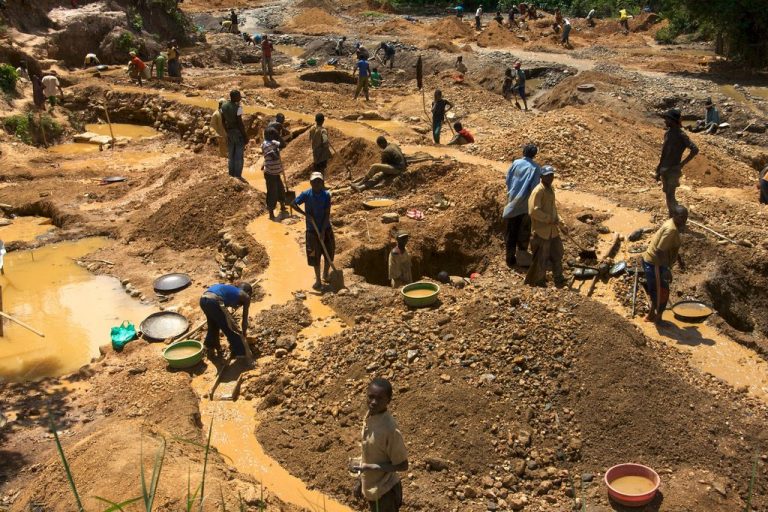
Security officials have raised alarm over an exponential increase in illegal panning activities in Chiadzwa diamond fields with more than 3000 panners arrested this year only.

Zimbabwe Consolidated Diamond Company (ZCDC) chief security over Ellias Mvere told delegates at the recently held Diamond Indaba that there has been a two hundred percent increase in the arrest of illegal panners.

Inversely while previous statistics showed that locals were thirty percent of arrested suspects, this has increased to about eighty percent of over three thousand panners arrested this year, said Commissioner Mhere.

“Illegal diamond panners commonly referred to as gwejas remain a cause for concern to the operations of the ZCDC company and continue being a threat to the national economy.

“In the last indaba, a total of 1 375 illegal miners had been arrested. Notably, only 30% of those arrests were of individuals from Manicaland.

“However, since then, the department has made a total of 3 259 arrests. Worryingly, only 21 percent
of the arrests were illegal panners from outside Manicaland.

“This represents an increase in illegal panner arrests from the Province, highlighting the need to further engage the local leadership so that cases of illegal panning can be eliminated,” said Mhere.

He added that the illegal miners, sponsored by illegal buyers, were using sophisticated syndicates of connivance and corruption with some inside security details to evade arrests, as he appealed for a collaborative effort with local leadership.

“The panners are operating from bases on the mountains and some are offered rented
accommodation by local villagers and shop owners.

“The intelligence we have suggest that the panners are being sponsored by illegal buyers and
syndicate managers. This highlights the need to further engage the local leadership so that cases of
illegal panning can be eliminated,” he said.

Minister of State for Manicaland Dr. Ellen Gwaradzimba said this was a reaction of the impoverished
state of affairs in the country calling for the formalization of illegal panners, as a sustainable solution to
empowering local communities.

Formalization of artisanal mining, if properly implemented, will ring-fence revenue from diamonds by
curbing illicit financial flows rampant in the diamond sector, says Zimbabwe Environmental Law
Association deputy director Shamiso Mtisi.

Mtisi said however warned that there should be a legal framework to guide formalization of artisanal
saying that a haphazard approach will foment chaos in the diamond sector.

He said to curb the scourge of artisanal mining ZCDC should follow Kimberly Process 2010 Joint Work
Plan guidelines which require governments or mining entities to fence o diamond mining areas.

“In terms of formalization of artisanal miners, the first thing is to develop a framework for
formalization and also a legal instrument for formalization and also a legal instrument just like they
have done in other jurisdictions.

“If you just open up the mines for artisanal miners without controlling them or organizing artisanal
miners, it will be creating chaos and will result in non-compliance of KP standards,” said Mtisi.

“One of the recommendations of the Kimberly Process in a joint work plan that was developed (2010)
was that all areas where there are diamonds should be fenced, but what we have is situation where
some areas are still open and there is no control there,” he added_263 Chat

US scoops up overseas fuel oil in pre-IMO push

0

 The United States is taking advantage of record-low prices of one of the world’s dirtiest fuels by buying record volumes, which it intends to upgrade into cleaner products before new shipping rules take effect, trading and analyst sources say.

US trade sources said it recently had become economical to ship fuel oil from countries such as Russia, boosting imports of the product into the United States.

This comes even as prices for high-sulphur fuel oil (HSFO) on the US Gulf Coast trend lower while demand for high-sulphur fuels sags globally.

Fuel oil in the region traded at $41,56 per barrel on November 6, a three-year seasonal low, data from S&P Global Platts shows.

Fuel oil prices in Europe have also fallen to record lows, which has helped make exports to the United States economical.

According to data from oil analytics firm Vortexa, US imports of fuel oil from Russia and former Soviet Union (FSU) countries surged to at least a multi-year high of 1,35 million tonnes in October, and they are expected to hold firm at similar levels in November.

“The broader rise in FSU-US flows since the beginning of this year has therefore helped to offset the impact of the collapse in Venezuelan fuel oil imports in the wake of US-led sanctions,” Vortexa said.

Vortexa separately noted that the United States had received fuel oil from Jordan at the end of October, with another tanker set to arrive around the end of November.

The route from Jordan to the United States is unusual, Vortexa said.

New regulations on marine fuel by the International Maritime Organisation that take effect on January 1 will restrict sulphur content in shipping fuels to a maximum 0, 5 percent, from 3,5 percent now.

Complex US refiners have long been expected to benefit from the new regulations because they have greater capability to break down cheaper, heavy crudes into higher-margin, compliant products.

They have vacuum distillation capacity to break down straight-run fuel oil, which comes directly from a crude unit, as well as coking capacity, which upgrades cracked fuel oil, a by-product from complex refining methods.

The increased imports may be related to US refiners looking to run fuel oil directly to their cokers as the price of high-sulphur fuel oil declines ahead of IMO 2020, said Sandy Fielden, energy analyst at financial services firm Morningstar.

“If fuel oil is a good deal cheaper than crude, you can run it direct to the coker to produce gasoline and diesel and increase refinery returns,” Fielden said.

“If it proves profitable then we should see more of it in the coming months as HSFO prices fall.” — Reuters