Home Blog Page 602

Diamonds output pegged at USD 1 billion in 2020

0

Diamond sector mining output for the 2020 period has been pegged at US$1 billion
buoyed by investments in exploration as well as joint venture agreements, officials in the diamond
industry have said.

Zimbabwe Consolidated Diamond Company (ZCDC) will spread its exploration footprint around
Zimbabwe by leveraging on joint venture opportunities, board chair Engineer Killian Ukama told
delegates at the recently held all stakeholders Diamond indaba.

Eng. Ukama said there was a massive interest in diamonds with at least 13 different producers
expressing interest to start exploration mining. Zimbabwe has signed a joint venture with Alarosa, the
world’s biggest producer of diamonds in carats.

“The Diamond Industry is expected to contribute $1 billion to the mining industry contribution target
of 12 billion by 2023 under the government’s Vision 2030.

“ZCDC is investing in exploration in partnership with other players in the diamond industry. We have
received at least 13 expressions of interest in joint ventures, to spread its footprint in the country
beyond Chiadzwa.

“It is hoped that such partnerships will yield positive results for the growth of the diamond industry with
the associated benefits such as increased revenue generation, employment creation, economic
growth, infrastructural development, and investments in downstream industries,” he said.

To achieve these lofty goals, Eng. Ukama called for a collaborative effort to get rid, in particular, of
negative perception dominated by what he termed a dual portrayal of the government-owned entity.

He called for unity of purpose to protect the diamond industry against an influx of negative reports
around ZCDC which have an adverse effect on the market of gems produced by the amalgamated
government concern.

“To fully unlock the value of diamonds it is critical that we jointly work towards building positive
perceptions of our diamond industry. The perception of our organisation remains one marred by
rumours, innuendo, untruths and an apparent lack of trust among stakeholders.

“As an industry which is driven by ‘the feel-good factor,’ this obtaining situation has serious
implications on the value of our diamonds. We need to unite in order to protect this asset,” said Eng.
Ukama.

Zimbabwe Environmental Law Association deputy director Shamiso Mtisi said the negative perception of
the diamond industry in Zimbabwe can be busted by embracing responsible mining, transparency in
disclosing revenue as well as upholding international benchmarks.

He said the government must assess, detect and address potential negative impacts of mining
operations across the supply chain, as well as adopting full disclosure practices detailing
disaggregated output.

Mtisi said in light of huge investment potential through joint ventures, the government must ensure due
diligence in assessing potential investors in the industry.

“ZCDC must clean its image through action and join other diamond industry players who are
promoting responsible mining practices.

“Responsible mining and sourcing has to be based on the need to manage social, environmental or
human rights related impacts of mining, including responding to community needs and national
development needs and growth.

“Rough diamonds may be over-taken by synthetic diamonds if we do not rebrand them as ethically
mined and mined from areas free of human rights abuses, environmental degradation and poor
labour standards, synthetics are being marketed as clean and not tainted by human rights violations,”
said Mtisi.

“Give a national breakdown of Production from Marange voluntarily, if you are quite people will
continue assuming the big guys are eating all the money from Marange, share disaggregated data of
revenues, contracts signed and use of resources,” concluded Mtisi_263 Chat

Police Arrest Six “Mashurugwi” In Mazowe, Gunshot Fired To Disperse Crowd

0

There was a near-death experience for illegal miners at Jumbo mine in Mazowe yesterday after a
gang of six machete-wielding thugs, known as Mashurugwi threatened to go on a rampage before
being whisked away by the police.

The police had to re gunshots as the gang fought violently to save their lives while the other miners
looked terrified.

The six, believed to be part of a terrorising gang of illegal miners in the gold-rich area, had “captured”
some open pits and illegally entered into the mine after threatening to kill other bewildered miners.
263Chat, which was at the scene when the incident unfolded, witnessed the melee as police struggled
to bring the situation to a halt.

One of the arresting police officers told this publication that the six were in the habit of confiscating
gold ore from other miners and forcibly invade their pits and in the event of refusal, they would
attack their victims with machetes and other sharp objects.

“We carried out an operation which nabbed six thugs who had gone underground unsanctioned.
They forced their way in and we got a tip-o so we waited for them to come out and we took them in,
“However, true to their violent nature, they resisted arrests and were becoming violent while the
angry mob was baying for their blood. We had to re warning shots to disperse the crowd otherwise
it would have been a lot worse,” said the other on condition of anonymity.

The group, which is part of a gang that is causing untold suffering and fear among the people in
Mazowe is said to be politically connected and they often boast that they can do whatever they want
as they will not be arrested.

One of the illegal miners in Mazowe told 263Chat that they live in fear of being attacked by the
Mashurugwi gang and were no longer able to move freely.

“Every night, they come and terrorize us, they tell us that they own these pits and their bosses
instruct them to do as they please. They carry machetes and sharp objects all the time and for us,
moving at night has become a nightmare because if they see you, they will attack you,” said the
miner, Munyaradzi Mandove.

Another source said the menacing gang resides in Bindura where they stay with sex workers in
taverns and terrorise unsuspecting residents in the high-density suburbs of the small mining town.
He said the gang is connected to police and they pay bribes in order to evade arrests in the event that
they are caught.

“We don’t know when they will pounce next, we live in fear and the police is not helping because they
aid these criminal activities,” said the source, identified as Uncle Diva.

During the recently held Mining Federation conference in Gweru this week, President Emmerson
Mnangagwa said he was alarmed when he read about the violence unleashed by the panners in the
media.

“We don’t want this (acts of violence), anyone found in possession of these dangerous weapons must
be arrested and sent to jail,” said Mnangagwa_263 Chat

Tsingshan’s US$1bn steel plant on course

0

Chinese firm Tsingshan Holdings Group’s plans to build a US$1 billion stainless steel plant in Mvuma remain firmly on course amid indications that Zimbabwe’s strategy to ramp up ferrochrome production is designed to also cater for the company’s feedstock requirements.

The company, one of the biggest producers of stainless steel products in the world, specialises in castings, steel bars, steel wires, steel plates and other products, which are mostly exported to South-East Asia.

Tsingshan signed a US$1 billion outline agreement with Government in July last year, and intends to build a two million tonne-per-annum stainless steel plant in Zimbabwe.

The firm will also mine a number of minerals needed for steel production.

The Chinese company recently expanded its plans for the Zimbabwe steel plant to include a power plant and lithium extraction.

Tsingshan is already undertaking resource evaluation for coal, chrome and nickel, which started in the second quarter of this year.

Tsingshan’s steel investment is part of the several multimillion-dollar deals that President Mnangagwa’s administration has inked since coming into power in 2017. The projects are at various levels of implementation.

Other projects include the US$4,2 billion platinum mining venture by Cypriot firm, Karo Resources, where exploration is already underway, with thousands of drills done on-site. An aero-magnetic survey was concluded earlier this year.

Zimbabwe’s foreign policy under President Mnangagwa has shifted from focusing on political issues to emphasis on economic ones.

The policy is designed in a way that aids Zimbabwe’s economic recovery, facilitates growth, creates employment and encourages a climate that is conducive to attracting investors into the country.

The government is working towards growing Zimbabwe’s economy to middle-income level by 2030, a vision espoused by President Mnangagwa. Initially, Tsingshan intended to produce chrome, nickel, iron and coal.

However, the fresh plans will see the company constructing a 600-megawatt power plant in two phases, as well as venture into lithium extraction.

Tsingshan’s investment is expected to create more than 2 000 jobs. It will promote technology transfer and generate billions from Zimbabwe’s export proceeds.

Mines and Mining Development Minister Winston Chitando recently said plans to increase ferrochrome production were on course.

“Government signed an agreement with Tsingshan for the production of carbon steel. The main ingredients that go into carbon steel are ferrochrome, coke and iron ore.

“For that stainless steel production to commence, we have to ramp up ferrochrome production, which is happening. That is why we have the 500 000 tonnes (target by 2023),” said Minister Chitando.

He said Tsingshan’s plans will also entail ramping up coke production, which is produced from coal, to facilitate the steel production.

Minister Chitando said Zimbabwe’s ferrochrome producers are currently churning out 500 000 annually.

The planned ferrochrome production is expected to contribute towards the Government’s vision of growing exports from the mining sector to US$12 billion by 2023.

Ferrochrome production, as a sub-sector, is anticipated to generate US$1 billion in export proceeds.

Tsingshan’s Afrochine has already embarked on expanding its furnace capacity to increase output.

Prior to signing the stainless steel agreement with the Government of Zimbabwe, Tsingshan already had a footprint in Zimbabwe. Its unit, Afrochine, extracts chrome near Selous.

Major ferrochrome producing entities in Zimbabwe include Gweru-based Jinan, Zimasco, and ZimAlloys, which is set to resume production after years of dormancy due to financial challenges.

Cumulatively, the companies produced 360 000 tonnes, but are expected to increase output to half a million by 2023, that is excluding the products that will come from Afrochine’s expansion plans.

Tsingshan’s Afrochine produced 19 677 tonnes in 2018 and is expected to increase production capacity to 500 000 tonnes by 2023.

The other key minerals that are expected to drive the vision for a U$12 billion mining industry include gold, diamond, coal, lithium.

“The US$12 billion will be achieved, no question about that. The US$12 billion is made up of a target of 100 tonnes from gold, which will generate US$4 billion; platinum, which will generate US$3 billion; while chrome, nickel and steel will bring in US$1 billion. Coal and hydro-carbons will generate another US$1 billion, while diamonds will bring in US$1 billion. Lithium will generate US$500 million while the other minerals will bring in US$1,5 billion,” Minister Chitando said_The Sunday Mail

Mining industry stutters but positive outlook in 2020

0

Zimbabwe’s mining confidence plunged to a two-year low, undermined by concerns over power cuts, scarce foreign currency and policy uncertainty, a survey has revealed.

The Mining Business Confidence Index (MBCI), compiled by the Chamber of Mines (CoM), a lobby group that represents local miners, declined to 2,2 percent this year from 8 percent at the end of last year.

This is a further drop from 21,9 percent in 2017.

But despite a difficult 2019, the survey forecast a positive outlook in 2020, with executives expressing confidence that the sector will bounce from the doldrums.

Zimbabwe earns much of its foreign currency from the sector, accounting for 65 percent of export receipts, but is facing a myriad of challenges, including power cuts.

The State power utility, Zesa Holdings, is rationing electricity supplies for domestic and industrial consumers due to subdued production at its major plants.

Kariba Hydroelectric Power Station, the country’s largest plant, is churning out less than 10 percent of its capacity due to declining water levels at Lake Kariba, where Zambia also draws water for its power generation.

Recurring breakdowns at Hwange Thermal Power Station, due to dilapidated power infrastructure, was also affecting power production.

The CoM survey polled mine executives on their outlook on the economy, profitability, commodity prices, access to capital, the policy environment, title security, political risk and investment plans.

Government is seeking to achieve a US$12 billion mining industry by 2023, up from US$2,7 billion in 2017.

Presenting the findings of the survey in Harare on Thursday, University of Zimbabwe economics lecturer Professor Albert Makochekamwa said executives were confident of 2020’s investment plans. They are also confident that the sector will be able to hire new employees in the new year.

Attracting investment is one of the key cornerstones that will enable Government to revive the economy.

“Overall, mining executives are slightly more confident about mining business in 2020,” said Prof Makochekamwa.

“The majority of the respondents, 60 percent, are slightly more confident about profitability prospects of the mining industry in 2020. To note, the profitability index for 2020 is somewhat higher than that recorded for 2019.

“Survey findings also show that respondents are confident about the mining industry growth prospects for 2020, with 60 percent expecting marginal growth of the mining sector in 2020.

“Survey findings show that mining executives are slightly more confident about investment plans for 2020, with 60 percent of the respondents indicating that they are planning to inject fresh capital into their businesses in 2020,” said Prof Makochekamwa.

The survey also found out that 70 percent of respondents are optimistic about 2020’s commodity market.

The executives, on an 80 percent scale, are also confident about the current mining title regime, a sign that shows that Government’s efforts in instilling order in mining claim ownership is bearing fruit.

The survey also revealed that the mining industry capacity utilisation declined to around 70 percent in 2019, compared to 75 percent in 2018.

With the exception of Platinum Group Metals, all other key minerals recorded declines in average capacity utilisation. Executives blamed this development on acute power outages and inadequate foreign exchange allocations_The Sunday Mail

Gold miner robbed of US$2k

0

THREE armed robbers are on the run after they allegedly attacked a gold buyer from Matobo in the middle of the night and got away with US$2 000 and RTGS$2 000.

Matabeleland South provincial police spokesperson Chief Inspector Philisani Ndebele confirmed the incident which occurred on Monday at around 1am at Phakama Business Centre.

He said the suspects who were armed with a gun approached Mr Martin Wayne at his home at the business centre under the pretext of selling gold and when he refused to open the door, they slashed his car tyres thereby forcing him to confront them and they went on to rob him.

“I can confirm that we are investigating an armed robbery case which occurred at Phakama Business Centre in Matobo. The three suspects whose identity is not known approached Mr Martin Wayne at his home at around 1am, knocked on the door and indicated that they were selling gold.

“Mr Wayne refused to open for them and advised them to come back in the morning. Instead of leaving the suspects became violent and punctured the wheels of Mr Wayne’s two vehicles which were parked in the yard,’’ said Chief Insp Ndebele.

He said Mr Wayne went out to check and met the accused persons standing by the door and one was armed with a gun.

Chief Insp Ndebele said the suspects demanded cash from Mr Wayne and threatened to kill him if he did not comply. 

He said they started assaulting Mr Wayne until he gave them US$1 000 which he had in his pocket. Chief Insp Ndebele said one of the suspects entered the house and demanded cash from Mr Wayne’s wife and threatened to assault her if she did not comply. He said the suspect took US$1 000 and RTGS$2 000 from the wardrobe and joined his friends who were outside and they fled from the scene.

Chief Insp Ndebele said the matter was reported to the police who attended the scene and Mr Wayne was taken to Mater dei Hospital for treatment. He appealed to members of the public to desist from storing large sums of money in their homes.

“As police we continue to urge people to desist from storing large sums of money in their homes as that puts them at risk of being robbed. Especially businesspeople, when people know that they handle large sums of money which they store in their homes they become a target of robbers. People shouldn’t put their lives at risk. We also appeal to anyone with information on the identity of the suspects or their whereabouts to contact any nearest police station,’’ he said_The Sunday News

SA miner to sink US$1m in Zim

0

SOUTH African mining company, Ingeli Minerals has made an initial investment of R10 million in alluvial gold mining in Shamva and the investment is expected to be scaled up to US$1 million, Sunday Business has learnt.

In an interview on the sidelines of the Zimbabwe Miners Federation exhibition held in Gweru last week, Ingeli Minerals chairman Mr Pumezo Mqingwana said operations are expected to start before end of the year.

“We have started investing in Zimbabwe up to the tune of R10 million. Very soon we intend to reach to US$1 million investment and after that we will immediately start operations. By the time we start to operate we believe we would have invested more than US$1 million in alluvial gold mining,” he said.

Mr. Mqingwana says the alluvial gold mining and washing project is about 90 percent complete.

“In terms of completion of the project we are now more than 90 percent. What’s left now is to bring equipment which we have been building in South Africa after exploration. The machines have been completed and they now await to be brought over to this side where we will operate,” he said.

He said the company is confident of sustainable operations, which could spur further investments in the country.

“We are certain that this project will unlock more significant projects that Ingeli Minerals will invest in, in Zimbabwe. We hope this will mark the beginning of a fruitful journey between Ingeli Minerals and Zimbabwe’s mining sector,” he said.

Meanwhile, ZMF president Ms Henrietta Rushwaya called upon the Government to relax laws governing the mining sector as some of the laws were stifling mining operations.

“We would like to call upon the Government to help relax laws that are governing the mining sector, especially the law that criminalises gold possession as it is promoting mineral leakages outside the country. If amended, production will increase by three-fold,” she said.

The ZMF Expo which was officiated by President Emmerson Mnangagwa was attended by various mining stakeholders_The Sunday News

Black granite: meagre revenue from prized stone

0

An old and battered haulage truck navigates its way through a narrow pothole-ridden road, releasing plumes of smoke as it contends with the sheer weight of its load. In its wake, it leaves a cloud of dust, forcing pedestrians using the same road to cover their noses.
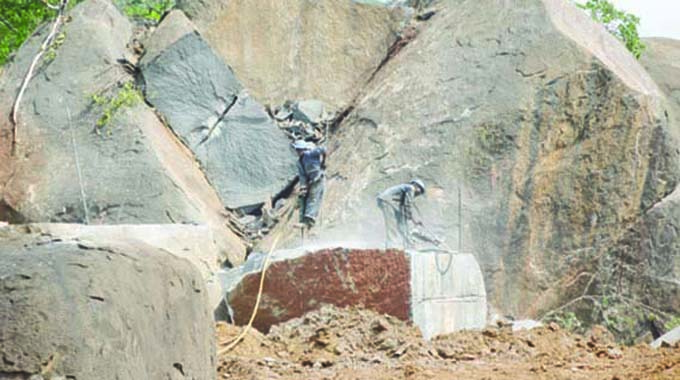
Despite being endowed with black granite, Mutoko, Murehwa and Uzumba-Maramba-Pfungwe is not benefitting from the resource

Similarly antiquated trucks laden with granite are common in Mutoko, where for years they have been transporting the rock from surrounding mines.

They signify rich pickings for the mining companies, but they are also a reminder of the systematic plunder of the resource here, to the detriment of development and the local environment.

The stone is being exported to First World economies including Italy, Canada, the United States of America, Denmark and Australia.

In spite of its mineral wealth, Zimbabwe is losing millions of dollars in potential revenue from the mining of black granite due to poor monitoring, inadequate infrastructure, lax taxation systems and non-existent value addition which, investigations have shown, may be contributing to trade mis-invoicing.

According to the Centre for Natural Resource Governance, the absence of important infrastructure such as weigh bridges, compounded by colonial laws and poor monitoring systems, all which might be resulting in the under-reporting of the actual figures of granite extracted in the country.

Trade mis-invoicing — a method of illicitly moving funds across borders by deliberately falsifying the value of goods — falls under the umbrella of the broader issue of illicit financial flows, whereby money leaves a country with companies, individuals or officials deliberately flouting regulations to make easy gains.

In Zimbabwe, mis-invoicing is prejudicing Government of millions in potential tax revenue — a sum which could be benefiting the population instead of lining the pockets of companies.

Several companies mine in Mutoko with multinational companies from Italy and China. The companies include Red Granite, Quarrying Enterprise, CRG and Zimbabwe International Quarrying and Natural Stones Export Company.

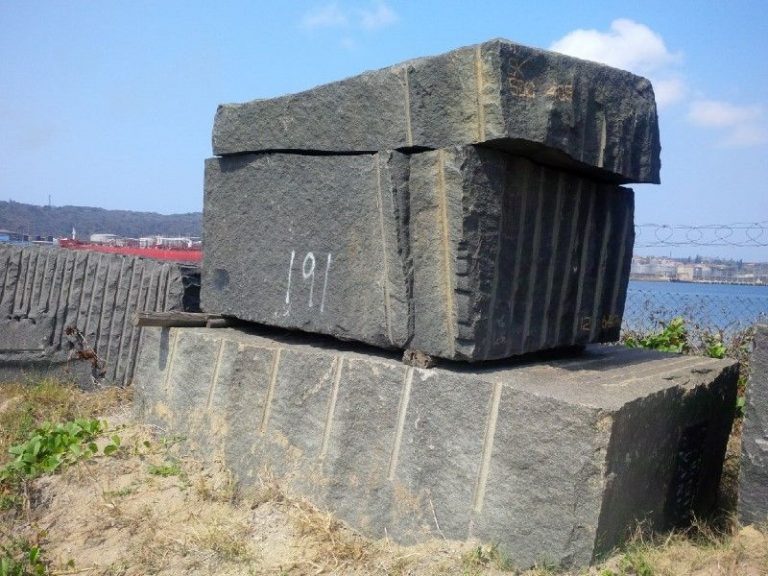
Mr Farai Maguwu, the director of Zimbabwe’s Centre for Natural Resource Governance (CNRG), a civic organisation, says that in the black granite sector, companies are understating production figures in order to pay lower taxes. Officials at borders are also using the naked eye to estimate the weight of granite blocks, a practice that creates room for mis-invoicing and the doctoring of documentation.

“A truck should be weighed at the mine and also at the border in order to compare if the figures tally,” says Maguwu.

For 50 years, black granite has been mined primarily in the north-eastern parts of the country, in areas such as Uzumba-Maramba-Pfungwe, Murehwa and Mutoko.

Zimbabwe produced 223 356 tonnes of granite last year up from 161 123 tonnes in 2017, data from the Zimbabwe Chamber of Mines shows.

Mutoko Rural District Council alone produces around 121 000 tonnes, with 10 083 tonnes produced monthly.

Maguwu says the figures could be much higher, though verifying the figures might be difficult.

Absence of weigh bridges

According to Mutoko Rural District Council, the absence of Government mining officers at sites and the lack of basic infrastructure such as weigh bridges is contributing to mis-invoicing and the understating of production figures by some companies. As a result, local councils and the Zimbabwe Revenue Authority (Zimra) rely on statistics provided by mining companies for taxation purposes.

The chief executive officer of Mutoko Rural District Council, Mr Peter Sigauke, says verifying the authenticity of figures provided by the companies is near impossible.

“We are getting quarterly production figures from the companies and we have no way of verifying if these figures are true,” he says.

Sigauke says Government has failed to address the absence of weighbridges for 12 years now, which “makes it very difficult to ascertain the figures we are being given by the companies”.

“At one point between 2006 and 2007 we raised the issue of a weigh bridge to be erected near Mutoko District Council offices so that we would also be able to verify the figures,” he adds.

Although a high-level committee was set up to oversee the development, and a tender was subsequently flighted, the weigh bridge was never erected.

Zimbabwean law provides that local authorities receive a small fee for every tonne of granite extracted from their jurisdiction. Mutoko RDC gets $1 for every tonne of granite, but the computation of the exact tax figures is complicated by the absence of weigh bridges.

Minerals Marketing Cooperation of Zimbabwe (MMCZ) chief executive officer, Mr Tongai Muzenda, says they are now working on building weigh bridges to rectify the issue.

“We are doing this as a corrective measure since there is a possibility of figures being doctored due to the absence of these weigh bridges,” he says

A 2017 investigation by the Parliamentary Portfolio Committee on Indigenisation and Empowerment noted the lack of transparency around production figures in Mutoko and Mudzi districts due to the absence of infrastructure. It ordered the Mines Ministry to immediately facilitate the setting up of weighbridges in all mining areas.

Spokesperson of the Dimension Stone Producers’ Association, which represents nine granite mining companies in Mutoko, Mr. Edward Muvuro says companies are not responsible for exporting the granite.

“The stones are measured by length, weight, and height and automatically you have the weight,” he says.

“The blocks cannot go out until the MMCZ comes physically to the site to inspect the block and re-measure it. We are not authorised to do exports as exports are done by the MMCZ, who then raise an invoice for us. It is impossible to falsify the weight of the block,” he adds.

A receipt seen by this publication shows that 12 blocks of raw granite costs $30 000, a figure which granite processers refute and say the figure is too low and claim a raw block fetches millions.

The Zimbabwe Revenue Authority (Zimra) which is responsible for collecting revenue from the sales of the granite did not respond to questions sent to them.

Colonial-era laws

In addition to the lack of weigh bridges, the continued export of unprocessed granite is bleeding the country of potential revenue.

Speaking during a visit to a local granite processing factory – one of the few in the country – President Emmerson Mnangagwa said Government will introduce regulations banning exports of raw blocks.

During the visit he said a block of unpolished granite fetches less compared to a similar weight that has been cut and polished.  Thus, he said a blanket ban on the export of raw granite is imminent.

He also promised the introduction of robust monitoring systems to stem illicit leaks.

Mutoko Rural District Council’s Sigauke believes the proposed ban will stimulate local development and job creation.

“The cutting and polishing should be done in Mutoko, this is the only way there can be development in this area,” he says.

Muguwu, of the CNRG, however, opines that the problem lies much deeper.

He says tax rules and mining laws in effect since colonial days need to be overhauled to address the challenges besetting the sub sector.

“We have the Mines and Minerals Act, which was enacted in 1961 by the Rhodesian colonial government, the law was not to empower the indigenous people but to empower the minority,” he says. “There is a need to reform it to make sure it stops some of the loopholes that were causing leakages.”

Environmental impact

Back in Mutoko, the once pristine ecosystem has been ravaged, parts of the district have turned into wasteland, characterised by parched landscapes and poisoned rivers. Houses and public infrastructure have been scarred by blasting. People and livestock have drowned in gaping open mining pits, with little in terms of compensation coming their way.

Most companies use the open-cast mining technique, which leaves large pits in the ground.

The 2017 Parliamentary report notes the massive environmental impact caused by the mining.

“Environmental degradation comes as a result of quarrying, dumping of the large black granite boulders everywhere, pollution and unsustainable clearing of vegetation to pave way for quarry extraction and, to construct roads resulting in serious deforestation,” reads the report in part. “The use of heavy machinery, such as graders, front-end loaders, and heavy trucks, contribute to the rapid deterioration of roads,” it adds.

And in spite of its mineral endowments, Mutoko remains underdeveloped.

Mining companies are accused of neglecting the development of the communities they work in. Local villagers are unhappy. They say the companies’ social corporate responsibility activities are negligible.

“The local ecological debt and underdevelopment does not match with the area’s natural resources endowment,” Faith Chikowore of Mbudzi village says.

Previously, Government tried to force mining companies to develop the areas through the Indigenisation and Economic Empowerment Act, which compelled mining companies to cede part ownership of their enterprises to local communities through trusts. They were also required to provide seed capital to a local trust for community development projects.

But the law has since been repealed.

Mr Muvuro says the companies conduct their activities in an environmentally responsible manner.

“After we have mined we plant trees, grass and add soil at every area that we would have mined. But there are instances where villagers request us not to close pools which they say would benefit their livestock given that there are not many water sources in the area.

“The Environmental Management Agency (EMA) said we should close these pools but communities say their livestock benefit from these pools. We have since asked the communities to write to EMA and explain their predicament, which they have since done.”

In 2016, Government summoned some of the companies operating in Mutoko to explain why they were not contributing to local development. They simply cited the harsh economic conditions as unfavourable to such endeavours.

Mr Muvuro contends that the companies are contributing to development through building and modernising local schools.

He said: “At every school, from primary to secondary up to university level, we have students that we are paying school fees for. We do not limit this to Mutoko, we have operations in Murehwa, we have operations in Uzumba.”

This story was produced by The Sunday Mail and was written as part of Wealth of Nations, a media skills development programme run by the Thomson Reuters Foundation. More information at www.wealth-of-nations.org. The content is the sole responsibility of the author and the publisher.


No apologies: Africans say their need for oil cash outweighs climate concerns

0

A handful of protesters on the ground floor of the cavernous Cape Town International Convention Centre spread fake oil on the ground and chanted, demanding an end to fossil fuels.

Two floors above, the hundreds of delegates at Africa Oil Week were largely unaware  and mostly unmoved  by the display.

“Under no circumstances are we going to be apologising,” said Gabriel Obiang Lima, energy minister of Equatorial Guinea, adding that they need to exploit those resources to create jobs and boost economic development.

“Anybody out of the continent saying we should not develop those fields, that is criminal. It is very unfair.”

The tension keenly felt at oil conferences in Europe was largely absent over the three-day event in Cape Town; there was little focus on climate change, apart from the shadow renewables cast over long-term demand.

In contrast, investor and government pressure to address climate change has fundamentally altered oil events in Europe. 

While no oil-producing country has stopped developing fossil fuel resources, pledges such as Britain’s promise to be net carbon neutral by 2050 or Norway’s national carbon tax show that governments acknowledge a need to shift away from fossil fuels. 

In Cape Town, African leaders touted the good that oil, gas and even coal can bring on a continent where some 600 million people lack access to electricity.

“Energy is the catalyst for growth,” said Gwede Mantashe, South Africa’s energy minister and national chair of the ruling African National Congress.

“They even want to tell us to switch off all the coal-generated power stations,” he said. “Until you tell them, ‘you know we can do that, but you’ll breathe fresh air in the darkness’.”

While Africa is rich in mineral resources and has for decades shipped fossil fuels to global consumers, its own citizens have contributed a miniscule amount of the emissions that cause climate change.

Since the 18th century, all African countries put together have emitted seven times less carbon dioxide than China, 13 times less than the United States and 18 times less than the combined countries of Europe, according to industry publication Carbonbrief.

Global climate efforts recognise this, pressuring developed countries to cut emissions much more aggressively than developing ones to make up for their historic contributions.

James Josling, head of Africa oil trading for Swiss-based Trafigura, said telling Africa not to develop its resources was akin to making it “pay for the sins” of other regions.

African ministers in Cape Town emphasised their need for fossil fuel cash and power in order to develop and diversify resource-dependent economies. Nearly half of Africans had no access to electricity last year, according to the International Energy Agency (IEA), while around 80% of sub-Saharan African companies suffered frequent electricity disruptions that cut into profits.

Sclerotic transportation networks and clogged ports also add some 30%-40% to the cost of shipping goods within Africa, according to the Infrastructure Consortium of Africa, while the African Development Bank has pegged the amount of cash needed for infrastructure development on the continent at a whopping $130–170 billion a year to 2025.

The IEA said renewables were expected to account for two-thirds of worldwide gains in access to electricity by 2030, and warned that changing global dynamics meant nations could no longer assume oil would translate into reliable future revenues.

Some ministers, including Mantashe and Uganda’s Irene Muloni, also emphasised a need to develop renewable resources.

In Kenya, roughly 70% of electricity comes from renewable sources such as hydropower and geothermal  more than three times the global average  and the government aims to generate 100% of energy from renewable sources by the end of next year.

But few in Cape Town were prepared to limit fossil fuel development.

Oil, said Gabon’s minister for hydrocarbons Noel Mboumba, is a major driver of development. “We will do all in our power to develop it.”  AFP

Mimosa engages RBZ on forex retention

0

Mimosa Mining Company (Mimosa) is engaging the central bank and ministry of mines for a more favourable foreign currency retention regime, managing director Fungai Makoni has said.

With foreign currency shortages crippling the economy, the government resolved to retain 45 percent of foreign currency earned by miners and feed into the market through the interbank system. Another decision to allow corporates only 30 days to utilise their foreign currency before it is converted to local currency at prevailing interbank rates is also the subject of contestation.

This has resulted in smuggling of minerals such as gold and use of informal channels to sell and receive payments with official figures indicating a 9 percent slump in forex receipts in the first nine months of 2019 after underperformance in gold, platinum, tobacco and tourism.

“We need more foreign currency for our business because certainly the business largely depends on inputs that are imported like machines, equipment and spares,” Makoni said after a tour of the mine in Zvishavane last week. “In terms of the retention, we think it could be better, but it’s something we are engaging with the RBZ through the Ministry of Mines and the Chamber of Mines.

“Where we feel that there could be better retention to support the mining industry.”

Recently, the company purchased a production plant for US$10m from South Africa. The plant is being dismantled and shipped to Zvishavane where it will be assembled for production. The new plant is expected to optimise recovery by about 1.2 percent or 200 000 ounces. The losses arise from inefficiencies given the plant is operating 10 percent above capacity.

“We are operating at 10 percent above capacity. Our plant the name plate is 185 00 per month and we are doing 210 000 tonnes,” Makoni said. “We have options to expand but what is critical is to remove inefficiencies. Over the years we have been incrementally increasing our production, say one percent this year two percent next year. Where we are now we are running above capacity and we are no longer recovering as efficiently as we should do. We want to optimize current production platform and get as much as we can out of what we are currently doing.”

After optimisation, Mimosa will then do feasibility studies for expansion and cost estimates, Makoni said. Mimosa holds about 6 percent of the platinum resource in the country and is part of a broader strategy to achieve a US$12bn economy by 2023, led by gold, platinum and chrome.

“We believe we still have far to go, a fair amount of resource, although we have the smallest between our two colleagues Zimplats and Unki we believe we still have value to extract,” said Makoni, adding the mine’s resource life span even after expansion could hit 20 years.

Mimosa produced 2,668kg of platinum between January and September worth US$65.8m according to the Ministry of Mines. Zimplats produced 5,757kg while Unki produced 1 844kg_Business Times

Zim might not benefit from palladium boom

0

Zimbabwe will have to review platinum group of metals royalties, if it is to fully benefit from the price boom that has been witnessed for palladium, observers have said. Palladium, which for long played second fiddle to platinum, has shone, trading at almost twice the price of the later, for the better part of the year.

Its prices have been up by 40 percent this year and has been surging for six straight quarters according to a report by Bloomberg.

Palladium prices are likely to remain elevated as production at the world’s top two producing countries South Africa and Russia has been subdued. Also behind the bullish trend are tighter environmental laws in Europe and China that are boosting consumption, according to Australia and New Zealand Banking Group.

Production is likely to continue to trail use through 2020, Bloomberg Intelligence analyst Eily Ong, said in an October 17 note.

Zimbabwe should benefit as it is the third largest PGM producer after Russia and South Africa. Authorities are already in anticipation and forecasting an increase in product to capitalise on the good prices.

The country’s mines ministry earlier this month forecast platinum-group metals output at 2,79 million ounces in 2024, almost triple the 979 000 ounces currently produced by Zimplats, Mimosa and Unki.

Increased production is also expected from new PGM mine developments in the form of the $4.2 billion Karo Mine as well as the $4 billion Great Dyke Investments mine. That mine houses, in particular those that are already in operation, are making a killing, is not in question but contribution to Zimbabwe is not clear.

The latest results released by Zimplats, for the full year to June 2019, showed the miner made revenue of $264,330 million from palladium alone while platinum contributed $194,9 million. In 2018, the reverse was true, with platinum earning $223,3 million in revenue while palladium weighed in with $200. A year earlier platinum’s revenue contribution amounted to $239,3 million while palladium contributed $161,2 million.

The prevailing prices have meant overall revenue for Zimplats increased to $630,9 million up from $582,5 million prior year comparative.

The question, however, comes from a national perspective. How much is Zimbabwe benefiting from its minerals in general and the current palladium boom in particular?

From Zimplats, national coffers only earned $26,5 million in royalty and commission expenses for all PGMs. The other major benefit could be through staff costs as the company paid $105 million (there is no information whether there are any expatriates that were paid.)

Analyst Mukasiri Sibanda suggests the 2020 National Budget should review platinum royalties upwards to increase mining tax revenue contribution.

He says as it stands now, platinum royalty rates are half the rate of the gold sector and marginally higher than base metals by 0,5 percent.

Ahead of the 2020 National Budget, Sibanda said it is disturbing that the Budget Review had weakened mining fiscal linkages by giving in to industry demands on deductibility of royalties for the purpose of calculating taxable income.

“Starting January 1, 2020, royalties will be recognised as an allowable deduction for tax purposes. Noting the mining sector’s poor tax contribution, the 2014 National Budget Statement directed that mineral royalties will no longer be an allowable cost for the purposes of calculating taxable income.

“Referring to regional best practice, the Budget Review reversed this position. However, the Budget Review failed to realign Corporate Income Tax (CIT) rates of between 15 percent and 25 percent, which were noted as below the regional average. Rather, the CIT rates were deemed as competitive, a major worry because Zimbabwe must not take a leadership position on race to the bottom — using lower tax rates to woo investors,” said Mukasiri.

He said it is imperative that Government adopts a progressive royalty regime with rates increasing or falling depending on the price.

“If a sliding scale was in place, then the country would be benefiting from the palladium boom,” he said.

Treasury must not limit the self-adjusting royalty rate to the gold sector, this should be applied to all minerals. The gold royalty regime is self-adjusting, at 3 percent below US$1 200 and at 5 percent above US$1,200, said Mukasiri_Business Weekly