Home Blog Page 605

Dorowa targets revenue boost

0

Dorowa Minerals, a primary producer of phosphate concentrates in Zimbabwe, plans to diversify into magnetite production to boost its revenue base, an official has said.

Magnetite is a rock mineral and one of the main iron ores which has several domestic and industrial uses including separating coal from waste, while in homes it can be transformed and used as a magnetic decor for refrigerator doors.

Dorowa Minerals general manager Charles Mangadze told New Ziana that the company was sitting on about 26 million tons of iron ore that contains the mineral magnetite.

“Besides phosphate which is used in the fertiliser chain, we also produce a mineral called magnetite. We produce it as a by-product but of late it is now no-longer a by-product because there are so many customers that are willing to take our magnetite,” he said.

“We have got plans to expand the current magnetite circuit. Initially, it was not one of our main products but now that we have got so much  demand we actually have a project that is running right now which we  expect to complete by mid-2020 (that is) the expansion of the magnetite  production line.”

Mangadze said the burgeoning demand was emanating from Mozambican coal companies as well as local ones.

“We currently are producing about 2 000 tons per month which is not meeting the demand so we want to expand our plant so that we can produce up to 8 000 tons per month, The current customers have come to us wanting magnetite of around 12 000 tons per month,” he said.

To expand the magnetite production line, Mangadze said Dorowa would require around US$1.8 to US$2 million.

Meanwhile, Mangadze said Dorowa was facing several operational challenges including power and fuel shortages.

He said the company, which operates 24 hours daily required about 4 000  to 5 000 litres of fuel per day for operations.

The company was working on securing adequate electricity and fuel supplies, he said.

“Currently we are losing 9 to 10 hours of production every day (due to power outages). We recently signed a contract with Zesa to pay (for

electricity) in forex and they promised us that we will be ring-fenced but we are still losing power but not as much as domestic consumers,” he said.

“So we are looking at other sources (of electricity), our plant is a 4-megawatt plant. Right now we have got proposals for a solar plant that  we are looking at.”

Dorowa Minerals is the only phosphate mine in Zimbabwe which is wholly owned by the Industrial Development Corporation.

The phosphate concentrates are a crucial raw material in the production of fertilizers and other agro-chemical products produced by companies including Zimphos, Sable Chemicals and the Zimbabwe Fertiliser Company,  all sister companies of Dorowa under the IDC stable. – New Ziana

Vast Resources gets funds for Romania, Zimbabwe projects

0

BH24 Reporter

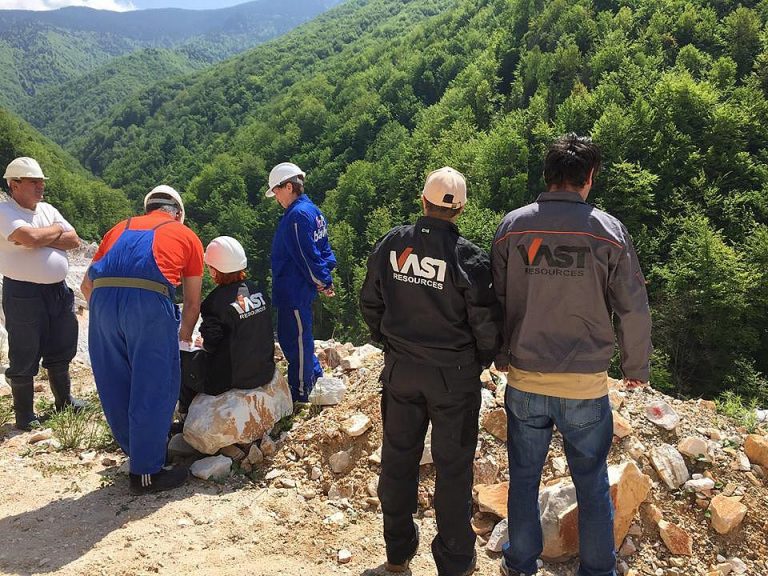
HARARE – Mining firm Vast Resources has signed documentation for a new US$13,5 million financing arrangement which is set to cover the costs of reaching production at the both the Baita Plai mine in Romania and the Chiadzwa diamond project in Zimbabwe.

A UK based fund, Atlas Capital Markets, is to be issued US$15mln of secured convertible bonds issued at 90 percent of par, and, carrying 5 percent interest per year. The bonds mature two years after issuance.

Included in the terms is a ‘non-conversion period’ giving protection from equity dilution following the date of the second tranche of bonds – it provides for six-months protection after the first tranche and potentially then 12-months after the second tranche of bonds.

Proceeds will be released to Vast in four tranches, tied to cashflow, with the first tranche comprising some US$7,1 million of bonds.

Vast told investors that the bond financing does not affect the ongoing process with a Swiss bank or other potential financiers and it continues efforts to secure a long-term financing facility for its Romanian assets including Baita Plai.

“The bonds provide the required capital to enable the company to bring its two core assets, Baita Plai in Romania and the diamond concession in Zimbabwe, into production,” said Andrew Prelea, Vast’s chief executive.

“The agreed non-conversion period, the early redemption and cash settlement options give us flexibility and enable us to limit dilution.”

Prelea added: “The Atlas facility will accelerate the start of production at Baita Plai while we continue to work on the establishment of a long term finance facility for Baita Plai and other assets in Romania, whether with the Swiss bank or otherwise.

“We are pleased to have established a new relationship with Atlas Capital Markets and look forward to working together.”

The $12bn mining strategic roadmap . . . must address the future world

0

Last week the Minister of Mines and Mining Development unveiled a strategic roadmap for the mining sector, hinged on creating US$12 billion revenues by 2023.

Of course, thinking long-term is a welcome departure from the short-term focus that generally characterises all politics and for that, the Government must be commended.

If anything, the planning horizon needs to be longer to enable inter-generational transfer of wealth. These are the debates one would expect youths to pounce on, influence and shape with vigour, particularly as calls are growing louder for future generations to share in the economic prosperity that exploiting the nation’s natural resources creates.

It is glaringly obvious, however, that the plan will meet severe headwinds from inadequate infrastructure capacity (electricity, rail, water, roads), human capital shortages, cash/monetary policy challenges, lagging mining regulatory reforms, the negative impact of US/EU restrictive measures on attracting capital, among other issues.

On the balance of probability, therefore, the delivery of projects, the bulk of which are either at concept level or in early stages, could take longer to execute than the optimistic 2023 target.

That said, the emphasis of my critique is beyond internal challenges; rather, it questions the strategic shrewdness of the choice of minerals, given changing external global conditions.

The strategy clearly focuses on precious metals (gold and platinum), forecast to rake in US$7 billion. The plan targets 100 tonnes gold output by 2023, roughly treble the 34 tonnes mined in 2018, which was actually a historical record. On the surface, fundamentals for gold prices outlook look impressive.

Deeper analysis on the price drivers, however, reveals that gold price strength will be due to rising costs of mining and not demand driven. The strategy, meanwhile, implies Zimbabwe will gain global market share through trebling local output.

The trouble with gold is Zimbabwe does not have any absolute advantages over other nations as there are many other countries capable of increasing output. The battle will then centre on relative mining cost competitiveness. Clearly, the prospect of Zimbabwe aggressively gaining global gold market share within five years and at the expense of other countries look slim, given the context of the current investment climate.

The global gold market is fragmented and unlike the cobalt market, for example, where the DRC commands 60 percent of the global market, and can unilaterally influence global supply with little to no competition from other countries. Gold is even more complex.

In 2000, then UK Chancellor, Gordon Brown, released so much gold on the global market that prices were suppressed to as low as US$250/oz (current price approx. US$1 400/oz). Curiously, this coincided with the land reform programme and it did hurt the Zimbabwean economy. Surely, that must serve as warning that relying on gold is a very dangerous strategy.

The platinum sector, meanwhile, is set to be the biggest loser from the electric-vehicle revolution. Roughly 45 percent of global platinum consumption is for catalytic converters used in internal combustion                                                                               engines.

Some forecasts estimate that by 2030, 90 percent of new car sector sales will be electric vehicles. Even then, by 2022, the costs of manufacturing and running an electric vehicle are set to be cheaper than combustion engines. Several European and developed countries have already begun banning diesel engines from as early as 2030. Admittedly, the strategic outlook for platinum does not look promising.

Indeed, the strategic roadmap is conspicuously silent on the very fact that the future of the mineral sector will be mainly driven by three factors; technological advances, climate change reduction and the quest for geopolitical dominance.

Technologically, the so-called battery metals (cobalt, nickel and lithium), represent the best prospects for the future. Lithium is actually not that scarce, but Zimbabwe can do more to play a part and become one of the important players in the global industry from the onset.

Climate change is going to force the world to rethink consumer tastes. Light weighting of automobiles and even in buildings construction will take centre stage. The winners will be copper, aluminium and graphite (for composites).

In the quest for geopolitical dominance, one of the most important minerals at the moment are the rare earth elements. These are used to make powerful magnets and have massive applications in military equipment, electronic devices and satellites technology.

China currently controls over 90 percent of the market and even counts the US Department of Defence among its customers. No doubt then, that China is using its market dominance as a trump card in ongoing trade wars with the USA.

It took China around 20 years to build this dominance. Interestingly, China holds around a third of world deposits and Zimbabwe is thought among the top five countries in the world with economically viable deposits.

Rwanda again features as a great case study. In 2010, Rwanda opened mines for coltan (tantalum), widely used to make capacitors for mobile phones and electronic devices. Today it is the biggest producer with 25 percent of global supply followed by the DRC (20 percent of market).

In fact, roughly three quarters of the world’ coltan supply is newly mined — and by African countries. The dominance of African countries in this market could be even greater if supply chains are integrated internally, making use of various continental free trade agreements.

My bone of contention is that the current strategy implies mining the same old traditional minerals and continuing the same old tradition of exporting raw materials. This surely will be a recipe for continued exploitation of our resources with little benefit for future generations.

Evidently, what Zimbabwe actually needs is an integrated industrial strategy (as opposed to a mining strategy), which speaks to future world realities and then informs mining plans. That industrial strategy must be crafted with value addition of mined ores intrinsically integrated as China did with rare earth elements industry. Now that will be a real game changer!

Hopewell Mauwa is strategic analyst based in London. He writes in his personal capacity and can be contacted on [email protected] 


Business weekly

Govt raises red flag over violent elements in the mining sector

0

The menace caused by gangs of machete-wielding criminals infamously known as “MaShurugwi” took centre-stage at a high-level government meeting amid concerns that the miners were terrorising villagers, it has been learnt.

Artisanal mining was decriminalised a few years back as part of the government’s efforts to boost gold production. The yellow metal overtook tobacco as the country’s single largest foreign currency earner in 2018. Information gathered by this paper shows that there are sharp disagreements within government on how to control the activities of the miners who have been credited for boosting the gold output.

According to a well-placed source, “the Cabinet is divided over the matter after the potential threat to national security by these thugs was cited. One minister noted that these thugs only need someone to fund them and they can turn into a militia overnight. The issue of MaShurugwi or machete wars are highly associated with civil wars and these are the fears being raised by government officials now.”

It is also understood that state security agents have advised President Emmerson Mnangagwa that the machete-wielding artisanal miners who are terrorising gold mining towns around the country could soon become a state security threat.

Top spies, according to sources, have also advised President Mnangagwa to deal with the matter carefully. “The problem is that people only look at something as a political or security threat if it is targeting the President or deemed to potentially result in the overthrow of the government, but this is a huge threat which people don’t see,” said a source.

“These people are becoming too powerful and difficult to deal with because they have machetes. Imagine if they start using guns. It’s going to be difficult for anyone to deal with them and this could become some sort of a militia that is difficult to contain,” added the source.

Business Times has learned that the Joint Operations Command – which comprises senior officers from the military, police, intelligence service and prisons – in Mashonaland Central province met recently to discuss the matter.

Some police officers say they now fear for their lives as they cannot enforce the law against these bandits without putting themselves in danger. According to insiders, the Mashurugwis claim to be well connected to top ministers and securocrats who guarantee their immunity.

Zanu PF vehicles were last year stoned in the Shurugwi area by these rowdy groups during the ruling party’s campaign trail. Zanu PF leadership in the Mashonalad Central province this month had a meeting with villagers in the Mazowe area and at Jumbo mine.

It was a meeting to address the security matters in the province. In attendance were the police and other members of the security sector. The villagers made the claims earlier when an inter-ministerial task force visited the province to assess the scourge of illegal mining. Police officers and Zanu PF officials also attended the meeting.

The gangs are said to be behind a series of crimes in Mazowe and some are already serving various jail sentences for killings in the machete gold wars. The ministerial task force visited the Eureka Mine, a defunct gold mine that President Mnangagwa visited before last year’s elections, promising to open it and create hundreds of jobs.

Remigious Matangira, MP for Bindura South, who also attended the meeting confirmed the problems of the Mashurungwi, but blamed it on the security forces for failing to bring order in the province.

Army spokesperson Overson Mugwisi said while it was a matter for all security departments, so far it remained a police issue where people were being cut by knives. He said there was no need to deploy the army so far_Business Times

ZESA threatens to disconnect defaulters

0

ZESA has advised all defaulting customers who are on the post-paid system to settle their electricity bills without any further delay to avoid the inconvenience associated with power being disconnected.

The power utility company sounded the warning however it is rolling out painful load-shedding of up to 16 hours accompanied by astronomical tarrif hikes. See document from the Power company below:-

NOTICE OF POWER DISCONNECTION OF DEFAULTERS

why South Africa’s energy generator is in so much trouble

0

Eskom is by far the largest of South Africa’s many state owned companies. This near monopoly power utility is in crisis. It’s the single largest threat to South Africa’s economy, according to a former minister of finance. The Conversation Africa spoke to Adjunct Professor Rod Crompton about why this is the case and what can be done.

 How is power generated and distributed in South Africa?

 Electricity markets in most countries consist of three parts: generation, transmission and distribution. Most electricity is generated by using heat to boil water to create steam which in turn spins a turbine that generates electricity.

 South Africa’s cheap and abundant coal resources made coal generated electricity an obvious choice for many years. Initially, power stations were owned by municipalities and large mining and industrial concerns. But as the costs of recapitalisation emerged, government was persuaded to take over responsibility for power.

 Eskom is among the biggest power utilities in the world, famous for its ability to handle vast tonnages of low grade coal. Eskom accounts for over 90% of power generating capacity. Its power plants are mostly coal with one nuclear station and some pumped storage (water). Only a few minor power generators have remained outside Eskom’s fold.

 More recently, international climate change pressure caused government to introduce renewable power generation through bidding rounds. These private investors were given 20 year price guarantees underwritten by government – some at exorbitant prices. Nevertheless, as these technologies became more globally popular, some of them – solar (photo voltaic) and wind power – emerged as the lowest cost generators.

 All power generation is tied into Eskom’s national transmission grid that moves electricity from generation stations to demand areas. Transmission is a natural monopoly. If you want to use the transmission grid you need Eskom’s permission.

Transmission lines end where high voltage power is stepped down to distribution networks until it reaches residential customers – at 220 volts. In many areas Eskom sells to municipal distributors.

 So, Eskom is a vertically integrated near monopoly responsible for generation, transmission and distribution.

 Is this monopoly situation unusual in the 21st century?

 In many countries competition between power generators has been encouraged to drive down prices. Transmission, being a natural monopoly, remains just that; but like toll roads they are open to all who obey the “road rules” and pay the toll. The same goes for distribution to a lesser extent.

 What’s the trouble with Eskom?

 Eskom has two major problems. Its operating costs are too high and it can’t pay its debt. It owes over R400 billion and does not generate enough cash to pay even the interest on its debt. It’s reached the end of the road.

 Eskom has been getting steep tariff increases in recent years but these have driven some customers off-grid and shut others down. Eskom’s sales have been declining by about 1% per annum. The less it sells, the higher the tariff it wants, and the less it sells – the utility death spiral.

How did it get here?

 The main cause of its troubles is its decision to build two of the biggest coal fired generating plants in the world, (Medupi and Kusile). These plants are running way behind schedule, they’re over budget and the bits that are complete don’t work properly. They are probably the single largest disaster in South Africa’s economic history.

 “State capture” (patronage networks), corruption and poor management have led to over staffing and neglected maintenance, resulting in constant breakdowns. Electricity theft, a culture of non-payment and defaulting municipalities have deepened the crisis. Eskom is owed over R30 billion.

 What are the answers?

 Eskom needs to simultaneously reduce operating costs, increase tariffs and shed a big chunk of its debt. There is no painless way for South Africans to deal with their Eskom crisis. And it can’t wait until the national elections on 8 May 2019.

 President Cyril Ramaphosa appointed a team of advisers and has announced that Eskom is to be split into three subsidiaries: generation, transmission and distribution. This has been a government policy since 1998. This should increase cost and debt transparency and may lead to increased efficiencies, especially if competition is allowed.

 Ramaphosa hinted that Eskom will be allowed to invest in renewables, possibly to absorb surplus staff and avoid retrenchments that have been so vehemently opposed by the unions. Some think this is too little too late. He passed the debt hot potato to the minister of finance’s budget speech on 20 February 2018.

Energy Minister Jeff Radebe said Eskom must prepare for increased competition, presumably in generation. The transmission network needs to be opened to allow this. The courts have stopped Eskom from switching off defaulting municipalities. Esokm’s crisis gets worse every day. Government will have to sort out municipal non-payment or allow towns and cities to go dark or let Eskom collapse.

 Until the President’s statement, government seemed paralysed. Will words turn into the effective action that’s needed to save South Africa from its power utility? – The Conversation Africa

6 gunmen shoot Bulawayo gold dealer

0

A GOLD dealer (31) is battling for life in hospital after he was shot by six men who got away with over US$40 000 cash, 400 grams of gold and other valuables including cellphones all worth over US$65 000.

Thulani Moyo is admitted to the intensive care unit at Mater Dei Hospital in Bulawayo after he was shot at his home in Ilanda suburb on Tuesday at around 2PM. 

When The Chronicle visited his residence where the gold dealer’s office is also located, relatives said Moyo was lucky to be alive.

 “He was lucky to survive but the situation is very bad. He is in the intensive care unit and we are hoping that he recovers soon. We cannot give any further information,” said a relative who refused to be identified. 

Bulawayo police spokesperson Chief Inspector Precious Simango said the gold dealer received a phone call from an unknown person who said he was selling gold. 

“The complainant instructed one of his employees, who is the company driver to go and fetch the clients at Townsend Girls High School gate. When he arrived, he found a white Fun Cargo parked at the school gate and could not see the total number of occupants. He gave them the signal to follow him,” she said. 

 On arrival at the gold dealer’s house, the suspects, numbering about six, according to sources, allegedly disembarked from the Fun Cargo which drove away and they were led to the smelting room.

“The person who had called gave the smelter 13,5 grams of gold. After smelting, the accused persons proceeded to the office for weighing and selling where they found the complainant (the gold dealer) in the company of another male adult who is a gold buying agent of Fidelity Printers,” said Chief Insp Simango. 

She said one of the ‘clients’ drew a pistol while the gold was being weighed and demanded money. 

“Whilst the gold was being weighed one of the accused produced a pistol and pointed at the complainant ordering him to lie down. When the complainant was trying to get down the accused shot him in the abdomen,” she said. 

 The other accused person allegedly produced a revolver, pointed it at one of the gold dealer’s employees and ordered him to surrender money and gold.

Chief Insp Simango said the employee allegedly took 400 grams of gold worth about US$20 000, US$40 000 and gave the armed robbers.

She said the robbers allegedly demanded more money, force-marched the employee to another room where the safe is kept and discovered that it was already open and empty.

The armed robbers allegedly ordered four of the complainant’s employees to get inside the kitchen and lie down.

They allegedly tied them, took two Huawei cellphones, a Samsung cellphone and hit one of the employees on the head with a pistol butt and he suffered a deep cut on the back of the head.

 Chief Insp Simango said the accused persons took the complainant’s car keys, left his car and fled through the gate on foot to a waiting car.

Moyo was rushed to Mater Dei Hospital. Chief Inspector Simango urged people and businesses to employ security personnel from reputable security companies. 

“Police in Bulawayo are appealing to members of the public to employ security guards from reputable security companies to safeguard their valuable property and to avoid keeping or moving around with large sums of money at their homes or on themselves as this will aid or help in reducing armed robbery cases,” Chief Insp Simango said_The Chronicle

Gold to reach $1 700

0

The gold bulls are back, predicting a price of $1 700 an ounce and higher in early 2020.

This month gold rallied to its highest level in six years, ranging between $1 480/oz and $1 510/oz. Standard Chartered Bank expects gold to remain at these prices for the rest of this year and then move to around $1 570/oz by this time next year.

What’s driving this latest move is a cocktail of factors: the US trade war with China, negative bond yields and rising retail investment in gold-backed assets. The recent rise in the metal price has softened jewellery demand from India and China, but other factors are creating powerful tailwinds that will sustain price momentum into 2020 and beyond. Retail investment in gold-backed exchange-traded funds (ETFs) is picking up, while hedge funds are buying on the dips to $1 480/oz and selling on the mini-rallies to $1 510/oz.

World Gold Council figures show that 374 tons of gold was bought by central banks in the first half of this year, most of it by emerging market countries. Second quarter gold buying by central banks in 2019 was the highest in 19 quarters. — Reuters.

ZESA to mine own coal

0

THE Zimbabwe Power Company (ZPC) plans to invest in coal production to feed its thermal plants as it is unhappy with existing coal mining companies who are failing to meet demand. 

ZPC head of operations, Engineer Kenneth Maswera, told Energy and Power Development Minister, Fortune Chasi, during a recent tour of the Hwange Thermal Power Station plant, that initial steps have been taken to ensure the utility produces its own coal to augment supplies by private firms.

“Honourable Minister we are considering mining coal ourselves as a long-term measure to avert the current challenges. We had been granted mining rights in the Western areas. However, the structure of the company we had partnered with changed and this affected the implementation of the project. We may still pursue the issue plan,” he said.

At a time the country is grappling with power shortages owing to subdued electricity generation at the thermal and hydro power stations, ZPC said inadequate coal supplies were crippling its operations.

Hwange Power Station general manager, Engineer Arnold Chivurayise, said mining companies were struggling to meet the power station’s daily demands for thermal coal and peas.

Hwange Colliery Company Limited, Makomo Resources and Zambezi Gas and Coal are the major suppliers of coal to ZPC’s thermal power stations. 

“The major problem is that we are not getting enough supplies from Hwange Colliery, Makomo and Zambezi Gas. Our target stock is 300 000 tonnes, which is equivalent to 45 days of power generation at 600MW. However, we have 84 729 tonnes, which is equivalent to 11 days generation,” said Eng Chivurayise.

“Hwange Colliery is supposed to supply 4 000 tonnes per day, which translates to 120 000 tonnes per month but has been hovering around 1 500 tonnes daily. Makomo, which is also expected to deliver 120 000 tonnes monthly is currently managing a daily delivery of 2 400 tonnes against a target of 4 000 tonnes.”

Meanwhile, Zambezi Gas with a 60 000 tonnes per month target is delivering 3 000 tonnes per day against a target of 4 000 tonnes.

Hwange Colliery and Makomo have also been undersupplying coal peas to Munyati, Bulawayo and Harare small thermal stations. Eng Chivurayise said the companies had advised them that they were facing capacity challenges in meeting demand brought on by high production costs as well as unavailability of diesel.

“We have since engaged the companies over the issue and they have indicated to us that they are facing various challenges such as high production costs, limited foreign currency to service key mining equipment, delivery system, diesel availability and inadequate haulage capacity amongst others,” he said.

Eng Chivurayise, however, assured Government that they would continue to engage coal miners to improve supplies ahead of the rainy season through stockpiling.

“We are engaging coal producers to increase their supply ahead of the rainy season. We intend to increase our stockpile since during the rainy season we have challenges of coal getting wet. When we have a stockpile and because of the mechanism we employ, the coal doesn’t become muddy,” he said. 

“This forces us to resort to using diesel to increase temperatures. However, we have started restocking to ensure that we continue producing. As part of solutions we suggest prepaying these companies to capacitate them. They need to be adequately capacitated to be able to produce the right volumes of coal.”

Eng Chivurayise said a Chinese contractor, Zimberly Investments, had expressed interest in supplying 10 000 tonnes of thermal coal to Hwange Power Station with a trial run currently underway-The Chronicle

Zisco hopes in local investors

0

THE Zisco board is evaluating the possibility of coming up with a domestic resource mobilisation strategy aimed at revitalising operations at the defunct steel plant.

Following the appointment of a new Zisco board led by acting chair Dr Gift Mugano last month, efforts are underway to explore new avenues of bringing the closed steel manufacturing giant to its feet again. 

Zisco ceased operations in 2008 at the height of hyperinflation.

While negotiations between Government and R&F, a Chinese steel manufacturing firm that has shown keen interest in taking over operations at Zisco were ongoing, Dr Mugano said the board has resolved to explore the domestic resource mobilisation route to re-ignite operations.

“We met as a board sometime back, a week or so and resolved that we need to take the route of local resource mobilisation as we wait for the finalisation of discussions between the Government and R&F,” he told Business Chronicle.

“Our strategy is never to close the door to foreign investors but as we wait for negotiations between Government and R&F to be concluded, we have seen it fit for us not to sit back and relax.

“As we wait for the finalisation of the discussions, we are looking at the possibility of developing a domestic resource mobilisation strategy to revive operations at Zisco.”

In August this year, Industry and Commerce Minister Mangaliso Ndlovu said Government’s agreement with R&F for the US$1 billion revival of Zisco remains firmly in place, but a few loose ends relating to iron ore claims which need to be granted to the investor. Dr Mugano said their hope was that the domestic resource mobilisation strategy could take between four and five months to implement before the Redcliff-based steel manufacturing firm starts operating.

It is hoped that if Zisco resumes operations using domestic resources, the steel plant would be operating at between 20 and 30 percent capacity.

Dr Mugano said the resource mobilisation strategy involved local institutions such as technical universities, banks as well as experts in different fields.

“As a board we have resolved that we need to come up with a strategy to use domestic resources to revive Zisco and we are going to have technical partners such as technical universities focusing on technology,” he said.

“We are also engaging established private entities which also focus on technology so that they become technical partners to deal with a feasibility study.”

After the feasibility study, Dr Mugano said, they were expected to come up with terms of reference for the revival of Zisco and the local technical partners would inform the company’s board on the state of technology at the steel plant.

“The technical partners will also inform us in terms of the state of infrastructure that is at Zisco, is it able to run and if so, at what level of production should we reignite the blast furnace.

“The domestic resource mobilisation for Zisco also involves economists and financial experts who will look at the economic side. For example, how do we mobilise finance to resuscitate operations at Zisco,” he said.

Due to Zisco’s closure, the country is importing US$400 million worth of steel and its products annually. Against this background, Government has said urgent steps were needed to invest and develop anchor industries for strategic sectors. 

“Looking at the existing industries that use steel and its products in their production processes, we need to do a research to find out what kind of steel products they want,” Dr Mugano said.

“We will also look at their annual demands and see if we can produce for them using linkages with that sector’s value chain system. We also want to look at a financing model where financial institutions locally can pool their resources together to oil companies such as the National Railways of Zimbabwe (NRZ) and Hwange Colliery Company Limited so that they deliver coal to Zisco”.

 At its peak, the former steel giant employed over 5 000 people_The Chronicle