Home Blog Page 610

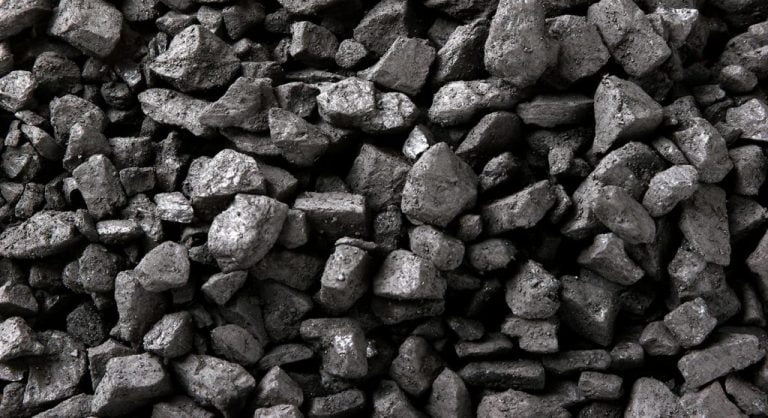
Coal piling up in Europe

0

Stockpiles of coal are surging at some of Europe’s largest ports as utilities from Germany to Spain are increasingly favouring cleaner gas in power generation.

Reserves at ports in Rotterdam, Amsterdam and Vlissingen last week rose to their highest levels since July.

The uptake after the summer has slowed because of mild weather so far this autumn. Crashing natural gas prices have also made it more attractive for utilities to burn the fuel, just as solar and wind continues to eat into the overall share of fossil fuels.

The latest statistics is yet another sign of how energy economics is supporting nations weaning themselves off the dirtiest fossil fuel to curb emissions to slow climate change. For most of this decade it was more profitable to burn coal in Germany, but that relationship was turned on its head early this year because of a glut of gas.

“With the flood of gas in the global markets, it has made it harder for coal generators to compete economically against gas,” said Joe Aldina, head of coal analytics at S&P Global Platts in New York.

Coal inventories at the three ports on September 16 stood at 6.5 million tons. At the same time, water levels at Kaub on the Rhine fell to their lowest since December. The river is a vital transport route for barges to coal-fired plants in Germany.

In the UK, coal-fired power generation fell below 1 percent of the total in the second quarter, the government said on Thursday. That’s the lowest share since the 19th century. Stocks are well-above average levels for the past five years, even if they have declined from multi year highs this spring, said Aldina.

The pace of thermal coal imports should continue to slow and keep stockpiles in check, he said.

In the gas market, a record number of liquefied natural cargoes to Europe this year, coupled with stable flows from both Russia and Norway helped fill up storage levels much earlier-than-usual this autumn. Benchmark prices have plunged almost 60 percent in the past year.

“European coal burn is at a very low level because of ultra-low gas prices,” said Hans Gunnar Navik, a senior analyst at StormGeo AS in Oslo.

Although coal for 2020 has been buoyed by recent macro events ranging from French nuclear supply risks to surging oil prices after the recent attack in Saudi Arabia, the benchmark contract has declined 22 percent this year.

“With these issues abating, the market is losing its once supportive drivers and reverting back to its supply and demand fundamentals,” Hui Heng Tan, a coal analyst at Marex Spectron Group, said by email.  — Bloomberg.

RioZim closer to 2 400MW power deal

0

RIOZIM will sign an engineering procurement and construction contract (EPC) with Power China for the first phase of its 2 400 Megawatts (MW) Sengwa Thermal Power Plant next month, a highly placed company director has revealed.

The coal fired plant, to be constructed in Sengwa, Gokwe North, will be built in phases starting with a 700MW power station and coal mine with an annual production capacity to supply around 300 million tonnes for power generation.

Business Weekly has it on good authority that RioZim intends to start canvassing for project finance among the banks by the beginning of the new year.

No comment could, however, be obtained from RioZim chief executive officer Bheki Nkomo.

RioZim’s Sengwa coal fired power plant project comes at a time Zimbabwe is facing acute power shortage, which has spawned rolling power cuts, disrupted economic activity and forced consumers to use expensive alternative options including power generators.

Several milestones have already been achieved since the Zimbabwe Stock Exchange (ZSE) listed multi-commodity miner signed an exclusivity agreement with Sino hydro’s electrical sister-company in September last
year.

The parties have concluded technical designs for the power station, 110 kilometre water pipeline from Kariba Dam, a coal mine and residential town for mine employees, with US$5 million having already been expended on the project.

Further, RioZim has also received the technical report on the project, which was prepared by Power China and will be evaluated by the company’s own technical people.

A power grid impact assessment has also been concluded, with recommendations made for a US$22 million substation to be built in Chakari  area near Kadoma.

Next key steps entail RioZim energy unit, Rio Energy, concluding a power connection agreement with Zimbabwe Electricity Transmission Distribution Company (ZETDC), setting up a joint project implementation team with ZETDC and concluding financing arrangements with Power China.

Concurrent with the construction of the power station will be the installation of 400Kva transmission line from Sengwa Power Station to Chakari, which will have a new substation build to avoid overloading the one at Selous.

“But also important is the fact that Power China wants a power demand analysis at a national and regional level to see if there really is effective demand and they have allocated US$1 million for that,” the source revealed.

South African firms with expertise in this field are already being considered for the job.

“The power demand analysis should start by October and be concluded by December to allow RioZim to be in front of bankers for finance by January,” the source said.

They want to see who the buyers of the power will be and whether they can pay in foreign currency needed to recoup the investment into the project.

“They will put US$1,4 billion and want to know who want the power,” the source said.

RioZim is also pushing for Special Economic Zone (SEZ) status for the Sengwa project, which will allow investors to consider setting up operations in the cotton producing area and to pay for the power in hard currency.

The company is targeting investors interested in the cotton value chain such as textiles given the area’s cotton producing potential, abundance of land and water.

“Our attraction is the SEZ, we want companies to come and manufacture, create jobs and export into the region in order to pay for the power in foreign currency.”

Power situation in Zimbabwe 

Zimbabwe is currently facing an acute shortage of power on the back of significantly low Kariba Dam water levels following the drought experienced in the dam’s catchment area.

At peak of demand, Zimbabwe requires 1 800MW, but can only manage just under 1 000MW due to constrained capacity at the major power plants; due to either climate or resource limitations.

The Zambezi River Authority, which administers the affairs of Kariba Dam, has restricted generation at 1 050MW rated Kariba, Zimbabwe’s largest power plant, to 358MW. The country’s other major power plant, Hwange Power Station, which has rated capacity of 920MW but manages about 550MW at best, faces reliability issues due to old age.

Zimbabwe and Zambia, which both face acute power shortages due to reduced output at the shared Kariba Dam, are working together to develop the 2 400MW Batoka George hydro scheme whose power will be shared equally.

Three other small thermal power plants; Bulawayo, Munyati and Harare, which average 100MW, have been de-commissioned pending re-powering programmes to reboot their productivity_Business Weekly

Zimplats records slump in production

0

Zimbabwe’s largest platinum producer Zimplats recorded a 36,1% slump in production volumes to 415,72kg in August as rising inflation, coupled with power cuts and foreign currency shortages, took a toll on the extractive sector, it has been revealed.

Zimplats’ production in the first eight months was pegged at 5 230,584kg.

The Impala Platinum Holdings (Implats) subsidiary retained US$150,9 million and US$98 million respectively from platinum sales.

Figures, however, indicated that Zimplats was getting a lot of value from other metals that form part of the platinum group of metals (PGMs), particularly palladium and rhodium sales.

Zimplats recently put its US$23 million refinery project on hold citing lack of a clear government road map on the mineral beneficiation policy.

“The SMC Base Metal Refinery refurbishment project remains on hold pending finalisation of the national beneficiation road map.

“The project total expenditure as at 30 June 2019 was US$23,6 million,” the company said in statement accompanying its year-ended June 30 results.

The Australian Stock Exchange (ASX)-listed miner was upbeat about the future despite the economic challenges facing Zimbabwe. Its shareholders continue to inject more capital into the company.

“The group spent a total of US$115 million in the full year-ended 30 June up from US$135,3 million spent on capital projects (stay in business, replacement mines and expansion projects) during the year compared to US$135,3 million spent in 2018,” the company added.

Zimplats said it had successfully navigated Zimbabwe’s turbulent currency market because most of its revenues were in foreign currency.

“Revenue is generated from sales of platinum group metals. We traced, on a sample basis, payments received in US$ to the relevant bank statements, noting no material exceptions,” the company said.

“We considered factors impacting the operating subsidiary’s access to foreign currency by inspecting relevant exchange control regulations and underlying agreements and obtained an understanding of the underlying terms and conditions.

“We found management’s conclusions to be reasonable.

“We inspected the expenditure disclosed for the operating subsidiary and noted that the operating subsidiary transacted using a combination of United States dollars, bond notes and real time gross settlement (RTGS).

“(We looked at) underlying agreements and noted that all long-term debt and borrowings were denominated in US$.”

Zimplats said the scrapping of the Indigenisation and Empowerment Regulations was expected to attract more players into the mining sector.

Source: The Standard

Govt to address miners

0

Government has made a commitment to address the multiple challenges affecting mining companies, which have led to a significant drop in revenues from mineral sales in the first half of the year.

This emerged after an inter-ministerial breakfast meeting held in the capital last week.

The meeting was attended by the Chamber of Mines of Zimbabwe; the Minister of Mines and Mining Development Winston Chitando; Finance and Economic Development Minister Professor Mthuli Ncube; Minister of Power and Energy Development Fortune Chasi; Industry and Commerce Minister Mangaliso Ndlovu; Information and Broadcasting Services Minister Monica Mutsvangwa and senior Government officials.

Power shortages, fuel supply bottlenecks and foreign currency retention thresholds are making it difficult for miners to increase production.

Speaking after the meeting, Chamber of Mines of Zimbabwe president Ms Elizabeth Nerwande commended Government for its undertaking.

“It is gratifying that Government has pledged to address the issues we raised, which are impacting negatively on mineral production. The challenges require concerted efforts by all stakeholders, a meeting of minds in the interest of the nation, as the mining sector contributes the bulk of the foreign currency earned and is the largest sectoral contributor to the gross domestic product,” said Ms Nerwande.

Miners are unhappy with foreign currency retention ratios of minerals such as gold, which are currently pegged at 55 percent.

There are fears the current policy is driving mining houses to the parallel market.

Gold deliveries to Fidelity Printers and Refiners fell to 13,2 tonnes in the first six months of the year from 17,3 tonnes a year ago.

Source: Sunday mail

US Issues Withhold Release Orders on Zim rough diamonds

0

THE United States Customs and Border Protection (CBP) issued five Withhold Release Orders (WROs) one of which are our own Zimbabwe Diamonds.

The CBP press release reads as follows:

U.S. Customs and Border Protection (CBP) issued five Withhold Release Orders (WROs) covering five different products, imported from five different countries yesterday, September 30. This action was based on information obtained and reviewed by CBP that indicates that the products are produced, in whole or in part, using forced labour.

“A major part of CBP’s mission is facilitating legitimate trade and travel,” said Acting CBP Commissioner Mark Morgan. “CBP’s issuing of these five withhold release orders shows that if we suspect a product is made using forced labor, we’ll take that product off U.S. shelves.”

Under U.S. law, it is illegal to import goods into the U.S that are made wholly or in part by forced labor, which includes convict labor, indentured labor, and forced or indentured child labor. When sufficient information is available, CBP may detain goods believed to have been produced with forced labor by issuing a WRO. Importers have the opportunity to either re-export the detained shipments at any time or to submit information to CBP demonstrating that the goods are not in violation

The Forced Labor Division within CBP’s Office of Trade leads agency enforcement efforts prohibiting the importation of goods made using forced labor. CBP receives allegations of forced labor from a variety of sources, including from the general public.

“CBP is firmly committed to identifying and preventing products made with the use of forced labor from entering the stream of U.S. Commerce,” said Brenda Smith, Executive Assistant Commissioner, CBP Office of Trade. “The effort put into investigating these producers highlights CBP’s priority attention on this issue. Our agency works tirelessly behind the scenes to investigate and gather information on forced labor in global supply chains,” she said.

The following WROs are effective immediately:

  • Garments produced by Hetian Taida Apparel Co., Ltd. in Xinjiang, China; produced with prison or forced labor.
  • Disposable rubber gloves produced in Malaysia by WRP Asia Pacific Sdn. Bhd.; produced with forced labor.
  • Gold mined in artisanal small mines (ASM) in eastern Democratic Republic of the Congo (DRC); mined from forced labor.
  • Rough diamonds from the Marange Diamond Fields in Zimbabwe; mined from forced labor.
  • Bone black manufactured in Brazil by Bonechar Carvão Ativado Do Brasil Ltda; produced with forced labor.


Investigations may be initiated a number of ways, including news reports and tips from either the public or trade community. CBP may also self-initiate an investigation into the use of forced labor in any given supply chain.

“CBP works extensively with our stakeholders, the media, and private sector businesses to gather information on forced labor in global supply chains and educate importers on U.S. compliance standards.” said Todd Owen, Executive Assistant Commissioner, CBP Office of Field Operations, “And we encourage the trade community to know their supply chains to ensure goods imported into our country are not produced with forced labor.”

Farmers grabbing mining concessions in Mutare

0

Licensed miners are being stopped from Mining by farmers with latter disguising that there is no miner-farmer consent yet they will eventually start mining leaving the land in complete distress, Mining Zimbabwe has learnt.

By Rudairo Mapuranga

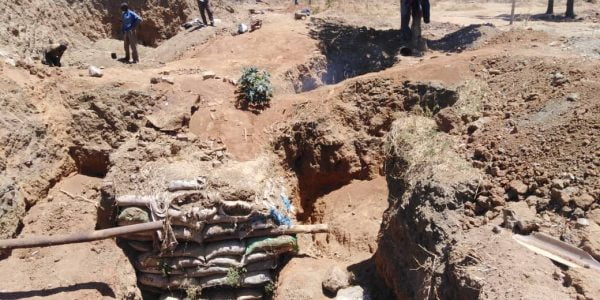
According to the distressed miners who spoke to Mining Zimbabwe, farmers who are mainly war veterans are abusing their position in society by grabbing mining claims near their farms saying that the Mining operations are disturbing their farming.

These farmers are also said to be turning their farms into mines without seeking permits from the Ministry of Mines.

“Farmers are turning farms into Mines without seeking permission from the Ministry and Miners are stopped from mining by farmers who say they are being disturbed from farming,” said one miner.

Mining Zimbabwe has learnt from miners that, it is increasingly becoming difficult for miners to get letters of consent from farm owners to be allowed to get licences on farms since the farmers will be eyeing to take over the Mining concessions the moment they know there are minerals on their farms.

“It is very hard for miners to get a letter of consent from farm owners to be allowed to get a licence on a farm of less than 100ha,” they said.

The miners have therefore called on relevant authorities to come on board and help with the situation.

The miners have said that unsafe mining methods are being used by farmers and gold leakages are on the increase.

“We wonder were the gold task force, Police, EMA, Ministry of Mines and lands, Mutasa rural district council are when there is a lot of gold leakages and land degradation going on,” they said.

The miners also say that the farmers are not arrested by law enforcement agents despite them reporting on several occasions.

“Is our law there to protect certain individuals, these farmers are not being arrested yet it is happening in broad daylight?” they said.

Unki to under-go ‘Responsible Mining’ Audit

0

Unki Platinum Mine will be the first mine in the world to subject itself to an independent audit under a ‘Standard for Responsible Mining’ initiative. This is partly in response to demands by customers who want to make sure they are buying minerals or metals that are untainted by environmental and social concerns.

Environmental, social and governance issues (ESGs) are high on the corporate agenda these days, not least in the mining sector. In southern Africa, the industry relied for decades on a ruthless and racially exploitative model of cheap migrant labour and predatory capitalism that explains much of the union militancy that is seen today.

So it is perhaps a welcome sign that a platinum mine in the region the Unki operation in Zimbabwe run by Anglo American Platinum (Amplats) will be the first to undergo an independent audit to see if it meets the “Standard for Responsible Mining.”

This standard really a set of standards has been developed by the Initiative for Responsible Mining Assurance (IRMA), a nonprofit group.  Daily Maverick.

Kitsiyatota artisanal miners’ operations a farmer’s thorn in the flesh

0

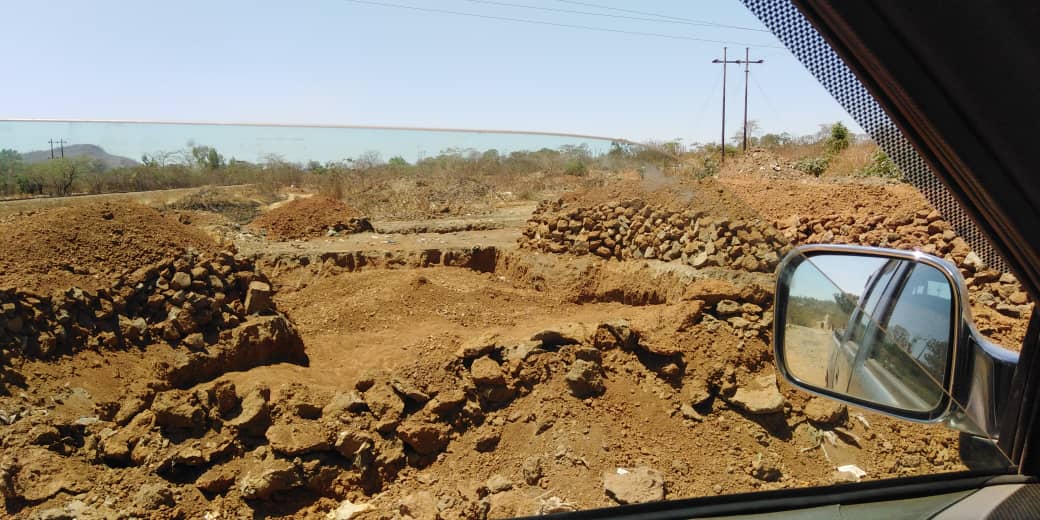
Following the portfolio committee of mines and mining development held on Friday the 27th of September in Mash central province, the artisanal mining operations are proving to be a great risk to the agricultural practices conducted in this region. The mining operations are not only destroying the farming lands but they are also causing river siltation, thereafter jeopardizing the farmers’ irrigation process.

Mirirai Melissa Ngoya

Speaking to Mining Zimbabwe, Mr G Dengu from the Bindura farmers association said, “artisanal and small scale mining activities are leading to Mazoe river siltation which is, therefore disadvantaging the irrigation scheme as farmers are no longer able to access enough water.”

He added on saying, “it is imperative to note that not everyone is interested in mining activities, hence the government must intervene and set up a system of control which will benefit both the miner and the farmer.”

Mr Dengu expressed his concerns, if not his disappointment at the fact that EMA has failed to control these informal mining activities that have proven to be a menace in the agricultural industry.

“It is sad that EMA has not yet taken measures to curb river siltation which is being caused by artisanal and small scale miners.”

The distressed farmer further said that water is being contaminated with chemicals that are harmful to the crops and this is quite unfair for them because they pay in order to access water for irrigation.

Land degradation in progress

“We are seeing the artisanal miners’ operations as a threat in our agricultural sphere since they are not considering that we share the same land and water bodies hence our operations must complement each other.”

Due to the devastating climatic changes, farmers are opting for the irrigation scheme hence relevant authorities must implement certain policies that will not result in the clash of these two industries.

“Agriculture and the mining sector are the major economic boosters in Zimbabwe thus, their operations must be in support of each other”, said Mr Dengu.

He further on indicated that when setting up the budget for 2020, they must consider setting aside funds for river de-siltation such that they will yield significantly.

MaShurugwi teargas and injure dozens in Matopo

0

A notorious group known by their monicker as “Mashurugwi” stormed Star Mine in Matopo, teargassed mine workers beat them up and left them for dead in a 15 metres deep trench, Mining Zimbabwe has learnt.

Rudairo Mapuranga

According to Matopo Gold Miners Association chairperson Rev Sifelani Moyo, the incident happened early hours of Sunday with the group of miners storming the mine beating up the workers after throwing tear gas at them.

The workers were then rounded up and thrown into a trench in an attempt to end their life.

“The mine was attacked in the early morning with most of the employees teargassed and beaten up and then thrown down a trench with a 15m depth and for dead,” said Rev Moyo.

Moyo, however, said that no deaths have been reported yet with all the employees coming out of the trench alive after rescue mission with the majority sustaining serious injuries.

“Fortunately there are no deaths but some sustained serious injuries,” Rev Moyo said.

The “MaShurugwi” according to Moyo were many in number and therefore managed to get away with mining equipment, welding machines, fuel, pumps and ten tonnes of gold ore.

“The criminals were in numbers and looted mining equipment, welding machines, fuel, pumps and about ten tonnes of gold ore,” he said.

Moyo also urged the police and relevant authorities to work together with miners in making sure that these criminal elements in the mining sector are brought to book.

“I call upon the various stakeholders especially the police and miners to put heads together and help bring such criminals to book because it is not long till we lose innocent hardworking lives,” Moyo said.

“MaShurugwi” are becoming a treat to the country security, experts have predicted that if they are not curbed now, there might be a creation of a terrorist group.

Gweru chrome smelter targets US$100 million export earnings

0

GWERU-based Chinese chrome smelter, Jinan Corporation, targets to increase its annual export earnings to US$100 million and creating additional jobs through construction of four more furnaces at its Almid plant.

The company operates five furnaces and will be commissioning a sixth low carbon unit before end of this year. 

Jinan Corporation is one of the top foreign currency earners in Zimbabwe, grossing at least US$25 million from ferrochrome exports.

Speaking during a media tour of the plant on Friday, Almid deputy general manager, Mr Zhou Zhengqiao, said funding for the four furnaces was already available through a grant from the Chinese government.

“We were granted funding by the Chinese government to establish 10 furnaces and right now we have five furnaces online and we expect to commission the sixth furnace by the end of this year,” he said. 

“After this we can generate US$100 million per annum and create 1 500 direct jobs. Our strength is that we have years of experience, sufficient funding, efficient technology and 10 000 hectares of chrome claims.”

Jinan Corporation has a joint venture with Zimbabwe Alloys where it processes ferrochrome slags sourced from the now defunct giant ferrochrome exporter.

“We have a joint venture with ZimAlloys where we use modern technology to process four million tonnes of slag, which accumulated there in the past 14 to 16 years. We have achieved what others could not do in the past decades,” said Mr Zhou. 

“We generate US$25m per annum and most of the processed slag we use it as construction material.”

He also said the company was constructing three chrome ore plants, with two of the plants set to be commissioned soon while work on the third plant was underway. 

Mr Zhou added that the company was planning to construct a machinery manufacturing plant on site to produce spare parts.

“We want to do our own machine manufacturing where we are going to produce 70 percent of spare parts on our own. Currently we are importing most of the spare parts from China, which costs us a lot and uses foreign currency. To save forex, we need to manufacture our own spare parts,” he said.

Jinan Corporation exports low and high carbon ferrochrome to South Africa, South America, Europe and Asia. The company, which was established in Zimbabwe in 2008, is a subsidiary of Sichuan Yiming Investment Corporation of China_The Chronicle