China’s Tsingshan Holding Group has expanded its plans for a steel plant in Zimbabwe to include a power plant and a lithium concession, Zimbabwe’s Mines Minister Winston Chitando said on Tuesday.
President Emmerson Mnangagwa’s government is trying to woo foreign investors, especially in mining, as part of efforts to revive an economy that suffered in the later years of Robert Mugabe’s rule.
Tsingshan signed a $1 billion outline agreement to build a 2 million tonne-per-annum steel plant in Zimbabwe in June last year.
Its original agreement included chrome, nickel, iron and coal concessions, but the new deal allows it to build a 600-megawatt power plant in two phases as well as to mine lithium.
Tsingshan’s subsidiary, Afrochine, already has a ferrochrome operation at Selous, 85 kilometres west of Harare.
“The Memorandum of Understanding (MoU) signed today expands the scope of the original MoU,” Chitando said at a briefing attended by Mnangagwa, his two vice presidents and Tsingshan executives led by Chen Shansong.
Chitando said Tsingshan now aimed to produce 1 million tonnes of ferrochrome for local use and for export as part of the project, versus an initial target of about 550,000 tonnes of ferrochrome for local use only.
Tsingshan will also explore the viability of upgrading Zimbabwe’s rail link to Mozambique’s Beira port, Chitando added._Reuters
The Zimbabwe investment environment has been coupled with a lot of issues ranging from mistrust between Government and investors (mostly foreign) emanating from transgressions of the past.
This comes out from how Government treated investors in the past particularly during the land reform programme and the consolidation of diamond operations in Manicaland. These actions therefore have been sending a negative signal to several investors. However some of these things are now myths considering efforts being made President Emmerson Mnangagwa and his new dispensation under the theme “Zimbabwe is open for Business.”
However there are 10 myths that have proven to be a challenge as Government works towards creating an all inclusive investment climate in the mining sector.
(1) The Indigenisation Policy
Zimbabwe in the past 10 years was running with the Indigenisation and Economic Empowerment policy which gave Zimbabweans the right to take over and control many foreign-owned companies in on a 51-49 percent ratio. This law has been a massive impediment to investment in mining considering the amount of capital required in mining only for an investor to wake up 49 percent share of that investment. The law has remained a challenge up until recently that Government decided to scrap the legislation and it now only applies to the diamond and platinum sectors.
So the scrapping of the legislation still has not sunk in most investors but the law is no longer in existence for multiple sectors but it still remains a myth that Zimbabwe has an existing repressive indigenisation law.
(2) Property rights violations
Coupled by how Government conducted the land reform which saw white farmers loosing property worth billions of dollars, the Zimbabwe investment climate was deemed toxic all over , and this attitude by investors also cascaded to the mining sector.
There is a general belief that Zimbabwe has no respect for property rights and all they need is the money from the investor and once that money is invested, immediately the respect for property rights vanishes as well.
The situation was also exacerbated by how Government grabbed Shabanie and Mashava Mines which belonged to local businessman Mutumwa Mawere. The situation was also made worse when Government lodged a hostile takeover of diamonds operations in Manicaland when it decided to be the sole miner in the area. A lot of mining companies mostly Russian and Chinese lost their operations.
(3) Difficulties in dividends repatriation
Most investors have been experiencing challenges in repatriating their dividends not just in the mining sector but in the wider economy in general.
To date arrears in dividends repatriation are running into billions and that fact has seen most investors seeing Zimbabwe as unattractive investment destination. Most companies have since engaged the RBZ in getting sovereign guarantees for their dividends to foreign shareholders. But the situation has since improved but it remains a misconception that repatriation of dividends is a challenges.
(4) Favouritism towards Chinese investors
There is a general misconception that investing in Zimbabwe, someone has to be Chinese. When Zimbabwe had a fallout with its Western counterparts, former President Robert Mugabe launched what was dubbed the Look East Policy. This saw an influx of Chinese companies invading the local mining sector mainly in chrome and diamonds. Chinese generally are aggressive in nature , and in this case they came in with massive investment which somehow sent a message that they were in Zimbabwe for business. The influx of Chinese therefore somehow painted a picture that maybe Government had a bias towards Chinese investors but that has not been the issue considering that China is the second largest economic super power that has since identified Africa as the new economic frontier, with Zimbabwe among the horizons. Therefore it remains a misconception that Zimbabwe favors Chinese but investment in mining in Zimbabwe remains open to any nationality.
(5) Mining investments only for foreigners
In addition there is also a general misconception that investing in mining in Zimbabwe remains something that can only be done by foreigners because of the huge capital demands. This misconception has seen many locals failing to venture into the multi-billion dollar industry out of fear.This therefore has seen many locals preferring to undertake small scale ventures. But in the fourth industrial revolution it is critical that locals are involved in the mining sector ,also on huge capital project. Mining should be for both local and foreign investors.
(6) Corruption as the only way to get mining rights
The resource curse is a paradoxical situation in which countries with an abundance of non-renewable natural resources experience economic stagnation and lack of development. And in most instances corruption because the order of the day.
Zimbabweans have become accustomed to announcements of “mega deals” over the years that never come to fruition. The opaque nature of the deals has been a breeding ground for corruption and looting.
The opaqueness of these deals has to a greater extent bred a misconception among investors that corruption is the order of the day and that for one to get mining rights has to pay a bribe.
(7) Zimbabwe labour laws draconian
Zimbabwe is open for business has become a common phrase in Zimbabwe. Events leading to the ushering in of the new dispensation in Zimbabwe has introduced these phrases.
There has been a positive vibe and commitment to invest in the country by big organisations. One of the major setbacks, thus being an impediment to quick investment into the country by investors, is the Zimbabwean labor laws.
The laws are rigid, restrictive to investment and they turn to be more favorable to the employees. This is an aspect that scares away many prospective investors.
Here, it is easy for an employer to acquire cheap labour, but it is not the case with the employers when they want to get rid of excess labour in their organisations.
Therefore there is a myth that labour laws in Zimbabwe are rigid but there are efforts being made at the moment by Government to adress issues around labour laws.
(8) Zimbabwe labour too expensive
There is a myth that Zimbabwe labour is too expensive and this has seen out Asian counterparts Chinese opting to bring everything including labour whenever they come to invest in Zimbabwe.
Zimbabwe’s ability to attract foreign investors is however being frustrated by high cost of labour. Comparing minimum wages, Zimbabwe has one of the highest labour costs in the region, second to South Africa.
Given that Zimbabwe’s productivity per unit of labour compared to other countries is low, it implies that labour costs are a major cost driver which affects the country’s competitiveness in the eyes of investors.
(9) Erratic power supply
There is still a misconception that Zimbabwe still faces erraric electicity supplies and high cost of power, a situation which has seen most investors shunning mining investment in Zimbabwe.
In terms of power supply, the country once faced an acute shortage of electricity that resulted in frequent power outages. This was a result of subdued power generation caused by inefficiencies in the running of thermal power stations, also associated with ageing equipment and outdated technology.
This development rendered commercial and industrial activities less competitive as companies resorted to more expensive alternative power sources such as diesel generators. But this is now a thing of the past and Zimbabwe right now has better electricity supply compared to South Africa following the commissioning of Kariba South Hydro extension.
(10) High taxes
Another misconception is that Zimbabwe has a rigid and painful tax regime. Zimbabwe’s tax regime is regarded as more costly and disadvantageous to businesses in relation to comparative countries, with the exception of Mozambique.
A medium-size business can expect to pay 35,3 percent of its commercial profit, which is about five percent higher than what a similar company would pay in South Africa (30,1 percent), twice as much as what would be expected for a similar company in Zambia (15,1 percent) and about 10 percent higher in Botswana at 25,4 percent.
This has proven to be an impediment to investment but government is currently working on relaxing the tax regime as it seeks to attract more investors across the whole investment front.
This article first appeared in the APRIL ISSUE of the Mining Zimbabwe Magazine
GOVERNMENT should expedite implementation of the “use it or lose it” concept as announced by President Emmerson Mnangagwa so as to unlock new economic opportunity and create more jobs, small scale miners have said.
They said the President’s directive was important as the mining sector was one of the key economic pillars and a major foreign currency earner.
During a recent youth indaba in Harare President Mnangagwa said mining companies holding on to claims should either use them or risk losing them to the State even if they are paying fees to keep them.
He said there were some conglomerates that have been holding on to mining claims for more than 60 years, thereby denying new players an opportunity to venture into the mining sector.
The news came as sweet music to the mining sector players who hailed President Mnangagwa’s bold position as progressive.
Zimbabwe Miners’ Federation (ZMF) president, Ms Henrietta Rushwaya said implementation of the “use it or lose it” policy will assist in improved production targets going forward hence need to operationalise it soon.
“Certainly nothing can stop us from meeting our targets if we get enough Government support. It is high time Government walks the talk by factoring in the issues of the use or lose it policy. The President should be hailed for such a move but the implementation process should also be favourable. We don’t want a situation where the concept will be abused to benefit a few,” she said.
Ms Rushwaya said there were some big mining companies that have been holding on to mining claims for many years for speculative purposes with no production going on.
“We have areas which have been held on for the past years for speculative purposes. If a conglomerate has been holding on to mining claims since 1930 for speculative purposes, let them be given to small scale miners, to our youth artisanal miners who do not have somewhere to carry out activities. That way we would have eradicated unemployment, we would have eradicated illegal mining activities as well as promote safe mining methods,” she said.
Young Miners’ Federation co-founder and president, Mr Payne Kupfuwa said the move by President Mnangagwa should also benefit youths in mining who have been neglected for long.
“Indeed we are in total support of the move by the President but we are saying it is time youths in mining benefit from such a move. We have been neglected for a long time. As youths it’s high time we owned our own claims and not work for our parents or wait to be employed. I think it was not by coincidence that President Mnangagwa announced this during a youth indaba, it should tell you that he cares about the youths and we are all ready to accept the challenge and deliver,” said Mr Kupfuwa.
The pronouncement came as gold deliveries in the first quarter of the year to Fidelity Printers and Refiners (FPR), took a 10 percent knock compared to the same period last year.
Deliveries in the first three months of the year totalled 6,5 tonnes, down from 7,3 tonnes delivered during same time last year.
The decline could dent Fidelity’s 2019 target of a record 40 tonnes, which was set on the back of record breaking deliveries of 33,2 tonnes last year.
Of note however, on the first quarter statistics, is the continued dominance of small scale miners over their primary producers with 64,6 percent of the deliveries having come from the former most of whom rely on rudimentary mining methods._The Chronicle
GOVERNMENT yesterday signed an investment deal worth more than $5 billion with a Chinese steel manufacturing giant, Tsingshan, for the setting up of a new steel plant in Mvuma and to bankroll a number of mining activities in the country.
The deal is set to create at least 30 000 jobs.
Tsingshan and Zimbabwe signed a memorandum of agreement, which served as an addendum to an initial agreement signed in June last year between the two parties.
Mines and Mining Development Minister, Winston Chitando and the chairman of Tsingshan Mr Chen Shangsong, signed the documents as President Mnangagwa and other senior Government officials witnessed.
Briefing the President on the development, Minister Chitando said the first phase of investment will see the injection $2 billion.
“The initial phase is valued at $2 billion and the value for the second phase, as the projects are implemented, will depend largely on the feasibility studies which will be carried out, but we are looking at between $5 billion and $10 million.
“We are looking at employing 20 000 for ferrochrome project and another 10 000 on the other projects, giving us a total of 30 000 jobs,” he said.
The steel manufacturing plant, the Minister said, would require significant increase in key feed stock minerals namely iron ore, nickel and coal.
To that end, Government has allocated the company special mining rights.
Since June last year, Minister Chitando said, Tsingshan has made significant progress in implementing the deal.
“In terms of the MoU signed around June last year, the Zimbabwean Government committed to providing resources to Tsingshan in the form of chrome, nickel, iron ore and coal resources.
“Since then, Tsingshan has concluded the expansion drive of 100 000 tonnes of ferrochrome at the Selous plant.
“It has started resource evaluation at the coal special grant in Hwange. It also started resource evaluation at the special grant in Mvuma area.
“Conclusions in terms of the company’s granting of nickel concessions were done,” said Minister Chitando.
The minister said the initial project is set to establish a two million tonne steel facility in the Mvuma area, of which one million tonnes will be carbon steel and the other 1 million tonnes being stainless steel.
Minister Chitando said yesterday’s MoU expanded scope of the original agreement in a number of respects.
“The initial MoU targeted the production of ferrochrome specifically for consumption in the Mvuma area, but it is now targeting the production of a million tonnes, which is for both local consumption and for export.
“The initial MoU targeted the production of coke specific for consumption in the Mvuma area, but the new one is targeting consumption in Mvuma and for export worldwide.
“In addition to the conversion of coal to coke, the MoU also provides for the research for Tsingshan to produce chemicals from part of the coke to be produced,” said Minister Chitando.
He added that the MoU provides for the construction of a 600 megawatts power plant in two phases of 300 megawatts each.
In terms of the MoU, Tsingshan will also be involved in lithium mining and value addition.
They also agreed to revamp the railway system to transport the products.
“The MoU also includes Tsingshan looking into the possibility of working with the Government and other investors in exploring the upgrading of the railway to the port or the construction of a new railway line, whichever will be established to be more economically feasible.
“It also provides for the establishment of a dedicated port along the coast which will handle production coming from various operations in Zimbabwe,” said Minister Chitando.
Tsingshan chairman, Mr Chen, hailed the Zimbabwean Government for support saying his company intended to invest more in the country._The Chronicle
A DEAL in which Indian firm, Whinstone Enterprises, was set to pour in funding into Lancashire Steel in a joint venture arrangement, has crumbled after the firm failed to follow laid down Government procedure.
The two parties signed an agreement in July last year, with the Indian investor expected to satisfy the much-needed financial obligation, while Lancashire Steel offered labour, skills and equipment.
But soon after Cabinet had approved the deal, the Indians stood accused of taking shortcuts and disregarding the laid down channel of doing things leading in Government suspending the deal.
Industry and Commerce Minister Mangaliso Ndlovu confirmed that indeed the pact had collapsed unless if the company decides to do things the proper way.
“The Government’s position is that the contract is not legal unless and until the company follows the proper way of doing things. They have to do things properly and until they do so there is no deal as of now,” said Minister Ndlovu.
Although he could not be drawn into discussing the finer details of what went wrong, the minister said the company risks losing the deal totally if they do not put their house in order.
He said Government awaits the company to follow the proper procedure before the deal reaches implementation stage.
“There is no agreement yet so if they are still keen on the deal, Government waits upon them to do things the correct way. Otherwise Government is open for any other suitor depending on the offer. But the doors are still open for the company to follow the procedure,” said Minister Ndlovu.
He, however, assured the nation and Kwekwe residents in particular, not to worry about the collapse of the pact saying Government was more committed to revive industries in the city more than ever before.
“I can assure you that companies, Lancashire in this case, will be back on its feet very soon. Government is more committed than ever before. Recently we facilitated the opening of ZimCoke, which will employ more than 1 000 workers.
“We are more committed than ever before. Kwekwe is an industrial hub and people there should not lose sleep because as Government we have Kwekwe at heart,” said the minister.
Lancashire Steel folded in 2010 after facing operational challenges owing to the demise of Ziscosteel, its major raw material supplier.
The company, which employed about 600 workers at full throttle, has capacity to produce about 4 000 tonnes of steel per month._The Chronicle
The office of Guinean President Alpha Conde is assuming oversight of the West African nation’s state-owned mining company in a move that will hand him more authority over the country’s holdings in some of the world’s biggest bauxite deposits.
The Presidency will take command of Societe Guinneenne du Patrimoine Minier, known by its French acronym Soguipami, from the mines ministry, according to a decree read Friday on state broadcaster Radio Television Guineene. Soguipami holds a 49 percent stake in Compagnie des Bauxites de Guinee and 10 percent of Societe Miniere de Boke, according a summary of the company’s holdings published on its website.
Soguipami also holds a 15 percent stake in AngloGold Ashanti Ltd.’s Siguiri operations.
Conde’s move to exert more control over Guinea’s mining holdings comes after the nation overtook Australia as the largest supplier of bauxite to China, accounting for almost half of the Asian nation’s imports of the aluminum-making ingredient in 2018. Conde is due to step down in 2020 after two five-year terms, but his refusal to address any questions about his succession has fueled speculation he may try to extend his mandate._Bloomberg News
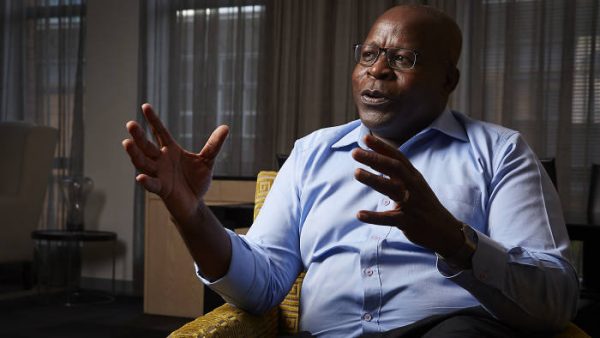
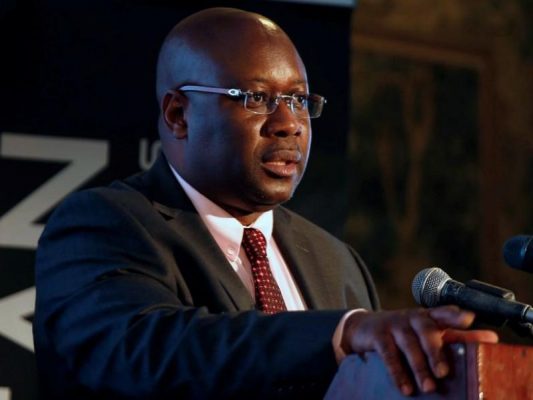
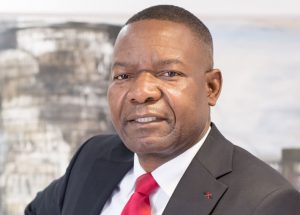
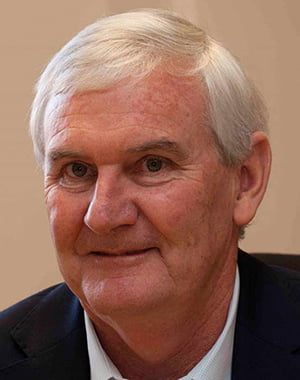
These are the ten most influential individuals in the Zimbabwe Mining Industry in 2019.
(1) Ben Magara
Zimbabwe-born Lonmin Chief executive officer and director Ben Magara has been named among the top 10 most influential men in 2014 by Forbes Magazine. He has remained one of the best exports for Zimbabwe in the mining sector.
Appointed Lonmin boss in July last year at the world’s third-largest platinum mining company, Magara is tasked with improving industrial relations and guiding the platinum miner’s turnaround strategy after strikes last year triggered violence which killed 46 people including 34 strikers shot dead by police in a single day at its Marikana mine.
Magara, who speaks seven languages, has a degree in Mining Engineering from the University of Zimbabwe.
(2) Winston Chitando
Winston Chitando is the current Minister of Mines and Mining Development. He was appointed to his this Ministry by President Mnangagwa in November 2017. His appointment brought hope to the mining sector and to date he has managed to bring forward significant growth in the sector.
Chitando joined Hwange Colliery Company in 1985, and worked for Anglo-American Corporation in various capacities, including Chief Accountant, for 11 years.
In 1997, he became a commercial manager (Mining and Industrial Division) at Zimasco before rising to the position of executive director (finance) for both Zimasco and Mimosa Mining Company (1998-2007).
Winston served as Vice-President of the Chamber of Mines of Zimbabwe from 2008 to 2011 and its President from 2011 to 2013 and Executive Chairman of Mimosa Holdings since April 1, 2013.
He was chairman of Hwange Colliery Company Limited since May 19, 2016. His tenure at its end however was blighted by alleged corruption allegations levelled against him.
(3) Alex Mhembere
Alexander Mhembere, also known as Alex, ACIS, ACMA, MBA, has been the Chief Executive Officer of Zimplats Holdings Ltd. since October 1, 2007. Zimplats is the largest platinum miner in Zimbabwe.
Mhembere has experience in platinum mining in Zimbabwe. He served as the Managing Director of Mimosa Group of Companies Zimbabwe of Aquarius Platinum Ltd until September 30, 2007. Mr. Mhembere has been an Executive Director of Zimplats.
Since taking over at Zimplats Alex has been instrumental in driving the growth of the company into the biggest platinum producer in Zimbabwe.
In addition during his tenure, Zimplats has managed to grow in phases and new mines have since been born at Ngezi operations despite the current economic challenges currently affecting the country.
Alex has also been a champion of community empowerment where the Ngezi community now has earned an urban status while also communities around Zimplats operations have been greatly empowered.
(4) Batirai Manhando
Batirai Manhando who is the current Chamber of Mines Zimbabwe president has been Managing Director at Bindura Nickel since November 2013.
He serves as Interim Group Chief Technical Director of Asa Resource Group Plc (alternatively Mwana Africa PLC) since December 14, 2016, and served as its Chief Technical Officer and Managing Director of BNC from October 6, 2016, to December 14, 2016.
Batirai served as Managing Director of Trojan Nickel Mine at Asa Resource Group Plc until October 6, 2016.
On his achievements, Manhando has led teams in the planning and execution of major projects including six-in-line furnace rebuilds, process upgrades and business turnaround. He is a member of the Southern African Institute of Mining and Metallurgy.
Manhando has also superintended the growth of Bindura Nickel Corporation despite the price conundrum that has been affecting the nickel market.
(6) Elizabeth Nerwande
Elizabeth Nerwande
Elizabeth Nerwande is currently the Head of Corporate Affairs for Mimosa Mining Company. She is also the First Vice President of the Chamber of Mines of Zimbabwe. She was the Executive Director of Consumer Council of Zimbabwe (CCZ) from 1999-2003, CEO for Zimtrade from 2004-2006 and Commissioner General for an Expo in Aichi Japan.
She also a board member at the Zimbabwe Consolidated Diamond Mining Company (ZCDC).
Elizabeth has been a champion of community development by mining companies and this saw Mimosa transforming the face of Zvishavane through various community projects and empowerment programmes. As part of that vision, Mimosa has one of the best football clubs in Zimbabwe, FC Platinum.
(7) Paul Chimbodza
Paul Chimbodza, a board member in lithium miner Prospect Resources is a holder of a BSc Geology Honours degree from the University of Zimbabwe, is an Associate Member of the Southern African Institute of Mining and Metallurgy and is an Executive Director and shareholder of Stonestar Investments, the owners of Dinhidza Vermiculite mine.
Paul has held senior Exploration Geologist and management positions at Rio Tinto, Trillion Resources of Canada and Delta Gold of Australia.
Chimbodza becomes one of the locals to have been awarded concessions to mine oil in the Muzarabani area. His contribution to the mining sector has been huge also after having played a huge role in the growth of Metallon Gold as well being the champion behind Zimbabwe realizing its lithium mining potential.
(8) Steve Curtis
Steve Curtis who is currently driving undoubtedly Zimbabwe’s biggest gold producer, Blanket Mine is a Chartered Accountant with over 30 years’ experience and has held a number of senior financial positions in the manufacturing industry.
Before joining Caledonia in March 2006, he was Director Finance and Supply Chain for Avery Dennison SA and prior to this Financial Director and then Managing Director of Jackstadt GmbH South African operation. Mr. Curtis is a member of the South African Institute of Chartered Accountants and graduated from the University of Cape Town. He was appointed to the Caledonia board in July 2008. Steve was appointed Caledonia’s Chief Executive Officer in November 2014, prior to which he was Caledonia’s, Chief Financial Officer.
The soft-spoken Executive is a man of repute and a point of reference for Zimbabwe mining success stories. Curtis was the first hero of the indigenization policy after his company became the first to implement the policy.
Blanket Mine under his stewardship has been one of the biggest supporters of community development.
(9) Toindepi Muganyi
Toindepi Muganyi is the current CEO of ASA Resources group and managing director of Freda Rebecca. He is also a former Chamber of Mines President. The man has managed to grow his profile to become a voice of reason in the mining sector.
Muganyi during his tenure despite economic challenges managed to transform Freda Rebecca into one of the biggest gold producers in Zimbabwe in the group of the likes of Metallon on an individual mine basis.
(10) Bhekhinkosi Nkomo
Bhekinkosi was appointed as CEO of RioZim Limited on July 01, 2017. He is an alumni of the Harvard Business School after having successfully completed its Advanced Management Program in Boston, Massachusetts.
Bheki is also a registered Chartered Accountant both in Zimbabwe and South Africa and holds a Bachelor of Commerce Accounting Degree from the National University of Science and Technology, and a Bachelor of Accounting Science Degree from the University of South Africa.
Nkomo is a well-rounded senior executive who possesses a strong business and leadership record spanning over twenty years of experience. Prior to his elevation to the role of CEO, Bheki served with distinction as RioZim Limited’s Group Finance Director from 2015 to 2017, during which period he was instrumental in spearheading the implementation of the Group’s expansion strategy which resulted in the Group’s number of operating gold mines growing from one in 2012 to three by 2017 and gold production increasing by more than 350%.
Furthermore, Bheki played a key role in restructuring the Group’s debt which significantly improved the Company’s liquidity, capital structure, and operational efficiency. Bheki also has vast experience in the areas of finance, operations, and strategic planning.
He has also served on various Boards. Currently, he serves on the Boards of RioZim Limited and its various subsidiaries and associates.
Zimbabwe will in coming weeks name two new investors who will develop separate platinum mining projects west of the capital as the country ramps up mining output in an attempt to ease a severe dollar shortage, the mines minister said on Wednesday.
Zimbabwe has the second largest platinum deposits after South Africa and hopes to transform its economy by boosting investment in the mining sector.
Last month, the government said it would scrap the controversial indigenisation law under which foreign companies are restricted to owning only 49 percent of their Zimbabwean operations
Winston Chitando said the two investors would be confirmed in the next few weeks, joining a sector where Anglo American Platinum and Impala Platinum already operate.
Chitando, who was speaking at a function in Mhondoro Ngezi, 100 km west of Harare, where Cypriot Investor Karo Resources was giving an update on its $4.2 billion mining project, declined to give details.
Zimbabwe has been introducing investor-friendly policies as part of President Emmerson Mnangagwa’s ambitions to transform the country into a middle-income economy by 2030.
Last month, the government said it would scrap the controversial indigenisation law under which foreign companies are restricted to owning only 49 percent of their Zimbabwean operations.
The mines ministry is also in talks with the Chamber of Mines about reviewing and streamlining mining taxes to make them more competitive, the president of the industry body said last week.
Chatando said Zimbabwe expected mining export revenues to rise by nearly a third to $4.2 billion this year, stepping towards a target of $12 billion by 2023.
The two new mining ventures would be situated in the Mhondoro-Ngezi platinum belt where Karo intends to start production next year and where Implats has the country’s biggest mining operation, Chitando said.
Phoevos Pouroulis, CEO of Karo, said at the same function that exploration work was ahead of schedule and the company expected to confirm the underground platinum resources by the end of the year.
Pouroulis is also CEO of South African miner Tharisa, which last year bought a 26.8 percent stake in Karo and a majority holding in a Zimbabwean chrome operation.
Zimbabwe’s platinum is found on the Great Dyke belt, which stretches for more than 500 kilometers and contains an estimated 96 million ounces in platinum group metals, including platinum and palladium._Reuters
South Africa’s Petra Diamonds has found yet another big rock at its iconic Cullinan mine, the third coloured diamond over 100-carats since March that has been unearthed at the operation.
It is the third Type II D-colour gem-quality diamond weighing more than 100 carats recovered at Cullinan since MarchThe 209.9 carat, D colour, Type II gem-quality diamond is also the fourth such stone discovered by Petra so far this financial year.
It follows last month’s recovery of a 100.83 carat gem-quality diamond and a previous 6.12 carat Type II blue stone both found at Cullinan.
The company, which recently appointed former gold miner Richard Duffy as chief executive, said the stone would be included in its upcoming sales cycle, along with a 425-carat D-colour Type IIA diamond recovered on March 29.
Petra has been seeking to turn around its fortunes after piling up debt to expand Cullinan, which yielded the world’s biggest-ever diamond in 1905.
Shares in the company jumped on the news and were trading up 4.5% in London at 17.92p by 3:08 p.m. local time._Mining.com
To provide the best experiences, we use technologies like cookies to store and/or access device information. Consenting to these technologies will allow us to process data such as browsing behavior or unique IDs on this site. Not consenting or withdrawing consent, may adversely affect certain features and functions.
Functional
Always active
The technical storage or access is strictly necessary for the legitimate purpose of enabling the use of a specific service explicitly requested by the subscriber or user, or for the sole purpose of carrying out the transmission of a communication over an electronic communications network.
Preferences
The technical storage or access is necessary for the legitimate purpose of storing preferences that are not requested by the subscriber or user.
Statistics
The technical storage or access that is used exclusively for statistical purposes.The technical storage or access that is used exclusively for anonymous statistical purposes. Without a subpoena, voluntary compliance on the part of your Internet Service Provider, or additional records from a third party, information stored or retrieved for this purpose alone cannot usually be used to identify you.
Marketing
The technical storage or access is required to create user profiles to send advertising, or to track the user on a website or across several websites for similar marketing purposes.