Home Blog Page 649

Lonmin urges shareholders to back Sibanye takeover

0

Platinum miner Lonmin does not have sufficient liquidity to fund the new projects needed to avoid shaft closures and job losses, it said on Monday as it urged shareholders to back its proposed takeover by Sibanye-Stillwater.

The London-listed company, crippled by soaring costs and subdued platinum prices, has been cutting spending to conserve cash and retain a positive balance sheet required by conditions of South Africa-based Sibanye’s offer.

However, progress on all fronts has been slow against the backdrop of strikes by South Africa’s Association of Mineworkers and Construction Union (AMCU) in a long-running pay dispute.

AMCU, which has been on strike at Sibanye-Stillwater’s gold operations since mid-November, wanted to extend the strike to at least 11 other companies including Anglo American’s gold and platinum operations, Harmony Gold and Lonmin. However, South Africa’s labour court rejected AMCU’s request this month.

“The challenges facing Lonmin and the industry persist,” Lonmin said in a statement ahead of what is likely to be a fiery AGM in London on Monday.

“This is why your board, recommends the all-share offer from Sibanye-Stillwater.”

Despite “new and prudent measures” to refinance the business with a previously announced $200 million facility, Lonmin said it remains “financially constrained and unable to fund the significant investment required to sustain our business and associated employment in the future”.

Lonmin added that poor production and correspondingly high unit costs have continued in its second quarter this year, largely offsetting the benefits of improved prices of platinum group metals._Reuters

Caledonia seeks to expand exposure in Zimbabwe

0

Gold miner Caledonia Mining is seeking ways to deepen its investment in Zimbabwe even though a currency crisis has dented its earnings and bureaucracy has slowed the company’s purchase of an increased stake.

The end of Robert Mugabe’s rule in 2017 after an army coup led to a rush of excitement that miners would flood in to develop the nation’s mineral wealth.

The end of Robert Mugabe’s rule in 2017 after an army coup led to a rush of excitement that miners would flood in to develop the nation’s mineral wealth

That enthusiasm faded as a severe dollar crunch hobbled business and led to shortages of medicine, fuel and food.

Following violent protests at the start of the year and Zimbabwe’s introduction of a new currency last month, Caledonia Mining’s Chief Financial Officer Mark Learmonth told Reuters the “hot money” had left but said the country was gradually moving in the right direction.

“If you believe things will be better in five years’ time, you have to get in now,” he said.

Caledonia Mining’s main asset is its 49-percent stake in the Blanket Mine, which produced 54,511 ounces last year, a nearly 3 percent fall year-on-year because of lower ore quality.

The mine has been producing for a century barring a temporary shut-down from October 2008 to April 2009 at the height of Zimbabwe’s economic crisis.

Caledonia is expanding production at the mine in southern Zimbabwe and says it is sufficiently confident Zimbabwe will recover from its problems to re-invest on a modest scale.

Bureaucracy

“We’re not talking about a big, producing mine. We’re talking about advanced exploration or brownfield, but with good prospectivity,” Learmonth said. “We plan to redeploy some of the surplus cash to be generated by the Blanket Mine,” he added without specifying figures.

The plan is to stay focused on gold, rather than expanding into other minerals.

Like other miners, Caledonia Mining has been hit by the currency turmoil, which slowed operations because it couldn’t buy equipment. Power shortages also disrupted production.

The Blanket Mine is now expected to reach a target of 80,000 ounces per year in 2022, rather than in 2021, a deadline the company previously thought achievable.

Zimbabwe’s foreign currency shortage worsened after the Reserve Bank of Zimbabwe said last October gold producers would receive 30 percent of their proceeds in U.S. dollars and the rest in local currency, Caledonia said.

Following negotiations between the government and Caledonia and other gold miners, the U.S. dollar percentage was raised to 55 percent and a higher share can be negotiated for specific needs, such as dividend payments.

The currency situation, Caledonia says, is manageable, but bureaucracy is a problem.

Following Zimbabwe’s changes to ownership laws announced last year, Caledonia in November agreed to raise its stake in the Blanket Mine to 64 percent from 49 percent, but does not know when that deal will be completed.

“The impediment is not political, it’s purely bureaucratic,” Learmonth said._Reuters

Lack of good projects puts mining boom at risk

0

After years of suffering, the mining industry is finally somewhat bullish on its own prospects. But senior executives at the Reuters Mining Summit this week reported a pronounced lack of good new projects of the kind that last for decades and make a company’s fortune.

“Trying to discover a new Voisey’s Bay is a needle-in-a-haystack exercise,” said Aaron Regent, chief executive of zinc miner Falconbridge Ltd. FL.TO, referring to Inco Ltd.’s N.TO giant nickel deposit in eastern Canada. “We’re all trying to scale up and get more volume through.”

That sentiment extends across segments of the mining industry, into precious metals as well.

“Discoveries are becoming harder and harder to find,” said Greg Wilkins, chief executive of Barrick Gold Corp. (ABX.TO). “I think the mining industry has less flexibility today than it did five years ago in grade management.”

The mining companies that presented at the summit largely agreed that, in the short term, they are well placed, with facilities to mine and projects to develop. But just beyond the horizon, they say, a much more serious risk lurks.

“The scarcity of good exploration projects is going to become a serious issue three to five years from now,” said Donald Lindsay, chief executive of top zinc miner Teck Cominco Ltd. TEKsvb.TO.

OFF THE PATH

Mining bosses say the future will lead them to places off the beaten path, where international businesses might not ordinarily go except for the lure of riches under the ground.

“I think that most of the good deposits that will come through will come in countries that are not as stable and not as easy to operate in,” said Peter Tomsett, chief executive of gold miner Placer Dome Inc. PDG.TO.

One prime example is the Democratic Republic of Congo, where Phelps Dodge Corp. PD.N says it is close to approval for a deal to develop the vast Tenke Fungurume deposit, site of the world’s largest known deposits of copper and cobalt.

“I think you have to take a little bit of a portfolio approach to it, and implicit in that is if you do lose it all it doesn’t sink the company,” Phelps Dodge CEO Steve Whisler told the summit at the Reuters office in New York.

THE CHINA QUESTION

Executives say new exploration and new production will be crucial to feed China’s ravenous appetite as the country industrializes, meaning more steel for buildings and copper for electrical wire, and as the standard of living for its citizens rises, meaning more gold for jewelry.

“From my view, the production level can’t keep up with the consumption level,” said Bruce Markowitz, president of aluminum company RUSAL North America Corp.

Companies are spending substantially more money in some cases to try to find new deposits to keep up.

“We’ve increased our exploration from around $30 million a year to around $50 million this year,” Inco’s president, Peter Jones, said at the summit.

Others say they are looking, but not necessarily finding much of real interest.

“We keep an active exploration program going in South America, in Canada, in the (United States) and Australia, but as yet we’ve not identified anything that really looks that prospective,” Keith Rumble, CEO of South African platinum miner Implats (IMPJ.J), told the summit by telephone from South Africa._Reuters

Gold gains

0

Gold rose on Monday as investors’ appetite for riskier assets faded on concerns about a potential U.S. recession and decelerating global growth, increasing appeal for the bullion alongside yen and bonds.

Spot gold was up 0.2 percent at $1,316.11 per ounce as of 0422 GMT, while U.S. gold futures gained 0.3 percent to $1,315.80 an ounce.

The metal last week posted its third consecutive weekly gain and rose 1 percent, the most since the week ended Feb. 1.

Investors dumped shares and fled to the safety of bonds, while the Japanese yen hovered near a six-week high.

“Market is in a risk aversion mode. It seems that the data from Friday night, of U.S. and Europe, didn’t come as expected,” said Michael McCarthy, chief market strategist, CMC Markets.

Data on Friday showed that U.S. manufacturing activity unexpectedly cooled in March and businesses across the euro zone performed much worse than expected this month, fanning concerns on global growth.

“If data continues to be as weak as forecast then there is very good chance we could see significant higher gold prices,” McCarthy said, adding that the inversion of yield is a sign of concern.

Yields on benchmark U.S. 10-year treasury notes fell further below three-month rates in Asia, an inversion that has in the past signalled the risk of economic recession. The yield curve inverted on Friday for the first time since mid-2007.

Lower yields reduce the opportunity cost of holding non-yielding gold and weigh on the dollar. A weaker dollar makes bullion cheaper for non-U.S. investors.

Chicago Federal Reserve Bank President Charles Evans said on Monday that it is a good time for the U.S. central bank to pause and adopt a cautious stance, adding that he did not expect any interest rate hikes until the second half of next year.

“Gold is set to make another run for the $1,350 price level that has proved resilient,” OANDA said in a note.

“Volatility fuelled by uncertainty and with plenty of Fed speakers expected to reinforce the dovish rhetoric from the central bank, the U.S. dollar will be limited on the upside.”

Indicating appetite for the safe-haven bullion, holdings in the world’s largest gold-backed exchange-traded fund, SPDR Gold Trust, rose about 1 percent in the previous week.

Investors also raised their bullish wagers in COMEX gold in the week to March 19, the U.S. Commodity Futures Trading Commission (CFTC) said on Friday.

Among other precious metals, palladium slipped 0.1 percent to $1,563 per ounce._Reuters

Artisanal miners insist on levy review

0

SMALL-scale miners continue to lobby Government to review downwards mining levies and fees in order to promote the growth of the sector and its contribution to the economy.

Through their representative body, the Zimbabwe Miners’ Federation (ZMF), miners have been seeking reduction in regulatory levies by margins ranging between 75 percent and 97 percent.

Speaking at the small-scale miners’ conference in Bulawayo last Wednesday, ZMF president Ms Henrietta Rushwaya said the mining levies being charged were discouraging investments and output in the sector.

“There have been quite a number of levies and charges which are being charged by the Ministry of Mines and Mining Development. As ZMF we feel these are still too high,” she said.

“Prospecting licensing requires us to pay $200 and for the registrations we have to pay another $200. 

“We feel this is quite expensive and this should be reviewed downwards. Consequently only 16 percent out of the 30 000 small scale miners have complied and registered and the registration for artisanal miners is yet to happen. 

“We are talking of plus or minus 1,5 million people who need to formally register under the Ministry. And we are suggesting that we pay at least a nominal fee of $50. Most mines have levies and charges which need to be reviewed downwards.”

On the use of explosives, Ms Rushwaya said players in the small-scale mining sector were being charged $1 000. 

She said earlier before the charge was reviewed upwards there were 3 000 registered miners for blasting and handling explosives by the Ministry of Mines and Mining Development.

However, when the figure was increased the sector only had 300 registered miners for blasting and handling but blasting and explosives continue to play a pivotal role in the sector.

Ms Rushwaya said artisanal and small-scale mines were acquiring explosives from the parallel market at a time ZMF was suggesting that a fee of at least $50 be charged for explosives.

“On other related issues, we have the inhibitive custom milling licence, which is now at $5 000 and when the fees were pegged at $2 000, there were 468 registered custom millers nationwide,” she said.

In the past, ZMF has lobbied the Government to peg the custom milling licence at $1 000. Ms Rushwaya also appealed to Government to remove multiple taxes that miners were being charged.

The multiple taxes include those charges levied by the Environmental Management Agency, Ministry of Mines and Mining Development, Rural District Councils and other Government departments._The Chronicle

Government to close gold milling centres

0

THE Government will soon close the majority of gold milling centres dotted around the country on suspicion of under declaration and  also hit hard on truant mining houses owing it a cumulative amount of more than $500 million in unpaid fees as it seeks to curb leakages and boost its coffers.

In an interview with  Sunday News Business on the sidelines of a small-scale forum held in Bulawayo last Wednesday, Mines and Mining Development Deputy Minister Polite Kambamura confirmed the disbursement of a crack Gold Mobilisation team to investigate activities at all the country’s gold centres after suspicions of underhand dealings and failure to account for the yellow metal processed at their plants.

“The gold mobilisation team went around all the provinces and identified some millers who were not declaring their production to Fidelity Printers and also observed illegal mining by some miners. So they will be going around again to find out whether whatever they recommended was done or not and it’s unfortunate that some millers are going to be shut down because they failed to comply. I’m not sure about the numbers but a lot of them, maybe 60 percent of millers,” he said.

Dep Minister Kambamura said most of the gold milling centres failed to produce records detailing the quantities of gold ore delivered to them for processing by miners as well as the number of miners that make use of their facilities, among other irregularities. 

“There are a lot of things that will be happening behind the scenes. So a lot of millers were found wanting. What it means is that a lot of gold is leaving the country through the back door so we want every gramme (of gold) to be accounted for,” he said.

Dep Minister Kambamura said the Government was in the process of giving most of the big mining houses with overdue mining fees a time frame to honour their debts or it would “come hard” on them.

“Currently we are owed about $506 million in unpaid mining fees so we are coming hard and we are going to give them a time frame to pay whether they are going to pay or come up with a payment plan that they will honour and we are not going to take that lightly,” he said.

Dep Minister Kambamura also said it has come to the Government’s attention that a number of large mining houses (names mentioned) were holding onto the country’s mineral resources for speculative purposes. 

“The problem that is happening now is that we are saying we are “open for business” but the whole country is pegged up and there is no activity. For your own information we got some claims, which were pegged in 1924 by Rhodesian companies and have been paying the mine fees . . . so we need to open up the ground if we are to be very productive and serious about opening the country for business in the mining sector. We have to release the ground, either you mine or you lose it,” he said.

Last week President Mnangagwa said mining companies holding onto claims should either use them or risk losing them to the State even if they are paying fees to keep the claims. He said there were some big conglomerates that have been holding on to mining claims for more than 60 years, thereby denying new players an opportunity to venture into the mining sector._The Sunday News

Gvt cushions small-scale miners

0

THE Government has introduced an incentive for small-scale gold producers, which will see them receiving their local currency component above the prevailing interbank market rate.

In an interview with Sunday News Business after a small-scale miners’ forum held in Bulawayo last Wednesday, Mines and Mining Development Deputy Minister Polite Kambamura said following an outcry by miners after the lowering of the foreign currency retention threshold from 70 to 55 percent by Reserve Bank of Zimbabwe (RBZ) Governor Dr John Mangudya in his recent Monetary Policy Statement, the Government engaged the central bank to come up with ways of cushioning the miners.

“Initially there was a lot of noise before we engaged the RBZ Governor. After engagement he did not review the retention figure as such but put an incentive instead of 45 percent being in the ratio of 1:1 he reviewed to 1:3.50. So a lot of miners are happy and they are quiet and we actually expect our March production to improve,” he said.

Deputy Minister Kambamura said in a clear indication of protesting small-scale miners only delivered 20 kilogrammes (kg) of gold to the country’s sole buyer of gold, Fidelity Printers and Refiners (FPR) after the announcement of the Monetary Policy Statement.

“For January things were so bad we had about 1,77 tonnes and a week after the Monetary Policy Statement we received only 20 kilogrammes in February and then we engaged the RBZ Governor who reviewed the rates and at the end of February we received 2,136 tonnes up from 1,77 in January. So a lot of miners are happy with the current complaints being about fuel (shortages), cyanide and explosives (unavailability), which are minor. We will try to chip in and see that they get those consumables,” he said.

Zimbabwe Miners Federation (ZMF) president Ms Henrietta Rushwaya reiterated the Deputy Minister’s sentiments stating that the Government had acceded to the gold miners’ demands in light of coming up with a favourable threshold for the gold delivered by small-scale miners at FPR. 

“Our Government has since seen it fit that they engage us and so far we are quite pleased to say that Government has taken our plea into consideration and all gold producers are actually getting favourable payments for their gold output to Fidelity and special mention goes to the Central Bank especially the Governor for having listened and taken heed of our clarion call with regards to the small-scale mining sector in so far as the 55 percent retention was or is concerned,” she said.

Ms Rushwaya said the small-scale representative body was engaged in talks with Government with regards to the adverse shortage of mining consumables, which are threatening to cripple the sector’s production.

“We are still in the process of engaging Government and last week we had a meeting with the Permanent Secretary in the Ministry of Finance (and Economic Development) with regards to the issuing of duty-free certificates for consumables such as cyanide, mercury and other related chemicals. The issue of import duty is something worth mentioning and as such the Permanent Secretary in the Ministry of Finance has requested us to write to the respective Ministry (Industry and Commerce) presenting our requests and they will also consider whether they can give us a waiver to the taxes that come with the importation of such goods,” she said.

Ms Rushwaya said ZMF was at an advanced stage of obtaining a licence for the importation of fuel as part of its efforts to ensure the availability and undisrupted supplies of the commodity to miners.

“We have actually written to Zera (Zimbabwe Energy Regulatory Authority) as of January this year and we also wrote to the responsible Ministry through their Permanent Secretary Engineer (Gloria) Magombo and we are pleased that as ZMF we are on the verge of getting a fuel import licence and our financial partner, Met Bank has been very handy and as they have managed to help us with the requisite fees needed for the acquisition of a licence. Very soon issues to do with diesel shortages in the small-scale mining sector should be a thing of the past,” she said.

The Government is working on a new set of regulations that would allow holders of free funds to import fuel to augment current supplies._The Sunday News

Chimanimani mine commissioning delayed by cyclone Idai

0

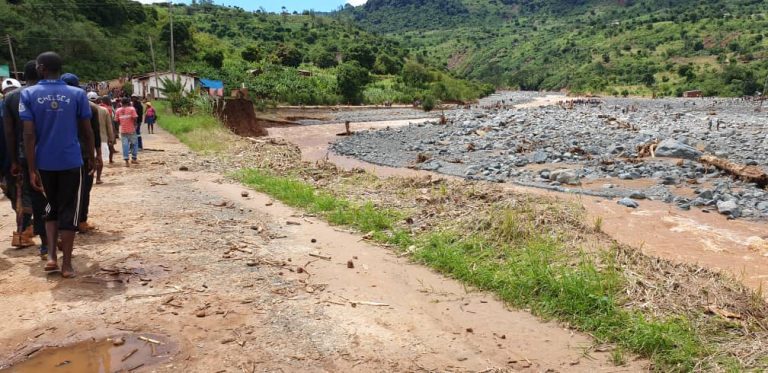
Zimbabwe Consolidated Diamond Company (ZCDC)’s plans to commission a new mine at its Chimanimani operations in the next two weeks has now been pushed back by more than three months owing to the devastation caused by Cyclone Idai, which wreaked havoc in Manicaland province, particularly in Chimanimani and Chipinge areas.

Mining operations at Chiadzwa have also been closed as the mining areas have become waterlogged and inaccessible.

The Cyclone last week ravaged Chimanimani and Chipinge districts, leaving at least 100 people dead and over 100  unaccounted for.

Fourteen employees from the State-owned diamond miner’s Chimanimani operations were marooned for three days before they were successfully evacuated.

The company has since evacuated 50 of its employees, but one is still missing.

ZCDC CEO Dr Morris Mpofu told The Sunday Mail Business last week that the Chimanimani diamond claims, which were acquired from DTZ-OZGEO last year, are key to the miner’s target of 4,1 million carats for this year, up from 2,8 million carats realised last year.

The claims are also expected to feed into ZCDC’s target to haul at least 10 million carats annually in six years’ time.

“ZCDC’s mining operations have also been affected by the cyclone, especially in Chimanimani,” said Dr Mpofu.

“The mine at Chimanimani was due for transition from project phase to production in March 2019 and now is being delayed due to flooding of pits, damaged infrastructure such as roads, bridges, power lines, accommodation quarters and boreholes.

“So what we are doing now? We are doing an extensive assessment of establishing how much long it is going to take us (to start mining).

“Initial indications are that it may be more than three months for us to get back to Chimanimani to start mining. Nonetheless, we will continue to ensure that we invest in bringing the infrastructure back to its original state,” he said.

ZCDC also now moving mining equipment from Chimanimani to Chiadzwa to increase volumes for its feedstock for its 450tph conglomerate plant which was  commissioned by the President in December. The exercise will be complete in a week or two.

Dr Mpofu said: “In our Chiadzwa operations, there isn’t much damage apart from flooding of the pits, as well as flooding of the Odzi River bridge.

“Dewatering of the pits has commenced and will be completed within the next 14 days. The mining contractor that was due to commence work at Chimanimani will now be redeployed to Chiadzwa to enhance the mining capacity and compensate for lost production at Chimanimani.

“So with these interventions, ZCDC is still confident that the 4,1 million carats target will be achieved by year-end.”

ZCDC has also been helping in rescue operations of stranded victims by hiring an aircraft that has been airlifting people mainly to Ngangu and Mutambara hospitals.

It has also bought groceries and the much-needed medical supplies and medical personnel who have been complementing Government and aid agencies in helping the distressed._The Sunday Mail

30 countries registered a significant increase in resource nationalism, Zim included

0

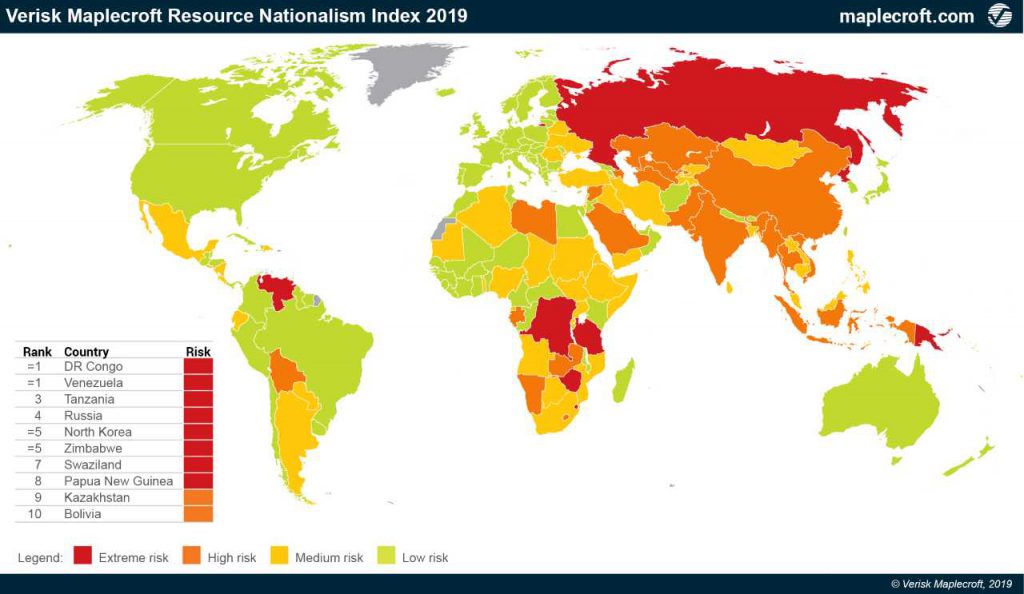
According to global risk consultancy Verisk Maplecroft’s latest Resource Nationalism Index (RNI) report, a total of 30 countries have registered a significant increase in resource nationalism risk metrics over the past year, 21 of which are considered major producers of oil, gas and minerals.

The RNI is aimed to measure the risk of expropriation, the imposition of more stringent fiscal regimes, and the pressure for companies to source goods and services from local providers. Countries are also rated and ranked based on these risk metrics.

Specifically, the RNI report names Russia and the Democratic Republic of Congo (DRC) as the two notable movers on the list, with both being downgraded to ‘extreme risk’ to indicate that the risk of governments taking greater control of natural resources is the highest. In DRC’s case, the risk bump was mostly a byproduct of its new Mining Code, which allowed more government interventions and oppressive fiscal terms for existing operators. Eight countries now have the ‘extreme risk’ rating (starting from highest risk): Venezuela, DRC, Tanzania, Russia, North Korea, Zimbabwe, Swaziland and Papua New Guinea.

Government interference poses threat to operators

Although outright expropriation has become a less likely scenario than before, government measures such as tax pressures, changing contractual terms and strict regulations can still make countries difficult to operate in.

Africa has long been recognized as a high-risk jurisdiction. It has gotten worse over the past year as 10 nations experienced growth in risk factors, according the RNI report. Other countries such as Mexico, India, Malaysia, Turkey and Iraq also saw increased risks as governments took measures to erode the revenues of operators.

Improvement in Zimbabwe, Ecuador

On the upside, the RNI report shows that 24 nations have seen improvements in their index performance, including Zimbabwe (joint 5th), Vietnam (25th), Ecuador (46th) and Guinea (94th). Even though Zimbabwe is still far away from what is considered a stable mining destination, its score has improved thanks to a new government regime that has been actively encouraging foreign investment. The country boasts the world’s second largest platinum and chromium reserves, according to Verisk Maplecroft, and could attract meaningful investment from abroad and even shed its ‘extreme risk’ tag.

Ecuador has made more significant progress. Since President Lenín Moreno came to power in 2017, Ecuador has jumped from ranking 3rd and ‘extreme risk’ in the Resource Nationalism Index two years ago to 46th and ‘medium risk’ in 2019._Reuters

Mali forecasts gold production to drop 3 pct in 2019

0

Mali’s industrial gold production is expected to drop around 3% to 59 tonnes in 2019, down from 60.8 tonnes last year, a mines ministry official said on Friday.

Thiecouta Diabate, director of the ministry’s evaluation cell, said gold output was predicted to decrease after two mining companies announced lower production this year.

Diabate told Reuters B2Gold’s Fekola said it expected to produce around 13 tonnes of gold, down from 14.8 tonnes in 2018.

He said AngloGold Ashanti’s joint venture Sadiola mine expects its gold output to drop by 50% to 2.6 tonnes this year, down from 4.9 in 2018.

Mali’s gold production rose 23% to 60.8 tonnes last year, mainly due to the start of production at B2Gold’s Fekola and Hummingbird Resources’ Komana mines.

Diabate said Komana’s output was expected to rise this year._Reuters