

Home Blog Page 648

Attacks on Chitando preposterous – Rushwaya

0

Zimbabwe Miners Federation (ZMF) President Ms Henrietta Rushwaya has called on miners desist from castigating the Minister of Mines and Mining Development Hon Winston Chitando over issues to do with government policy because he is just a mouthpiece of the government.

Rudairo Dickson Mapuranga

This follows recent embarrassingly uninformed, populist Social Media rants from a section of the small-scale miners led by disposed of former ZMF Mashonaland Central youth chairperson Blessing Togarepi.

Rushwaya said that the act by some miners who go around castigating the Minister over government policy is preposterous.

“The Minister is the mouthpiece of government and castigating him over government policies is absurd,” said Rushwaya.

The ZMF boss said that the position of miners should be focused on engaging and not labelling and rubbishing senior government officials using any form of media.

Rushwaya added saying that people need to be level headed when disgruntled and not to castigate and rubbish policies for the sake of it.

“As ZMF we follow government policies and where we have queries, we engage. Rubbishing and labelling senior government official using any form of media will not solve problems.”

“We need to be well conversant in subject matters which we castigate not just to rubbish for the sake of it,” said Rushwaya.

Rushwaya said that ZMF position on exclusive Prospecting Orders EPOs will be guided by the laws of the land if there is a need to engage the minister we will do so on an open-door policy.

Rushwaya said it is also not wise for individuals to castigate the minister when discussions are underway.

“Our position is: We stand guided by govt policies on such matters and if there is need to engage the Minister we do so since he has an open-door policy. We have engaged the Minister regarding the above and discussions are underway. So no need for an individual to be seen to be castigating the Minister when the Minister is doing everything possible to assist” Rushwaya said.

Rushwaya also said that EPOs are very important because they help the country in identifying the minerals in the country with their quantity.

“EPO’s are meant for companies with deeper pockets to provide mineral data through exploration. Without EPO’S and exploration, we would never know what we own. EPO’S are orders not Mineral rights like claims” said the ZMF President.

Renowned Zimbabwean geologist Kennedy Mtetwa said, it is extremely important for the country to grant EPOs and these EPOs actually can take a long time because world-class mines don’t get discovered in 3 years. It took many years of exploration to have the development of mines like Unki, Mimosa, and Zimplats.

Mtetwa also said that, by Zimbabwe stopping EPOs, it would push us behind by 10 years in getting new deposits from new EPOs. On global statistics, only 10 per cent of EPOs will return viable projects in 10 years. The banning of EPOs will come back to haunt the country in terms of serious mining.

EPOs are issued by the head of States through the mining affairs body as provided for by the mines and minerals act.

Togarepi labels Chitando a sell-out, fumes over EPOs

0

Disgruntled former Zimbabwe Miners Federation (ZMF) Mashonaland Central youth chairperson Blessing Togarepi has castigated the issuance of EPOs in areas where there is gold and called the Minister of Mines and Mining Development Hon Winston Chitando a traitor who is selling out the ruling party through granting exploration companies Exclusive Prospecting Orders (EPOs) which he said are causing national panic.

Through verified various audios messages circulating on social media, the vocal 31-year-old said that the youth were not happy with EPOs because they are causing chaos and the act by the Minister to continuously grant EPOs is a matter of State security.

Togarepi said that the issuance of EPOs by the Ministry of Mines is a way of de-campaigning the President of Zimbabwe Emmerson Dambudzo Mnangagwa because people are not happy with EPOs to the extent that chiefs and other 10 ministers in the government were dissatisfied with the issue of EPOs.

Togarepi also claims to have talked to the officers of the Zimbabwe National Army and State security who showed dissatisfaction with the EPOs.

“We need our country to develop, I talked to the chiefs they are not happy. They said they support President Mnangagwa, he is the one who gave Chitando the position but they are not sure if Chitando is making such decisions to sabotage Mnangagwa. Chitando must know his decisions anochekeresa musangano. The Minister must make proper decisions because I as Togarepi am going around everywhere to Chiefs, Army, MPs conscientising them and they are surprised by the state of things and are not happy.

“We know there are other minerals in the ground other than gold those are the ones that are supposed to be under EPOs than to shut down areas where there is gold.

“I’m moving around talking to everyone, the MPs and Chiefs about the dangers of EPOs and they are shocked by the state of our country as a result of the so-called EPOs and are very happy I have enlightened them.”

“Minister Chitando was appointed by the President, he should do things that please the people, the Minister must act” said Togarepi in part.

The Honorable Minister did not respond even though he is in the same WhatsApp group were Togarepi was castigating him and his continual granting of EPOs.

Also in the group is Political firebrand MP Temba Mliswa and several other officials.

However, one miner interviewed by Mining Zimbabwe said that Togarepi was biased against EPOs because they are taking him out of business.

EPOs have ignited serious debate in the Zimbabwe Mining Industry and the Mines Ministry may need to engage miners in roadshows or Indabas to inform miners what the EPOs benefit the country and why they may be good for the country as the animosity between some of the smallscale miners and the Ministry grows. Deputy Minister of Mines Hon Polite Kambamura is on record reiterating the government is busy implementing the use it or lose it policy on the speculative holding of claims/ EPOs.

Army grabs Omani tycoon’s properties over DRC deal

0
THE military seized various properties belonging to mega-rich Omani businessman Thamer al Shanfari as a result of a fallout emanating from a diamond mining operation in the Democratic Republic of Congo (DRC) when Zimbabwe participated in the Great Lakes War in 1998, the Zimbabwe Independent can report.

The properties at the centre of the court battle are stand numbers 98, 99, 100 and 101 Glen Lorne Township 8 of Lot 40A Glen Lorne Township 8 of Lot 40A Glen Lorne.

Shanfari, who was the former chairperson of Oryx Natural Resources, a joint venture firm set up by the Zimbabwe Defence Forces (ZDF) and investors from Qatar and Oman to finance the military’s operations in the DRC through proceeds from diamond mining operations, this month filed a High court application seeking an order for placement of a caveat over his four immovable properties which the Defence ministry was in the process of grabbing.

The Omani national is being represented by Atherstone and Cook Legal Practioners.Officials told the Independent the conflict dates back to August 1998 when the Zimbabwean army participated in the DRC war to save the Joseph Kabila administration, which was under siege from rebel forces.

During that time, Kabila sought the alliance of Zimbabwe in the war, but could not finance Harare’s military operation. He then parcelled out lucrative diamond reserves in Mbujumai to the Zimbabwean army to mine and use the proceeds to support its military activities.

The army, officials said, however, did not have capacity, experience or expertise to mine diamonds resulting in it looking for partners to form a joint venture.
The army then formed a JV company called Oryx, that was 30% owned by a military mining company Osleg — which was the Operation Sovereign Legacy and 70% owned by Omani and Qatar investors.

Oryx appointed Shanfari the chair of the company but he ended up operating like an executive chairperson.”During the entity’s operations in DRC, Shanfari would withdraw huge sums of money ranging between US$100 000 and US$1 million from Oryx Natural Resources. He would convert the US dollars to Congolese francs in Kinshasa before flying to Kigali, Rwanda where he would offload the francs to the Rwandan army,” a senior security official said.

“The Rwandan army needed Congolese francs to pay soldiers fighting in the DRC. Rwanda was literally at war with Zimbabwe as they were backing different sides.
“Shanfari made a lot of money through arbitrage because of exchange rate variations. He did not care about loyalties as he was chasing money, never mind the fact that the two sides were fighting.”

The officials revealed Shanfari woud visit European capitals, Dubai and Oman frequently to spend money without giving shareholders any dividends.
His double-dealings were exposed after he fell out with two former MI6 agents who were part of his security after a fallout over payment. The army then declared him a security threat.

Filing the High court application, Shanfari said he was compelled to approach the courts, given the enormous power of the millitary.”I (Shanfari) am also the primary beneficiary in the above mentioned properties in terms of the notarial deed of donation and trust (Ref 339) … in this instance I do have a clear caveatable interest, and this application is motivated by my reasonable apprehension that the respondents (Defence minister Oppah Muchinguri-Kashiri and others) are about to completely dispossess me of my properties and given the political and state power that is wielded by some of the respondents, the prejudice I stand to suffer if I do not act now, could be irreversible and the respondents have failed or refused to resolve my dispute with them amicably,” Shanfari said in his founding affidavit this month.

“I financed the construction of the main structure which was custom-made to suit my peculiar tastes and an entertainment area. After completion of the construction project, I resided at the subject property for intermittent periods, but have generally lived outside Zimbabwe for many years.”

According to Shanfari, all the documentation pertaining to the acquisition and ownership of the properties are presently in the custody of the Defence ministry’s lawyers.

Source – the independnet

South African miners to challenge new law in court next year

0

A South African court will in April hear an application by mining companies challenging key provisions of a new code for the sector.

The firms are testing three aspects of the government’s revised mining charter, which sets out rules on ownership, investment and exploration, according to Tebello Chabana, the spokesman of industry body Minerals Council South Africa. The remaining provisions have been agreed on and companies have started implementing them, Chabana told reporters in Johannesburg Wednesday.

The legal challenge centers on whether previous black-empowerment transactions should be recognized even after the black shareholders exited, local procurement rules and the licensing for some minerals.

“We thought we were getting closer to resolving these issues, but at the end of the day the matter is still going to court,” Chabana said.

The charter, which aims to distribute the industry’s mineral wealth more equally among citizens after the injustices of apartheid, was first issued in 2004 and updated in 2010_Mining.com

Endeavour bid for Centamin will boost mining interest in Egypt – minister

0

Egypt said on Wednesday it welcomed Endeavour Mining’s bid to takeover Centamin Plc, saying it would encourage foreign investment in the country’s mining industry.

Centamin rebuffed the 1.47 billion pound ($1.9 billion) all-stock takeover proposal on Tuesday, saying it did not offer enough value to Centamin shareholders.

Centamin’s assets include Egypt’s Sukari mine and Cleopatra project, as well as exploration projects in West Africa.

Egyptian Petroleum Minister Tarek El Molla said in a statement the government had no role in the bid but added that “we welcome new investment by international companies in exploring gold and mineral wealth.”

He said the bid would “give a positive message about the desire of an international company to be present in Egypt … and encourage other companies to come to Egypt.”

Egypt introduced a new mining law this year but has yet to publish the executive regulations. The government wants to unlock investment in Egypt’s mineral wealth, which has stalled under what explorers say are discouraging terms_Mining.com

Mliswa urges ban in the carrying of machetes

0
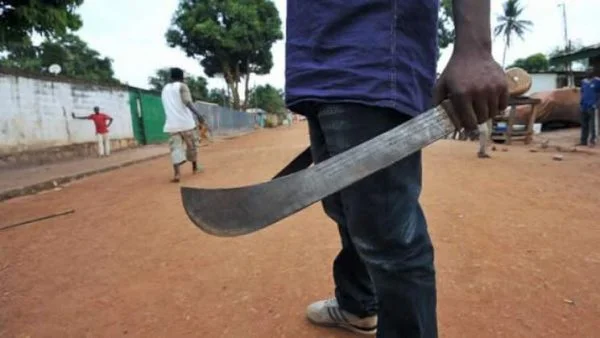
INDEPENDENT MP for Norton, Temba Mliswa says the government must ban the carrying of machetes which have been used by illegal mining gangs to hack down each other and other citizens with nothing to do with the wars.

Mliswa was speaking in parliament on Thursday.

The outspoken legislator condemned the government for its propensity to issue Statutory Instruments one after the other on currency matters while ignoring loss of life.

According to a recent report by the Zimbabwe Peace Project (ZPP), atleast 105 people died in a space of two months as a result of turf wars among notorious gangs within the country’s mining sites.

Machete wielding gangsters are also reportedly maiming people and confiscating gold from fellow gold panners.

Mliswa said in the house that President Emmerson Mnangagwa had ordered a ban on the carrying of machetes, but no action has been taken to date by the relevant authorities.

“His Excellency has been very clear that people are being killed and there is no action being taken,” Mliswa said.

“Government is quick to issue Statutory Instruments (SIs) on monetary issues but when life is being lost, nothing is done. Why do we not ban that?

“His Excellency has been very clear that these machetes must be banned and there must be a statutory instrument that empowers the police to arrest anybody with a machete until a certain time these issues are out because people are dying in Norton and everywhere in the country.

“They come and they disrupt business. They go into clubs and so forth and they are known as people from Shurugwi. I am from Shurugwi and the Shurugwi people do not behave like that.

“I would also like to clear that they are called ‘Mashurugwi’ because there was a lot of illegal mining in Shurugwi.”

He also accused some unnamed government officials for sponsoring the killings through sending the gangs to seize gold from small scale miners or panners.

He added, “I would like to protect the people that I lead as a village head that the Shurugwi people are great people. They do not do machetes.

“Can the government move in quickly to also come up with a Statutory Instrument to also block that because some of the leaders in Zanu PF are the ones doing illegal smuggling of gold and that is the reason why the Government is not keen on it, so why are people dying?”

Home Affairs Minister Kazembe Kazembe Thursday threatened arrest on politicians sponsoring machete gangs.

This comes as police have arrested over 5 000 people in eight months for offences ranging from illegal mining to possession of dangerous weapons.

Addressing a media conference in Harare, Kazembe said the issue of machete gangs was now worrisome and a serious security threat.

Under an operation dubbed “No To Anarchy by Artisanal Miners” police have since March this year, arrested 3 471 people for possessing dangerous weapons, among them, machetes_New Zimbabwe

New environmental policy to deal with rogue miners

0

RUNDE Rural District Council has adopted a new environmental policy that would enable the local authority to impose heavy fines and cease operations of rogue miners who fail to comply with environmental laws as it moves to address perpetual land degradation and deforestation due to mining activities.

The local authority approved the policies in a full council meeting held on Tuesday in Zvishavane as councillors concurred that the miners were now an environmental menace. Runde RDC chief executive officer Mr Godden Moyo said the local authority was working with organisations such as Centre for Conflict Management and Transformation (CCMT) to craft environmental policies to address issues of deforestation, land degradation among other issues that are being caused by mining and farming activities.

“Zvishavane is a mining community and we have serious challenges of lack of compliance by miners in the area. We passed environmental policies that compel miners to comply with environmental laws as well as practising sustainable mining that preserves the environment. Issues of land degradation as a result of mining activities are on record and we have been grappling with miners to comply with environmental laws and Environmental Management Agency (Ema). The policies are not restricted to mining but cover a wide spectrum although mining is one of the areas,” he said.


The Sunday News

Chasi spells out terms for Zesa board

0

IT will no longer be business as usual for boards under the purview of the Ministry of Energy and Power Development, as Government is crafting a raft of measures to monitor their performance including subjecting them to routine public scrutiny.

Within the cocktail of measures, the Minister of Energy and Power Development, Advocate Fortune Chasi, has also demanded that the boards especially that of the power utility, Zesa Holdings, regularly appraise the Government and the public of any developments being undertaken at the parastatal.

He said a comprehensive document spelling out the guidelines and mandates to be adhered to by the boards would be released this week.

This comes as Minister Chasi’s appointment of Dr. Sydeny Gata as executive Zesa chairman continues to attract sharp criticism from corporate governance proponents who argue such positions should cease to exist in public entities.

But argues Minister Chasi: “We have given the new board a huge task, a new mandate, which I’m looking forward to release on Monday (tomorrow). I will release a clear document, which will detail what the Government expects from them as to their short-term, medium-term and long-term plans. We have already agreed in principle with them and we are now expecting the implementation matrix and I will be meeting them once a month to be appraised on progress and their intentions so that we manage the process,” said Adv Chasi.

He said members of the public should be privy to the operations being undertaken by the Zesa board since electricity plays a vital part in national economic development.

“The board is expected to reveal everything that it will have undertaken. There won’t be anything that will be hidden because they (board) should appraise the public as well. Industrialists should always be aware of what’s taking place around them, to enable them to plan effectively and they should be aware that at such a particular time there will be no electricity so that they inform their workforce not to report for duty. Information should be in the public domain within the shortest of periods so that members of the public will have confidence on the utility and build that continuity,” said Adv Chasi.

The recently appointed Zesa board is chaired by Dr. Gata with the other board members being Professor Ashok Chakravati, Ms. Rosemary Siyachitema, Mrs. Caroline Mathonsi, Mr. James Muzangaza, Mr. Jonathan Wood, Ms. Stella Nkomo, Mr. Wadzanai Chigwa, Mr. Peace Rugube, and Mr. Eliab Chikwenhere.

Adv Chasi also said the Government was making concerted efforts to offset its outstanding debt to the South African power generator, Eskom.

“We are still committing ourselves to paying Eskom and we are making payment of about US$900 000 (a month) and at the present moment there are no hiccups with regards to payment of the debt, but we are working on coming up with structures in ensuring that we expedite clearing the debt so that we start afresh to negotiate for a new deal.

“It won’t be easily achievable, but we hope to have settled it next year. It’s also important to note that the power we are importing is very expensive and if we pay up, we will also concentrate on working on various projects to improve our supplies . . .,” he said.

Zesa owes Eskom about US$22 million, but has promised to regularly make payments in order to keep the power imports flowing.

Adv Chasi further noted that the power utility was also making concerted efforts to recover more than $1 billion from defaulting customers.

“The debt owed to Zesa by consumers stretches for a number of years and they are trying their best to recover these debts and, in the process, also facing litigation from a number of customers who are not satisfied with the process.

“However, the whole idea is not to threaten people, but we should bear in mind that the debt is very huge and cuts across various categories such as commercial, mining, agriculture and domestic. Government (departments) has fully settled its debt but industry, local authorities and domestic consumers are the ones that still owe Zesa,” he said.

Government departments owe Zesa Holdings more than $100 million.


The Sunday Mail

Crisis:Indigenous fuel importers’ licences expire

0

IMPORT licences for most indigenous oil companies are lapsing at the end of this month, fuelling panic in the critical industry, it has emerged. Zimbabwe is facing erratic fuel supplies against the backdrop of low exports, a weakening domestic currency and rolling power outages.

The situation worsened over the past few weeks as most fuel stations ran out of stocks, immediately evoking yesteryear memories. It also emerged the energy sector regulator, the Zimbabwe Energy Regulatory Authority (ZERA) is dragging its feet, reluctant to renew the licences.

Zimbabwe has six major oil-importing entities. Apart from the Indigenous Petroleum Association of Zimbabwe (IPAZ), five others are international oil companies and some indigenous players who are not members of IPAZ.

IPAZ, which was formed in 2004 after a nasty fallout between local and international oil companies, is the biggest importer of fuel into the country providing 11 700 000 litres of diesel a year and 8 000 000 litres of petrol. Sakunda and Redan, are no longer IPAZ members, after their take over by Singaporean headquarted Trafigura group and Puma.

Sakunda has been accused of monopolising fuel foreign currency allocation, a claim the central bank denies. There is now panic in the critical industry ahead of the festive season. The crisis explains, in part, the current fuel supply deterioration in the country. Zimbabwe’s fuel supply situation has deteriorated sharply in the past fortnight. It is expected to worsen further as the country heads towards the festive period.

The industry has also not been spared as most companies have been running on diesel generators due to crippling power cuts, which is ravaging the already frail economy.

Business Times can report that indigenous fuel players have since approached ZERA with the view to renew their licences. But, players in the industry told this publication this week that there is now “hide and seek between indigenous players and ZERA” with regards to the renewal of their licences. There is suspicion that there may be certain big players in the fuel industry frustrating the licensing system, according to players in the industry.

IPAZ chairman, Aaron Chinhara confirmed the latest development to Business Times this week. “The issue that has caused panic in the fuel industry has been the fact that most import licences for indigenous players are lapsing on December 31, 2019,” Chinhasa revealed. “So we have managed to engage ZERA and were issued with invoices to pay but the invoices have since been regarded as not genuine.

Chinhara added: “I have since paid for the renewal of the import licence but to date we have not received anything. This has massive ramifications on our part in terms of trading because our trading will be made difficult when operating with expired import licences.”

All efforts to get a comment from ZERA were futile. Eddington Mazambani, ZERA acting chief executive officer and spokesperson Gladman Njanji, had not responded to inquiries from this publication by the time of going to print. Zimbabwe’s fuel situation has continued to deteriorate despite weekly price increases. Currently, petrol is trading at ZWL17.44 while diesel is trading at ZWL17.90.

On the black market petrol and other designated fuel stations, the commodity is being sold in hard currency. Petrol is trading US$1.20, which is equivalent to ZWL$27,60, while diesel is trading at US$1.50, which translates to ZWL$34,50. Energy and Power Development Minister, Fortune Chasi, this week told Cabinet: “The fuel supply situation was constrained in the past week due to the depressed uplifts which were experienced early in the week and the previous week.”

However, Chasi said: “It was pleasing to note that the situation improved as the week progressed after the interventions which were done by the National Oil Infrastructure Company (NOIC).”

He indicated that NOIC implemented 24 loadings at its depots, resulting in the daily uplifts surpassing the daily consumption rates of five million litres of both petrol and diesel. The fuel crisis has resulted in most retail outlets closing doors even during the day due to rising costs of running generators.

“The industry has been badly affected by electricity shortages which has seen most industry players resorting to diesel powered power sources,” the Confederation of Zimbabwe Industries president Henry Ruzvidzo told Business Times this week. He added: “But availability of diesel has been a challenge and it is safe to say industry is in deep problems right now.We are always told various stories on power but no solution has come on sight at the moment. It is a sad chapter for the industry.”_Business Times

Ferrochrome producers push for energy tariff reduction

0

FERROCHROME producers are lobbying the government to reduce energy tariffs for bills paid in foreign exchange as the sector suffers from price fluctuations on the international market. Zimbabwe has one of the biggest chrome reserves in the region and is pinning its hopes on the mining sector to spur economic growth.

The ferrochrome producers also proposed the setting up of an Inter-Ministerial Committee to address the matter that is now threatening the viability of the industry.

In a letter addressed to Energy and Power Development Minister Fortune Chasi by Portnex International managing director Frikkie Laubscher citing concerns of the industry, ferrochrome producers are in urgent need for a review of the power tariff structure.

“Indeed, the entire ferrochrome industry is on the verge of total collapse and one simply needs to have regard to the significant outstanding foreign currency remittance (CD1 acquittals) position from the sector alone and every producer is in arrears,” said Laubscher. He said depressed prices for ferrochrome and the current tariff regime would reduce output of the sector.

Laubscher implored Chasi to set up an inter-Ministerial Committee to review a proposal submitted to the Ministry of Energy, ZETDC and also discussed briefly with Vice President Kembo Mohadi on November19, 2019.

“We are confident, a review of the tariff (or introduction of set-off incentives) is for the sustainable viability of all ferrochrome producers,” he said.

Chasi could not be reached for comment as his phone went unanswered and he did not respond to text messages sent to him. The cost of power in the country has drastically affected some mining operations that require uninterrupted and cheap power supplies. It has been established that power is critical to economic development and that there is a positive correlation between cheap power supply and growth in gross domestic product.

Therefore, cost of power has remained a nightmare for most mining companies especially for those with high power consumption operations. Despite calls to review downwards the cost of power, cost of electricity has been on the rise amid public outcry. Such a scenario, according to the miners has proven to be unsustainable for mining companies who are already suffering from low commodity prices.

Zimbabwe is facing rolling power outages following a sharp decline in generating power capacity at the country’s hydro-powered station. Water levels at Kariba Dam this year plunged following one of the worst droughts in living memory.

A steep electricity tariff increase and removal of subsidies has to date failed the country to raise enough foreign currency to cover for power imports or to fix its power plants which are in constant need for repairs due to old age. This has forced government to turn to mining companies especially those that export to pay for their electricity in foreign currency_Business Times