Home Blog Page 65

Gold buying prices in Zimbabwe per gram/ ounce, 5 December 2025

Gold buying prices in Zimbabwe per gram/ ounce, 5 December 2025, from the official gold buyer and exporter Fidelity Gold Refinery (FGR).

1 oz = 31.1035 g

CategoryPrice ($/g)Price ($/oz)
SG 90% and above127.62$3,969.36
SG 85% and above but below 90%126.27$3,926.42
SG 80% and above but below 85%124.92$3,883.48
SG 75% and above but below 80%123.57$3,840.54
Sample 5g and above but below 10g121.54$3,776.66
Fire Assay CASH128.28$3,990.50


Note: The Fire Assay cash price applies to gold above 100g, with no sample deduction.

A sample of not more than 10g is deducted for the Fire Assay Transfer price.

Gold buying prices in Zimbabwe per gram/ ounce, 4 December 2025

Gold buying prices in Zimbabwe per gram/ ounce, 4 December 2025, from the official gold buyer and exporter Fidelity Gold Refinery (FGR).

1 oz = 31.1035 g

CategoryPrice ($/g)Price ($/oz)
SG 90% and above127.913,978.45
SG 85% and above but below 90%126.563,936.36
SG 80% and above but below 85%125.213,894.36
SG 75% and above but below 80%123.853,852.37
Sample 5g and above but below 10g121.823,789.21
Fire Assay CASH128.594,000.25


Note: The Fire Assay cash price applies to gold above 100g, with no sample deduction.

A sample of not more than 10g is deducted for the Fire Assay Transfer price.

Diamond Producers Demand Fiscal Reform as Zimbabwe’s Fixed Royalty Bites

0

Diamond mining companies operating in Zimbabwe are mounting a unified and urgent appeal to the government to reform the sector’s fixed 10% royalty rate, which they label as one of the highest and most uncompetitive in the global diamond industry, Mining Zimbabwe can report.

By Rudairo Mapuranga

The push, highlighted in the 2026 State of the Mining Industry Report, comes not from a position of weakness but as a strategic call to secure the long-term viability and growth of a sector crucial to Zimbabwe’s economic ambitions. Producers argue that the rigid fiscal regime is untenable in the face of severe global market pressures, unique local operational challenges, and a government policy agenda that simultaneously seeks to attract investment and maximise state revenue.

The campaign is led by the key players shaping Zimbabwe’s diamond landscape: the state-owned Zimbabwe Consolidated Diamond Company (ZCDC), the Chinese Zimbabwean joint venture Anjin Investments, the Russian giant Alrosa (Zimbabwe) Ltd., and the privately operated RZM Murowa. Together, they represent the consolidated structure instituted after years of sector turmoil, now seeking stability and growth under a reformed fiscal model.

The industry’s plea is set against a backdrop of significant external challenges that have squeezed margins worldwide.

Plummeting rough diamond prices: After a post-pandemic surge, the global market for rough diamonds has corrected sharply. This decline erodes the revenue base upon which Zimbabwe’s fixed 10% royalty is levied, making it a disproportionately heavy burden during downturns.

The rise of lab-grown diamonds: The rapid consumer adoption of lab-grown diamonds, which can sell at an 80% discount to natural stones, has disrupted traditional markets, particularly in key segments like bridal jewellery in the United States and Asia. This competition places downward pressure on the value of all natural diamonds.

Geopolitical complexities: For Zimbabwean diamonds, historical controversies against some entities create additional market access hurdles and reputational barriers, potentially depressing the final selling price.

Local Geology and the High Cost Production Dilemma

Beyond global headwinds, Zimbabwean producers face intrinsic operational challenges that the fixed royalty exacerbates.

The nation’s diamond wealth is bifurcated. The famed Marange alluvial fields, operated by ZCDC and Anjin, are largely depleted of easy-to-mine surface gems. Mining has shifted to deeper, harder conglomerate deposits, which are significantly more expensive to extract. Meanwhile, the higher quality kimberlite pipes at RZM Murowa and those under exploration by Alrosa in Chimanimani offer better value stones but require substantial upfront capital and sophisticated technical expertise.

The core of the producers’ argument is that a one-size-fits-all 10% royalty fails to account for this spectrum. It unfairly penalises operations working with lower value, higher cost ore and stifles investment needed to develop the higher quality kimberlite resources that could boost Zimbabwe’s average dollar per carat yield.

A Policy Paradox: Gold’s Flexibility vs. Diamond’s Rigidity

The diamond producers’ case is bolstered by a glaring policy contradiction within Zimbabwe’s own mining fiscal framework. In its 2026 National Budget, the government demonstrated a clear understanding of progressive, market-sensitive royalty models by introducing a three-tier, price-linked system for gold.

Zimbabwe’s Gold Royalty Structure (2026)

Royalty rate: 3%
Price trigger: Applies when gold prices are between US$0 and US$1,200 per ounce.

Royalty rate: 5%
Price trigger: Applied when prices range between US$1,201 and US$2,500 per ounce.

Royalty rate: 10%
Price trigger: Levied when the gold price exceeds US$2,501 per ounce.

This system, designed to “ensure the mining sector contributes a fair share during periods of commodity price boom,” automatically adjusts the government’s take to market conditions. For the diamond sector, however, no such mechanism exists. The industry question is straightforward: if a smart, responsive model is logical for gold, why is a flat, high rate still imposed on diamonds?

This disparity is not lost on investors. The State of the Mining Industry Report 2026 reportedly reflects deep-seated concerns over fiscal predictability and competitiveness. The warning from Caledonia Mining regarding the impact of the new gold royalties on its profitability in Zimbabwe underscores the tangible effect these policies have on investment calculations and project viability.

Industry Response: Adaptation and Value Addition

Faced with these stacked challenges, diamond producers are not merely lobbying; they are actively adapting their strategies to survive and position for the future.

Embracing exploration: Companies like Alrosa and ZCDC are investing heavily in exploration across Zimbabwe, particularly for new kimberlite pipes, which are essential for the sector’s future beyond the alluvial deposits of Marange.

Pursuing value addition: There is a strong push, aligned with government goals in the National Development Strategy 1 (NDS1), to move beyond exporting rough diamonds. The objective is to develop local cutting and polishing, which can increase a diamond’s value by an estimated 8% or more. While progress has been slow, with less than 1% of stones currently processed locally, this represents a critical long-term strategy to capture more revenue within Zimbabwe and create jobs.

Navigating a tightening regulatory environment: Producers must also contend with an increasingly strict regulatory landscape. The forthcoming Responsible Mining Initiative Part 2 promises severe penalties, including loss of mining titles, for environmental violations, adding another layer of operational cost and compliance necessity.

The unified call from ZCDC, Anjin, Alrosa, and RZM Murowa represents a critical juncture for Zimbabwe’s diamond industry. They are advocating for a shift from a purely revenue extractive relationship to a developmental partnership with the state.

Their proposed solution centres on replacing the fixed royalty with a sliding scale model, similar to the new gold system or models proposed internationally. This would link the government’s take to profitability or price, protecting operators during downturns while ensuring the state captures greater value during booms. Such a reform, they argue, would enhance the sector’s resilience, attract fresh investment for exploration and beneficiation, and ultimately generate greater sustainable revenue for Zimbabwe’s economy than the current system, which risks stifling the goose that lays the golden eggs.

The government’s ambition to grow mining to a multibillion-dollar annual export sector is well known. The diamond producers’ message, as echoed in the 2026 industry report, is that achieving this goal requires a fiscal framework that incentivises growth, recognises sector-specific realities, and aligns Zimbabwe with global best practices. The ball is now in the policymakers’ court to decide whether to heed this call for partnership or maintain a course that the industry warns is unsustainable.

Tougher Oversight Ahead as RMA Training to Capacitate Inspectors Gets Underway

0

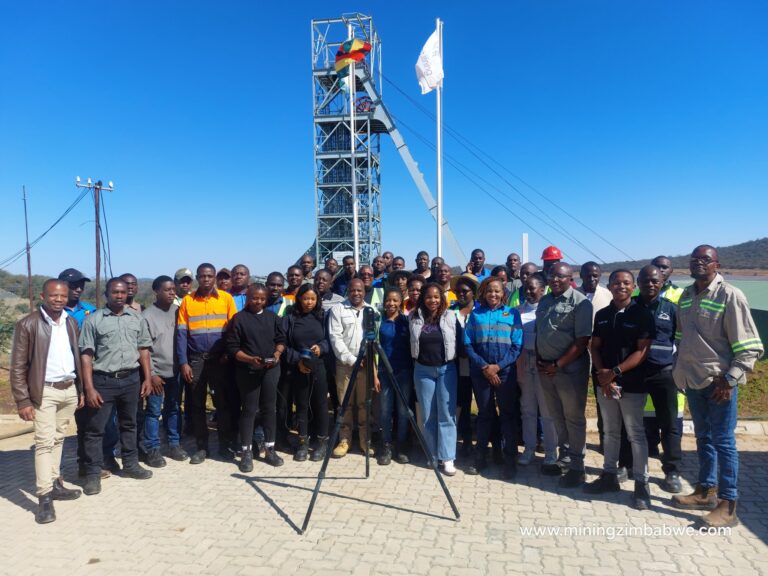
Government is tightening oversight of the mining sector through an ongoing Responsible Mining Audit (RMA) Training Workshop, a move designed to plug compliance gaps exposed in previous audits and send a clear warning to operators who continue to disregard the law, Mining Zimbabwe can report.

By Ryan Chigoche

The workshop comes as the Ministry of Mines and Mining Development, working alongside several Ministries, Departments and Agencies (MDAs), prepares for the third RMA, building on lessons from the 2023 and 2024 exercises, which revealed both progress and persistent weaknesses across the sector.

Last year, inspectors visited 728 mines, up from 424 in 2023, reflecting a major increase in coverage as the government ramped up compliance monitoring. During the same period, fines totalling USD 680,000 were imposed, underscoring the more assertive enforcement approach.

However, despite these positives, a report by ENM Advisory on Gaps in the 2023 to 2024 RMA showed that significant issues relating to responsible mining were left out, highlighting the continued need for stronger oversight.

“This training matters because the country is depending on us to anchor responsible mining. As mining expands and new players enter the sector, our oversight must stay ahead, be technically sound, coordinated, and uncompromising when it comes to protecting national interests, communities, and the environment,” said the Deputy Chief Government Mining Engineer, T Paswavaviri.

To address these persistent gaps identified in the report and promote a unified and more effective approach, he emphasised closer collaboration among all government institutions involved in mining oversight.

“The mining sector touches multiple institutions, Mines, EMA, RDCs, ZIMRA, Labour, and others. If these institutions work in silos, we lose time, duplicate work, and create space for non-compliance. The ‘One Audit, One File’ approach is a game changer. It harmonises operations, standardises what we collect, and maintains one consolidated audit record per operation. This isn’t just procedural, it’s a cultural shift. It says: ‘We work as one government, with one story, one compliance standard, and one shared responsibility,’” Paswavaviri said.

The audit teams are drawn from a broad range of government agencies, including Mines, the Environmental Management Agency (EMA), local authorities, ZIMRA, and the Labour Ministry.

This multi-agency structure reflects the cross-cutting nature of the Responsible Mining Audit (RMA) process and addresses weaknesses identified in previous audits, where fragmented inspections often produced conflicting findings and created loopholes that some operators exploited.

A central aim of the training is to strengthen the technical capacity of inspectors. Participants are being equipped to apply statutory compliance requirements, integrate Environmental, Social, and Governance (ESG) principles, and follow standardised audit procedures.

The workshop also introduces digital tracking systems, uniform reporting templates, and consolidated audit files, all designed to make inspections more consistent, reliable, and defensible.

By harmonising inspections nationwide, these tools help ensure that audits are standardised, predictable, and enforceable under the National Responsible Mining Audit Framework (NRMAF).

The timing of the workshop reinforces the government’s broader push for stricter oversight. President Emmerson Mnangagwa has warned that operators who flout environmental and safety laws risk being removed from the sector, a position echoed by Mines Minister Winston Chitando, who has stressed that repeat offenders will face decisive action.

Despite increased coverage, higher fines, and a more robust enforcement stance, audits continue to reveal significant non-compliance among small-scale and informal miners.

Unlicensed operations, unsafe working conditions, and breaches of environmental and labour standards underline the urgency of building stronger capacity within the inspectorate.

Through the establishment of a national cascade of skills and the enforcement of uniform compliance standards from district to provincial levels, the Ministry aims to make the upcoming 2025 RMA more effective, consistent, and credible.

The initiative combines enforcement with guidance, helping miners formalise their operations safely and sustainably.

The ongoing RMA Training Workshop represents a decisive step toward a mining sector that is more accountable, transparent, and aligned with national expectations, sending a clear signal that non-compliance will no longer be tolerated.

ZMF Pleads with President Mnangagwa to Reduce Proposed Gold Royalty Hike

0
  • ZMF Urges President Mnangagwa to Halt Proposed Gold Royalty Hike, Warns of Sector Collapse

The Zimbabwe Miners Federation (ZMF), representing the nation’s small to medium scale miners, has made a direct appeal to President Emmerson Mnangagwa to intervene and lower a proposed steep increase in gold royalties, warning that the policy threatens to cripple the very industry it aims to tax, Mining Zimbabwe can report.

By Rudairo Mapuranga

The urgent plea comes in response to the 2026 National Budget, which proposed hiking the royalty rate to 10 per cent when the gold price exceeds $2,501 per ounce. With gold prices currently trading well above this threshold, the majority of producers would immediately fall under the top rate, a significant jump from the previous structure.

In a formal appeal also addressed to the Minister of Mines and the Minister of Finance, ZMF President Henrietta Rushwaya argued that the hike is “counterproductive” and will “severely constrain gold production,” which includes stalling “new investment in exploration and mine development” and causing “capital flight,” undermining the government’s own revenue goals and economic growth targets.

The royalty change was presented as a measure to ensure the mining sector contributes a “fair share of revenue to the Fiscus during periods of commodity price boom”. The new sliding scale structure is also intended to harmonise rates across different categories of miners.

The proposed scale is as follows:

  • 3 per cent royalty for gold prices below $1,200 per ounce.
  • 5 per cent royalty for prices between $1,201 and $2,500 per ounce.
  • 10 per cent royalty for prices exceeding $2,501 per ounce.

In its detailed appeal, the ZMF contends that a 10 per cent top rate makes Zimbabwe a clear global outlier. The federation provides stark comparisons with regional and international peers to bolster its argument for a competitive cap of 3 per cent.

Regional and International Royalty Comparisons

In Africa:

  • Ghana: A leading African producer maintains a 5 per cent royalty on gold.
  • Tanzania and Mozambique: Apply royalty rates of 4 per cent and 5 per cent on precious metals, respectively.
  • South Africa: Uses a sliding scale from 0.5 per cent to 5 per cent based on profitability.

Global Benchmarks:

Western Australia: The royalty rate for gold is set at 2.5 per cent of the royalty value, with no royalty payable on the first 2,500 ounces produced annually by a project.

Queensland, Australia: Uses a sliding scale between 2.50 per cent and 5.00 per cent for prescribed metals like gold, with the exact rate varying with average metal prices.

New South Wales, Australia: Applies a royalty of 4 per cent of the value of recovered minerals, including gold.

Canada (Ontario and Quebec): Effective royalty rates are highly competitive, often below 5 per cent for profitable mines.

Nevada, USA: Net proceeds royalty rates are typically between 2 per cent and 5 per cent.

The ZMF letter warns that a rate significantly above 5 per cent “positions Zimbabwe as an outlier, rendering it uncompetitive” and will trigger a “catastrophic ripple effect.”

Positioning itself as a committed partner in national development, the ZMF states it is not advocating for a non-contributory sector. Instead, it proposes a “sustainable win-win model” centred on a maximum royalty rate of 5 per cent, aligned with regional and global standards.

The federation has called for further dialogue with the Ministry of Mines and the Treasury, standing ready to provide detailed technical submissions to work towards a fiscal framework that secures both national revenue and the future of Zimbabwean mining. The decision now rests with the government as it balances immediate fiscal needs against the long-term health of its most important export sector.

The Days of Unchecked Non-Compliance Are Over warns Chitando

0

…as Govt Moves to Plug Gaps in Previous RMA Audits

The Government has warned that the days of unchecked non-compliance in Zimbabwe’s mining operations are over, as authorities move swiftly to close gaps identified in previous Responsible Mining Audits (RMA) and strengthen oversight across the sector, Mining Zimbabwe reports.

By Ryan Chigoche

This was the key message delivered by Minister of Mines Winston Chitando in his foreword to the Responsible Mining Audit (RMA) Gap Analysis Report, compiled by ENM Advisory Group, which evaluated the 2023 and 2024 responsible mining audits. His remarks underscore the government’s determination to turn lessons from past audits into concrete reforms.

The 2025 Gap Analysis Report is particularly timely, coming as the Ministry of Mines is developing a National Responsible Mining Audit Framework (NRMAF) designed to address shortcomings identified in previous audits. This effort aligns with the government’s broader push for stricter oversight, reinforced by President Emmerson Mnangagwa’s warning that irresponsible miners will not be tolerated.

The need for reform is reinforced by the findings of the 2024 audit, which revealed significant progress from the inaugural 2023 exercise. The Ministry audited 728 mining sites in 2024, up from 424 in 2023, surpassing the targeted 712 audits. Alongside this expansion, fines totalling US$680,000 were imposed and suspensions increased, reflecting a more rigorous enforcement approach.

Building on this momentum, Minister Chitando emphasised the importance of moving beyond checklist-style audits when launching the RMA Gap Analysis Report. He highlighted the need for modern, principles-based standards, stronger community engagement, real-time digital tracking, and effective follow-up to ensure non-compliant operations are held accountable.

“The audits conducted in 2023 and 2024… demonstrated our capacity to enforce compliance and address widespread non-adherence to our national statutes,” the Minister said, framing the expanded programme as a “crucial first step” in resetting mining governance.

He added that the notable increase in fines and suspensions is more than an enforcement metric. “It is a clear signal that the days of unchecked non-compliance are over. We have shown that a multi-agency approach to mining oversight can yield tangible results, bringing to light critical issues related to safety, labour, ethical business practices, human rights, environmental degradation, and fiscal responsibility.”

Looking ahead, as the Ministry prepares to implement the improved audit framework with ENM Advisory Group providing consultancy support, Minister Chitando acknowledged that more work remains. “However, as this report candidly reveals, our work is far from complete. A true measure of responsible mining goes beyond legal compliance. It is about a holistic commitment to Environmental, Social, and Governance (ESG) principles that underpin a Social License to Operate,” he said.

The RMA process itself, piloted in 2023 following Cabinet approval, marked a major shift in mining oversight. For the first time, inspections were conducted by multi-agency teams drawing authority from various Ministries, Departments, and Agencies (MDAs), demonstrating a coordinated approach to governance.

Yet, as the RMA Gap Analysis Report (2023–2024) shows, despite these efforts, gaps persist in the country’s mining oversight. Audits remain largely reactive, focusing on statutory compliance rather than broader sustainability or developmental outcomes.

This limitation is compounded by operational inconsistencies. Even with a centralised Command Centre at the Ministry of Mines, each Ministry, Department, and Agency (MDA) relied on its own checklists, interpretations, and reporting templates. Such fragmentation has led to uneven findings and left holes in the national compliance picture.

Small-scale and unregulated mining operations were identified as particularly high-risk. Many operators lacked mine managers, licences, or basic safety infrastructure such as fenced shafts and secure tailings dams. Labour and taxation violations were widespread, with hundreds employing undocumented expatriates or failing to remit taxes.

The report stresses that enforcement alone cannot resolve these structural challenges. Without capacity-building, guidance, and support, artisanal and small-scale miners remain vulnerable to non-compliance. This underscores the need for a more integrated and proactive approach to oversight.

Even among larger, more structured mines, issues persist. While these operations largely complied with labour, environmental, and fiscal requirements, audits revealed persistent problems such as expired work permits, land-use irregularities, and disputes with rural district councils, showing that no operator is entirely immune to regulatory lapses.

In contrast, Custom Milling Centres and Elution Plants showed complete non-compliance. None held valid milling or elution licences as required under SI 178 of 1990, and all lacked environmental permits for hazardous substances and air emissions. Standalone cyanidation plants operated entirely outside the regulatory framework, without approvals, operational records, or ore movement documentation, posing serious risks to public safety and the environment.

Certain areas, particularly mining hotspots such as Kwekwe, were flagged as epicentres of illegal operations, unsafe shaft construction, uncontrolled use of explosives, and severe land degradation. Law enforcement presence in these zones was largely ineffective, overwhelmed by the scale of illicit activity and limited resources. This highlights the particular challenges of oversight in high-risk regions.

Against this backdrop, Minister Chitando emphasised the limitations of a purely checklist-based enforcement approach and called for a shift towards ESG principles to guide responsible mining. “A true measure of responsible mining goes beyond legal compliance… We must move beyond a checklist approach to embrace modern, principles-based standards,” he said, noting that small-scale miners require both oversight and supportive interventions.

While the audits exposed extensive violations across Zimbabwe’s mining sector, they also laid the groundwork for long-term reform. The multi-agency model has demonstrated that coordinated enforcement can yield tangible results, and Minister Chitando’s declaration that “the days of unchecked non-compliance are over” is being positioned as the defining benchmark for a new era of mining governance in Zimbabwe.

Government Strengthens Mining Oversight Through Multi-Agency RMA Capacitation Workshop

0

The government is stepping up oversight of Zimbabwe’s mining sector through an ongoing Responsible Mining Audit (RMA) Training Workshop, aimed at addressing compliance gaps highlighted in previous audits and signalling a tougher stance on operators who disregard the law, Mining Zimbabwe can report.

By Ryan Chigoche

The workshop comes as the Ministry of Mines and Mining Development, working closely with multiple Ministries, Departments, and Agencies (MDAs), prepares to roll out the pilot project, National Responsible Mining Audit Framework (NRMAF).

Last year, inspectors visited 728 mining operations, up from 424 in 2023, reflecting a significant ramp-up in the government’s compliance monitoring. Fines totalling USD 680,000 were imposed, demonstrating a firmer and more assertive enforcement approach.

Yet, despite these advances, the recent ENM Advisory Group RMA Gap Analysis Report (2025) revealed that compliance challenges persist, underscoring the urgent need for a structured, nationwide framework to ensure consistency and accountability across the sector.

Recognising these challenges, Deputy Chief Government Mining Engineer T. Paswavaviri emphasised the importance of the training workshop in equipping inspectors to tackle these gaps.

“This training matters because the country is depending on us to anchor responsible mining. As mining expands and new players enter the sector, our oversight must stay ahead—technically sound, coordinated, and uncompromising when it comes to protecting national interests, communities, and the environment.”

To further strengthen oversight, Paswavaviri highlighted the need for close collaboration among all government institutions involved in mining.

“The mining sector touches multiple institutions—Mines, EMA, RDCs, ZIMRA, Labour, and others. If these institutions work in silos, we lose time, duplicate work, and create space for non-compliance. The ‘One Audit, One File’ approach is a game-changer. It harmonises operations, standardises what we collect, and maintains one consolidated audit record per operation. This isn’t just procedural—it’s a cultural shift. We work as one government, with one story, one compliance standard, and shared responsibility.”

According to Eng Paswavaviri, the training also serves to strengthen the technical capacity of inspectors across all participating agencies.

Trainees are learning to apply statutory compliance requirements, integrate Environmental, Social, and Governance (ESG) principles, and follow standardised audit procedures.

Digital tracking systems, uniform reporting templates, and consolidated audit files will also be introduced to make inspections more consistent, reliable, and defensible.

By harmonising inspections nationwide, these measures are intended to ensure that audits under the forthcoming National RMA Framework are standardised, predictable, and enforceable.

The framework also aims to address challenges identified in previous audits, where fragmented inspections often produced conflicting findings and created loopholes that some operators exploited.

The timing of the workshop reinforces the government’s broader push for stricter oversight.

President Emmerson Mnangagwa has warned that operators who flout environmental and safety laws risk removal from the sector, a stance echoed by Mines Minister Winston Chitando, who has stressed that repeat offenders will face decisive action.

Despite increased coverage, higher fines, and a stronger enforcement stance, audits continue to reveal significant non-compliance among small-scale and informal miners. Many operations remain unlicensed, unsafe, and in breach of environmental and labour standards, highlighting the urgency of building a more capable inspectorate.

Through the establishment of a national cascade of skills and the enforcement of uniform compliance standards from district to provincial levels, the Ministry aims to make the National RMA Framework effective, consistent, and credible. The initiative combines enforcement with guidance, helping miners formalise their operations safely and sustainably.

The training represents a decisive step toward a mining sector that is more accountable, transparent, and aligned with national expectations.

The goal, according to the government, is to position Zimbabwe as a pioneer in structured, principle-based mining oversight, sending a clear signal that non-compliance will no longer be tolerated.

Fidelity and Formalisation Central Pillars to ASM-Led Gold Production Surge in 2026

0

Zimbabwe’s gold mining sector stands on the cusp of a defining year, with projections from the 2026 State of the Mining Industry Report outlining a path from approximately 47 tons in 2025 to a target of 50 tons in 2026.

By Rudairo Mapuranga

The anticipated growth is inextricably linked to the Artisanal and Small-Scale Mining (ASM) sector, which has long been the bedrock of national production, and Fidelity Gold Refinery (FGR), Mining Zimbabwe can report.

The report details a concerted, multi-stakeholder strategy centred on formalisation, technological adoption, and strategic support, with FGR positioned as a critical conduit for channelling this output into the formal economy. The collective ambition for 2026 is not merely a numerical target but a test of a new model for integrating ASM into a sustainable, secure, and prosperous national mining framework.

The confidence in reaching the 50-ton target is anchored in the resilience and growing capacity of the small-scale sector. According to the report, respondents from the gold sector explicitly connect their optimism to favourable and stable international gold prices, which provide both the capital and the confidence for expansion. This external market windfall creates a vital window of opportunity for internal reforms. The ASM sector’s growth is expected to be driven by ongoing expansion activities, with miners reporting plans to inject additional capital into their projects and reinvest earnings back into their businesses. This organic growth is further bolstered by the potential for joint ventures and improved access to equipment, which are critical for upgrading operational scale and efficiency.

Recognising that market prices alone cannot guarantee sustainable growth or official deliveries, the government has initiated a policy framework aimed squarely at improving the integration of ASM miners with Fidelity Gold Refinery. This is a central theme of the 2026 report. Key initiatives include the finalisation of a national ASGM strategy to enhance formalisation and the implementation of a dedicated gold mobilisation strategy. Support from the Ministry of Mines and Mining Development is channelled into capacity building and establishing financing structures tailored for small-scale miners.

The sector itself has articulated clear policy recommendations necessary for this transition. These span from the fundamental, such as simplified licensing processes, the delineation of legal mining zones, and the formation of mining cooperatives, to the developmental, including the establishment of dedicated financial mechanisms and improved access to geological data. The call for health and safety training and the adoption of cleaner technologies underscores a growing recognition within the sector that long-term viability depends on operational safety and environmental responsibility.

Fidelity Gold Refinery’s role is evolving under this new framework, moving beyond a passive purchaser to an active facilitator of formalisation. Initiatives detailed in the report are designed to incentivise and secure deliveries. These include a financial incentive scheme for small-scale producers based on monthly delivery volumes, the operation of anonymous depots to enhance security for miners, and the negotiation of favourable foreign currency retention levels. The Gold Development Initiative Fund (GDIF), to which small-scale miners contribute, is envisioned as a tool for circular investment back into the sector.

Perhaps most critically, FGR is focusing on improving its service footprint to meet miners where they are. The anticipated increase in Gold Service Centres across mining regions addresses a major logistical hurdle, reducing travel distances for inspections, payments, and certification. This practical step, coupled with the provision of technical services like milling and processing, directly tackles the inefficiencies that have historically pushed miners toward informal markets.

Despite this strategic alignment, the 2026 report soberly outlines profound challenges that threaten to derail progress. Regulatory hurdles remain among the most significant, with miners citing complex and lengthy licensing processes that make formalisation slow and prohibitively expensive. This is compounded by weak or selective enforcement of regulations, which perpetuates illegal mining, environmental degradation, and unsafe practices.

Capital constraints are equally crippling. Limited access to formal credit and exploitative practices by informal buyers who capitalise on miners’ cash flow challenges create a cycle of poverty that stifles investment. Technical limitations, such as poor geological data and inefficient, often dangerous processing methods like mercury use, further cap productivity and pose serious health and environmental risks. These operational challenges are intertwined with social issues, including land conflicts and community displacement, which undermine the sector’s social licence to operate.

The trajectory for Zimbabwe’s gold sector in 2026 will be determined by the speed and effectiveness with which the outlined strategies are implemented. The partnership between a reforming state, a proactive refinery, and an empowered ASM sector forms the core of this new approach. Success will be measured not just in tons delivered to Fidelity, but in the tangible formalisation of thousands of miners, the remediation of environmental damage, and the creation of a safer, more equitable industry.

The ultimate goal is to transform the ASM sector from a diffuse, informal network into an organised, professionalised, and invested partner in national development. If the integrated plans for policy reform, financial support, and technological upgrades are successfully executed, the 50-ton target will represent far more than a production milestone; it will signify the emergence of a more resilient, responsible, and prosperous gold mining economy for Zimbabwe.

Gold buying prices in Zimbabwe per gram/ ounce, 2 December 2025

Gold buying prices in Zimbabwe per gram/ ounce, 2 December 2025, from the official gold buyer and exporter Fidelity Gold Refinery (FGR).

1 oz = 31.1035 g

CategoryPrice ($/g)Price ($/oz)
SG 90% and above128.784,004.88
SG 85% and above but below 90%127.423,963.34
SG 80% and above but below 85%126.063,921.79
SG 75% and above but below 80%124.693,879.94
Sample 5g and above but below 10g122.653,815.20
Fire Assay CASH129.464,026.86


Note: The Fire Assay cash price applies to gold above 100g, with no sample deduction.

A sample of not more than 10g is deducted for the Fire Assay Transfer price.

Nkayi Police Arrest Security Guards Over Fatal Shooting of Illegal Miners

0

Police in Nkayi have arrested two security guards, Mbekezele Ngwabi, 52, and Elisha Matsvai, 45, in connection with a murder and attempted murder incident that occurred on November 30, 2025, at DGL5 Mine in Inyathi. The incident involved illegal miners, with one, Thabo Ngwenya, 24, shot dead, while another, Nkosikhona Moyo, 19, sustained serious gunshot injuries.

According to police reports, Ngwabi allegedly shot Ngwenya in the chest and neck with a 12-bore rifle, while Matsvai allegedly shot Moyo in the eye and left arm. Ngwenya died on the way to the hospital, and Moyo was admitted for treatment of his injuries.

The police statement said the victims had confronted the suspects after they had apprehended a friend for conducting illegal mining activities at the mine.

In a statement, the Police said, “The two security guards were arrested immediately after the incident and are assisting police with investigations. We urge the community to refrain from taking the law into their own hands, as such actions endanger lives.”

“Illegal mining remains a serious offence, but all enforcement actions must be conducted within the confines of the law. Those responsible for this tragic shooting will face the full might of the law.”

The suspects remain in custody as police continue to investigate the circumstances surrounding the shooting and any additional parties involved.