Home Blog Page 651

Gold near 3-week peak; palladium at record high

0

Gold rose on Thursday, trading close to a three-week peak hit in the previous session after the U.S. Federal Reserve phased out a possibility of an interest rate hike this year, while palladium scaled a record peak on supply issues.

FUNDAMENTALS

Spot gold gained 0.3 percent at $1,315.81 per ounce as of 0114 GMT, after touching its highest since Feb. 28 at $1,316.58 in the previous session.

U.S. gold futures rose 1.1 percent to $1,316.10 an ounce.

Spot palladium gained 0.4 percent to $1,609.70 an ounce, after registering a record high at $1,615.5 earlier in the session.

The dollar nursed heavy losses in Asia on Thursday after the Federal Reserve stunned markets by abandoning all plans to raise rates this year, a signal its three-year campaign to normalise policy might be at an end.

 Having downgraded their U.S. growth, unemployment and inflation forecasts, policymakers said the Fed’s benchmark overnight interest rate, or fed funds rate, was likely to remain at the current level of between 2.25 percent and 2.50 percent at least through this year.

Shares in Asia rose on Thursday after the Fed’s policy decision, but concerns over slowing global growth and U.S.-China trade talks are expected to limit gains.

U.S. President Donald Trump warned on Wednesday that the United States may leave tariffs on Chinese goods for a “substantial period” to ensure that Beijing complies with any trade agreement.

Prime Minister Theresa May made an impassioned appeal to British lawmakers to support her on Wednesday after the European Union said it could only grant her request to delay Brexit for three months if parliament next week backed her plans for leaving.

Rapid flows of investor money into physically backed platinum exchange-traded funds (ETFs) and a sharp drop in speculative bets on lower prices suggest the autocatalyst metal is on the verge of a recovery.

Citigroup Inc plans to sell several tons of gold placed as collateral by Venezuela’s central bank on a $1.6 billion loan after the deadline for repurchasing them expired this month, sources said, a setback for President Nicolas Maduro’s efforts to hold onto the country’s fast-shrinking reserves.

South Africa’s labour court ruled on Wednesday that the extension of a wage agreement to cover all gold unions and non-unionised employees of mining group Sibanye-Stillwater is valid and lawful, the miner said._Reuters

Caledonia optimistic of interbank exchange market

0

AIM-listed mining group, Caledonia Mining Corporation, is optimistic that the introduction of the inter-bank foreign currency exchange market in February will help stabilise business operations and assist the company to yield more profits.

The chief executive officer, Mr Steve Curtis, said this in a media update yesterday, while reflecting on the performance results for the fourth quarter period ended 31 December 2018.

Caledonia has local operations at Blanket Mine in Gwanda, Matabeleland South province.

Mr Curtis said the 2019 Monetary Policy statement issued last month by the Reserve Bank of Zimbabwe (RBZ), which dumped the previous 1:1 US$- RTGS dollar exchange rate, would restore investor confidence and assist business growth.

He said the fixed exchange rate had negatively affected the company’s operations.

“The monetary environment in Zimbabwe became more challenging following changes in policy although the general direction of policy development appears to be positive. Policy changes disrupted the commercial banking system in October 2018 and February 2019, which adversely affected procurement. Delays in procuring critical items meant capital equipment suffered from a lack of maintenance, which increased the frequency of breakdowns,” he said.

“We are optimistic that the introduction of a market exchange rate in February 2019 will in time allow a return to normal operating conditions.”

The Caledonia boss expressed hope that the new inter-bank trading mechanism would address the most pressing challenges that hampered implementation of programmes to expand the business. 

“Provided the RTGS/US Dollar exchange rate used to calculate Blanket’s RTGS-denominated gold receipts is at an inter-bank rate that recognises economic fundamentals and Blanket continues to receive its gold proceeds promptly and in full, management is optimistic the revised policy may create a more stable economic environment,” said Mr Curtis.

In the 12 months to December 31, 2018, Caledonia produced 54 511 ounces of gold, which was lower compared to the relative period in 2017, when 56 113 ounces of gold were produced.

The miner said production was low primarily due to lower grade. Gross profit for the period was also down by US$4 744, from US$26 321 in 2017.

Mr Curtis said in the report that production for the year was lower than 2017 due to an unplanned lower recovered grade and the prevailing economic challenges in the country.

Caledonia recently cried foul after the RBZ withdrew the export credit incentive scheme for gold producers stating that their earnings per share would decline by approximately US$5, 4 million._The Chronicle

Zim considering allowing small scale miners diversify operations

0

GOVERNMENT is considering allowing small-scale miners to diversify operations by participating in the production of semi-precious stones.

Mines and Mining Development Deputy Minister, Engineer Polite Kambamura said this during a small-scale miners’ forum held in Bulawayo yesterday.

“Our artisanal small-scale mining sector will soon diversify to include mining of semi-precious stones, manganese and other minerals apart from gold and chrome they have been mining. You agree with me that focus has been made on gold and little attention to other minerals,” he said. 

Engineer Kambamura said Government now wanted to give equal attention to all minerals in order to derive maximum benefits from its mineral resources.

“For example, semi-precious stones, the coloured gemstones found in Karoi, Mashonaland West province, have a potential to earn the country billions of dollars,” said Eng Kambamura.

He said despite vast deposits of semi-precious stones in the country, very little was being exploited.

“Small but high value minerals like lithium, manganese and magnesium are not being exploited at artisanal and small-scale miners’ level yet developed nations are scrambling for control of such resources dubbed the                                                                                            ‘minerals of the future’. We need to urgently develop the sector for the benefit of our country,” he said.

The Deputy Minister said investors from across the globe have been flocking to Zimbabwe seeking investment opportunities in the different economic sectors including mining.

“There have been many investors coming to Zimbabwe after the President (Mnangagwa) declared that the country is ‘open for business’. Our offices are inundated daily with investors from all over the world and that should tell you that there is something unique in the country,” he said. 

Eng Kambamura said as part of enhancing gold production Government was administering the Gold Development Fund, which was funded to the tune of $150 million with some small-scale miners having already benefited from the facility. 

He, however, said some of the beneficiaries were defaulting in paying back the revolving fund. 

The funding has traditionally been used to secure mining equipment for small scale miners through a model called Plant and Equipment Lease-to-Buy Scheme under a three-year tenure. 

According to Fidelity Printers and Refiners, in the first two months of the year, the country produced 3,91 tonnes of gold with the bulk of it coming from small-scale miners who delivered 2,53 tonnes. 

Of the 2,14 tonnes delivered to Fidelity Printers and Refiners in February 1,5 tonnes came from small-scale miners while 0,64 tonnes was by large mining companies.

Zimbabwe targets to produce 100 tonnes of gold by 2023 from 33,3 tonnes produced last year.

The country has an estimated 13 million tonnes of unexploited yellow metal reserves worth about $16 trillion._The Chronicle

$100 million to bankroll small scale mining

0

FIDELITY Printers and Refiners (FPR) would this year mobilise $100 million to bankroll small-scale mining operations in addition to the $150 million Gold Development Initiative Fund.

Speaking during a small-scale miners’ conference in Bulawayo yesterday, FPR head of Gold Development Initiative Fund Mr Matthew Chidavaenzi said: “We got about $150 million from the Reserve Bank of Zimbabwe (RBZ) and of that amount we have given out $120 million. 

“We still have $30 million to use but I’m happy to tell you that we have managed to get additional funding for small-scale miners for 2019.

Mr Chidavaenzi said about $80 million, which represents about 50 percent of the Gold Fund, had benefited women miners. 

“We still believe that this is too low and because of that we have come up with a refined package, which we will be introducing for women,” said Mr Chidavaenzi. 

He said FPR had noted that most of the small-scale mining equipment required foreign currency.

The GDIF facility was launched by the RBZ in 2016 as part of initiatives to capacitate small-scale miners in order to boost gold production._The Chronicle

SA court rules extension of wage agreement to AMCU valid and lawful

0

South Africa’s labour court ruled on Wednesday that the extension of a wage agreement to cover all gold unions and non-unionised employees of mining group Sibanye-Stillwater is valid and lawful, the miner said.

Sibanye had in December extended the agreement, reached the previous month with the National Union of Mineworkers, UASA and Solidarity, to all employees at its South African gold operations, including members of the Association of Mineworkers and Construction Union (AMCU).

AMCU had however rejected the extension as unscrupulous and said it would remain on strike, disputing the miner’s argument that the action was illegal because of the extension.

AMCU has been on strike at Sibanye-Stillwater’s gold operations since mid November in a pay dispute.

In February it wanted to extend the strike to at least 11 other mines, including the gold and platinum operations of Anglo American, and operations of Harmony Gold and Lonmin.

But the labour court rejected AMCU’s request to hold an industry-wide strike.

“We are extremely pleased with the ruling provided by the Labour Court,” Sibanye-Stillwater Chief Executive Neal Froneman said in a statement.

“It provides a clear path forward to resolving the ongoing strike in a manner which does not compromise our values or undermine our other stakeholders, who have also been negatively impacted by the AMCU strike action,” Froneman added.

Froneman urged AMCU to respect the ruling and allow due processes to be followed.

AMCU was not immediately available for comment._Reuters

Petra Diamonds keeps founder as chairman

0

South Africa’s Petra Diamonds (LON:PDL) is keeping founder Adonis Pouroulis as chairman, despite some shareholders voting against his renewal at the 2018 annual general meeting.

The company, which appointed last month former gold miner Richard Duffy as chief executiveeffective in April, said the appointment of a new chair was “not appropriate” at this time.

Petra said the board and nomination committee had considered the 22.12% vote against Pouroulis’ re-election as chairman in the context of Petra’s ongoing three-year succession plan.

Despite concerns raised by some shareholders, the diamond miner said the current chairman continued to “demonstrate the independence of thought and challenge required for his role, notwithstanding the number of years he has served as a director”.

Pouroulis founded Petra in 1997 and has been its chairman ever since.

The company has been seeking to turn around its fortunes after piling up debt to expand its iconic Cullinan, in South Africa, where the world’s biggest-ever diamond was found in 1905._Mining.com

The Bikitaite mineral

0

Bikitaite was named for the type locality in Bikita in the Masvingo District of Zimbabwe.

The only other locality for Bikitaite is in the United States at the Foote Lithium Co. Mine in North Carolina, USA. Bikitaite occurs as a late-forming mineral within fractures in lithium-rich pegmatites. Associated minerals include eucryptite, quartz, Petalite, feldspar, calcite, stilbite, allophone, albite, and fairfieldite.

FormulaLiAlSi2O6·H2O
Crystal SystemTriclinic
Crystal HabitAggregates
CleavagePerfect, Good, None
LusterVitreous (Glassy)
Colorcolorless, white
Streakwhite
ClassTriclinic - Pedial
FractureConchoidal
Hardness6

The mining industry in Zimbabwe is hamstrung by lack of exploration

0

This month amidst reports that Zimbabwe Miners Federation (ZMF) reportedly sent a letter to the Ministry of Mines in order to move a petition that EPOs should be strapped, The Stotle with Rudairo Dickson (RD) met geological mining expert (Kennedy Mtetwa) and discussed on EPOs and certain factors affecting the Mining sector in Zimbabwe.

RD Hello Kennedy, welcome to The Stotle: Inside Mining Zimbabwe can you please share an insight about yourself and your experience mining Geology and how you see the mining industry heading?

KM I am a graduate of the University of Zimbabwe with a BSc Geology Honours degree. I have 28 years working experience in the mineral resources sector mostly in mineral exploration to mines development in Zimbabwe and globally.

RD The mining industry particularly gold mining and chrome mining seem to be on decline, no new deposits are being found that we can brag about, what could be the reasons?

KM  Zimbabwe mining industry is hamstrung by lack of exploration which is supposed to lead to new mine developments. So with basically no real exploration in Zimbabwe, means the mining industry is at a standstill at most and in decline at the worst scenario. So yes gold is declining look at the Metallon closure of its gold mines amongst closed Falcon mines. The main reason is the RBZ policy of sole buyer of gold through Fidelity who pay some of the gold funds in RTGS which have a value less than the real USD that gold is sold in internationally.

RD Zimbabwe Miners Federation (ZMF) were complaining that Exploration Prospective Orders (EPOs) should be stripped, is that a good idea and why do you think so?

 KM That is an uneducated argument I will call it. It’s people who think mining is about small quartz veins. It’s for people who can’t see themselves looking at the big potential. It’s people who think only big white companies can open big mines. ZMF are free to peg claims right now before EPOs are granted. Why are they not doing so if they know where the new mineral deposits are located? That thinking by ZMF should be dismissed with the contempt it deserves. Zimbabwe requires black entrepreneurs to joint venture with international companies to find new medium to large mineral deposits through exploration in EPOS.

RD you have an experience of visiting others countries having an exposure of why their mining industry are performing very well. Can Zimbabwe adopt one or two methods being used in those countries?

 KM Yes I have worked in many countries across the globe for the past 18 years. Plenty things Zimbabwe can copy from exploration and mining heavy weight countries like Canada, Australia, USA, Zambia , DRC. Regards EPOs the Australian system where you can apply for and pay for an EPO online. Australian EPOs require that you shed half the ground you own every so often so that there is continuously new ground for others to apply for new EPOs or small workers to peg claims. That is one thing the Ministry of mines should seriously look at. If implemented then ZMF concerns will be history.

RD Zimbabwe Agenda Sustainable for Socio-economic Transformation (Zimasset) was criticized for scaring away investors, do you think it would have helped in anyway when it comes to mining exploration?

KM Well the 51% local ownership demand is a big draw back. It can only work where the local partner earns the 51% not getting it for free. Look Zimbabweans who have worked and grown in the mining industry some own 100% of their ventures as it is. What scared investors from Zimbabwe is the issue of rule of law and protection of property rights which investors say are not strong enough in Zimbabwe. They cannot risk bringing millions of USD in investments only for some unruly mob to take over their investments. So Zimbabwe must sort out our rule of law deficiencies and our respect of property rights.

RD What do you think apart from EPOs need to be done to improve exploration in Zimbabwe?

 KM For gold, Fidelity must pay 100% USD to gold producers. That will attract new investors into the gold mining sector. For diamonds government must open up exploration to whoever is interested and has the funding to explore. For platinum we are seeing no new mines being developed because of the 51% local ownership still being applied to that industry. Government should reduce that requirement to say 35% local ownership.

RD Can we safely say that the Mining industry in Zimbabwe is going to transform the economy of Zimbabwe as experts have been saying?

KM Government must listen to professional bodies for what is required. Lots have written by the Chamber of Mines and the Geological Society of Zimbabwe of what is required to get exploration off the ground again. Yes indeed the mining industry can transform the fortunes of Zimbabwe in a short space of time if the right policies are implemented.

RD Indeed mineral exploration is the key to the growth of the mining sector, what advice can you give to miners when it comes to boosting their output?

KM For miners to boost their output they must get advice from seasoned geologists. The miners must have their properties geologically mapped so that potential new deposits or extensions of existing mineralisation are detected so that they can produce more. Many small scale mines don’t have a geological map at all. They literally mine blindly for lack of a better word. Or they mine visually. Small scale miners should engage the Geological Survey Department for help with mapping their properties. This biggest draw back in Zimbabwe is lack of banks support to small and medium scale mining. They simply don’t give loans to these enterprises. I know that they have tom protect depositor’s funds. Government must through NSSA help fund promising mines and projects. All NSSA does is assist people doing housing developments. NSSA and government forgets that mining earns Zimbabwe forex which is currently in short supply, and requires increasing so that the country has adequate wheat, fuel, medication et cetera that is imported.

This article first appeared in Mining Zimbabwe march 2019 issue

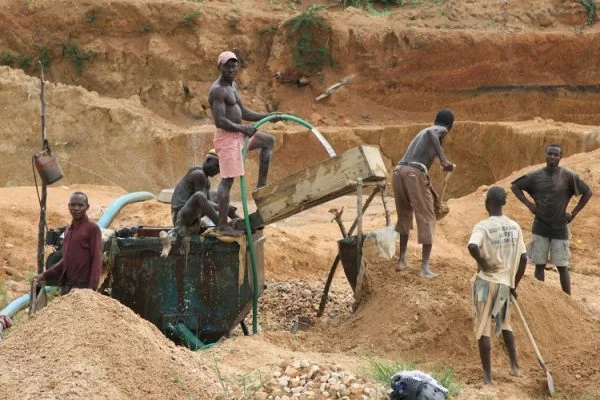
Minicaland small scale miners welcomes one stop processing centre

0

Small scale miners in Manicaland have welcomed Government’s initiative to establish the first one stop gold processing centre in Odzi, saying it would comprehensively bring back sanity in the sector. The Zimbabwe Mining Development Corporation (ZMDC) and Manicaland Miners Association (MMA) announced that the second processing centre by Government was to be set up in Manicaland following the Bubi Gold Service Centre in Matabeleland North.

A local miner in Manicaland Mr Latt Makahwi told Post Business that the development was going to improve the sector and cushion miners from outrageous prices from private gold processing companies.

“I believe that the Government initiative is a noble idea towards enhancing gold production in the country and developing the livelihood of small scale miners like us,” said Mr Makahwi

He added: “Government has acknowledged the role being played by the small mining sector in the country and has set up mechanisms to develop the economy by boosting gold production from this sector. This can only be achieved by targeting most of the artisanal miners in the province. This also will help miners to make informed decisions towards the development of the country,” he said.

Another local miner Ms Memory Chirara said: “We want Government to fast track this project following the observation that a lot of gold is being lost through the black market, a situation that has been very hard for the authorities to control because of the sophisticated illegal ways of smuggling.

“Gold production has declined recently as a result of smuggling and this has an effect on the national foreign currency income, hence if we have the processing plant now it would help solve some of the problems the nation has been facing.

“This is a win-win situation considering the services that miners will benefits, which will be ranging from technical support, reduced transport costs and reasonable charges that cannot be compared with the steep charges private millers have been charging us,” she said.

She also said they would be offered the opportunity to get paid from their residue which private players have been keeping for their benefit.

MMA chairman Mr Godfrey Kombo said the development was a positive move towards easing miners’ operational costs hence the call to have them register.

“The first to enjoy the benefits would be those formally registered. We also want to look at the long term benefits from the technical support miners will receive. Miners will receive education that will help curb the accidents that have taken a lot of lives. It will also help us preserve our environment from the oversight role the centre will provide.

“President Mnangagwa has said the goal is to target at least 100 tonnes of gold by 2023 but I believe with this centre in place and artisanal miners playing their part, we are very much capable of surpassing that target even before 2023,” he said._Manica Post

Two killed in accident at Glencore’s Zambian mine

0

Two workers died in an accident at Glencore’s Zambian operation Mopani Copper Mines (MCM) on Tuesday, prompting it to suspend production pending investigations, the company said.

“All operations at the South Ore Body (shaft) have been suspended until further notice,” the company said in a statement without providing details of the accident.

Mopani is one the biggest mining companies in Zambia — Africa’s No. 2 copper producer — with output of about 100,000 tonnes a year. It was not immediately clear how much production would be lost during the suspension to production._Reuters

error: Content is protected !!