Home Blog Page 656

Canadian juniors shifting focus to Africa, away from S. America

0

The State of Mining Finance 2019 report produced by the Prospectors & Developers Association of Canada (PDAC) and junior financing tracker Oreninc, shows Toronto’s stock exchanges managed to bump its share of global exploration capital raised to 44%.

However, the value of equity raised by juniors on the TSX and TSX-V decreased by 58% and 23% in 2018 respectively.

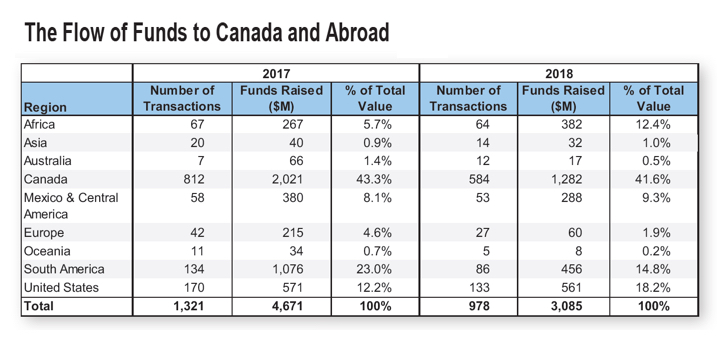
There is also a change in the way exploration funds are being applied regionally. Oreninc tracks the intended use of proceeds from financings on Canadian bourses which showed 60% of funds raised is destined for projects outside Canada.

Notable in 2018 is the year-over-year increase in funds flowing to African projects and the more than $600m decrease in funds used to explore in South America.

Canadian juniors shifting focus to Africa, away from S. America

Source: State of Mining Finance 2019

Mining.com

Glasenberg said to meet Tshisekedi after ties strained

0

Glencore Plc Chief Executive Officer Ivan Glasenberg met the Democratic Republic of Congo’s new president this week, their first encounter since Felix Tshisekedi took office, according to people familiar with the matter.

The meeting comes after relations between mining companies and the government deteriorated last year, when former President Joseph Kabila backed an overhaul of Congo’s mining code that hiked royalties and imposed new taxes. Tshisekedi replaced Kabila Jan. 24 after winning elections in December.

Glasenberg had an audience with Tshisekedi on Feb. 25, said three people who asked not to be identified because they aren’t authorized to talk about the matter publicly. They didn’t provide details of what was discussed at the meeting.Glasenberg had an audience with president Tshisekedi on Feb. 25

Glencore declined to comment and Congo’s presidency didn’t immediately respond to a request for more information.

Barrick Gold Corp. CEO Mark Bristow said last month he met Tshisekedi’s chief of staff and advisers on Jan. 29, when they discussed the mining rules. Barrick operates the Kibali gold mine in northeast Congo.

Glencore is one of the largest investors in Congo — the world’s biggest source of cobalt, which is used to make batteries that power electric vehicles, and one of the top producers of copper. The company controls two copper and cobalt mines in the southeast of the country.

Glencore’s Mutanda Mining is reducing output and dismissing expatriate workers as reserves of easier-to-refine oxide ores deplete. The company is studying the viability of building processing facilities to exploit their remaining sulfide deposits.

Strong Opposition

Glasenberg’s company and other international miners strongly opposed aspects of the new industry code. He signaled last month they planned to engage with Tshisekedi’s administration on the matter.

“We hopefully will be negotiating with the new government,” Glasenberg told analysts on Feb. 20. “We don’t accept the way they have changed the mining code right now.”

Glencore announced last week it’s written down Mutanda’s value by $600 million, blaming the larger tax burden. The new mining law has reduced “the probability of approving the development of new facilities to treat the sulphide reserves” at Mutanda, Glencore said in its 2018 earnings report._Reuters

Platinum prices low: S.A output jump will push oversupply to 6-year high|

0

On Wednesday, platinum futures was in retreat again, sliding to $832 an ounce after a new study predicted the largest market surplus in at least six years for 2019. In January the precious metal dropped to near 14-year lows.

A new report by the World Platinum Investment Council (WPIC) predicts the platinum market moving into a surplus of 680,000 ounces in 2019 after a surplus of 645,000 ounces last year.

A rise in consumption for the first time since 2015 this year will be offset by a 6% increase in mine-level output to 6.46m ounces on top of a 3% boost to recycling. Platinum is mainly used in autocatalysts to scrub emissions and in jewellery fabrication.

Automotive demand is projected to fall at a far slower rate than in 2018The WPIC said supply growth would come mainly from the release of material stockpiled by mines and smelters in South Africa during upgrades and maintenance over 2017 and 2018. South Africa supplies more than 70% of the world’s mined platinum and output will hit 4.725m ounces in 2019.

Expansion in the US is expected to lift North American supply by 50koz to 410koz. Output from Zimbabwe and Russia is expected to remain stable at 470koz and 675koz respectively

Platinum demand has been under pressure since 2015 following the Volkswagen diesel-engine emissions cheating scandal in the US. WPIC says automotive demand is projected to fall at a far slower rate than in 2018, declining 3% year-on-year to 3m ounces in 2019, compared to a 7% decline in 2018.

In contrast to platinum, palladium used in gasoline engines, continues to attempt fresh all-time highs, trading at $1,466 an ounce on Wednesday, up more than 60% compared to this time last year.

The last time platinum traded at this deep discount to sister metal palladium was in 2001. In 2008, platinum was at a $1,750 premium to palladium. As for the relationship with gold, platinum was still trading near par in February last year._Mining.Com

Barrick Gold sets conditions to negotiate with Newmont

0

Barrick Gold’s (TSX:ABX)(NYSE:GOLD) chief executive Mark Bristow said Monday he’s open to negotiate with rival Newmont about a deal to work together in Nevada, but only if his company runs the operations.

“Nevada, with a combined 76M ounces, will be worth a whole lot more if it is run by one operator,” Bristow said earlier in the day, adding that Barrick can do that more efficiently than Newmont.

“My suggestion is that Gary [Goldberg, Newmont’s CEO] gets his team up here tomorrow,” Bristow told the Financial Times. “Time is of the essence.”

Barrick had previously said that teaming up in Nevada was not “the right path” forward. Only last week, the Canadian gold miner said teaming up in Nevada was not “the right path” forward. It noted it would not enable full realization of benefits due to duplicate administration, conflicting priorities and cumbersome governance.

Earlier in the day, Newmont Mining (NYSE:NEM) rejected the Toronto-based company’s $18 billion unsolicited acquisition offer, countering with a proposal for a joint venture (JV) in Nevada. Such deal would be worth billions of dollars and create a major operator in the largest U.S. gold-producing region.

The contra-proposal stated that the Toronto-based rival would hold a 55% interest in the Nevada JV, while the Newmont-Goldcorp merged company would have a 45% stake.

The two gold miners have held merger talks every decade or so for almost thirty years, with the last one before today’s blowing at the 11th hour in 2014._Mining.com

Newmont rejects $18B hostile bid by Barrick

0

Newmont Mining (NYSE:NEM) rejected Monday rival Barrick Gold’s (TSX:ABX)(NYSE:GOLD) all-stock $18 billion hostile takeover offer, but left the door slightly open by countering with the terms of a deal to merge their operations in Nevada, U.S.

Chief executive Gary Goldberg said Newmont’s board had concluded that its planned $10 billion takeover of Canada’s Goldcorp (TSX:G) (NYSE:GG) was the best deal for shareholders.

The offer rejection could consolidate the Colorado-based miner as the world’s biggest gold producer.

“The combination with Goldcorp is significantly more accretive to Newmont’s shareholders on all relevant metrics compared to Barrick’s proposal, even when factoring in Barrick’s own synergy estimates,” he said. “Realizing value through Barrick’s proposal for Newmont’s shareholders hinges entirely on a new management team that lacks global operating experience and is only two months into its own transformational integration.”

Under its agreement with Goldcorp, Newmont is not allowed to engage with Barrick on its takeover bid after the board has determined that it’s not a “superior proposal,” the miner added.

“Newmont’s latest proposal is essentially based on the stale and convoluted process that foundered previously,” Barrick new boss Mark Bristow said in a statement. “As usual, it comes with unrealistic preconditions including swapping the chairmanship and the leadership of the JV. Experience has shown us that JVs only work well when the majority owner is also the operator.”

The offer rejection, anticipated by analysts, could consolidate the Colorado-based miner as the world’s biggest gold producer, with Barrick grabbing the second place and Australia’s Newcrest Mining (ASX:NCM) the third.

Getting nasty

Newmont’s contra-proposal sees its Toronto-based rival holding a 55% interest in a Nevada joint venture, while Newmont-Goldcorp would have a 45% stake.

Barrick and Newmont have held merger talks every decade or so for almost thirty years, with the last one blowing at the 11th hour in 2014.

A combination of the two would have created the world’s No.1 gold miner with annual production of more than 10 million ounces. However, the Canadian firm has not offered a premium, telling shareholders they will benefit from the value created by merging the two companies.

Hostilities between the two companies have grown since Barrick’s approach last month. On top of the chief executives trading insults, Newmont has now released private communications between Barrick ‘s Bristow and Goldcorp chairman Ian Telfer in which he praises the Vancouver-based miner’s “strong portfolio” of assets in “world class districts”. Bristow has previously said that Goldcorp had only one top tier gold asset in its portfolio, which is operated by Barrick._Mining.com

Gold edges above five-week low

0

Gold prices inched up today, after recovering from a more than five-week low in the previous session, supported by a pause in global equities’ rally, while a firmer dollar curbed gains.

Spot gold was up 0.2 percent at $1,290.04 per ounce, as of 0654 GMT, after slipping to $1,280.70 in the previous session, its lowest since Jan. 25.

U.S. gold futures were up about 0.4 percent at $1,289.60 per ounce.

Asian stocks held their ground on Wednesday as Chinese equities rallied on stimulus hopes, although a resurgence in regional tensions capped broader gains.

“Gold is firming after the sharp fall as competing influences of the interest bearing assets are reversing. Bond yields have started to weaken gently, and while the dollar is going up, equities are seeing headwinds,” said Benjamin Lu, an analyst with Singapore-based Phillip Futures.

“Gold in longer term is very much supported, partially due to shift in sentiments and global slowdown. In the shorter term, gold continues to show signs of bearish weakness and there is some room to go further south before it resumes its positive trend.”

The dollar index held near a two-week high hit in the previous session.

Markets were a bit cautious over the Sino-U.S. trade dispute and are awaiting developments in talks between the two major economies after a tit-for-tat tariff war, analysts said.

U.S. Secretary of State Mike Pompeo said President Donald Trump will reject any trade deal that is not perfect but that they will still keep working on an agreement rekindling concerns in the market.

While a series of robust data from the United States has strengthened the dollar, the Federal Reserve’s patience on policy is nowhere close to running out.

Markets will now look ahead to the European Central Bank’s monetary policy meeting on Thursday and U.S. non-farm payrolls data on Friday.

On the technical front, gold is expected to hover above a support at $1,283 per ounce, as it seems to be stabilising around this level, according to Reuters analyst Wang Tao.

However, gold continues to see downwards pressure from outflows in exchange traded funds and a firmer dollar, MKS PAMP Group said in a note.

Holdings of SPDR Gold Trust, the world’s largest gold-backed exchange-traded fund, dropped 2.7 percent so far this year.

Among the other precious metals, palladium slipped 0.5 percent to $1,507.77 per ounce.

Spot silver gained 0.1 percent to $15.14 per ounce, after slipping to its lowest since Dec. 27 in the previous session, while platinum dipped 0.4 percent to $833.10 per ounce. _Reuters


Zim ranked second on worst mining policy

0

ZIMBABWE has the second worst attractive mining policies in Africa, ranking better than the Democratic Republic of Congo (DRC), a new report has shown.

According to Canada-based Fraser Institute’s 2018 edition of the annual survey of mining companies released last week, the southern African nation was ranked 76 out of 83 jurisdictions ahead of DRC which was 82 out of 83.

“Zimbabwe’s score and rank increased this year, moving it up from 89th (of 91) last year to 76th (of 83). Despite this increase, the country is still Africa’s second least attractive jurisdiction based on policy factors,” reads the report.

The study’s Policy Perception Index (PPI), which captures the opinions of managers and executives, looked into uncertainty concerning the administration, interpretation, enforcement of existing regulations. It also looked at environmental regulations, regulatory duplication and inconsistencies and taxation.

The 10 least attractive jurisdictions for investment based on the PPI rankings starting with the worst are Venezuela, Democratic Republic of Congo (DRC), Neuquen, Chubut, Philippines, Guatemala, La Rioja, Zimbabwe, Bolivia, and China.

In Africa, Botswana is again the highest ranked jurisdiction in Africa, polling 12th out of 83, with Namibia becoming the second most attractive jurisdiction, ranking 36th out of 83 in 2018.

The survey further focused on uncertainty concerning disputed land claims and protected areas, infrastructure; socio-economic agreements, political stability, labour issues, geological database and security.

Authorities in Harare are working on an overhaul of the country’s mining legislative framework, as the southern African nation tries to open up the sector to foreign investment and spur production to improve mineral earnings.

Mining generates more than half of Zimbabwe’s export receipts. Last year, it earned US$2,8 billion, but industry executives say it has the potential to earn more with increased transparency and investment. The local ownership law, which restricted foreign shareholding in mining houses to 49%, has since been amended and now only applies to companies mining platinum and diamond.

A separate report by the Zimbabwe Environmental Law Association also noted that the current mining legislation contributed to the country’s failure to leverage on its mineral resources to effectively contribute to economic development._NewsDay

Chinese company ordered to stop operations

0

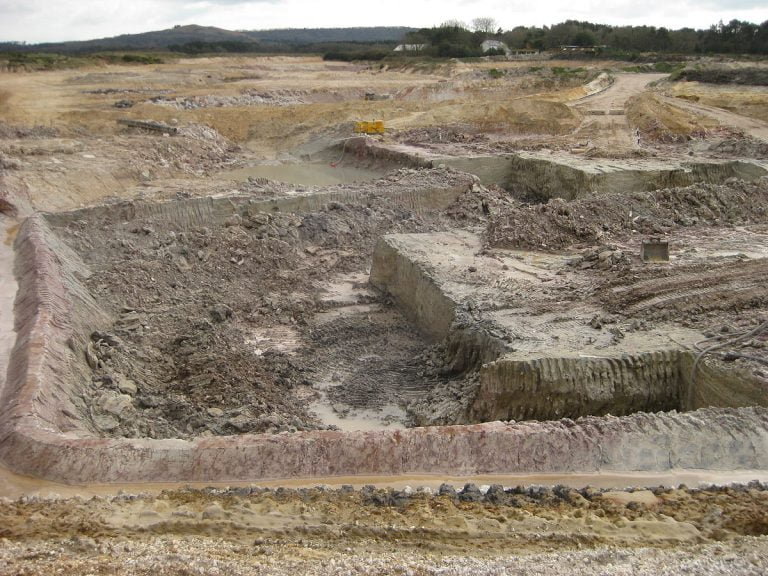
THE Environmental Management Agency (EMA) has ordered an Umguza-based Chinese brickmaking company to stop operations pending processing of its Environmental Impact Assessment (EIA) certificate.

Homestead Clay, also known as Zimbabwe and China Biocheng Brick Company, has been mining clay along the Harare Road in the Umguza District without an EIA certificate, thereby violating the country’s laws.

EIA is a process of evaluating the likely environmental impacts of a proposed project or development, taking into account inter-related socio-economic, cultural and human-health impacts, both beneficial and adverse.

EMA Matabeleland North provincial manager Chipo Mpofu-Zuze revealed that the company’s EIA certification papers were yet to be approved.

“The correct name which they submitted for an EIA is Homestead Clay. It could be having another name, but the documents they submitted to us indicate that they are called Homestead Clay,” Mpofu-Zuze said.

“They did prospectus and were told to do the full EIA. They did it and submitted it for processing. We are now processing it. Our team went there today (yesterday) and they have ordered them to stop operations,” she said.

Mpofu-Zuze said EMA was having challenges with companies that start operations without an EIA certificate.

“The challenge that we have is that people think that if they do that book (EIA) even before its approved they can start operations. This is what they (Chinese company) did, but they have been told to stop until their EIA certificate has been approved, if it’s going to be approved,” she said.

Southern Eye last week visited the site and was told that all documents including the EIA certificate were there.

Company official Takavada Mbondiah yesterday insisted that they had the EIA certificate, dismissing EMA’s claims that it halted the operations.

Mbondiah claimed that they got their EIA certificate two weeks ago._NewsDay

Gold steadies

0

Gold steadies today, but hovering near a five-week low touched in the previous session, as rising U.S. Treasury yields boosted the dollar.

Spot gold crept up 0.2 percent to $1,288.87 per ounce as of 0336 GMT, after slipping to $1,282.50 in the previous session, its lowest since Jan. 25.

U.S. gold futures were also up 0.2 percent at $1,290.20 per ounce.

The dollar, against a group of six major currencies, was trading close to its two-week high of 96.816 posted in the previous session.

The U.S. currency has enjoyed some support from higher U.S. Treasury yields as data, including fourth-quarter gross domestic product, eased fears of a potentially rapid loss in economic momentum.

“People are more comfortable in moving out of safe-haven assets and gold is coming under pressure from that,” said Jeffrey Halley, Senior Market Analyst at OANDA.

“A lot of money was parked in gold at the start of the year, waiting for clarity on tariffs. Now that we are seeing little bit of optimism on the tariffs that is sort of undermining pillars for buying gold,” Halley said, adding that if yields continued to rise, that would further pressure gold.

U.S. Secretary of State Mike Pompeo said on Monday he thought the United States and China were “on the cusp” of a deal to end their trade war.

However, a slight slip in the Asian equity market triggered by a cut in China’s economic growth target supported gold prices on Tuesday.

China cut its growth target for this year to 6.0 to 6.5 percent, in line with expectations, from around 6.5 percent last year.

“Concerning that global economic growth slowed down, while central banks turned more dovish on monetary policy, we are not being pessimistic about gold market,” gold dealer Wing Fung said in a research note.

Gold may fall to $1,271 per ounce, as it has broken a support at $1,289, according to Reuters analyst Wang Tao.

Tracking bullion prices, holdings of SPDR Gold Trust, the world’s largest gold-backed exchange-traded fund, fell 0.76 percent on Monday from Friday. Holdings have fallen over 2 percent so far this year

Among the other precious metals, palladium slipped 0.1 percent to $1,531.89 per ounce.

Spot silver gained 0.5 percent to $15.15, while platinum was 0.7 percent higher at $840.27 per ounce._Reuters

New granite cutting and polishing plant in Mutoko

0

Zimbabwe is set to have another mega-plant that will be producing tiles and other related granite
products, the Daily News reports.

This comes after Surewin Investment (Pvt) Ltd which was granted the Special Economic Zone status
last year is setting up a manufacturing plant for granite cutting and polishing in Mutoko.

The plant is set to attract foreign direct investment to the tune of USD$20 million with an estimated
revenue of USD$5 million per annum through both local and export sales of value added granite rock
products.Mutoko in Mashonaland East Province is commonly known for the black granite which is now popularly used to furnish and tile modern homes worldwide.

Zimbabwe Special Economic Zone Authority (Zimseza) chief executive officer Edwin Kondo stated
that the newly-approved investment is also expected to bring new technologies to the granite mining
sector. “The project will see thousands of direct and indirect jobs created and a huge number of the
jobs will be for the locals.

Twenty locals are expected to be trained on mine construction projects during the first year of
implementation,” Kondo said.

Zimseza is a statutory body set up in terms of the Special Economic Zones Act (Chapter 14:34)
mandated to designate, attract and administer Special Economic Zones in Zimbabwe.
While Zimbabwe’s “import over export” problem remains, the project is said to contribute greatly
towards introducing new technologies and skill, value addition and import substitution.

“Furthermore, the country and its human resource will benefit largely from the transfer of new granite
cutting and polishing technologies which will make our granite products competitive on the
international market thus increasing value to our natural resource,” Kondo added.

While the Mutoko people have bemoaned exploitation of resources as the community wallows in
poverty, Kondo said Surewin Investment (Pvt) Ltd has also undertaken the social responsibility
projects to assist the local community.

“The organisation promises to undertake the following projects in its continued support and assistance
to the local community construction of access roads, seasonal road maintenance, completion of
learning blocks at Manemba Primary and Nyakabau Primary School and upgrading of local school
facilities,” he said.

To date the authority has declared five special economic zones namely Masuwe stateland in Victoria
falls measuring 1 200 hectares, Fernhill in Mutare measuring 87 hectares, stand 518 Beitbridge and
its surroundings measuring 105 hectares, Imvumila industrial area in Bulawayo and the Belmont,
Kelvin, Donnnington corridor also in Bulawayo._Daily News

error: Content is protected !!