Home Blog Page 659

Palladium hits record high

0

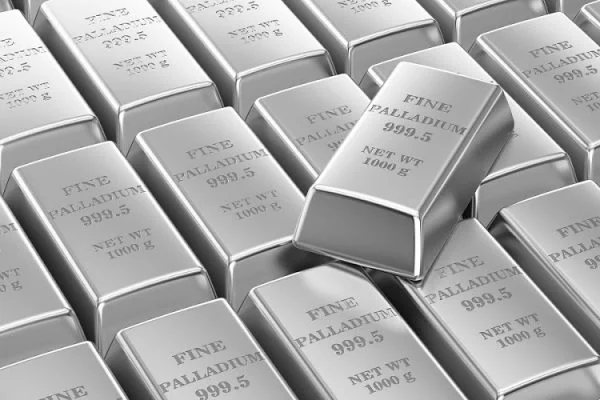
Palladium hit a record high on Tuesday, surging above $1,550 as a threatened strike by South African mineworkers added to supply risk concerns in an already tight market, while gold prices edged up on a subdued dollar.

Spot palladium traded as high as $1,553 per ounce as of 0400 GMT.

The metal has risen 23 percent this year on a sustained supply deficit and has gained for seven straight months.

At least 15 mining firms in South Africa, a major producer of the autocatalyst metal, have received notices of strikes to be held later this week.

“Support comes from supply side issues, mainly from South Africa where a strike by the union has a potential to disrupt output further,” ANZ analyst Daniel Hynes said, adding that positive news on Sino-U.S. trade is also providing support.

“There’s been a feeling that demand overall would be impacted by tariffs on the either side and this potential deal will minimize the risk of that occurring, so the market is viewing this as a positive move.”

U.S. President Donald Trump said on Monday he may soon sign a deal to end a trade war with Chinese President Xi Jinping if their countries can bridge remaining differences, saying negotiators were “very, very close” to a deal.

“(However,) considering the rally we are seeing in prices, the risk of a correction is increasing by the day. (But) for the moment the trend is likely to continue,” Hynes said.

Meanwhile, spot gold gained 0.2 percent to $1,329.08 per ounce and U.S. gold futures were up 0.1 percent at$1,331.2 as the dollar remained subdued.

The U.S. unit was down 0.1 percent against major currencies .

“Investors will now be moving away from the trade issue and will start to focus on macro releases and testimony by Federal Reserve Chairman Jerome Powell,” INTL FCStone analyst Edward Meir said in a note.

Fed chair Powell will be testifying on U.S. monetary policy and the economy before the Senate Banking Committee on Tuesday and Wednesday.

“Powell could use the opportunity to move perceptions a little bit more towards the hawkish side. In such a case, we could see modest dollar strengthening set in over the course of his remarks, likely exerting more downward pressure on gold.”

Holdings in the world’s largest gold-backed exchange-traded fund, SPDR Gold Trust, fell 0.15 percent to 788.33 tonnes on Monday.

Elsewhere, silver rose 0.2 percent to $15.91 per ounce, while platinum was up 0.6 percent at $854, after scaling its highest since early November at $856.50._Reuters

Beny Steinmetz makes Guinea comeback in Sarkozy-brokered deal

0

Israeli mining tycoon Beny Steinmetz is making a dramatic return to Guinea after the billionaire ended a bitter dispute with the West African country that brought his business empire to its knees.

The settlement, brokered by former French President Nicolas Sarkozy, ends a seven-year-old dispute centered around one of the world’s richest mineral deposits that included a colorful list of characters from billionaire George Soros to former U.K. leader Tony Blair and mining heavyweights Rio Tinto Group and Vale SA.

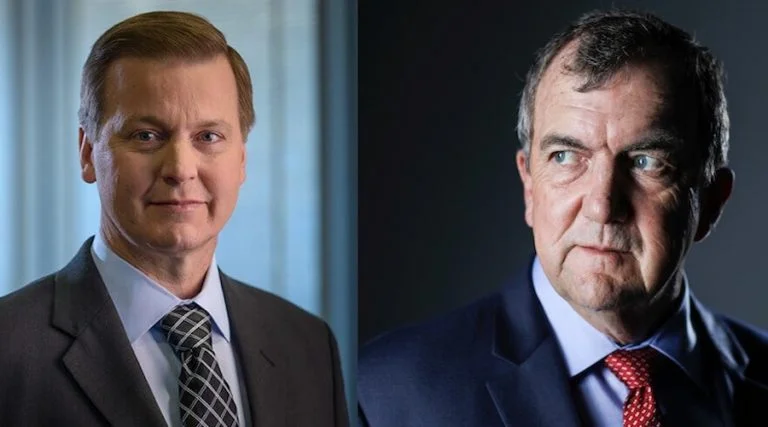
After months of secret negotiations, Steinmetz’s BSG Resources Ltd. agreed with Guinean President Alpha Conde to withdraw allegations of corruption leveled against each other over years and to drop a two-year-old arbitration case over one of the world’s most-fabled mineral deposits — the Simandou iron-ore project. Guinea also agreed to partner with mining grandee Mick Davis, who will develop the Zogota iron-ore mine once the disputes have been settled, marking a comeback for one of the industry’s biggest names.

The reconciliation puts Steinmetz, BSGR and Davis in prime position to lead the development of Guinea’s massive iron-ore reserves. Mining giants like Rio Tinto, Vale and Aluminum Corp. of China have all failed to develop projects in the country.

“We were enemies. Now we are friends and partners with the Guinean government. We have both put aside the past and BSGR and its employees and advisers have been vindicated.”

“A good agreement is much better than any war,” Steinmetz, who acts as an adviser to BSGR, said in a phone interview on Sunday. “We were enemies. Now we are friends and partners with the Guinean government. We have both put aside the past and BSGR and its employees and advisers have been vindicated.”

For Steinmetz, the heir to one of Israel’s premier diamond businesses, the arrangement is a remarkable return to favor in Guinea. BSGR entered administration a year ago to protect itself from the outcome of litigation and arbitration it was involved in related to the country. In 2012, Guinea stripped BSGR of its rights to Zogota and half of Simandou, thought by miners to be the world’s biggest undeveloped iron-ore deposit. A government committee alleged he and his officials paid millions in bribes to obtain the rights.

“We are all really pleased with the situation,” Steinmetz said. “Guinea wants to work and they see us as the pioneers of the iron-ore situation, because nobody else has picked it up. Production and export of iron ore will be expedited and this is a win-win situation for everyone.”

Sarkozy, who was in office between 2007 and 2012, had a relationship with both sides and was able to broker the deal, according to a person with knowledge of his role.

Long-time director Dag Cramer negotiated the deal for BSGR, a firm owned by a Steinmetz family foundation. Under its terms, the company relinquishes rights to Simandou and Zogota, and Davis will develop the smaller deposit.

BSGR keeps an economic interest in Zogota, which, according to Steinmetz, will move toward producing “very fast.” The company will get a share of the revenue from the new project, which will be developed by Davis in partnership with Guinea.

‘Win-win’

“We’re pleased with the agreement,” Guinea’s Mines Minister Abdoulaye Magassouba said in an emailed statement, adding that the new projects will be in line with the country’s new mining code. “It’s for the good of the people. It’s with this aim that the government will try hard to work in a win-win partnership with the investors.”

The reconciliation suited both sides. Guinea faced the possibility of an embarrassing loss in arbitration court, while BSGR would have been able to do little with an award by the tribunal if Guinea’s government remained hostile. The government withdrew all allegations of corruption against BSGR and Steinmetz.

Steinmetz, 62, was originally sent out by his family to secure supplies of rough diamonds, introducing him to difficult environments across the globe. He developed a diamond mine in Sierra Leone before setting his sights on Simandou in neighboring Guinea. Ailing President Lansana Conte stripped Rio Tinto of its rights to half of the asset, which the Anglo-Australian miner hadn’t developed in a decade of control. The rights lost by Rio were transferred to Steinmetz weeks before the president passed away in 2008.

BSGR rapidly sold half of its Guinean assets to iron-ore mining giant Vale SA for $2.5 billion.

Mining review

After Conde was elected in 2010, he announced a review and clean-up of the mining industry, Guinea’s main source of income. Billionaire hedge fund manager George Soros and former U.K. Prime Minister Tony Blair advised on and funded Conde’s initiative. A lurid dossier of alleged corruption against Steinmetz became the basis for BSGR’s loss of rights in 2012.

Steinmetz and BSGR always denied any wrongdoing and insisted they would one day be vindicated. Rio Tinto, meanwhile, is now under investigation in the U.K. and Australia for payments it made to a consultant to try to restore its rights to Simandou.

The Guinean saga has been more than just a painful business loss for Steinmetz. He has been the subject of investigations by authorities in the U.S., Switzerland, Romania and Israel, where he was briefly detained in 2016 and then placed under house arrest.

Though Simandou has long been a fabled asset, developing it may be impossible. It would require an investment of $20 billion, including the construction of railway lines across a mountainous country. Rio attempted to later sell its share of the project to Aluminum Corp. of China, but the deal collapsed last year.

Mick the Miner

Davis may have a favorable solution, with the government allowing him to export via an existing railway line through neighboring Liberia, using his newly formed Niron Metals venture.

“Niron believes that the Zogota deposit can be brought into production on an accelerated timetable, thereby helping to unlock the potential of Guinea’s rich resources for the benefit of all stakeholders, including the Government and people of Guinea,” the company said in a statement.

Davis, nicknamed Mick the Miner, was one of the industry’s most successful operators in the early part of the decade as the mining industry boomed on China’s rampant industrialization. As Xstrata Plc’s chief executive officer, Davis led a team renowned for transforming the coal producer through about 40 deals worth $35 billion over 10 years from 2002, before agreeing to a friendly merger with commodity trader Glencore Plc, where Ivan Glasenberg managed to beat him to the top job.

Since then, the U.K. Conservative Party treasurer has struggled to regain a footing. His private equity vehicle X2 Resources folded after failing to make any deals amid volatile commodity prices and disparate investors who couldn’t agree on what assets to buy.

Bloomberg News

Mick Davis to mine Guinea’s Zogota iron ore deposit

0

Niron Metals, headed by the former boss of Xstrata Mick Davis, will develop Guinea’s Zogota iron ore deposit, previously owned by BSG Resources (BSGR).

The news, confirmed via an emailed statement, follows a Monday agreement between Israeli tycoon Beny Steinmetz, BSGR’s owner, and the government of Guinea over the rights to Simandou, one of the world’s largest untapped reserves of iron ore.

“[BSGR’s deal] has paved the way for the creation of an effective mining partnership between Niron and the Government to mine this deposit,” it said, “The company looks forward to bringing this to fruition subject the satisfactory settlement of all disputes between the parties.”

As part of that settlement, BSGR has relinquished its claims on blocks 1 and 2 of Simandou, whose development has been hindered by years of legal wrangling as well as the $23 billion cost of the required infrastructure.

The Zogata project is expected to produce around 2 million tonnes of iron ore a year.

Rio Tinto (ASX, LON:RIO), the world’s second largest iron ore producer, still holds a 45.05% stake in Simandou’s remaining blocks 3 and 4.

“At the request of the Republic of Guinea, a new group of investors (presented by and including Steinmetz) will exploit the Zogata deposit, in order to export iron ore, according to an accelerated timetable,” a statement quoted by Financial Times reads.

The Zogata project is expected to produce around 2 million tonnes of iron ore a year, which will be transported by rail and exported via a port in neighbouring Liberia.

Guinea’s government had previously stated that ore had to exported via the West African nation’s own ports.

Davis is well known in the mining industry. He led Xstrata from a $500 million business in the early part of the last decade to an operation so big that — at one point — it made a takeover offer for Anglo American (LON:AAL).

His latest venture, mining fund X2 Resources, ended up losing its backers as it was unable to score any deals in the three years since launch.

Mining.com

Barrick makes hostile $17.8 billion bid for Newmont

0

Canada’s Barrick Gold (TSX:ABX)(NYSE:GOLD), the world’s second-largest bullion producer, is going hostile in its bid to acquire U.S. rival Newmont Mining (NYSE:NEM) and create a mega-gold corporation with a $17.8 billion all-share offer.

The move, announced before markets opened on Monday, increases the potential for a three-way fight among some of the world’s largest gold miners, and comes after Newmont’s chief executive, Gary Goldberg, qualified the approach as a “desperate” and “bizarre” move by Barrick.

If successful, the bid will create the world’s largest gold company with a value of around $42 billion at current market prices. That gold mammoth would hold assets in almost every continent, including Australia, Africa, the U.S. and Latin America.

The move increases the potential for a three-way fight among Barrick, Newmont and Goldcorp, some of the world’s largest gold miners.

The Toronto-based miner is offering 2.5694 shares for each Newmont share, giving investors of the U.S. company a 44.1% of the combined entity. The deal, Barrick said, it’s “far superior” to Newmont’s $10-billion offer to buy Goldcorp (TSX:G) (NYSE:GG), unveiled in January and still on the works.

In a letter to shareholders, chief executive Mark Bristow said acquiring Newmont would create up to $7 billion in synergies, mainly through cost savings due to the overlap in operations in Nevada, where both companies have massive mines and exploration projects.

“Considered globally, the merger represents a radical and long-overdue restructuring of the gold industry, and a transformative shift from short-term survival tactics to the long-term creation of sustainable value,” Bristow said.

The companies already own in Nevada — the largest U.S. gold- and silver-producing state —  Turquoise Ridge mine, in a 75%-25% partnership. And Newmont alone has 19 mines adjacent to Barrick’s own operations.

“There is no other transaction in our industry that can create better value for shareholders and other stakeholders than a business combination between Newmont and Barrick,” John Thornton, Barrick’s executive chairman, wrote to Newmont’s board. “The market reaction to date to your Goldcorp transaction suggests that investors do not endorse your rationale.”

A deal between the two world’s largest bullion miners would likely thwart Newmont’s intended acquisition of Goldcorp, leaving the Vancouver-based company stranded — or back in play — amid a wave of consolidation in the gold sector.

The potential mega-merger of the two world’s largest bullion miners would likely thwart Newmont’s intended acquisition of Goldcorp.

It’d also bring into question Barrick’s ability to integrate another miner, as the company has just completed the acquisition of Randgold.

The potential mega-fusion would follow years of relatively sluggish gold prices, with futures stuck in a range between $1,000 and $1,400 per ounce since 2013. But the precious metal seems to be on the way up, with prices increasing about 11% since October.

Barrick and Newmont have held merger talks every decade or so for almost thirty years, with the last one blowing at the 11th hour in 2014.

The news comes as the mining industry is still recovering investors’ trust following a stretch of ill-timed and badly-chosen expansions and acquisitions that sent billions of dollars down the drain.

Barrick itself was responsible for one of those —  the acquisition of Equinox Minerals in 2011, which Thornton since qualified as if not the worst, one of the five worst acquisitions in history.

Shares in both Newmont and Barrick were largely unchanged in early trade.

Mining.com

Gold price rises

0

Gold prices rose on Monday as the dollar fell against the yuan after U.S. President Donald Trump said he would delay an increase in tariffs on Chinese goods, while palladium surged to a record high.

Spot gold rose 0.2 percent to $1,330.48 per ounce at 0532 GMT. U.S. gold futures were steady at $1,333.

The offshore yuan strengthened 0.6 percent to 6.673 yuan against the dollar, after hitting its highest level since mid-July, on the news that Trump might not raise tariffs on $200 billion of Chinese imports to 25 percent from 10 percent.

A strong yuan makes gold cheaper for world’s leading gold consumer, China.

Trump said on Sunday that he would delay an increase in tariffs on Chinese goods that had been scheduled for later this week, citing “substantial progress” in Sino-U.S. trade talks over the weekend, and that he and his Chinese counterpart would meet to seal a deal if progress continued.

“The dollar is weaker today after Trump’s extension of tariff deadline,” said Jeffrey Halley, senior market analyst, OANDA.

“Gold, as it moves into the European and New York trading session, might come under pressure from the stock market,” Halley said, adding that there won’t be any sustained downward pressure until there is more information on the trade deal.

Asian shares scaled a 5-month peak after Trump’s decision to extend the deadline improved appetite for riskier assets.

Gains in equity markets tend to decrease appeal for gold, considered a safe store of value during economic and political uncertainty.

“Gold prices, though hinting for a looming bearish correction on risk-on market sentiments, will remain firmly supported on rising economic uncertainties and heightened geopolitical risks in 2019,” Benjamin Lu, an analyst with Singapore-based Phillip Futures said in a note.

Meanwhile, spot palladium traded as high as $1,506.50 per ounce, propelled by a stark supply deficit, and was last up 0.5 percent at $1,505.

Platinum, which rose to its highest since late November, was up 0.4 percent at $843.50 per ounce.

The platinum group metals (PGM) continued to rise as supply risks increased after South Africa’s Association of Mineworkers and Construction Union (AMCU) planned to extend a strike from Sibayne Gold to other PGM producers in the country, ANZ analysts said in a research note.

The AMCU has been on strike at Sibanye’s bullion operations since mid-November and plans to extend the strike to its platinum mines as well as all other mines where the AMCU has members.

Elsewhere, spot silver rose 0.3 percent to $15.96 per ounce.

Reuters

RioZim thermal power project to take off

0

RIOZIM has signed an exclusivity agreement with a Chinese state-owned firm Power China for the construction of a 2000-megawatt (MW) thermal power station in Sengwa, Gokwe North, raising expectations the long-standing plan is slowly coming to fruition, sources said last week.

An exclusivity agreement (or a lock-out, shut-out or no-shop agreement) is designed to ensure that the other party to a prospective deal negotiates solely with the client for a period of time.

The contractor is already on site, conducting initial evaluations which precede financial closure.

The first phase of the project involves the construction of a 700MW plant.

Sengwa, which carries a $2,2 billion price tag, is among several independent power projects that have been licensed by the regulator, the Zimbabwe Energy Regulatory Authority (Zera).

Although RioZim chief executive officer Mr Bheki Nkomo was not available for comment by the time of going to print, sources said Power China –  a sister company of Sinohydro, which was involved in the expansion project on Kariba South and is presently working on Hwange Power Station’s Unit 7 and 8 – is already preparing a bill of quantities.

“They (Power China) are on the ground now (Power China). They are doing a bill of quantities on the water pipeline and power lines. So, they are updating (details) on two issues, as required by financiers.

“The bank wanted to know the cost of the water pipeline from Kariba to Sengwa, so they are currently costing out that, then the cost of evacuation lines from Sengwa to Sherwood, they wanted proper costing,” said the source privy to the transaction.

“They also want the cost of building the town where workers at the power station will stay. We had also promised to deliver a Special Economic Zone, because we will require customers who will buy the power in forex.

“We want to obtain export processing zone at Sengwa. So, we have applied and the Office of the President is looking at it and on our partners. So things are moving well and we are very positive on the project,” added the source.

Upon completion, Sengwa will be among Zimbabwe’s two biggest power plants, including the 2 400 MW Batoka project that is being jointly pursued by Zambia and Zimbabwe.

Further, the envisaged thermal power project will be fed from RioZim’s coal claims, which are understood to hold more than 1,3 billion of the commodity.

Over the years, the company has been struggling to secure funds for the project.

But the pro-business administration of President Emmerson Mnangagwa has renewed investor interest.

RioZim recently shortlisted six prospective investors – among them Power China and US electrical systems behemoth General Electric (GE) – for the project.

The country has been shoring up its power supplies, and recently completed the 300MW Kariba South Hydro-power Station.

These projects, which have augmented supplies to the local power grid, have naturally cut the country’s import bill.

The country used to spend $40 million of scarce foreign currency to import power from Eskom of South Africa and Mozambique’s Hydro Cahora Bassa.

Separately, the Zimbabwe Stock Exchange-listed miner is currently working with a Japanese technical partner, Univergy, to build a 100MW solar power plant for its mines.

The Sunday Mail

AMCU strike undermines the struggling mining sector- Minerals Council

0

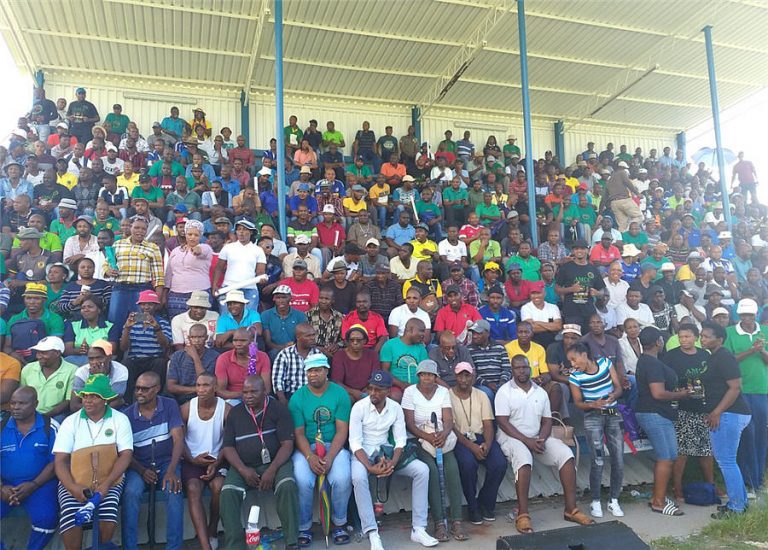
The Minerals Council South Africa on Friday expressed its concern about the consequences of The Association of Mineworkers and Construction Union’s (AMCU’s) planned secondary strikes at mining companies where the union is recognised in the gold and platinum sectors.

Fifteen companies have, so far, received notices of secondary strike action from AMCU, including Lonmin, effective from the night shift of February 28 to around March 7, said the council.

The companies are considering the notices and will do everything in their power to avert such a strike, including legal recourse, reported the Minerals Council.

AMCU earlier this week announced its plans to embark on a secondary strike at not only Sibanye-Stillwater’s platinumoperations, but at all operations where it is the majority union.

The strike is in support of union members who have been on strike at Sibanye’s gold operations since November last year. Sibanye has recently announced that it may retrench up to 5 870 employees and 800 contractors as it restructures its goldoperations.

The secondary strike action has been declared at a time when the gold and platinum sectors are facing numerous challenges, including poor commodity prices, continually rising input costs and operational challenges with the depth of operations continuing to increase, while grades continue to decline, the Minerals Council stated.

In 2018, on an all-in cost basis at prevailing prices, 71% of gold mining operations were either marginal or lossmaking, while more than 50% of platinum group metals production was unsustainable, it pointed out.

“Strike action will only serve to further undermine the sustainability of an industry on which so many lives depend,” stated the council.

It added that the strike would be to the detriment of the mining industry and the people directly employed by it, as well as affecting the entire economy and the country as a whole for many years to come.

Since 2007, jobs in the gold sector have declined by nearly 40% and, since 2017, employment in the gold sector has declined by 10%.

“The mining industry has the potential to be a key driver of the economy and change. It is unfathomable that AMCU would willingly call for secondary strikes in an industry that is already in jeopardy,” said Minerals Council CEO RogerBaxter.

Mining Weekly

South Africa mining strike to spread to at least 15 firms — Minerals Council

0

At least 15 mining firms in South Africa have received notices of strikes to be held next week in support of colleagues at Sibanye-Stillwater who on strike over wages and job cuts, Minerals Council South Africa said on Friday.

The Association of Mineworkers and Construction Union (AMCU) has been on strike at Sibanye’s bullion operations since mid-November and plans to extend the strike to its platinum mines as well as all other mines where the AMCU has members.

Firms to be affected include AngloGold Ashanti, Harmony Gold, Anglo American Platinum and Lonmin.

Reuters

20 killed near Mutanda Mine

0

About 20 people died on Wednesday when a truck carrying acid to Glencore’s Mutanda Mine in Democratic Republic of Congo collided with two other vehicles, Glencore said on Friday.

The accident occurred in the evening about 50 kilometres (31 miles) from the copper and cobalt mine in the southeast of the country.

The truck was owned by a logistics company contracted by the mine, Glencore said, without giving its name or any other details on whether those who died were all workers at its mine.

It said in an emailed statement to queries from Reuters that it “will continue to work with the logistics company and relevant government agencies, including the emergency services to provide support”.

Reuters

Artisanal miners exposed to many dangers

0

Following the Battlefields national disaster, which claimed the lives of more than 50 artisanal miners, there has been growing calls that the sector needs regulation and support.

In Zimbabwe, gold is one of the country’s leading export earners and last year more than 33 tonnes of gold were produced, with the bulk, of more than 27 tonnes having been produced by small scale miners.

Globally, every year, more than 2,700 tonnes of gold is mined, and twenty per cent of that – over 500 tonnes annually – is produced by artisanal and small-scale miners.

But despite all the rich pickings, the story of artisanal mining is still characterised by harsh conditions, without the protection of industry regulations on pay, health or safety, to sate the national hunger for gold for foreign currency.

While the Battlefields disaster brought home reality of mining risks, at least in terms of unsafe mining shafts, there are many other risks including exposure to harmful mercury emissions that also need urgent attention.

According to Global Environment Facility (GEF), an organisation formed to help tackle the world’s most pressing environmental problems, urgent action is needed to protect millions of men, women and children exposed to toxic levels of mercury through gold production every year.

GEF says the artisanal and small-scale gold mining (ASGM) sector is the single largest source of man-made mercury emissions, responsible for the release of as much as 1,000 tonnes of mercury to the atmosphere annually.

Globally, as many as 15 million people work in the ASGM sector globally – including 4,5 million women and over 600,000 children. In Zimbabwe, while the exact numbers might not be known, thousands of families rely on gold panning.

So indeed, the disaster is an unfortunate reminder that there is urgent need to address the several challenges that multitudes of artisanal miners face daily.

Zimbabwe is among the top 10 countries in the world that are still using mercury to process gold, importing over 350 tonnes of mercury annually. This is despite signing the Minamata Convention in Japan 2013.

“Introducing safe, mercury-free technologies into the ASGM sector will help provide a safe transition to job formality and dignified work for millions, while putting an end to the environmental impacts that can pave the way to sustainably produced gold,” GEF said this week, amid a global push for a $180 million investment to tackle the hidden cost of gold – exposure to toxic levels of mercury.

With many miners relying on toxic, mercury-based extraction methods, the ASGM sector is said to be the world’s single largest source of man-made mercury emissions, releasing as much as 1,000 tonnes  of mercury (almost 40 per cent of the global total) into the atmosphere every year.

Studies indicate that mercury exposure in artisanal and small-scale miners is a major, largely neglected global health problem – putting miners and their communities at risk of impacts from permanent brain damage to seizures, vision and hearing loss, and delayed childhood development.

“Mercury emissions impact health and ecosystems, contaminating the food we eat, the water we drink and the air we breathe. This is a long-term problem we need to confront now. Joint initiatives like GEF GOLD demonstrate that when we unite for environmental action we can protect community health, provide livelihoods to those most in need, and save the planet.” Joyce Msuya, Acting Executive Director, UN Environment, reportedly said.

Launched this week, at London’s Goldsmiths’ Centre, the Global Environment Facility-backed Global Opportunities for the Long-term Development of the ASGM Sector (GEF GOLD) programme aims to reduce the use of mercury in artisanal gold mining and introduce and facilitate access to mercury-free extraction methods, while also working with governments to formalise the sector, promoting miners’ rights, safety and their access to markets.

Promoting and facilitating access to non-mercury processing techniques for artisanal and small-scale miners is vital – not only to reduce mercury emissions, but to protect the health of vulnerable communities.

Business Times