Home Blog Page 66

ASM Urged to Prioritise Safety, Gender Equity and Responsible Mining Practices

0

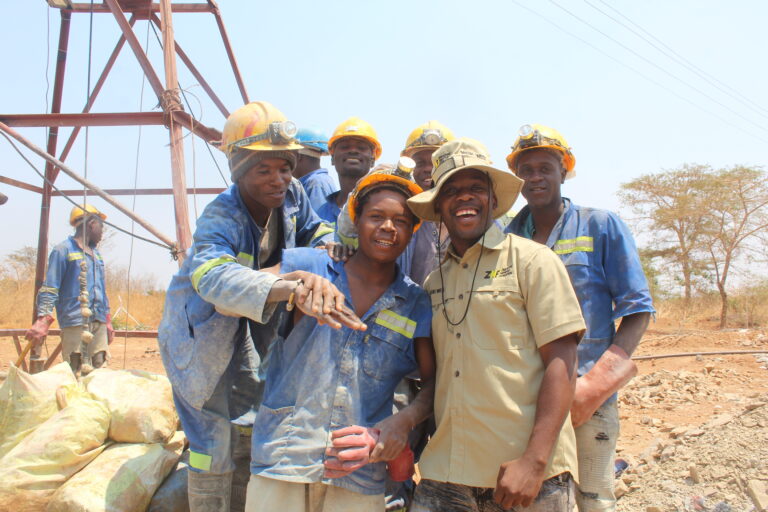
While Artisanal and Small-scale Miners (ASM) have been applauded for their contributions to the national fiscus, the sector continues to face critical challenges that threaten both miners’ welfare and the sustainability of mining operations, Donald Nyarota, Communication and Advocacy Officer at the Centre for Natural Resource Governance (CNRG), has said.

By Rudairo Mapuranga

Speaking at the Zimbabwe Diamond and Allied Minerals Workers Union (ZDAMWU) ASM Exchange Program, held at the Holiday Inn in Mutare, Nyarota emphasised the urgent need to address occupational health, safety, and environmental concerns, while also ensuring gender equity and responsible investment in the sector.

“There are challenges in the sector around occupational health and safety standards, and the rising mine-related accidents need to be solved. This industry should promote safe conditions for mine workers,” Nyarota said, highlighting findings from several research projects by CNRG that uncovered abuses within the sector requiring sustainable solutions.

Nyarota said mining accidents remain a pressing concern, with workers often operating in hazardous conditions without adequate protective equipment. He urged industry players to prioritise safety and implement systems that reduce accidents and fatalities.

“Mine-related accidents are rising, and these must be addressed sustainably,” he said.

Highlighting the gendered nature of mining impacts, Nyarota said women in mining and surrounding communities continue to bear a disproportionate burden.

“We want a strategy that is tangible and really addresses these gendered impacts,” he said, noting that unpaid care work and community responsibilities further exacerbate the challenges faced by women in ASM.

The CNRG official stressed that environmental degradation in mining areas directly affects communities. Poor rehabilitation practices and climate-related impacts compound socio-economic vulnerabilities.

“When the environment is damaged and left without rehabilitation, it is the communities that suffer,” Nyarota said.

He called for accelerated amendments to the Mines and Minerals Bill, alongside proper enforcement mechanisms, to ensure environmental protection becomes integral to artisanal mining.

Nyarota also lauded government initiatives, particularly the introduction of a mining cadastral system aimed at preventing double allocation of claims. He noted that Manicaland will pioneer the system, ensuring clarity and transparency in mining rights.

“The government has also undertaken a stance to include women in the upcoming Mine Affairs Board, which is going to be cross-representative across our provinces. These are key developments in the sector,” he said.

Nyarota called on miners to support unionisation efforts, warning against resistance from mine owners that undermines workers’ representation and the push for decent work.

“Every worker should be represented. In that representation, it should engender the decent work that we want,” he said.

He also emphasised the importance of attracting responsible investors who respect laws, cultural values, and community rights while contributing positively to the economy.

“Our government has been pushing for foreign direct investment, and we are calling for responsible investors that will not violate the rights of our society,” he said.

Nyarota encouraged participants to raise issues constructively, emphasising collaboration over blame.

“This is a safe space where we discuss issues progressively without pointing fingers… Let us look at how we can improve the issues that we are going to raise,” he said.

Global Air Cylinder Wheels Raises $3.2M to Revolutionize Mining Tires

Arizona-based company, Global Air Cylinder Wheels (GACW), has raised $3.2 million through its third Regulation CF equity crowdfunding campaign, advancing its strategy to secure funding for purchase orders, commercialisation, and expansion of its innovative wheel technology worldwide.

At the heart of GACW’s innovation is the Air Suspension Wheel (ASW), a non-pneumatic, steel-based wheel that integrates in-wheel suspension and damping using nitrogen-filled cylinders and dampers. Unlike conventional rubber tires, the ASW is designed to be safer, longer-lasting, and environmentally sustainable.

Mining companies face steep costs from tire replacement, safety risks from overheating, and environmental challenges tied to tire disposal. Tires, alongside fuel and payroll, are among the industry’s biggest expenses, with traditional tires wearing out quickly due to rock cuts, impacts, and heavy loading.

Key Benefits of ASW Technology

  • Durability: Built to last 10–15 years, the full lifespan of a mining vehicle
  • Safety: No risk of overheating or explosion
  • Sustainability: 100% rebuildable and recyclable, with replaceable treads that cut waste
  • Adaptability: Customizable to payload, speed, weight, and other operational needs
  • Cost Savings: Up to 60% lower lifetime ownership cost than rubber tires
  • Time Efficiency: Treads can be replaced without removing the wheel, saving hours of downtime
  • Environmental Impact: Cuts microplastic pollution, landfill waste, and emissions
  • Fuel Efficiency: Reduced rolling resistance lowers fuel consumption

Mining remains GACW’s primary commercialisation focus, though the technology also has potential applications in commercial trucking, logistics, military vehicles, and electric mobility.

“Our mission is to redefine what’s possible for industrial wheels,” said GACW CEO Harmen van Kamp. “We’re delivering a solution that reduces operator costs, enhances worker safety, and drastically lowers environmental harm. With our funding strategy and production plan, we’re on track to make the Air Suspension Wheel the industry standard in mining and beyond.”

Invictus Signs Strategic Agreement with Qatar’s Almanzo Holdings

0

Invictus Energy, the company exploring for oil and gas in the Muzarabani Basin, has signed a private agreement with Almanzo Holdings during a visit by a Qatari delegation to Zimbabwe.

By Rudairo Mapuranga

The signing took place at State House, where President Emmerson Mnangagwa met with the delegation, which also signed Memoranda of Understanding with the Ministry of Industry and Commerce and the Agricultural Development Authority (ARDA), Mining Zimbabwe can report.

The agreement between Invictus and Almanzo Holdings is expected to strengthen cooperation in Zimbabwe’s energy sector, opening avenues for investment and development in oil and gas exploration.

Speaking after the signing, Invictus Managing Director and Chief Executive Officer Scott McMillan said the agreement marked the start of a long-term partnership.

“As Invictus, we have been building our relationship with Almanzo Holdings and the Sheikh in Qatar over the last year, and we’re very pleased to be taking a very big step to cement our partnership for the future,” McMillan said.

A representative of Almanzo Holdings described the signing as the beginning of a strong relationship with Zimbabwe, signalling a commitment to mutual growth and investment.

The engagement with the Qatari delegation underscores Zimbabwe’s continued focus on attracting international investors to support key economic sectors, particularly energy, industry, and agriculture. The visit highlights the country’s ambition to expand strategic partnerships that can contribute to sustainable development and long-term economic growth.

VP Chiwenga Engages India on Diamond Value Addition

0

Vice President of Zimbabwe, Retired General Dr Constantine Guvheya Chiwenga, is in India where he is leading a delegation engaging companies in Surat involved in diamond cutting, polishing and jewellery manufacturing, Mining Zimbabwe can report.

By Rudairo Mapuranga

The visit is centred on strengthening Zimbabwe’s push towards value addition and beneficiation of its minerals, particularly diamonds, in line with the country’s Vision 2030 agenda. Zimbabwe is seeking to tap into India’s vast experience in the diamond sector to ensure maximum benefit from its mineral resources.

As part of the ongoing discussions between Harare and New Delhi, an arrangement has been made for 50 Zimbabwean students to undergo training in advanced diamond cutting and polishing techniques. The training is expected to equip young Zimbabweans with critical skills that will enable the country to expand its footprint in the global diamond industry while creating more opportunities locally.

The engagements are also aimed at reducing the role of middlemen in Zimbabwe’s diamond trade and ensuring that the country retains more value from its resources. India, being the world’s largest diamond processing hub, presents Zimbabwe with a strategic partner in its quest to grow exports, create jobs and boost foreign currency earnings through beneficiation.

Peggers Petition Against General Notice on Survey Grade Coordinates

0

• Peggers Say It Breaches Secrecy and Is Costly to Miners

Certified Registered Approved Prospectors (CRAP holders), widely known as peggers, together with some miners across Zimbabwe, have petitioned the Ministry of Mines and Mining Development over a General Notice requiring all mining title holders to submit survey-grade coordinates for their claims. The petitioners describe the directive as illegal, disruptive, and costly, Mining Zimbabwe can report.

By Rudairo Mapuranga

The petition, addressed to the Ministry’s Secretary and copied to Minister Winston Chitando and Parliamentary Portfolio Committee Chair R. Matangira, targets General Notices issued by Provincial Mining Directors (PMDs) and the Permanent Secretary, which took effect from 1st July 2025. The notices mandate that only registered mine surveyors using survey-grade instruments, including Total Stations, GNSS base rover systems, and Real Time Kinematic (RTK) GPS setups, are authorised to provide coordinate data for all mining titles.

While the Ministry frames the move as a step to professionalise the mining sector, peggers and miners argue that the General Notice undermines established staking practices and breaches the secrecy essential for claim registration.

Accuracy vs. Secrecy

Zimbabwe’s mining law allows miners to register claims discreetly, with only the pegger and the discoverer aware of a deposit until officially claimed. The petitioners argue that the General Notice, by requiring surveyors at the point of staking, compromises this secrecy, making claim locations public and increasing the risk of simultaneous claims and disputes.

“For years, handheld GPS devices have been used to stake claims. While survey grade accuracy is important, introducing surveyors at the time of claim registration disrupts the process and threatens miners’ exclusive rights,” the petition states.

The Ministry’s Position

The General Notice mandates survey-grade coordinates for all mining claims to eliminate disputes and ensure data accuracy. Permanent Secretary Pfungwa Kunaka emphasised that handheld GPS devices, which can have 5 to 10 metre errors, have been a major source of boundary disputes and overlapping claims.

“Only registered mine surveyors using survey-grade instruments can provide the precision required to secure mineral rights and prepare for the upcoming Mining Cadastre System,” Mr. Kunaka said.

Supporters argue the General Notice protects miners, especially small-scale operators, from encroachment and legal battles, and lays the foundation for a modern, digitalised mining cadastre.

Cost and Legal Concerns

Despite these benefits, peggers and miners say the General Notice is costly and legally questionable. They list several unintended outcomes:

  1. Peggers are being denied the right to legally work and earn a living.
  2. Citizens’ constitutional right to mine is being restricted.
  3. Existing miners are being saddled with the cost of resurveying claims to meet survey grade standards.

The petitioners also highlight that the General Notice was not gazetted, as required under Section 403 of the Mines and Minerals Act [Chapter 21:05], and therefore cannot legally suspend the Act. The notice also introduces redundancies, undermining existing regulations under S.I. 109 of 1990 on mine surveying and plan preparation.

The petitioners are not opposed to survey grade accuracy or professionalisation, but they urge the Ministry to phase in the General Notice in a non-disruptive manner that respects existing pegging practices and claim confidentiality. They request immediate repeal of the sections of the notice that impose undue hardship, alongside a collaborative approach to digitalisation.

Gold buying prices per gram in Zimbabwe, 25 August 2025

Gold buying prices per gram in Zimbabwe today, 25 August 2025, from the official gold buyer and exporter Fidelity Gold Refinery (FGR).

SG 90% and ABOVE US$101.30/g.
SG ABOVE 89% BUT BELOW 90% US$100.23/g.
SG ABOVE 80% BUT BELOW 85% US$99.15/g.
SG ABOVE 75% BUT BELOW 80% US$98.08/g.
SAMPLE BELOW 10g BUT ABOVE 5g US$96.47/g.

Fire Assay CASH $101.83/g.

NB: Fire Assay cash price is for gold above 100g; no sample is deducted.

A sample of not more than 10g is deducted for the Fire Assay Transfer price.

A 2% royalty is charged on all deposits (Small-scale miners).

A 5% royalty is set for Primary Producers.

Zimbabwe Gold Exports Hit US$487 Million in July 2025

0

Zimbabwe’s gold sector recorded a strong performance in July 2025, with export earnings jumping past US$400 million to reach US$487 million, Mining Zimbabwe can report.

By Ryan Chigoche

This marks a 172% increase compared to the US$179 million earned in the same month last year, driven by higher production levels and favourable international gold prices.

The growth in earnings mirrors rising output. Cumulative gold deliveries for the first seven months of the year reached 24,308.57 kg, up from 17,279.37 kg during the same period in 2024, a 40.7% increase.

According to the Reserve Bank of Zimbabwe (RBZ), total gold export earnings for January to July stood at US$2.32 billion, more than double the US$1.11 billion recorded last year, highlighting the sector’s robust expansion.

Gold prices themselves rose slightly, edging up 0.3% in July to close at US$3,362.90 per ounce on the 31st.

This modest increase was influenced by inflation expectations linked to tariffs and ongoing geopolitical tensions. While July was relatively calm for gold, the long-term outlook remains positive, with multiple factors likely to sustain demand.

Global uncertainties continue to play a major role in supporting gold. Ongoing conflicts in Ukraine, the Middle East, and parts of Asia are driving investors toward gold as a safe-haven asset.

Central banks’ ongoing purchases to diversify reserves further underpin the market, while rising inflation and potential interest rate cuts by the US Federal Reserve make gold an attractive hedge.

Financial institutions have offered varying projections for gold through 2025. Goldman Sachs expects prices to reach US$3,500–3,700 per ounce, while J.P. Morgan is more conservative, forecasting US$2,600 per ounce by year-end.

ANZ Research anticipates a range of US$2,805–3,600, and Citi Research forecasts US$3,675 per ounce by Q4 2025. These differences reflect both market volatility and the multiple factors shaping global demand.

Zimbabwe’s gold sector has benefited from supportive government policies and targeted industry initiatives, which have helped drive production growth in recent years.

External factors such as a softer US dollar, central bank diversification strategies, and potential Fed rate cuts are expected to continue influencing prices positively.

With production rising and international demand showing no signs of slowing, Zimbabwe’s gold sector is well-positioned for continued growth, offering investors a compelling opportunity amid ongoing geopolitical and economic uncertainties.

US to Build First Strategic Cobalt Reserve in Decades in response Global Supply Risks

0

The United States is taking major steps to secure its supply of cobalt, a critical mineral essential for defence applications and lithium-ion battery production. For the first time since 1990, the Defence Logistics Agency (DLA) has issued a tender to acquire up to 7,500 tons of alloy-grade cobalt over the next five years, in a contract valued between US$2 million and US$500 million.

By Ryan Chigoche

This initiative comes as officials seek to reduce dependence on foreign sources of critical metals and strengthen domestic supply chains.

Cobalt is overwhelmingly mined in the Democratic Republic of the Congo (DRC), which accounts for roughly 70% of global production.

However, the majority of this cobalt is exported to China, where it is refined and processed for industrial and battery applications.

This heavy reliance on Chinese processing has made the U.S. and other countries vulnerable to supply disruptions. In early 2025, the DRC imposed an export ban on cobalt to stabilise prices and encourage local processing, a move that further tightened the global market and contributed to rising prices.

China’s role in the cobalt supply chain is significant, not only as a processing hub but also through direct investment in DRC mining operations. Chinese companies have expanded production in the DRC, consolidating their influence over a key portion of the world’s cobalt supply.

The combination of Chinese dominance and the DRC’s export controls has highlighted the strategic vulnerability of countries like the U.S., which rely on secure access to this critical mineral for both technological and defence applications.

In what can be viewed as a response to these dynamics, the Pentagon’s procurement is part of a broader effort to address these vulnerabilities.

By securing cobalt from reliable international suppliers such as Vale in Canada, Sumitomo in Japan, and Glencore’s Norwegian plant, the U.S. aims to reduce reliance on China and mitigate the risk of future supply interruptions.

This strategy aligns with recent policy shifts that give the DLA more flexibility to make long-term purchases without congressional approval, supported by guaranteed funding of US$1 billion per year.

The U.S. move underscores the geopolitical dimension of mineral supply chains, as recent Chinese export restrictions on other critical metals like gallium, germanium, and antimony have shown how dependent industries can be disrupted.

By building its first strategic cobalt reserve in decades, the U.S. seeks to safeguard both its defence capabilities and technological industries against future market shocks, while signalling to the global market the importance of diversifying supply sources for critical minerals.

Shuntai Appeals Contempt Ruling as Legal Battle With Bryden School Escalates

0

Chinese cement manufacturer Shuntai Investments has appealed a US$10,000 fine imposed by the High Court for contempt of court after it was found guilty of operating in the vicinity of Bryden Country School in Chegutu without an Environmental Impact Assessment (EIA) certificate in violation of a court order, Mining Zimbabwe can report.

By Ryan Chigoche

The ruling followed a case brought by Bryden Country School, which in March successfully secured a provisional order halting construction of a cement plant near the school.

Despite the injunction, Shuntai continued work at the site before obtaining the mandatory EIA in April.

The High Court concluded that this breach of the stop order warranted the contempt ruling and imposed the fine.

In its Supreme Court appeal, Shuntai argued that the evidence was insufficient to prove contempt and maintained that the fine was disproportionate.

Its lawyers said the court misinterpreted routine construction activity at the site and failed to properly consider the company’s financial position before setting the penalty.

The move to contest the relatively modest fine has reignited debate over investor accountability.

For a project expected to create around 800 permanent jobs and help address Zimbabwe’s cement shortages, a US$10,000 penalty is minimal. Observers note that Shuntai’s rejection of the fine as excessive sends a worrying signal about compliance with court orders and regulatory oversight.

The legal dispute traces back to February, when Bryden and the Chegutu community raised concerns over Shuntai’s plans to establish a cement plant, brick moulding facility, and limestone quarry 4.5 kilometres from Chegutu town.

At the time, the Environmental Management Agency (EMA) fined the company for proceeding without the required Environmental and Social Impact Assessment (ESIA), and local authorities confirmed that no approved plans existed.

Alarm over the project’s proximity to the school intensified after an aerial view showed the cement factory less than 500 metres from Bryden’s boundary, the quarry 360 metres away, and a connecting road just 60 metres from the school’s cross-country course.

Residents warned that dust from cement and limestone, along with noise from blasting and heavy machinery, posed direct health and environmental risks.

By comparison, other cement factories in Zimbabwe are located much further from towns and schools, including one 11 kilometres from Bulawayo in Matabeleland and another nearly 30 kilometres from Gweru in the Midlands.

While the Chegutu community acknowledged the potential benefits of the project, it stressed that economic development should not come at the expense of public health or legal compliance.

Shuntai’s decision to begin operations without approval and then contest the contempt ruling has intensified scrutiny of both investor practices and the effectiveness of Zimbabwe’s regulatory enforcement.

The Supreme Court has yet to set a date for the appeal hearing.

Premier Raises £1.38 Million to Advance Zulu Project Optimisation

0

Premier African Minerals Limited (AIM: PREM) has secured £1.38 million in new funding through a share subscription, as the company continues to drive progress at its Zulu Lithium and Tantalum Project in Fort Rixon.

By Rudairo Mapuranga

The fresh capital, raised via the issue of 6 billion new ordinary shares at 0.023 pence per share, will support the ongoing optimisation of the Primary Flotation Plant, provide potential funding for a secondary flotation facility under review, cover operating expenses and debt settlements, and bolster working capital.

Premier highlighted that the primary allocation of the funds will be directed toward refining and optimising the Primary Flotation Plant at Zulu, which has already produced spodumene concentrate exceeding the 5% Li₂O threshold required for saleable product. Further investment will ensure consistent production at saleable grades, a critical step in advancing Zulu from its early operational stage into sustained output.

The company is also keeping the option open to fund an alternative flotation plant, pending the outcome of the recently announced review into its feasibility and benefits.

A portion of the proceeds will be used to settle certain operating costs and debts while Premier continues negotiations on the non-binding letter of interest with a large international trading house. That potential offtake arrangement, announced earlier this week, is seen as key to securing stable sales channels and long-term financial sustainability for Zulu.

Chief Executive George Roach welcomed the outcome of the raise, noting the positive signal it sends to the market.

“We are very pleased to have completed this capital raise at a price representing a significant premium to our last funding round, and see this as clear recognition of the progress we are making,” Roach said.

The issue of 6 billion new shares will increase Premier’s issued share capital to 83.67 billion ordinary shares, with application for admission to trading on AIM expected around 28 August 2025.

This fundraising comes at a critical juncture for Premier, which is working to move Zulu beyond commissioning hurdles into full-scale production amid strengthening spodumene prices globally. The company maintains an internal target to achieve spodumene production costs of approximately US$500 per ton at mine gate, a figure not independently verified but considered highly competitive in the current lithium market.

With funding secured, Zulu’s optimisation work will continue, alongside strategic reviews and offtake negotiations that are expected to shape Premier’s next growth phase. If successful, the financing and operational progress could pave the way for Zulu to emerge as one of the region’s most significant lithium producers.