Home Blog Page 669

Metallon sues RBZ US$132m for non-payment of gold produced

0

Metallon Corporation (“Metallon”), the leading gold mining company in Zimbabwe, has served Legal notice to the Reserve Bank of Zimbabwe (RBZ) and Fidelity Printers and Refiners Limited, (FPR) for lack of payment for gold produced. Metallon is demanding specific performance from the Governor of the RBZ and the FPR, including full payment of amounts owed.

“We have started legal proceedings against the Reserve Bank of Zimbabwe, particularly against the Governor, Dr John Mangudya, demanding specific performance. We are doing this because we feel the treatment we have received from the concerned authorities has been driven by corruption and a sense of impunity, for which we believe there is no end in sight.” said Mzi Khumalo, Chairman of Metallon.

Metallon has been forced to put its mines on care and maintenance because of the unsustainable costs of running them without proper compensation for its proceeds from the Government of Zimbabwe. Where payments were received, they would only amount to a third of the total owed. Between 2016 and 2019, Metallon lost US$82m and Metallon is claiming for US$132m for the lack of profit and procurement, including interest.

One of the key issues raised by Metallon in its notice to the Governor of the RBZ and the FPR is that while the Company issued its invoices in USD, the Foreign Currency Retention Scheme saw Metallon being paid in RTGS. The disparity in the purchasing power resulted in the corporation being unable to procure machinery, equipment and operational goods at competitive prices. This seriously affected the production capacity of its various mines, leading
to huge losses and unemployment measures being taken in an already strained economy.

More than 2000 employees have lost their jobs. “The people who suffer most are Metallon employees who no longer have jobs. First, they were victims of hyper-inflation under the previous regime. And now they have lost their
livelihoods. We had no other recourse but to take decisive action,” added Khumalo.

Metallon is also suing the Zimbabwe Ministry of Mines and Mining Development for the unlawful withholding of a mining lease that was approved by the Zimbabwean Mining Affairs Board in January 2019.

FULL DOCUMENT HERE


For more information please contact:
Klara Kaczmarek
Head of Communications
Metallon Corporation
Mob: + (44) 7859 048 228

ZCDC Confirms Shooting Of Diamond Harvesters

0

The Zimbabwe Consolidated Diamonds Company, ZCDC, has confirmed that its security guards shot and killed alleged illegal diamond miners in Marange last Tuesday.

ZCDC spokesperson Sugar Chagonda confirmed the shooting in an interview on Friday.

Reports initially received from ZimEye.com sources indicated that two people were killed and over forty injured when the ZCDC guards fired at miners who had found a new diamonds deposit outside the protected concession area.
Chagonda disputed the claim saying that only one person was killed and a number he could not specify injured.

Chagonda defended the guards’ brutal act claiming that they shot the hapless miners in self-defence.

According to him, the guards were dispatched to go and clear the miners from the area by the government-owned mining company which is holding sole rights to mine diamonds in the area.

“When the guards got to the area, the illegal miners refused to disperse and armed themselves with shovels and peaks and advanced to fight the guards,” he said.

“Fearing for their lives, our guards fire three warning shots to the air but the miners who outnumbered the guards continued advancing which forced the guards to shoot at them,” he added.

Speaking in a separate interview, Director of the Centre for Natural Resource Governance Trust, Farai Maguwu claimed that the guards indeed killed two innocent people and injured forty others.

According to him, the matter was reported to Mutare Rural Police who however would not comment on the matter._ZimEye

84 artisanal miners arrested

0

EIGHTY-FOUR artisanal miners have been arrested in Umguza during a police blitz on illegal mining in Matabeleland North. 

The illegal miners appeared in court on Wednesday charged with prospecting for gold without a licence.

Thirty four women and 50 men were arrested while allegedly prospecting illegally for gold at Sunace Mine, Arda in Umguza. 

The suspects could not fit in the courtroom and proceedings had to be halted while court officials and prison officers caucused on logistics on how they could all appear before the magistrate. They appeared in four groups before Bulawayo magistrate Mr Franklin Mkhwananzi who remanded them out of custody some on free bail and others on $100 bail.

Most of the accused persons came from Lupane, Umguza, Nyamandlovu, Inyathi, Bubi, Binga and Kensington. 

Magistrate Mkhwananzi gave the group’s court appearance dates from May 21 to 24, giving reasons that they were too many and could not all be dealt with in a single court room in one session. “When the group arrived in court with police officers, they could not be accommodated at the set down offices, which is the first port of call for suspects prior to court appearances. They then had to be taken to holding cells at the court.

Some of the alleged illegal miners include Nkosiyazi Moyo (23), Sipho Ndlovu (32), Ishmael Munsaka (20), Joshua Munsaka (29), Anex Ncube (18), Sikhumbuzo Ndlovu (43), Latin Nyoni (22), Sibangani Sibanda (37) and Thembinkosi Ncube (32). They all pleaded not guilty to contravening section 368(1) of the Mines and Minerals Act (prospecting for gold without a licence).

Representing the State, Mr Mufaro Mageza said on May 13 this year at around 7AM, police officers from Sauerstown were on an operation to curb illegal mining at Sunace Mine, Arda in Umguza.

He said police busted the group as 43 of them were working in the mine while the rest were having lunch a few metres away from those that were still on their shift. There were temporary settlements at the area which had belongings of the suspects, including clothes, blankets, cooking pots and mining tools. 

 The police officers found the accused persons prospecting for gold at the mine.

They were asked to produce their permits or prospecting licences and they failed leading to their arrest.

The court heard that they were found using picks, shovels and hammers which were produced in court as exhibits._The Chronicle

Govt owed US$206m in mining taxes

0

Government is owed a cumulative US$206m in unpaid mining taxes and has since declared that it will soon be forfeiting claims held for speculative purposes. Mines and Mining Development Deputy Minister Polite Kambamura said Government will this month deliberate on objections made regarding the Exclusive Prospecting Orders (EPOs).

Speaking in Chinhoyi recently, Kambamura said the accumulative debt was as a result of bad attitude from mining companies reluctant to support  the Government.

“The US$206 million owed is a cumulative figure compromising of unpaid ground rentals, unpaid special grants and some are continuing to mine without paying those fees. It’s either we forfeit claims on grounds of non-payment because people are only complaining that things are tough, but it’s only a paltry US$100 per year with a mining resource, yet a gramme (of gold) is being purchased at fairly reasonable price,” he said.

Kambamura said Government would first give debtors notices before forfeiting the claims.

“We are going to forfeit on those grounds just to try and recover the owed money but will give people notices first to come forward and pay on an agreed date.

“Failure to pay we will then forfeit and follow legal channels to recover those monies because of late even if a person owed $20 000, the Government would just forfeit without following up. This time we forfeit and follow up the legal way,”  he said.

On Government’s position regarding EPO’s, Kambamura said the issue will be tabled before the mining board this month.

“We have vast pieces of land throughout the provinces set aside for exploration, as the procedure is a lot of those EPO’s were objected.

“The mining affairs board will be seating this month to consider all those objections and everyone who objected will be called to come forward and explain reasons for objections.

“Thereafter the body will make a decision whether to issue such EPO’s or not. Of late there have been some EPO’s that were applied time back and since then the owners of such did not come forward with any exploration results or reports. All such cases are going to be considered under the ‘use it or lose it’ principle going to be announced by Mines and Mining Development Minister this month,”  he said.

Kambamura also castigated some mining firms that were smuggling minerals outside the country in the disguise of reprocessing them.

President Mnangagwa has declared mining will play a major role in helping Zimbabwe achieve Middle- Income status by 2030 but areas of smuggling, under invoicing exports and corruption need to be addressed immediately._Business Weekly

Hwange Power Station funding under threat

0

Zimbabwe might face challenges accessing the US$1 billion loan facility from China Eximbank for Hwange Power Station expansion following the change of functional currency that resulted in funds that were held in an escrow account to securitise an earlier loan being converted to local currency.

This emerged yesterday during a briefing between Zesa officials and newly appointed Minister of Power and Energy Development Fortune Chasi who was on a tour of power generation facilities in Kariba.

Zimbabwe Power Company (ZPC), the generation arm of state power utility Zesa, acting managing director Robson Chikuri, said China Eximbank had verbally expressed its displeasure about the situation.

Fears now abound that the bank may soon register its misgivings in writing, indicating the escalation of the gravity of its reservations, which might strain the relationship between the parties.

At this point, Chikuri said, there will be need to urgently address the issue, which posed serious threat to draw downs on the US$1 billion loan for Hwange extension project, a programme already underway.

Zimbabwe cannot afford to throw off rail the Hwange units 7 and 8 expansion programme at a time the country is gripped in the throes of a debilitating power deficit, which has spawned load-shedding.

The escrow account funds related to a US$320 loan million Zesa received from China Eximbank for the capacity expansion of Kariba South power station.

The 300 megawatts extension project, completed in March last year and commissioned by President Mnangagwa, cost just over half a billion US dollars.

State power utility, Zesa, was obligated to maintain an escrow account balance of US$28 million held in the form of trust funds that would be accessed by China Eximbank if the borrower defaulted.

However, while the escrow funds were deemed US dollar balance, they immediately became local currency in February this year, after the Reserve Bank dropped the parity policy between the green back and bond notes/coins and electronic balances.

Central bank governor John Mangudya also floated the currency after introducing the interbank market for foreign currency, resulting in loss of value on conversion using the ruling interbank rate.

At the current rate of about 3,5 RTGS to US dollar, the escrow account funds are equivalent to about US$7 million.

Effectively, it means Zesa breached an agreement between the parties to maintain the prescribed escrow account balance of US$28 million, which might scupper funding arrangements for Hwange, funded by the same bank.

The Government of Zimbabwe is the common borrower for the two loan facilities and breach of funding terms for the Kariba South loan presents real risk of China Eximbank blocking disbursements to Hwange.

Zesa had also signed power purchase agreement, an agreement for the Kariba, loan denominated in US dollars, from which funds deposited in the escrow account should be mobilised.

The State power utility must pay at least US$16 million interest and principal to China Eximbank twice a year, failure of which the bank can “raid” the escrow account funds, as per the parties’ agreement.

Kariba South Hydro Power Station general manager Engineer Wellington Maphosa said Zesa had since written to the Reserve Bank to make an undertaking to honour the escrow balances on 1 to 1 parity.

However, the Reserve Bank is reportedly yet to pronounce its position on whether it can honour the request, which has huge bearing on the loan for Hwange.

“This agreement was signed in 2014 in US dollar. I think you have heard about the US$533 million budget (for Kariba South expansion), it was made up of two major loans.

“One was from Standard Chartered of US$150 million. This one is being serviced from sales of power exports to Namibia and this loan is under control.

“The second major loan was obtained through China Eximbank; this is where we have a major challenge because now power is paid for in RTGS dollars. It (payment) has changed from US dollars.

“So, that change of currency has eroded the debt service reserves. China Eximbank required us to build (US dollar) resources,” Eng Maphosa said.

Eng Maphosa said they had been building the escrow reserves over the years in preparation for the first payments of clearing the China Eximbank loan, which falls due in January next year.

“At the time we received payment (of the loan), China Eximbank would request bank statements to see if we were keeping our side of the agreement,” he said.

Eng Chikuri said if the challenge was not addressed, Zesa would not be able to get the second interim payment, which could immediately throw the Hwange expansion project off the rails.

“The threat has already come from China Eximbank, but at the moment it’s still verbal, when they write to us, that issue will need to be addressed immediately.

“The second primary power station after Kariba is Hwange. For Hwange we got US$998 million from China Eximbank. We have the challenge that if we don’t correct the anomaly now, we may not be able to get the second interim payment,” he said.

Zimbabwe faces an acute shortage of power following the reduction in water allocation for power generation at Kariba by Zambezi River Authority, which regulates use of Zambezi River water.

Kariba Dam, which supplies the country’s largest power plant, sits on the Zambezi River, which demarcates Zimbabwe and Zambia and manages the river on behalf of the two neighbouring states._Business Weekly

Unki pledges to support economic growth

0

MULTINATIONAL mining group, Anglo American Platinum, has pledged continued support for Zimbabwe’s economic development in partnership with Government as it believes in President Mnangagwa’s vision of transforming the country into a middle-income economy by 2030. 

Speaking during the official commissioning of the $62 million Unki Mines smelter here yesterday, company chairman, Mr James Maposa, said the “Zimbabwe is open for business mantra” being championed by the new political dispensation was genuine and his group shared the same 2030 vision for Zimbabwe. 

With increased investment, decent jobs, broad-based empowerment and anti-corruption measures, Zimbabwe could be transformed into an economic paradise, he said. 

“This is a vision we share, and the official opening today of this $62 million platinum group metals smelter is proof that at Anglo American Platinum, we mean business and that we are here to stay — to join you on this journey to economic growth and future prosperity,” said Mr Maposa. 

The smelter, whose construction was announced in 2015, is an extension of the company’s commitment to local beneficiation of minerals and buttresses Government’s plans for economic growth as espoused in the Transitional Stabilisation Programme (TSP). 

The custom-designed, cost efficient smelter is sized to meet Unki’s current production and retains capability for later upgrades to meet future increased mine production. 

The scope of the facility is the primary smelting of Unki concentrate to produce a furnace matte, which is crushed on site and transported to the AngloAmerican Platinum converter process facility in Rustenburg, South Africa, for further processing. 

The furnace heat-up at the smelter started early August 2018 and has been ramping up with the first production of matte at the end of September 2018 while the export of crushed matte commenced in mid-November 2018, said the group. 

Mr Maposa said his company understands that Government cannot do it alone hence they were keen to partner Zimbabwe and its people to collectively foster economic transformation. 

The group has since 2008 invested more than $500 million in mining operations and social infrastructure development in Zimbabwe. 

“In 2018, Unki Mines spent about $75 million on procurement from local suppliers, employees earned more than $32 million and nearly $25 million was paid in tax to Government,” he said. 

“In addition to the 1 137 employees and 1 089 contractors employed by Unki mines, the new smelter is employing 73 workers. 

“Unki is a strategic investment for Anglo America Platinum, who remain a long-term investor in Zimbabwe. 

“To date, Unki mines is the only PGM company that has heeded Government’s beneficiation call.” 

The 73 workers at the smelter have been trained at the company’s smelters in South Africa and have been equipped to fully operate the modern facility. 

Mr Maphosa said his company has embraced Government’s vision in its entirety including the aspects of prudent safety standards and sustainable operations that cover thorough corporate social responsibility sensibility. 

As the country forges ahead with its industrialisation drive and stimulating value chains across sectors, Mr Maposa said his company will play its role to ensure the success of Government efforts. 

Unki has implemented a number of projects in farming, sanitisation, water infrastructure, roads, housing, healthcare and capacity building to meet community needs. Mr Maposa, however, said the firm was facing some challenges such as electricity tariffs and forex retention threshold, concerns that were negatively impacting on their viability and appealed for Government intervention. _The Chronicle

Zesa to pay Eskom & HCB

0

ZESA Holdings has lined up a number of stop-gap-measures, which include mobilising US$80 million to clear arrears with Eskom of South Africa and Hidroelectrica de Cahora Bassa (HCB), in bid to alleviate rolling power outages being experienced in the country.

Payment of the US$80 million arrears would unlock more power imports, which have slumped significantly from 450MW to a measly 150MW due to arrears.

Zimbabwe is battling electricity shortages following a sharp decline in water levels in Kariba Dam due to erratic rains in the 2018-19 rainfall season, and generation constraints at Hwange Power Station because of ageing equipment.

This has resulted in massive load shedding, which lasts up to 10 hours especially for residential customers. 

Zesa spokesperson, Mr Fullard Gwasira said in e-mailed responses that they “acknowledge” the increase in power outages and believe power imports and using electricity sparingly would be a panacea in the interim.

“(We are introducing) demand side management (DSM) initiatives where customers are urged and encouraged to use electricity sparingly in order to release additional capacity to other needy areas and; mobilisation of resources to clear the US$80 arrears that Zesa owes to regional suppliers (Eskom of South Africa and HCB of Mozambique) in order to unlock capacity for increased imports,” said Mr Gwasira.

Zesa currently imports 50MW from Eskom and up to 100MW from HCB but can access up to 450MW from the two regional power utilities if it extinguishes its arrears. 

Said Mr Gwasira: “As a result of an outstanding payment, the two countries Mozambique and South Africa have reduced exports from their respective utilities to 50MW and 100MW until their arrears have been cleared.” 

Zesa struggles to pay for power imports due to foreign currency shortages.

Mr Gwasira expects load shedding to “continue until enough resources have been availed to fill the gap with imports of about 500MW from the region”. 

“Sister utilities expect us to provide a workable payment plan and pay for current consumption in full. A good rainfall season also will come in handy as it will restore the live level of the dam,” he said.

In the long-term, Zesa expects the completion of the Hwange Expansion Project in 2022 and the re-powering of Bulawayo and Harare power stations to bring “significant relief” to the electricity supply situation. 

On completion, Hwange Thermal Power Station would add 600MW to the grid while the re-powering project at Bulawayo and Harare power stations would add 90MW and 120MW respectively.

There are concerns Zimbabwe could be stuck in power challenges until it revises the tariff, which is seen as key in attracting fresh investments and allow for repairs on infrastructure. 

Zesa has not obtained a tariff increase since 2011 and currently sells electricity at an average price of $9,86c per kilowatt hour (kWh), which used to be US9,86c/kWh before the Monetary Policy Statement of February 20.

Mr Gwasira concurred.

“It is true that we have a sub-economic tariff which needs an urgent review. The cost of thermal power generation has increased significantly, along with the cost of diesel, which are key components in the generation mix. 

“This is exacerbated by the fact that most of our consumables such as power imports, cables, oils, diesel, water at Kariba, transformers and transformer oils, and spares, are all paid for in United States dollars,” he said.

The introduction of a local currency, RTGS$, means consumers are now paying almost three times less than the previous value. 

Confederation of Zimbabwe Industries (CZI) president Mr Sifelani Jabangwe told our Harare Bureau by phone that: “I think the tariff probably now needs to reviewed because even if you look at it against the interbank rate, the tariff has now come down from the average tariff of US$0,0986 to just over US$0,03. 

“We have always said we want it to be around US$0,05 or US$0,06 but it is now way below that.” 

Zimbabwe National Chamber of Commerce (ZNCC) president Dr Divine Ndhlukula also said “certainly, power is now cheaper”, adding “there is need to review the power tariff”. 

But the industrialists want a tariff that will make local products competitive. _The Chronicle

Two miners shot dead dozens injured in Marange diamond fields

0

Two illegal diamond miners have reportedly been shot dead and scores others injured after security details at the Zimbabwe Consolidated Diamonds Company shot at over 300 of the miners at a newly discovered diamonds base in Marange.

Highly placed ZimEye.com sources indicated that villagers in Marange discovered a new diamond rich area outside the ZCDC concession area a couple of weeks ago and started harvesting the precious stone outside the government mining company’s knowledge.

The reports indicate that ZCDC got wind of the mining activity and dispatched heavily armed security details on Tuesday morning to disperse the miners.
The guards are reported to have gone on an instant spree shooting at the over 300 miners killing two on the spot and injuring forty others.

The sources indicate that the area has since been declared a no-go area and soldiers from the Zimbabwe Defence Forces have been deployed to guard the area together with the ZCDC guards.

Efforts to get a comment from police in Mutare and ZCDC officials were not successful at the time of writing._ZimEye

ZCDC fires seven executives with immediate effect

0

ZCDC has fired seven executives with immediate effect. This move comes after serious accusations of corruption and mismanagement of resources.

This move will likely get applause from Zimbabwe as it will be seen as a step in the right direction to curb mismanagement that is rampant in the mining industry.

Chief Operating Officer Mr. Roberto De Pretto has now been appointed Chief Executive Officer until further notice.

The Press release is contained in the document below:-


ZCDC fires seven executives

Zimbabwe Consolidated Diamond Company (Pvt) Ltd (ZCDC) is a diamond mining company wholly owned by the Government of Zimbabwe. The Company has mining operations in Manicaland in Mutare’ s Chiadzwa area and in Chimanimani.

The Company is conducting exploration and resource evaluation programs across Zimbabwe and expects to open new mines in other parts of the country soon.

ZCDC was issued with Special Grants 6026 and 6460 which vests mineral rights to carry out mining operations for diamonds in Chiadzwa and Chimanimani respectively.

Gold miners incentive scheme

0

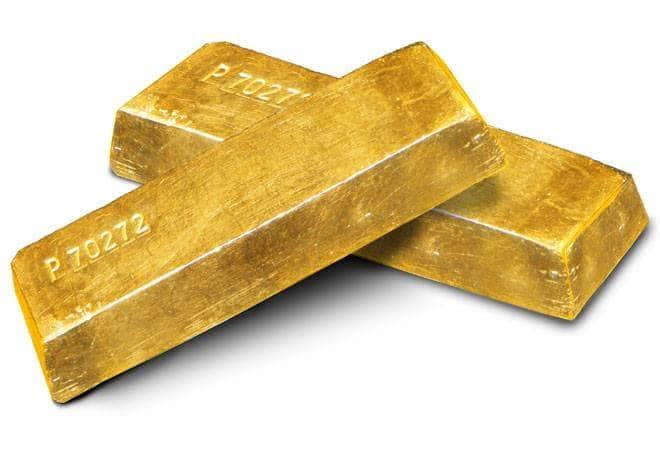
THE Government has introduced a gold support price aimed at addressing production challenges affecting miners and increasing formal deliveries of the yellow metal. 

The incentive has been introduced through the Reserve Bank of Zimbabwe’s subsidiary, Fidelity Printers and Refiners, the country’s sole gold buyer. According to ZBCtv, Mines and Mining Development Minister Winston Chitando on Monday said the new gold support price was a reflection of the Government’s commitment to providing incentives to productive sectors that have potential of facilitating economic growth.

“We are confident of the current measures and their effects on viability, so the support price is a reflection of that commitment,” he said.

As part of efforts to restore business confidence and profitability, Fidelity Printers on Monday announced the introduction of a gold support price of US$44 000 per kilogramme and US$1 368,55 an ounce. 

In an interview yesterday, Zimbabwe Miners’ Federation chief executive officer Mr Wellington Takavarasha said while the artisanal and small-scale miners dominate production and deliveries to Fidelity Printers, it was imperative for the gold buyer to continuously review the gold support price based on economic conditions.

“We welcome such efforts but it is through a review of the pricing mechanism that can guarantee us future business as we seek to unlock value in the entire sector,” he said.

Government has this year set a target of 40 tonnes of gold deliveries to Fidelity Printers up from the 33,2 tonnes delivered in 2018. 

During the period under review, small-scale miners accounted for 21,7 tonnes of the total output, compared to 11,5 tonnes by the primary producing gold mining firms.

Meanwhile, Gwanda-based Blanket Mine parent company, Caledonia Mining Corporation, has requested clarity from Fidelity Printers and Refiners on the modalities of the new gold support price. 

“The announcement by Fidelity states that to incentivise gold production in Zimbabwe, it will pay an incentive price over and above the contractual purchase price. 

“This incentive price will be $44 000 per kilogramme ($1,368,55/ounce), a premium of approximately $86/ounce (6,7 percent) on the current prevailing London Bullion Market Association (LBMA) Spot price,” Caledonia wrote on its website. 

“At this stage it is unclear how long the gold support price will remain in place, how, when and by what rationale it may be adjusted in the future and whether the additional income associated with the gold support price will be subject to Zimbabwean income tax or royalty deductions. Caledonia has made requests for clarity on these issues and will notify the market in due course if appropriate.”

Efforts to get a comment from Fidelity Printers and Refiners general manager Mr Fradreck Kunaka were unsuccessful as he was said to be out of office. Chronicle