Oil prices edged higher on Thursday, after data showed inventory declines in the United States and as investors began to expect that the global oil market could have a deficit sooner than they had previously thought.
OPEC’s output agreement with Russia and Canada’s decision to mandate production cuts could create an oil market supply deficit by the second quarter of next year, if the top producers stick to their deal, the International Energy Agency said in its monthly Oil Market Report.
U.S. crude inventories at Cushing, Oklahoma, the delivery point for U.S. crude futures, fell by nearly 822,000 barrels in the week through Dec. 11, traders said, citing data from market intelligence firm Genscape.
Brent crude LCOc1 was up 15 cents, or 0.3 percent, at $60.30 per barrel by 10:51 EST (1551 GMT). U.S. light crude CLc1 was 21 cents higher, or 0.4 percent, at $51.36 a barrel.
“The market over the last week has attempted to stabilise and I still think that’s what is happening today,” said Gene McGillian, manager of market research at Tradition Energy in Stamford, Connecticut. — Reuters.
Gold was little changed on Thursday as the dollar steadied and equities climbed on signs of easing trade tensions between the United States and China, while palladium rose to a record high, trading at a premium to the bullion.
Spot gold was steady at $1,245.55 per ounce at 0806 GMT, while U.S. gold futures were up 0.1 percent at $1,251.2 per ounce.
“Market sentiment is neutral today… We’ve got a little more positive sentiment than we anticipated from U.S.-China trade tensions, which is weighing on the topside,” said Stephen Innes, APAC trading head at OANDA in Singapore.
The dollar index, which measures the greenback against six major rivals, was down a tad at 96.958, after retreating from a near one-month high overnight.
Meanwhile, Asian shares advanced on signs of easing trade tensions between the world’s top two economies, and expectations that China will step up efforts soon to support its cooling economy.
China appears to be easing its high-tech industrial development push, dubbed “Made in China 2025,” which has long irked the United States, while it also made its first major U.S. soybean purchases in more than six months on Wednesday.
Investors seem more interested in equity at this point of time than in gold, said Ronald Leung, chief dealer at Lee Cheong Gold Dealers in Hong Kong. — Reuters.
Taxable Income of a Holder of Special Mining Lease
A holder of a special mining lease, corporate income is taxed at a special rate of 15% instead of the general tax rate of 25%.
However, holders of a Special Mining Lease are liable to Additional Profits Tax (APT). The tax is payable upon attaining a formula based level of profitability.
Exemption from Certain Taxes
After consultation with the Minister responsible for the administration of the Mines and Minerals Act, the Minister of Finance may declare the holder of a Special Mining Lease to be an approved holder of a special mining lease for the purposes of exemption, wholly or partly, from the following taxes:
Non-Residents shareholders tax;
Non-Residents tax on Fees;
Non-Residents tax on Remittances;
Non-Residents tax on Royalties
Allowable Deductions/ Expenditure
Deductions on all capital expenditure on exploration, development, and operations incurred wholly and exclusively for any mining operations are allowed in full.
Expenditure incurred during a year of assessment on surveys, boreholes, trenches, pits and other prospecting and exploratory works undertaken for the purpose of acquiring rights to mine minerals in Zimbabwe or incurred on a mining location in Zimbabwe, together with any other expenditure that is incidental thereto. The taxpayer may elect to have the expenditure allowed in the year of assessment in which it is incurred or carried forward and allowed against income from mining operations in any subsequent year of assessment.
Assessed Losses
There is no restriction on carryover of tax losses; these can be carried forward for an indefinite period.
Royalty on Gold for Small Scale Miners
In order to support this sector, Government levied a lower rate of royalty of 1% on small scale gold producers whose output does not exceed 0.5 kg per month.
Support for Small Scale Miners
The capital-intensive nature of mining activities poses challenges to operations of many small-scale miners. This is notwithstanding that; small-scale mining activities employ many people in the country.
In order to encourage the participation of financial institutions in supporting small scale mining activity, Government has put in place tax incentives for financial institutions who accept geologically surveyed claims as collateral for small scale miners’ borrowing requirements
Customs Duty
Rebate of duty on goods for the prospecting and search for mineral deposits-: Rebate of duty is granted on goods which are imported by a person who has entered into a contract with the Government for the prospecting and search for mineral deposits.
Rebate of duty on goods imported in terms of an agreement entered into pursuant to a special mining lease: Rebate of duty is granted on goods which the Secretary for Mines certifies as eligible for a rebate of duty in terms of an agreement in the special mining lease.
Suspension of duty on goods imported for specific mine development operations: Customs duty suspension is granted to a holder of a mining location importing specified goods during the project’s life cycle for mining development operations such as sinking shafts, installation of machinery, construction and erection of facilities for the production and conveyance of minerals.
Deferment of Value Added Tax: VAT deferment is granted to mining companies on capital equipment imported for a period of ninety days subject to the conditions set by ZIMRA Commissioner-General.
Rebate of duty on goods for use in petroleum exploration or production: Rebate of duty is granted to the grantee of a special grant issued under the Mines and Minerals Act authorizing the exploration or production of petroleum.
These are the procedures and Criteria for Issuing Exclusive Prospecting Orders (EPOs)
1.1 Application is made to Secretary, Mining Affairs Board who:-
acknowledges receipt of application by date-stamping and assigning it an application number e.g. EPO 1/09 (or EPO Application No. 1 of 2009), EPO 2/09 denoting the sequence in which they were received and the year received.
also checks fulfillment of legal requirements of the application.
1.2 Procedures of acquiring an EPO are detailed on the table below:
Processing Steps for Exclusive Prospecting Orders
STAGE
RESPONSIBILITY
MAB Secretariat /Legal Services
Zimbabwe Geological Survey [ZGS]
MAB chaired by the Permanent Secretary
Minister/ President
1. Application Submission
Accepts and assigns Application Number in the format Serial No./Year [eg 01/09…..217/09.]
Sends Application copy to ZGS
2. Application Verification
Checks on:
Area for overlaps etc;
Work programme
Budget
Company profile
Minerals sought
Technical expertise
Expected results
3. Application Noting
Recommends Applications to be noted after above assessment.
Based on available information application is NOTED or REJECTED
4. Application Gazettal
Reserves area.
Draft General notice sent to Attorney General for checking
Publishes checked notice in Government Gazette for objections within 21 days.
5. Application Consideration
Invites Company to appear before MAB for interview
Interview conducted
Consideration for recommendation or rejection made.
6. Application recommendation and Approval
Assigns EPO No. eg 4886….
Prepares Cabinet minute to President, supporting memo and draft General Notice of Order.
Draft Notice sent to AG’s Office
General Notice sent to Minister and then to President for APPROVAL or REJECTION.
7. EPO Gazettal
Approved General Notice sent for Gazettal.
Approved Order sent to Applicant
8. EPO Work Monitoring
Receives Six-monthly progress reports.
Sends copies to ZGS.
Evaluates six-monthly reports.
Visits exploration sites.
Makes recommendations to MAB.
Compiles geo-technical data from EPO’s
Accepts or rejects continuation of exploration work.
Mining Affairs Board Criteria For Recommending EPO Applications
1.3 In making the recommendation the Board looks at the following (or should be satisfied with the following):-
the applicant(s)’ background;
corporate structure
that the applicant is a fit and proper person to obtain an Order and is of adequate financial standing to undertake such operations under an EPO;
that it would not be against national interest to make such an order;
the applicant’s programme of work; and
technical expertise;
1.4 The EPO is transferable with recommendations from the President.
Mining Affairs Board Criteria For Recommending EPO Applications
1.3 In making the recommendation the Board looks at the following (or should be satisfied with the following):-
the applicant(s)’ background;
corporate structure
that the applicant is a fit and proper person to obtain an Order and is of adequate financial standing to undertake such operations under an EPO;
that it would not be against national interest to make such an order;
the applicant’s programme of work; and
technical expertise;
1.4 The EPO is transferable with recommendations from the President.
Procedures and criteria of obtaining Mining Claims in Zimbabwe.
Introduction
1.1 Foreign Investors are allowed to own 100% shareholding for mining operations in all minerals except for platinum and diamonds which the foreign investor is expected to jointly own with Government on a 51%/49% basis.
1.2 Before starting operations the newly registered company should possess a Zimbabwe Investment Authority (Z.I.A) certificate and can then apply for a prospecting license from any Ministry of Mines and Mining Development Offices.
1.3 Any person who is a permanent resident of Zimbabwe and above the age of 18 may take out a prospecting license at any Ministry of Mines and Mining Development offices.
1.4 The Provincial Mining Director acting on behalf of the Permanent Secretary may refuse to issue a prospecting license but shall forthwith be required to report each refusal to the Secretary.
1.5 Each Prospecting License is valid for two years.
1.6 A holder of a Prospecting License automatically acquires the rights of prospecting and pegging mining claims anywhere in Zimbabwe.
1.1 When a Prospecting Licence holder has identified a mineral deposit that he/she is interested in, he/she appoints an agent or an Approved Prospector to peg on his behalf.
1.2 The agent is required to physically peg the area by marking the deposit with a Discovery Peg. He/She should also post Prospecting, Discovery and Registration Notices on the ground. The notices must be posted in a conspicuous manner to alert other prospectors.
1.3 Before posting these notices the agent is required to inform/or seek consent from the landowner of his intention to prospect.
NB: Consent is only sought from the landowner if prospecting on a farm less than 100 hectares, otherwise the prospector is only required to inform the farm/landowner in writing either by registered mail or deliver by hand.
1.4 All areas classified as not open to prospecting and pegging or reserved against prospecting and pegging cannot be pegged, e.g. cultivated lands, dip tanks, Dams, etc.
1.5 Each Prospecting License can peg up to a maximum of 10 claims at 1 Ha each.
1.6 An application for registration must be submitted to the Ministry of Mines and Mining Development offices. The application must have copies of the following attachments:
(a) Prospecting license(s).
(b) Prospecting Notice.
(c ) Discovery Notice (Base Minerals).
(d) Notification of intention to prospect to the landowner.
(e) A map in triplicate to the scale of 1:25000.
1.7 If the Provincial Mining Director is satisfied that all pegging procedures have been followed he shall issue a certificate of registration upon payment of the gazette fee. This allows the holder to start mining operations subject to meeting other obligations like Environment Impact Assessment (EIA).
1.8 Within three months from the date of registration the miner is required to erect permanent beacons on the ground.
1.9 All precious mineral claims are supposed to be continuously worked on in order to obtain renewal of title. Claims have a 12-month tenure after which they shall expire or be renewed.
1.10 Gold and other precious metal claims are inspected by production and capital expenditure.
1.11 Base metal claims can be protected by payment.
1.12 If a mining claim is transferred or sold a Certificate of Registration After Transfer shall be issued by the Ministry of Mines and Mining Development.
1.13 Failure to renew title will result in the forfeiture of a mining claim. Furthermore, loss of title can be through cancellation or abandonment.
For the past decade, the country’s mining sector has been facing a myriad of challenges ranging from fluctuating
global mineral prices, subdued working capital and above all brain drain due to prevailing economic challenges.
However, despite the prevailing economic challenges, some mining houses have managed to defy the odds by coming up with problem mitigating measures to adapt to the hardships.
Some companies during the past decade have folded never to come back, some struggling but without measuring
all of them with the same yardstick, some have managed to thrive, posting the best results financially and in
production terms.
Mining Zimbabwe, however, took time to go through the performance of various companies in a list of 10.
(1) Caledonia Mining Corporation
The Matabeleland based gold miner despite it being a mid-tier gold producer has managed to outperform its peers in the mining sector. Since inception, the mining company immensely showed its image as a good corporate citizen and has been on the best-performing companies owned by foreign investors.
Listed on the New York Stock Exchange, the mining firm being run by Steve Curtis is currently carrying out an ambitious expansion drive aimed at producing 80 000 ounces of gold by 2021. The company’s strategic focus remains the implementation of its investment plan at Blanket Mine which was announced in November 2014 and is expected to extend the life of mine. The mining firm has been consistent in its production and profitability since dollarization and has been one of the companies of note in terms of retaining shareholder value through consistent payment of dividends.
In spite of the hullabaloo around the indigenization issue, the gold mining firm was the first to comply with the
draconian legislation.
(2) Zimplats
Zimplats, the country’s biggest platinum miner has been true to its economic standing by playing a huge role in anchoring the ailing Zimbabwean economy
The mining firm has been consistent in posting positive results and its role in economic development is unquestionable. The platinum miner’s total payments to Government in direct and indirect taxes has been sitting at
$17 million in the quarter to March 2018.
The mining firm is currently undertaking a massive expansion project at its Phase as well as the development of a new mine (Mupani Mine) at its Ngezi operations. Zimplats, however, is spending close to $264 million on the project.
Under the stewardship of the resolute Alex Mhembere, despite the unstable mineral prices the platinum miner has
managed to stay afloat, showing no signs of agony.
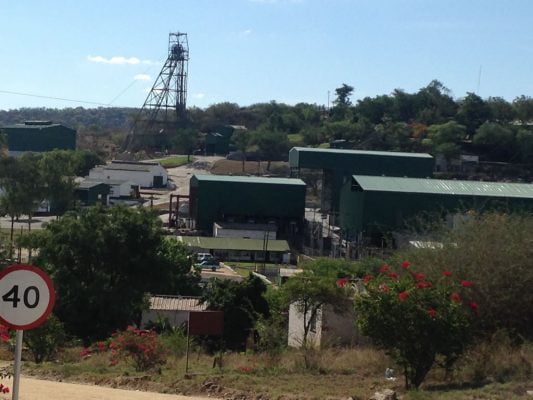
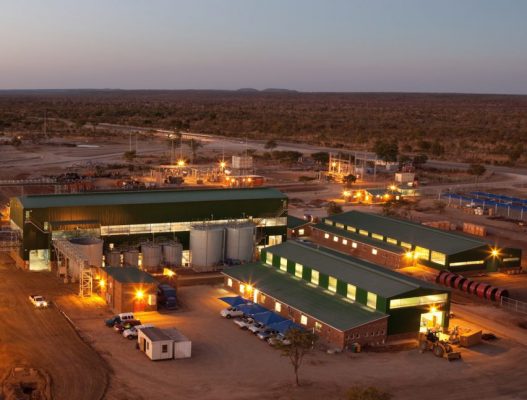
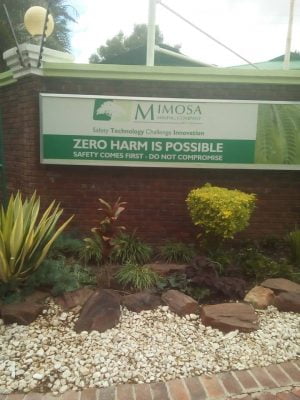
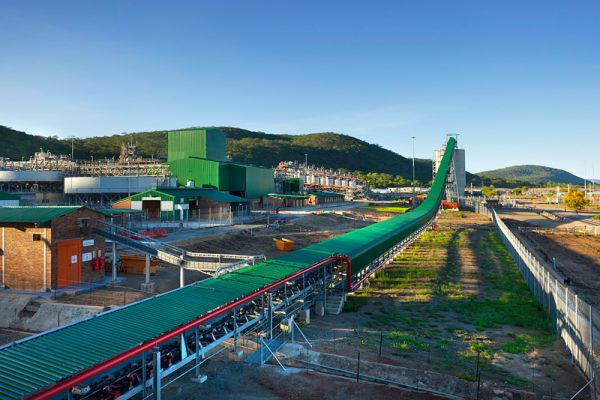
(3) Mimosa
The Zvishavane based platinum producer has always been visible in its corporate responsibility initiatives. Its role in economic development should never be underestimated especially from the fact that it has managed to keep alight the mining town of Zvishavane following the folding of the once vibrant Shabani Mines.
The company has been consistent in its production despite earlier clashes with Government where at one time, it is South African shareholder mooted shutting down the Zimbabwe mining operation.
Modest in nature and quite in its activities, the Anglo platinum owned miner, Unki has been doing well and this has been seen through its current projects being put in place. The platinum miner is currently setting up a smelter in Shurugwi at a cost of around $60 million. This project is in line with Government calls on value addition and beneficiation.
(4) Unki Mine
Unki Platinum Mine, Zvishavane Zimbabwe
Modest in nature and quite in its activities, the Anglo platinum owned miner, Unki has been doing well and this
has been seen through its current projects being put in place. The platinum miner is currently setting up a smelter in Shurugwi at a cost of around $60 million. This project is in line with Government calls on value addition
and beneficiation.
(5) Africa Chrome Fields
The chrome miner owned by investment tycoon, Zunaid Moti has been one of the game changers in chrome mining in the country.
Since its inception, the miner has brought state of the art technology used in modern mining in-order to improve efficiencies and productivity.
The miner has managed to play a major role in the revitalization of chrome mining which has of late been driven by mainly small scale players. Given a chance the miner has the potential to become of the biggest chrome players in the country.
(6) Zimasco
Arguably the country’s biggest ferrochrome producer, the firm has had its fair share of challenges which saw it being placed under judicial management.
Zimasco was placed under JM in June 2016 after its indebtedness to banks and creditors had gradually increased to about $65 million. However following various initiatives, the company has since exited judicial management and by January 2018 the company had posted $160 million in turnover and a profit of $45 million.
Despite the debt albatross hanging around the firm, Zimasco has managed to defy the odds and has so far managed to repay its debt is one of the profitable companies at the moment.
(7) Metallon Gold Corporation
The gold miner which is the country’s biggest producer with four mining assets under its portfolio has managed
to keep its nose under the water despite challenges threatening its existence.
Despite mineral prices slump during the whole of 2017, the miner managed to commission several projects chief among them, the Sands Retreatment plant at Mazowe mine. The gold miner which owns, Shamva, How mine, Mazowe and Redwing Mine is having its fair share of challenges but has managed to thrive in this difficult
operating environment.
Metallon is owned by South African mining magnate and African National Congress (ANC) stalwart, Mzi Khumalo.
(8) Asa Resource Plc
Despite massive shareholder scandals rocking the group company, its mining subsidiaries, Bindura Nickel Corporation and Freda Rebecca Gold Mine have continued to show massive resilience posting encouraging results.
There have been some allegations of externalization of funds at Freda Rebecca by Chinese shareholders amounting to about $15 million. This was a major setback to the mining group, a situation which eventually led to the suspension of its share on the London Stock Exchange.
The mining group is currently under the stewardship of administrators, Mark Skelton and Trevor Birch of Duff and Phelps Limited. There are also plans currently underway to restart the smelter at Bindura Nickel Corporation.
(9) Makomo Resources
The coal miner based in Matebeleland North has been the main driver of coal mining in the country at a time when the biggest coal miner, Hwange Colliery has been facing capitalization challenges.
Over the past five years, Makomo Resources has grown to become the biggest coal miner by output and has also become the biggest supplier of coal to Zimbabwe Power Company Over the years the miner has managed to clinch a contract of supplying 600 000ntonnes a month of coal to ZPC and the miner has a monthly output of 160 000 tonnes of coal. At its peak, the output was 180 000 tonnes.
At the moment Makomo Resources also exports coal to Zambia and Malawi.
(10) Zimbabwe Consolidated Diamond Mining Company
Following the consolidation of diamond mines by Government, there has been sanity and order in that sector.
Production has been consistent and this also saw Government injecting a considerable amount of investment capital to boost production.
The diamond miner, however, is targeting to produce 10 million carats by 2023, an output which is expected to feed into President Mnangagwa vision of a middle-income country by 2030.
The diamond mining sector earnings are expected to hit $18 billion by 2023.
This article first appeared in the July 2018 issue of the Mining Zimbabwe magazine
Machinery Exchange successfully secured the dealership for the Hitachi equipment product range and is relaunching this full product range in Zimbabwe.
Hitachi provides integrated solutions, ranging from the sale of hydraulic excavators, front end loaders, and rigid
dump trucks and other construction machinery to services and maintenance. Leveraging decades of expertise with these technologies and know-how, Hitachi offers solutions that address the needs of a broad range of industries, including civil engineering and construction, building and structural demolition, and mining and excavation.
Hitachi has been providing a multitude of industry customers, including mining, construction, quarry and forestry with reliable and high quality machinery and after sales support solutions for decades.
Machinery Exchange is the premier company in Zimbabwe for the provision of general & component repairs, machine reconditioning & rebuilds, engineering repairs & fabrication, spare parts supply, servicing & maintenance and new machine & truck sales to service the Earthmoving, Transport, Mining and Construction Industries.
Our Customer Support division is responsible for the after sales support of the full Hitachi equipment sold into the
field. With an experienced and highly qualified team of Customer Support Technicians – their job is to ensure that all repairs, servicing and maintenance is carried out on time and to the right quality.
These technicians travel with fully equipped light vehicles and carry all their tooling with them so that they can carry out all necessary work on the client’s site. The customer support division is also supported by larger field service vehicles which are able to provide mobile field support with built-in compressors, welding machines, generators etc.
Through the Customer Support Division, Machinery Exchange offers an on-site, or on-callout Maintenance Agreement for select customers, whereby we carry out all the servicing, repairs and maintenance of a fleet of equipment. The equipment does not necessarily have to be supplied by Machinery Exchange. In addition to this
service, we offer a trouble-shooting or diagnostics service for the full Hitachi Equipment range, as and when customers require. Our targets in the provision of the full service maintenance agreement are an 85% equipment availability, through disciplined service intervals,proactive inspections, timeous intervention and repairs. This allows the customer to focus on his business whilst we focus on keeping the equipment in good working order Machinery Exchange is based within a 9,400 square metre industrial property at no. 5 Martin Drive, Msasa Harare. This provides us with a solid base of support from which we can operate our 4 x business divisions and allows us to provide world class service to our customers “Our customer’s success is our
success”
On behalf of the 25 Diamond Cutting and Polishing students from the Zimbabwe School of Mines Students we are writing this letter to raise our concerns about our Diamond Cutting and Polishing Program which was started by a company in Partnership with Zimbabwe School of Mines.
The program was set out under the ZIMASSET aim of value addition and beneficiation and 25 students were sent to China to study Diamond Cutting and Polishing process in order to help our country in processing its own Diamonds.
It is with great concern and discomfort that we have discovered Zimbabwe is going to send Diamond rough to Botswana for processing even though we are equipped with these skillsets and are currently unemployed. Due to our lack of experience it is difficult to get employment elsewhere thus we look to you the facilitators (the Government) for the opportunity to prove our worth and be integrated into the industry.
According to the plan and contracts given to us after completing this program, both the company and the
government had promised to give us jobs after the study, helping us start our careers in the industry and utilize our skills. But however since the return of these students in June 2017 nothing has been done to assure us of these jobs and no communication has been made between the school, company or government and the students. This has more than raised concerns and panic among us students who are left with uncertainty about their future. All of us having our own stories to tell, one thing was unanimous that we all were given the assurance that this was a step in the right direction Career wise and that we were going to be pioneers of this promising industry.
As a group we are kindly asking for recognition from the government in regards to the skills that we acquired from the Major Diamond Cutting and Polishing player that is China and we believe that our talent, determination and hunger to do what we know best are key in helping with the development of our Country if given a chance to show our skills. We are qualityoriented recent college graduates and managed to accrue nearly a year of work experience with on the job training at Chow Tai Fook (Pvt) Ltd Diamond Factory, one of the largest diamond Companies in China.
So we we’d like to claim this opportunity that has come in front of us and offer our services to the new initiative, whether the diamonds get polished locally or outside but we want to be a part of this. Therefore, make us part of the system we want to work with you on a tangible way forward.
We look forward to a favourable response from you.
Resource-rich Zimbabwe is home to a whopping 800 mines, some of which were shut down or placed under care and maintenance in the past two decades, for various reasons.
By Justice Zhou
These include a fall in the global prices of minerals, unfavorable economic conditions, hostile indigenization laws, operational costs and steep tax rates among other problems. However, as the new government seeks to lure
investors, it has relaxed indeginisation and local empowerment laws, exempting all minerals, except diamonds and platinum, from mandatory ceding of a 51 percent to locals.
Previously wary investors appear to have been charmed by the friendlier policy stance and are starting to show interest in grabbing mining and exploration opportunities. A sharp recovery in global commodity prices and the rising demand for minerals that are pivotal in the development of “clean fuels” technology, needed to reduce carbon footprints, has prompted the government to embark on a priority programme in which it seeks partners looking for
higher returns to invest in the revival of a number of mines that are of strategic economic importance.
Below, Mining Zimbabwe takes you through some ten mines that could offer higher returns if revived.
10. Sabi Gold Mine
Although the mine is slowly getting back on track after it was placed under judicial management , following the suspension of operations in 2014, there’s no doubt that it still faces debt problems and also needs a massive cash
injection to ramp up operations. Located in Zvishavane in the Midlands, Sabi mine claims were first pegged in the 1890 with the first recorded production in 1909. It was acquired by ZMDC in 1984.ZMDC owns 100 percent of
Kimberworth Investments (Pvt) Ltd trading as Sabi Gold Mine, a company currently running the mine. It operates one rectangular double compartment shaft reaching down to 15 metres below a 12 level elevation. The principal
mining method is underhand stopping, while it has a capacity to treat 450 tons of ore per day. With bullion prices showing signs of robust recovery, this could be a good bet for investors.
9. Jena Gold Mines
Located in Silobela, 60 km outside Kwekwe, central Zimbabwe, Jena mines was first pegged in 1979, was later acquired by state mining company, the Zimbabwe Mining Development Corporation or ZMDC in 1984. It operates a multi shaft system. The mine has a capacity to treat 450 tons of ore per day. The mine employs underhand benching long-hole open-stopping and shrink stopping mining methods. With bullion prices showing signs of robust recovery, this could be a good bet for investors. The government is reportedly looking for funds to recapitalize the
mine, which had remained operational yet under care and maintenance due to financial problems.
8. Elvington Gold Mine
Elvington Gold Mine, about 100 km west of the capital Harare, is also 100 percent owned by ZMDC. The mine suspended operations in 2003 due to the collapse of one of its main shafts. The mine is on care and maintenance. Currently the mine is involved in dump retreatment while preparing for resuscitation of underground operations. The aim of the sand treatment project is to see whether it is feasible to leach the sands. Elvington used to produce 45kg’s of Gold per month before the shaft incident. According to reports, the collapse of the mine in 2004 saw ore reserves at the mine shrink from a high of 1,3 million to 340 000 tons, with recommendations there is need for
extensive exploration to be carried out. According to ZMDC, further exploration to find out whether there are reserves left at the mine will justify the need for underground mining.
7. Shabanie Mine
Shabanie Mine, located in Zvishavane in the Midlands province, used to be one of the biggest employers with
over 2 000 workers, but was shut down closed in 2004, due to low demand of white asbestos. Government has reportedly found an investor for the revival of one of the oldest mines in the country, although the details are sketchy, with planned electricity reconnection at the mine in preparation for its revival. Shabanie Mashaba Mine Holdings, the owner of the mine, has started renewing contracts for its employees, amid reports suggesting that the new government is keen to see to put the asbestos giant back in operation.
6. Kamativi Tin Mines
Kamativi Tine Mines, a wholly owned subsidiary of Zimbabwe Mining Development Corporation, closed operations in 1994 after 58 years of operation. The closure of the mine was prompted by the fall of the price of tin, the state miner has said. In its heyday, it produced tin and other by-products including tantalite niobium and lithium minerals. Kamativi mine is having renewed interest because of the firming tin prices and the large suite of
minerals associated with tin. ZMDC intends to resuscitate Kamativi in the near future. Recent explorations at the site indicated that that there were, in fact, more deposits of lithium at the mine than tin itself, with plans now afoot to dig for the so-called “white petroleum”, which is vital in new-general tech gadgets and electric cars.
5. Bikita Mine
The mine is located in southern Zimbabwe in province, about 80 km east of Masvingo town. Reports suggest the ZMDC will soon start mining its lithium deposits in Bikita, on the back of firming demand for the mineral on the global market. It is one of the largest lithium mines in Zimbabwe. It is home to reserves amounting to 10.8 million tons of lithium ore grading 1.4% lithium thus resulting in 0.15 million tons of lithium. The state is reportedly planning to start mining lithium deposits at Bikita, on the back of firming demand for the mineral on the global
markets.
4. Sanyati Copper Mine
Located in Kadoma District, Mashonaland West, Zimbabwe located about 92 km NW of Kadoma on the
Sanyati River, and 200km W of Harare, Zimbabwe’s three copper mines, namely Sanyati Mine and Alaska Copper mines, Mhangura Copper Mines and Lomagundi Mines are owned by the state miner. They were mothballed due to a slump in copper prices and an unfavourable economic and policy environment. However, Sanyati Copper Mine is reported to be having better prospects than, for example, Mhangura mine, which previously had major operations but was later closed in 2000. Feasibility studies and further exploration indicated the former had larger deposits of the mineral, according to state media reports. Efforts are said to be at an advanced stage to revive the mine in
the near future. The state miner is allegedly scouting for $500 million required to revive its three copper mines together with a new smelter and refinery.
3. Sandawanda Mine
Sandawana Mine is located nearly 100 km south of Zvishavane town in the Mberengwa district in the southern part of Zimbabwe. Emeralds were first discovered in 1955 at Sandawana. The mine was controlled by Gemstone Resources Limited, a British owned company following a sale from Rio Tinto Zimbabwe in 1992, but it has since been acquired by ZMDC. Sandawana hosts part of the Mweza Greenstone Belt and has great potential for emeralds, gold, tantalite, beryl, iron ore, silver, niobium, lithium, chrome, tin and slate. It consists of a number of emerald deposits including Ceres, Athene, Eros, Marmaid, Junc, Zeus, Atom, Plato, and Vulcan among others. Emerald occurrences are situated in a contact zone of pegmatite and tremolite schist along the southern slope of Mweza. Sandawana has been a major producer of emeralds for 40 years, until operations were suspended in 2011, with loss of traditional markets being cited.
2. Lynx Mine
The Karoi-based graphite mine, a joint venture firm between (ZMDC) and Graphit Kropfmhul Gmbh of Germany, is under care and maintenance. Production was discontinued in September 2017, with lack of capital being cited. It was recently reported by the state media that that Lynx Mine was negotiating with potential investors to secure long-term production.
1. R.H.A. Tungsten Mine
The mine is located 270km south of Bulawayo, Zimbabwe’s second biggest city, and is owned by AIM-listed Premier African Minerals. Operations at the mine were suspended in January as the company said it was negotiating with a state empowerment company on a new funding model after the indigenisation law was relaxed by the new government. Premier says it has completed 1,302 metres of drilling to date with assay results awaited. The group has also embarked on an independent conceptual study with a view to establishing a code compliant resource and an early assessment of the potential to bring the mine back into production. The company has a diverse portfolio
of projects, which include tungsten, rare earth elements, lithium and tantalum in Zimbabwe, encompassing brownfield projects with near-term production potential to grass-roots exploration.
To provide the best experiences, we use technologies like cookies to store and/or access device information. Consenting to these technologies will allow us to process data such as browsing behavior or unique IDs on this site. Not consenting or withdrawing consent, may adversely affect certain features and functions.
Functional
Always active
The technical storage or access is strictly necessary for the legitimate purpose of enabling the use of a specific service explicitly requested by the subscriber or user, or for the sole purpose of carrying out the transmission of a communication over an electronic communications network.
Preferences
The technical storage or access is necessary for the legitimate purpose of storing preferences that are not requested by the subscriber or user.
Statistics
The technical storage or access that is used exclusively for statistical purposes.The technical storage or access that is used exclusively for anonymous statistical purposes. Without a subpoena, voluntary compliance on the part of your Internet Service Provider, or additional records from a third party, information stored or retrieved for this purpose alone cannot usually be used to identify you.
Marketing
The technical storage or access is required to create user profiles to send advertising, or to track the user on a website or across several websites for similar marketing purposes.