Home Blog Page 68

Beijing Warns Western Firms Against Rare-Earth Stockpiling

0

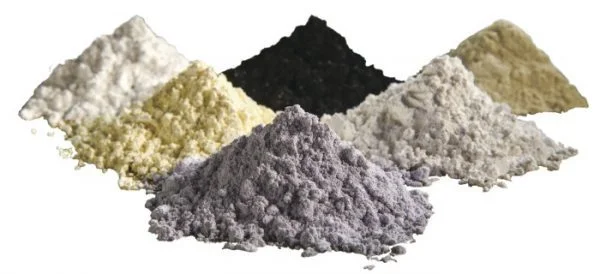
China has warned Western companies against stockpiling rare earths, a move Beijing says risks tightening global shortages of the strategically vital minerals. The warning comes as China continues to consolidate its dominance in the rare-earth sector and apply stricter controls over exports, Mining Zimbabwe can report.

By Rudairo Mapuranga

China controls about 90% of the world’s rare-earth supply and nearly 94% of permanent magnet production, making it the single most influential player in the market. Since April 2025, the country has restricted exports of medium and heavy rare earths, measures that have already rattled downstream industries such as electric vehicles and automotive manufacturing. Export licences are harder to secure, and year-on-year shipment volumes have slumped.

The message to Western firms is clear: Beijing will not tolerate speculative hoarding of rare earths, particularly at a time when supply is already constrained. This warning comes even after recent diplomatic de-escalations, including a 90-day tariff truce with the United States. Despite this, rare earths remain a core sticking point in trade relations, and Beijing’s actions show that it is prepared to leverage its market share as a strategic tool.

In response, some foreign manufacturers have begun relocating parts of their operations into China to sidestep export restrictions and secure a steady flow of inputs. For the rest of the world, the episode highlights the vulnerability of global supply chains to geopolitical manoeuvring and the risks of over-reliance on a single supplier.

China’s Grip on Global Antimony Refining Deepens

New industry data highlights just how tightly China controls the global antimony refining sector, reinforcing concerns about the world’s dependence on a single country for critical minerals. Together with Russia, China accounts for an estimated 89% of all refining capacity, according to figures published by Mining.com.

Antimony, a mineral used in everything from semiconductors and batteries to military hardware and flame retardants, has become increasingly strategic. China’s dominance of its refining capacity means it has an outsized influence not only on prices but also on the security of supply for industries in the West and other regions.

This concentration of refining power is not new, but it has grown more concerning as global demand rises. Export restrictions, environmental crackdowns, and shifting industrial policy in China have already sent ripples through the antimony market. Western battery makers and defence suppliers in particular are finding themselves exposed, with few immediate alternatives.

The situation mirrors the rare-earths sector, where Beijing has consistently used its commanding position as leverage in trade disputes and as a shield for domestic industrial strategy. For many countries, the lesson is that securing critical mineral supply cannot rely solely on imports from China.

For Zimbabwe and other mineral-rich nations, the tightening Chinese grip underscores the importance of developing domestic processing and refining capacity. Without it, producers remain price takers in markets where supply risks are dictated elsewhere.

Policy vs Reality: Zimbabwe’s Gold Sector to Achieve Record Highs in 2025

0
  • Is 100 Tonnes Within Reach?

Zimbabwe’s gold industry is on a historic run. In June 2025, the sector earned US$393.87 million from exports of 4.27 tonnes, the highest monthly output on record. By mid-year, cumulative deliveries had already reached 20.1 tonnes, well ahead of the 13.87 tonnes achieved in the same period of 2024. With momentum this strong, analysts believe Zimbabwe is on track to surpass its official 40-tonne annual target, with some projections suggesting the final figure could reach 50 tonnes.

By Ryan Chigoche

Behind these impressive numbers, the government and industry have set their sights higher.

Over the past year, officials have floated the idea of scaling Zimbabwe’s gold output to 100 tonnes annually.

Mines Minister Winston Chitando confirmed that a framework was being drafted to lift annual deliveries beyond 100 tonnes and boost gold export earnings to over US$4 billion.

The immediate past president of the Chamber of Mines, Thomas Gono, has described the target as achievable, provided miners gain access to affordable electricity and more than US$1 billion in new investment for exploration, mechanisation, and plant upgrades.

Producers themselves have cautiously endorsed the vision, saying the goal is realistic under the right policy environment.

June’s record output underscores the potential, but it also raises critical questions about whether Zimbabwe can sustain such growth and what needs to change to reach the next level.

The surge in output has been driven largely by artisanal and small-scale miners (ASM). In June, ASM delivered 3.31 tonnes, an all-time record accounting for nearly 80% of total production.

In the first half of 2025, ASM deliveries reached 14.5 tonnes, almost double the 7.7 tonnes recorded in the same period last year.

Their performance reflects deliberate policy incentives, including full USD payments, competitive buying prices, and the mine-to-market tracking system introduced in late 2024 to curb leakages from side-marketing.

Large-scale producers, on the other hand, continue to face challenges. Their output rose slightly to 0.953 tonnes in June, but high labour costs, unreliable electricity, and the 30% export surrender requirement continue to weigh heavily on operations. Platinum producers have already resisted surrender obligations this year, highlighting the tension between policy and sector efficiency.

Structural Bottlenecks

While current figures are encouraging, scaling from 40–50 tonnes to 100 tonnes annually will require significant reforms.

Beyond the estimated US$1 billion needed for exploration, mechanisation, and beneficiation, Zimbabwe loses an estimated US$1.5 billion annually to gold smuggling, limiting the benefits of official deliveries. Infrastructure gaps, particularly in power supply, remain a critical constraint.

Regionally, Zimbabwe’s ambitions stand against Africa’s top producers.

Ghana, the continent’s leading gold producer, is projected to deliver 158 tonnes in 2025, while Mali and Burkina Faso will each produce around 100 tonnes.

South Africa, despite ageing mines, maintains output near 100 tonnes annually. These benchmarks show that Zimbabwe’s 100-tonne aspiration is not unrealistic, but achieving it will require scaling up large-scale investments while continuing to formalise ASM operations.

Global Tailwinds, Local Choices

Global gold prices are also supporting Zimbabwe’s prospects. Prices averaged above US$3,400 per ounce in the first half of 2025, peaking at US$3,500 in April, with projections of US$3,700 by year-end.

This has helped lift Zimbabwe’s earnings to US$1.84 billion in the first half of the year, a 25.7% increase from 2024.

These favourable market conditions present a unique opportunity. But without reforms to reduce surrender requirements, invest in exploration and infrastructure, and curb smuggling, the country risks plateauing before reaching the 100-tonne mark.

Looking ahead, the government’s ambition to transform Zimbabwe into a 100-tonne producer is bold, and June’s record output demonstrates the sector’s potential. However, achieving this milestone will require more than strong global prices.

It demands policy consistency, significant capital inflows, and a careful balance between supporting ASM and revitalising large-scale mining operations.

For now, Zimbabwe’s gold sector is riding a wave of historic performance. Whether this momentum can be converted into long-term structural growth and eventually the 100-tonne target depends on the decisions made today.

Shamva’s Revival Proves Mazowe Can Be Saved

0

Shamva Gold Mine and Mazowe Mine share a common history. Both once operated under Mzi Khumalo’s Metallon Gold. Both collapsed under the same circumstances, and both were taken over by desperate artisanal miners when formal operations ceased. At Shamva, deaths became routine, and chaos reigned until Kuvimba Mining House stepped in.

By Rudairo Mapuranga

Today, Shamva is a model of modern mining, boasting more than 1.5 million fatality-free shifts and proving that Zimbabwean mines can achieve world-class safety and productivity.

Mazowe, however, remains stuck in that past, a graveyard of collapsed shafts, fatalities, and lawlessness. The contrast could not be clearer: where formal ownership was restored, life and order returned. Where the state has delayed, death continues. The lesson is obvious: if Shamva could be transformed under Kuvimba, then Mazowe, under its rightful owner Namib Minerals, can also thrive.

Shamva: From Makorokoza to Modern Mining

When Metallon Gold faltered, Shamva was left in ruins. Artisanal miners flooded the shafts, accidents multiplied, and the mine became a symbol of Zimbabwe’s wider mining decay.

But the takeover by Kuvimba in 2020 turned the tide. Investment was injected, systems restored, and safety made a non-negotiable priority. Fast forward to 2025, Under the leadership of Engineer Gift Mapakame, Shamva has now reached 1,523,000 fatality-free shifts, a feat once thought impossible in the mining environment.

“Reaching this milestone is not about luck or coincidence. It is the result of consistent effort, strict adherence to safety standards, and the belief that every worker must return home safely,” Mapakame said.

Shamva’s turnaround demonstrates that artisanal mining chaos is not inevitable. With proper ownership, capital, and leadership, even a mine written off as dead can become a beacon of safety and sustainability.

Mazowe: A giant in Waiting

Mazowe’s trajectory followed Shamva’s in its decline, but unlike Shamva, it has not yet had its revival. Today, allegedly, over 10,000 artisanal miners swarm Mazowe’s shafts. Deaths are no longer news; they are expected. Collapses, explosions, and suffocations claim lives regularly. Families bury breadwinners with no compensation, no justice, and no recognition.

A Ministry of Mines stop order issued in 2024 has been ignored, while police cite “lack of authorisation” to act. Lawlessness has been allowed to harden into normality.

Meanwhile, Namib Minerals, the legitimate owner of Mazowe Mine, has pledged a US$300 million investment to restore underground operations, create jobs, and increase gold output. Yet, like Metallon before, Namib is blocked not by market forces but by the absence of enforcement.

Two Stories, One Lesson

Shamva and Mazowe are twin stories diverging at one decision: government allowed Shamva to be formally taken over and properly operated by Kuvimba, while Mazowe is yet to formally begin operations.

The proof is before us: when formal operators are empowered, Zimbabwe’s mines thrive. When lawlessness is allowed to prevail, they bleed.

The Way Forward

We cannot claim ignorance. The success at Shamva is living evidence that the revival of Mazowe is possible and urgent. To achieve this, the Ministry of Mines and the Zimbabwe Republic Police must:

  • Enforce the stop order and evict illegal operators from Mazowe immediately.
  • Secure the mine’s infrastructure to allow Namib Minerals access to its property.
  • Back Namib’s US$300 million investment programme with clear political will.
  • Provide regulated artisanal mining zones elsewhere, ensuring safety and accountability.

The Last Day Is Now

Shamva was once as chaotic and deadly as Mazowe is today. But Kuvimba’s takeover proved that with formal operations, investment, and leadership, a mine can rise from being a death trap to a gold standard.

The question is not whether Mazowe can be saved. Shamva is a crystal clear example of that. The only question is whether there is a will to allow it to happen.

The latest day to make Mazowe safe was yesterday. The last day to make it right is now.

DISCO’s US$800m Expansion Powers Zimbabwe’s Steel Revival

0

Dinson Iron and Steel Company (DISCO), a unit of China’s Tsingshan Holdings, is set to pump US$800 million into its steel plant in Zimbabwe, doubling output capacity from 600,000 to 1.2 million tonnes annually, Mining Zimbabwe can report.

Information Minister Jenfan Muswere confirmed the development during a recent ministerial tour, describing it as a “game-changer” for Zimbabwe’s industrialisation drive.

Phase One Success
The US$1 billion plant has already begun producing pig iron and carbon steel, supported by a 50MW thermal power station that recycles furnace gas. Plans for a solar plant are underway to further secure power supply.

Expansion Plans
The new investment will add a second blast furnace, rolling mills, and advanced processing facilities, moving DISCO into the ranks of Africa’s top steel producers.

Why It Matters

  • Cuts Zimbabwe’s US$1bn annual steel import bill

  • Creates jobs and skills in steel engineering

  • Anchors industrial growth and regional exports

  • Positions Zimbabwe to target EU markets if ESG compliance is met

Tsingshan’s long-term roadmap could see production jump to 3.2–5 million tonnes per year, placing Zimbabwe firmly on the global steel map.

Foreign Capital, Zimbabwean Jobs: Why Chinese Mining Companies Must Be Held Accountable

0
  • Local Jobs First: Mines should employ at least 90% Zimbabweans, with expatriates limited to specialised roles.
  • Skills Transfer: Foreign workers must train Zimbabweans for all technical and managerial positions.
  • Accountability Matters: Employment records and agreements must be public to ensure foreign investors benefit the country, not just themselves.

Zimbabwe is rich in minerals – platinum, gold, lithium, chrome, nickel, and rare earths — positioning the country as a key player in the global green energy transition. But the real question is: who benefits from this wealth, Zimbabweans or foreign investors?

Recent reports show troubling trends in Chinese-owned mines. In some operations, over 45 per cent of employees are Chinese, while Zimbabweans are relegated to low-skilled, short-term contract roles. Salaries paid to foreign workers are often repatriated, offering little local economic benefit.

By contrast, other foreign-owned firms like Implats, Valterra Platinum, and Bravura employ over 97 per cent Zimbabweans. Their model demonstrates how foreign investment should work: bringing capital, technology, and skills while creating jobs and embedding value locally.

Legal and Moral Responsibility

Under Zimbabwe’s Mines and Minerals Act, mineral rights belong to the State on behalf of the people. Mining titles are not a licence to exploit; they are a custodial responsibility. Companies must demonstrate clear employment localisation and skills transfer plans, ensuring Zimbabweans fill skilled and managerial positions.

Yet, in many Chinese-run mines, Zimbabweans are confined to casual labour roles. Contracts are short-term, often just one year, creating job insecurity and stripping workers of dignity. This model is exploitation, not investment.

Skilled Workers Are Available

Zimbabwe produces thousands of graduates yearly in mining engineering, geology, metallurgy, and related fields. The challenge is not skill but opportunity. Jobs that could be done locally are filled by imported labour, while local wages circulate abroad instead of boosting the domestic economy.

What Needs to Change

  1. Mandatory Localisation: At least 90 per cent of employees should be Zimbabwean, except for highly specialised roles.

  2. Skills Transfer Programmes: Foreign nationals must train Zimbabwean understudies for every position they hold.

  3. Permanent Employment: Short-term contracts should be limited; permanent employment should be standard.

  4. Community Development: Companies must invest meaningfully in local communities.

  5. Transparency: Employment records and agreements should be public to ensure accountability.

The Bottom Line

Zimbabwe’s minerals are a birthright. Foreign investors must operate on terms that benefit Zimbabweans, not exploit them. Chinese mines employing large numbers of their nationals while offering insecure jobs to locals are draining the economy, undermining sovereignty, and betraying the social contract of resource ownership.

The government must enforce laws and demand accountability. If Zimbabwe acts, mining can become a true engine of national development — welcoming foreign capital only when it respects Zimbabwean labour, law, and sovereignty.

Shamva Mine Sets Aside US$7 Million for Expansion, Targets 24,000oz Output

0

Kuvimba Mining House–owned Shamva Mine has unveiled a US$7 million capital expenditure programme for the financial year ending March 2026 as it pushes to strengthen output and community impact. The investment is aimed at expanding production to 24,000 ounces of gold per year while reinforcing exploration and social development initiatives.

By Rudairo Mapuranga

The mine produced 6,000 ounces in the first quarter, slightly down from 6,200 ounces in the same period last year. Despite the marginal decline, management remains confident that a strong capital injection in the first half of the year will stabilise operations and support sustained growth.

“Our capital for the year is around US$7 million. We have deployed slightly above US$1.5 million to date,” General Manager Gift Mapakame said.

Exploration Drive and Expansion Plans

A significant US$1.8 million of the budget has been earmarked for exploration activities, covering both surface and underground drilling, now said to be at an advanced stage. Current mining operations extend to depths of around 650 metres, but long-term expansion is centred on the Shamva Hill Open Pit Project.

The company plans to transition from its present hybrid underground and open-pit operation to a fully open-pit mine, which management believes will enhance efficiency and production reliability.

Community Development Commitment

Beyond operations, Shamva has reinforced its role as a partner in local development. Over the past two years, the mine has invested more than US$500,000 in community projects.

Key initiatives include:

  • Infrastructure: Rehabilitation of the Shamva-Bindura Highway and upgrades to the Wadzanai Township sewer system.

  • Healthcare: Upgrading wards and the mortuary at Shamva District Hospital, while also deploying mobile clinics to improve healthcare access.

These projects reflect a strategy that links operational success with broader socio-economic progress in the host community.

Balancing Growth with Responsibility

As Shamva pursues its 24,000oz annual production target, the US$7 million capex allocation underscores its dual focus: securing production growth through exploration and expansion, while continuing to invest in local development.

By combining operational resilience with community impact, Shamva Gold Mine is positioning itself as both a leading gold producer and a driver of regional development under Kuvimba Mining House’s diversified portfolio.

Gold buying prices per gram in Zimbabwe, 19 August 2025

Gold buying prices per gram in Zimbabwe today, 19 August 2025, from the official gold buyer and exporter Fidelity Gold Refinery (FGR).

SG 90% and ABOVE US$101.24/g.
SG ABOVE 89% BUT BELOW 90% US$100.17/g.
SG ABOVE 80% BUT BELOW 85% US$99.10/g.
SG ABOVE 75% BUT BELOW 80% US$98.03/g.
SAMPLE BELOW 10g BUT ABOVE 5g US$96.42/g.

Fire Assay CASH $101.78/g.

NB: Fire Assay cash price is for gold above 100g; no sample is deducted.

A sample of not more than 10g is deducted for the Fire Assay Transfer price.

A 2% royalty is charged on all deposits (Small-scale miners).

A 5% royalty is set for Primary Producers.

Chinese ambassador Urges Compliance with Zimbabwean Laws Amid Allegations of Abuse

0

Chinese ambassador to Zimbabwe, H.E. Zhou Ding, has called on Chinese mining companies operating in the country to fully comply with Zimbabwean laws and environmental regulations, stressing that mutual respect is vital for the success of Zimbabwe–China cooperation, Mining Zimbabwe can report.

By Rudairo Mapuranga

Speaking in Harare after a high-level meeting with the Minister of Skills Audit and Development, Professor Paul Mavima, Ambassador Zhou dismissed recent reports by local media alleging widespread human rights abuses and environmental damage by some Chinese-owned mining operations.

“We encourage Chinese companies to abide by Zimbabwean laws and implement environmental regulations. If you find any related cases specific to Chinese companies, you can report them to local law enforcement agencies. Most of the cases brought forward by the media are not based on facts. After investigations, we have found some of them to be exaggerated, and this is not beneficial to our cooperation,” Zhou said.

He added that the Chinese Embassy had been cooperative in engaging with authorities whenever concerns were raised and reiterated that responsible corporate behaviour was key to strengthening bilateral ties.

Zimbabwe Pushes Back Against Irresponsible Mining

Despite Zhou’s remarks, concerns persist within Zimbabwean communities and civil society about the conduct of some Chinese miners. Numerous reports highlight instances of illegal operations, disregard for environmental rehabilitation, and poor treatment of workers.

In certain cases, allegations have emerged that some Chinese mining companies have invoked the name of President Emmerson Mnangagwa to shield themselves from scrutiny. According to industry insiders, this name-dropping tactic has been used as a smokescreen to avoid accountability, intimidate local authorities, and continue operating illegally.

This behaviour undermines not only Zimbabwe’s laws but also tarnishes the image of the presidency, creating perceptions that political protection is being misused to facilitate environmental harm and social injustice.

The Strategic Importance of Zimbabwe–China Partnership

Professor Mavima, speaking after his meeting with Ambassador Zhou, underlined the broader strategic value of the Zimbabwe–China relationship, particularly in the skills development sector.

“Our ministry is about assessing the skills landscape, identifying gaps, and ensuring that we develop programmes to fill those gaps, while also anticipating future skills needs,” Mavima said.

The Bigger Picture: Africa and the Green Transition

Africa is home to some of the world’s largest reserves of transition minerals, including lithium, cobalt, and rare earths, which are critical to the global clean energy revolution. With rising demand for batteries, electric vehicles, and renewable energy technologies, Zimbabwe finds itself strategically placed at the heart of this transition.

But experts warn of a looming green resource curse if policies are not strengthened. Professor Afeikhena Jerome, a special advisor at the African Union Commission, stressed that both African governments and foreign investors need to act responsibly:

“China should consider establishing a Ministry or Department that monitors private and state-owned Chinese mining companies operating abroad and investigates and regularly reports on credible reports of human rights abuses. Since many of these companies are state-linked, China must ensure that they abide by host country laws and international standards, including Environmental Impact Assessments and free, prior, informed consent of local communities.”

Zimbabwe’s partnership with China is vital for its economic future, but ensuring that this partnership delivers mutual benefit requires stronger enforcement of laws, transparency in contracts, and accountability for all mining companies.

Ambassador Zhou’s call for compliance with local laws is welcome, but it must be matched by visible action on the ground. The allegations of illegal operations and name-dropping of the President must be thoroughly investigated and prosecuted where proven.

For Zimbabwe to benefit fully from its mineral wealth and avoid the pitfalls of exploitation, a firm message must be sent: no investor, regardless of nationality, is above the law.

Zimbabwe Mining Export Earnings Rise 38.6% to US$2.81 Billion in H1 2025 – RBZ

0

Zimbabwe’s mining sector posted a robust performance in the first six months of 2025, with export earnings climbing to US$2.81 billion, up from US$2.03 billion in the same period last year, Mining Zimbabwe can report.

By Ryan Chigoche

This is according to the RBZ Midterm Monetary Policy Statement, which reported that total export earnings for the same period stood at US$3.95 billion, compared to US$3.14 billion in the first half of 2024, a 25.7% increase.

Mining was the clear driver of this growth, with its earnings surging 38.6% year on year. This saw the sector’s contribution to total exports rise from around 64% in 2024 to roughly 71% in 2025, underscoring its central role in sustaining Zimbabwe’s foreign currency inflows.

The latest RBZ data highlights the mining sector’s resilience amid fluctuating global commodity prices.

Gold led the charge, with export revenues soaring 57.6% to US$1.38 billion from US$878.5 million in 2024. This was underpinned by record deliveries, as official gold output rose nearly 46% to 20,103 kg from 13,784 kg in the same period last year.

Platinum also delivered a strong performance, with earnings up 24.9% to US$797.2 million, supported by a rebound in global prices after a prolonged slump. Prices of PGMs staged a notable recovery in the second quarter of 2025, with platinum climbing around 40% including a record-breaking 28% jump in June alone, the strongest monthly performance since 1986. This rally pushed platinum prices to an 11-year high of about US$1,432 per ounce in June. Palladium gained over 15%, while rhodium surged around 20%, further boosting earnings.

In a surprising turnaround, the struggling diamond subsector recorded the sharpest growth rate, with export earnings more than tripling to US$134.86 million from US$43.13 million, a 212.7% increase.

This growth came despite a 60% drop in export volumes, as reported by the Chamber of Mines Zimbabwe in its latest quarterly brief, suggesting higher prices or improved value addition played a role.

Other notable gains came from coke exports, which rose 55.9% to US$89.4 million, and other minerals, which brought in US$22.6 million, up 4.6% from last year.

However, not all subsectors performed positively. Lithium ore exports slipped 0.6% to US$214.6 million, while chrome ore and ferrochrome earnings dipped 0.4% to US$149.6 million.

The strong half-year outturn reinforces mining’s position as Zimbabwe’s top foreign currency earner, responsible for the majority of the country’s US$3.95 billion in exports. With gold, platinum, and diamonds performing strongly, analysts believe the sector is on track to surpass last year’s full-year earnings, provided global prices remain favourable and production disruptions are minimised.

Meanwhile, the country’s mineral revenue covering the entire year is forecast to reach US$6.2 billion in 2025, up from US$5.9 billion in 2024. This implies a full-year sector growth target of approximately 5.1% year on year.

The sector, however, continues to face significant headwinds that threaten its growth potential.

Chief among these are the RBZ’s 30% retention policy and delays in disbursing liquidated foreign currency proceeds under the same framework.

According to numerous industry experts, these policies are deterring further investment into the sector, potentially capping its ability to deliver even stronger results in the future.

Gold buying prices per gram in Zimbabwe, 15 August 2025

Gold buying prices per gram in Zimbabwe today, 15 August 2025, from the official gold buyer and exporter Fidelity Gold Refinery (FGR).

SG 90% and ABOVE US$101.59/g.
SG ABOVE 89% BUT BELOW 90% US$100.51/g.
SG ABOVE 80% BUT BELOW 85% US$99.44/g.
SG ABOVE 75% BUT BELOW 80% US$98.36/g.
SAMPLE BELOW 10g BUT ABOVE 5g US$96.75/g.

Fire Assay CASH $102.13/g.

NB: Fire Assay cash price is for gold above 100g; no sample is deducted.

A sample of not more than 10g is deducted for the Fire Assay Transfer price.

A 2% royalty is charged on all deposits (Small-scale miners).

A 5% royalty is set for Primary Producers.