

Home Blog Page 706

Brown Engineering Group – A passion for delivery

0

Brown Engineering Group, a proudly Zimbabwean company, is wanting to make it known that they have diversified from their roots in the agricultural industry and applied this knowledge base into the mining sector. The Group sees a bright future in the Zimbabwean mining industry and aims to support the economy by providing homegrown solutions to the mining industry’s needs.

Rhett Edwards, the Companies Business Development Manager says; “We have diversified our offerings by applying the knowledge and skills attained from decades of manufacturing in the agricultural sector, to different industries with similar requirements for structural steel support and mechanical processing equipment. We believe this is imperative not only for continued business operations, but also to make sure that the country’s productivity increases. We want to showcase that the mining entities can support Zimbabwean manufacturing companies and we can provide the solutions required to fulfill their expectations.”

“We are currently competing with regional and international companies and must adhere to the high standards already set. We have achieved this, on several projects, the most predominant one being Pickstone Peerless Mine in the Chegutu area.  Brown Engineering were commissioned to build a CIP tank farm of over 165 tons, comprising of 6 tanks with all the launders, walkways, supports and necessary interfaces. The company sees this offering of bulk steel structures as a key focus due to the expertise and capabilities they have in terms of manufacturing.”

Brown Engineering not only specializes in mining, agriculture, and structural work, they also focus on pipelines and tanks, as well as material handling equipment, namely conveyors, weighbridges and silos. All these products and services allows customers to deal with one entity that can provide a one-stop solution to customer specifications at very competitive prices be it regional or local.

On the infrastructure side, Brown Engineering Group has focused on commercial structures, having built many warehouses for various entities, namely Varun Beverages (PEPSI) and tobacco houses, measuring up to 15,000m² per individual warehouse. Although these projects rarely come around, the company acknowledges that their specialty lies between the 800m2 to 6,000m² warehousing which conforms to their standard designs which allows them to deliver quickly. The application of these commercial structures has now been adapted to mining, one in particular, a 5,000m2² structure for the up and coming Prospect Lithium Mine.

During a factory tour, it was great to see what a Zimbabwean manufacturing company can achieve. Brown Engineering Group are undertaking projects for the mining industry, pipelines for hydro power in the Eastern Highlands as well as numerous commercial structures locally and regionally.

Brown Engineering Group is venturing into the mining sector, as mining is now one of the biggest industries in Zimbabwe which can help revive the nation’s economy from where it is right now.

Rhett maintains “We are open for business and we are ready to deliver what the customer needs in terms of quality, time frame and with a budget considerate approach.”

Brown Engineering Group lives by its slogan, ‘A passion for delivery!’ and looks forward to fully engaging clients and their requirements in the mining sector.

Rushwaya called on “Mashurugwi” to desist from “machetes”

0

Zimbabwe Miners Federation President Henrietta Rushwaya commended artisanal and small scale miners to stop slaughtering each other with machetes but rather focus on mining in order for them to surpass their production target.

Rudairo Dickson Mapuranga

Rushwaya urged artisanal miners to seek help and guidance from ZMF executive and the ministry of mines on how to solve disputes and shun carrying machetes around.

“Let us use machetes properly, we don’t know a Zimbabwe that has people walking around carrying machetes,” said Rushwaya.

Rushwaya also recommended that artisanal miners should work with different stakeholders in the mining community to curb Mashurugwi’s notorious activities.

“Let us report people who come in our areas carrying machetes,” she said.

Speaking at the same event, Chegutu West Member of Parliament Hon Dexter Nduna also encouraged artisanal and small scale miners to leave the habit of terrorising each other with machetes, instead, they should seek for mutual ways of handling disputes.

‘‘I have three things to tell you, artisanal miners, the first is, desist from using machetes, second, desist from using machetes and the third is, desist from using machetes” said Hon Nduna.

Machetes miners popularly known as Mashurugwi rose to prominence in the Shurugwi area where they are known for using machetes and other alike equipment to rob gold mining holes from other miners who are inferior to them.

The so-called Mashurugwi were also accused of robbing communities they reside in with machetes leading to their unpopularity.

Miners urged to sell gold to fidelity

0

The Deputy Minister of Mines and Mining development Honorable Polite Kambamura has urged small scale and artisanal miners to deliver their gold production to Fidelity Printers and Refiners (FPR) in order to receive enough support from the government.

Rudairo Dickson Mapuranga

Speaking at the Environmental Impact Assessment launch held in Kadoma a forth night ago, the Deputy Minister said it was a very noble idea for small scale and artisanal miners to sell their gold production to Fidelity so as to help in the course of the economy.

Kambamura said that the government is ready to employ more gold buyers under fidelity who will live in the mining areas in order to unburden the miners from relinquishing their operations when going to sell gold.

The deployment of more gold buyers according to Kambamura will also reduce leakages because miners will have easy access to Fidelity licensed buyers.

“The government is working on giving more money to buyers. We are going to employ more gold buyers through Fidelity” said Kambamura.

“It is becoming difficult for miners to move from their mines to go and sell their gold to fidelity,” said the Deputy Minister.

Kambamura also said that if small scale and artisanal miners adhere to the government’s call to deliver their gold production to Fidelity and if the country reaches its gold production target for 2019, it will be very encouraging for miners and the government to engage large scale miners in order for them to offer tributary mining claims to small scale and artisanal miners.

Use it or lose it” the slogan continues

0

The government of Zimbabwe is concerned with determined companies particularly large conglomerate who are said to be keeping their mining concessions for speculative purposes in Zimbabwe.

Rudairo Dickson Mapuranga

Speaking at the Environmental Impact Assessment launch held a forth night ago in Kadoma, the Deputy Minister of Mines and Mining development Polite Kambamura said that the minister is going to summon those firms and order them to recompense the claims to the government.

“The minister has the power to call them and order them to give back those claims to the government,” said Kambamura

Speaking at the same event, Member of Parliament for Chegutu, Hon Dexter Nduna also encouraged the government to take claims that are held for speculative purposes.

“Claims held on speculative purposes should be taken and be given to artisanal miners,” said Nduna.

The call for the government to take back mining claims that are held for speculative purposes was pioneered by the minister early this year citing the unuse of many platinum concessions in Zimbabwe that are lying idle therefore affecting platinum production in the country.

Miners particularly small scale and artisanal miners have welcomed this notion as a noble idea as this will help empower indigenous aspiring miners to acquire claims.


Rushwaya’s  audience with EMA yields results

0

Zimbabwe Miners Federation president Henrietta Rushwaya’s meeting with EMA has produced s benevolent results to the miners.

Rudairo Dickson Mapuranga

Recently, miners were complaining that the fees charged by EMA were a millstone in their operations. This prompted the ZMF president to seek an audience with EMA concerning the issue as a result, the meeting proved to be behooveful on the side of the miner.

Speaking at the Environmental Impact Assessment launch held in Kadoma a forth night ago the ZMF boss said that the government through EMA has lessened the burden on small scale and artisanal miners, hence they are encouraged to adhere to government stipulations.

“We thank EMA for supporting us in our mining environment. And We also want to thank the government for recognising us as a sector” she said.

Rushwaya also recommended that artisanal miners should be cautious of the environment they operate in order to create a friendly relationship with EMA.

“Let us not use mercury, and other equipment that is harmful to the environment near the public and infrastructure,” she said.

Rushwaya also encouraged miners to sell their gold to the government through the country’s sole gold buyer and exporter Fidelity Printers and Refiners.

“Let us sell our gold to the government through Fidelity,” she said.

The Zimbabwe Miners Federation boss advised miners who will benefit from EMA, ZMF relationship to go and preach the good news to other miners.

“Those who will benefit here, let them go and preach this good news to others,” said Henrietta Rushwaya.


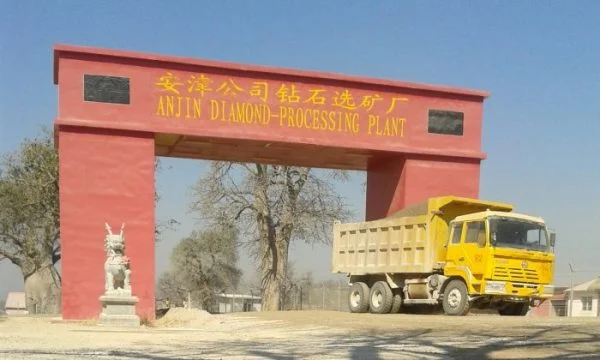
The return of Anjin furies Marange villangers

0

Marange villagers have called on the government to withdraw Anjin from operating in Chiadzwa claiming that the firm has a “dark past” including human right abuses.

This comes after the government last week through Mines minister Winston Chitando announced the resumption of mining operations by Anjin Diamond Company in Chiadzwa.

Anjin operated in Chiadzwa from 2009 to 2016 before government revoked licences of diamond companies mining in Chiadzwa leading to the formation of the Zimbabwe Consolidation Diamond Company (ZCDC).

At a Press conference yesterday in Mutare the Amalgamated Chiadzwa Development Communities Trust (ACDCT), Marange Chapter chairperson Jay Kasakara, who was flanked by Centre for Research and Development director James Mupfumi, said in the past Anjin flouted environmental laws.

“The (ACDCT) is deeply saddened by the decision by government to allow new diamond mining operations in Marange without following due process. In the past three months the ACDCT has observed in dismay the unregulated diamond mining activities taking place in Chiadzwa by Anjin Diamond Company, which has a dark past,” he said.

“This unfortunate decision was confirmed by minister Winston Chitando on a local radio station. Anjin was one of the mining companies that also started mining operations in Chiadzwa community in 2009 without the approved environmental assessment plan,” he said.

“Their mining activities destroyed the community infrastructure such as roads, bridges, schools, degraded farming land, sacred areas and contaminated sources of (drinking) water,” he said

“Over 4 000 cattle were lost after falling into mining pits, gullies and slime dams, around 450 families were relocated to Arda Transau without secured livelihoods and compensation for their losses,” he said

“ACDCT calls upon the government to immediately halt new mining developments in Marange and move with speed to implement some reforms such as undertaking a human rights due diligence process for the people of Marange to claim compensation for adverse impacts caused by Anjin Diamond mining,” he said

Mupfumi said the government should immediately stop secretive mining practices in Marange that are resulting in all sorts of human rights violations.

“The government has a constitutional obligation to protect human rights, the government is shielding opacity in Marange in order to maintain selfish interests,” he said_NewsDay

Mine Entra to propel mining sector

0

THE organisers of the annual mining, engineering and transport expo, Mine Entra, the Zimbabwe International Trade Fair (ZITF) Company believes the event plays a catalytic role towards helping the country achieve its targeted growth in the mining sector.

ZITF Company public relations and marketing manager Ms Stella Nkomo said Mine Entra continues to play a critical role in propelling the critical discussions around driving the extractive sector forward. This year’s 24th edition of the expo to be held at the Zimbabwe International Exhibition Centre will run from Wednesday to Friday under the theme: “Accelerating Zimbabwe’s Mining Future to 2030”. 

The event will officially be opened by Mines and Mining Development Minister Winston Chitando. The event supports Government’s efforts by ensuring that the knowledge-sharing forums within Mine Entra cater to the different economic segments,  allowing them to participate in mining-led economic growth. For example the Women in Mining Conference and Young Professionals Forum will highlight opportunities for women and the youth within the mining value chain and provide practical perspectives on exploiting these opportunities. 

“Conversely, the main Mine Entra conference will allow for medium and large-scale mining operators to engage in productive discussions for the creation of an enabling environment for mining sector growth. In line with this, the event highlight will be the Inter-ministerial Roundtable discussion featuring the Ministers of Mining and Mining Development, Transport and Infrastructure Development, Industry and Commerce, Energy and Power Development as well as Finance and Economic Development,” said Ms Nkomo.

The Government intends to grow the mining sector from a US$3 billion to a US$12 billion sector by 2023 through coterie of interventions across minerals.

To date, 200 exhibitors have confirmed their participation at this year’s show, occupying over  5 600 square metres of exhibition space, representing approximately 80 percent of the space made available for sale. 

“Last year the exhibition had a total of 251 exhibitors (225 direct and 26 indirect). With the continuous flow of last-minute bookings and enquiries, we are hopeful that we will close at par with last year,” said Ms Nkomo.

The number of foreign countries being represented at this year’s show rose from four last year to five this year with the China, Kenya, South Africa, South Korea and Zambia having confirmed their participation.

“Through our direct selling efforts, participation in foreign trade exhibitions as well as engagements with foreign diplomatic missions based in Zimbabwe, we have ensured that foreign exhibits at Mine Entra are typically from mineral commodity wealthy nations such as South Africa, China and Zambia. Participation by such foreign exhibitors ensures that Mine Entra provides opportunities for both information and technical exchange between them and their Zimbabwean counterparts,” said Ms Nkomo.

The ZITF Company said this year’s exhibition would feature a wide range of interesting and varied product mix appealing to both large and small-scale mining operations 

“Some of the other products on display include detection and lifting equipment, chemicals and explosives, compressors, protective clothing and equipment, seals, bearings and gears, drones, as well as medical aid, insurance and security services,” said Ms Nkomo_The Sunday News

Mineral exports in 9 percent jump

0

Zimbabwe has recorded an 8,7 percent jump in mineral exports to $910 million in the first half of the year compared to the same period last year, statistics from the Minerals Marketing Corporation of Zimbabwe (MMCZ) show.

MMCZ is exclusively responsible for the marketing and selling of all minerals produced in Zimbabwe, except for silver and gold.

In an interview with The Sunday Mail Business last week, MMCZ general manager Tongai Muzenda said the first half of the year had seen the marketer raking in US$910 million, up from US$837 million in the same period last year.

This could see the sector achieving Government’s 2019 target of growing mining sector exports to US$4,2 billion this year, up from US$3,2 billion achieved last year, especially as precious stones from the country’s, Zimbabwe Consolidated Diamond Company (ZCDC), are yet to auctioned despite sustained production levels.

The diamond miner is, however, expected to offload its stockpile soon. Despite the strong showing, the exports however, fell just short of MMCZ’s target of  US$915 million.

“Our sales for the six months to June 2019 in terms of value are at US$910 million of all metals and minerals. This is compared to a budget of US$915 million, which means we are about US$5 million out on target,” said Mr Muzenda.

“But I am sure we will be able to catch up as we go into the third quarter, which we are now in. Compared to last year, we were on US$837 million, which means we are better off than we were in 2018,” he said.

Major highlights

Platinum group of metals (PGMs) continue to dominate the MMCZ export chart with a total contribution of 63 percent in terms of value.

Also dominating the MMCZ chart is the chromium sector which, because of Government’s value addition thrust, has, however, seen a decline in chrome ore and chrome concentrate export, while value-added ferrochrome has been on the increase.

“The biggest contributor to the US$910 million envelope is PGMs. PGMs constitute about 63 percent of the total revenue that we got,” said Mr Muzenda.

“Also worthwhile noting is high-carbon ferrochrome exports, which amounted to US$148 million, which is also a big number.

“Chrome concentrates are at about US$36 million, which is quite good as it shows we are value adding into ferrochrome because if you compare with last year, you will see that chrome ore concentrates were US$58 million.

“On the non-metals, which includes things like your coke, graphite and so forth, granite has done quite well, it’s coming up. Though not as much as we would have loved, but it’s at US$12 million,” he said.

Diamonds

The exports have also fallen on the back of depressed trade in the diamond sector, where market watchers have lowered expectation for 2019. Giant diamond players such as De Beers have also recorded a decline in revenue in the first half of the year, but Zimbabwe’s fortunes could be in for a major boost once the marketer begins to offload ZCDC’s stockpiles. The larger chunk of the country’s diamond revenue is attributed to Murowa Diamonds, which has continued to trade.

“For diamonds to date, the total sale is US$77 million, which is very good because most of this would be attributed to Murowa Diamonds.

“The diamond market has been falling off. Currently the prices have come down from the first quarter into this quarter by anything between 30 to 40 percent depending on the type of diamonds, especially the rough diamonds,” said Mr Muzenda_The Sunday Mail

SA platinum giants to hammer out wage deal

0

When the world’s biggest platinum miners sit down to hammer out a wage deal this week, they’ll hold two potentially winning cards in reserve: the cash and metal stockpiles to endure a strike.

Those buffers may prove crucial as Anglo American Platinum, Impala Platinum Holdings and Sibanye Gold meet with the Association of Mineworkers and Construction Union on successive days from July 9.

While the producers will be conscious that AMCU led the country’s longest ever platinum mining strike in 2014, none can meet its demand for a pay increase of as much as 48 percent without undermining their businesses.

“Anglo has the balance sheet to withstand” a strike, plus its key operation is more mechanised, said Ben Davis, an analyst at Liberum Capital in London.

“Impala and Sibanye are certainly the more exposed, but have the most to lose from large wage increases for the sustainability of their businesses.”

During the 2014 strike, stockpiles of metal concentrates held by the producers were nearly depleted.

Should an amicable settlement prove elusive, much will depend on the length of any strike, said James Wellsted, a spokesman for Sibanye, the largest platinum miner.

Sibanye has also shored up its cash position ahead of the negotiations, he said.

“We generally have stockpiles available for whenever there are operational disruptions but we can’t guarantee how long those will last in a strike situation,” Wellsted said.

“Obviously we have to plan for the worst-case scenario.”

Meeting obligations
Last November, AMCU started a five-month wage strike at Sibanye’s gold mines. While the union was eventually forced to call off the action, the company was obliged to hold talks with lenders as it came close to breaching bank covenants.

Sibanye, Amplats and Implats all declined to comment on the size of their stockpiles of platinum-group metals.

“We don’t believe there is an appetite for a prolonged strike in the current economic climate,” said Jana Marais, spokeswoman for Amplats.

“Nevertheless, we have measures in place to ensure we will be able to meet our obligations to our customers.”

Amplats, the most profitable producer, expects to triple first-half net income to at least R6,1 billion. The company has also rebuilt its cash position, after selling or shutting down higher-cost mines.

Implats said it expects to return to profit in the 12 months ended June 30, after a reporting a loss in the year-earlier period.

Implats shares rose as much as 4,1 percent in Johannesburg, and the stock has doubled this year.

Amplats has jumped 51 percent during the period and Sibanye rallied 61 percent.

While AMCU has said its demands are justified as higher palladium and rhodium prices boost company earnings, producers will warn that such a settlement would lead to job losses and mine closures.

For some investors, a relatively peaceful strike might be preferable to high wage increases, which would prove costly if metal prices decline, said Peter Major, an analyst at Mergence Corporate Solutions Ltd.

A strike could cut platinum output by as much as 40 000 ounces to 45 000 ounces per week, according to Johnson Matthey Plc, a key maker of catalytic converters for the car industry.

“A disruption is not nice, but it doesn’t make you go broke,” Major said.

“Previously, there was pressure on companies to avoid a disruption at all costs because it was a great commodities boom. This is no more la-la land.” — Bloomberg.

107MW solar plant for Hwange

0

INDEPENDENT power producer, Power Ventures (Private) Limited, has applied for a licence to establish a 107 megawatts solar energy plant in Hwange District, Matabeleland North province.

The Zimbabwe Energy Regulatory Authority (Zera) confirmed the application in a public notice yesterday. It said the proposed solar plant, if approved, would be established at Chidome Ward in Hwange.

“The Zimbabwe Energy Regulatory Authority has received an application from Power Venture (Private) Limited to construct, own, operate and maintain a 107.771MW Solar Power Plant at Chidome Ward, Hwange Rural District Council in Matabeleland North Province,” said the authority.

“The applicant intends selling the power generated to the Zimbabwe Electricity Transmission and Distribution Company (ZETDC).

The project will also include the construction of approximately 75km of 88(132)Kv Double Lynx line from the proposed solar plant to the existing Hwange 33Kv substation”.

The energy watch dog said the licence application by Power Venture (Private) Limited was done in terms of Section 42 and 46 of the Electricity Act (Chapter 13:19).

Zera has since invited stakeholders with any concern about the application for the generation licence to lodge written representations with them before 26 July.

The proposal comes at a time Zimbabwe is facing acute energy supply gaps with low generation capacity at the country’s main power stations in Hwange and Kariba.

The situation has been compounded by drought conditions in the last rainfall season, which has seen water levels at Kariba Power Station drop significantly in the last few months.

This has forced the power utility, Zesa, to implement a tight load shedding schedule that has seen some places going for up to 15 hours without power.

In view of this situation, renewable energy is seen as the short term and long term solution with solar being the low hanging fruit for Zimbabwe.

According to Zera, a number of solar projects are being processed while other renewable small scale power projects are at different stages of implementation_The Chronicle